Most wonderful time of the year?

ADC3BF96-CEB6-4728-8555-650B36C62AF4
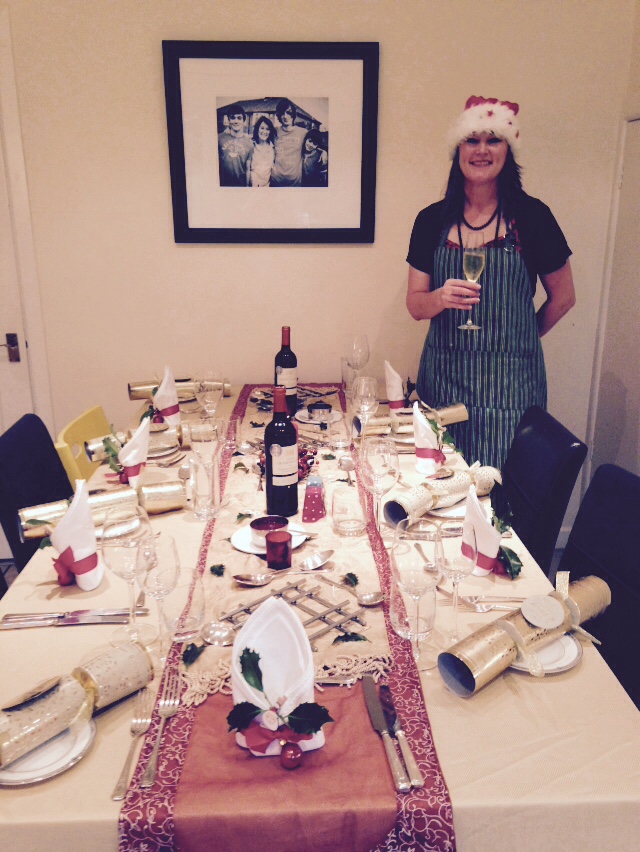
My favourite time is when the turkey is on the table and I can finally relax
09C2C910-AC99-4E2C-A1C1-C80D607816C8
My mum and I have hosted our fair share of Christmases so know how exhausting it can be

Well the big day is just around the corner and no doubt any youngsters in your life will be bursting with excitement in anticipation of the arrival of the fat man in the red suit.

I heard a rather interesting statistic the other day following this question: ‘According to a recent survey, what percentage of adults think that Christmas is the most wonderful time of the year?’ There were two answers to choose from, 34% or 54% (Which do you think is correct? I’ll tell you at the end of this column).

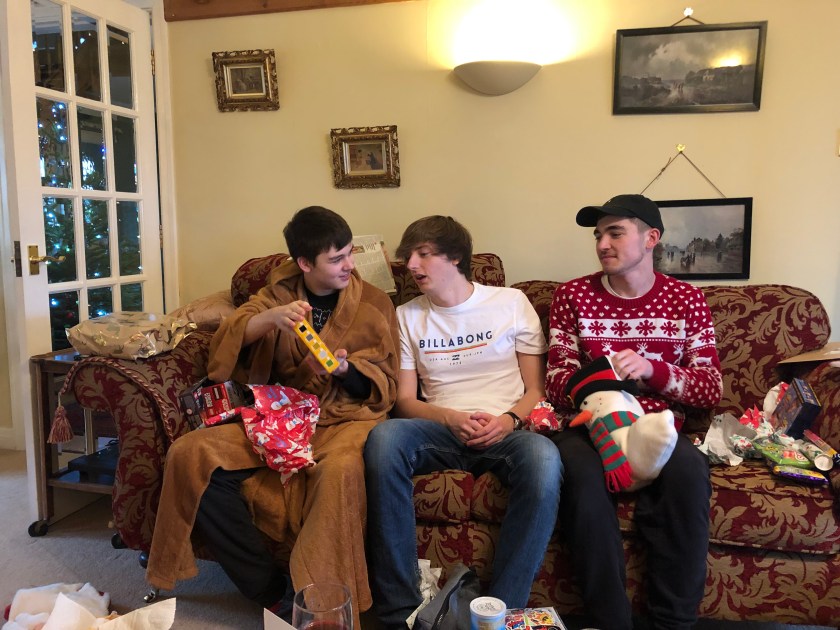
My teenage son immediately expressed shock that the higher number was not even higher because, surely, everyone MUST love Christmas?

Ahhh, the optimism of youth! I said the answer would depend on who the respondents were. If it was mainly young people and men, who have no idea of the amount of effort, work and stress that goes into making a wonderful Christmas, then the answer would be the higher one. If most of the respondents were women, then it would be the lower one (apologies to any males who take on the behemoth of Christmas, but statistics show it is still mostly women). Of course, you also have to factor in those who are alone, sick or missing loved ones, for which this time of year is especially difficult.

“You mean you don’t think Christmas is the most wonderful time of the year?” my son asked in dismay.

I had to explain that I love lots of things about Christmas, particularly the bit where the turkey comes out of the oven and is on the table, as that’s when I know my job is done and I can start to relax. But for those of us who have to shoulder the responsibility of almost everything to do with Christmas, it is blooming hard graft. It should be compulsory for every person who has organised Christmas to be sent on an all-expenses-paid spa retreat for the whole of January to recover.

OK, so I know I am being a bit bah-humbug, and there is lots that I genuinely love about the festive season, but I do feel there is a distinct lack of awareness among those who do not have to do the bulk of the organising to understand the immense effort it takes to make it the ‘most wonderful time of the year’. And don’t get me started on the expense (I do have a 750-word limit, after all!).

Possibly what I enjoy most of all are the frequent gatherings with friends and family. I love it when we all get together over delicious food and overflowing drink to enjoy each other’s company.

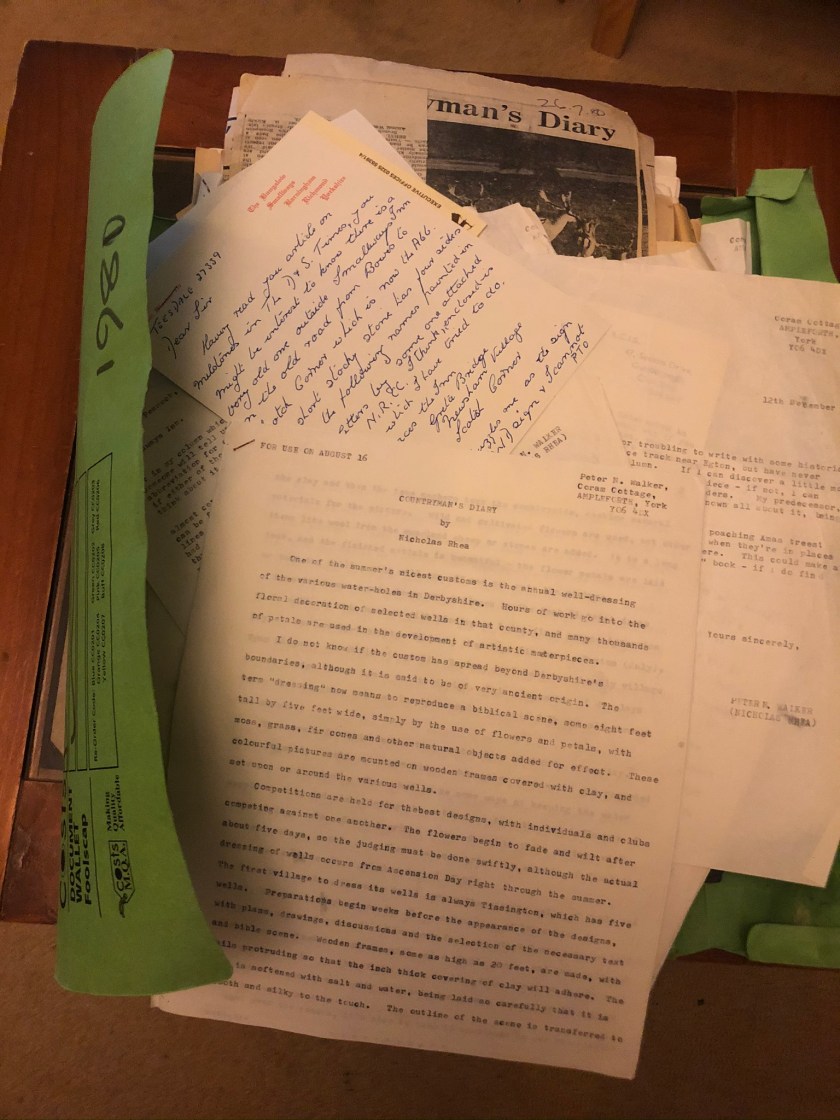
As my dad explains in his column from 22nd December 1979, back in the day (and as I remember in the 1970s), it used to be customary for any visitors to be offered a slice of traditional Christmas cake and maybe even a glass of sherry. I’m not sure if that custom still persists, as fewer and fewer people make the traditional cake these days.

The cake would be big enough to last many servings, and as Dad wrote in 1979: ‘The milkman, butcher, postman and others must receive countless portions during their Christmas rounds.’

He remembers a local doctor who would keep several sheets of greaseproof paper in his bag, and politely ask his generous patients if he could take the cake home to share with his wife. By the time he’d finished his rounds, his bag would be bursting with slices, but at least he hadn’t offended anyone by refusing it, nor made himself ill by eating too much!

My mum still makes a deliciously moist traditional fruit cake, and I recall as youngsters, my three siblings and I were all invited to take a turn stirring the mixture. It would be a couple of months before Christmas, and would have been the first exciting hint that it wasn’t far away.

Although I wasn’t a massive fan of fruit cake, the best bit about it was that it would be coated in a thick layer of marzipan, and then another thick layer of rock-hard white royal icing. Some were even decorated with a ribbon around the outside and a collection of jaunty festive plastic figures on top.

Now back to the survey. The answer was 34%.

I wish you all the best for Christmas, and a very happy new year.

Read more at countrymansdaughter.com. Follow me on Twitter @countrymansdaug

This column appeared in the Darlington & Stockton Times  on 20th and the Gazette & Herald on 18th December 2019

Earning our stripes

0B2E8802-2AC5-4833-BE90-866FAFBB7BDB
The lonely hearts ad on the reverse side of my dad’s column
381ECCEA-B4CF-47E1-8887-37F1B32C7A55
A typical hand-drawn full page advertisement from 1979
3B5E884E-1FD3-467B-B20A-9F5ECF9E3040
A handsome, rather angular, gentlemen, sporting his stripy Viyella House shirt, stares moodily across the Binns Christmas advert

When I read my dad’s columns from 40 years ago, I often look at the reverse side of the cutting, which can have a variety of fascinating items to peruse. There may be adverts, letters to the editor, local notices, news stories and announcements, all accompanied by photographs or illustrations that evoke the 1970s and bring back memories of living through that memorable decade.

The content often reflects the time of year, so on the back of a February 1979 column is a letter to the editor discussing the harsh winter they were experiencing, while in March there are adverts for footwear and camping equipment to suggest Spring is on its way. Move on to July and August and there are notices for agricultural shows, gymkhanas and barbecues, whereas in December we see a huge advert from Binns department store trying to tempt us through its doors for our Christmas shopping.

And who could resist a Sanyo music centre with ‘3 wave band radio PLUS belt driven turntable, magnetic cartridge and diamond stylus’, not to mention the ‘front-loading Cassette deck’? Clearly, the ‘Cassette’ is a very important aspect of the music centre to warrant its own capital letter. What strikes me about these large newspaper adverts is that all the images that accompany them are hand-drawn, rather than photographs of the products. I presume this is because they were unable to reproduce quality photos of the product via black and white newsprint.

I wonder what became of all those genuinely talented advertisement artists? In the Binns advert, gazing across the page towards the Sanyo music centre is a rather moody and distinctly angular gentleman looking very dashing in his stripy ‘Viyella House’ shirt and fat kipper tie, also stripy. Gosh, how we loved stripes in the 1970s.

I discovered that Binns, a familiar name to many of us northerners, had mostly disappeared by the mid-1980s after being absorbed into the House of Fraser brand. However I was surprised to find that Viyella is still going, and despite a chequered history of buyouts and near bankruptcy, it still has many branches all over the country, as well as an online shop.

The name Viyella originally referred to a fabric made up of 55% merino wool and 45% cotton that was trademarked in 1894 by William Hollins and Co., becoming the first ever ‘branded’ fabric. However, Hollins and Co soon began to make clothes too, and so Viyella became a fashion brand in itself. In the 1970s it was synonymous with the stripy shirt, but a quick check on their website today, and out of the 120 shirt designs available, a mere four are stripy, while 12 are plain.

So what pattens are on the remaining 104 shirts? Can you guess?

Before you discover if you are right, I want to mention one advert that caught my eye on the back of Dad’s column from 15th December 1979. You can tell it’s winter, as there are many adverts placed by farm labourers looking for work, presumably having been laid off during the lean winter months. But below them is a single entry under the ‘Personal’ section that reads: ‘LONELY- UNATTACHED? Don’t be this Xmas. Contact Kate’s Intro Bureau for details of special offer and sample list of friendship-marriage partners. Thousands of members.’

How discreet this little ad is, although I do wonder if the grand claim of ‘thousands of members’ is a bit exaggerated, as back in those days, approaching a dating agency for help was seen as quite desperate and shameful. You’d never have admitted you had gone to one, even if you had.

How times have changed! The internet has revolutionised the dating scene, with countless apps and websites making it so much easier for singles to find partners. It has shed its somewhat seedy image, and couples are willing to talk about having met online. In fact, only this morning I heard that it is predicted that within the next decade, 40% of couples will have met via apps and websites, and that 2037 will be the ‘tipping point’ year, when more babies will be born to couples who met online than through a face to face date.

Did you get the shirt pattern right? I bet you’re not surprised to learn that the men of today prefer the ubiquitous checked shirt above any other. Will stripes ever come back?

Read more at countrymansdaughter.com. Follow me on Twitter @countrymansdaug

This column appeared in the Darlington & Stockton Times  on 13th and the Gazette & Herald on 11th December 2019

It Beggar’s belief

CCF23DAD-92E3-44DF-BBE3-12138EA3118A
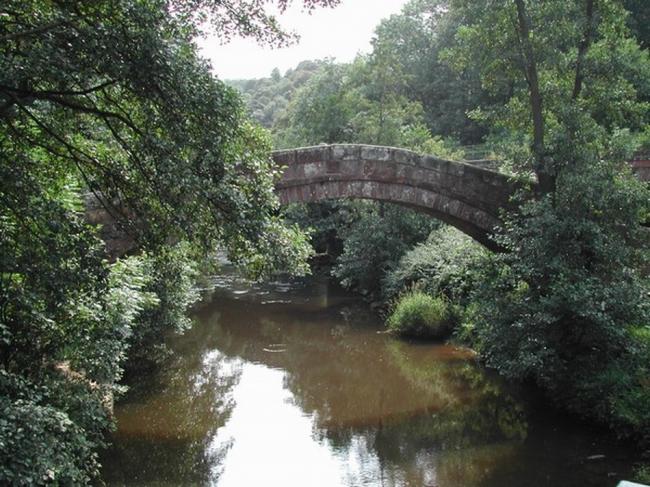
Beggar’s Bridge in Glaisdale which was built by local man Tom Ferris, one of the pseudonyms used by my dad for his books. 
507D0FA5-A567-45E1-A514-880EBBA654AB
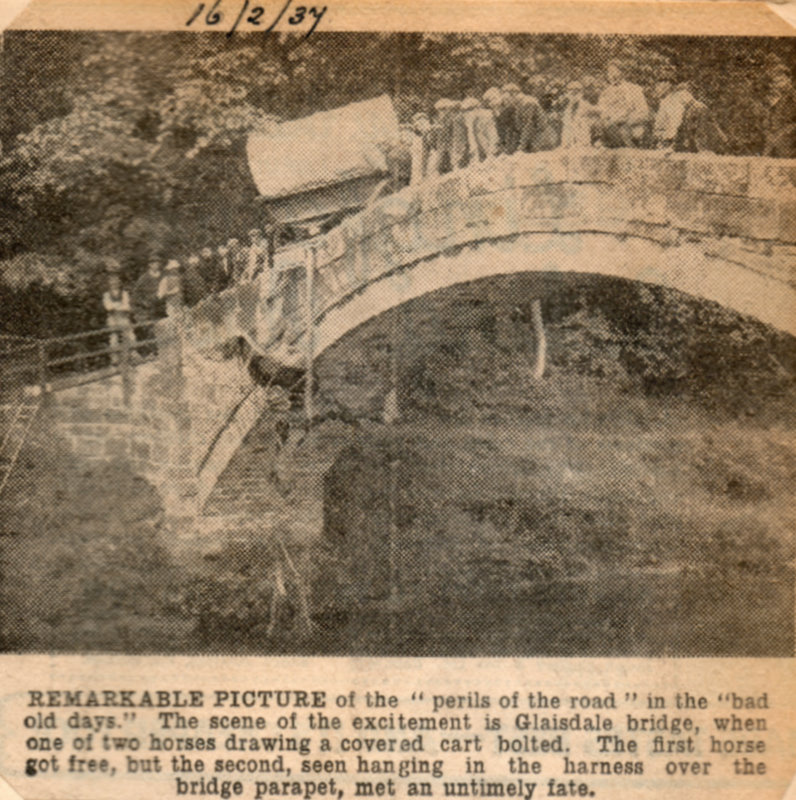
A grainy 1937 newspaper copy the 1899 photograph of the accident at Beggar’s Bridge in which the unfortunate horse died.

One of Dad’s quirky traits as an author was to write under different pseudonyms. He used six names in total, and when I asked why, he gave me a couple of reasons. The first was so that readers could distinguish between the different series of books. For example, he would write crime novels under his real name, Peter N. Walker (the ‘N’ was there to distinguish him from other Peter Walkers), but his Constable books (which inspired the TV series Heartbeat) were written under the name Nicholas Rhea.

The second reason was more pragmatic, in that in the early days, his publisher wouldn’t publish more than two books a year by the same author. As my dad was both prolific and canny, he began to write novels under different names so he could get more than two a year published. He ultimately had around 130 fiction and non-fiction titles issued, and from 1993 onwards, he only wrote under the pen name Nicholas Rhea.

Usually, he came up with names inspired by his own life. One was Christopher Coram, because we lived in Coram Cottage. Another was Andrew Arncliffe, after the woods where he and my mum used to take romantic walks. Nicholas Rhea came about because of his admiration for the Martyr of the Moors, Father Nicholas Postgate, while Rhea was his mother’s maiden name. And then there was James Ferguson, the name he used for a series of Emmerdale novels commissioned to accompany the TV soap. We are not sure how it came about, apart from the fact that Mum’s father’s first name was James, and Massey Ferguson was a famous tractor manufacturer (bearing in mind Emmerdale originally had ‘Farm’ in its title).

He only wrote one novel under the sixth name, ‘Tom Ferris’, in 1969, and I’m not sure why he never used it again. But I do know that the name came from a legend associated with his home village, Glaisdale, as he recounts in his column from 8th December 1979.

Tom Ferris (or Ferries as it is sometime written) was a 17th century benefactor of the village, well known for building ‘Beggar’s Bridge’, a narrow crossing over the River Esk. Like my dad, Ferris married a girl from nearby Egton Bridge, but Dad’s courtship was somewhat easier than poor Tom’s.

The legend goes that Tom was the son of a poor sheep farmer, but fell in love with a wealthy landowner’s daughter, Agnes Richardson. The couple wanted to marry, but Mr Richardson refused to allow his daughter to marry a ‘beggar’.

Tom vowed that he would go abroad to seek his fortune and return a rich man. The night before he was to depart, heavy rain caused the River Esk to flood and there was no way to cross, so Tom could not see his love for one final farewell.

Tom returned some years later having fulfilled his vow to become rich, and was able to marry his beloved Agnes. He built a bridge so that the River Esk would never again prevent anyone from being with their true love.

There is some truth to the tale, in that Tom Ferris did exist, did become wealthy and did marry Agnes. But in fact the bridge was built in 1619, one year after her death, by which time he had moved to Hull, where he continued to be successful, even becoming the city’s mayor. It is more likely that he built the bridge as a tribute to Agnes in the village where they courted as youngsters.

When I used to visit my Nana Walker in Glaisdale, I was fascinated by a picture that she had of a terrible accident involving Beggar’s Bridge in 1899. A wagon drawn by two horses was crossing the narrow bridge when they were spooked. One of the horses leapt over the low parapet and ended up dangling by its harness in mid air. It sadly didn’t survive the ordeal. A local amateur photographer, Joseph Readman, captured the gruesome scene, and the photograph became rather famous.

Some versions of the story say the second horse was already dead in the river below, but out of shot, while others say the second horse escaped. I’ve heard that there was more than one photograph taken at the time, with other shots showing the second horse. But which version is true, I wonder?

Read more at countrymansdaughter.com. Follow me on Twitter @countrymansdaug

This column appeared in the Darlington & Stockton Times  on 6th and the Gazette & Herald on 4th December 2019

No stain on the countryside

7D83D81D-E546-4B9B-9910-13536E937694
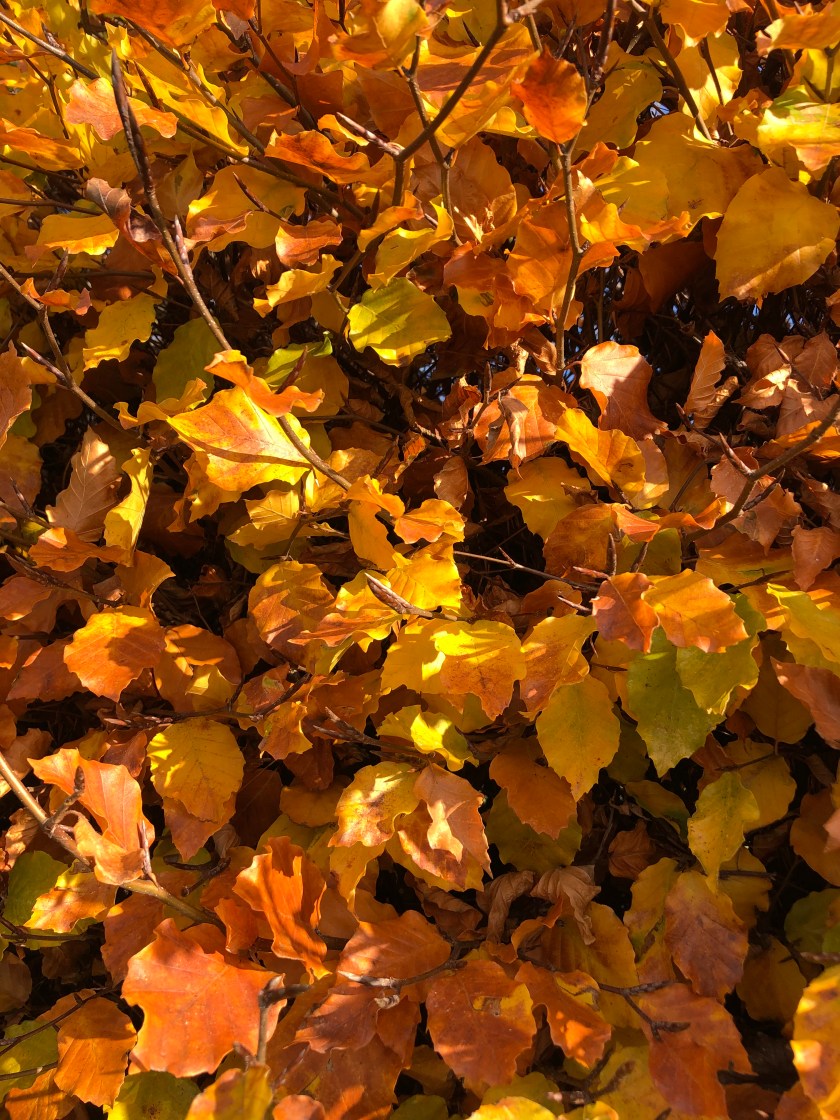
Amazing autumn colours in a beech hedge
74C68430-FA59-459E-A43C-36F5485B089B
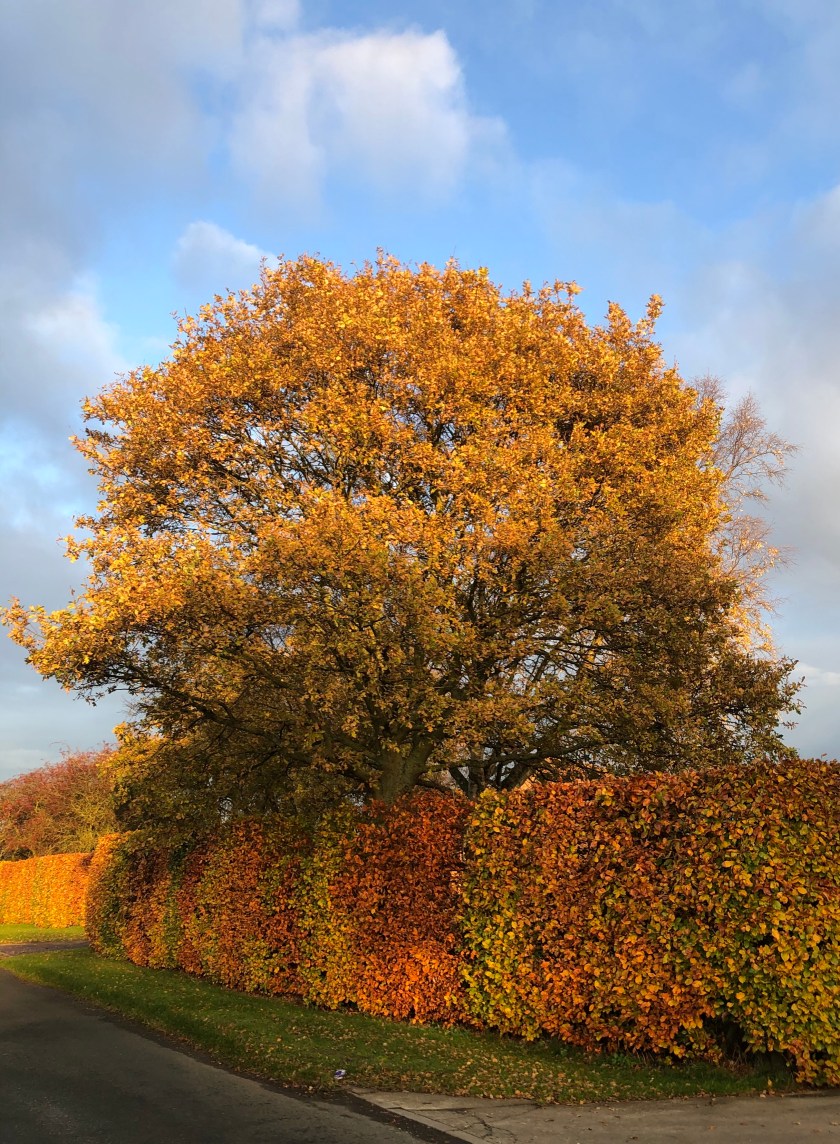
The beautiful autumn display has lasted longer this year
49BDAD44-AD3E-45C2-A439-5162014C74D2
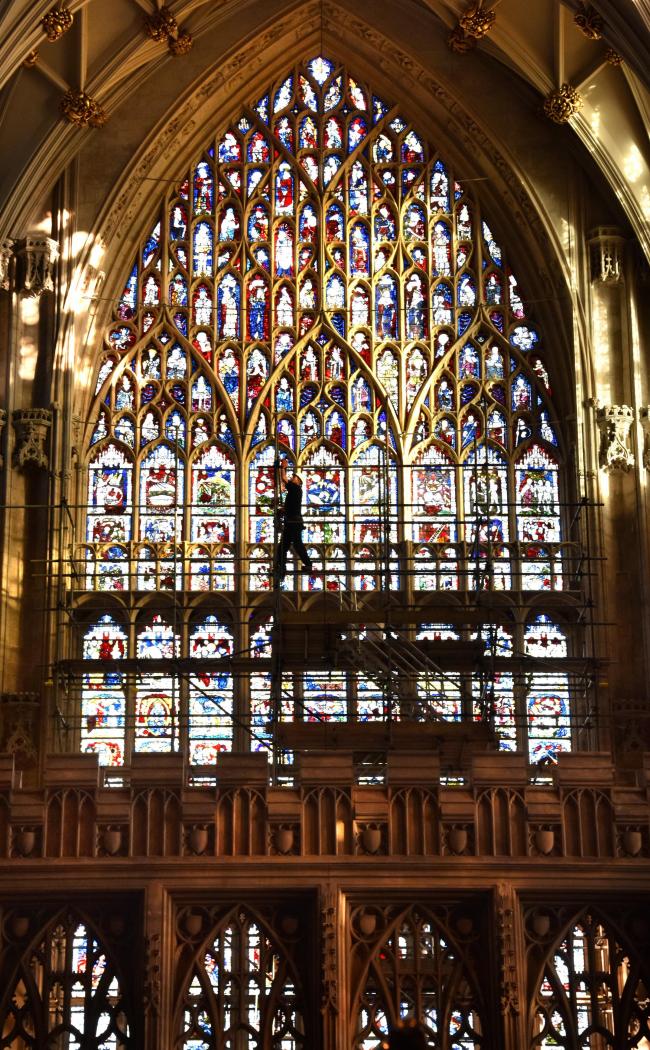
York Glazier’s Trust restored the minster’s Great East Window. Picture by Frank Dwyer

As I have been going about my business around the North Yorkshire countryside recently, I’ve nearly come off the road several times while being mesmerised by the stunning beauty of the autumn trees. The variety of colours decorating our landscape has been simply breathtaking and, for me anyway, is some compensation for the long winter to come.

By the time you read this, it is likely that the leaves will have all but gone, but I wonder if you agree that the glorious colours have lasted longer than usual this year? I recall my regret in previous years at the brevity of the display, as usually the colourful leaves would be whipped from their branches once an October or November storm had raged through. But for 2019, although we have had plenty of rain, the winds have remained fairly benevolent over recent weeks, and so I am assuming this is why we have been blessed with a countryside kaleidoscope of dozens of shades of greens, yellows, oranges, reds and browns.

I was so overcome with what I was seeing the other day, that I had to stop the car, get out and just look. It was a beautiful, clear sunny morning, and the leaves upon the trees before me seemed illuminated from within as the sunlight landed upon them. As I looked up through the branches, it reminded me of being in church as a child, when I used to get distracted during Mass when the sun shone through the colourful stained glass windows, as if someone had flicked a switch to light them up.

In ages past, Yorkshire was renowned for the production of stained glass, particularly the city of York, and according to my dad’s column from 1st December 1979, a list of Freemen of the city from between 1330 and 1540 shows no less than 100 names of local ‘glassyers’, as they were then called.

It’s not certain exactly when stained glass began to be produced, but according to the Stained Glass Museum based at Ely Cathedral in Cambridgeshire, references to it have been found as far back as the seventh century, and by the 12th century it was a recognised art form. The techniques for making stained glass have remained largely unchanged since then, which we know thanks to a contemporary description by German Benedictine monk Roger of Helmarshausen who, under the pseudonym Theophilus, wrote ‘De Diversis Artibus’. This is an exceptionally valuable historical resource, as it is an exhaustive account of the techniques of all known crafts of the first half of the 12thcentury, and includes the earliest references in Europe to paper and oil painting.

Initially, there were only a limited number of colours to use, but in about 1300, a new stain was discovered which could turn white glass yellow, and blue glass green, which gave the artist more freedom to highlight hair, haloes and crowns.

Thanks to the Reformation and the Dissolution of the Monasteries in the 16th century, only a handful of examples of monastic medieval glazing survived, and general interest in the art of stained glass subsequently declined. However, it underwent a renaissance in the early 19th century following the Catholic revival, and enthusiasm for medieval and Gothic architecture grew when John Ruskin, the most influential Victorian art critic, labelled it the ‘true Catholic style’.

Many new churches were built and old ones restored in the movement, led by staunch Catholic and architect AWN Pugin, who believed that the Gothic style was the only one suitable for a truly Christian country. It led to a renewed demand for ecclesiastical stained glass, and the art form has remained buoyant ever since.

Today, York Glazier’s Trust are responsible for the conservation and maintenance of York Minster’s windows, as well as for the preservation of historic stained glass all over the country and further afield. They restored the badly damaged 16th century Rose Window after the dreadful fire of 1984, and more recently the enormous Great East Window, a project that was initiated in 2005 and completed in 2018. The 15th century window, which took three years to construct, is the largest expanse of medieval stained glass in Britain, with 300 separate glazed panels.

There are some wonderful examples of ancient stained glass in many of our smaller local churches, so next time you’re passing one, why not pop in and appreciate this most ancient of art forms.

Read more at countrymansdaughter.com. Follow me on Twitter @countrymansdaug

This column appeared in the Darlington & Stockton Times  on 29th and the Gazette & Herald on 27th November 2019

Worming my way through history

479F94C1-B35A-40F3-A035-7A679BB45766
Working on this week’s column with a cup of tea, made from leaves in a pre-warmed pot and milk poured from a jug
FB94BCD7-05E6-4F36-95DB-D61CDF58DA5D
The Darlington Scouts emblem showing the Sockburn Worm with a sword in its neck

As I have mentioned before, I usually have no idea what I am going to write about in these columns before I sit down and read my dad’s piece from the corresponding week 40 years ago.

When I finished reading his column from 24th November 1979, I decided that I was going find out more about Sir John Conyers, who lived from 1255 until 1303, and was gifted lands around the village of Sockburn, seven miles south of Darlington, looped by the River Tees. The lands were a reward for his bravery at having slain the Worm of Sockburn.

I wasn’t sure what this ‘worm’ was, although I assumed it wasn’t the kind I found in my garden, as you wouldn’t need to be brave to slay one of those, let alone defend a whole village from one.

I discovered ‘worm’ was another name for a kind of dragon, known as a wyvern. Of course, then I had to find out what a wyvern was, and found that it’s like a winged dragon but with two legs instead of four.

As it happens, I had unknowingly seen countless pictures of wyverns but had assumed they were your common-or-garden dragon. Some images depict them walking upright, like a tyrannosaurus rex, while others show them in a more horizontal stance. But now that I’ve looked again at such pictures, it’s like looking at a dog or a horse with its front legs missing. It does look a bit odd!

It is likely that the worm story is an allegory for Viking marauders who were ransacking the north at the time and that Sir John was victorious in defending the village of Sockburn against them. Another interesting fact is that the Worm of Sockburn is supposed to have inspired Lewis Carroll, who lived in nearby Croft-on-Tees for many years, to write his poem, the Jabberwocky.

Wyverns will be familiar to Game of Thrones and Harry Potter fans, and one is even featured on the emblem of Darlington Scout Group, with Sir John Conyers’ conquering sword protruding from its neck. They also appear on noble coats of arms, such as that of Prince Edward’s wife Sophie, Countess of Wessex, and of Catherine of Braganza, wife of Charles II.

It was at this point of this week’s meandering journey of historical discovery that I came across the most interesting fact of all. It wasn’t that Portuguese Catherine of Braganza was married to Charles II until his death in 1685, or that she was never allowed to be called Queen due to her Catholic faith, or that she never bore him a child despite him having at least 14 illegitimate children by seven other women, or that she was noted for making it fashionable for women to wear clothes normally associated with men, such as waistcoats and breeches.

No! It was the fact that she has been credited with introducing tea into this country!

Now, as a fairly snobbish tea drinker, who at home insists on leaf tea made in a pot that has been warmed first, only with water on the absolute point of boiling, and with milk poured from a jug and not the bottle, I think I owe a debt of gratitude to the woman who sparked a revolution in the drinking habits of a nation. She introduced us to a product that I simply could not live without. Tea has seen me through many obstacles in life, such as death, divorce and driving tests, and I have my little ritual every morning. I make time for my first cuppa of the day, taking a break from any work or chores to properly sit down, switch off and enjoy it.

Further research revealed that actually, Catherine couldn’t have been responsible for its introduction to these shores as Samuel Pepys talks about it in his diaries in 1660, five years before she moved here.

But like the princesses Margaret, Diana, Kate and Meghan that have followed her, she set the trend and made something quite uncommon become the height of fashion.

So we’ve been on quite a voyage this week, from Sir John Conyers, to the Sockburn Worm, to dragons, to wyverns, to Vikings, to Lewis Carroll, to the Jabberwocky, to Catherine of Braganza, to Charles II, to Samuel Pepys and finally, we end it all with a nice cup of tea.

Is there anything more satisfying than that?

Read more at countrymansdaughter.com. Follow me on Twitter @countrymansdaug

This column appeared in the Darlington & Stockton Times  on 22nd and the Gazette & Herald on 24th November 2019

Wood yew believe it?

9F3A3C86-CA15-4C82-A71E-5961CDFB787A
A yew tree outside St Hilda’s Church, Ampleforth
4E79A124-3791-4AE3-AC91-BE4439763084
Bright red yew berries with their distinctive ‘hole’ in the centre
D45BF7C7-7827-4E16-A56C-09978560135F
A yew tree (on the right) on one of my dog walking routes

The yew is a more common sight in English churchyards than most other species of tree and there are a number of theories as to why this is the case.

Back in Mediaeval times, boys over the age of 16 were obliged to practise their archery skills after mass on a Sunday. As yew wood is strong and flexible, it is perfect for making bows, and so the trees were said to have been planted in churchyards for this purpose.

Another common tale went that because yews are highly poisonous to livestock, they would be planted near churches to stop commoners grazing their cattle over sacred ground.

However, both these stories are likely to be just myths, as the yew, which has a reputation for longevity, is usually much older than the church so would not have been planted in the churchyard, but rather the church would have been built near the already established tree.

This country was pagan long before Christianity came along, and in ancient lore, the yew was considered a sacred tree. Like many evergreens, it signified everlasting life with associations with death and rebirth due to its uncanny ability to not expire. In fact, even one that looks dead can often spring back to life, thanks to new shoots appearing from deep within the apparently dead tree carcass, rising up and surrounding the tree’s original trunk.

Its branches tend to grow downwards and where they hit the ground, new shoots can also spring up. A grove of yews can look like several separate trees, even though they are in fact still, technically, just the one tree.

The reason they are now commonly seen in churchyards is likely to be because when the Christians persecuted the pagans, they took over many of their sacred sites, replacing any pagan structures with new churches. The yew retained its mythical aura, and through Christian eyes, became a symbol of Christ’s resurrection.

In my dad’s column from 17th November 1979, he mentions a grant awarded from Derbyshire County Council to repair what was said to be the oldest yew in England, which was at St Helen’s Church, Darley Dale, and was believed to be 2,200 years old. He says he’s not sure if the claim is correct and cites another yew at Fortingall in Scotland which claims to be the oldest in Europe at between 3,000 and 9,000 years of age. I have also found references to other very aged yews, including at Defynnog, in Wales, which claims to be 5,000 years old, another in Ankerwycke, Berkshire, a comparative youngster at just 2,000 years, and then a middle-aged one of 4,000 years at Crowhurst in Surrey.

It is very tricky to determine which is the true ‘oldest’ yew, but their esteemed reputations have attracted many visitors over the centuries. In fact, in September 1863, the editor of The Times received a letter, purportedly from the Darley Dale yew itself, complaining about the significant amounts of visitors that had begun to arrive, thanks to the advent of trains making it easier for city-dwellers to travel into the countryside.

‘Until tourists began to multiply and excursion trains to run, I had scarcely a single scar, older than time and tempest had left, on my body. But now the Snookeses, and Tomkinses, and Joneses have begun to immortalize themselves (as is the fashion of that race) by cutting their names all over my bark,’ the letter reads.

The ‘tree’ beseeches the editor to publicise the problem so that someone might come to its aid to protect it from further damage. It took until 1876 for the ancient yew’s prayers to be answered, when parish records from May of that year show that Manchester solicitor Charles Lister Esq. had paid for a sturdy iron fence out of his own pocket to protect the yew from further vandalism. That fence, and the tree, still stand today.

One surprising fact about the English yew is that although its needles contain alkaloids that are poisonous to humans and animals, these alkaloids also contain chemicals that are effective in the treatment of some forms of cancer. Known as taxanes, these chemicals help stop new cancer cells forming, and are used in chemotherapy drugs for certain types of breast, ovarian and prostate cancer.

Although taxanes can be produced synthetically in a laboratory, yew clippings are still collected today to extract the chemical naturally.

Well, yew live and learn!

Read more at countrymansdaughter.com. Follow me on Twitter @countrymansdaug

This column appeared in the Darlington & Stockton Times  on 15th and the Gazette & Herald on 13th November 2019

Can’t stop the feline

F61008FA-BC6E-4AAA-A330-6BE90392BC34
Marmalade the cat slept in plain sight during the day, but would hide when it was time to go out at night

Some people say you are either a ‘cat’ or a ‘dog’ person and cannot be both. Well I don’t agree, for I love cats and dogs equally. Although I grew up with cats, I now look after dogs and both give me pleasure in equal measure. I also have several friends who own both cats and dogs, the traditional arch enemies living side by side in harmony.

You don’t get the same outpouring of unconditional love from a cat that you do from a dog. Generally, a dog’s goal in life is to make his owner happy, and they give love in abundance to those who share their home with them. A cat, on the other hand, just about tolerates its owners, and will switch on the charm only when it wants something from them.

In his column from 10th November 1979, Dad explains how as far back as 1767, a writer was bemoaning the mercenary way cats treated their poor owners, describing the creature as an ‘unfaithful domestic’, and said that those who believed that any cat was theirs to keep was sadly deluded: ‘Even the tamest cats are not under any subjection, but may rather be said to enjoy the perfect liberty; for they act only to please themselves, and it is impossible to retain them a moment after they choose to go off.’ I’m sure, 250 years on, today’s cat lovers will recognise that description.

Growing up, we had stray cats in our garden, and my brother named one of the males ‘Jackson’. Dad describes how Jackson used to come to us for food, and would playfully roll on his back whenever dinner was imminent.

But he was totally wild, and we could never get anywhere near to stroke him. Dad talks about the difference between him and Marmalade, who came to us as a stray, but decided it was far more advantageous to adopt us and move into our home, where she stayed until the grand old age of 18.

Dad wonders whether cats have a higher-than-average intelligence, thanks to some shrewd traits that Marmalade displayed. She seemed to know when were were going to put her outside at night time.

During the day, she normally slept in full view on the sofa, or on the warm boiler in the kitchen. But when it was time to put her out for the night, suddenly she was nowhere to be seen. She had a number of hiding spots where she would conceal herself, often in the most difficult places to reach. But over time, we worked out her favourite places to hide.

But in his column, Dad describes how just a few days earlier, Marmalade had finally flummoxed him. I remember the occasion well. We hunted high and low for her, checked all her usual spots, and some new ones, but just couldn’t figure out where she was.

Then, almost on the point of giving up, someone noticed that the door on the antique grandfather clock was slightly ajar. We opened it and there, staring up from the depths of the case, was our cunning little feline. Although we had found her, it was impossible to get her out without tipping the clock up, which meant risking damaging it, or possibly hurting the cat. So we had to leave her there until she decided it was time to come out. She’d finally beaten us!

Marmalade was always very reluctant to go outside at bedtime where her peers would be doing what cats should do, roaming the land keeping nocturnal vermin at bay.

But she couldn’t be bothered with all that. And luckily for her, my bedroom window was just above a plastic lean-to attached to the back of the house.

I would hear Dad putting her out and locking the door downstairs. Then, like the Milk Tray man on a mission, she’d run across the back of the house, leap onto the garden wall, then on to the roof of the lean-to, scurry up the corrugated plastic until she reached my window ledge where she’d perch outside and meeow until I let her in.

She’d spend all night sleeping blissfully on my on cosy warm bed. Then early in the morning, I would put her outside before Dad got up, and he’d let her in again, non the wiser.

Now that’s what I call feline cunning!

Read more at countrymansdaughter.com. Follow me on Twitter @countrymansdaug

This column appeared in the Darlington & Stockton Times  on 8th and the Gazette & Herald on 6th November 2019

Shop til we drop

B1758487-CCCF-4611-8412-F1369F8BC8DB
A 1965 bill from Ossy Thompson’s traditional grocery shop
63750875-0E9D-4B88-A94E-434CCFA4D7D8
The village shop in Ampleforth with a ‘Daily Mail’ sign on the wall
95E729EE-9F53-4B99-B980-2276122E4269
An old picture of the village shop in Ampleforth which is still the heart of the community

When my dad was writing his column on 3rd November 1979, he voiced concern about the demise of the traditional English village.

The Association of County Councils (now the Local Government Association) had just published a report highlighting the problems of living in a rural area and, as my dad says, ‘the problems will increase in the near future, even to the extent of making village life as we know it a thing of the past.’

I never asked him whether he thought that prediction had come true, although it is fair to say that village life has changed dramatically over the last few decades. It may be that village life as he knew it became a thing of the past, but I would say that, like many things, it has evolved rather than been lost entirely.

I grew up in Ampleforth which was, and still is, a thriving community. In the 1970s we had a village ‘Spar’ shop, a post office that also sold sweets, groceries and homewares, a Co-op, a butcher, and a quirky footwear-cum-habadashery shop. They existed alongside the timber yard, coal merchants, two pubs and two garages.

Our friends’ dad, Oswald Thompson, known as Ossy, also ran a very traditional grocery shop, with a counter all the way round and all the products stacked on shelves behind it. You didn’t help yourself, but Ossy would pass you whatever you wanted to buy. He also provided a delivery service, and would shut every Wednesday afternoon to spend time delivering to his regular customers.

The shop was attached to his home, so when there were no customers, he would slip through to the living room and watch the telly. The shop door had a bell that tinkled every time someone walked in, so at the sound of the bell he would leap up to serve them.

I’m sure Ossy Thompson’s shop was dearly missed when it shut its doors for the final time sometime in the 1970s, but that kind of service was being superseded by the more modern supermarkets and convenience stores that allowed you to help yourself, touch the products and fill your own basket before paying.

But the value of Ossy Thompson’s store was so much more than the products it sold. It was a place where people would come and chat, and pass a few minutes of their day catching up on the local news and gossip while he handed the goods over. And no doubt on Wednesdays, he was a welcome sight to the elderly and less mobile village residents who could not walk down to buy their goods in person.

But time moves on, and along with that comes the inevitability of change. In the late 1970s, the first big supermarket, an Asda, opened not too far way from us in Huntington near, York, and like many other families, we began to frequent it, doing a ‘big shop’ once a month. Local shops just couldn’t compete on price and variety and over the years, many sadly closed down.

But there are those who have survived, and to do so, they have had to be very canny with what they offer with the focus very much on local produce. Today in Ampleforth, there is just one village shop which supplies almost everything you might need, including, grocery items, newspapers, stationery and booze. Having it is a real bonus for the community it serves, which these days stretches to those surrounding villages which no longer have their own shops.

I have noticed a trend away from the big supermarkets now though. Where I live, we have a few village shops where these days I do most of my shopping, preferring to make several trips there a week, rather than heading up to the huge Tesco just a couple of miles away. Although I pay more for individual products, and I have sacrificed the variety of choice, I buy less because I’m not tempted by things I don’t need and, more importantly to me, spend far less time actually doing the shopping.

Every time I do go into the big supermarket for some essential, I come out having spent far more money and time accumulating stuff I really don’t need. But with most of us becoming increasingly conscious about excess and waste, and more competition from budget shops like Lidl and Aldi, the large supermarkets cannot afford be complacent.

Read more at countrymansdaughter.com. Follow me on Twitter @countrymansdaug

This column appeared in the Darlington & Stockton Times  on 1st November and the Gazette & Herald on 30th October 2019

Bathed in glory

09734AF3-309D-4345-A194-662B302D6319
Twyford’s unique bathroom tribute to the Queen for her silver jubilee in 1977
A2E1D89F-6D44-46D9-A421-BCB695328C23
The rather ugly gas fire in my home that sits where an open fire would have been

As I’m writing this, I’m looking out of the window and thinking that the weather is telling me very clearly that winter is on its way. The wind is hurrying leaves along the pavements, the clouds are hanging very dark and low, and the threat of rain seems ever present. It’s only 11am, and yet I’ve had to turn on the lights to see what I’m doing.

It’s the time of year when I begin to miss the real fire we used to have in our previous home. On days like this, there’s nothing more comforting than curling up in front of living flames. In my current house, in place of the once open hearth sits a rather ugly gas fire. I’m guessing the old fire was replaced in the 1960s or 1970s when it became commonplace and affordable to install boilers to heat water and radiators, and sometimes the unsightly boiler could be hidden in the chimney space behind an artificial fire on the front.

My dad talks about this topic in his column from 27th October 1979, when he mentions the regular power cuts that affected us in the 1970s. Country folk could rely on their oil lamps for light and their cooking ranges for warmth and food. But he also laments the fact that we had to remove our own cast iron range to make way for a modern new boiler.

It does make me cry a little inside when I think back. I have vague memories of that great big traditional range, which was clearly the heart of our 19th century cottage. But I remember the new white, rumbling boiler far better, as it symbolised the dawn of a more modern, heat-efficient age. It brought hot radiators to our bedrooms, and you had to love the big brute of a boiler for that fact alone.

In the 1970s, we didn’t have the same affection for the old, labour-intensive ways, or an appetite for preserving original features of aging homes. We chucked out anything that hinted of history and tradition to make way for modern and convenient. Why have original ceramic floor tiles when you could cover them over with easy-to-clean patterned lino? Who needed draughty wooden sash windows when God invented double glazing and uPVC? And why put up with heavy dust-riddled four-panelled doors with rattly brass knobs when you could have plain, lightweight Sapele mahogany veneers with easy-to-use lever handles that closed with a whisper rather than a clout?

And then you have the bathroom. White suites were so boring compared to such glorious colours as alpine blue, peach melba, harvest gold, and avocado green. And to keep up with the trend, the loo roll manufacturers produced toilet rolls in a whole range of hues that you’d be hard-pressed to find today. In fact, you could match all your bathroom accessories, like mats, soap dishes and toothbrush cups, to your chosen suite.

I used to work for the company that made Andrex loo roll back in the 1990s, and even then you could still get toilet tissue in yellow, pink, blue, green and peach. In fact, white was only just beginning to be popular again. Today though, the most exciting loo roll colour, apart from white, that I can find is ‘champagne’. I think they’re giving the loo roll ideas above its station with that name. Just ‘cream’ would suffice.

While researching this piece, I came across a blog about the history of the sanitaryware firm, Twyfords, and if you’re interested in revisiting the memories of those fantastic bathrooms of old, then it’s well worth a visit. According to the blog, Twyfords introduced coloured suites as far back as the 1930s and continued increasing its colour palette right up the 1990s.

In 1977 Queen Elizabeth II had been on the throne for 25 years and in a rather unique tribute, Twyford launched its ‘Queen Silver Jubilee’ bathroom suite, which included a huge corner bath, a large oval sink, a grand toilet and, to cap it all, that noble 1970s emblem of wealth and success  – a  bidet. The whole suite was in the rather unusual colour choice of ‘sepia’ brown. But what really set it apart was a distinctly regal flourish – a garland of golden vines weaving its way round each piece of porcelain.

I do wonder if the Queen was amused.

Read more at countrymansdaughter.com. Follow me on Twitter @countrymansdaug

Let’s make it plain

7BA3CAD2-1121-4879-A3C0-7B5D59297050
Me in the days when I had a ‘proper’ job as a journalist.

Back in the days when I had a proper job, I used to edit a staff magazine. I had to write articles, find pictures, and then design the whole lot using a desktop design package (Anyone remember good old ‘Aldus Pagemaker’?). I’d come from a local newspaper where, if you didn’t write in good, clear English, you’d be hauled before the news editor, told in no uncertain terms that you’d written a pile of poop, then get sent back to do it again.

So it was with this mindset that I entered the corporate world editing the internal magazine for a toilet paper manufacturer. As you can imagine, it was a whirl of never-ending glitz and glamour.

I never really struggled for content, as I had ‘newsgatherers’ based in all our locations scattered across the country, and they would send in articles and ideas for stories to be put into the magazine. The problem was, these people weren’t writers, but volunteered to do the news gathering on top of their own jobs. Although I was very grateful for them sending me content, unfortunately some of it was, well, how can I put it? Really, really boring. Oh, and very badly written too. You’d also get long, tedious articles about some new manufacturing process, or reams and reams of text about ‘company reorganisation’ written in a bizarre version of English that no-one who actually spoke English would ever understand

I remember one occasion when I was fairly new into the job and had called a newsgatherer at one of our sites to discuss editing what she’d sent me. She was something in HR, and possessed no self-doubt about the importance of her own role in the organisation. The effrontery of a minion such as myself daring to suggest changing anything in her literary masterpiece was simply outrageous.

So she gave me a proper dressing down, and ordered me not to touch a single full stop in her copy.

It didn’t occur to her that I was a professionally-trained writer doing the job I was paid to do, which was to take copy sent to me and turn it into plain English. I would not have dreamt of trying to prevent her doing the job she was employed to do, nor tell her how to do it. But she clearly thought she could write better than a professional writer.

That’s the funny thing about being a writer. Because most of the population can use a pen or a computer keyboard, then we all have the potential to be writers. But being a good writer is like most jobs, in that the skill comes with training and experience. I mean, I play a fair bit of tennis, but I’d never tell Andy Murray how to hold his racquet.

Translating a piece of complicated company jargon into something comprehensible is a particular skill and should not be underestimated. In my Dad’s column from 20th October 1979, he applauds the pressure being put on officialdom to simplify jargon so that its meaning is understood by the people it is trying to inform.

It was the same year that Chrissie Maher, frustrated with the lack of progress in simplifying communication, founded the Plain English Campaign with a fantastic publicity stunt. She shredded hundreds of gibberish-laden Government documents in Parliament Square, Westminster. She was approached by a police officer who ordered her to move on, using the wording of the antiquated 1839 Metropolitan Police Act. Once he had finished his long, drawn-out piece of legalese, Chrissie translated it into Plain English, saying: “Does that gobbledygook mean we have to go?”

On the Plain English website you can find some wonderful examples of meaningless, empty phrases used by people who want us to think they know what they are talking about (you know who you are!).

Try changing this into Plain English; ‘We need a more blue-sky approach to balanced relative paradigm shifts.’

Or how about ‘It’s time to revamp and reboot our synchronised monitored matrix approaches.’

Possibly some of the most famous users of gibberish are our beloved football managers and pundits, and courtesy of the Plain English Campaign’s ‘football gobbledygook generator’, I wonder if you can make sense of this little nugget:

‘We were over-reliant on our custodian once again and we got between the lines well and it’s still potential ‘phoenix-from-the-flames’ stuff.’

Good luck with that!

Read more at countrymansdaughter.com. Follow me on Twitter @countrymansdaug

This column appeared in the Darlington & Stockton Times  on 18th October and the Gazette & Herald on 16th October 2019