Is there a solution to pollution?

57C0BBE1-E6C4-4194-A0E4-60D9D24AE122.jpeg
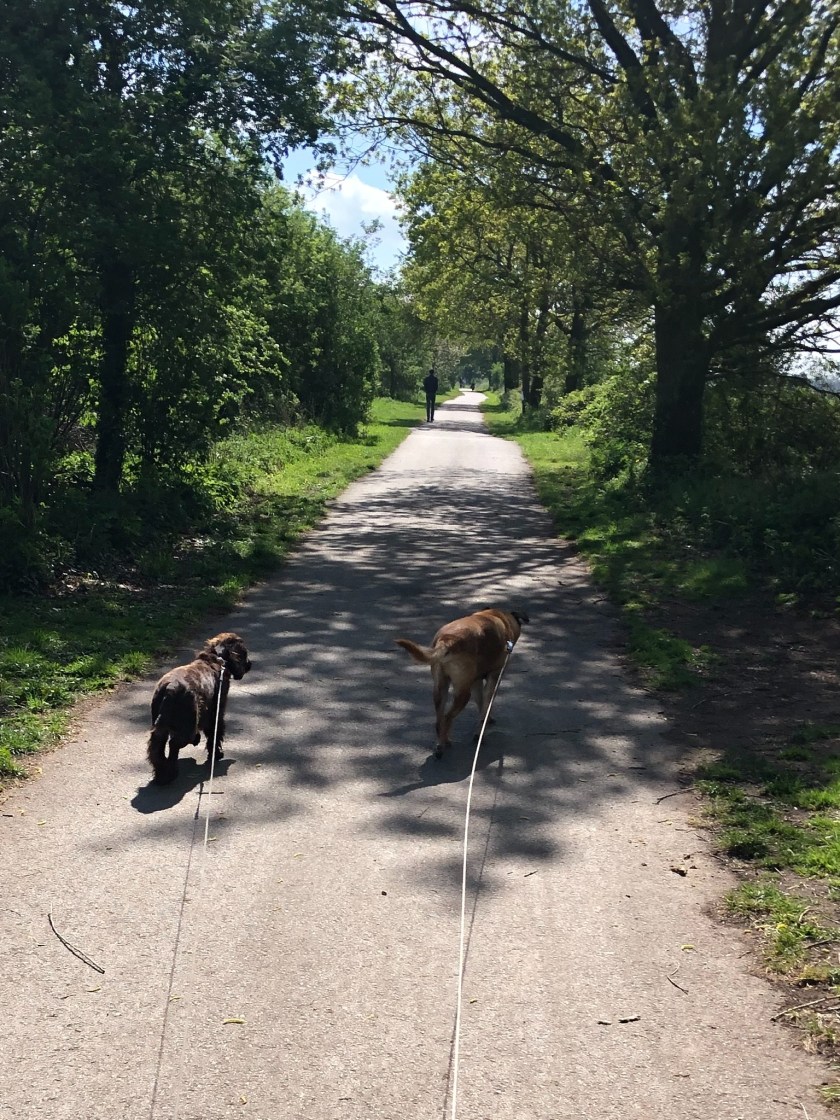
The dogs on the lovely York-Selby cycle path near Bishopthorpe on Saturday 27th April where I encountered a large group of young people who left their litter behind

The problem of waste and and plastic pollution is, quite rightly, a very hot topic at the moment and I have previously discussed the rise in fly-tipping and the lack of a sense of personal responsibility for litter among our youngsters.

Just the other day I was walking dogs along a country path at Bishopthorpe near York, and I came across a large group of teenage ramblers, plus a few adults, split into a number of smaller posses. They looked like they were on a Duke of Edinburgh Award challenge and were well kitted out, with sturdy boots and large rucksacks on their backs.

One group had decided to take a break by the side of the path. We greeted each other, and they were very friendly and cheerful as they ate their snacks. I walked on further with the dogs, watching other groups of the teenage hikers ahead of me as they made their way good-naturedly along the route.

After a while, it was time for me to turn back and once again I passed the spot where they had taken their break. To my utter dismay, scattered across the ground were several freshly-empty crisp packets and sweet wrappers. I was so cross that they blatantly disregarded the beauty of the countryside within which they were walking, and now they were nowhere to be seen.

Had I met them again, I would have asked if any of them had attended the recent ‘Fridays for the Future’ climate strikes where, instead of attending school, thousands of pupils took a day off to join marches against pollution and climate change. I have a feeling that a good number of them will have done that, not registering the hypocrisy of leaving their litter behind to pollute the environment they claim they want to protect.

I do think the issue of littering is worse these days, and yet, it is nothing new. In his column from 19th May 1979, my dad wrote: “It seems we are a careless society, whose people care not for the landscape, their environment or the lives and health of wild creatures.”

And the particular threat of plastic pollution was already concerning him back then too. He expressed disappointment that so many of our groceries were being packed in plastic wrapping and containers: “Many plastics will not deteriorate, and will consequently lie in the grass or on the moors forever, unless some hapless animal like a cow or a sheep attempts to eat it.”

But there are people out there who are coming up with clever ways to help combat the problem. I came across a fascinating video on social media featuring Balinese social entrepreneur Kevin Kumala. He has invented a new kind of carrier bag using starch from the cassava, a root vegetable grown in many Asian countries. The carrier bags are strong enough to hold your groceries, and yet 100% biodegradable and harmless to nature, being totally safe if animals ingest them. Unlike conventional plastic bags, which take hundreds of years to break down, these take just three to six months and are made without using any harmful oil-based chemicals. In fact, they completely dissolve in warm water which is then safe enough to drink.

Is it time our big supermarkets start leading the way by ditching their conventional bags and choosing those that are kinder to our environment?

Another entrepreneur, Toby McCartney, has also come up with a groundbreaking idea, this time to turn plastic waste from the household, commercial and agricultural sectors into pellets that can be used in the construction and repair of roads. It means less waste going to incineration or landfill and, so he claims, results in stronger road surfaces that are less prone to potholes. That will be a welcome solution to many of us in Yorkshire who are well acquainted with that problem.

Cumbria County Council is the first in the country to start using this new plastic compound on its roads, so I wonder if North Yorkshire has any plans to follow suit?

Lastly, if you are a teacher, adult leader or parent associated with the large group of teenagers who were walking down the York to Selby cycle path, past Bishopthorpe, on Saturday 27th April, then please get in touch with me via this paper so we can discuss what we can do to help our young people be more responsible around litter.

Read more at countrymansdaughter.com. Follow me on Twitter @countrymansdaug

This column appeared in the Darlington & Stockton Times  on 17th May and the Gazette & Herald on 15th May 2019

In the dog house

DB33F535-2F91-4AE3-AABF-465E43BB3D10
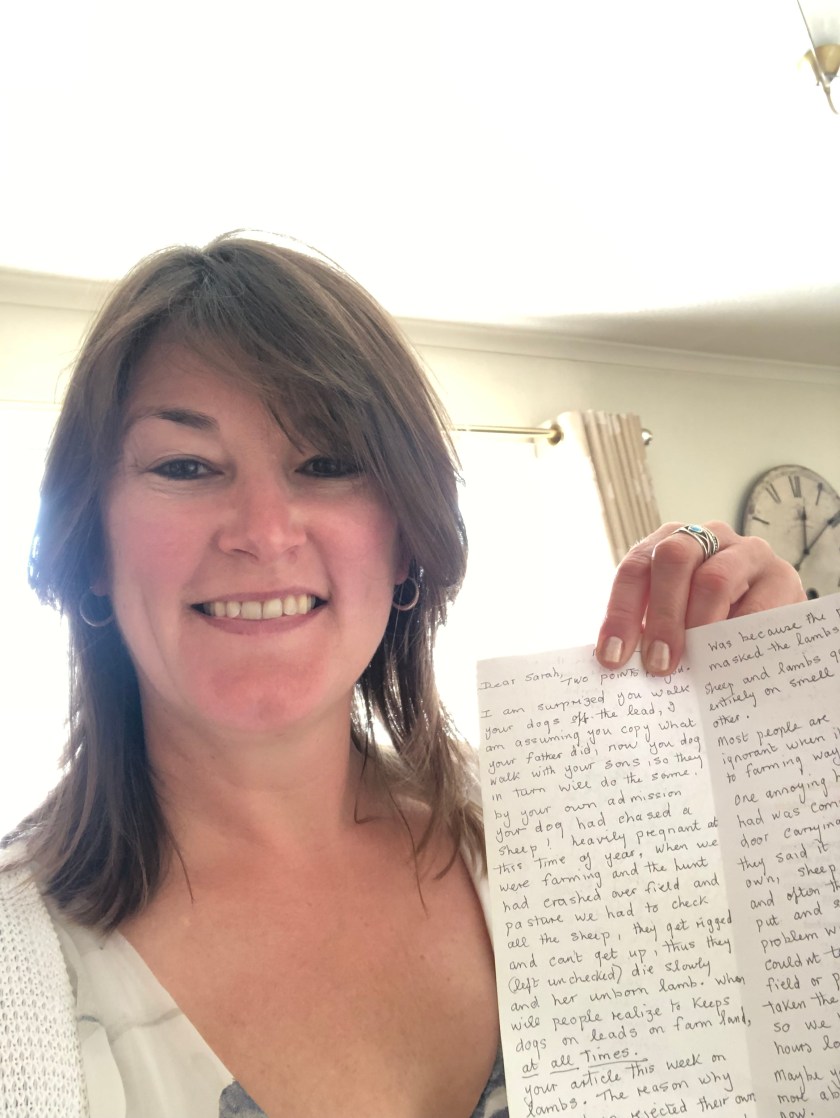
Me with the letter I received from a rather disgruntled reader

I have received a rather stern letter from a reader who seems somewhat annoyed with me. I’m quite pleased that I have reached almost 100 columns (this is number 99) and it is the first message that has not been positive and encouraging, so I will take that as a good sign!

I love to receive letters and communication from readers, even the negative ones, as it proves that people are reading what I am writing, which can only be a good thing for our newspaper. And if I demonstrate my ignorance then I am more than happy to be corrected. After all, every day is a school day!

The column I wrote in early March entitled ‘A wolf in dog’s clothing’ discussed the dangers of letting dogs off leads in the countryside, especially at lambing time, and it was this one which prompted the letter.

I think my dad will be looking down and chuckling at what my son jokingly called my first ‘hate’ mail, because I know Dad received his fair share of critical mail too. Of course, it is far from ‘hate’ mail, and is written by someone who has seen first-hand the carnage caused by sheep worrying incidents so is understandably angry with irresponsible dog owners. I’d like to thank them for taking the time to get in touch, and for imparting other nuggets of country wisdom that I don’t have the room to include here.

But in relation to the column, the writer seems to have the wrong end of the stick and make assumptions that are wrong. They did not include their address, so I can’t reply to them personally, so I shall set them straight here, just in case any of you reading are also living under similar misconceptions.

The letter-writer states, “I am surprised you walk your dogs off the lead. I am assuming you copy what your father did, now you dog walk with your sons, so they in turn will do the same.”

In fact, my dad never owned a dog in my lifetime, and so I have not learned anything about walking dogs from him to pass on to my sons.

The writer then goes on to tell me how dangerous it is to walk dogs off leads around sheep at lambing time, and of the potential costs to pregnant ewes and the farmers who own them.

Now this makes me wonder if the reader had actually read the whole of my column, or was so incensed at the first few paragraphs that they had to stop and immediately put pen to paper to express their anger.

The whole point of the column was to demonstrate the dangers of having a dog off-lead around livestock. Some cases of sheep attacks are because owners do not believe their dog has the capacity to attack, and so I shared my own case precisely to demonstrate that even the most placid of dogs can chase sheep. This was one occasion in the early 2000s outside of lambing time and no harm came to the sheep. I certainly learned from it, and I hope that others, including my sons who were there at the time, do not make the same mistake.

If that point wasn’t clear, then I apologise.

The reader also suggests that country folk are not at fault, but lays the blame for thoughtless behaviour at the door of uneducated ‘townies’. Perhaps they have missed recent police rural crime team and National Farmers Union statements which declare that country dwellers who allow their dogs to roam free from their own homes are a major part of the sheep-worrying problem.

I would like to assure the writer that I am not one of those (I don’t actually own a dog, but look after other people’s). Nevertheless, one of the greatest pleasures of dog walking is letting well-behaved pooches roam freely off the lead, but ONLY when it is safe to do so, away from livestock and other dangers. I see many farmers, and rural and urban residents alike, doing the very same thing, as they have done since time immemorial, and I will continue to do so myself. It is just a small irresponsible minority who ignore those dangers.

I hope this has set the record straight, and assure the letter-writer that myself and my boys take our dog-walking responsibilities very seriously indeed.

Read more at countrymansdaughter.com. Follow me on Twitter @countrymansdaug

This column appeared in the Darlington & Stockton Times  on 10th May and the Gazette & Herald on 8th May 2019

May the (police) force be with you

087E5D5C-D68A-4B0A-9726-CBD76A87A84B
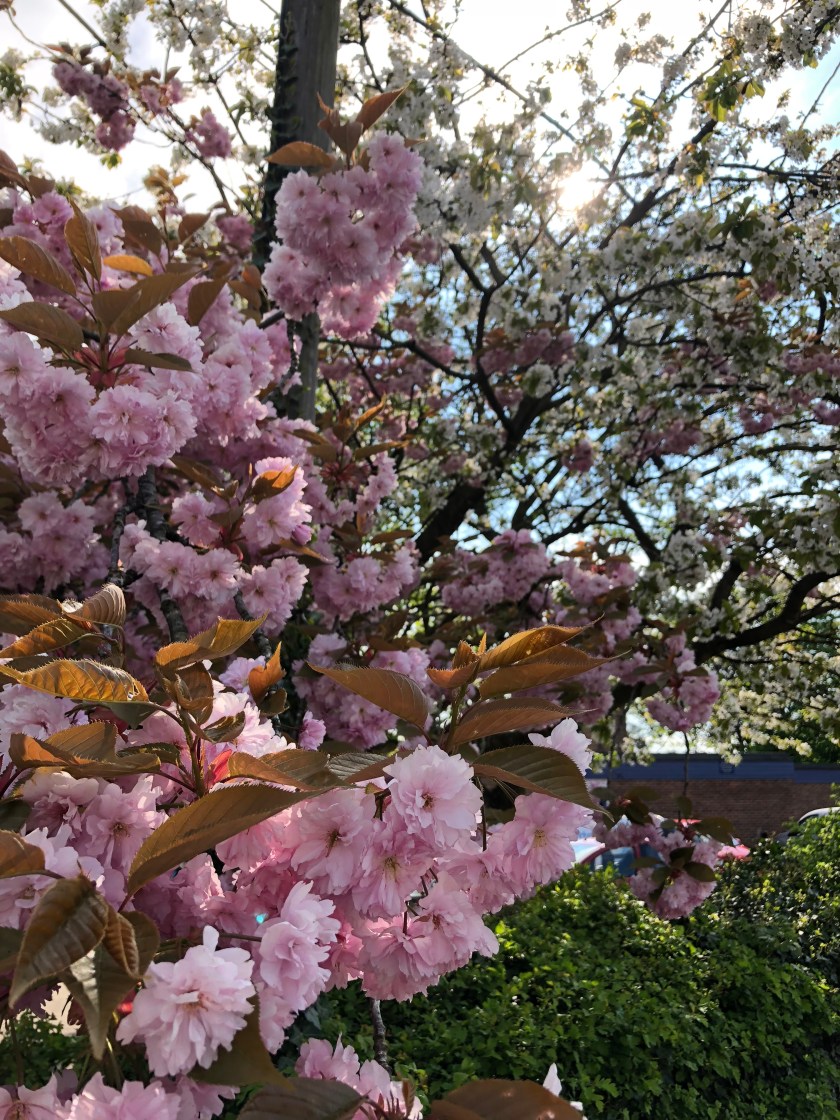
May is my favourite month thanks to the abundance of blossom
F46EF0CB-471E-4338-BF0F-CC1CC2DCA149
May is my favourite month thanks to the abundance of blossom
C710998B-1005-48A5-BB90-8274C15AE1F2
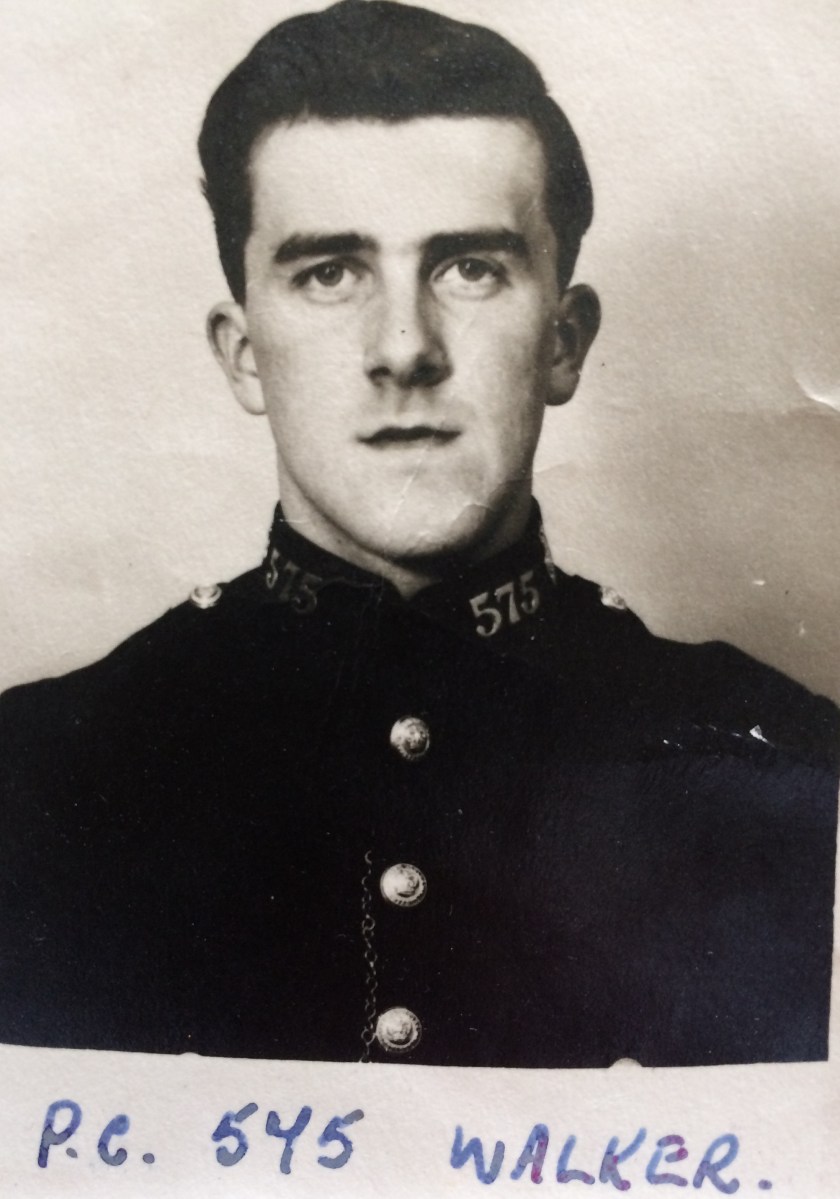
Reader Chris Lumley trained with my dad in 1956 and they had consecutive collar numbers. He was 574 and dad was 575

Ahhhh, May is here! I feel a sense of winter tension being released whenever this month arrives. It is my favourite month of the year, thanks to the abundance of blossom on the trees, the increased activity of our wildlife and the bright yellow fields of oil seed rape which are at the peak of their resplendent yellow glory right now.

We know that we are just about out of the woods, cold weather-wise, and the race is on to see who will be the first to boast about leaving the central heating off for more than 24 hours at a time. On a fine day, we can hang the washing outside knowing it will be dry by the end. When we gather it in, we inhale its unique fresh smell which simply cannot be matched by indoor drying (although sometimes I wonder if my neighbour takes my washing on the line as a sign to burn his garden rubbish).

May was also a favourite of my dad’s, as he explains in his column of 5th May 1979: “I consider this the most attractive month of the year, a time when the year seems to beckon us to enjoy life. Perhaps I am biased because my birthday falls during this month, but I think I am not favouring May for that reason.”

In fact, my birthday is exactly a week after my dad’s, which meant I felt an extra special connection to him, so maybe I am biased. But how can you not love May?

There is much folklore about this glorious month, and country dwellers know to treat it with respect, and not take any fine weather for granted. There is a saying that goes “A hot May makes a full churchyard” and another “Shear your sheep in May and shear them all away”, but the following little ditty is one of my favourites:

“He who bathes in May will soon be laid in clay;
He who bathes in June will sing a merry tune;
He who bathes in July will dance like a fly.”

Going by this, we Yorkshire folk had better postpone our annual baths until at least next month then.

Following my column from three weeks ago where I talked about ‘beastlings’ I had some lovely reminiscences sent in by readers. They are memories that could be lost forever, so by documenting them here, I hope I am doing my bit to preserve them.

Helen Hatton wrote: “I spent many magical hours of my 1950s and 60s childhood visiting a farm in High Farndale. A highlight was being taken in the horse and trap to deliver the milk to the Milk Marketing Board collection point lower down the dale.

“If a cow had calved, a bottle of ‘bisslings’ (a two-pint vinegar bottle), would be dropped off at the other farms that milk was collected from. This would be returned unwashed, but with salt in. I didn’t ever see curds being made but did eat the curd tart made from it. My understanding is that the curd was made by heating the bisslings with milk from the kitchen jug. Raw milk of course! Milking was done by hand at this time.”

And Chris Lumley contacted me with the following: “I grew up on a smallholding near Pickering in Ryedale. We had a small dairy herd and all our milk, except what we used at home, went to the Milk Marketing Board. When one of our cows calved, its milk could not go to the MMB as it was often bloodstained and we called it “bislings”. Mother used it to make curd tarts or ‘cheesecakes’ as you describe. It was also used to feed the newborn calves for their first few days and I never heard it said it was not suitable for this purpose. Like your Dad we still like Yorkshire curd tarts and often buy them in town.”

Amazingly, he also goes on to reveal a connection to my dad: “I joined the old North Yorkshire Constabulary in October 1956 at the same time as your dad. We had consecutive ‘collar numbers’. I was 574 and he was 575. We went through training at Newby Wiske Hall and I was posted to Malton when your Dad went to Whitby…Keep up the good work continuing his column.”

Read more at countrymansdaughter.com. Follow me on Twitter @countrymansdaug

ENDS

This column appeared in the Darlington & Stockton Times  on 3rd May and the Gazette & Herald on 1st May 2019

The butterfly effect

FC2DB3D5-AD8E-4C59-A9C8-4F92643176CD
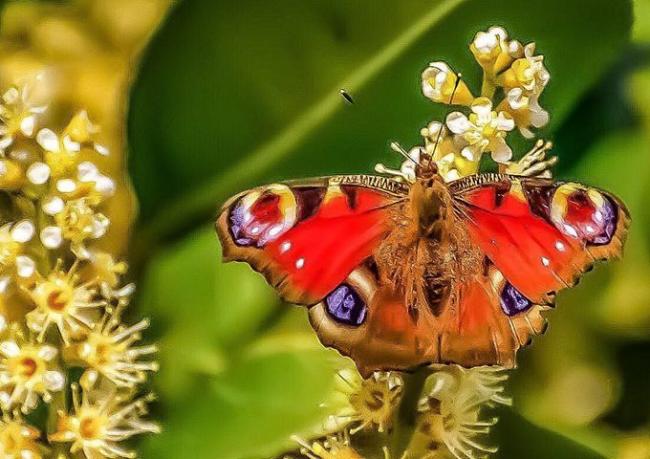
A peacock butterfly, which has seen numbers fall by 58 per cent, according to the Butterfly Conservation Picture: Keely Woodberry

You may recall that round about this time last year I wrote about the dwindling numbers of our beautiful butterfly population, with many familiar species in long-term decline, such as the Small Tortoiseshell and the Common White (large and small).

So I was delighted to hear about a recent report from the charity Butterfly Conservation which stated that, following a prolonged spell of decline after successive poor summers, overall numbers have ‘bounced back’ after the long, warm and dry summer of 2018.

According to the report, numbers of the endangered Black Hairstreak boomed by more than 900% compared to 2017, while the threatened Large Blue was up 58% over the same period. This was attributed to the good weather in early summer, which is when these species fly, along with cold snaps in February and March which will have helped the survival of caterpillars and chrysalises.

The common whites have also fared well, with the Large White up 115% and the Small White 158% after a run of poor years.

Unfortunately, the news is not so good for the Small Tortoiseshell, which was down 38% and the Peacock, which fell by 58%, a worry when you know that the Tortoiseshell’s large namesake is already extinct. The reduction in numbers was attributed the prolonged drought conditions last June and July which were detrimental to the survival of late-emerging caterpillars.

One of the most severely affected was the Red Admiral butterfly which saw its numbers crash by 75% after a good year in 2017. Had he been here, my dad would have been very sad to hear this, having written about this particular species in his column from 28th April 1979. It was there that I discovered that butterflies like the Red Admiral are rather amazing.

We all know about the astounding journeys made by birds from countries like Africa to our shores, but what I didn’t know was that there are a few butterflies that do that very same migratory journey, including the Red Admiral. Although it is officially considered a ‘resident’ species to the UK, it has established itself relatively recently and only in small numbers in the south of England as most cannot survive our cold winters. The UK has 59 species in total, and only two of those are truly migratory, which are the Painted Lady and the Clouded Yellow.

The vast majority of Red Admirals head south in the autumn to warmer climes, where they hibernate, but then return to Europe in late spring when their food sources become abundant again, enabling them to breed.

It’s almost impossible to fathom how something as delicate as a butterfly can make such a perilous crossing, but they fly high on air currents which help to carry them along, expending as little energy as possible. Most will stop and breed along the way in Southern Europe, before continuing further north as the weather here gets warmer. It is unlikely than one individual butterfly will do the whole journey, but like a migrating relay team, they produce offspring en route that will continue the pilgrimage.

Although 2018 was considered, for the most part, good for butterflies, severe weather events like last summer do have significant long-term impacts on our flora and fauna, and butterflies are not out of the woods, with two-thirds of our species showing negative tends over the long term. But there are things we can do in our own back yards to help, and I would encourage you to visit ‘butterfly-conservation.org’ to find out what simple things you can do to help the struggling insect and butterfly population as it is the disappearance of their habitats that is the main cause for their decline.

There is a trend, which I can’t get my head around, of people swapping their natural lawn for artificial grass, and I have also seen fake topiary-style ornaments and hanging baskets adorning some homes. These plastic alternatives might be convenient, but they are not providing any of the essential elements of a natural garden, namely pollen and insects which are essential for the survival of our wildlife. If we let our pollinators disappear, the consequences for the environment and the food chain will be catastrophic.

How awful would it be if, after their perilous journeys across land and sea, these beautiful creatures then disappear because we have decimated their habitats. We mustn’t let that happen.

Read more at countrymansdaughter.com. Follow me on Twitter @countrymansdaug

This column appeared in the Darlington & Stockton Times  on 26th April and the Gazette & Herald on 124th April 2019

Lessons from Dad

87956584-A242-413E-A0CC-C5EF218F977D
The photo of my dad, aged 65, on the inside cover of his novel, The Sniper
7D80F879-1356-43B7-9208-1F991449BE0F
My dad’s 1992 novel, The Sniper

4B929846-7F8E-412A-93FC-FD8234D6083CThis Sunday 21st April was Easter Sunday, and by a rather poignant coincidence, it also marked two years since my dad Peter Walker (aka Nicholas Rhea) passed away. It barely seem possible that 24 months have gone by, and yet the memories of that period are still vivid.

These days, when I think of my dad, it usually starts with a smile, then morphs into sadness as I’m reminded of his loss, and often, a few tears will follow. Grief is a funny old thing. It never leaves, but it does change in nature. You might recall last year’s anniversary when I wrote about being reduced to tears over little things that unexpectedly reminded me of him, such as making mashed potato or eating pizza.

Today, I am happy to report that I can now make mash and eat pizza without having to reach for the tissues.

But I do still have my moments where the gap he has left hits me hard. I have just started to read one of his crime novels, ‘The Sniper’, and on the inside back cover is a lovely picture of my dad taken in 2001 when he was 65. He still looks young and vibrant, and very much the dad I remember growing up.

Looking at that picture reminded me of the chats we would often have about stories he was writing, what was going on in the latest episode of Heartbeat or projects I was working on, and I always enjoyed being able to talk with him about that sort of stuff over a cuppa. And so of course, when I looked at that picture in the back of the book, the familiar process started, with the smile, then the sadness, followed by a few tears at knowing I would never be able to chat over a cuppa with him again.

But those feelings are not as all-consuming as they were in the early days, and although I can’t imagine this sense of loss will ever go away, I know that each moment of sadness will pass. They are just part of the healing process and when they crop up, it’s fine to just let them happen.

One thing that always cheers me up is when I read his column from the corresponding week forty years ago in preparation for my column today. I can’t talk to him in person but he is still teaching me things I don’t know, expanding my knowledge in ways I never imagined possible, and never even considered two years ago.

So this week, true to form, Dad has taught me about a right old mish-mash of subjects from his column of 21st April 1979.

I have learned some folklore relating to long-range weather predictions, namely that if rooks are building their nests high in the trees, it bodes well for the rest of Spring. I must check if they are doing that this year!

He also added notes about the Yorkshire Dialect Society and their newly-released LP which was entitled ‘First o t’sort’. Costing £3.50, it celebrated our county’s ancient tongue through readings and poems. You can still buy the recording direct from the society, either on cassette for £2.50, or CD for £5. The price hasn’t gone up much in 40 years, has it, but sadly I can’t buy a copy as I no longer possess a tape recorder or CD player. Does anybody?

Dad then mentions, with his tongue firmly in his cheek, the infamous (and fictional) Ryedale Henwatching Society, and how members were agitated about the fact that Easter eggs were taking over from real eggs.

And then, lastly, I learned that there was once a greenhouse inside Lincoln Cathedral. It was used as an office so that the vergers could go about their work, sheltered from the cold and draughts, while keeping a watchful eye the cathedral’s treasures. Dad says: “It seems such a brilliant idea that I wonder it has not been more widely used in similar places.”

These days, I think the idea has been adapted by clever architects and engineers as I have seen purpose-built glass office structures within cavernous buildings like cathedrals. I can’t find any reference now to a greenhouse ever being in Lincoln Cathedral, but would love to hear if anyone actually remembers it.

So, having been suitably educated this week, I wonder is there anything that your dad taught you?

Read more at countrymansdaughter.com. Follow me on Twitter @countrymansdauG

This column appeared in the Darlington & Stockton Times  on 19th April and the Gazette & Herald on 17th April 2019

A beastly kind of tart

975F77DA-652D-44F7-BC6F-7EC2B62C98FD
A mother cow and her calf. Mum produces ‘beastlings’, otherwise known as bovine colostrum, in the first days of the calf’s life

As is often the case when I’m looking back at my dad’s columns from 40 years ago, I have come across a word that is new to me, but that has been used in various ways in the north for many years.

That word is ‘beastlings’. At first glance, those unfamiliar with it might think it refers to ‘little beasts’ and indeed, there is a connection, but in the context in which my dad was writing it was something else.

In his column from 14th April 1979 a reader had contacted him about the word. At first, Dad reminded us of a similar word, ‘beatlings’, which were the toasted scraps of fat that were eaten with salt on pig killing days.

But ‘beastlings’ referred to the first milk of a cow that has just calved, before the normal milk comes in, otherwise known as bovine colostrum. When my dad was young, this creamy yellow milk was considered too rich for the newborn, and so the farmer’s wife would instead use it for curd, or beastling puddings.

It makes me wonder why a cow would produce milk that was too rich for its own young. We know that colostrum in mammals contains essential antibodies that help to fight infections and bacteria, and that it is full of nutrients which promote growth and give a baby a healthy start in life. So why was it considered too rich for the newborn calves? Maybe someone reading this knows the answer.

Dad grew up in and around Eskdale on the North York Moors, and there it was a custom to give a bottle full of ‘beastlings’ to friends and neighbours who would then turn it into various desserts, such as rum pudding or cheesecake, which Dad recalls his grandmother calling ‘chissuck’. It seems using colostrum in this way is not unique to this country, and I have found recipes from all over the world for various curd desserts and hard cheeses with this milk as its main ingredient.

There was also a Yorkshire superstition associated with the bottle in which the ‘beastlings’ was delivered. Recipients had to return the bottle, unwashed, to the original owner, otherwise some misfortune would befall the calf.

I do have access to a phenomenal resource of information, and decided to consult it on this occasion to find out more about ‘beastlings’. I am, of course, talking about my mum.

When I asked her, she did know what ‘beastlings’ was, but her family, who came from Lealholm, referred to it as ‘bislings’, and her own mother used it to make ‘bisling pudding’, which was rather like a steamed pancake which they ate with golden syrup.

My own research has revealed a number of alternative spellings. I looked up ‘beastlings’ in the Oxford English Dictionary, but it wasn’t there. However, ‘beestings’ was, and it is another name for bovine colostrum. Other searches threw up ‘beastings’, ‘beeslings’, ‘bisnings’, ‘beastung’ and ‘beisten’, the latter coming from Scotland. I’m not sure from which parts of the country the other words originate, but I presume the spelling is linked to how it is pronounced in the differing regions.

My mum also mentioned that her mother used ‘bislings’ to make Yorkshire curd tarts. These are not to be confused with custard tarts, but are a particular delicacy of our fair county. They are more like a baked cheesecake (or ‘chissuck’), with currants, allspice and sometimes flavoured with rosewater.

The Yorkshire curd tart was a particularly favourite of my dad’s and as a child we would go to Helmsley on market days where a trip to the bakery to pick one up was obligatory. Traditionally, this tart would be baked for celebrations around Whitsuntide, which is the week following Whitsun (or Pentecost), the seventh Sunday after Easter.

I spent a lot of time on a farm in my youth and, as on many North Yorkshire farms, the farmer referred to his cows as ‘beasts’. Therefore it is not a far stretch to assume some may also have referred to their calves as ‘beastlings’, although I can’t remember him using that particular word. However, it is just possible that a quirky term like ‘beastlings’ for bovine colostrum comes from this connection with the young beasts.

Can any readers remember using the colostrum in the ways I describe above or, in fact, still use it to this day?

Read more at countrymansdaughter.com. Follow me on Twitter @countrymansdaug

This column appeared in the Darlington & Stockton Times  on12th April and the Gazette & Herald on 10th April 2019

Clever old ewe

907F0BC9-756B-4CF4-B385-413AD12ECF8B
Mum with her lambs in the degradable jackets (Pictures from agrimin.co.uk)
7FF5D599-2F09-4D6A-91D0-80076324E1F9
A lamb is kept warm with a degradable jacket

I’m hoping that as we are now into April we have seen the last of the really cold weather, and that there is no more snow to come, particularly as the moors and hills of North Yorkshire are scattered with lambs.

Snow is a particular threat to young livestock, as my dad explains in his column from 7th April 1979 which followed a couple of weeks of really wintry weather. Apparently, the arctic conditions had led to a significant loss of life among sheep and their recently-born offspring.

He talks about one dales farmer who bought a large quantity of plastic jackets which were designed to protect the lambs from the cold and wet. They would wear them for the first critical hours, after which they ‘melted’ in the sun (the jackets that is, not the lambs).

This to me sounded quite far-fetched, but when I looked into it, I found that it is absolutely true and these little jackets are still used today. We wouldn’t use the word ‘melted’ nowadays when explaining how they break down, but of course when Dad was writing his piece, words relating to environmentally-friendly materials were not in such common usage.

After a lamb is born, the farmer or shepherd will dry it and clean it up, then put on one of these polythene jackets. The lamb then wears it for the first few days that it is exposed to the open air until it naturally sheds, or bursts out of, the jacket. As they are made from degradable materials, they decompose within a few weeks thanks to the ultraviolet rays in sunlight.

Although the are some reports of ewes rejecting or even attacking lambs wearing these coats, on the whole they are a very effective way of helping the youngsters survive during their first few days of life. The jackets also have the added benefit of deterring foxes who might fancy a lamb chop for tea. It seems that foxes, unlike humans, don’t like their food when it is wrapped in plastic. Maybe we could learn a thing or two from them.

Another interesting thing Dad mentions is an experiment carried out by scientists who wanted to determine how ewes and lambs find each other again once they become separated. Do they recognise each other by sight, or by sound?

In the experiment, three ewes were were taken away from their three-day old lambs and placed in pens at the end of a paddock. The lambs were kept out of sight for half an hour, mixed in with a pen full of other ewes and lambs, all bleating and baa-ing. Then, one by one, the lambs were released to see if they would find their way back to their mothers at the other end of the field. The test was then repeated with more than 50 lambs, and over 70% of them had no trouble finding their way back to their mothers.

Of course, in this instance, we still don’t know whether the lost lambs used the sight or sound of their mothers to guide them, but in a second experiment, the ewes were hidden by a tarpaulin. So the lambs only had the sound of their mother’s bleating to go on, and 60% of them found their way back to the right parent (I’m not sure of that counts as success or not!).

Sheep have an undeserved reputation for being rather stupid, when in fact they have shown they have brain power equal to that of monkeys and have been known use clever ways to seek out better sources of grass. In fact in 2004, some were spotted rolling over a cattle grid to get to the tastier pasture on the other side (my children display similar tactics when seeking out junk food).

A quick thank you to Maureen Dillon who contacted me about my piece about clover and shamrocks from three weeks ago. She says that clover has a white speck at the centre while shamrocks are all green. Does that apply to all species of clover I wonder? If you know the answer, do get in touch.

By the way, I’m very excited to be guest-presenting ‘God’s Own Countryfile’ on BBC Radio York on Wednesday April 10th from 7pm-9pm. Do listen in if you can, or catch up on the BBC Sounds app.

Read more at countrymansdaughter.com. Follow me on Twitter @countrymansdaug

This column appeared in the Darlington & Stockton Times  on 5th April and the Gazette & Herald on 3rd April 2019

A foolish thing to do

This Monday will be April Fool’s Day, and my dad absolutely loved to spot the false and outlandish stories that journalists would come up with to attempt to trick their audiences.

Dad was well practiced in April foolery, using his columns to try to hoodwink his fans into believing some very daft stories. It was certainly the case in his piece from 31st March 1979, where he claimed that the Home Office had announced that we would be converting to ‘metric time’ in the near future.

This would mean that one second would become known as a ‘milliday’, a minute would be a ‘centiday’, and an hour became a ‘deciday’. Although a day would stay as a day, a week would become a ‘decaday’, a month a ‘hectoday’ and a year a ‘kiloday’.

He describes how the the new system would be implemented, along with the impact it would have on working hours, pay, pensions, holidays and the like, and that the Government estimated that it wouldn’t be fully up and running for five years, with the anticipated launch date being 1st April 1984.

I’m not sure children these days perform many April Fool’s pranks, but in the 1980s when I was a teen, teachers across the land must have dreaded it because we always used it as an excuse to play tricks. Most teachers took it in good faith, and the jokes were pretty harmless, like hiding the board rubber or chalk (yes, it is that long ago!), or taking away the teacher’s chair.

But I do remember an occasion when one teacher was not impressed at all, and I was the one who bore the brunt of his wrath. Our maths teacher, Mr O’Donoghue, wasn’t the sort of teacher you would normally choose to prank as you couldn’t be sure he’d take it well, but in our third year (or year nine in new money), he became our form teacher. So we would all congregate for register each morning and lunchtime, and it was in these pockets of time that we got to know him a bit better.

On April 1st 1981, after Mr O’Donoghue had been our form tutor for around seven months, we thought we’d bonded well enough to be able to play a trick on him. So we decided to leave the classroom door ajar just enough to balance a wooden blackboard rubber on the top, so that when he walked in, it would drop on his head. It was a well-known, tried and tested prank.

It worked like an absolute dream. He strode into class, only to jump back as this unexpected missile hit him from above.

We all collapsed in fits of laughter for the first few seconds, until Mr O’Donoghue erupted like Mount Etna.

‘RIGHT, ON YOUR FEET AND STAND BEHIND YOUR CHAIRS!’ he bellowed.

I was miffed that he’d had such a sense of humour failing, and begrudgingly got to my feet. I was the last to do so, and as I grumpily and noisily shoved my chair under my desk, the clatter of it of it echoed around the otherwise silent class.

This act of defiance incensed him even more, and he immediately issued me with a detention which, for someone who hardly ever got them, was the highest of humiliations.

Thing thing about Mr O’Donoghue, though, was that despite the odd angry outburst, he was a kind and gentle soul who didn’t really like handing out punishment. Later that day, he saw me in the school corridor and beckoned me over.

“Forget the detention,” he said, “I know you didn’t do it on purpose.” I felt like a convicted criminal saved from the gallows. And also a convicted criminal who got away with it, because, of course I had done it on purpose.

Funnily enough, that wasn’t my last run-in with Mr O’Donoghue. A couple of years later, a friend and I were play-fighting at the top of some stairs when I lobbed a pencil case at her and it missed and went flying over the bannister, and guess who’s head it landed on? In almost an exact copy of the incident two years earlier, Mr O’Donoghue bellowed at me, issued a detention, then withdrew it later in the day.

So if you’re reading Mr O’Donoghue, thank you for the reprieves, and I promise not to throw anything anywhere this April Fools day.

Read more at countrymansdaughter.com. Follow me on Twitter @countrymansdaug

This column appeared in the Darlington & Stockton Times  on 29th March and the Gazette & Herald on 27th March  2019

Mother used to say

AE211248-6412-40C8-B211-47DC9DB6F044
Me at prime teen tantrum age 

As I write this, I’m listening to the March winds blustering and howling in the trees outside, and thinking that the month’s reputation as a windy one is justified.

There is plenty of folklore surrounding wind, which is understandable when you think that our distant ancestors needed to find some explanation for this invisible weather phenomenon. They would have had no idea of the origins of a force that could gently dry their washing one day, then destroy their homes the next.

Obviously, wind was an extremely important source of energy in the days before motorisation, and early explorers of the high seas had a number of charms they used to summon it when needed. You’ve probably heard of whistling down the wind (which now refers to something being done fruitlessly), but woe betide you if you were caught whistling on a boat at any other time, as you risked attracting a hurricane.

Witches used to ‘sell’ wind to sailors. They would give them a piece of string with three knots tied in it to take on board, and when wind was required, they’d undo one of the knots. But they always hoped to not have to reach the last knot, as untying that would summon a gale.

In his column from 24th March 1979, Dad recalls parents telling their children that if they pulled a face when the east wind was blowing, the ugly expression would be fixed there forever.

It made me think back to other things that our parents, especially our mothers, would tell us to scare us into doing what we were told. One was if you sat too near to the TV you’d get square eyes, or if you looked at the sun while cross-eyed, you’d stay like that. Another was that if we swallowed our chewing gum, it would stay in our stomachs forever, and of course, if you eat your carrots, you’ll be able to see in the dark. I’ve eaten plenty of carrots over the years, but can’t say that I ever noticed an improvement.

There’s a whole host of sayings which, pre-parenthood, you swear never to use yourself. Then along come your children, and before you know it they’re tumbling out of your mouth like marbles down a hill. It’s a cycle that will never be broken, words and phrases we pass from generation to generation, because in the heat of an argument with your child, when they are pushing you to the outer extremes of your patience with never-ending cries of “But why?” or “It’s not fair!”, being able to pluck that ready-made conversation-ending logic out of the air is a blessing.

Think back to how many times your mum or dad said “Because I said so!” or “Life isn’t fair” after one of your teen tantrums. It’s only when you’re a parent yourself on the receiving end of such a tantrum, and after you’ve exhausted all your reasons for refusing whatever the request was, that you then understand why “Because I said so!” comes so easily to the lips.

I’ve lost count of how many times over the years I’ve informed my sons of the poor starving children in various nations who would be so grateful to have a plateful of broccoli and green beans, or asked them, “How do you know you don’t like it if you don’t even try it?”

Another phrase I carried with me from childhood, was “Don’t speak with your mouth full” and that regularly echoes around our dinner table. But I’ve just thought of one that I don’t use now, but was told as a child, and that is “Don’t put your elbows on the table.” I’m not sure why you shouldn’t do that, apart from the fact it was just seen as bad manners. But our table is often the scene of lengthy after-dinner chats, and it’s natural to lean on your elbows while listening. I still wouldn’t put them on the table while others are eating though (well, not if my mum is looking anyway).

When I was little, I was self-conscious of the hairs on my forearms, until I was told that having hairy arms meant that you were strong. To this day, I have a reputation on the tennis court for hitting the ball rather hard, so I think of all of them, that one must be true.

Read more at countrymansdaughter.com. Follow me on Twitter @countrymansdaug

This column appeared in the Darlington & Stockton Times  on 22nd March and the Gazette & Herald on 20th March  2019

The Luck of the Irish

I mentioned some time ago that one of the things I have started doing since my dad died is to make my way through his substantial back catalogue of books. As many of them were written when I was very young, I only ever read a few.

In June last year, I was about a third of the way through his tenth novel, Carnaby and the Saboteurs, when, turning the page, I found a pressed four-leaf clover. I must admit, I was rather overcome at the sight of it, as it felt like my dad was sending me a message of good luck from beyond the grave.

The book was published in 1970, and so it made me wonder whether that little clover had been hiding between the pages for almost 40 years. I have no way of knowing, but that tiny, dried and flattened weed suddenly became very special to me.

Some people, myself included, are confused over the difference between a clover and a shamrock, and on Sunday 17th March, there will be many a trefoil displayed both in Ireland and further afield as the Celtic nation commemorates the death of their patron, St Patrick.

As my dad writes in his column from 17th March 1979, St Patrick, who is believed to have been born in around AD385, is credited with bringing Christianity to the country and is said to have worn the three-leaved plant as a symbol of the Holy Trinity. The story goes that while preaching to pagans, he used the leaf to explain the concept of one almighty God, but with three entities within him – God the Father, God the Son and God the Holy Ghost. In the same way, the shamrock had three separate small leaves that joined together to make the whole.

He chose the perfect symbol, as the shamrock was already sacred to the pagans, and some cite it as the reason why he was so successful at converting them to Christianity.

But going back to my four-leaf clover, I decided to find out what the difference between a shamrock and a clover is, if there is one. Its name comes from the Gaelic ‘saemrog’ which means ‘little clover’ and having done some digging, I now know that a shamrock is definitely a member of the clover family. But as there are many species of clover, the burning question is which family does a true shamrock actually come from?

It seems that even experienced botanists differ over that question and they cannot agree which family of clovers the true shamrock derives. We do know that all shamrocks are clovers but not all clovers are shamrocks, and the general consensus is that a four-leaf version can never be a shamrock.

That might come as a surprise to some of our Irish-American friends, who have been known to show their pride in their Celtic ancestry by displaying a four-leaf clover on St Patrick’s Day, believing it to be a shamrock.

And there is even some confusion among the Irish in their homeland as, according to a 1988 survey by the National Botanic Gardens in Dublin, there were four different species that people displayed as shamrocks, only three of which were actually clovers with the potential to be true shamrocks (white clover, red clover and hop clover). The fourth wasn’t a member of the clover family at all, but a lookalike called the black medick. This one can be more easily grown as a house plant, and therefore florists and shops stocked up on it so that eager consumers would buy them as a convenient decoration for St Patrick’s Day. I wonder if the purchasers realised that the verdant main feature of their patriotic display was actually an imposter?

I would be interested to hear from any Irish friends whether they have strong views, or a definitive answer, on what species of clover constitutes the ‘true’ shamrock.

In the meantime, I have made sure that my special four-leaf treasure has its own protective box so that it doesn’t come to any harm. It’s such a delicate thing that I’m terrified it might disintegrate if I handle it too much. And hopefully, with my dad’s blessing from above, it will bring me some good fortune in the future. I’m not asking for much, but something along the lines of a huge lottery win will do (Are you listening, Dad?).

Read more at countrymansdaughter.com. Follow me on Twitter @countrymansdaug

ENDS

This column appeared in the Darlington & Stockton Times  on 15th March and the Gazette & Herald on 13th March  2019