From vermin to ermine

1F48FEA4-4C57-41A3-848B-AE46DD4FF51B
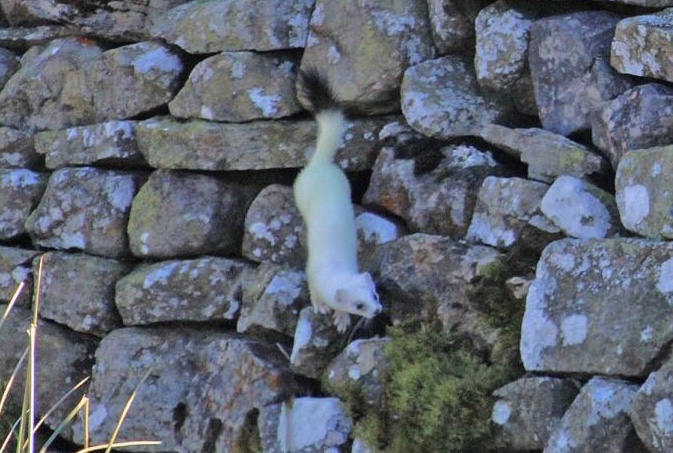
A stoat in its winter white coat. Picture by Liz Hornby

I’m getting quite excited as it is approaching 29th March, the date when I will be able to pick up my tennis racquet again and play outdoors. Apart from not being able to see my mum, playing tennis has been one of the things I have missed most during the latest lockdown. I play in the village of Coxwold, which is not far from the ruins of Byland Abbey.

The road between Coxwold and Byland was mentioned by my dad in his column from 21st March 1981 when a reader contacted him suggesting they’d seen a stoat that Dad had talked about a few weeks earlier. The one Dad had seen had been totally white, with just the tip of its tail black.

Stoats can shed their fur, but normally only change colour if the conditions warrant it. So in colder climates where there is a lot of snow such as in North East Scotland, a stoat will shed its summer coat of chestnut brown, turning white to blend into its frosty surroundings. Further south, where winters are milder and there is little snow, they keep their brown coats so that again, they are more easily camouflaged within the landscape. It was unusual to see a pure white stoat as far south as North Yorkshire especially, as Dad says, the winter of 1980-81 was not particularly cold.

By the time the reader had spotted the stoat that he believed was the same one as seen by my dad, its summer coat had started to show through the white, and this patchy appearance is known as ‘piebald’. Some stoats keep their piebald coats throughout the year.

The white pelt of a stoat is known as ‘ermine’ and down the centuries it was a highly prized piece of fur, not just because it was soft and thick, but also because it was so hard to get hold of. Apparently, for the coronation of King George VI in 1937, 50,000 ermine pelts were imported from Canada just for the occasion.

I always get excited when I see a stoat dart across the road in front of me, as it doesn’t happen very often. But I’m usually confused as to whether it is a stoat, or its relative, the weasel. I wasn’t very sure of the difference but, as is often the case, my research for this column has served to educate me.

The stoat and the weasel both belong to the ‘mustelid’ family of mammals, which refers to those that have long bodies and short legs, and otters and mink are also mustelids. Although their colourings are similar, the stoat is larger than the weasel, at between 24-32cm in length, with a tail ranging from 9-14cm. The weasel, on the other hand, is the UK’s smallest carnivore, at just 17-22cm long, with a shorter tail of just 3-5cm.

Often, we just get a quick flash of them when we spot them in the countryside, so what you need to look out for is the way they run. Stoats have a bounding gait, arching their backs as they go. Weasels, on the other hand, simply run, keeping their bodies flat and close to the ground. Also, if it has a black tip at the end of its tail, then it is definitely a stoat.

Both species are common throughout the UK, and can been seen all year round. They are fearsome hunters, and can kill animals much larger than themselves. Despite its diminutive size, a stoat will kill a rabbit with a single bite to the base of its skull. Weasels, because they are so small, raid the tiny burrows of small rodents, like mice, to catch their prey. Both can be seen hunting day and night.

Another fact I discovered while researching this column is that mink are not native to this country, but were imported from America and bred in fur farms, from which they escaped in the 1950s and 60s. As they were such excellent hunters and breeders, with a long lifespan of up to 12 years, they soon established themselves and are now quite prolific. They are a threat to our native water vole, the females being small enough to raid the burrows of these little rodents. Wildlife conservation organisations are on the case though, so hopefully our watery native might once again bounce back.

Contact me, and read more, at countrymansdaughter.com. Follow me on Twitter @countrymansdaug

This column appeared in the Darlington & Stockton Times on 26th and the Gazette & Herald on 24th  March 2021
Fishing for words

5593206C-E6E3-4C85-9490-84B588314C44
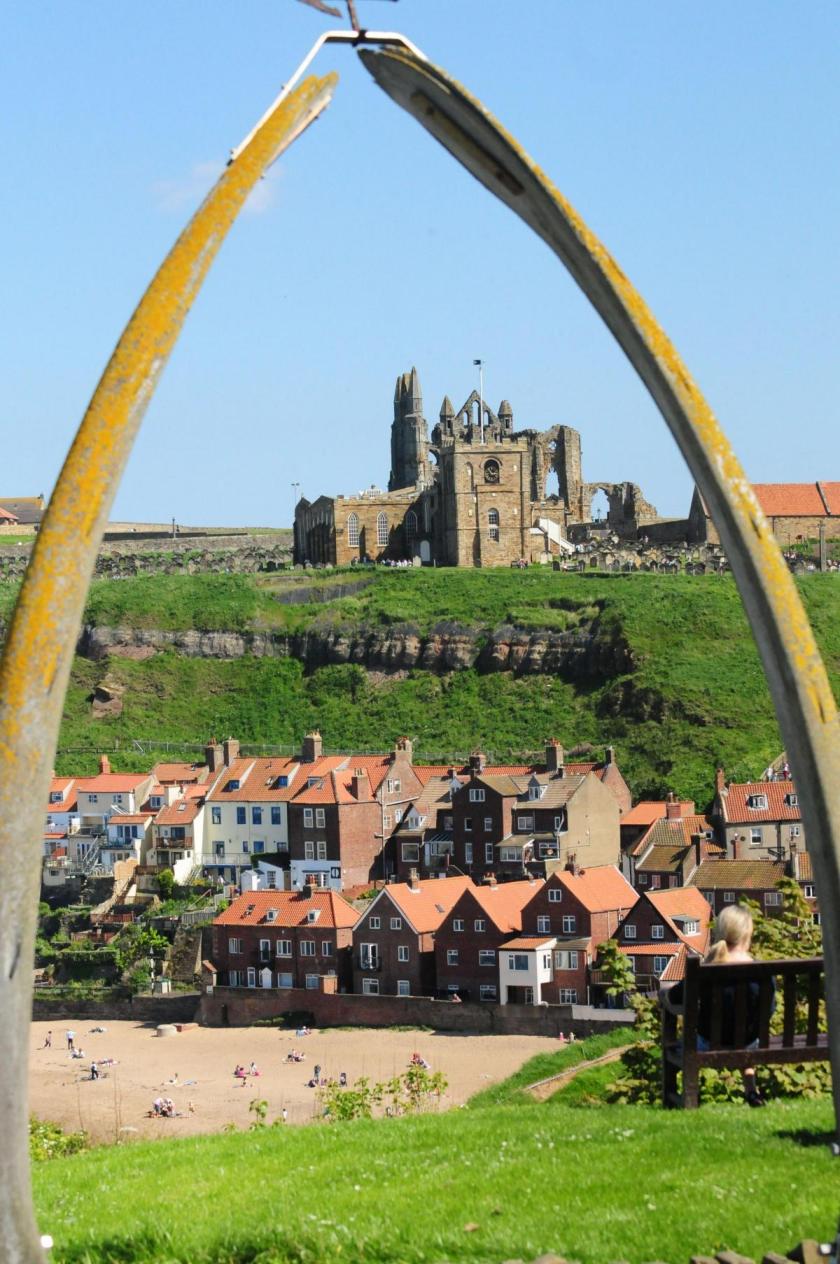
St Mary’s Church, Whitby, with the ruins of Whitby Abbey behind it. Picture by Martin Oates 

In my dad’s column from 14th March 1981, he talks about a poem written by a woman called Susan K Phillips who was born near Boroughbridge in 1831 and who often spent the summer months in Whitby. He was talking about her work ‘The Whitby Bells’ and discussing whether the title referred to the bells of St Mary’s Church, which sits atop East Cliff.

He came to the conclusion that they were the bells mentioned in the poem:

‘The Whitby bells, so full and free,

They ring across the sunny sea,

That the great ocean god, who dwells

‘Mid coral groves and silvery shells,

Wakes to the summons joyously.’

Mrs Phillips had several collections of poetry published in the mid-1800s and became known as the ‘poet of the fisher-folk’ because many of her works celebrated the lives of the men and their families who were such an important part of coastal life.

I didn’t find a great deal of information about her online, but I did come across an obituary written not long after her death at the age of 66 on 25th May 1897, in which the writer said: “She was a frequent visitor to Whitby and was beloved by the rough, but kind-hearted, fishermen. She was a true friend to them in their time of sorrow, and in the hard lot of those who are engaged on the perilous waters of the North Sea.”

Mrs Phillips became a widow herself just twelve years into her marriage to the portrait artist Henry Wyndham Phillips and was no doubt greatly empathetic to the plight of the wives of fishermen who were drowned at sea. One of her most moving poems is called ‘Lost With All Hands’ and when you read it, you can’t help but imagine that she must have witnessed the devastation of families whose loved ones did not return. The poem tells of a wife preparing her small home for Christmas, with the Yule candle waiting to be lit by the husband who never comes back.

The title of another, ‘The Fisherman’s Funeral’ is self-explanatory, and describes how he is laid to rest up on the cliff top, presumably in St Mary’s graveyard:

‘And the widow’s sob, and the orphan’s wail, jarred through the joyous air;

How could the light wind o’er the sea blow on so fresh and fair?

How could the gay waves laugh and leap, o’er sand and stone,

While he, who knew and loved them all, lay lapped in clay alone?’

While researching this, I also came across a picture of the stone memorial cross that stands at the top of the 199 steps up to the church. Erected just one year after Susan Phillips’ death, it is dedicated to Caedmon, who is credited with composing the first Old English poem ever to be written down.

Caedmon, a reportedly tuneless, uneducated and illiterate man, lived with St Hilda’s monastic community in the 7thcentury at Streoneshalh, which was the predecessor of today’s Whitby Abbey. He was a herdsman and tended to the animals, sleeping with them in their sheds. One night he had a dream in which he was visited by an angel who told him to compose a hymn about ‘The Creation’. He rushed to tell Hilda, and despite the fact he was not known to be able to sing, immediately sang the hymn in a ‘heavenly voice’. Hilda urged him to write down the words which, miraculously, he could also suddenly do.

Encouraged by the abbess, Caedmon became a monk and began to write many works, hymns and poems about Christian life. His story was told by the Venerable Bede in his 8th century ‘Ecclesiastical History of the English People’. Bede included a Latin translation of the words of Caedmon’s original hymn which became known as ‘God the Creator’. It was subsequently translated back into Old English, so it not possible to know how true it is to the actual words penned by Caedmon. No version of the original is still in existence. Caedmon is said to have died in the monastery hospice in AD 680. As he had a premonition of his own death, he was able to gather his friends and loved ones around him as he took his last breath.

Despite Bede’s account describing Caedmon as a prolific writer, ‘God the Creator’ is the only example of his work that still exists.

Contact me, and read more, at countrymansdaughter.com. Follow me on Twitter @countrymansdaug

This column appeared in the Darlington & Stockton Times on 19th and the Gazette & Herald on 17th  March 2021

Let’s March into Spring

F22B108D-1A64-4B97-B226-C5DF249557F8
Daffodils are an uplifting emblem of Spring
F24A415E-D492-44E3-AEA6-61D735A32779
The wonderful Spring weather during the first lockdown last year allowed me to get out & enjoy the countryside on my bike

Isn’t it lovely to finally have the feeling that we have seen the back of winter (although I am touching wood as I write this because it is not unusual for winter to still have the last laugh and send one final ferocious slap in March). For a number of reasons, one being the current lockdown, this one has seemed particularly drawn out and so the longer days, the lighter nights, the buds on the trees, and the emergence of long dormant plants offer us a sense of hope that better, warmer weather is not far away.

I was reading a column my dad wrote from March 1978 where he explained how difficult he found it to adequately describe these fascinating weeks when the countryside starts to wake up and come back to life, and the feelings that it generated within him. He instead resorted to the writings of others whom he thought did a better job, such as these words from Alexander Pope:

‘In that soft season, when descending showers

Call forth the greens and wake the rising flowers;

When opening buds salute the welcome day

And Earth relenting feels the genial ray.’

And these from H.G.Adams:

‘A bursting into greenness,

A waking as from sleep,

A twitter and a warble,

That make the pulses leap;

A watching, as in childhood,

For the flowers that, one by one,

Open their golden petals,

To woo the fitful sun,

A gust, a flash, a gurgle,

A wish to shout and sing,

As, filled with hope and gladness,

We hail the vernal Spring.’

Just reading those short verses brings a smile to my face and a sense of hope that my favourite season of the year is just around the corner.

It is well documented that the arrival of Spring brightens our moods, and Seasonal Affected Disorder (SAD) has been a recognised condition since the 1990s. This is where it is believed that a reduction in exposure to sunlight, longer nights, colder days and extended periods of bad weather can cause some people to suffer melancholy, lethargy and even severe depression. It has its own entry on the NHS website, with treatments ranging from increasing outdoor activity, lightbox therapy, counselling and antidepressants.

But a large-scale US study published in the journal ‘Clinical Psychological Science’ in 2016 casts doubt on whether it is a bona fide condition. The study showed that levels of depression in adults were consistent across different latitudes, seasons and levels of exposure to sunlight, and that they didn’t increase in winter.

Of course, that may be true, and I do wonder if there are people who get depressed particularly during hot sunny weather? Not everyone likes the heat. The thing is, there are people I know who are definitely less happy in winter, and if sitting in front of a lightbox helps, then why not?

I recently heard that the light emitted from the screen of a tablet or mobile phone has the same effect as daylight, so if you are struggling to get to sleep at night, then you need to stop looking at your screens at least an hour and half before you go to bed. I’m not very good at that, and often find myself tuning in to something on my tablet late at night, and even occasionally fall asleep while watching. I also know my boys definitely do not switch off their screens until just before they go to sleep. But we still seem to manage to nod off fairly easily, thankfully.

I can imagine that some may have found this latest lockdown more difficult thanks to the wintry weather and those of us forced to stay at home have spent far more time inside staring at screens than we would otherwise do. First time round, which unbelievably is almost a year ago now, we were blessed with a lot of fine, dry days, so it was easy to get out on walks and bike rides, which hasn’t been the case this time around.

Thankfully, as I write this, the signs are that the restrictions will soon be easing and, fingers crossed, we might be able to return to some kind of normality, just as the warmer, brighter days of Spring are upon us.

Now wouldn’t that be welcome!

Contact me, and read more, at countrymansdaughter.com. Follow me on Twitter @countrymansdaug

This column appeared in the Darlington & Stockton Times on 12th and the Gazette & Herald on 10th March 2021

Just a Stone’s Throw

3AF2C023-BD28-414A-B409-F916A4F130C4
The Yorkshire Dales are criss-crossed with hundreds of dry stone walls, some possibly dating from the 15th century and earlier

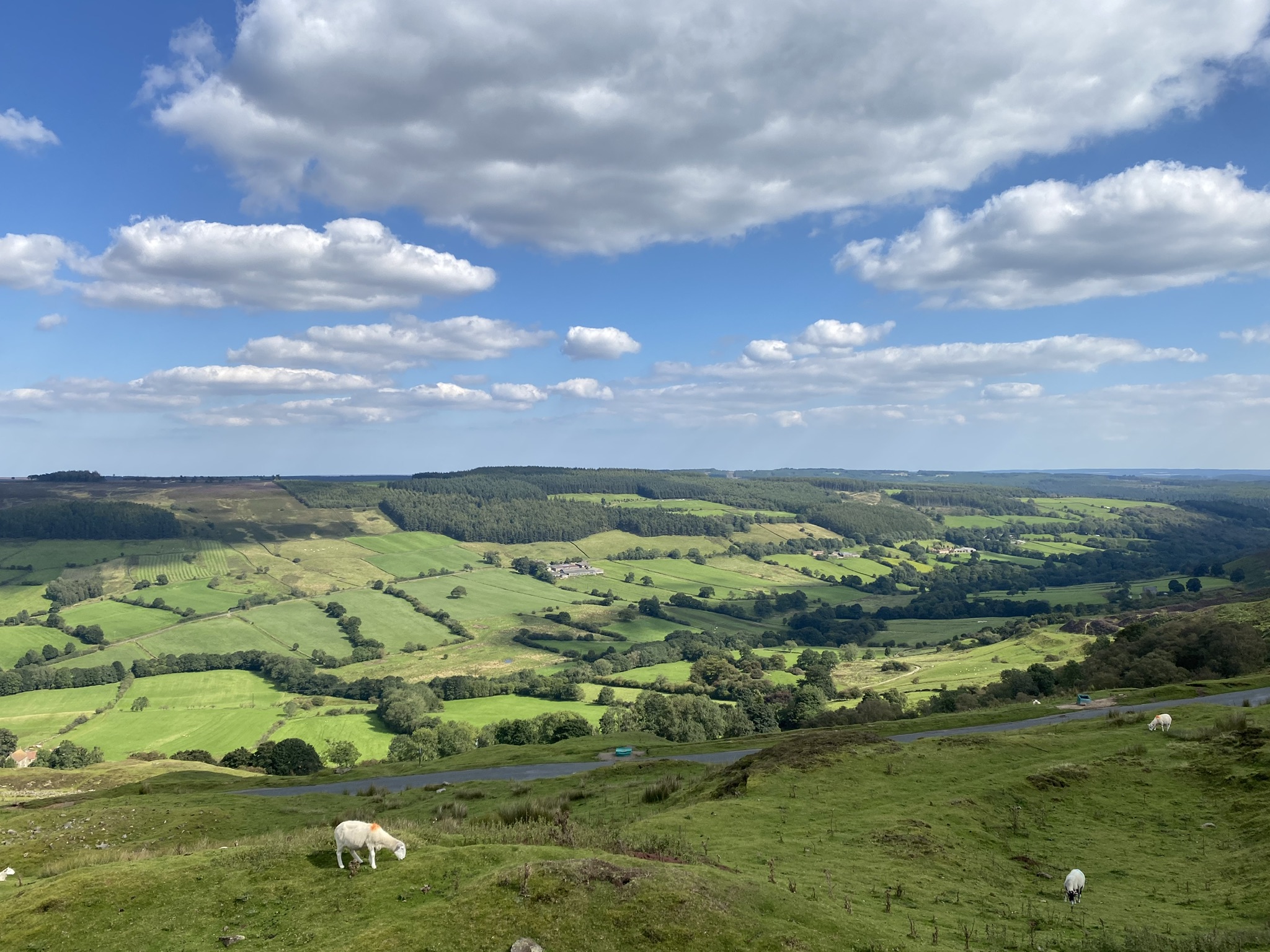
One of the most identifiable features of the Yorkshire Dales and North York Moors is the dry stone wall that is as synonymous with the landscape as the sheep it is built to contain.

It’s amazing to think that some of these walls have been around for hundreds of years, built so sturdily that they still do the job as well they did when they were first constructed, despite the fact they have nothing but gravity, friction and the skill of the builder to hold them up. Part of their longevity is down to the fact that they move and give when battered by the elements, with rain, wind and snow able to pass through as well as around them.

There is evidence to suggest that Britons were building dry stone walls since before Roman times, often as a way of keeping predators away from settlements. Some early examples in the Yorkshire Dales have distinct overhanging top stones which it is believed were designed to stop wolves leaping over them because the design died out at the same time as wolves became extinct at the end of the 15th century.

It was during the medieval period, as people moved to live on higher ground, that they became very popular. The higher you lived, the fewer the trees that grew there, and therefore less wood was available to build a structure to contain your livestock. But stones were plentiful, even though it was a laborious and backbreaking process, digging the rock out of the ground then transporting it by cart or sledge to wherever it was needed.

Medieval monks also favoured the technique during the construction of their churches and abbeys, and fine examples can be seen at Fountains Abbey near Ripon.

As the feudal system in England died out, common land was divided up during the period of ‘enclosure’ in the 18th and 19th centuries and private owners became responsible for their own parcel of land, which in upland areas was marked out by dry stone walls.

As my dad mentions in his column from 28th February 1981, the strength of the wall depends on it having good foundations and correctly-placed ‘through’ stones. A through stone is a larger piece that spans the full width of the wall and is paced at regular intervals along and up and down the wall. It keeps smaller stones below it place, and increases the stability above it.

The shape of the wall is like the letter A, wider at the bottom then gradually narrowing towards the top. Stones are sorted into sizes, with those that will make suitable through stones set aside. A channel, slightly wider than the wall, is first dug out of the ground, up to a foot deep, and the largest stones are placed in it for foundations, with small stones filing the gaps. A skilled craftsman will know which shaped stones should go where, where to put those with curved edges, and where to put those with more angular shapes. Once it is built, it is often finished with a tightly packed row of stones placed vertically with curved edges pointing up.

The whole lot will then stand for many, many years, without any need for cement or mortar, with simply gravity and the weight of the stones themselves holding it all in place. They become a rich habitat for a whole host of flora and fauna, with creatures like field mice, shrews, hedgehogs and insects using them for shelter, while birds will nest in them, and hunters will perch atop to spy for prey.

They also support various species of moss, lichen and wildflower, each one flourishing in its own mini ecosystem that evolves on the part of the wall that suits them. Some will be found on the cooler, windy, wet, north face of a wall, while others will enjoy a warmer, drier, south facing side.

In North Yorkshire we have 13,000 miles of dry stone wall, while nationally there are almost 120,000 miles. Unfortunately, only a relatively low percentage, 13%, are in good condition, with 17% in a state of advance decay. A whopping 70% are considered derelict.

Thankfully, there are still skilled craftsmen out there continuing to pass on their art, teaching others how to build with courses, video tutorials, and workshops, helping to preserve and maintain this wonderful feature of our historical landscape.

Contact me, and read more, at countrymansdaughter.com. Follow me on Twitter @countrymansdaug

This column appeared in the Darlington & Stockton Times on 5th and the Gazette & Herald on 3rd March 2021

All in a game

3D5AFFE4-DD3D-413A-9D75-E8B6A21E9A9A
We played lots of playground games when I was at primary school in Ampleforth in the 1970s (I’m sitting in the middle of the front row in a fetching waistcoat)

I live not far from a school and I can hear the happy sounds of the children in the playground enjoying the respite from lessons. I often wonder what kinds of games they play, and whether they still enjoy those that my generation did as youngsters. 

There was a whole host of them, the rules not written down, but we all knew what to do, such as Wallflower, Leapfrog, Kiss Catch, Cat’s Cradle, Marbles, Conkers, Hopskotch, British Bulldogs, and Stuck in the Mud. In his column from 21st February 1981, my dad describes games from his own youth, and one that he calls ‘Sheep and Wolf’ sounds very similar to what I would call ‘What Time is it Mr Wolf?’

In Sheep and Wolf, one person would be a shepherd and another the wolf, while everyone else was a sheep. The sheep and shepherd would stand facing each other at either end of the playground while the wolf would loiter at the side. The shepherd would shout ‘Sheep, sheep, come home’ while the sheep replied, ‘No, no, we can’t, there’s a wolf.’ After this has been repeated a few times, the shepherd then says, ‘The wolf has gone home’ and the sheep then have to race across to the shepherd without getting caught by the wolf. Whoever got caught would become the next wolf. 

‘What Time is it Mr Wolf?’ was similar although there was no shepherd. One person was the wolf at one end of the playground facing away from the sheep at the other. The sheep would ask ‘What time is it Mr Wolf?’ and the wolf would say a time, and the sheep would creep forward. This would carry on a few times, with the sheep getting closer and closer, until Mr Wolf would suddenly reply ‘It’s dinner time!’, and turn around to chase the sheep.

Some of these games meant that you could target a boy or girl that you liked, and I remember not trying too hard to run away if the wolf was a boy I had taken a shine to.

When we were very young it was ‘The Farmer’s in his Den’. You all stood in a ring holding hands with everyone else singing the well-known song. The farmer, who was in the centre, chose a ‘wife’, usually a girl he liked, then the ‘wife’ chose a ‘child’, the ‘child’ chose a ‘nurse’, the ‘nurse’ a ‘dog’ and the ‘dog’ a ‘bone’, and at the end, for some reason I have yet to fathom, everyone patted the ‘bone’. Some of us were rather over-enthusiastic with the bone-patting and teachers occasionally had to intervene!

A game from Dad’s childhood was called the ‘Sally Waters Kissing Game’ (Others have it as ‘Sally Walker’, but who was this mysterious lass, I wonder?). The girls danced around a circle of boys, and one boy had to choose a girl and the rest would form a ring around the pair and everyone sang:

‘Why don’t you marry the girl you love?

Why don’t you marry the girl?

You’ve got the ring, and that’s everything,

Why don’t you marry the girl?’

There was a similar game known as Mana, Mana, Minetail, or Kissing in the Ring. Everyone stood in a circle, and each boy in turn had to call the name of a girl, saying ‘Mana, Mana, Minetail.’ The girl would shout ‘For what?’ and the boy would reply ‘Drink a glass of thinetail,’ to which the girl would reply, ‘Thank you for that, but catch me first.’ Obviously it was a way that a boy could let a girl know he had his eye on her, and no doubt if the feelings were mutual, the girl would not try too hard to get away.

Some of my favourites were hide and seek games, and one that I loved was ‘Block 123’ , where someone was ‘It’ and the rest of you had to run and hide. There was a place that was the ‘block’ and when someone was found they became imprisoned on the ‘block’. Those still hidden had to try and rescue the prisoner by getting to the ‘block’ without  getting ‘tigged’. 

Incidentally, in my corner of North Yorkshire, we called the famous chasing game ‘tig’, although I do know many who called it ‘tag’. What did you call it, and what playground games do you remember?

Contact me, and read more, at countrymansdaughter.com. Follow me on Twitter @countrymansdaug

ENDS

This column appeared in the Darlington & Stockton Times on 26th February and the Gazette & Herald on 24th February 2021

The justice of Felons

CA72C9A0-69C9-4A0F-84F4-CC4FB00DB3FC

In my dad’s column from 14th February 1981, he mentions some interesting ‘crime prevention’ initiatives that local populations established in the early 19th century to protect themselves and their property from the attentions of any ne’er-do-wells.

Before a national police force was created, many communities across the country came together to form groups with the aim of crime prevention and for the apprehension and punishment of outlaws. They were a bit like today’s neighbourhood watch schemes and the names of all these bodies were very similar, such as the ‘Glaisdale and Lealholm Society for the Prevention and Prosecution of Felons’, or the ‘Weardale Park and Forest Association for the Prosecution of Felons’.

These cumbersome names were shortened to ‘The Felons’ and, according to Dad, some of them were still going strong in 1981, though by then their main point of business seemed to be the arranging of an annual dinner, rather than maintaining local law and order. 

But what I found fascinating was the record of the original duties of the societies as it demonstrates what was important to rural residents in the 19th century. It gives us a snapshot of their lives back then, what it was that they valued and what was likely to be targeted by the criminals. They were also tasked with ensuring the streets were kept free of bothersome youths who would gather en masse in certain places to seek the kind of entertainment that would irritate the older members of the community.

The following is an account of the principles of the Weardale Felons. What follows is possibly one of the longest sentences known to man (whoever wrote it was not acquainted with the full stop), but I hope you will find it as entertaining as I did. 

The association existed ‘for the apprehending and bringing to conviction any person or persons committing murder, robberies, felonies or petty theft, notorious crimes or misdemeanours, in any of our dwelling houses or against any of our persons or by stealing any of our property from any outhouses, field or premises, or off or from the commons appurtenant or appendant to the said Parish of Stanhope, or any horses, mares, geldings, cows, calves, sheep, swine and poultry, and other goods and chattels of any description, hay, corn, turnips, potatoes, gates, flood-gates, rails, or by cutting or destroying any young trees or plants or breaking gardens or by taking away or destroying or burning any of our hedges or quicksets within said Parish of Stanhope, and also for the due punishing of any person or persons that may hereafter be found trespassing by going out of the roads, fighting, sliding upon the snow or ice, or playing at football or other unlawful games, in any of our fields and premises or otherwise, and for other purposes on the bond of association contained.’ Phew!

It’s funny to us now that football might be considered an ‘outlawed’ game, but it could be an extremely violent und unruly pastime, rather than the ‘beautiful game’ we see today. The rules of football were not officially set down until the 1850s, but most local clubs continued with their own version of ‘mob’ football which often resulted in some nasty injuries.

What I found most troubling though was a subsequent (and mercifully much shorter) paragraph about the punishment of felons: ‘We are determined that no means shall be neglected for apprehending and bringing such offenders to condign punishment.’ This suggests to me that they are giving themselves leave to dispense whatever form of vigilante justice they deem fit, which in itself is just a different kind of lawlessness. 

There were two words I had to look up in these society rules, and I hope I’m not the only one. I didn’t know that a ‘quickset’ was actually a type of hedge and not something offered by the hairdresser. And ‘condign’ in this context means a punishment that befits the crime, such as having your hand chopped off if you are caught stealing (although that is more a mediaeval punishment than from the 19th century). 

Although they seem to have granted members limitless powers, I’m not sure how effective these societies actually were. They gradually fizzled out with the advent of a national police force, with only a few, as I mentioned, enduring into modern times.

I wonder if any are still going to this day?

Contact me, and read more, at countrymansdaughter.com. Follow me on Twitter @countrymansdaug

This column appeared in the Darlington & Stockton Times on 19th February and the Gazette & Herald on 17th February 2021

Ship of Fools?

68C701D1-6F5F-4C7D-8BC7-F5A7EF44C543
The Bonhomme Richard was sunk in the Battle of Flamborough Head in 1779 during the American War of Independence 


As I have mentioned previously, I have been enjoying rewatching the 2015 TV series Poldark during this latest lockdown. It is set in Cornwall and the coast and sea are featured as much as the main protagonists.

Back in the late 18th century when the stories are set, when a ship got into trouble in sight of the coast, there would be great excitement on land because any spoils that floated ashore would then become the property of whoever it was who owned the ground upon which it arrived. It did lead to some disputes, especially with the original owners of any salvaged cargo, which could be very valuable.

There are many wrecks that lie at on the ocean floor around our coastline, many of which are casualties of World War II. But we also have our fair share of 18th century timber ships too, and one of the most famous in Yorkshire is the U.S. warship Bonhomme Richard. According to my dad’s column from 7th February 1981, the 42-gun ship sank off Flamborough Head after a three and a half hour battle with the British Serapis on September 25th 1779 during the American War of Independence. It was captained by the infamous John Paul Jones, described by some as more of a pirate than a noble seaman, and the fact that this ship was in action at the very dawn of the U.S Navy is why it is of such importance to American historians.

When Dad wrote that column, no wreckage of the ship had ever been discovered, but since then there have been claims by two separate parties who have valid reasons for declaring they have found the remains of the Bonhomme Richard.

One claim was made by Harrogate-based company Merlin Burrows (MB), who specialise in using satellite imagery to locate lost archaeological treasures. In 2017, they said they had X-ray imaging showing what looked like a ship’s bell and a figurehead in the same place that the 1779 battle had taken place, and in 2019, they displayed some burnt timbers that they had retrieved from the waters below.

However, the claim is disputed by American experts who used eye-witness accounts and ship’s logs (also available to MB), alongside their own knowledge of how wreckage might drift underwater. They suggested that the location pinpointed by Merlin Burrows was not accurate. The discovery of the timbers place MB’s findings in the right timeframe, but there is little else revealed so far to suggest it is that particular ship.

Melissa Ryan, an ocean exploration expert, has worked with U.S., British and French navy officials since 2006 searching for wooden wrecks, including the Bonhomme Richard, and she says there are up to 1,500 boating carcasses littering the ocean floor around our coast, some, she says, dating back as far as Viking times. She believes the Bonhomme Richard lies further out to sea as an eye witness described the fatally damaged vessel ‘disappearing over the horizon’ before it sank.

A few miles out from the Yorkshire coast is what is known as ‘Torpedo Alley’, thanks to the abundance of shipping sunk by German submarines during both world wars. Most of these wreckages are made of metal, but, according to Ryan, in 2012 they found a wooden carcass among it all. They also found an anchor and rigging material that suggests it is of the same era as the Bonhomme Richard.

When Captain Jones acquired the merchant ship Duc de Duras in 1779, he adapted it so that it was ‘war ready’, added cannons and ‘iron knees’ to brace the ship, then changed its name to the Bonhomme Richard. Finding any of these items would strengthen the case of either claimant. The ‘Holy Grail’, though, would be to locate the ship’s bell which would bear the original name Duc de Duras and prove once and for all who is right. 

Looking for ships at the bottom oceans is a very expensive business, and I believe lack of finance is hampering further explorations, so it looks like we may not get an answer to the conundrum for some time to come. But if either party is ever proved right, I do hope that one day we will all get to discover more about at the ancient ship that fought its last battle just off the coast of our great county.

Contact me, and read more, at countrymansdaughter.com. Follow me on Twitter @countrymansdaug

This column appeared in the Darlington & Stockton Times on 12th February and the Gazette & Herald on 10th February 2021

Our daily bread

2B5663EF-4D35-47EC-BFCF-7791C093FD24
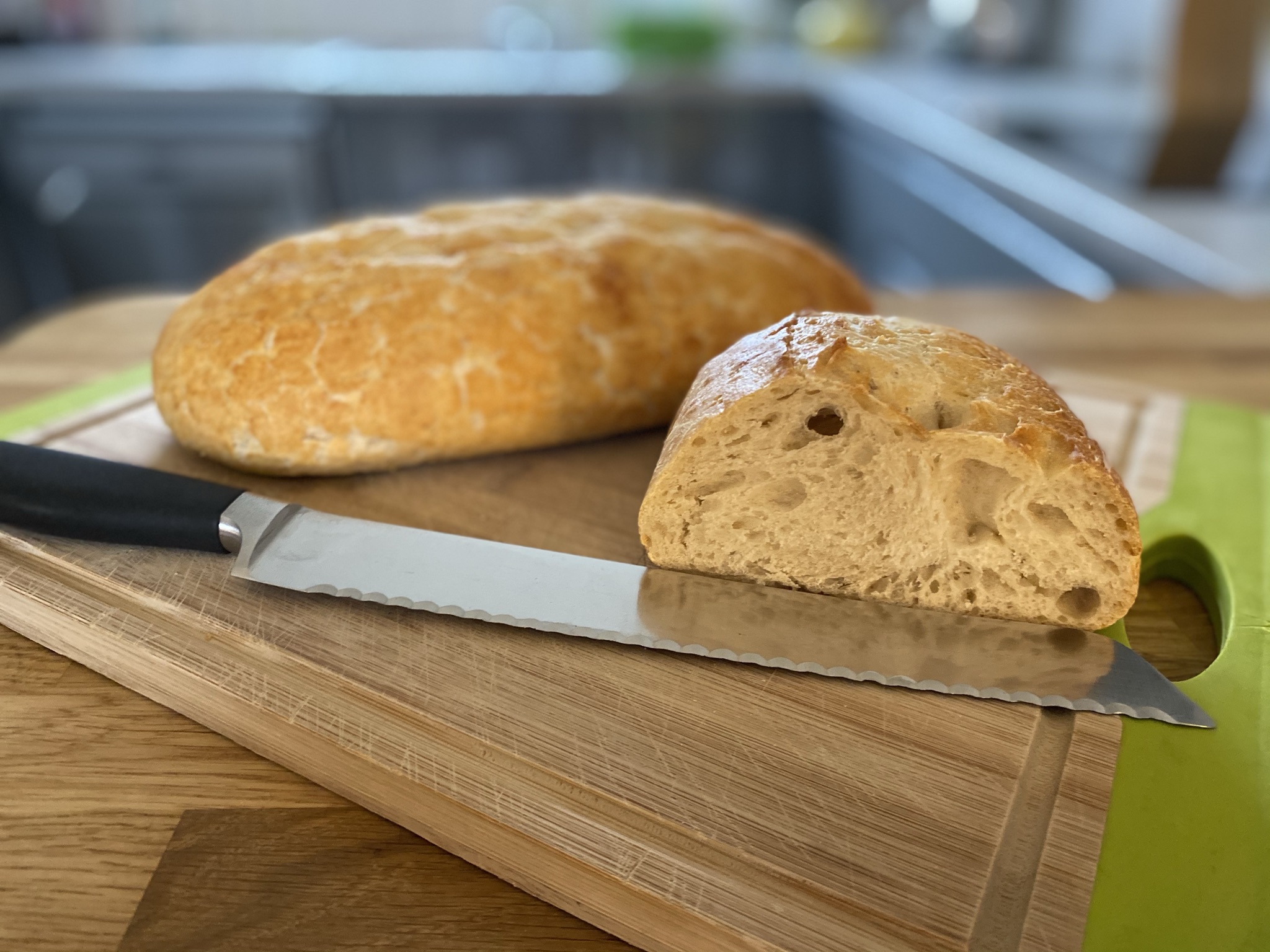
I can’t resist a crusty white loaf

The enthusiasm for home baking has shot up during the lockdowns, and one of the most popular things to make at home is the humble loaf of bread. I’ve not had a go myself as it seems to be quite labour intensive unless you have a bread-making machine. 

I try not to eat too much bread as it doesn’t agree with me, but unfortunately I absolutely love it, especially a freshly-baked carb-loaded crusty white loaf. One of my favourite ways to relax is with a French baguette with lashings of butter alongside a glass of chilled of dry white wine. A very simple yet undeniably satisfying pleasure.

Bread is one of the earliest known forms of ‘cooking’ and there is archaeological evidence suggesting that some form of bread was created at least 30,000 years ago. Prehistoric man was known to eat a kind of gruel made from water and grains, and it is this food that would be spread on to hot stones near the fire to cook into a solid form. 

I wonder, because our best discoveries often come about as a result of happy accidents, whether someone spilled their gruel on to a rock near the fire, and noticed it starting to bake into something interesting? And hey presto, bread was born!

All the early forms of bread were flat, and whichever grains grew in your continent’s climate determined the kind of bread you made. In the Middle East you’d have pitta and bazlama, in India there were chapati, naan and paratha, shaobing in China and tortilla in Central America. 

The discovery that you could make bread rise was also likely a happy accident. From around 8,000BC, the ancient Egyptians were adept at brewing beer and it is possible that some of the yeast they used in the process found its way into a waiting flatbread mixture. Another theory is that there were some latent yeast spores in a flour mixture that was left too long in the heat. However it came about, it was around then that the process known as ‘proving’ was discovered.

Originally, grains would be crushed by hand, but again it was the Egyptians who invented a ‘machine’ to do the job. The grains were placed between two circular stones that were then rotated to crush them. This method was ultimately surpassed by the water mill that was invented by the Romans in around 450BC, and with each technological advance, the making of bread became more skilled and more artistic. As time went on, the finer the flour and the whiter loaf the better, as the kind of bread you ate was a reflection of your status. Dense brown loaves with coarse grains were left for the poor.

The bread making process was completely revolutionised by the the steam roller mill that was first seen in Switzerland in 1834. It rolled the grain to split it, rather than crush it, and this made the process of separating the endosperm, the germ and the bran, much easier, thus refining the flour even further. Another revolution occurred with Otto Frederick Rohwedder’s invention of the slice and wrap machine in 1928, which he used for the loaves he sold from his own bakery in Michigan. By 1933, 80% of all bread sold in the U.S. was sliced and wrapped, and the saying ‘the best thing since sliced bread’ began to be uttered.

According to my dad’s column from 31st January 1981, there were 18 million loaves sold in the UK every day 40 years ago, 75% of which were white. More recent figures suggest it is around 12 million, which is quite a drop considering that the population has increased by more than 11 million since 1981. However, it is no doubt down to the fact that there are so many food alternatives to bread available in our shops these days, alongside many of us choosing to lead a low-carbohydrate or gluten-free lifestyle. 

However, 99% of households do still buy bread, and despite the number and variety of exotic doughy creations using a whole plethora of different grains, white bread still accounts for 75% of our purchases. 

As I come to the end of this piece, I still haven’t had my breakfast, and sat there on the side is an untouched, white crusty bloomer.

Hang the low carb diet! Pass me the butter.

Contact me, and read more, at countrymansdaughter.com. Follow me on Twitter @countrymansdaug

This column appeared in the Darlington & Stockton Times on 5th February and the Gazette & Herald on 3rd February 2021

Don’t lose your head

01F8D629-29AA-4E2E-9069-8CCECACA8057
Aidan Turner as Captain Ross Poldark in the 2015 TV series
786A424F-9DE9-4060-990D-8FD67EEC3E88
The Halifax Gibbet


The latest lockdown has allowed me to rediscover films and TV programmes that I enjoyed in the past and my current favourite is the 2015 adaptation of Winston Graham’s Poldark novels. What strikes me about Captain Poldark is that despite being a nobleman, unlike his wealthy contemporaries, he champions the poor and the deprived, and recognises that poverty and starvation are often the true drivers behind criminal behaviour. 

One such storyline involved a young husband who had to support his wife, child and mother, but had no income due to fact that the local mine had closed. He resorted to risking his life by taking game from the local aristocrat’s land to feed his family. In the late 1700s, when the story is set, landowners had to the right to demand capital punishment for anyone caught poaching on their property. The young man paid a very high price for feeding his family. 

This severest of punishment is a topic discussed in my dad’s column from 24th January 1981 when he talks about the Halifax Gibbet. This fearsome contraption was a precursor to the favourite of the French Revolution, the guillotine. The Halifax Gibbet consisted of two tall wooden struts with one wooden block on the ground which would support a criminal’s head, and another bigger block with an axe head embedded in it held aloft by ropes secured by a wooden peg. When the peg was removed, the block plummeted downwards.

The origins of the Halifax Gibbet are lost, so we are not sure when it was first constructed, although there is a written record of something very similar from an account in the ‘High History of the Holy Grail’, a complex tale from the early 13th century that charts the progress of various knights of the Round Table. Although it is fictional, it is believed the description was taken from real life.

The first recorded beheading in Halifax took place in 1280, but it is not known whether that was by sword, axe or gibbet, but by the 16th century, beheadings by the gibbet were common. The first person to be recorded as being subjected to it was a Richard Bentley, from Sowerby, who was executed on 20th March 1541, although the contraption was believed to have been used for many, many years before records began. 

According to an ancient custom in Halifax, the Lord of the Manor had the right to decapitate anyone who was caught, or who confessed to, stealing goods on his land over the value of 13 and half pence.

If the felon was able to escape over the boundary, he couldn’t be pursued. However, if they ever returned, then they would be still subject to the punishment. In fact a man called John Lacey achieved such a feat in 1617 and remained at liberty for seven years until he thought he’d be able to come home safely. Unfortunately for him, the punishment was not forgotten and was ultimately carried out. The Running Man pub, still found in Pellon Lane, Halifax, pays tribute to his escapade. 

By 1650, public opinion had turned against such drastic punishment for petty theft and Oliver Cromwell prohibited it. The last to suffer the blade of the Halifax Gibbet were John Wilkinson and Anthony Mitchel who died on April 30th1650.

The gibbet was dismantled and the site neglected over following couple of centuries, until it was dug up again in 1839. The original stone base was discovered, as was the deathly axe blade which was rescued and can now be seen in nearby Bankfield Museum. A replica has been erected on the original plinth, and still stands at the end of Gibbet Street in the town. A nearby plaque lists the names of all those known to have met their end at that spot.

The Halifax Gibbet was one of the most feared instruments of execution in the country, as were the gibbets of Hull that resided by the river’s edge. Felons would be strapped to them and drowned as the tidal waters of the Humber advanced. Thus sprang up the following saying: “From Hell, Hull and Halifax, may the Good Lord deliver us.”

Unfortunately, unless we live nearby, we can’t visit these two notable Yorkshire towns at the moment, but at least when it is possible again, we will no longer have to fear being strapped to a gibbet! 

Contact me, and read more, at countrymansdaughter.com. Follow me on Twitter @countrymansdaug

This column appeared in the Darlington & Stockton Times on 29th January and the Gazette & Herald on 27th January 2021

Walking is rather Moorish

189CA6FE-6573-4BAE-AA5C-6A476186A578
Some people confuse the North York Moors with the Yorkshire Dales
6645D805-B54B-42D2-94B9-CFD75507C784
I had to correct Rev Richard Coles when he suggested my roots lay in the Dales

In his column from 17th January 1981, my dad discusses the fact that we often have to explain to those not familiar with Yorkshire that we are blessed with two separate national parks in our great county, and that the Yorkshire Dales and the North York Moors are not one and the same. I came across this confusion myself when I was invited to speak about taking over my dad’s columns on BBC Radio 4’s Saturday Live programme in 2017.

In the minutes just before going on air, the host, the Reverend Richard Coles, was clarifying his introduction. He had written a sentence about how I was a descendent of the Dales. I had to politely explain that my roots were in fact in the Moors and that the Dales lay west of the A1 motorway adjoining the Lake District, while the Moors lay east of the A1 adjoining the coast.

“Descended from distinguished Moor persons, Sarah Walker discusses her Yorkshire heritage,” was how I was finally introduced, my correction no doubt spoiling the alliterative flow of his original version.

The North York Moors National Park was established in 1952 with Yorkshire  Dales following in 1964. The aim was to protect and celebrate the landscape, wildlife and cultural and industrial heritage. Visitors would be encouraged, bringing with them much-needed income to fund the important work of the authorities. 

In 1981 when Dad was writing his column, the North York Moors National Park Committee was looking at ways to increase its revenue to support its upkeep, and he says: ‘Whether a professional marketing approach could ‘sell’ the National Park is a matter for long discussion.’

Little did he know then that 11 years later, his own literary endeavours would result in a marketing triumph for his beloved Moors when Heartbeat became an instant TV hit. 

In 2009 the Yorkshire Tourist Board was rebranded as ‘Welcome to Yorkshire’ and a far more commercial approach towards promoting tourism was adopted. It has recently launched its new initiative, ‘Welcome to Walkshire’, to encourage people to make the most of the hundreds of public footpaths in our fabulous county. Obviously, during lockdown, we do have to stay very close to our own homes, but once it is over, no doubt we will be keen to explore further afield. 

If we are out and about though, we do have to share our footways responsibly and considerately, which sadly does not always happen. Following my column a couple of weeks ago where I talked about my small side business of dog care, I was contacted by a reader who expressed disappointment at the behaviour of some dog owners who had allowed their pet to run towards him and nearly trip him over, then expressed astonishment at him for his lack of delight at this unwanted greeting.

I have encountered this kind of behaviour myself in dog owners who think that anyone who does not willingly submit to the wayward behaviour of their canine companions must be a some kind of cold-blooded animal hater. But people should not have to tolerate being accosted by a smelly, slobbering hound if they don’t want to. My own policy is that if I spot someone coming towards me without a dog, and I know my dog will want to greet them, I will place it back on the lead until I have ascertained whether the stranger will welcome the uninvited displays of canine affection. 

One of my regular routes is an old railway line that is shared by pedestrians, dogs and bikes. And the key word here is ‘shared’. There are plenty of people, in each category, who seem to think they have a god-given right to conduct themselves however they wish, and that the rest of us have to adapt to them. I’ve lost count of the amount of times bike, pedestrian and dog have nearly come a cropper because of the stubborn refusal to share the route sensibly.

Cyclists, if you are approaching people with dogs, please slow down and sound your bell. Dog walkers, please stand aside and make sure you have control of your dog while the cyclists go past.

And lastly if, like me, you love walking dogs, and even if they are the sweetest dogs on earth, please make sure they are not also the sources of pain in other people’s necks.

This column appeared in the Darlington & Stockton Times on 22nd January and the Gazette & Herald on 20th January 2021