EE’s daft as a brush

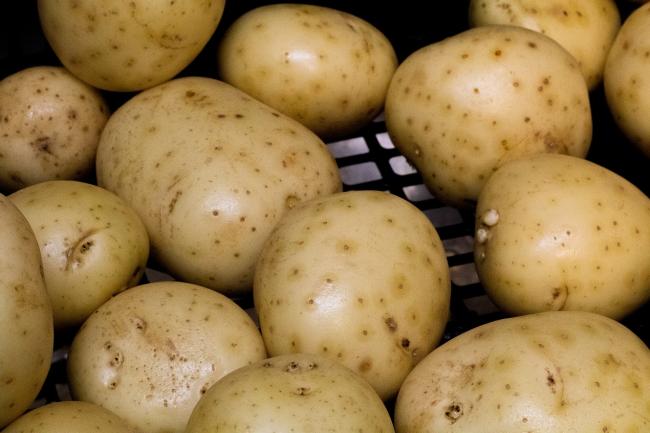
Former vice president Dan Quayle famously couldn’t spell the word ‘potato’. Picture: Pixabay

I compose these columns a couple of weeks in advance, so as I write this I am still surrounded by the trappings of Christmas and the festive cheer has yet to wear off. Because of that, and because we’ve had such a difficult 2020, I feel I am justified in extending the seasonal silliness just a little bit longer in the hope that it might bring a smile to your face and a giggle to your soul.

Firstly though, you might remember a couple of weeks back I discussed tautological words and phrases (that say the same thing twice using different words) and the unnecessary ‘extra’ words we sometimes include in sentences. I was looking through my dad’s paperwork relating to his January 1981 columns when I came across a letter from a reader on this topic.

Colonel NM Dillon from Shincliffe, County Durham, had written in with a few of his own observations, which I’d like to share with you as they are quite interesting. 

Apparently, in the Durham area, butter is referred to as ‘best butter’, and Col Dillon asks, “Why the ‘best’?” Another peculiarity of the area, he says, is that diabetes is referred to as ‘sugar diabetes’ or simply ‘The Sugar’. He also expresses the opinion that real ‘staircases’ rarely exist any more because the ‘case’ part of the word harks back to a time when household stairs were often located outside of the building and so cases were built around them to protect them from the elements. Therefore, internal sets of steps without cases should just be called ‘stairs’. I wonder if any readers today still use these phrases or have any of their own observations to share (my contact details are at the bottom of this article)?

While researching my column last time about the spoken gaffes of George Bush Senior and George Bush Junior, a person I came across who was even more famous for speaking gobbledegook was George Bush Senior’s presidential campaign running mate, Dan Quayle. His website address is still ‘vicepresidentdanquayle.com’, which tells you something about him, bearing in mind he’s not been the vice president for the past 27 years. His online entry in Wikipedia even has its own section dedicated to his public gaffes. I didn’t have enough room to include them last time, so rather than deprive you of such entertainment, I’ve included a few below which I hope will bring you those those giggles I promised at the start of this article: 

“I believe we are on an irreversible trend toward more freedom and democracy – but that could change.” 

–        Really? Are you sure about that?

“I have made good judgements in the past. I have made good judgements in the future.”

–        I also drive a red DeLorean.

“Republicans understand the importance of bondage between a mother and child.”

–        None of my children are ever going anywhere near a Republican.

“We are ready for any unforeseen event that may or may not occur.”

–        That’s so reassuring

“One word sums up probably the responsibility of any vice president, and that one word is ‘To be prepared’.”

–         Calculator anyone?

“What a waste it is to lose one’s mind. Or not to have a mind is being very wasteful. How true that is.”

–        I’m certainly in danger of losing mine

“The Holocaust was an obscene period in our nation’s history….I mean in this century’s history. But we all lived in this century. I didn’t live in this century.” 

–        I’m so confused. 

One of Quayle’s most famous blunders of all occurred in June 1992 when he was vice president. He was hosting a school spelling bee in front of a room full of kids, teachers and the world’s media. A 12-year-old boy was asked to write the word ‘potato’ on the board in front of Mr Quayle. He did exactly that, correctly, and was about to leave when the vice president stopped him and said: “Spell it again. Add one little thing on the end…Think of ‘potato’, how is it spelled?” The puzzled child hesitated, then added a letter ‘e’ at the end of the word. “There ya go!” beamed a triumphant Mr Quayle.

And the excruciating moment, captured on film, has never been forgotten. 

Contact me, and read more, at countrymansdaughter.com. Follow me on Twitter @countrymansdaug

This column appeared in the Darlington & Stockton Times on 15th January and the Gazette & Herald on 13th January 2021
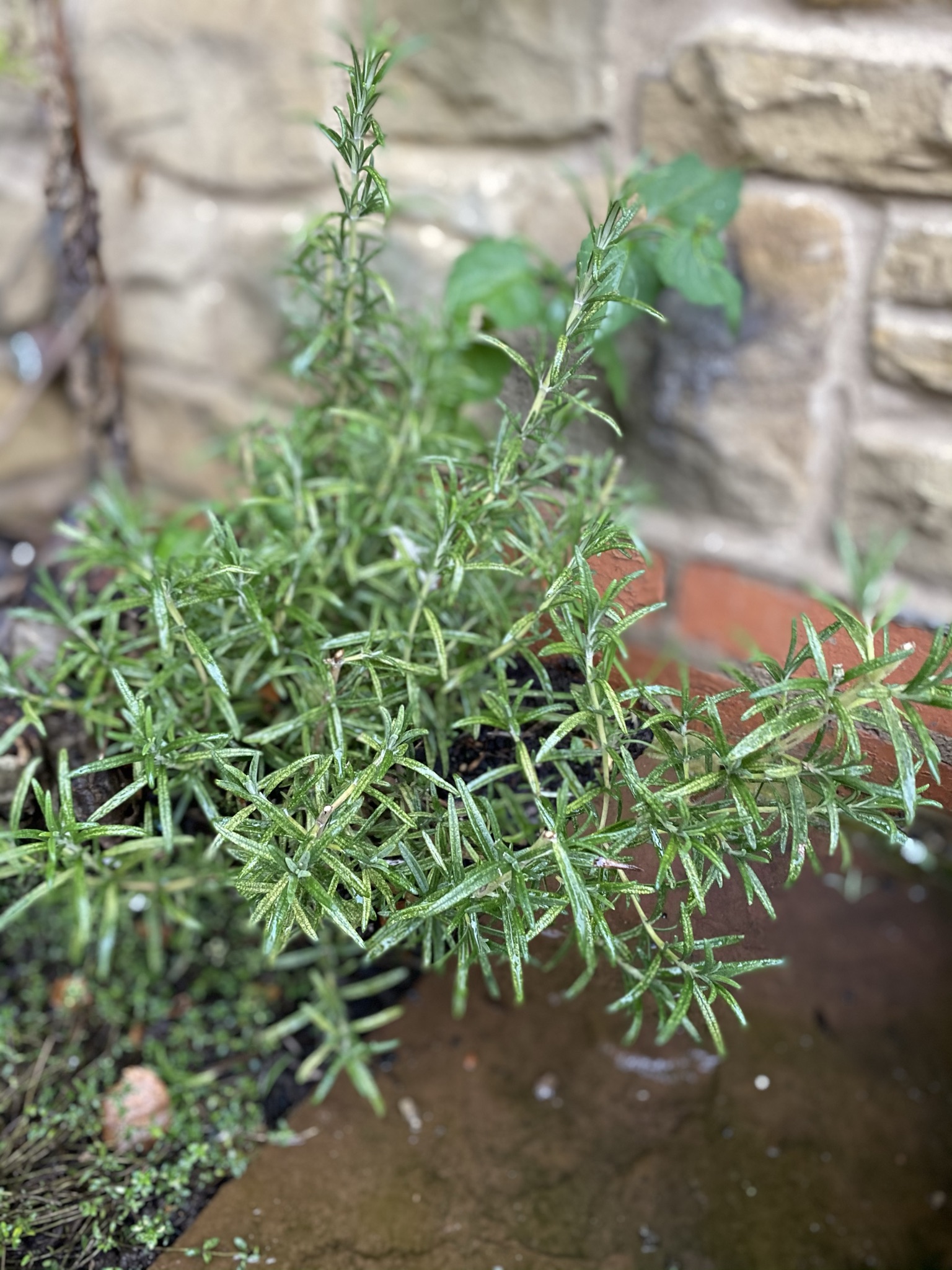
A Rosey year ahead?

2A818D08-AF74-4B48-B921-06F0DDEA7F41
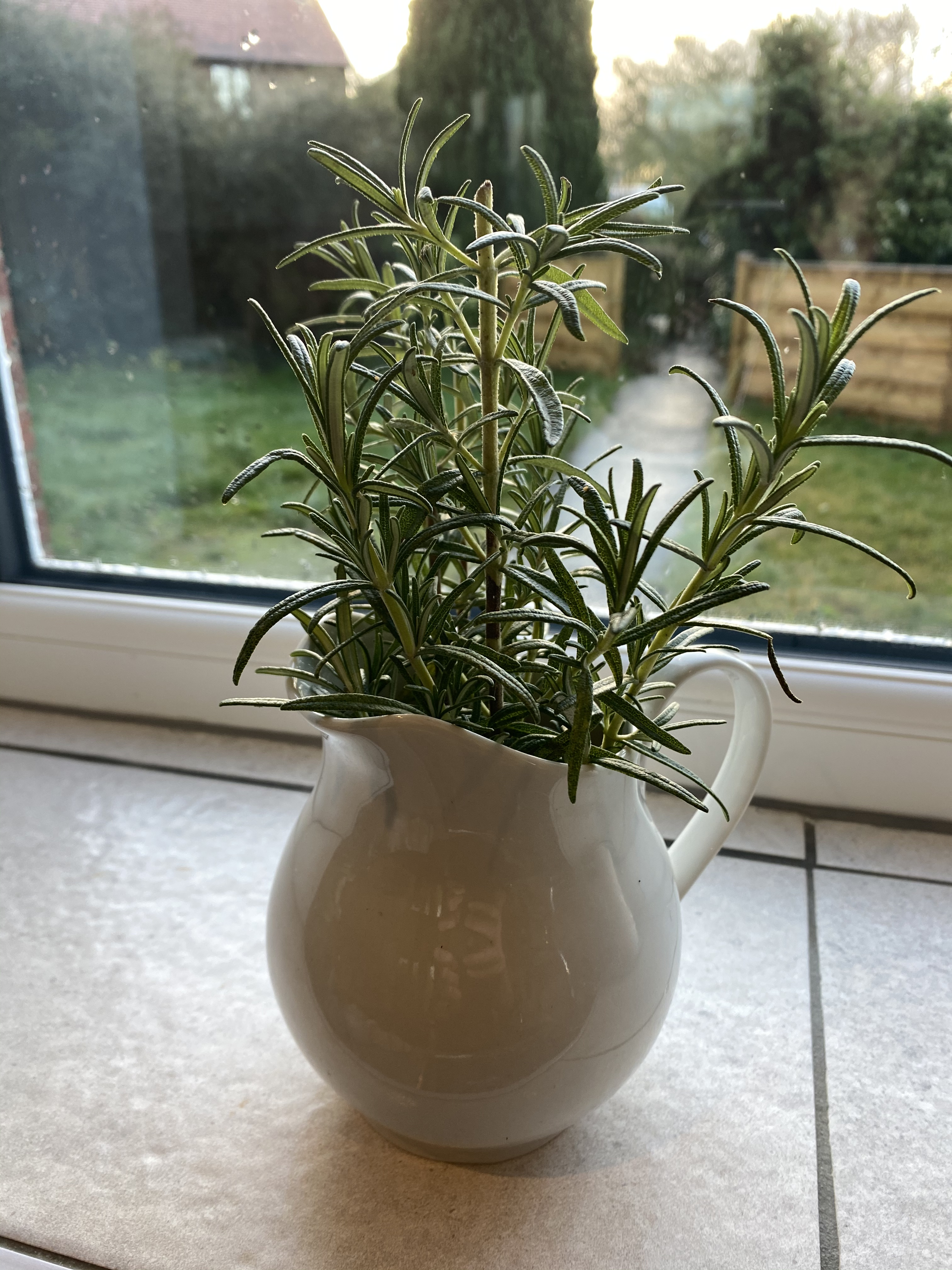
A rosemary bush

013882D0-5627-4264-BD4F-14036BF19A44
Sprigs of rosemary ready to use in cooking

As Twelfth Night dawned this week, I’m sure most of you will have taken down your tree and packed away your decorations for another year. It has been a festive season like no other, but I hope you managed to enjoy whatever you decided to do and however you decided to mark the start of 2021.

If you are someone who enjoys using natural greenery to create your decorations, then you will no doubt be familiar with holly, ivy and mistletoe, but once upon a time it was the herb rosemary that was at the top of the tree in terms of festive décor.

It was believed to possess many qualities, some mythical, and others more practical. In medieval times, it was spread across the floor over a base of rushes that absorbed the muck and smells brought in on the feet of the great unwashed. As they trod on the rosemary, it would release a pleasant scent that would disguise the other less welcome odours rising from below.

As a forerunner to toothpaste, the woody parts of the shrub would be burnt and ground into a powder and used to cleans one’s teeth. It was also used as a cure for baldness, to ease digestive complaints and of course in cooking as a flavouring.

In terms of its mythical qualities, if you slept with it under your pillow, that would mean your slumber would not be disturbed by nightmares, and a shrub planted outside your home would protect you from unwanted intruders. In Ancient Greece, it was associated with memory and brain power, so hopeful students would wear wreaths of rosemary on their heads during examinations. The Romans would plant it outside tombs in the belief that it would preserve the bodies of their dearly departed.

Rosemary has strong connections with the Christian faith, with some stories claiming that its name came from the Blessed Virgin herself, and that Bethlehem was the first place the herb was ever cultivated. According to the tales, the infant Jesus’ newly washed baby garments were spread out across a rosemary bush to dry. Soon after his birth, the holy family had to flee to Egypt to escape the wrath of King Herod, who was searching for this imposter ‘king’ to slaughter. As Mary’s blue cloak brushed past shrubs of rosemary, their white flowers transformed into a beautiful bluey-grey. The family also wore sprigs of the the herb on their clothing as they fled in the belief that it would protect them from harm. These associations led to the plant being known as the Rose of Mary, and hence its current name. It is also believed to live for no more than 33 years, the lifespan of Jesus, and to not grow taller than his height while he walked upon the earth.

But there are other beliefs about rosemary that have nothing to do with Christianity at all. Other sources say the name is derived from the Latin ‘ros’ meaning ‘dew’ and ‘marinus’ meaning ‘sea’. It was native to the lands surrounding the Mediterranean, needing very little water to survive, and could exist on merely the ‘dew of the sea’, that is, the moisture carried on the breezes that wafted in off the water. It is often associated with love, possibly because the Greek goddess of love, Aphrodite, was said to have risen from the waves draped in garlands of the herb. Hopeful beaus would give sprigs of it to their hearts’ desires, and brides would wear rosemary coronets on their wedding day. In Shakespeare’s Hamlet (Act 4, Scene 5), Ophelia says: “There’s rosemary, that’s for remembrance. Pray you, love, remember.” With its associations with love and death, it may be a reference to her forthcoming demise.

Rosemary as a girl’s name became popular in the late 19th century to correspond with the advent of the Art Nouveau movement. Inspired by the colours, shapes and forms found in the natural world, names such as Rose, Lily, Olive, Myrtle, Ivy and Flora suddenly filled local birth registers.

Some of those names, such as Rose, Lily and Flora, have remained pretty common, although I don’t know any girls born in recent times with the name Olive, Myrtle, Ivy or even Rosemary. Come to think of it I can’t say I know many youngsters these days with the name Sarah either.

I suddenly feel rather old.

Contact me, and read more, at countrymansdaughter.com. Follow me on Twitter @countrymansdaug

This column appeared in the Darlington & Stockton Times on 8th January and the Gazette & Herald on 6th January 2021

A case of dogged repetition

4C0DD362-ADF9-42F2-933D-73B147A573AE
Minty, left, and Vega, two Labradors that I have looked after
067D2CEA-6C25-428C-A7B2-BBFD4CE8F617
Two of my doggy guests, Jess, a Golden Retriever, and Oreo. A Black Labrador


We have come to end of the year, and what a year it has been! I’m sure that most of us are not sad to see the back of 2020 and are hopeful that the coming 12 months are better for us all.

Something that was severely impacted during the past year was my small side business of looking after other people’s dogs. My boys and I love dogs, but I am not keen to take on the commitment of owning one. Looking after other people’s seemed like a good compromise and until the pandemic hit, I was pretty busy. But because few people are going on holiday now, and more people are working from home, the demand for this kind of service has reduced significantly, although thankfully not entirely.

I have welcomed many breeds through my doors and one thing that used to puzzle me is why some people call a certain dog a ‘Labrador’ and others call it a ‘Labrador Retriever’. That question cropped up in my dad’s column from 29th December 1980 and he thought that the Labrador was one breed, and the Retriever another. In fact, although the Labrador is a Kennel Club-recognised breed in its own right, it does come under the banner of ‘Retriever’ alongside the Golden, the Flat Coated, the Chesapeake Bay and the fantastically-named Nova Scotia Duck Tolling.

As the name suggests, the dog’s hazy origins lie in Canada, and it is believed that English settlers arrived in Newfoundland as far back as the 1500s and would use native dogs to help them fish the waters. These dogs, that were smaller than today’s Labradors, were known as St John’s water dog or the lesser Newfoundland, and would retrieve nets, lost lines, dropped fish and pull carts loaded with the catch.

English traders took them back across the North Atlantic Ocean and interbred them with their own hunting dogs to create a new breed altogether that was not only an excellent working dog, but also blessed with a friendly temperament that was eager to please. They became an instant hit with the sporting aristocracy, especially the Earls of Malmesbury.

The third Earl of Malmesbury is credited with naming the breed in 1887 in a letter in which he referred to his ‘Labrador dogs’, presumably because they came from the region known as Labrador and Newfoundland. He established his own breeding programme and the Labrador Retriever was officially recognised by the UK Kennel Club in 1903, with the first official breed club set up in 1916. Today, the Labrador is the most popular of all pedigree breeds thanks to its versatility as a family pet, a service dog, a guide dog and a working dog.

The reason Dad mentioned the Labrador Retriever in the first place was because he was discussing our usage of certain words that are unnecessary, and was citing ‘Retriever’ after ‘Labrador’ as one such example. Another was ‘salt cellar’, because the word ‘cellar’ actually means ‘salt’ so we are in effect saying ‘salt salt’. 

This could be said to be an example of tautology, the practice of saying the same thing twice, but using different words and I’m sure many of us do it regularly without even noticing. But what really irritates me is when people in positions of power do it to try to fool us into thinking they are more intelligent than they are, as if we won’t be able to tell when they are spouting meaningless waffle.

An expert in the art of meaningless waffle is former U.S. president George W Bush, who had a reputation for making tautological gaffes. His intelligence (or lack of it) was the subject of much comedic scrutiny.

“Our nation must come together to unite!” he declared, and “By making the right choices, we can make the right choice for our future.” 

What about this insightful observation? “Over the long term, the most effective way to conserve energy is by using energy more efficiently.”

It seems to run in the family too. His father, George Bush senior, is reported to have said: “It’s no exaggeration to say that the undecideds could go one way or the other.”

And wisely, on that wisest piece of wise wisdom, I’d like to wish you all a very Happy, Jolly, and Content New Year! 

Contact me, and read more, at countrymansdaughter.com. Follow me on Twitter @countrymansdaug

This column appeared in the Darlington & Stockton Times and the Gazette & Herald on 30th Dec 2020

A lasting tribute

B081E75F-6045-497A-A0C8-D8841902DA77
My dad wrote a moving tribute to his own dad Norman, pictured here in the 1930s. Grandad died unexpectedly just before Christmas 1980.

As loyal readers of this column know, Christmas for my family is a celebration that, although joyful, is also tinged with sadness. During our first Christmas without Dad in 2017, we didn’t have time to dwell on his loss as my sister was gravely ill, and died at the beginning of January 2018. And so the second Christmas without Dad was our first that the loss of them both was really felt around the festive dinner table. I’m sure there are many of you reading this who can relate to that. We do still thoroughly enjoy it, but our absent loved ones are very much present in our thoughts at such times.

When I took over this column, my first piece appeared not very long after Dad had died, and it was a tribute to him. The grief was still raw, and I’m sure those feelings came out in the way I wrote it. This week, when I took out my dad’s column from 20th December 1980, I wasn’t expecting to read what I did. It is a very moving tribute he wrote to his own father who had just passed away.

I was 13 when my grandad died so did not truly appreciate the impact it would have had on my dad. But reading his tribute now, it is a rare occasion when his emotions are clearly close to the surface. Having experienced the same loss myself, the words that Dad wrote back then have moved me to tears because they are words that I could so easily have written about him. His deep love for his father shines through.

I hope you will indulge me a bit this week, as I’d like to share his words with you now, and although they are written about my grandad, I’d like them to be a tribute to all our lost loved ones whose absence we feel so keenly at this time of year.

So, over to you, Dad:

‘We are facing this Christmas without my father. He died shortly before I settled down to compile this weekly article, a comparatively young man at the age of 64. He passed his final hours in hospital, attended by a devoted hospital staff whose actions helped to cushion the inevitable sorrow.

‘I am sure we are not alone in our sorrow this Christmas. Many other families and individuals will have to cope with similar losses and tragedies, and their personal fortitude will carry them through the dark period ahead.

‘But my own father would never wish us to be sorrowful on his behalf. He was a realist, a gentle person with a delightful sense of humour whose outlook on life was based entirely upon honesty and service to his fellows. He would never wittingly do anyone a bad turn and was always willing to help and assist, yet at the same time never wishing to intrude. He allowed his children to live their own lives, always with a guiding hand but never with compulsion, while his personal views upon politics and religion remained entirely his own.

‘He was a man of remarkable talent, a fascinating combination of arts and mechanical skills with hands that could produce music from almost every instrument and also cope with the task of repairing any mechanical object from an electric iron to a motor cycle or motor car. He firmly believed in doing everything himself – repairs to the house, decorations, plumbing, roofing, gardening, and everything else. That talent has rubbed off on his family and I am thankful for his leadership in that respect. As we say in Yorkshire, “he could turn his hand to owt”.

‘Clearly he will be missed and it is difficult to sum up his qualities in a short phrase, but perhaps the following lines from Edmund Spenser (1552-1599) are suitable:

‘The gentle mind by gentle deeds is known.

For a man by nothing is so well bewray’d

As by his manners.

‘But Christmas is not a time for sorrowing. It is a time of renewal, reminding us of new beginnings and it is a time for celebration and happiness…it is the one universal celebration which is founded upon trust and happiness and it has the ability to cross international boundaries, political arenas and religious differences.”

I send you all my best wishes for the festive season and for a very Happy New Year.

Contact me, and read more, at countrymansdaughter.com. Follow me on Twitter @countrymansdaug

ENDS

This column appeared in the Darlington & Stockton Times and the Gazette & Herald on 23rd Dec 2020

Yule start the fire

3398B8FF-7F8A-425B-AEF6-FCF67F6192CE
I miss the real fire that we had in our last house

One of the things I miss since I moved into this house is an open fire, especially at this time of year. There’s nothing to match the golden glow of real flames, and they bring an extra element of festive coziness to our Christmas preparations. We had a log burning stove at my last house, and I absolutely loved it. With the tree up, twinkling lights on and stockings hung, the lit fire was the finishing touch to our own Christmas story.

Growing up, we had an open hearth in our cottage living room, and my dad was an expert at laying a fire which would often be blazing moments after being lit. He knew just how many newspaper ‘logs’ to place at the bottom with the right gaps in between to let the air circulate. On top of that, a good few sticks of kindling, then a layer of coal. And once the coal began to glow, you could start adding your bigger logs.

But it was important to know your wood, as different types of tree burn in different ways, and these days, your best bet is to go to a reputable supplier for properly seasoned logs to get the most out of your fire. Paying for good logs means you will spend less on maintaining your chimney and stove. There is an old saying that helps you remember how different species of tree burn.

‘Oak logs will warm you well, if they’re old and dry,

Larch logs of pinewood smell, but sparks will fly,

Beech logs for Christmas time, Yew logs heat well,

“Scotch” logs it is a crime for anyone to sell,

Birch logs will burn too fast, Chestnut not at all,

Hawthorn logs are good to last, if you cut them in the fall.’

I tried to find out what ‘Scotch’ logs are, and couldn’t come up with an answer (unless it’s Scots pine? But then, pinewood is already mentioned in the second line). And why is it a crime to sell them?

The last word ‘fall’ might make you think this poem originated in America, but in fact the word ‘fall’ was used for ‘Autumn’ in old English, but has not been in common speech in this country since Shakespearean times.

Dad lists many other species of wood that will burn very well, including sycamore, laurel, hornbeam hawthorn and fruit, which also give off a pleasant smell. But avoid burning acacia as it releases a terrible odour.

Of course the traditional log to burn at Christmas time is the Yule Log, but I haven’t heard of anyone doing it recently. The only Yule Log you’re likely to come across now is the chocolate version, although I’d be very happy to stand corrected!

The Yule Log is no ordinary piece of wood, but is a custom that some say pre-dates Christianity. The tradition is that you retain a partly burned piece of a log from the previous Christmas, and keep it dry all year so that it readily ignites on Christmas Day. Then it is brought into the house on Christmas Eve and ceremoniously laid on the fire. When it is lit the next day, the piece of wood that is to be the new Yule Log is placed on top and allowed to burn. But, as it is needed for the following year, once it is about half done, it needs to be taken out and kept safe and dry for 12 months. How you take it out without burning yourself or your surroundings might be a topic for debate, but once it has cooled, you then put it under your bed to protect your home and family from fire. Of course, in the days when this practice was common, house fires were a very real and ever present threat.

While the Yule Log is burning is the time on Christmas Day that you make merry, enjoy the good food, good drink and pleasant company. As one saying goes: ‘Old wood to burn, old wine to drink, old friends to talk to, and old books to read’.

This year, it is definitely going to be different, with smaller gatherings rather than the large getogethers some might be used to. But I’m optimistic that by Christmas 2021, things might have returned to something like normal again.

We can but live in hope!

Contact me, and read more, at countrymansdaughter.com. Follow me on Twitter @countrymansdaug


This column appeared in the Darlington & Stockton Times on 18th Dec 2020 and the Gazette & Herald on 16th Dec 2020

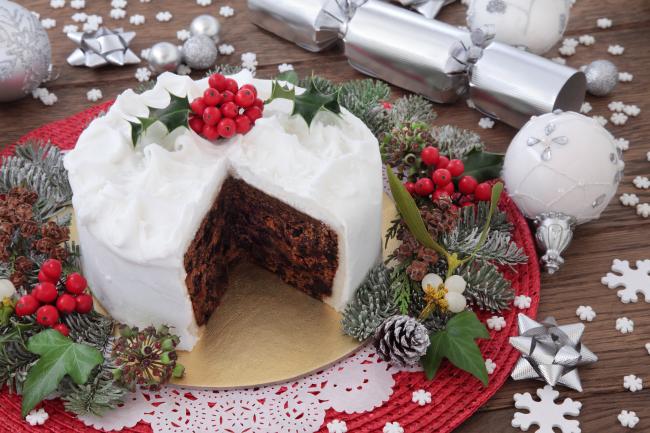
Having our cake

3F6AEDD0-030F-4D38-BB52-8A06E016C9D9

I was listening to the radio this morning and they mentioned an interesting fact about the second lockdown. One of the most searched-for recipes online in November was for Christmas cake.

During Lockdown Mark 1, there was a huge surge in the popularity of home baking because, with so much time on our hands, it was an easy way to entertain ourselves. People started bulk buying flour and it became extremely difficult to get hold of it in the shops. On one desperate trip to the supermarket I resorted to buying a packet of pizza dough mix when I couldn’t get my hands on any flour. Thankfully, I never had to use it, as I later found a small local shop that still had one solitary bag of flour tucked away at the back of a shelf. Back in the days of Lockdown 1, bread-related items such as scones, banana bread and sourdough were the most popular.

There was also a surge in online searches for recipes that didn’t need flour, presumably because it was so hard to come by. Homes were being filled with things like meringues, that only need eggs and sugar, and banoffie pie, that just needs bananas, cream, toffee sauce and a biscuit base. Of course, in the first lockdown, children were not in school, so parents across the land were involving them in kitchen-based activities which meant that child-friendly bakes, such as flapjacks and biscuits, were also extremely popular.

So in Lockdown 2, we have taken up the bowl and wooden spoon once again, and with Christmas just around the corner, it’s no surprise that many of us are using the opportunity to revive the Yuletide cake-making tradition that has until recently been on the wane. My mum would make a deliciously moist fruit cake every year, and I recall as youngsters, my three siblings and I were all invited to take a turn stirring the mixture in preparation. It would have been a couple of months before Christmas, and was the first exciting hint that the big day wasn’t far away.

The popularity of these cakes diminished over recent years and I still don’t know many people who make them. However, upon hearing that news report this morning, I would be interested to find out if any of you either still make and eat a festive cake, or whether you have used the time during lockdown to revive the old tradition. It used to be that if anyone called in, they would be offered a slice of the Christmas cake, maybe with a chunk of Wensleydale cheese, and possibly even a glass of sherry – does anyone still do that? There is something uniquely special about that particular combination of flavours, and although the custom of serving fruit cake with cheese has spread beyond the borders of Yorkshire, it is believed to have first started here.

The sharing of the Christmas cake is a custom that goes back centuries, although it is difficult to say exactly when it was first associated with the celebration. According to my dad’s archives, a festive pudding was mentioned in Poor Robin’s Almanac, a series of writings by a number of authors, first published in 1663.

‘Mince pies and plum porridge, good ale and strong beer, with pig, goose and capon’ were the favourites according to the almanac in 1695. The plum porridge mentioned is a likely forerunner to the Christmas cake, and although it was usually served quite runny, they turned it into a solid, baked version for Christmas Day. In 1662, an anonymous York poet known only as ‘J.T.’ published the following:

‘Up boys and be ye early housewives lark,

Rise up and run through snow and dark,

And cake of plum and good cheer will she give,

And merry make us while Yuletide live.’

In those days (and as I remember in the 1970s), the cake would be big enough to last many servings. As Dad wrote in one of his old columns: ‘The milkman, butcher, postman and others must receive countless portions during their Christmas rounds.’

The cake is just one of the many delicacies served at this time of year, but why do we only eat things like pigs in blankets and mince pies at Christmas? Then again, if we ate them all year round, then they wouldn’t be so special, would they.

Contact me, and read more, at countrymansdaughter.com

Follow me on Twitter @countrymansdaug

This column appeared in the Darlington & Stockton Times on 2nd Dec 2020 and the Gazette & Herald on 4th Dec 2020

Game for anything

012B8EEA-F07C-43B0-A3EA-2CB949DD3A7E
Trivial Pursuit is one of my favourite board games


DA94FECF-E381-4B11-927F-5A3EC101518E
Some of the board games I’ve enjoyed over the years

Something that saddens me is the decline in traditional games played as a family. Growing up I was a big fan of board games like Frustration, Buckaroo, Draughts, Cluedo, and Backgammon.

My love of games continued into adulthood, and then on into parenthood, and when my children were very little, we played a number of board games alongside Hide and Seek, Blind Man’s Buff and treasure hunts. But as they grew older, the lure of technology beckoned and the old games were played less and less, eventually becoming solely a Christmas activity forced upon them by a mother desperate to cling on to the past. I would subject the family to rounds of Pictionary, or Trivial Pursuit, or to ‘parlour’ games like charades, or ‘The Name Game’ (where you all write down 20 names of famous people on pieces of paper that are folded and thrown into a bowl. Then, playing in teams, you get 30 seconds to describe as many as you can while your team guesses). It’s one of those games that the whole family, from youngsters to grandparents, are supposed to enjoy, although it baffled me that not everyone was as enthusiastic about it as me. 

This sentiment is echoed by my dad in his column from 29th November 1980 when the fear of advancing technology was already taking hold. A friend had asked him if he knew of any suitable games for children to play indoors. He wrote: ‘In a modern society, this is not easy because there are so many intriguing games which can be bought and which today operate with the help of miniature computers and electronic gadgetry.’

He was referring to things like ‘Pong’, a 1970s electronic game that mimicked table tennis with two people ‘batting’ a ‘ball’ backwards and forwards across a screen. It was one of the first consoles that you could plug into the TV to play. My best friend had one and I coveted it, begging to have a go whenever I visited her. By 1980, more sophisticated video games had begun to appear, the most famous being Pac-Man, where the object was to eat as many dots in a maze as you could without crashing into the coloured ghosts along the route. It started out as something you could only play when visiting a town centre arcade, but soon, home-based consoles were developed and were instantly popular. Other electronic games soon followed, such as Donkey Kong and Space Invaders, which although extremely simple by today’s standards, were nevertheless incredibly popular with a young generation ready to embrace the age of the computer.

‘Playing games’ evolved into ‘gaming’, and a whole new era of internet-based entertainment for the youth dawned. I wonder what our forebears would make of the idea of young people sitting alone in their bedrooms playing games with their peers miles away, often living on different continents and in different time zones. It would have blown their minds! The sad thing is that these are not games that many play together as a family. 

Continue reading “Game for anything”

A sweet odyssey

After I left school at 18, I embarked on the exciting adventure of a gap year abroad, spending mine with a family in the city of Athens, Greece. I was going to study Greek and Roman culture at university, and was keen to visit the ancient land I’d heard and read so much about. Although hard in the beginning, being as it was a massive culture shock for this closeted Yorkshire lass, I ended up loving my time there and became very fond of the family who hosted me.

A345567E-359B-440D-B4F8-7D14748DB9AC
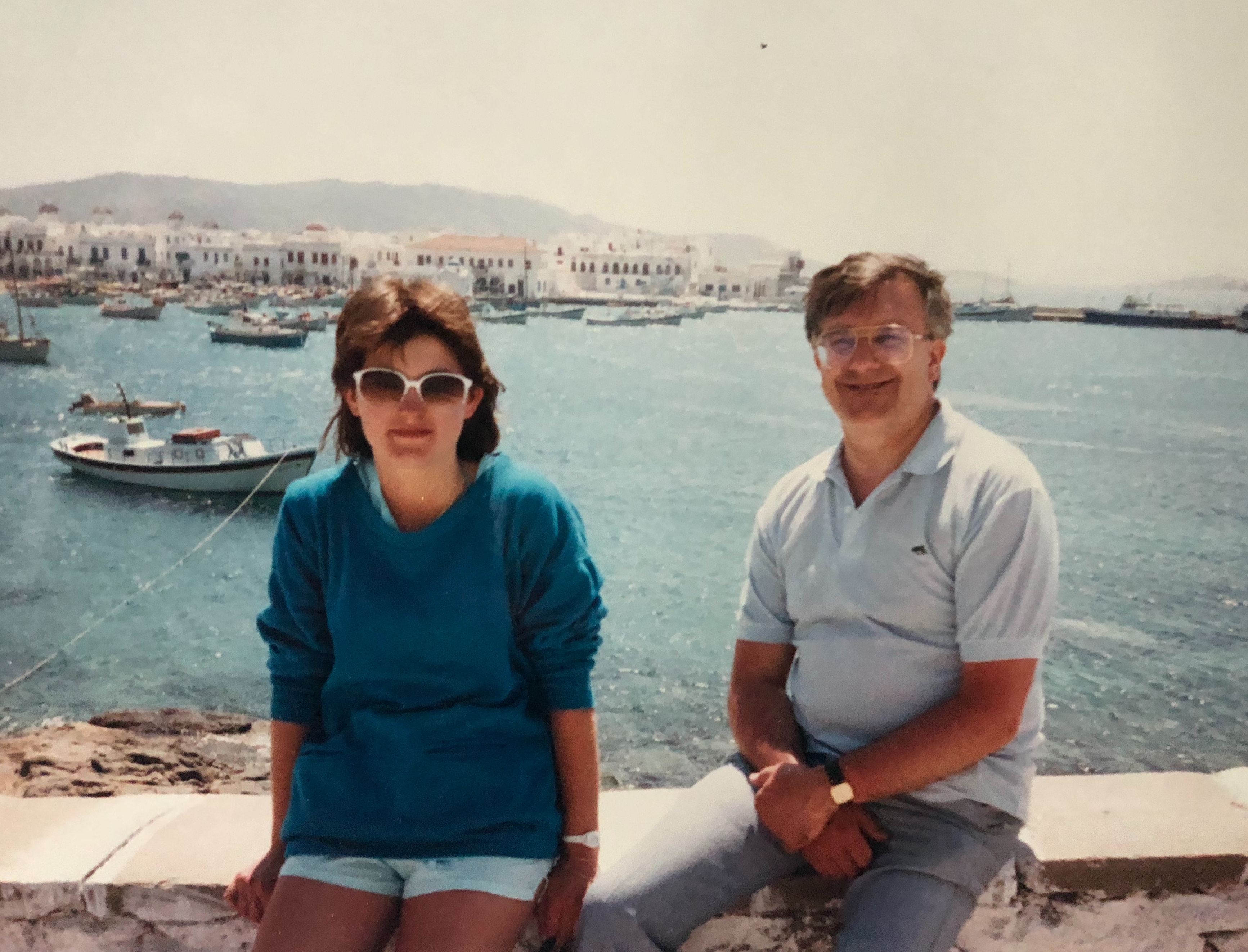
Dad and I on the island of Mykonos in 1986 when my parents had come out to visit me during my gap year in Greece.

One of the things that surprised me was how much I enjoyed Greek cuisine. Until that age, I was very unadventurous when it came to food, and was happy to stay in my ‘meat and two veg’ comfort zone until, that is, I was faced with no alternative but to eat Greek food.

I discovered the delights of local delicacies such dolmades (rice wrapped in vine leaves), souvlaki (small kebabs with mint dressing), spanakopita (cheese and spinach pie), kleftedes (meat balls), moussaka (aubergine bake), kolokythakia (fried courgette), and baklava (filo pastry with honey and crushed nuts) to name just a few. Despite the abundance of rich food, one of my favourites was the simple Greek salad made with tomatoes, feta cheese, onions and olives. It would be liberally doused with oil made from olives grown by the family themselves and stored in enormous urns in the cellar. I had never had anything as exotic as olive oil before, and despite not being particularly fond of olives, the oil was another matter entirely. I grew to love it, and most foods were either cooked in it, or sprinkled with it. It might explain why I came back from Greece rather larger than when I went!

The best part of having a Greek salad came at the end. Bits of cheese would crumble off while you were eating, and finish up at the bottom of the bowl along with the oil and tomato juice. It was perfectly acceptable, in fact almost obligatory, to break off some bread and mop up all the delicious remains of the salad. The Greeks even had a name for the practice – ‘papara’. 

The family with whom I stayed were not shy about how fantastic they thought their food was compared to ours. They described English cuisine as stodgy, bland and overcooked, which in the 1980s was probably an accurate description. I’m glad to say that these days, our country’s reputation has dramatically improved, and we have some of the best chefs cooking exquisite menus in some of the finest restaurants in the world. 

One of the traditions that the Greeks just couldn’t get their heads around was why we often served savoury foods with sweet accompaniments. I can still remember the grimace on my host Laura’s face when she talked about us serving pork with apple, or duck with orange, or turkey with cranberry sauce. In her mind sweet and savoury never belonged on the same plate.

She recoiled in horror at the mention of gammon with pineapple, and pineapple on pizzas too, or dates with bacon and pear with Stilton. She would definitely not have approved of our tradition of serving cheese with grapes either, never mind a custom that my dad describes in his column from 22nd November 1980. He says: ‘In Yorkshire, we like to eat our cheese with apple pie, for it is said that apple pie without a cheese is like a kiss without a squeeze.’ And here’s me thinking us Yorkshire folk preferred our apple pie with custard! (I would be delighted to hear if any of you still do it, or whether you eat any other unusual sweet/savoury combinations).

Another tradition of which my Greek host would disapprove is that of serving Wensleydale cheese with Christmas cake. I mean, it has to be one of the best combinations, but I’m not sure she would have ever been persuaded to try it, nor to try it with gingerbread, another Christmas treat that my dad mentions. However, this was the 1980s, so perhaps the Greek palate  would be more open to it today. 

Having said that, though, I have a feeling that Laura would express her opinion in no uncertain terms when she learned that this year, one of my favourite salads has been salty Greek feta with sweet pomegranate seeds. 

Read more at countrymansdaughter.com. Follow me on Twitter @countrymansdaug

This column appeared in the Darlington & Stockton Times on 20th Nov and the Gazette & Herald on 18th Nov 2020

Salt in the wound

978B8025-C9D4-4CEB-9F5F-77FAB2E60EB4
Is salt really as bad for you as they say?


When it comes to enjoying food, in my opinion, there are two opposing camps. Those who like sweet things and those who prefer savoury. I’m definitely in the latter camp, and will forgo a pudding in favour of a starter, or if I am going for the full three courses, then will likely choose a cheese plate to follow my mains. 

I think this is because I love the taste of salt far more than I should. This flavour-enhancing mineral has had a bad reputation over the years, and in the 1990s when my children were little, it was considered almost irresponsible to add it to any food I cooked for them. I remember confessing to my GP that I thought I ate too much of it, but that I couldn’t really give it up. She asked me how much exercise I did, and when I explained that I played squash and tennis several times a week, she told me to stop worrying as I’d be losing a lot of salt through perspiration. The burden of salt-guilt was suddenly lifted, which I’m not sure was an entirely good thing as I’m now maybe too liberal with the seasoning!

It’s true that too much salt is bad for you, and can contribute to the development of cardio-vascular diseases, and the producers of fast food and ready-made meals have certainly been guilty of over-loading their products with the stuff over the years. But the thinking these days is that moderation is the key, and as long as you limit how much of it you consume, you can enjoy it on your food and in your cooking. It is recommended that you eat no more than 5g a day.

It is still the case that if I spill any, I will throw it over my left shoulder, much to my kids’ amusement as when I do it, they think I’m suffering from some kind of momentary arm spasm. And when I explain that it’s to ward off any bad luck caused by the spilling of the salt, they then google the phone number of the nearest therapist.

But the association of luck and salt goes back many centuries, although I wasn’t sure how far until I read my dad’s column from 15th November 1980. He said that the old superstition may even date back to the Romans. Apparently, when the Romans sacrificed animals to the gods, salt was placed on the unfortunate’s head, and if any were spilled, it was a portent of doom. To avoid this, the livestock would be given fodder beforehand which was adulterated with a drug to keep them docile. 

Salt was also associated with friendship as it was an incorruptible mineral, and therefore if it was spilled between friends, it meant that the relationship was under threat. To counteract this, the spilt salt had to be thrown over the left shoulder. Similarly, if salt was spilled between two people at dinner, then that was a portent of a future argument.

It always had to be the left shoulder for the tossing of the salt as this was the side upon which evil lurked. The salt would land in the face of the malevolent spirit who would then be blinded and prevented from carrying out their nefarious plans.

Another superstition was to carry a pinch of salt around in your pocket. It purportedly helped businessmen negotiate successful deals, and at night time, protected the carrier from potential misfortunes concealed within the darkness. It was also used to guard children from the malicious attentions of any passing witches. It was well known that sorceresses had to count every grain of salt in the vicinity before they were permitted to cast any spells, so by having it nearby, the child could be spirited away while she embarked on the laborious task. 

The symbolism of spilled salt is possibly most famously depicted in Leonardo da Vinci’s painting of the Last Supper. The mural was created between 1495 and 1498 and rests eight feet up from the ground in the refectory of the Dominican convent of Santa Maria delle Grazie in Milan, Italy. It depicts the moment when Christ announces that one of the 13 apostles at the table would betray him.

It is easy to identify Judas sitting a little to the right of Jesus, thanks to the upturned salt cellar just by his arm. 

Read more at countrymansdaughter.com. Follow me on Twitter @countrymansdaug

This column appeared in the Darlington & Stockton Times on 13th October and the Gazette & Herald on 11th October 2020