What say you readers?

IMG_1671
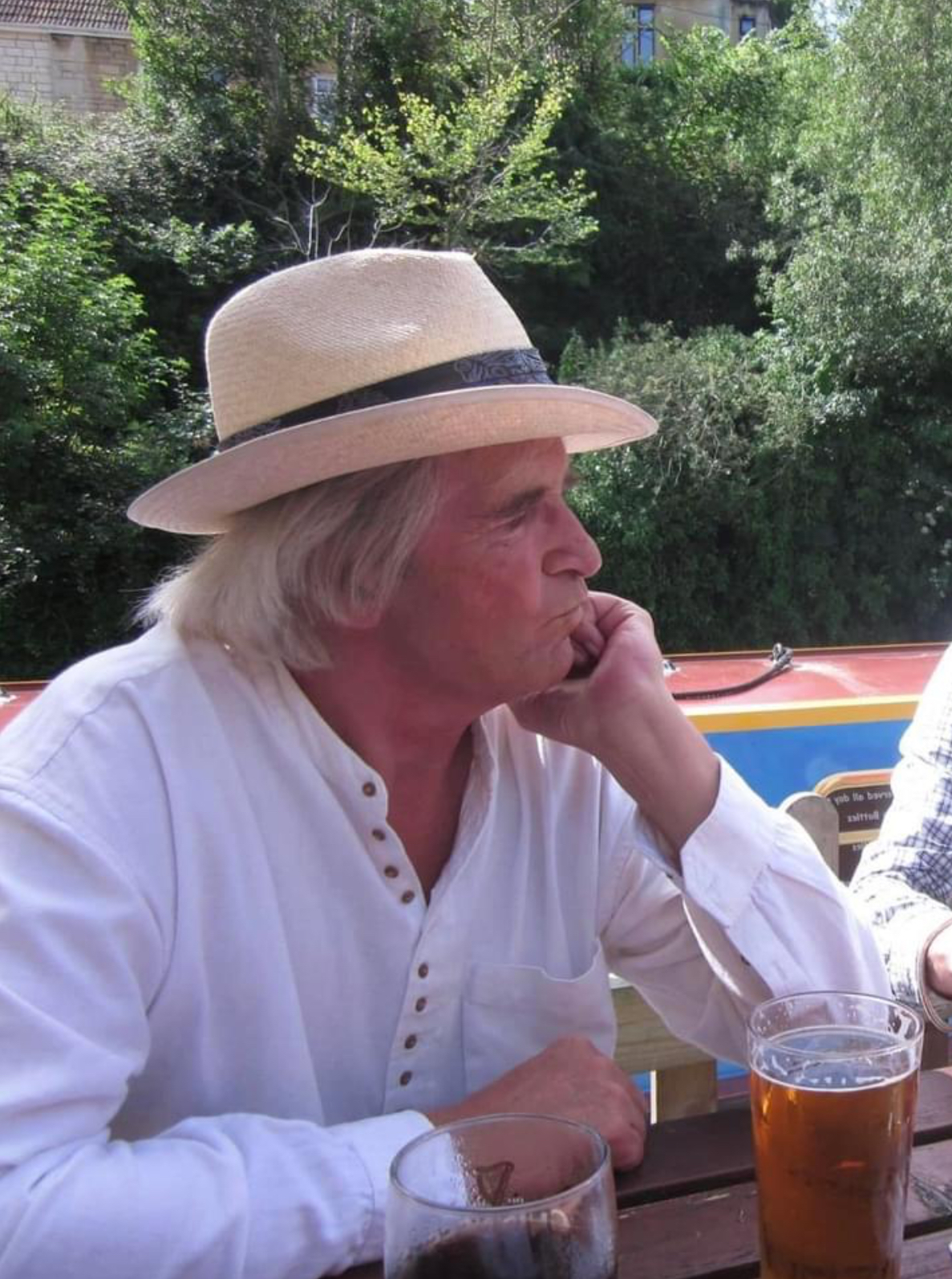
Janet Pearce believes assisted dying would have given her husband Mike a less painful and traumatic death

I have had some responses following the column that I wrote about the controversial subject of assisted dying. 

Janet Pearce, who was featured in my earlier column about unmarried mothers, wrote to me to say: “As a retired nurse who has witnessed many deaths in different settings and from different causes, yes people should have the right to choose the way they want to die. The important approach is honesty…My husband died in pain and being given analgesia by intramuscular injections…He refused the injections because he could not bear the extra pain…He continually asked the doctor to euthanise him, but of course that was not allowed. We have the technology, it is 2024, let’s sort it out!”

That must have been such a difficult time for Janet, and even more so for her poor husband Mike, who was not given any choice except to continue to suffer in agony until he passed away. Why do people have to endure that kind of trauma when the end is close? We have the capacity to make it more peaceful and less harrowing for both the patient and the loved ones who have to stand helplessly by.

Regular reader Clare Proctor said: “It’s an emotive subject and you have handled it well. I absolutely agree with Esther Rantzen – and you. We are accused of being barbaric if we allow animals to suffer and die in agony, but apparently that is exactly what we should do to our beloved humans. Where assisted dying is already legal, statistics show that numbers are not high and there is no proof of the system being abused. Religious objections are often quoted. Religious belief is and should always be a personal choice and not inflicted upon those of us who do not believe. The only thing any of us can really claim as our own is our body, and we should be able to say how we want to meet our end…governments should not be making that decision for anyone.”

Clare’s words about religion and personal choice brought to mind a message I received recently from one reader who was not happy with some of the wording in my column concerning the 18th century Methodist preacher Joseph Pilmoor, who was born out of wedlock. It was a very long message from a born-again Christian which I have had to edit down due to lack of space.

It reads: “Wesley said: ‘Do no harm, do good and love God’. These are not a means to salvation but the fruit of it. Ephesians 2 v 10 says: ‘For we are God’s handiwork, created in Christ Jesus to do good works, which God prepared in advance for us to do.’ ”

It continues: “But this is addressed to believers, people who are already saved…Not all will be saved however as not all will accept His free gift of salvation. It is not just ‘fallen’ women who need to be saved – you mention the word ‘converted’ which conveys a wrong understanding. Everyone needs the salvation which God offers through Jesus…Jesus said that you must be born again to enter the kingdom of heaven (John 3 v 3). This means that the Holy Spirit dwells in you and begins to work out the fruit of the Holy Spirit in your life. See Galatians 5 v 22-23: “The fruit of the Spirit is love, joy, peace, forbearance, kindness, goodness, faithfulness, gentleness and self-control.”

Is the reader here implying that lack of ‘self-control’ is why we get babies born out of wedlock? She adds, quoting my column: “I truly doubt that the attitude was that it was ‘all the woman’s fault and that many prayers were said to help her tighten up her loose morals’ and that ‘they ever felt the need to pray for the man involved…’. As born-again believers, this is never the attitude that Christians take or would have taken because we know that: (Romans 3’23) ‘For all have sinned and fall short of the glory of God.’ “

She does say a lot more in the hope of educating me and encouraging me down the path to ‘salvation’, and ends with: “I hope this helps clarify some misconceptions in your article.”

Well, over to you dear readers. Does it? 

I’d love to hear from you about your opinions, memories and ideas for columns. Use the ‘Contact’ button on the top right of this page to get in touch. This column appeared in the Darlington & Stockton Times on Friday 12th April and the Ryedale Gazette and Herald on Wednesday 10rd April 2024.

A deadly topic for debate

Dame Esther Rantzen has lung cancer and believes assisted death should be made legal. She is planning to go the Dignitas Clinic in Switzerland when her health deteriorates so that she can be in control of how she dies.

Going back to last week when I mentioned the controversial topic of assisted death, I want to talk more about it. Having witnessed loved ones with terminal illnesses suffer as they approached their final days, I am a supporter of assisted death, as long as it is properly controlled and monitored. I believe, in certain circumstances, people should have the right to control the end of their life.

A recently-published report by the House of Commons cross-party Health and Social Care Committee found evidence that in countries where it is allowed, assisted death has led to better end-of-life care. 

One of the newest countries to make it legal is Canada (2016). Reader Lynn Catena lives there and explained that they refer to it as ‘MAID’ (medical assistance in dying): “It is not yet available to dementia patients, and the criteria is such that your prognosis must be terminal or you are living with a debilitating illness for which there’s no cure.”

Including people with dementia could be an ethical minefield unless tightly controlled. The person in question would have to make the decision to be helped to die while they still have the mental capacity to do so, which could be years before the event. Having said that, in the Netherlands, you can sign a declaration in advance, stating your wishes before the illness robs you of your capacity. I’m unsure who makes the final decision as to ‘when’ is the right time, but I presume it is a joint discussion between the medical professionals and the person’s loved ones. I knew a Dutch man in his 70s who was diagnosed with a form of dementia that was going to progress quickly. Rather than suffer the descent into an unquestionably difficult existence, he wanted to take control of the way he died. Because he knew exactly when and how it was going to happen, it gave him and his loved ones the time to prepare and say goodbye properly, as well as precious peace of mind that he would not be subjected to a prolonged period of suffering. He passed away peacefully surrounded by his family.

In the Netherlands, assisted dying has been legal since since 2002 and there are 10 other countries around the world where that is also the case. The UK is not yet one of them, and the Health and Social Care Committee’s report found that assisted death was linked to improvement in end-of-life support in the countries where it is legal. It also resulted in extra state investment in palliative care. Hospices in this country are terribly underfunded, and they survive only because of their constant charitable fundraising. Any extra investment by the state has to be welcome. 

Dame Esther Rantzen, who has stage four cancer, believes that people should have a choice about “the way we want to end our lives”. She is angry that she has to travel to Switzerland’s Dignitas clinic to exercise her choice and is glad that the new report has assuaged fears that palliative care could be damaged by introducing assisted dying. “There isn’t the slippery slope that so many are worried about,” she says. 

The Dutch approach does seem very well scrutinised and transparent, meaning that abuses of the system are rare, and the individual is at the centre of all decisions. Two independent doctors, who do not know each other, are required to approve the request, ensuring that the person has the mental capacity to make the decision, and has not experienced any external pressure to do so. The individual then has to wait 12 weeks from the time of the request until their chosen date and, of course, can change their mind at any time. Importantly, every case of assisted death is scrutinised afterwards by an ethicist, another doctor and a lawyer to make sure all guidance has been followed in the proper way. Their findings are then published in an annual public report, with any shortcomings or abuses openly acknowledged and addressed. 

Statistics also suggest that fears of relatives and health professionals gleefully starting to bump people off early are unfounded.

With all that in mind, I’m eager to find out what you think!

I’d love to hear from you about your opinions, memories and ideas for columns. Use the ‘Contact’ button on the top right of this page to get in touch. This column appeared in the Darlington & Stockton Times on Friday 22nd March and the Ryedale Gazette and Herald on Wednesday 20th March 2024.