Counting our blessings

IMG_1513
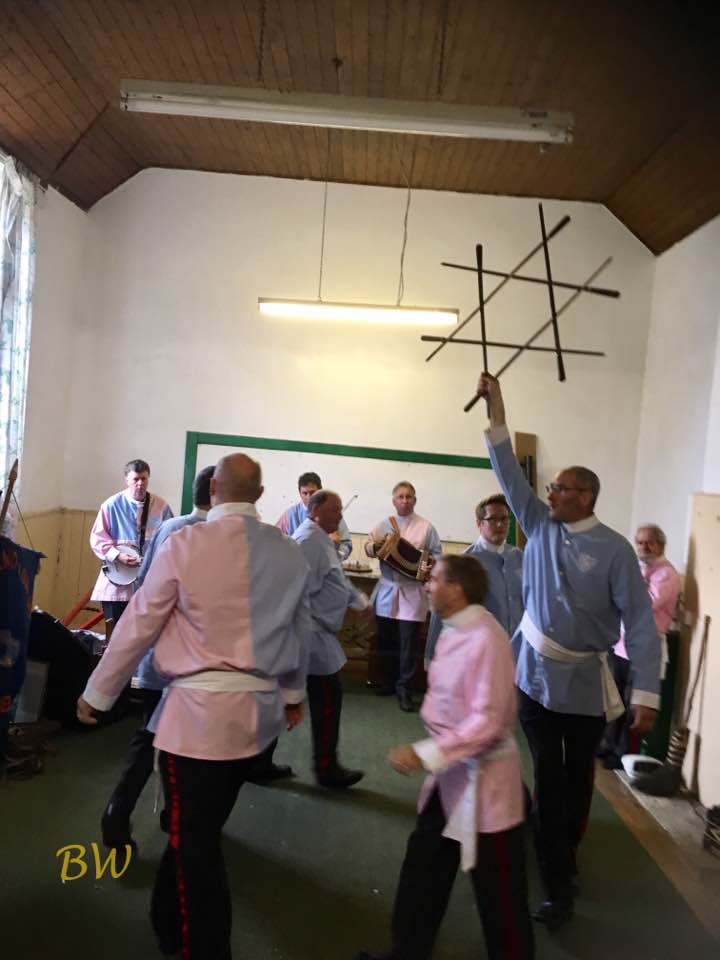
The Goathland Plough Stots in action

IMG_1512

I was disappointed that readers didn’t come forward following my column about unromantic Christmas gifts. I’m dying to learn what rubbish items you’ve received and yet, having said that, I understand that the giver of the awful present might also read this column and so a certain reticence is perfectly understandable. If I guarantee your anonymity, would that help?

I did hear from a reader who declares that her husband defies the stereotype and is the ‘perfect’ gift-giver. Clare Proctor has never suffered the misery of unwrapping a set of pans, writing of husband Howard: “He always buys me great gifts, jewellery, gorgeous perfume, my favourite Florentines, lovely scarves…the list goes on.” She says she sometimes struggles buying gifts for him but adds: “You can never have too many pairs of socks or boxes of chocolate! Also, this year, we treated each other to tickets to see Nicole Scherzinger in Sunset Boulevard in the West End in January – my wish; Howard’s gift!” I think we all need a Howard in our lives!

On another note, Peter Allen from Gilling near Helmsley got in touch following my column about Plough Monday. He had himself composed a piece on that very subject for his parish magazine and includes more detail, saying the custom “was especially prevalent in the North and consisted of a gang of youths, sometimes as many as forty, dragging a plough through the streets. Dressed in white shirts, with a warmer coat underneath, they sometimes blackened their faces. Colour was added with the use of ribbons attached front and back, and knots of ribbons in their hats…An old lady was dressed up and joined the group. More often than not this was a boy in women’s clothing. George Young in his ‘History of Whitby’ refers to these as ‘Madgies’, or ‘Madgy Pegs’ and they went round from house to house, rattling collection tins. When they received money, they shouted “Huzzah”, but if nothing was forthcoming the cry was, “Hunger and starvation”.”

He also mentioned a play that was performed in the village where I grew up. “There is an Ampleforth Play which incorporates sword dancing. The Ampleforth Play contains elements of a traditional Plough Play and as it was performed around Christmas, it would therefore seem safe to assume that it was part of a Plough Monday festival. Some features of it are that the music was provided by a fiddler and a drummer but that songs were unaccompanied. The troupe of players moved from place to place in procession thus: The two musicians, a flag bearer, Clown and Queen, the King and the rest of the dancers/actors in pairs. Interestingly the Queen was always played by a man who had not had his hair cut for twelve months before the performance. Preparation for the play had begun months before…and dancing masters toured the villages of Cleveland teaching the words of the play and the sword dances en route. The Ampleforth Play does not seem to have been performed locally for well over 100 years, although there is a reference to it having been produced in London in the early 1920s.”

Peter asked if I could find anything in my dad’s files, and sure enough, I dug out a newspaper clipping from 1966 which suggests it was performed more recently. I don’t know who the writer was, nor which paper it came from, but it states that the Goathland Plough Stots ‘performed a play very similar to that acted by the Ampleforth Plough Stots…The Rev. Patrick Rowley, vicar of Ampleforth, is at present collecting information regarding the Plough Monday celebrations which I remember being regularly observed in Cleveland when I was a boy.’ The writer adds that the tradition was a ‘relic of pre-Reformation days’ and describes an event that has remained more or less the same for centuries. One difference was that by 1966, the donations collected were spent on a community celebration at the local inn, whereas originally, it was to ‘pay for the votive lights in church. These were renewed and burned throughout the octave of their feast and were associated with their prayers that God would speed the plough and give a bounteous harvest.’

With the incessantly wet conditions we’ve had recently playing havoc for many farmers trying to grow winter crops, let’s hope the blessings of the ploughs work and we can expect far better weather in 2024.

This column appeared in the Darlington & Stockton Times on Friday 19th and the Ryedale Gazette and Herald on Wednesday 17th Jan 2024.

The blessed plough

a111e9e8-a072-4284-b7b9-22e898bf8993
The plough has been a fundamental piece of farming equipment for centuries, enabling the population to feed themselves.
IMG_1509
Blessing the plough outside Ripon Cathedral (Photo courtesy of Ripon Cathedral).

I’m sure you know that it is traditional to remove Christmas decorations by the Feast of the Epiphany on 6th January, although it is still debated as to whether you have to take them down before the 6th or on the 6th to avoid inviting bad luck into the house. I’m still unsure which is right.

What you might not know is that the day after is St Distaff’s Day. St Who? I hear you cry. Well, Distaff is no-one and there is no such saint. It actually refers to the cleft stick used by spinners to hold yarn in place and appeared this country in around 1505. St Distaff’s Day was symbolic of women resuming their regular household chores after the 12 days of festive fun. Spinning was an essential skill, and women would spin most evenings, turning raw wool and flax into thread to be used for clothing, footwear, bedding, baskets and for mending all of the above.

St Distaff’s Day precedes the more well-known Plough Monday. This is the first Monday after the Epiphany when the men of the household would resume their labouring duties. In the days before mechanisation, the plough was the most important piece of farming equipment that the community would rely on to enable them to plant crops and feed themselves for the coming year.

In Mediaeval times, small villages would have just one plough to be shared by residents, and a ploughman would carve out each person’s plot in the ‘ridge and furrow’ method of open agriculture. Once the autumn harvest was complete this revered piece of equipment would usually be stored in the local church for the winter. A candle, or ‘plough light’, would be kept permanently burning to protect the plough from any malevolent crop-ruining spirits that might be lurking about.

Then, on Plough Monday this sacred machine would be brought out of hibernation to mark the start of the new agricultural year. It would be blessed by the priest, and the good folk would ask the Lord to grant them a successful growing year ahead. Men would dress up in costumes, similar to that of Mummers or Morris Dancers, and then parade to music through the village, knocking on doors asking for alms. Anyone who declined to give a few coins would likely find that overnight, their front path had been ploughed up. The plough posse would end up at the local inn and spend the rest of the day feasting, drinking and having a merry old time.

Today, it is not uncommon to see this tradition marked on the Sunday before Plough Monday, which is known as Plough Sunday, and I am a bit confused as to when or if one came before the other. Some sources suggest the plough was blessed on the Sunday, and then the parade would take place the next day. Other sources have the events happening on the same day, whether it be the Sunday or the Monday.

The custom has disappeared from many places, but not all, and in our region is marked most notably in Ripon Cathedral (which this year takes place on 14th January), and in my dad’s old stomping ground, Goathland (7th January).

In fact, I was looking at one of my dad’s books, ‘Yorkshire Days’, in which he mentions Plough Sunday and Monday, and also the ‘Goathland Plough Stots’. The Goathland tradition is to bless the plough on the Sunday after the Epiphany, and then follow that up the following Saturday with their ‘Annual Day of Dance’, a traditional sword dance practiced by the Goathland ‘Stots’. ‘Stot’ is an old Yorkshire word for the oxen or bullocks that pulled the plough, and therefore was given to the men who pulled it through the village during the celebrations.

As I was writing this column, the words to ‘There’s a hole in my bucket, dear Liza’ popped into my head. As a young child, I used to be very confused as to why Liza would suggest that Henry mended his holey bucket with straw when the buckets I knew were made of plastic or metal. But it has only now dawned on me that back in the day they’d be made from wood, clay or some kind of woven yarn or straw, and repairs would likely have been with whatever natural material was to hand.

Unless you can think of a better explanation?

This column appeared in the Darlington & Stockton Times on Friday 5th and the Ryedale Gazette and Herald on Wednesday 3rd Jan 2024.