Going for a Song

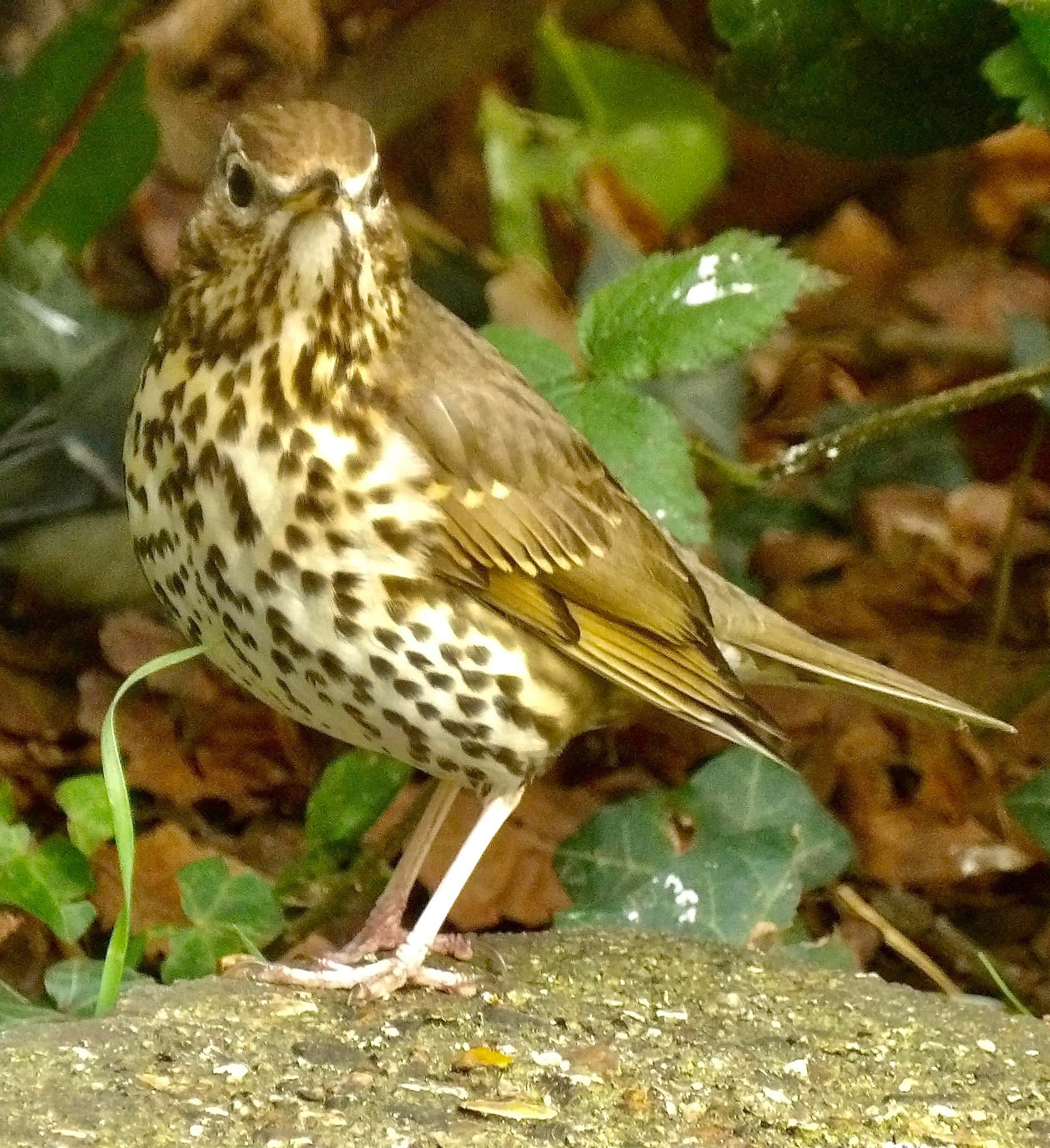
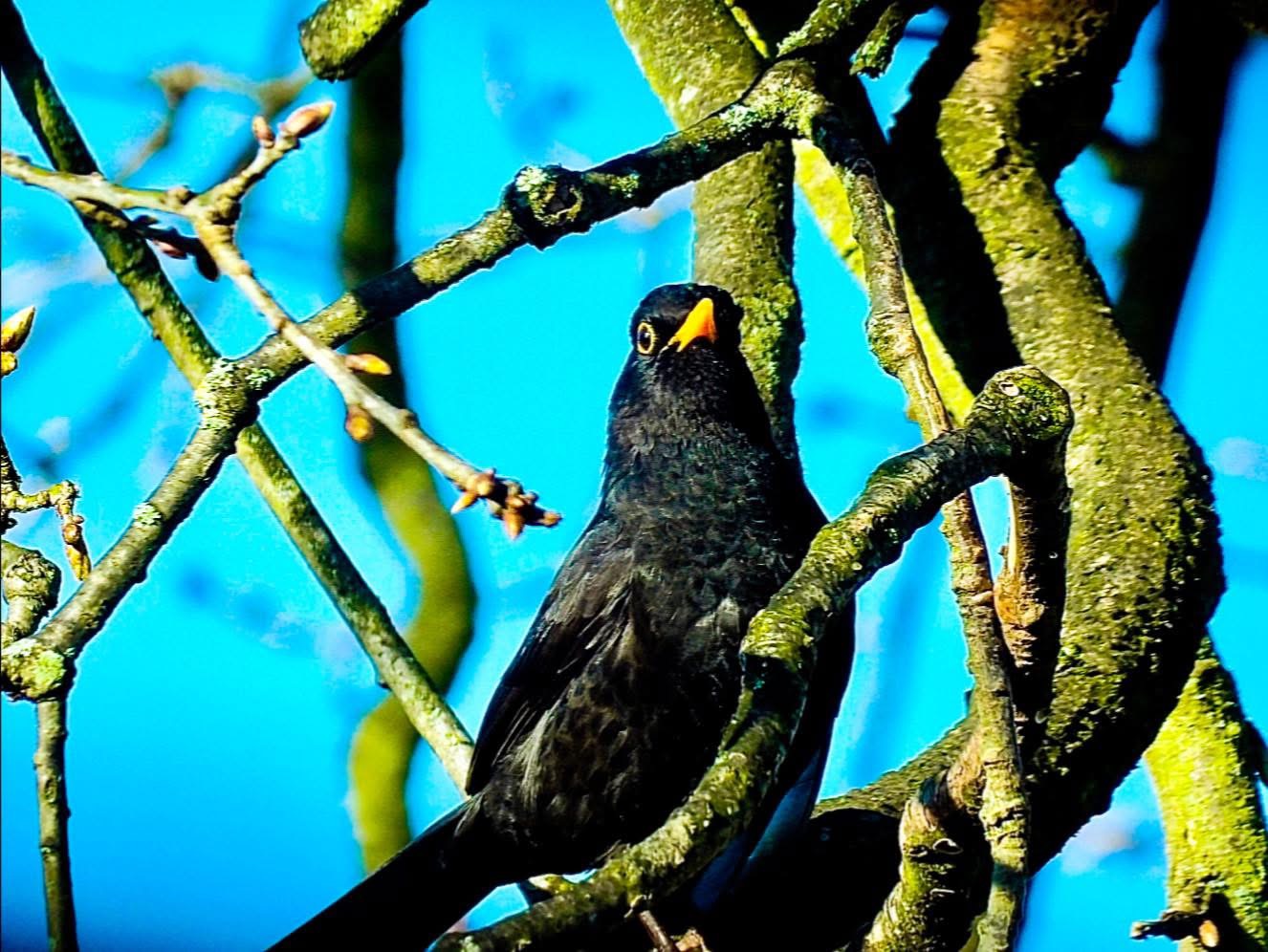
Birds like blackbirds, thrushes and magpies caught in local woods and fields were traded at Kirkham Bird Fair. Picture by Mick Gisbourne.

Reader Rex North has been in touch with some interesting contributions on recent topics. He says: “I was interested to hear about the ‘Bird Fair’ at Kirkham. It seemed to me that this must have happened during the 1840s, and prior to that if the band travelled by boat, as the York-Scarborough railway opened in 1845 and it would have then been possible to travel by train from Malton to Kirkham Abbey station more quickly.

“I have an 1840 directory of the East and North Ridings published by William White, and some reference is made to this fair, as follows: ‘A pleasure fair is held near the ruins (of Kirkham Priory) on Trinity Monday, when the principal traffic is in blackbirds, throstles (thrushes), magpies and other birds, taken in the neighbouring woods and plantations.’ This rather suggests a trade of wild birds caught and sold for their singing capabilities, with magpies being capable, I believe, of being taught tricks etc, so perhaps having a value in those days. I would suspect that the trade died out soon after the railway came, but it would be interesting to know more!”

It would, wouldn’t it, Rex, and the added details you have provided are fascinating indeed. I must admit I made the assumption that these avian trades would have involved birds like poultry, pigeons or birds of prey, that were used for food, competition or pest control. It never occurred to me that they would be kept for their singing! These days most of us wouldn’t dream of doing anything as cruel as snatching songbirds from the wild and placing them in a cage purely for our own entertainment. Their song may have sounded sweet, but I can’t imagine the birds were remotely content in their domestic prison.

I was also tickled by the use of the phrase ‘pleasure fair’. It conjures up images of a simpler time, where happiness was gained in less complicated ways than today.

Rex also has some information on Samuel Bean, known to reader Katherine Hill as ‘Grandpa Samuel’ whom she believed had been born at Peep o’Day farm near Husthwaite, Easingwold in the 1880s.

Rex writes: “I was also intrigued by the name ‘Peep o’Day Farm’, and, being interested in family history I found that Samuel Bean was in fact baptised at Acomb, near York, on 27th July 1879, the son and 4th child of Samuel and Sarah Bean. Samuel (senior) was born at Marton in the Forest, near Sheriff Hutton, being baptised at St Mary’s Church there on 19th November 1848, the son of James and Anne, who farmed at Marton Bridge. Sadly there seems to be no link to ‘Peep o’Day’ at Husthwaite as such, but by 1861 James and Anne had moved with their family to Rising Sun Farm at Easingwold, and had arrived at Acomb by 1871. Samuel and Sarah themselves were not only farming, but running the ‘Skip Bridge Inn’ on the York to Knaresborough Road by 1881, as well as managing the four young children. I wonder if your correspondent’s reference to ‘Peep o’Day’ might refer to ‘Rising Sun’, the meaning being virtually the same?”

I passed this information on to Katherine and she replied: “To get such a positive and interesting response is wonderful. The information is really helpful. My mum also told me that some of Grandpa Samuel’s family farmed at Rising Sun. This all links up with our information. Do you know where/which farm they went to in York? One source suggests they were at Rufforth Grange (enclosed by the airfield in WW2). We do know that Grandpa Samuel and siblings were brought up living at Grange Farm, Acomb.” 

I can’t answer her question, but perhaps Rex or another resourceful reader might be able to find out.

Katherine added: “My ‘Bean’ cousins and I are having a get together soon to talk about our family history. I am recording as best I can the information we’ve got and hope to put it together for a booklet for each branch of the family.”

I wish Katherine the best with her booklet and hope all the Beans have a wonderful family celebration! And if any of you reader sleuths can help further in her quest, do get in touch in the usual ways.


Do you have opinions, memories or ideas to share with me? Get in touch with me using the ‘Contact’ button on the top right.

This column appeared in the Darlington & Stockton Times on Friday 20th and the Ryedale Gazette and Herald on Wednesday 18th Feb 2026

Farming for verses

3DF73D3F-1E1D-4C54-AB38-F5DCE3A19D5B
A poem was written years ago featuring the pretty names of farms surrounding the village of Husthwaite, North Yorkshire.

In my dad’s 1981 archive of columns that I’ve been reading over the past few weeks, he mentions several times a particular verse that was associated with some farms in the Hambleton area of North Yorkshire.

It is a pretty rhyme made up of the names of those farms and I wonder if anyone else has come across similar in their part of the world? It went like this:

‘Rising Sun and Peep o’Day, Throstle Nest and Flower o’May,

Acaster Hill and Baxby Mill, Well Pots Green and Providence Hill.’

A slight variation of the same poem was sent in by a reader who lived at Bickerton near Wetherby, and it read:

‘There’s Rising Sun and Peep o’Day, Throstle Nest and Flower o’May,

Then lying in the mist so far, is Thornton Hill and Acaster.’

According to my dad, the farms were on land surrounding the village of Husthwaite, and the questions in my mind were: When was this poem written and by whom? And did these farms really exist? If so, were any of them still there now? Of course, I set out on a mission to find out.

I’m pleased to report that I have had some success. Listing them in the order of the poem, I found a Rising Sun Farm a mile and a half north-east of Easingwold, although it is some four miles away from Husthwaite. Is it the right one? Peep o’Day Farm is still there, a couple of miles south of the village, next to Peep o’Day Wood. Part of the address of this farm is listed as ‘Thornton Hill’. Is this the Thornton Hill mentioned in the second version of the poem? But if so, would they mention both Peep o’Day and Thornton Hill in the same verse if they were in fact the same place? I couldn’t find another Thornton Hill Farm in the area around Husthwaite. 

I found a Throstle Nest Farm, slightly south of the village, and in the course of my research, I came across two Throstle Nest Plantations (one near Norton-on-Derwent, and one near Darlington) and two Throstle Nest Woods (one near Giggleswick in the Dales, and one near Pocklington in East Yorkshire). Incidentally, my research led me to discover that ‘throstle’ is an old word for a song thrush (of course, my dad would already have known that, as I’m sure many of you reading this do too! But as I said when I first started writing these columns more than four years ago, compared to my dad, my knowledge of such things is scant indeed!).

Flower o’ May is still there, just south of Husthwaite, and Acaster Hill Farm is almost opposite it. ‘Castre’ is the Latin word for ‘camp’, so I wonder if there are any Roman connections?

As for Baxby Mill, I believe the mill itself is either no longer there or derelict, but its location, as you’d expect an old water mill to be, is on the Ings Beck in Husthwaite, at the bottom of the hill heading west out of the village. I drew a blank for Well Pots Green, but there is a Woolpots Farm, a short distance to the south. Is that the one they mean? Providence Hill is still there, to the south west of Husthwaite.

So, clearly, there are still some questions arising out of these two similar rhymes, such as when they were written, but it is clear that most of the farms mentioned do still exist. I will put money on the fact that a reader will be able to furnish me with a some clues as to how these farms got their names. Wouldn’t it be wonderful if someone can tell us more, and perhaps even share their memories of the farms in question?

One of dad’s readers drew his attention to the most unusual name for a farm that he had come across which was ‘Gateway to Happy Sparrows’! Dad doesn’t mention where it was, nor whether it still existed in 1981. Not entirely surprisingly, I could find nothing out about it either, but would love to hear from you if you know of it, or have tales about properties with unusual names and how they came about them. If you want to get in touch, either write or email this newspaper, or go to countrymansdaughter.com and use the contact page to sent me a message.

Contact me, and read more, at countrymansdaughter.com. Follow me on Twitter @countrymansdaug

This column appeared in the Darlington & Stockton Times on 17th and the Gazette & Herald on 15th September 2021