Watch out for super-sleuth mums!

IMG_9442
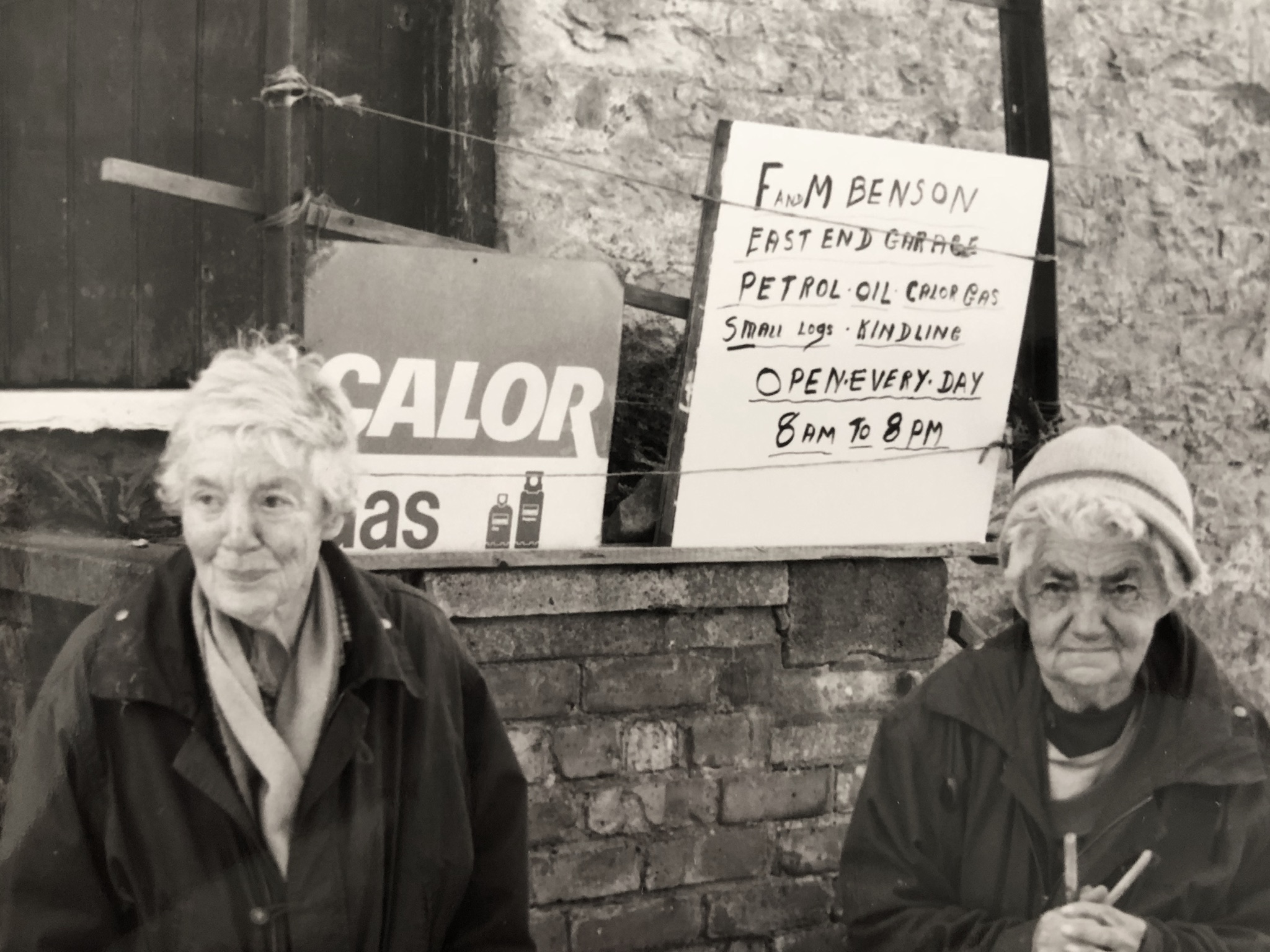
Minnie Benson with one of her many ‘Lassies’. Picture by Camilla Veale

I was delighted to hear from reader Andy Brown who was inspired to get in touch after seeing my column featuring the Ryedale Folk Museum and the cobbler’s where my dad took me, not to get my shoes mended, but to get a haircut.

Andy said: “I loved your column…I can just about remember these old village tradespeople where you would get your bike puncture repaired at the garage or something mended at the forge or sawmill. I lost my dad this year and he was a truly frugal Yorkshireman. Utilising the local cobbler, if he had been entrusted to get my hair cut, would have been just the sort of thing he would do – that is if he didn’t resort to the sheep clippers! Your recollections made me smile.”

When I was a child, two sisters, Minnie and Fanny Benson, owned the petrol garage in the village and offered a bike repair service where a puncture could be mended for 10p a pop. They also offered baby-sitting, a service of which my parents took advantage most Saturday nights when they nipped across the road to the pub. The sisters owned a succession of border colliers, all of whom were called ‘Lassie’, the logic being that they only needed to shout one name for them all to come. I used to beg them to bring the dogs with them whenever they looked after us. Minnie would turn up, dogless, because she knew my mum was not a fan. But when the coast was clear, Fanny would often arrive with whichever Lassie it was, and the dog would then bound up the stairs with me to settle on my bed.

Lassie would be taken home before my parents returned, and I kept her visit just between myself and the sisters, or so I thought. It was only later that Mum told me she always knew when the dogs had been because of the trail of hair they left in their wake.

I wonder if you agree when I say that most mothers have superhuman detecting abilities that make Hercule Poirot look like an amateur. On one occasion, when I was very tiny, I was rummaging around my mum’s bedroom drawers when I found a strip of little round sweets, possibly blue or pink, which looked very appetising to me. There were lots in the packet so I was sure my mum would not notice one missing and was mildly disappointed to find that they tasted of nothing at all. You can imagine my shame when Mum confronted me the very next day about the missing pill, warning me about the dangers of eating something that I didn’t know what it was, even if it did look like a sweetie.

Of course, I was too young to know about contraceptive pills, and the fact that if ‘Tuesday’ had been eaten by someone other than Mum, it would be a dead giveaway. Now that I am a mother myself, I understand how unwitting young children leave trails of forensic evidence behind them, and thus we mothers can perpetuate our mythical super-sleuth status.

In the same column where I talked about my visit to the Ryedale Folk Museum, I also mentioned my concern about preserving my dad’s study. Andy Brown had an idea: “I understand your dilemma with your dad’s office. I always picture you leafing through his books and documents either for inspiration or to expand on your own ideas and have always felt you were the best possible custodian of his memory. But life does have a habit of needing to move on.

“Maybe the solution presents itself in your column – could your dad’s archive be donated to the Ryedale Folk Museum? I know it won’t be the same as having it with you but as your dad was such a key figure in preserving the folk culture of the Moors it would seem an appropriate location.”

I agree with Andy, and he might be surprised to learn that I did approach the museum several years ago with that very suggestion. Although they looked into it, at the time, they didn’t think they had an appropriate space for it, nor the resources to set it up.

I am looking at alternatives, though, and will warmly welcome any bright ideas!

Read more at countrymansdaughter.com. Follow me on Twitter @countrymansdaug

This column appeared in the Darlington and Stockton Times on 6th and Ryedale Gazette and Herald on 4th October 2023

Wishes going down the drain

IMG_5559
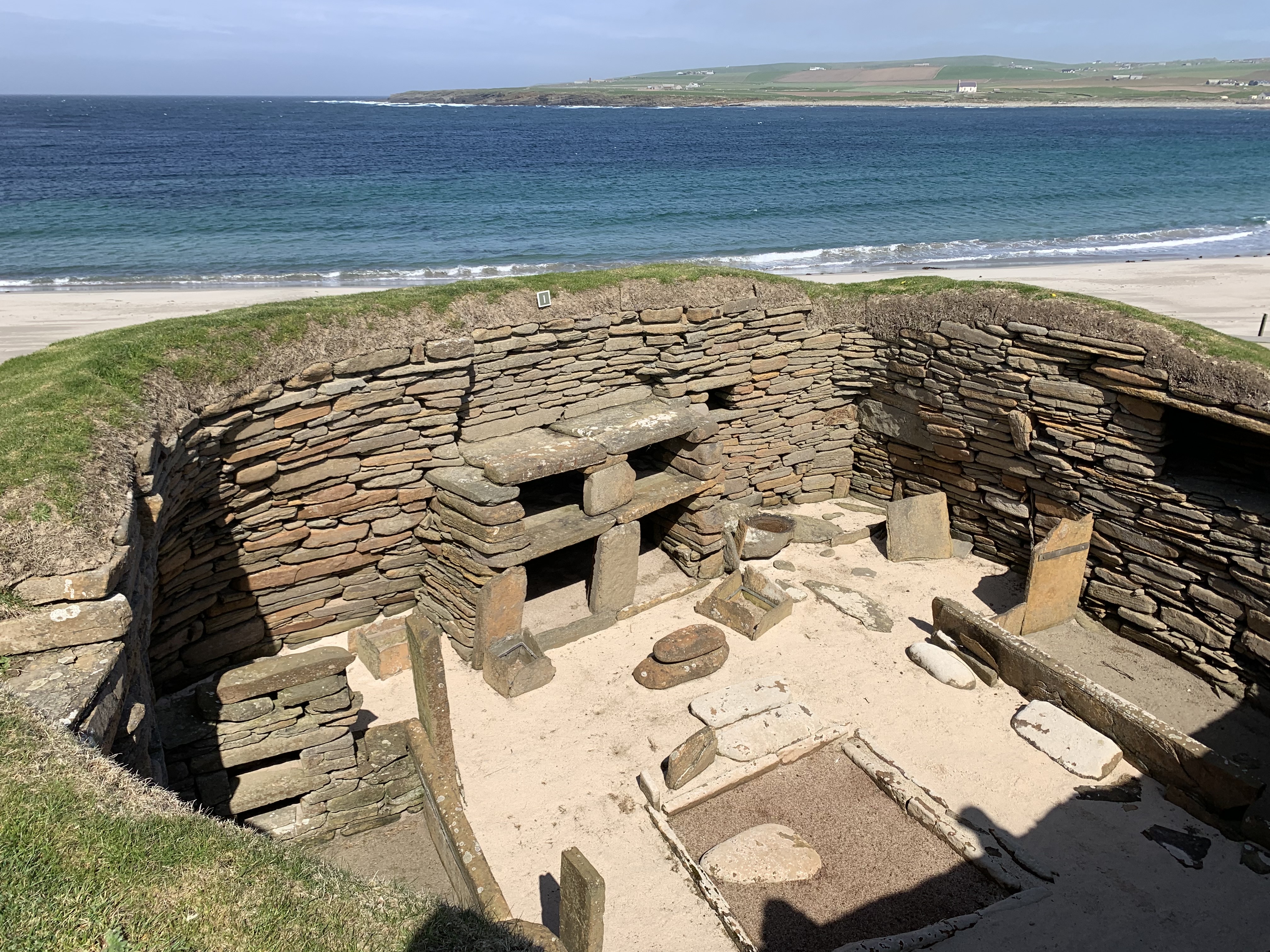
Skara Brae in the Orkneys, one of the best-preserved prehistoric villages in Western Europe. Pictures by Kinlay from Orkney Uncovered.
IMG_1294
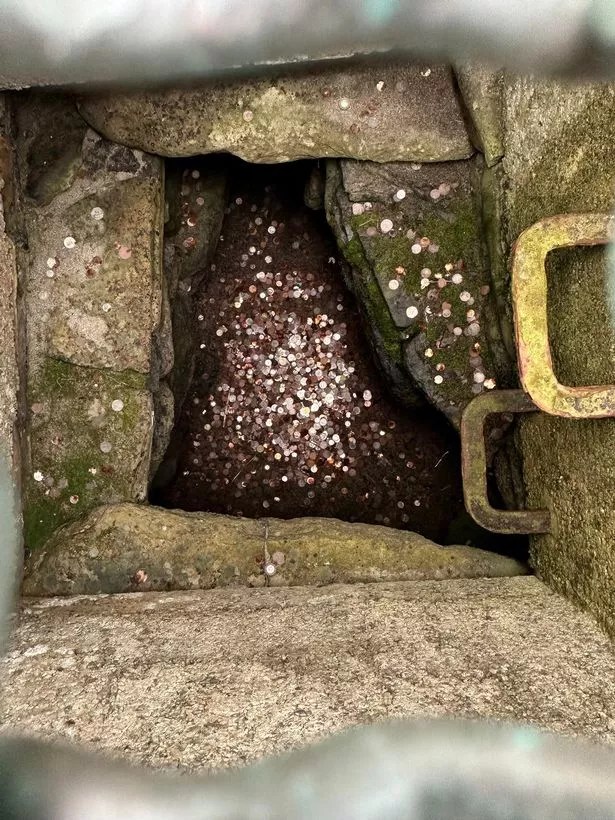
Visitors to kara Brae throw coins into what they think is a wishing wel. In fact it is a sewage drain. Pictures by Kinlay from Orkney Uncovered.

The question about how the ancient residents of Thixendale sourced their water has been brought up again by reader Jo Bird. If you recall, there has been evidence of activity in the Thixendale area since the Mesolithic and the Neolithic periods (Middle Stone Age, 7,000-10,000 years ago and New Stone Age, 5,000-7,000 years ago) as shown by the discovery of man-made tools found in barrows, or burial mounds, dotted about the landscape. Settlements, for obvious reasons, grew up around sources of water, and yet Thixendale lies in a dry valley.

Jo observes: “I suspect that even if there has never been a water course, that in previous centuries when the water table was higher, there were wells…I was brought up in Norfolk where the underlying geology is chalk, as at Thixendale, and the village where I lived had no water course, but there were several wells which were in use until mains water was supplied, I recall in the early 1950s, but there is no sign of them now.”

She adds: “I remember the location of two wells in my Norfolk village, but there has been no trace of them for simply ages. There would have been more, I’m sure. You could perhaps ask anyone who lived at Thixendale before about 1950 if they knew of or used wells…it’s likely that there are lots of villages that once had wells but no trace of them now. People of 80ish or more might recall.”

Jo has a point about wells, and I would welcome any recollections from people old enough to remember how they got their household water before they were connected to the mains. I agreed with Jo’s suggestion that wells would likely have supplied Thixendale in later centuries, but wondered if the ancient inhabitants of the Mesolithic and Neolithic periods would have had the engineering skills to dig down far enough into the chalky layers below ground to access the fresh water lying beneath.

Of course, that set me off digging online and it surprised me to learn that in fact, they did. The oldest well dug by humans to access drinking water was found in the Jezreel Valley in Israel and dates from about 6500BC. Nothing similar from that era has yet been found on our shores but there is a settlement known as Skara Brae, a stone-built Neolithic village on Mainland, the largest island of the Orkneys. It is one of the best-preserved prehistoric villages in Western Europe, occupied from around 3000 BC until 2500BC, and has a sophisticated water and drainage system that includes toilets with facilities to flush waste away from the house through purpose-built channels. Although I can find no mention of a well, likely due to the fact that fresh water was readily available from the nearby Loch of Skaill, it proves that ancient Europeans did have the sufficient engineering skills.

Once I started reading about Skara Brae, I became captivated. We often credit the Romans with educating us about complicated engineering, but it seems the villagers of this remote island were already pretty clued up, establishing a thriving community hidden within a cluster of large middens (mounds of waste). This subterranean way of life ensured precious heat was preserved and homes were insulated from the harsh northern coastal weather conditions. A series of one-room houses of around 40 square feet were built using flat stone slabs, all connected by covered tunnels. As well as a functioning drainage system, each house had ‘built-in’ stone furniture which included beds, seating, a dresser, a central hearth and a tank in the ground which archaeologists believe would have been used to minimise the mess from the preparation of their main food source, fish. Among artefacts discovered were tools, gaming dice, food and drink vessels, stone carvings and jewellery in the form of beads, necklaces and pendants.

As I mentioned, the ancient residents of Skara Brae had no need to dig any wells. Nevertheless, we modern humans do have a tendency to chuck loose change down anything resembling a well while in the hope of bringing us good luck. At Skara Brae, visitors wishing for their dreams to come true have for years been throwing their pennies down what they thought was a well. Sadly, as one witty tourist guide pointed out, they have quite literally been throwing their money down the toilet!

Read more and contact me at countrymansdaughter.com. Follow me on Twitter @countrymansdaug

This column appeared in the Darlington and Stockton Times on 29th and Ryedale Gazette and Herald on 27th September 2023

Yorkshire pioneer who gave Wright brothers a lift

IMG_8156
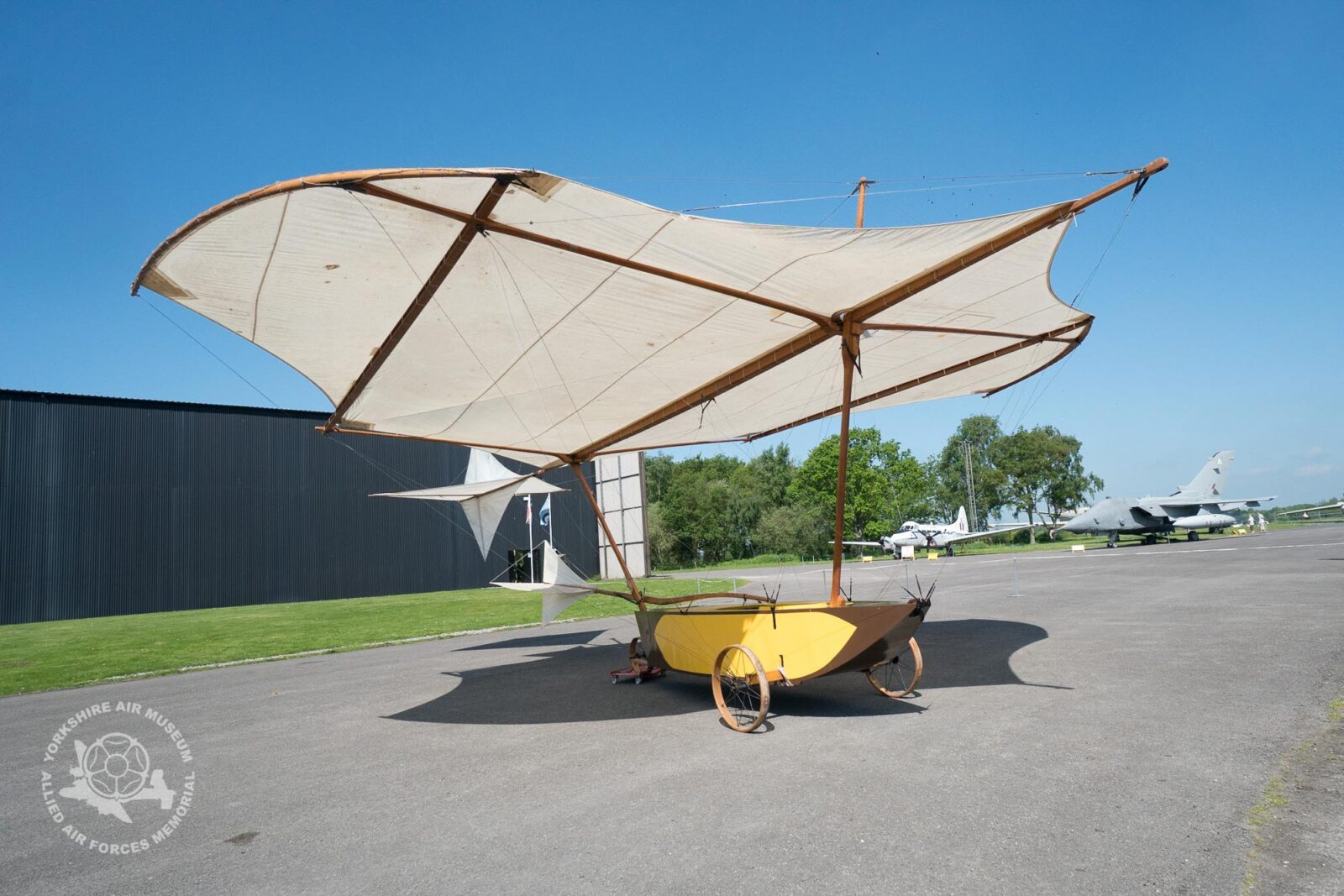
The sign at the entrance to a Yorkshire village with a bold claim
P1000539
John Severs’ picture taken in Kirkby Stephen that still shows distances in furlongs

I was contacted back in July by reader John Severs with the following:

“It was another good article you recently published on ploughing strips and the derivation of the furlong measurement, very informative. I’ve attached a photo of a milepost which I took a few years ago in Kirkby Stephen. In addition to the miles, it also indicates furlongs. I suppose that there are some more in the old North Riding area.”

I can’t say I’ve noticed any mileposts that still refer to furlongs, and so this must be a very old one indeed. As I mentioned in my column, a ‘furrow-long’ was considered the length a horse could plough in one day, or a pair of oxen could plough before they needed to rest and was the chosen method of measuring distance when the sport of horse-racing took off in the 1500s. A furlong is an eighth of a mile and they are still marked alongside British racecourses today. The length of any race shorter than a mile, or that is not a round figure in distance, will be described using furlongs.

The black and white signpost in John’s photo shows that it is 12 miles and two furlongs to Appleby from Kirkby Stephen, while Brough is four miles and three furlongs away. It is a very precise measurement, and it reminded me that you rarely see signs showing ‘half’ miles these days. Distances are rounded up or down to the nearest figure and I am guessing it is because it is not essential to know the exact distance when travelling by motorised transport. Perhaps in the days of yore, it was more important to know exactly how far you had left to walk or ride.

On the subject of signs, I was driving through Brompton By Sawdon when the village entry sign caused me to slam on my brakes, stop, and take a picture. Brompton lies about eight miles south-west of Scarborough and what caused me to pull up was the declaration that the village was ‘The Birthplace of Aviation’. What a bold claim, I thought, and immediately determined that I had to delve into it. In my own mind, I expected ‘The Birthplace of Aviation’ to be somewhere far more exotic, like America, where brothers Orville and Wilbur Wright made their groundbreaking first flight.

If you search online for ‘birthplace of aviation’, the Wrights are the first to come up, with Ohio claiming the honour thanks to the fact it was the brothers’ home town. However, I was delighted to see that second on the list is Brompton by Sawdon, and the reason is that it was the birthplace of a pioneering aeronautical engineer, Sir George Cayley (1773 – 1857). Cayley is responsible for many engineering innovations but is credited with being the first to truly understand the scientific principles of winged ‘heavier than air’ flight (as opposed to hot air in balloons, which until then was the only way to get airborne). In 1799 he came up with the idea of a fixed-wing flying machine with separate mechanisms for control, lift and momentum. He developed a model version, which did fly, but soon came to realise that unless someone could come up with an engine that was suitably light, and yet capable of delivering the necessary lift and thrust, then the machine would never be able to carry humans on a sustained flight.

Sadly, he died before he could accomplish that feat, and would not witness how his research and innovation played a huge part in the Wright brothers’ success, which they acknowledged. He would also not have known that his discovery of the four forces that impact on flying aircraft – weight, lift, drag and thrust – would be still used in aviation today.

The first flight carrying a human happened on 17th December 1903 when Orville Wright piloted the ‘Wright Flyer’, the fixed wing, ‘heavier than air’ biplane that he and his brother had been developing for four years. He flew for 12 seconds across 120 feet at Kitty Hawk, North Carolina.

For many years, Kitty Hawk and Ohio disputed with each other as to which of them was the true ‘Birthplace of Aviation’ until, in 2003, Congress came down in favour of Ohio, thanks to the fact the brothers lived and developed their ideas there.

Which place do you think deserves the honour? And have you spotted any noteworthy signs on your travels?

Read more at countrymansdaughter.com. Follow me on Twitter @countrymansdaug

This column appeared in the Darlington and Stockton Times on 22nd and Ryedale Gazette and Herald on 20th September 2023

Stings in the tales

IMG_0646
Steve D does not recommend disturbing a wasps nest with a ride-on mower
IMG_8218
Wasps are polarising insects

My last couple of columns have struck a chord with readers keen to tell me of their own experiences, which I absolutely love to hear, so thank you to all of you who have taken the trouble to get in touch.

Last week it was all about dimpled pint pots, and this week, it is all about that annoying critter that harasses those of us who enjoy drinking from our pint pots outdoors – the wasp.

I mentioned that in spring and early summer they like to eat protein in the form of other bugs and insects, which is true, but I have since learned that they also feed on the sweet liquid secreted by the wasp larvae that are still growing in the nest. By the end of the summer the larvae have matured into fertile male and female wasps, then leave the nest to mate. So the worker wasps have to find their sugary fixes elsewhere, and thus are drawn to the sweet stashes provided by their human suppliers.

I also posed the question of whether you consider the wasp to be a pest or a friend, and it seems, for the poor wasp, that the majority come down on the side of pest, with the odd person sticking their neck out to fight its corner. Usually, as in my case when a wasp stung my toddler son for no apparent reason other than grumpiness, the bad experiences colour our opinion of them for ever more. Such is the case of a friend of reader Lynn C: “Last night we were just talking about sipping out of cans. One fellow got stung that way and refuses to drink out of cans now. He’s scarred for life!” she says.

Michael K was stung on the way home from his holiday: “I was in the back of a taxi in Corfu travelling to the airport when one came in at speed landing down my shirt. I screamed out making the driver jump.” He adds that he was also attacked last year trying to tackle a nest himself. “Not a good idea,” he admits, and now employs the services of a ‘Wasp Man’ who charges £80 a visit. “Not bad for five minutes’ work,” he says. I think I’d charge double for performing such a risky operation, Michael!

Talking of nests, Steve D had a rather terrifying experience and advises: “Wasps do not like it if you go over their nest on the mower!” He was on a ride-on cutting his grass last year when he unknowingly ran over one. “Little b*****s went directly for my face,” he says. “I’ll never forget the moment I looked up and one of the little sods was making a beeline (see what I did there!) for the spot directly between my eyes. Hit me like a bullet. A painful week!”

Joanne C also had an alarming experience. “I was stung few weeks ago IN MY MOUTH!’ she cries. “The wasp had left its sting on my food and I ate it and it stung my lip and it really hurt…it swelled up and eventually eased…I’m not even afraid of them either. Can’t say the same for spiders though!” This tale intrigued me, because I know that bees lose their spike when they sting, but wasps don’t. Could it really have been a wasp sting, or perhaps a bee sting that had come away from its host to lurk with intent among the salad leaves?

Some of us acknowledge that our fear of them is perhaps unwarranted. Angela B admits: “I am so ridiculously and irrationally scared of the little @&*#s much to the amusement of my friends. I cannot remain still and grab the nearest person and literally shake! I don’t understand others’ fear of spiders as they don’t come looking for you like the evil wasp. Even saying the word makes me shudder. Spoils my summers!”

The lone voice that spoke up for the much-maligned wasp was Gareth C who points out: “Wasps are excellent pollinators, they hunt and eat aphids, and they will eat mosquitoes if they find them.”

Knowing that, then, I need to train one to sort out that irritating mosquito that loves to dive-bomb my ear in the dead of night. If you know how to train a wasp, do get in touch via the usual channels.

Read more at countrymansdaughter.com. Follow me on Twitter @countrymansdaug

This column appeared in the Darlington and Stockton Times on 15th and Ryedale Gazette and Herald on 13th September 2023

A pot full of opinions

I’m delighted that my column about dimpled pint pots a few weeks ago sparked a spirited response from readers.

Clare P used to own a pub on the North York Moors and said: “We had a stash of dimpled jugs for the old stalwarts who preferred them, but they rarely got used. Our biggest revolution…was when they outlawed pints of hand-pulled real ale with the frothy ‘ice cream’ head…The taps had to be adjusted to stop any beer flowing back into the barrel and the glass had to have a full pint of beer, often marked on the side, before you got to the head. So the frothy heads disappeared. There was quite a lot of groaning from the regulars, but they adapted!”

Steve P came up with an ingenious DIY solution to preserve his treasured frothy head when drinking from a dimpled pint glass at home: “I couldn’t find one with a head saver…so I had to etch my own using a Dremel…perfect!” Stewart P says he also misses the dimpled pot for bitter and adds: “I generally enjoy drinking out of big glasses. It saves downtime.”

Gareth C is not impressed with the modern Pilsner glass, declaring it a ‘liar’: “It has a bulb at the top, so the top half of height contains more than 2/3 of the drink. This means that when it looks like it is half full, you have hardly any left.” Good point Gareth!

Some establishments still use the old-style glasses, including, as Andy W reliably informs us, Wetherspoons in Stockport. Michelle C still uses them in her establishment too: “Some guys love their cask ale from them,” she says. Allan J is not in that camp, declaring it is like “drinking your beer out of a jam jar!”

Jim A says he associates handled and dimpled glasses with lager because that’s how they drink it in Germany, and he pairs straight glasses with draught ale: “It tastes the same, but the glass has to be right for the drink. I drank lager when I was young out of dimpled glasses, the ‘real’ men (old blokes) had pints of bitter in straight glasses.” I find that interesting, because I would have said it was the other way round, but perhaps Jim and I belong to different generations, so our memories differ. Billy G also remembers drinking lager out of dimpled pint glasses, and I know for a fact that he is much younger than me!

Nick G and John D both suggest a more sobering reason as to why the dimpled pint pot disappeared: “Unfortunately,” says John, “They did not shatter as do the modern pint glasses and as such could be used as a weapon when broken, the handle being used by the perpetrator to give more force when used in a pub brawl.” Cripes!

Lydia W points out that dimpled pint pots not marked with the pint or litre line cannot legally be used any more, although Anne H believes that you can use them in certain establishments. Alan B says that beer glasses are now a certain shape to enable the bubbles to keep rising to the top and so stop the drink going flat. He is also glad that the rule about marked pints has come in: “I used to hate it when I had lager and lime and was given an old glass not marked to the line. The publican used to put less lager in and charge me for the lime!”

Andrew H had a similar complaint: “I had a pewter pint pot with my name for my 21st birthday. I left it behind the bar at my local…Friends asked me how I knew I had a pint as the head could not be seen.” After a good two years of drinking it that way, Andrew decided to take it home to measure it himself, and sure enough, it was well short of a full pint. “I bet my last penny the landlord and his bar staff knew they were fiddling me,” he grumbles.

Stephen G is straight to the point when it comes to the the dimpled glass: “Too flipping heavy,” he complains. But of all these comments, I think my heart lies with the one from Alison M.

“Mine’s a bottle of Pinot,” she says, “Happy to put it in a pint glass.”

Cheers to that!

Read more at countrymansdaughter.com. Follow me on Twitter @countrymansdaug

This column appeared in the Darlington and Stockton Times on 8th and Ryedale Gazette and Herald on 8th September 2023

A race to find the answer

IMG_8558
The Gysepy Race is clearly visible in the village of Duggleby on the Yorkshire Wolds

IMG_8565
Travel a little further east of the village, and it is barely visible at all

In one of my columns about the Yorkshire Wolds I wondered where the ancient inhabitants of Thixendale sourced their water. There has been evidence of activity in the area since the Mesolithic and the Neolithic periods (Middle Stone Age, 7,000-10,000 years ago and New Stone Age, 5,000-7,000 years ago) as shown by the discovery of man-made tools found in barrows, or burial mounds, dotted about the landscape. Settlements, for obvious reasons, grew up around sources of water, and yet Thixendale lies in a dry valley.

A reader got in touch to suggest that the Gypsey Race might flow through there. When I heard that, the question that immediately entered my head was ‘What on earth is the Gypsey Race?’

As I now know, the Gypsey Race is a natural watercourse that has its source a little east of Wharram-le-Street on the Yorkshire Wolds, passing through villages such as Duggleby, West Lutton, Foxholes, and Burton Fleming, ending where it enters the North Sea at Bridlington. Thixendale lies west of the source, and therefore the river cannot possibly flow through there.

What is peculiar about this particular river, though, is that it flows both above and below ground, and for much of its journey is quite invisible. The word ‘gypsey’ is an East Yorkshire term that refers to a waterway that comes and goes. If the weather remains dry, then parts of the waterway above ground will remain dry, whereas during a period of wet weather, it fills up and flows above ground. What is happening in reality is that the water table is rising and falling, depending on the level of rainfall, and in dry conditions, it simply falls below the level of the stream bed, rendering it invisible to us land dwellers. However, it will still be held in the aquifer below our feet where we cannot see it. If you watch the river closely, you might see bubbles bobbing up to the surface. These are little pockets of air being pushed out from the chalky layer below.

There are such rivers in other parts of the country, with each region having its own term. In some areas, they are known as ‘winterbourne rivers’, the word ‘winter’ referring to the time of year it is most likely to flow above ground, and the word ‘burna’ being an old term for a stream. Places with ‘Winterbourne’ in their name occur where we find chalky ground, mainly on the eastern side of the country. In Kent, they are known as ‘nailbourne rivers’ and in Hampshire they are called ‘lavants’.

There is some folklore around gypsey rivers, the most common being that when it is in spate, it is a portent of doom. It is only relatively recently that we have begun to understand the scientific reasons behind its quirky behaviour and in previous centuries, it baffled and unsettled many, as described in this 1911 quote from ‘Examples of Printed Folk-lore concerning the East Riding of Yorkshire’, edited by a woman known simply as ‘Mrs Gutch’.

‘To solve the mystery of the “Gypsey Race,” as the strange waters are called, has been the ambition of many modern scientists. Little, however, has yet been discovered to account for its eccentricities. Almost as suddenly as they came, some six weeks ago, the waters will shortly disappear, and may not be seen again for years. Only five or six times during the last twenty-one years has this brook run its eerie course. Its source of origin is a hidden mystery. The strange workings of Nature, however, appeal to the curiosity and imagination of the Yorkshire wold-dweller.

‘Day by day young and old watch the stream running its twenty-mile course of hide and seek among the chalk to the sea at Bridlington. Astonishment is often mingled with awe, for according to tradition dire disasters follow in the wake of the brook, and which in consequence bears the sinister title of ” The waters of woe.” Superstitions die hard, and in these out-of-the-way wolds people are still to be found whom it is difficult to dissuade that the running of a stream fed by an intermittent spring is not in some way associated with the supernatural.’

Advances in science mean we now understand why the Gypsey Race behaves as it does. And yet the question remains – where did the ancient residents of Thixendale get their water?

Read more at countrymansdaughter.com. Follow me on Twitter @countrymansdaug

This column appeared in the Darlington and Stockton Times on 1st Septembrt and Ryedale Gazette and Herald on 30th August 2023

Is the wasp really a pest?

IMG_8240

I have mentioned my dislike of wasps before, and it is about now that they can become extra annoying when you are eating or drinking outside. They just love to buzz about your burger, land on your ice cream, or take a dip in your pint.

Some people aren’t too bothered, and calmly bat them away, while others scream, throw their chairs back and flee as if pursued by hungry lions. Although wasps are more likely to sting than bees, they are still only supposed to do that when they feel threatened.

They are extremely territorial about their nests, and if they deem anyone or anything to be a danger to it, they will attack, so it’s best to steer well clear if you come across one. I used to think it was an old wive’s tale that if you kill a wasp, its mates will come to take revenge, but in fact it is sort of true. A squished wasp emits a pheromone that alerts its comrades nearby who rush to the scene to leap into defensive action.

One summer years ago we were staying at a holiday cottage where wasps had made a nest under the roof. My youngest son was playing in the garden when I noticed one flying around him. It was not in a good mood, even though my son, a toddler then, was well away from its nest and oblivious to it. The wasp was circling him like a predator and before I could intervene, it swooped in at lightning speed to sting him. My poor boy was shocked and distressed at the sudden piercing pain in his arm.

So that is why I don’t like wasps. They sting, sometimes for unforeseen reasons, sometimes multiple times, and it really hurts! Why this irritated wee beastie thought my little boy was dangerous still baffles me. Thankfully, though, my now 21-year-old has no memory of it.

There are those who will defend this polarising insect though. I was visiting a house in the country and got talking to a gentleman about wasps and my natural dislike of them. He insisted they got a bad press and went on to explain why they behave like they do in late summer.

The wasps that annoy us, he said, are often worker wasps and they are a bit Jekyll and Hyde. For the first half of the year, they are the benign Dr Jekyll, their job being to maintain the nest and provide food for the growing colony. In these early days of summer, insects and grubs are plentiful, and the busy wasp is too preoccupied finding enough protein to feed the ever-hungry brood. They give us humans and our food a wide berth because they can easily find what they need elsewhere. Once the colony is established, however, they are no longer of use and are cast out like a layer of surplus middle management. Suddenly they are homeless, and food supplies are running thin. Competition with other redundant hungry wasps is fierce and in a desperate bid to survive, they will take whatever they need wherever they can find it. At this time of year, they crave sugar, and our penchant for al-fresco dining provides them with an oasis of sweetness in an otherwise barren landscape.

On the positive side, wasps are excellent pollinators for our fruits, flowers and crops, and also extremely efficient at pest control. Some sources I’ve read say that if it wasn’t for the wasp, we would be overrun with destructive insects that would make our lives misery.

Knowing this did make me sympathise a little with their plight. But I can’t say it makes me like them much more.

Read more at countrymansdaughter.com. Follow me on Twitter @countrymansdaug

This column appeared in the Darlington and Stockton Times on 25th and Ryedale Gazette and Herald on 23rd August 2023

Hair-raising visit to the cobbler

IMG_8013
The cobbler’s workshop at The Ryedale Folk Museum

IMG_8011
Jack Suggitt’s work bench

IMG_8010
The workshop is a replica of Jack Suggitt’s cobbler’s shop in Gilling East.

As I mentioned last week, a friend and I visited the Ryedale Folk Museum in Hutton-le-Hole recently which celebrates and preserves the traditional skills, crafts and trades of rural North Yorkshire. They have recreated a life-size blacksmith’s forge, a cooper’s workshop, a chemist, a saddler and a grocer’s among other things, and you experience a little of what it must have been like to live and work in these places long before modern advances led to their demise.

They have also completely rebuilt four cruck houses, named after the huge floor-to-ceiling curved A-frames that are the basis of the structure of the buildings. Carved out of sturdy oak, these crucks are linked by a great ridge tree forming the framework that supports the thatched roof. Walls were built inside to suit the owners’ needs, often with sleeping quarters at one end, and the fire and kitchen at the other. Known as ‘longhouses’, due to their linear design, they usually included space for livestock near the sleeping area. The animals generated precious heat that would help keep everyone warm, with the thatched roofs serving as insulation. Most houses of ordinary folk were thatched until the 19th century when pantiles began to be mass-produced.

The display that I was most keen to see was that of the cobbler because, as I proudly boasted to my friend, it is our own local shoemaker’s workshop that has been recreated.

The cobbler was called Jack Suggitt, and his little shop was behind his house on the main street in Gilling East near Helmsley. I have a distinct recollection of going with my dad to what was little more than a shed filled to the gills with tools, shoes, boots, lasts, and pots of polish and glue. It had a very distinctive smell, a pungent combination of leather and adhesive. It is one of my earliest memories, as Jack retired in 1969 when I was only two.

But what was so unique about going to Jack’s was that it was not to get my shoes mended. I was going to get my hair cut. It is funny how, as a child, you completely accept as normal things that to others might seem rather odd and it only dawned on me much later that not many people would visit the shoemaker for a haircut. But there I sat, stock still on the tall chair in his cluttered shop while he snipped my short, straight two-year-old barnet. I have no idea whether he was a skilled barber, and when I asked my mum about it, she struggled to remember why I would have gone there on that particular day. Firstly, she said, it was highly unusual that Dad would take me for a haircut, and secondly, had it been her, she would definitely not have chosen the cobbler-cum-barber for my hair trimming needs. I am guessing that it must have been a Saturday, when Dad was not working, and that perhaps there was a special occasion imminent for which we needed to be smart. Sometimes us parents leave it too late to get our children’s hair cut, and then we realise, just before we are going to a wedding, or to have school photos taken, that said hair is an unruly, shaggy mess unfit for public display. So then we rush them to wherever we can get a last-minute appointment. And perhaps that is how I ended up at the cobblers’ with my dad.

Places like the Ryedale Folk Museum do very important work in preserving ancient ways of life, and seeing Jack Suggitt’s workshop brought to mind a dilemma I am dealing with myself. What is going to happen to my dad’s study? At the moment, it is almost perfectly preserved, as if he has just nipped out for a moment, and it is an excellent example of a writer’s bolt-hole. It is stuffed full of the history of my dad’s life as a policeman and an author, with shelves full of his reference books and files full of cuttings and letters going right back to the start of his career in the 1950s. It needs preserving, but the time is going to come when we will have to leave this house. If had my way, I’d lift up the whole room and take it with me. But I can’t.

So what on earth are we going to do with it?

Read more at countrymansdaughter.com. Follow me on Twitter @countrymansdaug

This column appeared in the Darlington and Stockton Times on 18th and Ryedale Gazette and Herald on 16th August 2023

Where have all the dimples gone?

IMG_7986
The ‘tulip’, left, and the ‘Nonic’ beer glasses. Do you have a preference for your pint?

As I write this, North Yorkshire pubs are in the news. The Goathland Hotel has come up for sale after the current licensee has decided to retire. The hotel doubled as the fictional Aidensfield Arms in the TV series Heartbeat (which of course was based on my dad’s Constable series of books). The sale sparked national interest, and made it to the dizzy heights of BBC news.

The second pub-themed story came courtesy of the Ryedale Folk Museum, based in Hutton-le-Hole. This lovely little museum, which celebrates traditional rural crafts and skills of the North York Moors, has launched a new exhibition called ‘Pub!’ which features historic photos from the archives of some well-loved hostelries from the area, including The Star Inn at Harome, the Lion Inn at Blakey Ridge and of course Hutton-le-Hole’s own pub The Crown. The exhibition runs until 4th September.

It made me think back to the pub I used to frequent as a young adult, namely the Malt Shovel in Oswaldkirk. It was one of the most popular in the area with the younger generation, and I have many fond memories of nights spent there with friends who I still know to this day. I’m not going to elaborate on what those ‘fond memories’ are because most of them involve embarrassing alcohol-fuelled misdemeanours. I was very fortunate to get a job serving behind the bar too, and I absolutely loved it. To this day, it remains one of my favourite ever jobs.

I got to know my locals well, to know who drank what and when, and as soon as I saw them coming in, I’d start to pour their drink so that it was ready for them as they reached the bar. This was in the days when most men of a certain age drank bitter and had no hesitation in telling me if the pint I’d just pulled wasn’t good enough. Lager as an acceptable drink for the red blooded male was just beginning to peep from the shadow of bitter, and continental bottled beers were becoming increasingly popular, especially amongst the young. The brewery, Samuel Smith’s, had recently launched its own ‘Natural Lager’ in bright green bottles, and in our pub, it really took off. No one who drank Natural Lager used a glass, because glasses were for outcasts, losers and old people. The Supercool drank straight from the bottle.

I was having a drink recently with one of those friends from my pub days who posed the following question: What happened to dimpled pint pots with handles? When I worked at the Malt, most pints came in straight-sided glasses that had a bulge near the top, and this design had overtaken the dimpled pint pot, coinciding with the demise of bitter and the increase in popularity of lager. The design was patented by American Hugo Pick in 1913 and improved upon the completely straight and smooth glass that had a tendency to crack and develop sharp nicks in the rim when being washed and stacked, which rendered them unusable. Known as the ‘Nonic’ (or No-nick) Pick added a slight bulge around the glass about an inch below the rim, which increased its strength and made it easier to hold when washing up. The other common design of the day was the ‘tulip’, which has a narrower bottom half for a more comfortable feel when held in the hand.

We consider the dimpled pint pot a stalwart of the traditional English pub, but in fact it wasn’t around for that long. It became popular in the 1920s and 30s, after glass tankards superseded pewter (1500s onwards) and ceramic (late 1800s onwards). The dimpled glass pot was developed by Ravenhead Glass, with a handle to keep the beer cool and dimples to make it easier to hold when washing up. However, these thick glass pots fell out of favour once lager became popular, imbibers preferring thinner, smoother glasses. Ravenhead closed in 2001, and the pot disappeared with them.

In recent years, though, it has had a bit of a revival with the advent of the Hipster movement in the 2010s. Suddenly, the dimpled pint pot was back in fashion, with the bearded trendsetters wanting to drink their fashionable craft beers out of this uniquely British vessel.

I wonder how they’d feel if they knew that their olde worlde beer jug was likely imported from Turkey?

Read more at countrymansdaughter.com. Follow me on Twitter @countrymansdaug

This column appeared in the Darlington and Stockton Times on 11th and Ryedale Gazette and Herald on 9th August 2023

Where there’s water

IMG_7171
There has been human activity around the village of Thixendale since prehistoric times

I mentioned the lovely village of Thixendale in my recent column about the Yorkshire Wolds. I had already decided that I would do another piece focussing on that specific village because it has such a rich history. As I was researching, I also came across the mention of the ancient ridge and furrow method of farming, which was also the subject of an earlier column. I’ll have to get back on to those rolling Wolds to see if I can spot the signs for myself!

There has been evidence of activity around the village since the Mesolithic and the Neolithic periods (Middle Stone Age, 7,000-10,000 years ago and New Stone Age, 5,000-7,000 years ago) as shown by the discovery of man-made prehistoric tools such as flints (a sharp stone blade) and scrapers for animal skins. Much of the Stone Age coincided with the Pleistocene Epoch (the last era of the various Ice Ages), and as a result of the frozen ground, early humans lived a nomadic lifestyle, only staying in Thixendale for part of the year until they were driven on by the continuous search for food. The hunter-gatherer diet would have been mainly meat and foraged berries and seeds

It is the two-million-year-long Pleistocene Epoch that is responsible for the topography of the  landscape we see today. The valley in which Thixendale sits would have been created by the run-off from glaciers creating channels though the chalky surface at the end of the Ice Age. The dramatic fluctuations in climate, from greenhouse-hot to freezer-cold, led to the extinction of many large mammals such as mammoths, sabre-toothed cats and giant ground-sloths. This mass-extinction event marked the end of the Pleistocene Epoch and the beginning of the Holocene Epoch which is where we are today.

The advent of the Bronze Age (about 2,500-800BC) led humans to becoming more settled, when the development of stronger and more sophisticated metal tools enabled people to cultivate the land. There have been a number of Bronze Age barrows (burial mounds) found around Thixendale and nearby dales containing bones and ashes of long-dead inhabitants, alongside food vessels, arrowheads and tools. As time went on, these settled areas became more civilised, and a thriving community established itself in and around Thixendale. We know, from excavations at the nearby deserted mediaeval village of Wharram Percy, that there were formal houses built from around 100BC onwards. Many of the routes and tracks linking the various settlements were forged during the Roman period (from AD43 to 410AD) and more established townships evolved from the 10th century onwards. From the air, evidence of the medieval ridge and furrow agriculture can still be seen, which is where individuals owned several strips of land which they would cultivate to grow vegetable and cereals.

The Enclosure Acts (a series of Acts of Parliament starting in the early 17th century that chopped up and enclosed vast swathes of land that used to be common) put an end to much of that, and most of the land was grabbed by the nearby abbeys of St Mary’s in York, and Kirkham Priory a few miles away. They turned much of the land over to sheep grazing, leaving the residents with very little to live on, and it ultimately led to the desertion of some villages, including Wharram Percy. Thixendale would likely have met the same fate had it not been for good old Henry VIII destroying the Catholic monasteries, nabbing the land and then selling it off to the local aristocracy. The Sykes family of the Sledmere Estate bought the village and the surrounding land and established several thriving farms. In the 19th century, Sir Tatton Sykes did much to improve the lot of Thixendale residents, including providing jobs on the various farms, building a school and a also church, which saved the villagers a strenuous four-mile trek to the one at Wharram Percy.

For obvious reasons, settlements establish themselves around a natural source of water for the simple reason that humans cannot survive without it. However, what intrigues me is the fact I’m not aware of a natural water source in Thixendale. As I mentioned in my last column about the Wolds, the valleys in the area are dry due to the well-draining chalky soil.

How did the people of Thixendale get their water in the very beginning I wonder? I’m sure there is someone out there who will enlighten me.

Read more at countrymansdaughter.com. Follow me on Twitter @countrymansdaug

This column appeared in the Darlington and Stockton Times on 4th and Ryedale Gazette and Herald on 2nd August 2023