Sweet excitement of Advent

So the big day is just around the corner and there are not many doors left to open on our Advent calendars. This year might be the first since I had children that I didn’t buy each of them one. Time seemed to run away with me, and before I knew it, we were well into December and so there didn’t seem to be much point. The fact that my children are aged 26, 24 and 20 may also have been a factor!

I was discussing Advent calendars with my mum and when she was a child, they didn’t seem to exist on the North York Moors, or if they did, she certainly never had one. She also didn’t think she gave them to us children after she had become a mum herself. However, I do remember them being around occasionally, and the excitement of opening up the door each day to see what Christmassy picture would be revealed, the anticipation heightening as the closed doors grew fewer and fewer. We didn’t need such luxuries as chocolate because the thrill of revealing the picture was enough.

I’m not sure when calendars containing sweets started to appear, although some of our posher friends did have those big cloth ones that you would hang on a wall with a sweet or a small gift in each of the 24 pockets. But it seemed that by the time my children were of school age, calendars containing chocolate were very much the norm. In fact it was really difficult to find any without them, yet I was determined that my children would experience the same excitement I had but without the need for a sweet treat. I tried it, but the disappointment on the little faces that there was no chocolate hidden behind the door was too much for any mother to bear, and by the following year I had caved in again. I compromised though, and managed most years to find one without sweets, and so for a time, my kids were lucky enough to get both.

The first printed Advent calendars appeared Germany in the early 1900s, although before that the countdown to Christmas Day had been marked by, for example, chalk marks on walls. We are not certain who invented the idea of a calendar with doors, but the most often repeated tale involves a German boy called Gerhard Lang. Gerhard’s mother would attach 24 sweets or biscuits to a large piece of card, and he was allowed to eat one every day until Christmas.

As an adult, Lang recalled the sense of excitement that he felt at being able to eat his treat, and how that increased as he counted down the days to 25th December. He hit on the idea of creating a printed calendar where a different festive picture would be hidden behind 24 doors. He began mass producing these with his business partner until the 1930s when they went bust. By then, though, his idea had caught on, and calendars were being produced and bought all over the Western world. Here in the UK, it was during the 1950s that they really took off and became one of our annual Christmas traditions.

The popularity of chocolate calendars is surprisingly recent though. There were attempts in the 1960s to introduce them, and Cadbury produced its first one in 1971. I was quite pleased to learn that us Brits resisted them for a long time, concerned that Christmas was becoming too focussed on the gifts rather than than the spiritual aspect but, as we might come to expect, commercialisation won out, and Cadbury’ chocolate Advent calendars finally went into continuous production in 1993. They have never looked back.

Today you can get practically anything in an Advent calendar, such as perfume, toiletries and even toys. However I was very happy to come across a traditional pretty cardboard calendar in a shop in my local market town. As she’d never had one in her childhood days, I decided it was time that my mum had the chance to enjoy her very first one.

I don’t know about you though, but every time she opens up one of those doors, the excitement has been replaced by dread that I have so little time left and so much to do!

I’d like to wish you all a very Happy Christmas!

Read more at countrymansdaughter.com. Follow me on Twitter @countrymansdaug

This column appeared in the Darlington and Stockton Times on 23rd and Ryedale Gazette and Herald on 21st December 2022

Bagged myself a cuppa

CCDFD167-17B7-479A-AA82-E02B3582F078
My local cafe serves a lovely cup of tea made in a pot with leaves


There is a lovely tea shop in my home village and my mum and I recently stopped there for a cuppa. The tea tasted really good, which isn’t always the case when you don’t make it yourself. Tea-making is quite an art, and not many people get it right.

Thankfully, our local café does a fine job, not least because they use loose leaves in a pot which gives the tea a depth of flavour that is hard to achieve when using bags alone.

Using leaves is viewed as a bit posh these days, but it wasn’t the case when bags first appeared. My mum recalled a funny story from her younger days when her own mother was visited by an unexpected guest and was quite apologetic when she could only offer tea made with leaves. Tea bags had only landed on British shores a few years earlier in around 1939, and no doubt it became the done thing to demonstrate you were part of the fashionable elite by having them in your home. They left no irritating rogue leaves floating about, didn’t leave sludge at the bottom of the cup, and didn’t make a mess when you emptied the pot down the sink. The refined bag took care of all that nonsense. No wonder my Nana felt bad about offering her guest common or garden leaf tea! 

The majority of Brits were late adopters of the sachet of dreams. Loose tea had arrived on our shores in the 17th century from China, with the earliest being a type of green tea that was drunk without milk. By the following century, stronger black teas became popular, and that’s when we began to add milk to make it more palatable. By the 19th century we were sourcing much of our tea from new markets in India, which soon overtook China as our main supplier. 

Entrepreneurial minds were always looking for solutions to the perennial problem of messy leaves, and so inventors created little metal infusers known as ‘tea eggs’ or ‘tea balls’ that were suspended either into a pot or a cup on a metal chain. 

An American chap called Thomas Sullivan is often credited with inventing the tea bag in 1908, but in fact it was two women, Roberta Lawson and Mary McLaren from Milwaukee, Wisconsin, that patented a design in 1901 where leaves were placed in individual loose-weave cotton pockets designed for one cup.

Sullivan, who was a tea and coffee merchant, used to send clients samples of his wares inside little drawstrung silk pouches. But those who received them, having seen the Lawson/McLaren invention, mistakenly used the string to hold on to the pouch while lowering it into their cups, rather than opening up the pouch and pouring out the contents as Sullivan had intended.

The little pouches became incredibly popular, and Sullivan spotted an opportunity, realising the silk weave was too fine to allow the tea to brew properly. He set about inventing something similar, but better, and landed on the idea of using a type of gauze rather than silk which would allow the full flavour of the leaves to come through. By the 1930s, the gauze had been replaced by a kind of filter paper, and loose leaf tea began to disappear from US shop shelves. 

The well-known tea suppliers Tetley were the first to bring them over from America in 1939 but we, as we Brits tend to be, were a bit wary of this strange new concept, and it wasn’t until 1952 that rivals Lipton sparked a leap in popularity when they patented their ‘Flo-Thru’ tea bag. Having said that, by the end of the 1960s, only three per cent of the population were regularly using tea bags. By the year 2000, though, that figure had surged to 95%.

For me, a good cup of tea is like therapy, and has seen me through many stressful events. I make time every day to switch off from whatever I’m doing and enjoy a pot of proper tea made with good quality leaves.

If you must use bag in a cup, though, please take this tip from an expert. Never, but NEVER, squeeze a tea bag. Instead, just pop it into your cup of just-boiled water and leave it to seep (or steep or mash or brew) until it is just the right colour.

Now there’s a topic for another day!

Read more at countrymansdaughter.com. Follow me on Twitter @countrymansdaug

This column appeared in the Darlington and Stockton Times on 16th and Ryedale Gazette and Herald on 14th December 2022

Like a virgin

CD768BD3-6675-46A0-BF7C-51CBC7534421

A8703957-3405-428D-AE93-0FF817FE7F0F
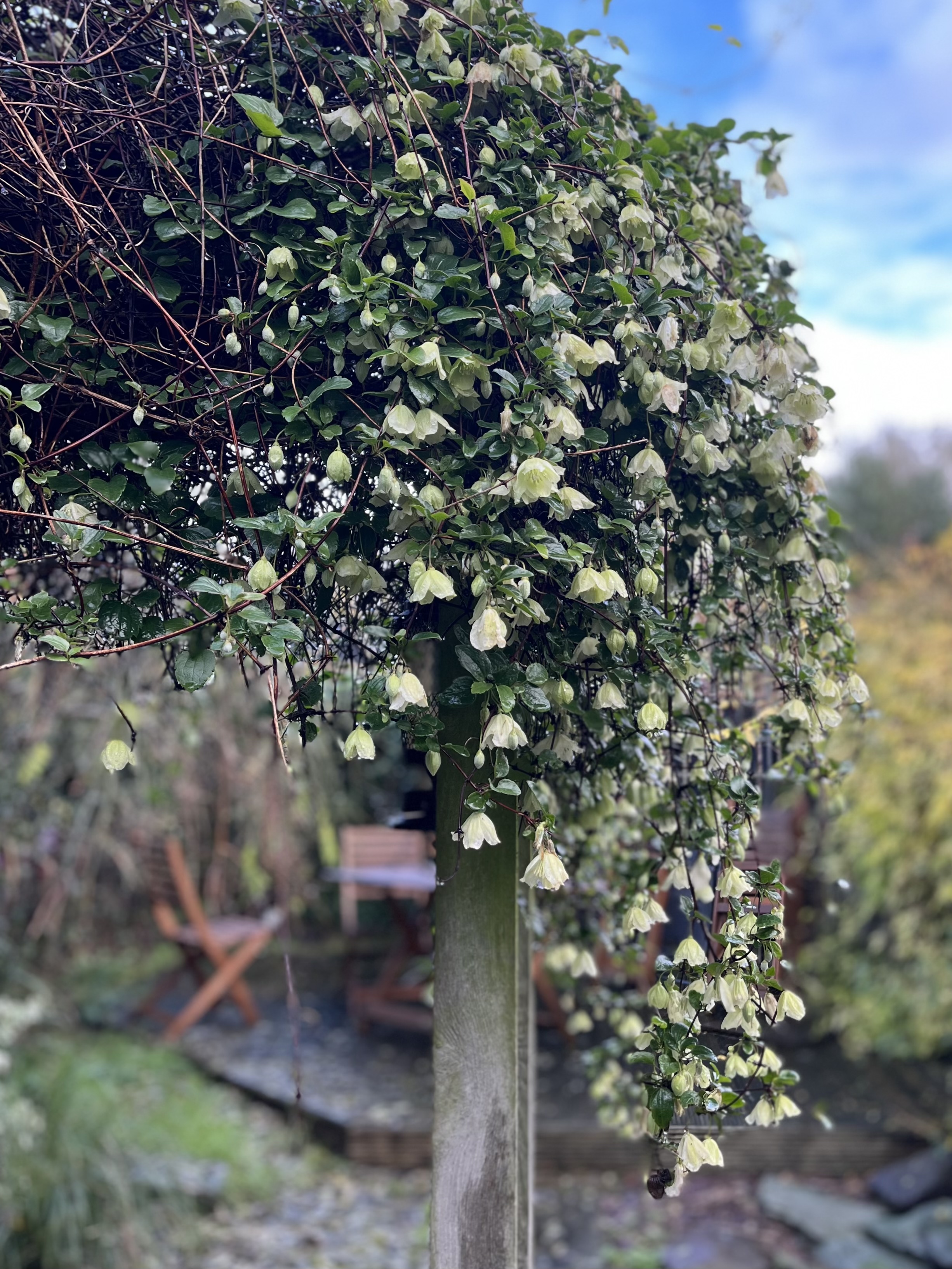
The Early Virgin’s Bower clematis that is currently blooming in my garden


On a grotty, damp morning recently I was visiting a house for work and was taken into the back yard to look around. Creeping along the retaining wall was very pretty plant heavy with blooms and I remarked that it was uplifting to see it on such a miserable day. It had small dark green leaves and an abundance of delicate creamy white bell-shaped flowers and the owner said was a species of clematis. She explained that it would continue showing right through the winter, but didn’t know the full name of it.

When I returned home, I mentioned it to my mum, who is an experienced gardener, but my woeful description didn’t help her identify it. Not long after that, we took a trip to a local garden centre and toured in hope around all the clematis species on view, but couldn’t find the one I had seen. We gave up trying, and promptly forgot all about it. 

It was only today, back in my new house that, when I let the dogs out, I saw right there in the middle of the garden, a wooden arbour festooned with the very same plant. How I’d not noticed it sooner, goodness only knows, but harnessing the magical power of the plant-identifying app on my phone, I knew I would soon discover its name.

Ladies and gentlemen (drum roll please) the mystery plant is the grandly-named ‘Early Virgin’s Bower’. It is the prettiest of winter flowers and the little white bells are a welcome sight amongst the evergreen shrubs and leafless trees. I discovered that it is a Mediterranean creeping variety that needs to be supported by a trellis or other structure. It’s important to know that most (possibly all) species of clematis are poisonous, and that toxins are contained in every part of the plant. However, it is only really a problem if ingested, causing blistering in the mouth and stomach upset. Extensive handling can result in painful skin rashes, so it’s best to wear gloves when dealing with it.

It can also be a danger to animals if they eat it, which some over-curious pets might just do. However, it is extremely bitter in taste and therefore those tempted to try it will likely spit it out. It is not considered life-threatening to animals, but if they start displaying symptoms such as excessive drooling, vomiting and diarrhoea then the advice is to get them to a vet ASAP.

I tried to find out more about this quirkily-named creeper, thinking there may be folklore related to it, but when I checked in my reference books and online, I couldn’t find any mention of it. Instead, my search led me unexpectedly to Virgin Mary’s Nuts (if you have just experienced an inappropriate snigger, then you are as childish as me!). Virgin Mary’s Nuts are also called Sea Beans, Molucca Beans or simply Lucky Beans. 

These beans originate from countries in the Caribbean and South America and tend to wash up on the western shores of the UK, having hitched a ride on the Gulf Stream. They’ve been found since at least the 17th century, and the larger ones are meant to bring good fortune. In Richard Carew’s 1602 book ‘Survey of Cornwall’ he describes these ‘nuts’ being found on beaches alongside colourful sea shells and says they resemble a sheep’s kidney ‘save that they are flatter; the outside consisteth of a hard dark-coloured rind, the inner part a kernel devoid of any taste, but not so of virtue, especially for women travailing in childbirth, if at least old wives’ tales may deserve any credit.’

That last sentence could explain why they were given the name ‘Virgin Mary’s Nuts’, but they do sound an awful lot like kidney beans, which are thought to have originated in Peru. However, a single raw kidney bean can cause severe sickness, diarrhoea and stomach pains, so back then would they have known that unless they were boiled for at least 10 minutes they would be toxic? Or that if they were cooked at too low a temperature, the toxicity would increase? It must have been quite a risky business trying out new and exotic foodstuffs 400 years ago!

Thankfully, we don’t have to resort to beach-combing to source the key ingredients for our chillis, and also have the luxury of knowing that we can eat them straight from the can. 

Read more at countrymansdaughter.com. Follow me on Twitter @countrymansdaug

This column appeared in the Darlington and Stockton Times on 9th and Ryedale Gazette and Herald on 7th December 2022

Unpacking past memories

1D95A594-47CB-473C-914F-0244927BA18C
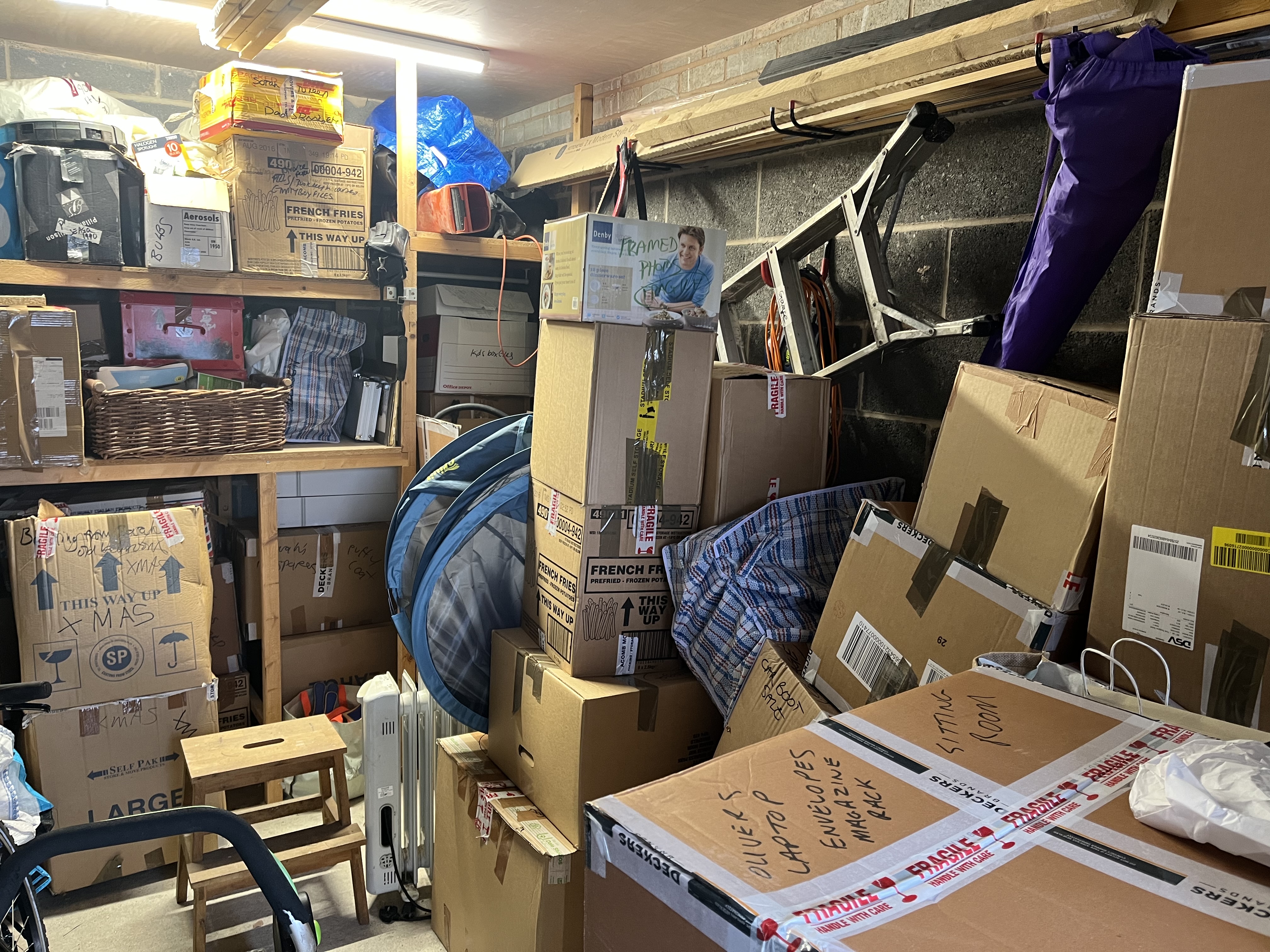
Stacks of boxes languishing in my garage thanks to ‘unpacking fatigue’


You may have noticed that recently I’ve not referenced my dad’s columns so much. I am finding that I am able to compose my columns without his help, unlike the early days, when I would read the columns he had written forty years ago and use them to inspire mine. It was a lovely way of keeping a connection with my dad, and I felt like he was holding my hand as I found my feet in the first few years of writing the Countryman’s Daughter column.

This week, however, when I came to sit down, I didn’t have any clue about what I was going to write, and decided that I would go back to my previous habit of reading Dad’s piece from the corresponding week in 1982 and see if something in it would inspired me.

So all I needed was to dig out the column. And that’s where I encountered a problem. Where was the column? It was then that I remembered it was among a big pile of unpacked boxes that are still sitting in the garage waiting for attention after my recent house move. And I have no idea which box it is in. 

I went into the garage to see if any of the labelling on the boxes would give me a clue. But they didn’t, and they were piled up in such a way that it was impossible to see what was written on the lower boxes.

Why do we collect so much stuff that when it comes to moving house we always get a number of boxes that remain unpacked? Their contents are not deemed sufficiently useful to warrant priority treatment, so there they sit for months, or even years, until we forget they exist at all. While preparing to move this time I found several unpacked boxes languishing in the shed from the last time I moved nine years ago. You’d be forgiven for thinking that after nine years I’d realise that it was time to do the sensible thing and get rid of them. But no. I brought them with me to this house, no doubt to stay unpacked until my next move.

I am naturally a bit of a hoarder and hang on to things that have sentimental value, even if they never see the light of day. What will ultimately happen to them, who knows, but I work on the theory that when I’m dead, it will no longer be my problem, it will be my children’s (thankfully they don’t read my column).

The reason we leave boxes unpacked is a result of ‘unpacking fatigue’, brought about by weeks of packing and unpacking. We just cannot face yet another box. Over the process of the move, we have to make endless decisions about what to keep, what to ditch and what to donate to charity at both the packing and unpacking stages that we just can’t face having to keep on making those decisions. So we leave a few boxes for another day. And that day never comes.

The contents of those boxes are often items of sentimental value, which we find the most difficult to throw away. In my case, it is things like my dad’s folders containing his columns, or whole bundles of letters that I have kept from my parents, siblings and best friend from when I was on a gap year at age 18. I can’t bear to throw them away, even though I know they are not being kept in the best conditions to look after them. Boxes are designed to protect items in transit, rather than to preserve them, and so it is not the best idea to leave precious stuff locked in cardboard for the long term as it will be susceptible to damage from damp, bugs or rodents.

To make a move less overwhelming, experts suggest using a priority labelling system, so as well as writing what is in the box, where it came from and where it is to go in the new house, you label it with a letter. ‘A’ would stand for ‘unpack first’, B for ‘unpack second’ and ‘C’ for ‘unpack last’. It means you can stage the process so that it feels easier to manage.

I’m hoping it will be a long time before I have to put it to the test. 

Read more at countrymansdaughter.com. Follow me on Twitter @countrymansdaug

This column appeared in the Darlington and Stockton Times on 2nd December and Ryedale Gazette and Herald on 30th  November 2022

A matter of leaf and death

3F931906-AB3A-497E-BC1C-99ED97BF61D0
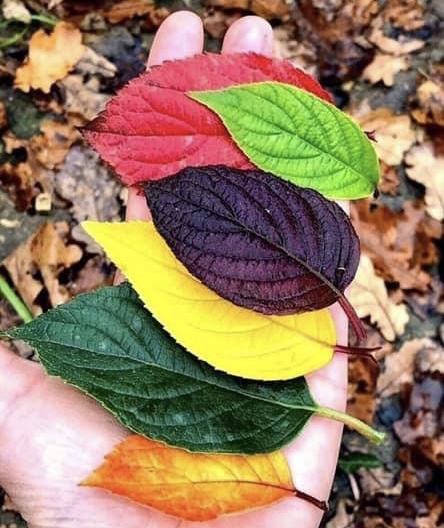
Different pigments contained in leaves are responsible for the autumn colours. Picture by Victoria Manley

76B49B50-12AC-4BBD-AC1D-82075B0D6B7D
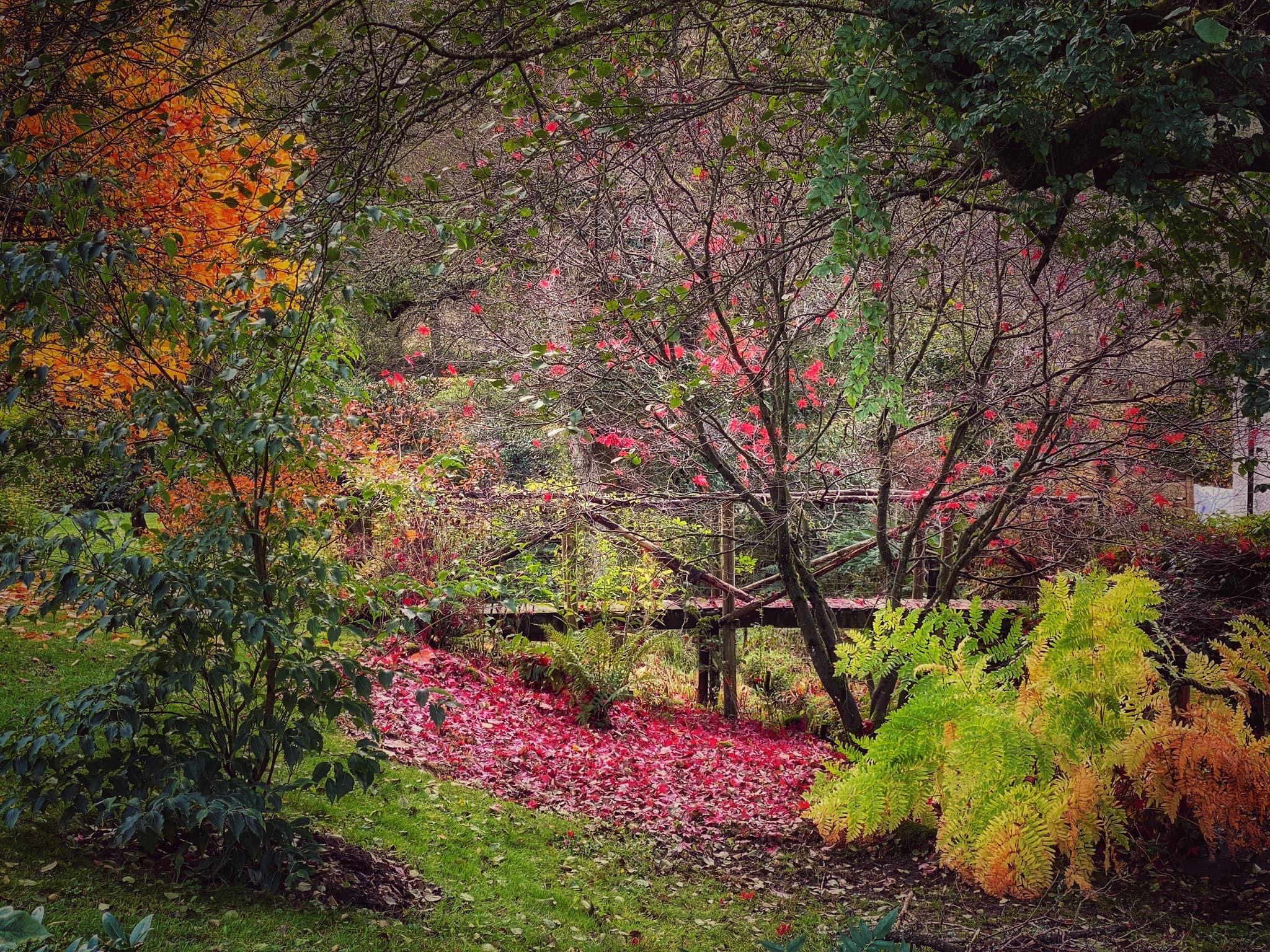
Autumn colours on the Woodcock Way circular walk in Dalby Forest. Picture by Janet Sanderson

This week I have been captivated by a photograph taken by a member of my Facebook group (Picture That Walk). It shows a handful of fallen leaves, and the array of colours is simply incredible. Another photograph also caught my eye, taken on the Woodcock Way circular walk in Dalby Forest, and again, the autumn colours are just spectacular.

Now the clocks have gone back we feel like we are firmly heading towards winter, which this year officially starts on 21st December and ends 20th March 2023. That period is known as the Astronomical Winter, although the Meteorological Winter starts on 1st December and ends 28th February. The leaves have almost all fallen now, and this year autumn has once again came up trumps, with some fantastic displays that had me marvelling at Mother Nature’s accomplishment. For me, seeing the landscape transform in such a way somewhat softens the blow of summer coming to an end. Although the trees are what we call ‘dying off’, they are not so much dying as ‘going to sleep’, recharging their batteries so that they can burst forth with new life in the spring.

The intensity of the colour and the duration of the display is largely dependent on the behaviour of the weather, with reduced daylight hours and cooler nights triggering the start of the change telling us that autumn is arriving. An ‘indian summer’ with warm, dry days and colder nights usually leads to a long-lasting and more varied and intense colour display, while a drizzly, dank, mild September and October will mean a short-lived burst of colour, before leaves turn brown and fall off the trees.

The colour change is all down to the behaviour of the chemical chlorophyll, which is responsible for the green hues. Chlorophyll is the most dominant pigment and is active in spring and summer, using the sun to transform carbon dioxide and water into nutrient-rich starches and sugars in a process called photosynthesis. Chlorophyll constantly breaks down and replenishes, thanks to the large flat surface of a tree’s leaves which allow them to absorb as much sun as possible.

As we approach autumn, this process slows down, and chlorophyll becomes less dominant, allowing other pigments contained in the leaves to become more visible. There are three categories of chemical, each responsible for certain colours. Flavonoids are yellows, carotenoids are oranges, and anthocyanins are reds and purples and the proportion of these pigments varies from tree to tree, which explains why they differ in colour and shade.

Trees are really very clever, and recognise that they need to shed their leaves to preserve their meagre water and nutrient resources to ensure they can survive the winter. To do this, they grow a layer of cells between the branch and the stem of the leaf which severs the connection between them, causing the leaf to fall off.

That’s not the end of the story though. The leaves that fall surround the base of the tree, trapping in moisture and heat, and they gradually break down, becoming like a compost which in turn is absorbed into the ground, again delivering much needed sustenance into the soil.

We may hate having to rake up fallen leaves, but it isn’t always necessary. If they have fallen onto a flower border, then you may as well leave well alone, as they will act like a warm weed-deterring blanket against the frost, and will also deliver goodness back into the earth as they break down. The same applies if they land on your lawn, just as long as there is not too thick or heavy a covering of them, which can damage the grass.

Having said that, when they collect on pavements and drives leaves are a darn nuisance! No sooner have you swept them up, then the wind comes and scatters them all over again. Opposite my mum’s house there are four sycamore trees that have the really annoying habit of shedding their leaves one after another then sending them straight across the road into my mum’s drive and up to her front door. Why they can’t just all drop their leaves at the same time is a mystery, but probably has something to do with how much exposure the each individual tree has to the elements.

It’s a constant battle between man and leaf. And the leaf usually wins.

Read more at countrymansdaughter.com. Follow me on Twitter @countrymansdaug

This column appeared in the Darlington and Stockton Times on 18th and Ryedale Gazette and Herald on 16th  November 2022

A sample of history

34210979-F4A1-49CD-9FCB-D152E4A00FB6
The set of 19th century samplers including two created by my mum’s ancestors when they were children

477F76BE-D9AD-4B86-9607-B0AA1DA2279B
The 19th century sampler by Hannah Raw found rolled up with one done by my great great great aunt. So who was Hannah, and how did her sampler end up with my mum’s family?

40C18E08-CA43-4E5D-A4E0-00E3817FA745
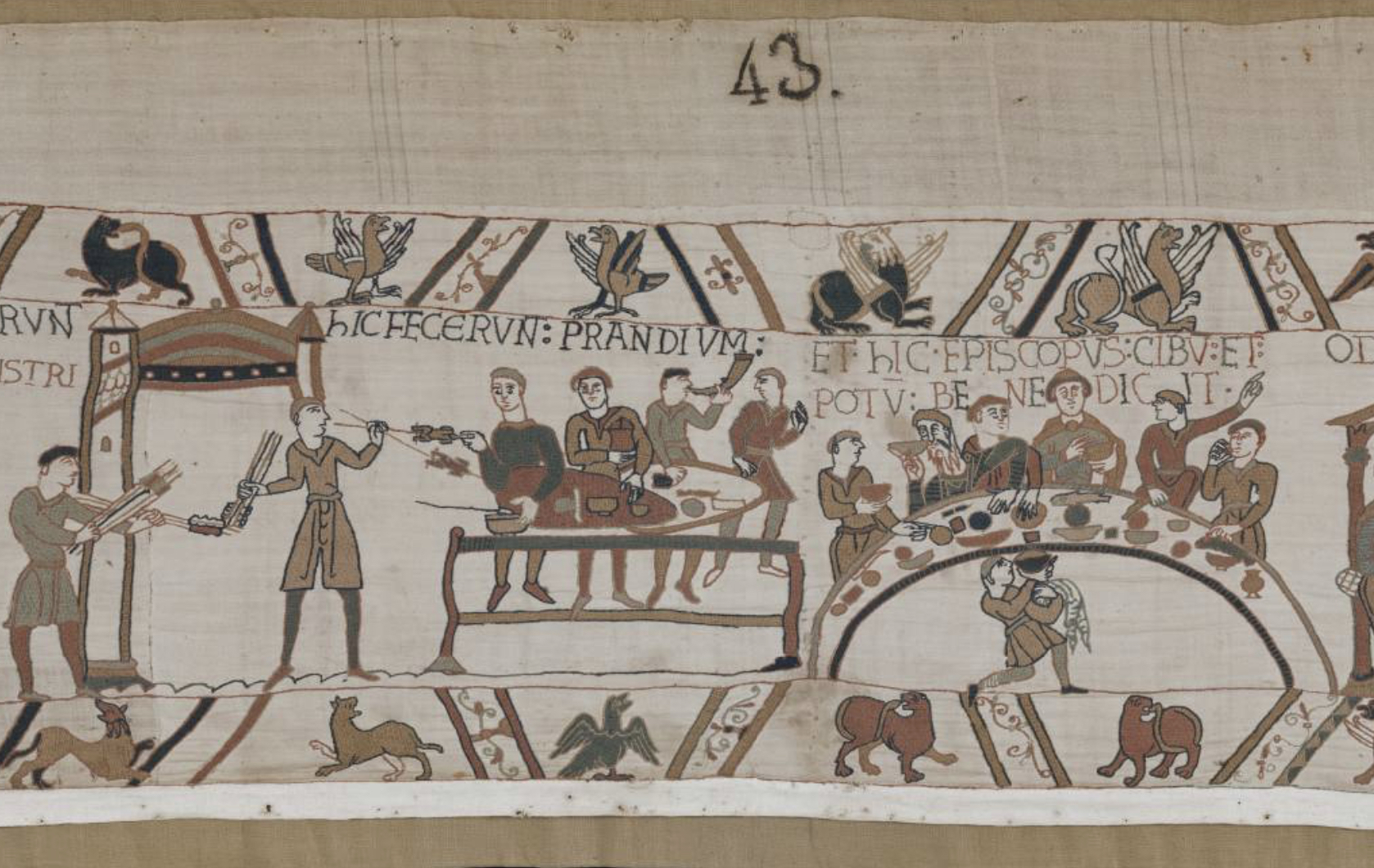
A section from the most famous piece of embroidery, the Bayeux Tapestry, showing life in 11th century England (picture courtesy of the Bayeux Tapestry Museum)

For years now, we have had a set of three 19th century samplers adorning the walls of my mum’s kitchen. Like many things in a family home, you get so used to them being there that you rarely pay them any attention.

But since I’ve been spending more time there, and because we have almost every meal at a table in front of them, I have begun to wonder more about them. Two were done by ancestors on my mum’s side of the family. Mary Atkinson, who was 12 when she created hers in 1876, was my mum’s maternal grandmother, while Jane Lacy, who was 10 in 1837 when she created her sampler, was Mum’s great great aunt on her mother’s side. The third sampler is by a little girl called Hannah Raw, who was only nine when she created it in 1835, but about whom we know nothing. How we came to have her sampler is a mystery, but it was kept rolled up with Jane Lacy’s at my Nana’s home, and my mum kept them once her parents had passed away.

Judging by Hannah’s age, it is likely that she was a contemporary of Jane Lacy’s, but were they friends? Why did Hannah not take her sampler to her own home? By the time Hannah and Jane were embroidering these two little pieces of family history, the sampler had become an established part of their education, and would have been a common feature in school rooms across the country. They were used to help youngsters learn their letters and numbers alongside the necessary skill of sewing.

But before that, the sampler played a much broader role in people’s lives. The Victoria and Albert Museum in London has a huge collection of them from all over the world that date as far back as the 14th century when competence with a needle and thread was absolutely essential. Samplers were a way of recording topical and family events, often through the use of pictures and imagery, and in the days when few people could read or write, and even fewer had access to things like paper and ink, they were also used like pictorial reference books and instruction manuals, to store information and instructions on how to do certain things from which others could learn.

The most famous piece of embroidery in the western world has to be the Bayeux Tapestry. Despite its name, it is not a true tapestry (that is when strings of thread are woven together to create a final image. Embroidery is when patterns or letters are sewn on to a backing cloth, which is what the Bayeux Tapestry is). In a series of 58 panels, it depicts the shenanigans from 1064 that led up to the Battle of Hastings in 1066 when William the Conqueror defeated King Harold II. The tapestry, which is a whopping 230 feet long and 20 inches tall, was believed to have been created in 1070s England, having been commissioned by William’s half-brother, Bishop Odo of Bayeux, to decorate the walls of his brand new cathedral in the Normandy town.

Despite it being it well-known for illustrating the Norman Conquest, it is also an excellent catalogue of military and civil life from the 11th century. Thanks to this work, we can see what type of armour was worn (chainmail and helmets with nose plates) and what kinds of weapons were used (swords, spears, axes, fire, bows and arrows), how castles were constructed (motte and bailey), how battles were fought (with boats, horses and infantry) and how ships were designed (Viking longboats) alongside snippets from civil life too, such as the kinds of foods eaten (a lot of game) and the vessels used at mealtimes (bowls and drinking horns). It’s an incredible and virtually contemporaneous record of 11th century life.

It is now housed at a dedicated museum in the town of Bayeux, but you don’t have to go that far to see it. The museum has a website where you can see the whole tapestry in all its glory.

Lastly, if there is anyone who is descended from the Raw family from the Lealholm and Glaisdale area of the North York Moors, I’d love to find out if you know what happened to young Hannah and see if we can work out why we came to have her sampler.

Read more at countrymansdaughter.com. Follow me on Twitter @countrymansdaug

This column appeared in the Darlington and Stockton Times on 25th and Ryedale Gazette and Herald on 23rd November 2022

Direction of travel

BACA0EF7-3751-4157-8933-2A71795C5914
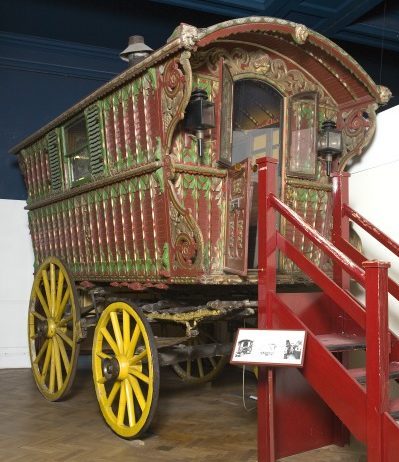
A Romani caravan in Bristol Museum and Art Gallery (picture from the museum website).

I was doing some research among my dad’s files for another project when I came a across an old police bulletin from 1982. These were notices that were circulated within the police force when, for example, they were on the lookout for a fugitive. They would contain information such as a description of a suspect, the registration number, colour, make and model of relevant vehicles, as well as instructions on places of interest to search, such as towns, roads, ports, motorway services and motor auctions.

Of course back then, there was no email, and so they would most likely be sent by fax machine or internal post to all the relevant divisions that needed to receive them. I was struck by some of the dated language and the specific instruction to be on the lookout for ‘itinerants or gypsy types’, which is a reflection of the prejudices of the time, and language and practices that were accepted then (you would hope) would not be so tolerated today.

It wasn’t the first time this week that the word ‘gypsy’ cropped up. You might recall that a couple of weeks ago I discussed my dad’s complicated numbered filing system. Today, I decided to go right back to see what his very first folder contained and what it was entitled. Folder number 1 of 183 is called ‘Gypsies’ (by the way, there are far more than 183 folders, as many of his topics have sub-folders, numbered 50.1, 50.2 etc).

In there I found many clippings taken from newspapers from the early 1960s onwards. Unfortunately the earliest of them do not show the date as dad only got into the habit of dating them later on, so I can’t be certain what years they were written, but what is interesting is that there are a fair few composed by the man who started the Countryman’s Diary column 100 years ago in 1922, Major Jack Fairfax-Blakeborough.

His love and knowledge of the racing world meant that he had fostered a respectful relationship with members of the travelling community, having met many at horse fairs where they would trade in racehorses. He declared their knowledge and expertise on breeding and the quality of a mount was second to none. He distinguished between true gypsy clans and other nomadic caravan dwellers. “The gypsy proper has always suffered from confusion with other restless wandering nomads. The real gypsy has has little affinity with the very considerable army of hawkers, tinkers, general dealers, scrap merchants …and those who claim to be gypsies with a long lineage…All these restless creatures of the open air have been lumped together under the same heading,” he said.

But having got to know those he calls ‘true’ gypsies, and accepting that they did do a bit of poaching merely to feed themselves, it’s clear he had a real fondness for these people of the road. He says: “I found true gypsies to be honest, dependable men of their word, and for many of them had a great liking and respect.”

He was also quite adamant about the correct spelling, that ‘gypsy’ should be spelled with a ‘Y’ and not an ‘I’. Throughout this folder, there are a variety of spellings, such as ‘gypsy’, ‘gipsy’, ‘gipsies’ and ‘gypsies’. The Major declares it should be with a ‘Y’ as it derives from the word ‘Egyptian’ and stems from the fact that when the Romani first arrived in Europe in the 14th century, people believed they had come from Egypt. Even today, some of us mistakenly believe they originated in Romania, but in fact the Romani nomads trace their origins back to India, possibly to the north-west region of Rajasthan. The westward migration is believed to have begun as far back as 500AD due to invasions and unrest in the region.

On another note, I’d like to thank reader Richard Baker who got in touch to point out the cruelty of running snares for catching wild animals. Another reader had mentioned one to me in relation to the picture of a fox skull that I featured in my column a couple of weeks ago. By using the picture, I was not suggesting that I approved of such traps, it just happened to be the circumstances in which the long-dead animal was found, but I would like to thank Mr Baker for highlighting the matter.

Read more at countrymansdaughter.com. Follow me on Twitter @countrymansdaug

This column appeared in the Darlington and Stockton Times on 11th and Ryedale Gazette and Herald on 9th November 2022

Paving the way to safety

956A1CA5-F35A-4B53-8FA0-CE9D9A743BA0
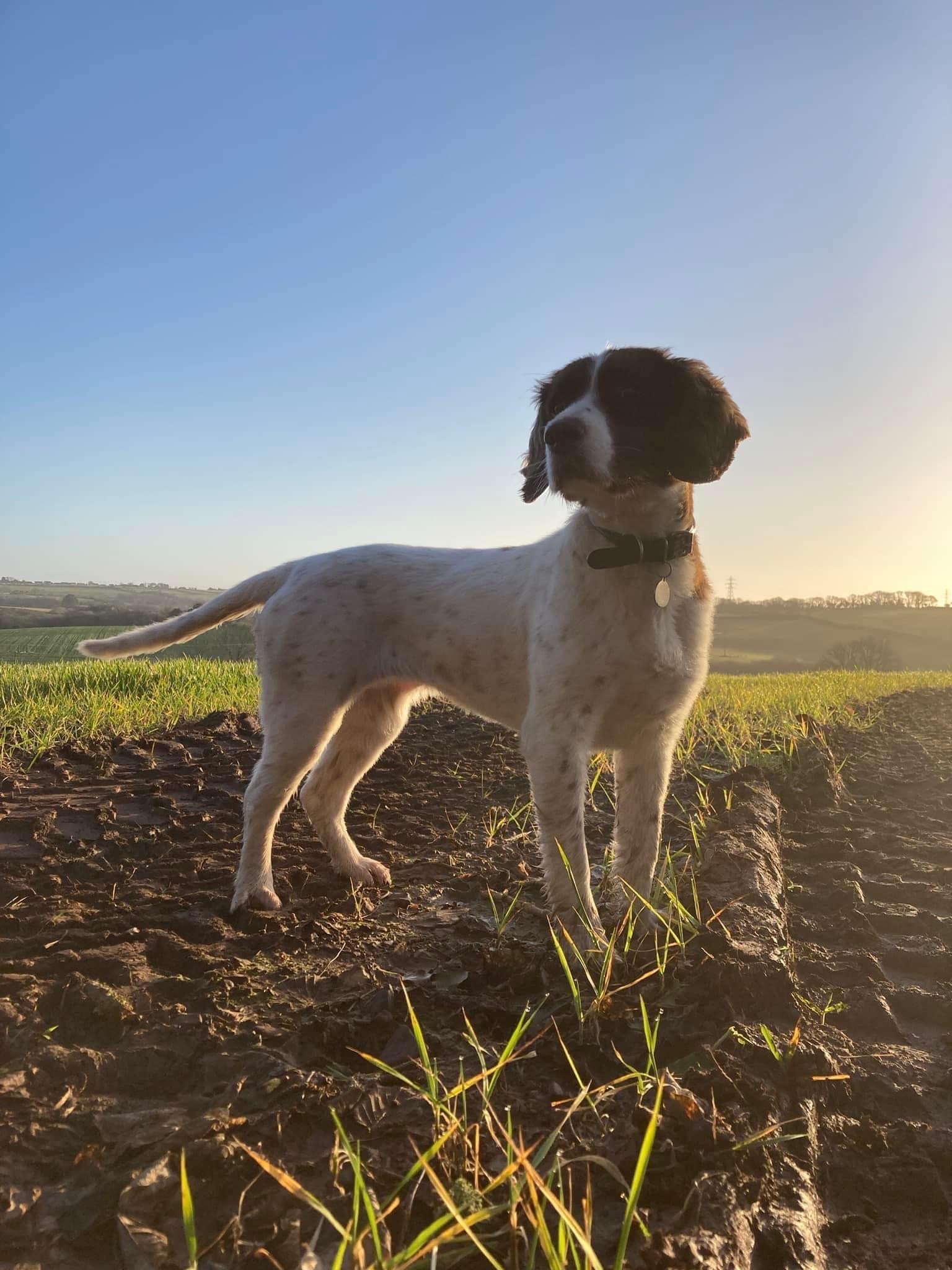
My friend’s beloved Springer Spaniel Izzy, who was killed when a speeding trailer dragged her off the pavement. Picture by Claire Dunstan-Elliott 

I heard a tragic story this week involving a friend who lives in a Welsh village. She was walking her Springer Spaniel Izzy on her lead along a footpath near her home. A massive tractor came hurtling through, pulling behind it a double set of trailers (that is two trailers attached one behind the other, a bit like train carriages). The driver was going far too fast, and was apparently oblivious to anything except the road ahead. He seemed unaware that there were folk walking on the paths, unaware that his trailers were swaying from side to side perilously close to them.

Despite traffic whizzing by, being on the pavement makes us think we are safe, but really, we are only safe if drivers are paying attention not just to the road, but also to what is going on beyond its edges. Sadly the driver in this case wasn’t. His last trailer caught Izzy, dragging her into the road and under its wheels. The owner, who had hold of the lead, was also pulled into the road, but thankfully she escaped physical injury. Her beloved Izzy, though, died instantly, leaving her whole family traumatised and heartbroken. The driver did not stop.

My home village is fairly typical, no doubt much like that one in Wales, and a major worry for me is the state of the pavements. Over the years, more houses have been built and more cars are parked on the roadside. We’ve come to expect that, as most families now have a minimum of two cars. Many of the cottages were built in the 19th century when there were no motorised vehicles, and so the plot of land they each stand upon is not sufficient to provide parking space. As such, residents are forced to park on the street, and so it can be a case of stop-start as you drive through, patiently waiting for the traffic coming towards you to overtake the line of parked cars before you can take your turn to pass.

In some parts the footpaths are very narrow, or even non-existent, in others, they are uneven, worn away and very poorly maintained. Many of our residents are elderly and get about with the aid of sticks, frames, or even wheelchairs.

There is nothing between the pavement and the road apart from a small curb, and sometimes the vehicles thunder past just inches from a pedestrian. As well as cars, we get plenty of farm vehicles, buses, caravans, delivery vans and heavy lorries passing through. Some owners have taken to parking half on the pavement to make it easier for the traffic, but the knock-on effect is that it makes it extremely difficult for pedestrians with prams or buggies, or for the elderly, to get by and so they have to step off the pavement to negotiate the obstacle. They are literally taking their lives in their hands as they do so, particularly if they are physically unable to leap out of the way should anything untoward happen. Add into the mix difficulties with hearing or sight, then they are completely at the mercy of road users.

Bin day is particularly hazardous. Most residents try to leave their bins and recycling boxes in such a way that they are not blocking the pavement, but not all, and once they’ve been emptied, it can look like a hurricane has passed through. For some, it makes walking on the footpath almost impossible, and so they are yet again forced to step into the road.

So do me a favour and have a thought for those who need a safe and clear pavement.

One last note note – I’d like to ask those of you who have garden greenery overhanging the street to have a quick look to see if it is obstructing the pavement in any way. If so, please cut it back so that the less able can get through without fear of tumbling into oncoming traffic. You might not have noticed, but little by little, on the other side of your garden wall, your plant has gradually nibbled away at the amount of space on the other side. I urge you to go have a look, and if need be, cut your encroaching plant back. People like me, who worry for our elderly loved ones as they try to go about their daily business, will be very, very grateful.

Read more at countrymansdaughter.com. Follow me on Twitter @countrymansdaug

This column appeared in the Darlington and Stockton Times on 4th and Ryedale Gazette and Herald on 2nd October 2022

A pint of persistence

FA455E0E-54CA-465A-8176-E46381D6BBC3
I’m spending more time writing in my dad’s study, and found in his files a withering rejection from Police Review Magazine in 1962, as well as a payment of £1 18s 6d for another article from 1963.


I’m spending more time staying with my mum in our family home, and consequently it means I can compose my columns in the very study where my dad wrote his books and articles for the last 36 years of his life.

It is a very special place and where I feel closest to him. I am surrounded by books, magazines and pamphlets that he collected over the years as well as his substantial set of filing cabinets. The folders inside are crammed with clippings that he took from newspapers and other publications with the idea that one day he might use a nugget of useful information contained therein.

In all, there are four big cabinets and each one is stuffed full. Of course, he established his filing system way before the world wide web was invented to provide instant answers to questions and queries he might have. But long after the internet became the norm, he maintained that his bespoke filing system held information that you simply would not be able to find online.

He could have been right, and I will no doubt discover if that’s true the more time I spend in his study. But even if he isn’t, there is something uniquely satisfying about physically rifling through files, inhaling the scent of old cuttings, feeling real paper between your fingers, searching in hopeful anticipation that you might uncover something special hidden away. 

You have to know how my dad’s mind worked to be able to understand his quirky way of cataloguing his cuttings collection. If you assume logic will help you find your way around, then you are mistaken. He came up with a system that involved numbers from one to 183 accompanied by an alphabetical card index. If you go to the cabinet with files 43 to 62.2, you will discover that folder 50 is called ‘Christmas’, which sits in front of folder 50.1 which is about Christmas trees, which in turn sits in front of 50.2 which is about mistletoe and 50.3 which is about candles. All well and good, as those are all themed around the festive season, which does make sense. 

But then we get to folder 51, which is labelled ‘Wells’ (the ones that contain water, not the city), 52 is labelled ‘Swans’, 53 is ‘Northern Ireland’, 54 is ‘Stars, the Sky and Planets’, 55 is ‘Apples’ and 56 is ‘Bridges’. So there is no sense in trying fathom if the files are grouped in a logical order, they are not. You have to refer to his extensive handwritten card index to make sense of it all and it might take you a good few minutes to locate what you are looking for. It is satisfyingly old-fashioned and I have no doubt that the contents will be a reflection of the passage of time, a historical record of events, trends, fashions and the like spanning the 60 years or so of Dad’s writing career 

I mentioned earlier the hope of finding something special hidden away, and as a result of writing this column, I did! When I had a good rummage in folder number 50 (‘Christmas’), hidden among the mountain of clippings was an original typed copy of an article he wrote in October 1962. It was about Christmas motorists from the point of view of a traffic policeman. It was rejected by at least seven different publications, but the most withering came from Police Review Magazine.

‘Dear Mr Walker,’ it said, ‘We doubt whether “Motorists – Through the Eyes of a Policeman” tells our readers anything they do not know already. It should really be read by members of the public, not by the Police. We are returning the manuscript in the hope that you will submit it elsewhere.’

Ouch! But as a man who had 13 full novels rejected before his first was published in 1967, this condescending response certainly wouldn’t have put Dad off, rather it would have fuelled his determination. And sure enough, I found another article from the following year about the traditions and history behind the celebration of Christmas, very much in the vein of what you might read had he been writing today.

This 1500-word piece was published in the Ripon Gazette and Observer, and Dad was paid the princely sum of £1 18s 6d (£1.92½p), a price that may just have covered a couple of celebratory pints down the pub.

Read more at countrymansdaughter.com. Follow me on Twitter @countrymansdaug

This column appeared in the Darlington and Stockton Times on 28th and Ryedale Gazette and Herald on 26th October 2022

A little dose of joy works wonders

613DAEEC-E538-4D8C-9BE5-05B7CF70E342
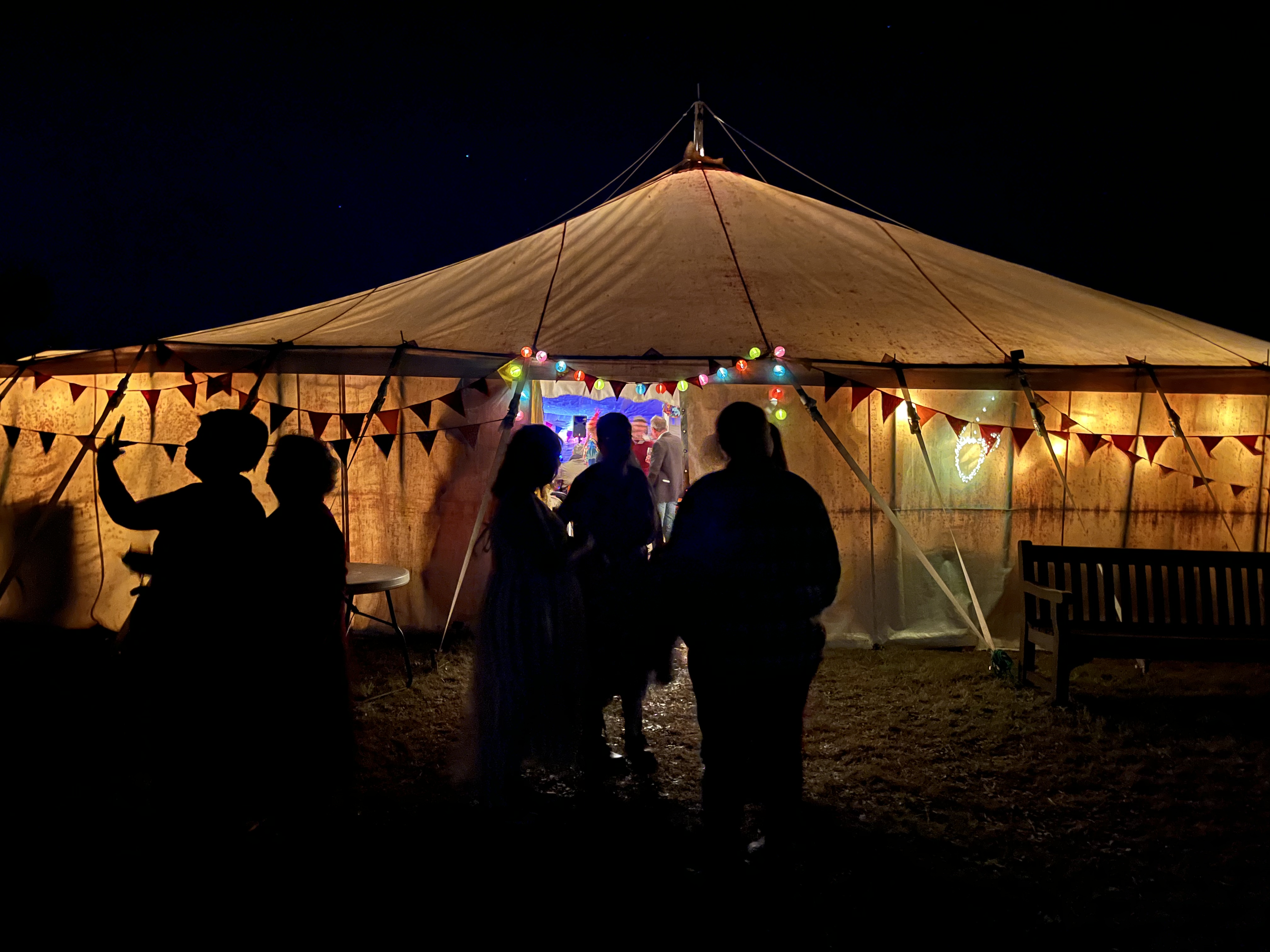
When the sun went down the stars came out on a lovely wedding day

DFA47E3F-5051-4147-8580-8C32AFA4EEAA
It is so nice to do something joyous when we are constantly bombarded with depressing  news

Having trained as a journalist, I used to have this innate need to check the news several times a day. If I was in the car, I would have the radio on, or if I was at home, I would constantly check news websites to see what was going on in the world.

However, during the first lockdown of 2020, the relentless barrage of bad news started to get me down. We were bombarded with awful story after awful story, whether it was to do with the pandemic or not, and I felt that it was affecting me mentally in not a very nice way.

If I was to make it through the pandemic with my usual optimistic outlook in tact, something had to change, and so I made a conscious decision to stop watching or reading the news. I began to crave something more positive, and this was one of the motivations behind setting up my Facebook page, Picture That Walk, where people could share uplifting photographs that they had taken on their walks and bike rides during lockdown. Two and half years down the line, the page is still going strong, and people continue to share their excellent photos, with members declaring that it gives them that daily mood lift that some of us need.

As Covid began to become an every day part of our lives, I thought that perhaps I would go back to watching the news again. But it continues to be a relentless stream of depressing stories so I am not keen to immerse myself in it as I did before. I don’t want to expose myself so much negativity, day after day, because I don’t think it is healthy to do so. Some might say that I am burying my head in the sand, avoiding those issues that really I should care about, but, quite frankly, I just don’t want to. I have enough stress to contend with in my everyday domestic life that to absorb the troubles of the rest of the world has become too much. So once a day, to ensure I am not totally oblivious to what’s happening out there, I will catch up on the main events. But that’s it (Of course, I still get my fabulous weekly newspaper!).

This past weekend, I was delighted that I was able to do something that was completely and utterly joyous. I attended a wedding! It was wonderful to be able to look forward to something to celebrate, something that wasn’t difficult, or hard, or sad, something that brought us all together to join in a pleasurable occasion. It was the wedding of a dear friend that was supposed to have happened in 2020, but for obvious reasons was postponed. It was quite special to see so many people brought together for a good reason, many of whom appreciated the opportunity to visit this little oasis of joy in an otherwise difficult world.

The wedding was held mostly outdoors, which was an achievement in early October in Yorkshire! We did have to head into a marquee when a heavy shower turned up, so the vows were exchanged under canvas, but once the rain stopped, the sun came out and it stayed clear for the rest of the day. As the sun went down, the stars came out, and it was one of the most perfect of evenings. We were out in the countryside, so there was no light pollution to disrupt our view of the night sky and the heavens really did afford us a magical display.

Finding the time to do something uplifting, to have a break from the difficulties life is currently throwing at us is essential to maintain the ability to deal with it all. I don’t know if it is a cultural thing, but why do us Brits often feel selfish when we take time out for ourselves? I firmly believe, that if you don’t do that regularly, then you become less able to handle those everyday stresses.

So I challenge you to make the time do something nice just for yourself. Bat away those feelings a of selfishness, because it’s not just you who benefits, but everyone else around you too. And so you must consider it your duty.

On that note, I’m just going to find the number for that luxury spa I’ve always wanted to visit.

Read more at countrymansdaughter.com. Follow me on Twitter @countrymansdaug

This column appeared in the Darlington and Stockton Times on 21st and Ryedale Gazette and Herald on 19th October 2022