Believe it or knot

D4CD3D22-2D70-49A9-8B2F-A033E651263C
King Canute showing his sycophantic followers that even a great king is not so powerful that he can stop the tide from coming in.

I came across an article the other day about a record level of knot landing on the Norfolk coast at the RSPB reserve at Snettisham. Around 140,000 of them have been seen, compared to the previous record set there in the winter of 1990-91 where 120,000 were spotted. The numbers caused quite a stir within the bird-watching community, and films of their sweeping murmurations are well worth a watch online.

The reason the story caught my eye was because I had just been researching my column by reading my dad’s Countryman’s Diary from this week in 1980 where he talks about the knot. The coincidence struck me because, being only familiar with more recognisable members of our avian population, I had no idea there was even a bird called a knot. And suddenly, here were two articles about it, written 40 years apart, and which I picked up on the same day. I think that is what we might call serendipity.

For those of you who don’t know, a knot is a chubby, short-legged wading bird about 25cm in length from the sandpiper family. A curious feature is that its plumage changes colour according to the season and at this time of year, it has grey upper plumage, and a white lower body, whereas in summer it has a more browny upper body, with a brick red chest. It undertakes one of the longest migrations of any animal, starting from its Arctic breeding grounds and heading south to the coasts of Europe, Africa and Australia, stopping to grace us with its presence en route. 

As my dad mentions in his 8th November 1980 column, there are two theories as to how it got its peculiar name, one of which is that it comes from its hoarse cry of ‘knut knut’. I’ve had a listen online and I’m not sure that’s how I’d describe it, though. The other suggestion is that this bird, in Latin known as calidris canutus, is named after the famous King Canute because it is always found at the very edge of the sea, just like in the story of the king and the tide. 

King Canute (or Cnut) was a famous Viking warrior and ruled in England from AD1016 to AD1035. According to Henry of Huntingdon, who wrote ‘Historia Anglorum’, a 12th century account of England from its beginnings until 1154, King Canute wanted to demonstrate the danger of vanity to his sycophantic courtiers. So he set his throne by the sea and declared that he was going to order the tide to stay out so as not to get his robes and feet wet. 

Obviously, the tide continued to come in, so the king leapt up and declared: “Let all the world know that the power of kings is empty and worthless and there is no king worthy of the name, save Him by whose will heaven and earth and sea obey eternal laws.” He then hung his crown on a crucifix, never to wear it again. The message was that there was no one more powerful than god, not even a king.

Henry of Huntington’s account, the first version of which was written less than 100 years after Canute’s death, was intended to demonstrate that as well as being a great warrior, the king was also intelligent and humble. He won the affection of his English subjects, and had a reputation for reconciling the warring English and Danes.

Today, however, when someone is described as behaving like King Canute, it is an insult. The insinuation is that they are behaving arrogantly in trying to stop something happening that is inevitable. The fact that Canute was supposedly doing the exact opposite has been lost in the mists of time. 

The legend has cropped up in a few high profile news stories in recent years, possibly the most famous occurring in 2011 when footballer Ryan Giggs was seeking injunctions against newspapers wanting to print details of an extra-marital affair. Media lawyer Mark Stephens declared he was ‘trying to stop the unstoppable tide of information as it flows through the internet. He has become the King Canute of football.’

It’s a shame the original message contained in the tale, true or otherwise, has been lost, as it is the version of the story that I for one much prefer. 

This column appeared in the Darlington & Stockton Times on 6th October and the Gazette & Herald on 4th October 2020
Tiers for Halloween

0E1481E5-EDA5-4672-B223-7F9FE252D047
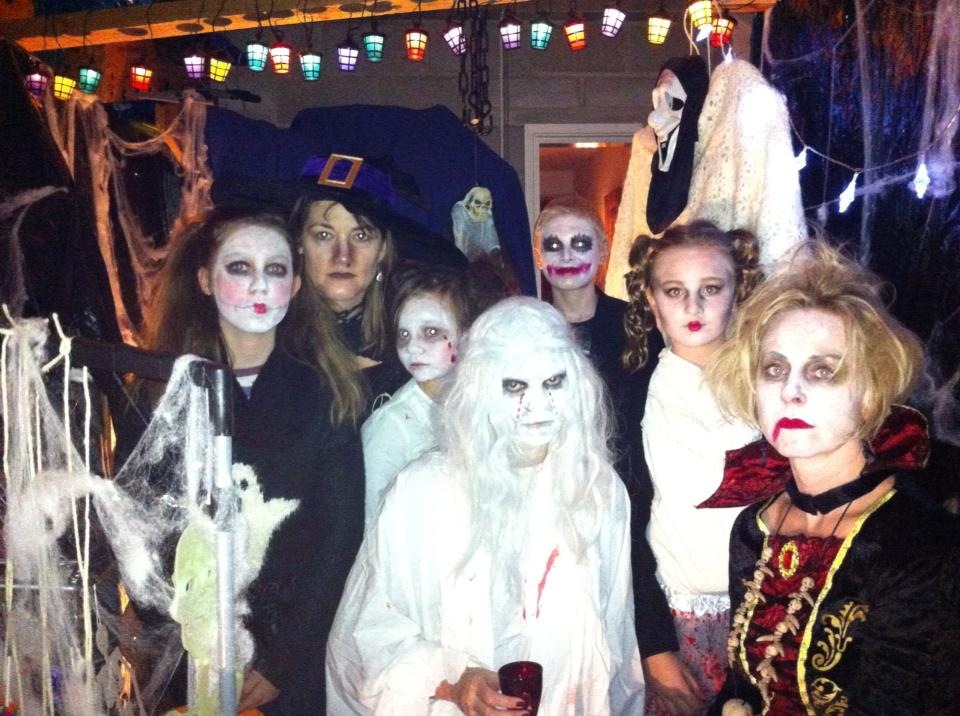
Me, second from left, in my friend’s garage that would be transformed into a witches’ grotto for Halloween
EAB31F24-10D0-401E-A5C5-8F9203C9D65D
My boys ready for Halloween In 2005.


It’s Halloween week, and celebrations are going to have to be rather different than normal with the government’s new ‘three-tier’ alert system in place to slow down the second wave of coronavirus infections. There will be no children going from door to door in their ghoulish fancy dress asking for treats, nor hoards of young adults in monstrous make-up crowding into the pubs and clubs for a night of partying, which has been customary in recent years.

There are various names for Halloween, such as Hallowe’en, All Hallows’ Eve, Hallows’ Evening, Allhalloween and All Saints’ Eve and, as my dad mentions in his column from 1st November 1980, it is a Western Christian tradition that marks the night before ‘Hallowmas’ or All Saints’ Day. Following All Saints’ Day comes All Souls’ Day on 2ndNovember, and the three days together were known as Allhallowtide. This was a time for honouring saints and martyrs and also for praying for those who’d recently died whose souls had not yet reached heaven. Relatives of the dead would don masks to disguise themselves from any lost souls en route to the above, for if they saw their loved ones, they might not want to leave. 

My own children could barely contain their excitement as Halloween approached, spending days planning what they would wear, and weighing up how big a receptacle was needed to carry the booty. It’s such a shame that children this year will lose out on the tradition of trick or treating, which for mine was one of the most thrilling of annual celebrations. Having said that, there are plenty of places online offering alternatives for making the weekend special, if somewhat different, for the young ones. 

With three boys, I spent many years treading the trick or treat path around my neighbourhood, and from the time that I began to take my oldest out (2000), until the last year my youngest went out (2014) I noticed how 31st October grew bigger and more extravagant with each passing year. When I first started, my front porch was one of the most highly decorated on my estate, adorned as it was with white sheets, black plastic creepy crawlies and fake spider web. I also replaced the porch light with a red bulb to enhance the creepy atmosphere, and a CD played spooky music in the background. No expense or effort was spared there!

But as the years went on, my small porch was soon overshadowed by far more elaborate and sophisticated creations. It would take me a couple of hours to drag my stuff out of the attic and assemble it. But it became obvious that some neighbours spent days or even weeks preparing full-on Halloween showcases. In fact, my estate became quite well known locally for the amount of effort that went into it, and was the ‘go-to’ destination for many from beyond our immediate surroundings. 

I knew we had hit the trick-or-treat ‘big time’ when, one year, we ran out of sweets half way through the night. I had bought the amount that had been sufficient in previous years, but I wasn’t prepared for the surge in popularity and so raced around the house scouring cupboards and drawers for any long-ignored confectionery lying about (such as unwanted strawberry and coconut chocolates left at the bottoms of sweet tins). 

When this feeble emergency supply was also exhausted, then it was a race to blow out the pumpkin candle, turn all the lights off and shut the curtains to make it look like we were not in before the next trick or treater turned up. There’s nothing worse than having to look into the face of an expectant child on Halloween and have to tell them you’ve run out of sweets. 

Some of my neighbours really went to town, including a close friend who, after a few hard years of treading the Halloween beat with her four youngsters, decided instead to transform her garage into a full-blown witches’ grotto. She’d have tricks and scares a plenty hidden on the drive and among the decorations, and she awarded herself virtual points for the loudest screams she could elicit from the nervous youngsters who dared approach.

Thankfully, she also had some mulled wine on the go for the adults, so usually, while the kids gorged themselves on confectionary, we’d end up in her garage to enjoy a very happy Halloween. 

This column appeared in the Darlington & Stockton Times on 30th October and the Gazette & Herald on 28th October 2020

Let’s hear it for the bird

532D2455-1A85-424F-ADD0-10071AF23892
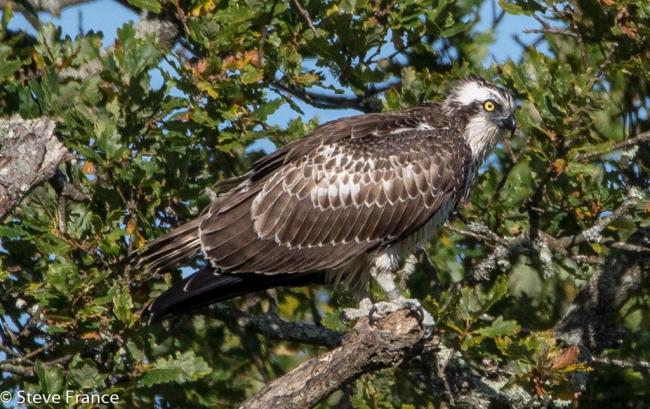
A pair of ospreys caused a hullabaloo when they were spotted hunting in the local ponds in Ampleforth. Picture Steve France

There is something mesmerising about a large bird of prey in flight. It’s not uncommon to see once-endangered red kites soaring on the thermals as we go about our daily business, and yet, if I see them while driving from A to B, I can’t help but keep glancing up in awe at their grace and power. It’s almost as if they are visiting from some distant exotic land and don’t really belong here.

I have the same reaction when I come across buzzards and even owls – they halt me in my tracks. So I can just imagine the hullabaloo resonating around my home village of Ampleforth when a pair of ospreys were spotted hunting in the local ponds, as my dad describes in his column from 25th October 1980: ‘The most exciting event in Ryedale’s natural history calendar must surely have been the recent visit of a pair of ospreys.’

They had been seen fishing in the lakes near Ampleforth, while in Coxwold an angry mob of rooks had harassed a visiting osprey that they saw as a threat. Dad himself spotted one above Byland Abbey, and my brother reported seeing a pair half way between Ampleforth lakes and Coxwold.

Ospreys are big birds, about half a metre long, with a wingspan of up to 1.5 metres. They have a dark brown upper body and white underside, with the larger female sometimes dappled with brown speckles. They have a hooked black beak and a white head with a brown ‘Zorro’ slash across the eyes.

The local sighting was such a newsworthy event because the once common osprey had been driven to the brink of extinction in the Victorian era by over-zealous collectors of eggs and bird skins. In fact, they were completely extinct in England by 1840, and in Scotland by 1916.

After 40 years, a breeding pair was spotted making a nest near Loch Garten in the Cairngorms in 1956, and following that, breeding pairs have been spotted there every year since 1959. Numbers slowly began to rebuild, and by 1976 there were 14 known pairs and this had increased to 71 by 1991 and to 158 by 2001. Although they were reintroduced to England in 1996, it wasn’t until 2001 that the first successful breeding pair was reported here. Now, there are believed to be around 300 pairs across the UK, although they are still a protected species.

The migratory birds are resident in the UK between March and October before heading south to West Africa for the winter. They can fly up to 430km in one day, stopping near large bodies of water en route to rest and refuel. And that is why they were spotted in and around Ampleforth in 1980, as they were taking a wee break before continuing on their journey to warmer climes. But how special that must have been to see them, knowing that they were so rare, likely coming from the very few that had so recently re-established themselves in Scotland.

Ospreys are one of the few birds that only eat one type of food – fish – which is why they make their homes next to bodies of water. They are very impressive when hunting, and can soar up to 70 metres high while hunting, their laser-accurate eyesight enabling them to spot their prey so far below. They then dive vertically at incredible speeds until pulling up at the last second to extend their talons ready to grasp the unsuspecting fish swimming just below the surface. They plunge up to metre into the water to grab the fish which is then whisked away to the nest or a nearby tree to be eaten.

Ospreys are monogamous, and return to the same nesting site year after year. New nests are often built in the very tops of trees, and are up to 150cm wide and 60cm deep. Each year they return, the birds give their home a bit of a refurb, adding more branches, leaves and moss, so that the nests can extend up to two metres in width.

I don’t know if there any nesting ospreys in North Yorkshire today, but if you visit the RSPB website, it gives a comprehensive list of nature reserves and bird sanctuaries where you can see them. Obviously now might be a bit late in the year, but perhaps put it on your to-do list for 2021.

Read more at countrymansdaughter.com. Follow me on Twitter @countrymansdaug

ENDS

This column appeared in the Darlington & Stockton Times on 23rd October and the Gazette & Herald on 21st October 2020

It’s a ducking crime

The other day, my brother asked: ‘Did you know that duck ponds are not called duck ponds because of the ducks that live there?’

I was quite taken aback, as I really didn’t know that! He went on to explain that small ponds were not only a source of water for village residents of yore, but they were also places of punishment for those found guilty of misdemeanours.

I’ve not been able to verify his claim (although I’m hoping some clever person reading this might know for sure), and yet punishment by ducking was very common in the Middle Ages. The ducking stool evolved from the ‘cucking stool’ which was a kind of chair or commode to which the offender was secured and then paraded through town as a form of public humiliation, similar to stocks and pillories that I’ve written about before. The idea was to invoke repentance from the subject. The word comes from the old verb ‘cukken’, which is derived from the Greek ‘kakos’ and the Latin ‘cacare’, which means ‘bad’ or ‘evil’, and the word ‘cack’ has been used for many centuries in association with defecation. The first recorded use of the cucking stool appears in the twelfth century. 

Later, the apparatus was adapted with the chair being attached to a pivoted frame a bit like a see-saw. The chair at one end could be lowered into water by those operating it from the other end, and thus the ‘cucking stool’ became a ‘ducking stool’. This was a much more severe form of punishment, and in many cases ended up with the accused being drowned after being submerged over and over again.

I have found references to it in newspaper archives from the 18th century, and it was used for misdemeanours such as pickpocketing and obnoxious behaviour. The Ipswich Journal from 14th May 1743 declares: ‘On Thursday the 5thInstant in the Afternoon a Fellow well dress’d was seized in May Fair for picking a Gentleman’s Pocket, and was immediately carried to the Ducking-Pond near that Place, in order to receive the usual Discipline of the Mob; but so great a Number of People pressing against the Rails, they suddenly broke down, by which Means he made his Escape; for near thirty of them look’d as much like Pickpockets as he did.’

This device was also known as the ‘scold’s chair’, with the word ‘scold’ referring to a woman who was noisy, disruptive and argumentative. Men who were noisy, disruptive and argumentative (and I know plenty) never ended up in the ‘scold’s chair’, yet if they committed wrongdoings, they could end up in the ‘ducking stool’. 

I’m sure you are also familiar with the ducking stool being used in the Middle Ages for women who were accused of being witches. But when they realised that being tied to a chair and ducked proved nothing, instead, they tethered the poor woman’s hands to her feet and threw her into the pond. If she floated it meant she was a witch, and therefore was doomed to die. If she sank, then of course she was innocent, but by the time they hauled her out she was usually already dead. 

The chair would also be used for women who had been found guilty of selling sex, or of having an illegitimate child. The men who availed themselves of the sexual services, or who impregnated a woman, were never held to account, and that attitude was one that prevailed until very recently. But most of us now appreciate that it was usually desperation and hunger that drove women to sell their bodies, and unmarried women were often raped by their powerful employers which resulted in pregnancy.

In my dad’s column from 18th October 1980, he illustrates how badly society treated women when he discusses the origins of the term ‘outlaw’. Someone who had committed a crime was judged to be outside of the law and devoid of any human rights at all. If he died, his children would not have any claim to his estate as he officially didn’t exist. However, as my dad explains, women would never be considered outlaws ‘for the simple reason that the law considered a woman too insignificant to worry about.’ 

Thankfully, my dad was more enlightened than many of his own generation, so much so that he cooked for the family once a week and always did the washing up. 

Read more at countrymansdaughter.com. Follow me on Twitter @countrymansdaughter

This column appeared in the Darlington & Stockton Times on 16th October and the Gazette & Herald on 14th October 2020

Fly away from here

I had the utmost displeasure the other day of walking into an empty house that, unbeknownst to me, had an infestation of flies. Every window was covered in those trying to find escape, and every windowsill was littered with their companions’ corpses. I was there to show some people round who were interested in buying the house and they were due at any moment.

I raced around opening windows and patio doors, but each time would disturb the Roman blinds that decorated them, and out would swarm yet more clouds of black flies. As well as nesting in the blinds, they also seemed to be coming out of the window frames too. It was like something out of a Hitchcock horror movie, and I still shudder at the memory.

I’m not sure why it had happened, as it wasn’t the first time I’d been to this house, and nothing like it had occurred before, but I wonder if it was something to do with the see-sawing temperatures of recent weeks? Thankfully the viewers were late, and by the time they arrived most of the flies had dispersed and, as it was a hot sunny day, I did not have to explain why all the doors and windows were wide open.

They decided the house wasn’t for them after all, and I informed the owner of the fly problem so, hopefully, I won’t have to face the grim swarm again. 

As the weather cools down, there will be fewer flies about to bother us and despite most people’s aversion to them, they are meant to bring good fortune in certain situations. They are also the subject of a number of sayings, as my dad mentions in his column from 11th October 1980.

I’m sure you are familiar with wanting to be a ‘fly on the wall’, meaning that you’d enjoy being privy to someone’s private discussions, or you may have occasionally said something would be a ‘fly in the ointment’ meaning something small was bound to spoil plans already made. We also say someone has ‘no flies on them’ meaning they are quick-witted and won’t be caught out.

Other phrases include ‘dropping like flies’, used when people fall ill or die in large numbers, ‘breeding like flies’ (self-explanatory!) and if someone makes a very hasty exit, we might suggest they fled ‘like a blue-a***d fly’!

I hadn’t heard of ‘fly on the coach wheel’ that my dad mentions. This is very old saying which refers to those people who inflate their importance, when in fact they are quite insignificant. It comes from an ancient fable, some suggest from Aesop, where a fly sitting on a chariot wheel during a race looks back and says ‘Goodness, look at the dust I’m making!’

This troublesome insect also features in a number of superstitions, but some are quite contradictory. For example, in the north of England, if you encounter a fly buzzing around your home out of season, or on special occasions such as Christmas or New Year, then you just leave it alone and good luck will follow. However, further south, the same thing portends a death, and bluebottles were known as ‘fever flies’ or ‘deaths flies’. Anyone they landed on was going to catch a fever and die. 

Next time a fly falls into your drink or soup, don’t be upset, because that is a sign that riches are heading your way. What we don’t know, however, is whether you should continue drinking with the fly in situ, or whether you are permitted to dispose of the contaminated liquid without destroying your good fortune. I’m assuming that those who believed in this superstition were quite glad of flies in their ointment!

Upon coming to the last paragraph of my dad’s column this week, I was filled with a rather warm glow as I read what he’d written:

‘Regular readers might be interested to learn that my paperback book ‘Constable on the Hill’ is due for publication this month by New English Library (price £1).’

I’m sure, when writing that paragraph forty years ago, Dad had no notion of what his first Constable book would lead to – 37 books in that series, almost 130 books in total, a hugely successful TV series (Heartbeat) and a significant boost to the local tourist economy.

When it came to writing, there were certainly no flies on my dad. 

Read more at countrymansdaughter.com. Follow me on Twitter @countrymansdaughter

This column appeared in the Darlington & Stockton Times on 9th October and the Gazette & Herald on 7th October 2020

Wart a way to go

One of the most embarrassing things to have to wear in childhood was the ‘sock of shame’, the white stretch covering on one foot which informed the swimming fraternity that you had verrucas. Wearing that sock made you feel like some kind of leper, and you prayed that you wouldn’t have to suffer this public humiliation for too long. 

Warts and verrucas usually go away on their own, although it can take months or even years. Although they are harmless, they can be itchy or painful, but mostly are just plain embarrassing. They are caused by the human papilloma virus (HPV), and spread to others via contaminated surfaces or close skin contact. They are more easily spread if the skin is damaged or wet, hence the need for those eye-catching socks.

Most of us will have suffered from them at some point, and the embarrassment associated with them stretches back through many centuries. Due to poor hygiene and overcrowded living conditions, our medieval forebears suffered far more with them and a whole plethora of purported cures sprang up, as my dad mentions in his column from 4th October 1980. 

‘There is an old belief in this village that dandelion milk will cure warts,’ he says, and adds, ‘One equally curious cure practised in the Helmsley district was to dip the affected hands into the trough of water used by a blacksmith to cool horseshoes.’

I resorted to my trusty friend (inherited from Dad), the ‘Penguin Guide to the Superstitions of Britain and Ireland’ and was amazed to find it devoted no less than 12 pages to the subject of warts! The large number of traditional cures is due to the fact that in the old days, people’s hands and feet were literally covered in them, and so people would be desperate to get rid of them. Today, it is more common to see just one or two. 

Plant-based cures were very common, and although the recommended plant might differ from area to area, the method of application was very similar. Top of the list were broad and runner beans. You would split the bean pod in half, then rub the sticky sap on to the affected area. Some also believed that after doing this, you had to press the pod back together, then bury it, and as the pod decayed in the earth, so your warts would disappear. Dandelion milk was the next most common application, followed by celandine, apples and potatoes.

In some areas it was believed that applying raw meat to warts would cure them, and although it didn’t seem to matter which meat was used, what was essential was that the meat had to be stolen. Similar to the plant-based cures, after application, the meat had to be buried, and as it rotted away, so the warts would vanish. Another essential element of this method, and one that occurs in a number of beliefs, is that the burial must take place in absolute secret. It is mentioned as far back as 1579 in ‘A Thousand Notable Things of Sundry Sorts’ written by Thomas Lupton, and persisted well into the 19th century. 

One of the most ancient of cures involves eels, and features in a 13th century manuscript from the ‘Physicians of Myddfai’, a succession of famous and revered doctors who lived in Carmarthenshire, Wales. It goes: ‘Take an eel and cut its head off, anoint the parts, where the warts are situated, with the blood, and bury the head deep in the earth; as the head rottens, so will the warts disappear.’

There were also wart ‘charmers’, who specialised in magical cures. Some would touch the warts with special herbs while reciting a charm, while others would count each wart while touching them with the herbs. These two methods would only work if carried out by one who possessed the ‘gift’ for curing warts.

Possibly the cruellest cure involves the humble snail. You rub the snail on your warts then, with a pin, you prick the snail as many times as the number of warts you have, then stick the snail on a blackthorn hedge, and as the snail withers and dies, so will your warts.

I’m not sure I could ever do that to a poor snail, but I might give the runner beans a go if ever the needs arises. 

Read more at countrymansdaughter.com. Follow me on Twitter @countrymansdaug

This column appeared in the Darlington & Stockton Times on 2nd October and the Gazette & Herald on 30th September 2020

A matter of fat


When I was a youngster, my friends and I used to frighten the living daylights out of one another by sharing scary stories passed down from our elders. There’s nothing more certain to keep a child awake at night than the thought of an axe-wielding bogeyman lurking under the bed.

There was a particular favourite my elder siblings would relish telling me as we drove home across the darkening North York Moors after a visit to our grandparents. Did I know that a young couple’s car had broken down on these very moors? While the man went for help, his girlfriend heard on the car radio that a madman had escaped from a local asylum. Soon after, there was a loud banging on the roof of the car. When she got out to investigate, the reason for the banging became clear – the madman was sitting on the roof with her boyfriend’s head in his hands.

It was only as I got older that I learned that this was not a true story at all, but one of countless gruesome urban myths, many of which were versions of the same tale, but localised to terrorise children like me. A variation of this one has a hook-handed serial killer escaping from jail, a car breaking down on a remote moor and two occupants meeting a very sticky end. 

In his column from 27th September 1980, Dad recounts another story, but leaves us to decide whether it is true or not. It is set in Farndale in the middle of the 18th century, and features a brave woman who uses her cunning to protect herself. 

One autumn evening, the woman was sitting by her fire making scrappings from the day’s pig-killing when there was a knock at the door. Upon opening it, she found an old lady asking for shelter who said she was heading to Eskdale but was afraid to cross the moors in the dark. She explained that she would be quite happy to sleep on the ‘squab’ in the kitchen, a wooden bench with a thin mattress on top, a bit like an old-fashioned sofa-bed.

Feeling sorry for the old lady, and quite happy to have company, she agreed, and the two sat by the fireside chatting into the evening. The woman continued with her task of dealing with the pig, and boiled down the fat in the cauldron over the fire. Finally, her tired guest lay down on the squab and fell asleep.

But then, our heroine noticed something strange. Protruding from beneath the old lady’s garments was a pair of very manly boots. Suddenly she began to panic, as she recalled local gossip about a devilish tactic currently being used by gangs of thieves. A gang member would gain entry to your house by disguising himself as an old lady. He would pretend to fall asleep, and wait until you fell asleep too. He would then signal to the rest of the gang who would be waiting in the darkness outside. The thieves would storm the house, stealing anything of value, and injuring or even killing the occupants if they tried to stop them.

The woman knew she had to act fast if she was going to save herself, and her eyes fell upon the cauldron of fat. The ‘sleeping’ man was pretending to snore, his mouth wide open, and by now she was certain he was a robber. She scooped up a ladle of boiling fat and tipped it down his gaping gullet instantly incapacitating him. As he screamed and writhed in agony, she dragged him out of the house and deposited him on the dung heap.

Returning inside, she bolted the doors, locked all the windows and lay in wait for his accomplices. Sure enough, at around midnight she heard a low whistle from outside, which was intended to be a signal for the criminal who now lay lifeless outside. She answered the whistle by declaring that they might like to look for their expired companion on the dung heap, and if they dared to cross her threshold, she would gleefully greet them with the same fate.

The men scarpered in terror, was she never troubled by thieves again.

I don’t keep a cauldron of boiling fat, but in its place is my alarm system which hopefully deters any would-be intruders from troubling me. 

Read more at countrymansdaughter.com. Follow me on Twitter @countrymansdaug

This column appeared in the Darlington & Stockton Times on 25th September and the Gazette & Herald on 23rd September 2020

Going for a song

I was recently contacted by reader David Severs who used to be the sergeant at Helmsley Police Station when Dad was village bobby of Oswaldkirk in the 1960s. Towards the end of my dad’s police career when he was press officer in the early 1980s, they also had adjacent offices at force headquarters in Newby Wiske Hall. 

David writes: “I told him that I had seen an Oxford philosophy examination paper in which the first question was ‘Do birds enjoy singing?’”

He goes on to explain that Dad used this question as a topic for a subsequent column, and so I decided to see if I could find the column in question in his archives. With the help of my team of detectives (my mum and brother) we came across a piece Dad wrote in 2008 on the very subject. It might not be the original column, but nevertheless discusses this topic.

Dad writes: ‘If we think carefully about that query, it is almost impossible to answer because the first question must surely be: What constitutes bird song? And secondly, why do they sing?’

He states that we think of bird song as something musical and melodic, so therefore does the squawking of a herring gull count? Or what about the repetitive call of a cuckoo? Is the quack of a duck or the honk of a goose bird song?

Dad explains that birds sing for specific reasons, such as to attract a mate, to warn of the presence of predators, or to indicate where its territory may be. In other words, it is a tool of communication, so to know if they enjoy it is hard to judge. It’s a bit like asking us humans if we enjoy the act of talking (of course, we could all name at least one person we know who loves the sound of their own voice).

However, according to one study which was featured in The Times newspaper, there is now scientific proof that at times, birds do actually sing just for the love of it. And it is that which prompted Mr Severs to get in touch, as when he read it, it reminded him of his previous conversations with my dad.

The article was prompted by research on starlings that seemed to prove that although singing was a means of communication, there were also occasions where the birds sang just for the pleasure of it. This was termed ‘gregarious’ singing.

Biologist Professor Lauren Riters from the University of Wisconsin-Madison explains that the birds practice the notes in the songs: ‘They try out different songs, they order and reorder and repeat some sequences, they add and drop notes. It sounds a bit like free-form jazz and it’s quite distinct from the structured songs that male songbirds produce when trying to attract mates.’

She goes on to explain that when they sing in this way their brains produce opioids, chemicals which are known for inducing pleasure and reducing pain (the same as are found in the addictive drugs heroin, morphine and fentanyl).

Professor Riters’ team fed the birds low doses of fentanyl, and sure enough, this triggered high rates of ‘gregarious’ singing. They were also able to switch off the opioid receptors in the birds’ brains, and after this, the birds sang less.

When lockdown was at its height and there were very few vehicles on our roads, I really noticed the bird song around me. I liked to think that our feathered friends were thoroughly enjoying an environment free from polluting exhaust fumes, or was it simply the lack of traffic noise that meant that I was more able to hear them?

There are some very tall poplar trees in my neighbour’s garden, and I often see groups of starlings gathered in the highest branches, singing at the tops of their beaks, and they very much look like they are enjoying themselves. And similarly, on my dog walks, there is a particular hedgerow which is favoured by dozens of sparrows. If they don’t notice you coming, they all cheep excitedly and noisily among themselves. As soon as you stop to listen though, they go quiet. It reminds me of a school assembly hall full of noisy children before the head teacher signals for hush.

But are these sparrows singing for fun, or is their noise about something else? I wish I could ask them! 

Read more at countrymansdaughter.com. Follow me on Twitter @countrymansdaug

This column appeared in the Darlington & Stockton Times on 18th September and the Gazette & Herald on 16th September 2020

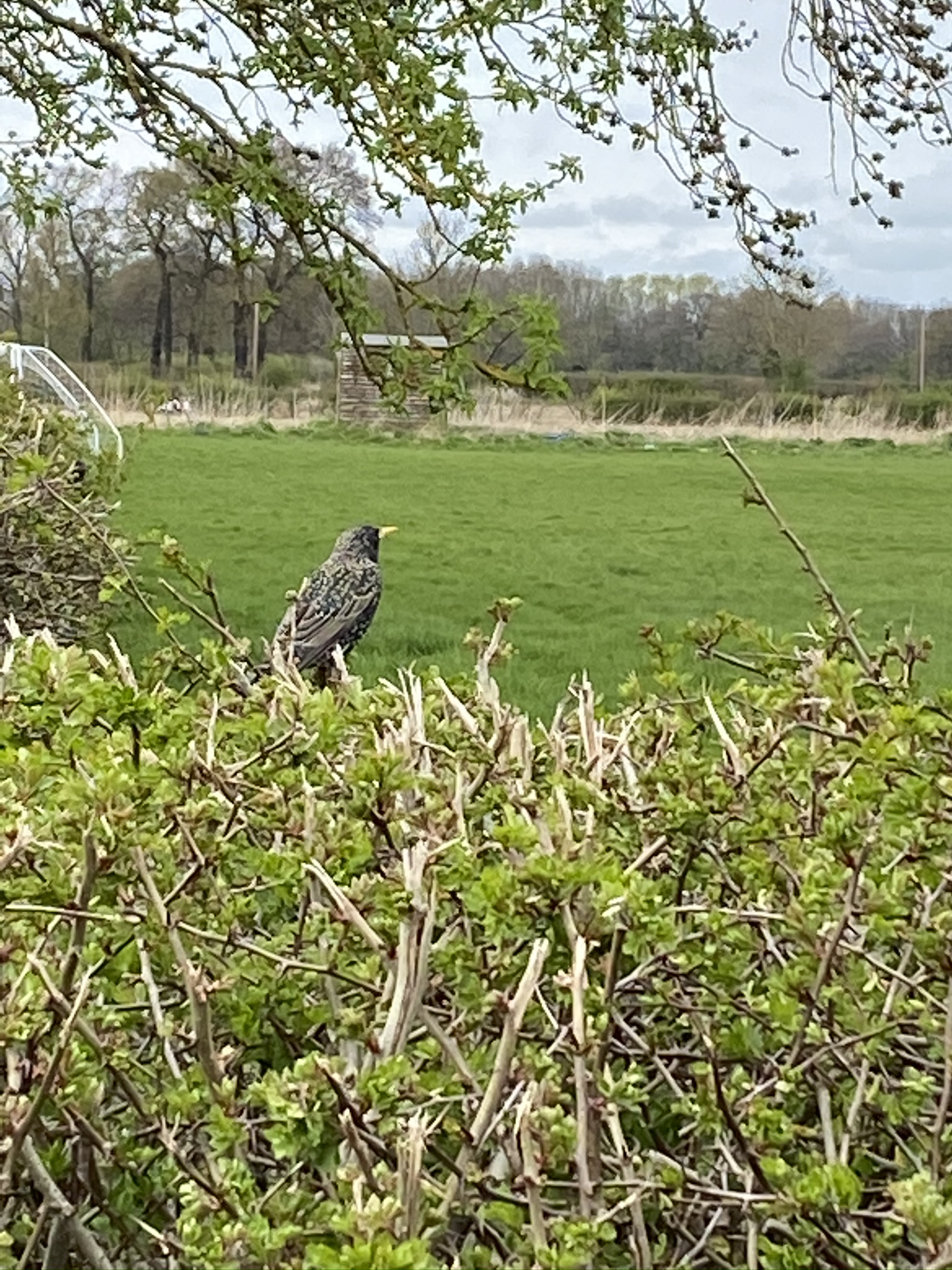
A starling ready to break into song, and the empty A64 dual carriageway. During lockdown, the birdsong seemed so much more noticeable because there was no traffic noise

Not so fine and deodandy

When my dad was a bobby patrolling the streets of Whitby in the 1960s, it was the custom back then that if you were called to a sudden death, you automatically became the ‘coroner’s officer’ which meant you took responsibility for the dead person throughout the whole process until they were released for burial. This would include attending post mortems, investigating the cause of death, liaising with bereaved loved ones and attending inquests. Today, ‘coroner’s officer’ is a role in itself and they can be serving police officers, civilian police staff or local authority employees.

Dad often found himself being sent to sudden deaths because it involved a lot of form-filling, and most officers hated it. But not my dad, as it called on upon his writing and descriptive abilities, and so his colleagues were delighted that he enthusiastically attended these deaths, earning himself the nickname ‘Form 48 Walker’ after the pages-long document that had to be completed each time.

I found an article in his archives from September 1978 in which he writes about the role of the coroner who would have to hold an inquest where there was reasonable cause to suspect a violent or unnatural death, a death from an unknown cause, or a death in prison or police custody.

He uses a word that I had not come across until I read this article. He says of the coroner: “No longer does he concern himself with deodands.” I had no idea what a ‘deodand’ was.

Dad explains that ‘deodand’ was a word first used in the 11th century and since the earliest days of coroners. It referred to the item that caused, or was responsible for, the death of a person. It could be a knife, a gun, a rock or indeed anything! Said item would have to be forfeited, and as such, was under the supervision of the coroners (I did wonder what happened if bare hands were used to strangle someone. How would they be forfeited?). 

A 1227 record reveals that a man was killed by a cart that was drawn by two horses with a pig on board, and the whole lot was declared ‘deodand’, although more often it was just a wheel that was confiscated, as defects with those were often the cause of carting accidents.

The idea was that the offending item would be given to God, and hence the name, as ‘Deo’ means ‘God’ in Latin, and ‘dandum’ means ‘to be given’. The Church would then decide how the deodand could be used to help the relatives of the deceased, perhaps by selling it and giving them the proceeds. 

Over time, instead of confiscating the deodand itself, a monetary value would be assigned to it, which had to be paid, a bit like a fine these days. The Crown eventually took over the role, and the deodand system continued until relatively modern times, although it was open to abuse, and the money would often never end up where it was supposed to go, but disappeared into the coffers of corrupt officials.

As modes of transport became more sophisticated, the system faced potentially complicated situations. For example, what would they do if a ship sank killing its passengers? Or as the age of the steam engine dawned, what would happen if many people died in a train crash? The engineering advancements of the modern era made the system extremely complicated, and following a number of sky-high judgements against train operators, which put the whole system at risk of collapse, Parliament abolished the practice in 1846. 

Dad had a lot of tales to tell around deaths that he dealt with when he was a bobby, some sad, some shocking, some morbidly funny and some just downright bizarre. I hope one day to collate them all into a book as they really do deserve to be heard.

The one that most sticks in my mind is about the first time he had to go to a mortuary. As Dad walked in, he was greeted by a sight that never left him. 

The mortuary attendant was perched on the edge of a table next to a bowl of recently excavated entrails casually reading the paper. He greeted Dad, then leaned towards the cadaver in front of him and, from a lunch box balanced on the unfortunate dead man’s chest, pulled out and began to eat a large scotch egg.

Read more at countrymansdaughter.com. Follow me on Twitter @countrymansdaug

This column appeared in the Darlington & Stockton Times on 11th September and the Gazette & Herald on 9th September 2020

Gone up in smoke

I’m not a smoker but I did surreptitiously dabble when I was at an age where I cared about what my peers thought of me and wanted to fit in. I regularly went to parties where all the cool kids would light up and look unspeakably sophisticated with their cigarettes held nonchalantly between their fingers, smoke slowly escaping from their mouths without any hint of a cough. That cough, sparked by the first intake of fumes into inexperienced lungs, was the tell-tale sign of a novice, and opened you up to a whole volley of ridicule from the seasoned teenage puffers.

Once I was old enough and confident enough, I admitted to myself that I didn’t enjoy smoking at all, hated the taste it left in your mouth and the smell it left on your clothes, not to mention the considerable expense. Of course, at that tender age, health concerns about smoking didn’t even enter the equation. 

So I never became addicted to nicotine like some of my contemporaries, who later in life would likely have to go through the most difficult process of trying to give up. The government and the NHS put an enormous amount of effort into helping people to quit, as well as trying to dissuade our younger population from taking it up in the first place.

Today’s youngsters will never experience the murky delight of travelling in smoke-filled buses, trains and planes, or work in offices where colleagues light up at their desks. Smoking is now prohibited in all enclosed public spaces and this policy, as well as the ever-increasing cost, is credited with contributing to a sustained decline in the amount of people taking up the habit. In fact, according to the Office of National Statistics, the percentage of smokers in the population has dropped from around 20% in 2011 to just over 14% in 2019, with the biggest decline among 18 to 24 year olds. 

There are many tools available to help you quit, such as nicotine patches and, with the smoking ban in public spaces, more people are turning to e-cigarettes and other less harmful ways of enjoying a nicotine hit. In fact nicotine, although addictive, is in itself is no more unhealthy than caffeine, but it is the way in which it is consumed that makes the difference.

The quest for smoke-free alternatives has led to an increase in sales of snuff, ground dried tobacco leaves with various flavours added, a pinch of which you sniff into your nose. It is a product more usually associated with Regency dandies who would whip out their ornate boxes of this prized product to impress the ladies.

Dad mentions snuff in his column from 6th September 1980: ‘Some doctors said recently that this was by far the best method of enjoying tobacco. It was less injurious than smoking and did not produce such a risk of cancer.’

That is not entirely true. Since Dad wrote that piece, there is some evidence to suggest taking snuff can increase the chance of developing cancer in the nasal passages or sinuses. Despite that, it is still said to be 98% less harmful than smoking cigarettes.

Sweden has the lowest rate of smoking-related deaths in Europe, and that is put down to the popularity of a product called ‘snus’ (pronounced like ‘loose’). It is similar to snuff, but instead of being sniffed, small pouches similar to little teabags are placed between the gum and the upper lip. It gives an instant nicotine high, but with far fewer risks and has been enjoyed in Sweden for the past 200 years.

Oral tobacco products like snus, however, were banned in the rest of Europe in the 1990s amid fears of a future health crisis following the aggressive tactics of producers trying to market it to young people. It is suggested that the intention was to create a new breed of addicted consumers, without impacting on the sales of cigarettes.

However, it is the act of inhaling tobacco fumes that is the most dangerous to health, and according to one article I read, ‘If men in all EU countries had the smoking rate of Swedish men, nearly 300,000 deaths from smoking could be avoided each year.’ I’m not sure why only men are mentioned, but if true, it is an eye-opening statistic.

Are cigarettes are on the road to being snuffed out, I wonder?

Read more at countrymansdaughter.com. Follow me on Twitter @countrymansdaug

This column appeared in the Darlington & Stockton Times on 4th September and the Gazette & Herald on 2nd September 2020

Me at age 15, when I thought it was ‘cool’ to smoke