Enlightened by the storm gods

75E19C69-720F-47A4-A189-9F4D65ACA54C
Storm clouds gather over the fields near my home

As I write this column, I’m sitting next to my open patio doors and looking out into the garden on a very hot and humid day. Before the weekend, the Met Office had issued severe weather warnings for thunder, lightning, rain and floods for the whole of the UK for the coming Monday and Tuesday.

It’s Tuesday now, and the storms have not materialised. Although I am relieved to some extent, especially for those who have previously suffered flooding and lightning strikes, I had still felt the same sense of excitement at the possibility of a good storm that I used to feel as a child. In his column from 30th August 1980, Dad writes about one such storm that directly hit our village: ‘The children…sat at the windows entranced but a little afraid of the phenomenon being played out before them.’

The storm caused the power to cut out, which was very common in those days. It was quite thrilling to be plunged into darkness suddenly, and have to feel your way about the house in search of torches and, as in our house, oil lamps. It makes it sound like we were living in some kind of Victorian time warp, but it was not uncommon in the 1970s to keep oil lamps handy for just such an occasion. They were far more reliable than the torches which, because they were seldom used, had barely any battery life left in them by the time you actually needed them.

Today we know exactly what causes a thunderstorm, but in ancient times, such weather events were not understood, and so people believed they were how the gods displayed their anger. In ancient Greek mythology, the most powerful of them all was Zeus, god of the sky and thunder (also known as Jupiter in Roman times), and when a storm arrived, it was a sign that he was cross. So people would make offerings to him in the hope of it passing over without causing them harm. Other cultures came up with their own gods to explain unexplainable weather events. There is Thor in Norse mythology, the god Indra in Hinduism, and in Slavic culture it is Perun. All of them are considered the leaders of the gods, and possess similar traits, such as wisdom, strength and power.

Our pagan forefathers had their own beliefs and superstitions around storms. Some believed that if you pushed your bed into the centre of the room, then hid under the covers citing the Lord’s Prayer, you would be protected. Others thought that by opening all doors and windows, any passing bolt would simply come in one way and go out another. At the same time you had to cover all your mirrors and shiny objects, otherwise they might attract the lightning on its journey through your house. Another was that if you put an item made of iron into the fire, such as a poker or tongs, then it would protect the whole house from any danger.

There was also, especially in Yorkshire, the belief that if you spoke about or pointed to lightning, then you were tempting it to come your way. Stories were told of boys who had done this and as a result had had the seat of their shorts torn clean off. School children would provoke each other into mentioning lightning to see if it would actually happen.

Inn keepers felt the need to protect their beer in a storm, and would place an iron bar across all the barrels, which was supposed to stop their contents from going sour, which they believed was caused by the vibrations of the thunder claps. Similar steps were taken relating to milk too, and nursing mothers would not feed their babies until the bad weather had passed by.

However, not all lightning was considered a threatening event. Folklore popular among the farming community suggested that sheet lightning was sent to help with the crops. This account from Wiltshire in 1938 says: ‘An old lady living near to me was conversing with a neighbour during one of these displays and remarked that there was nothing to cause alarm, as sheet lightning was just sent to ripen the corn.’

I’m not sure that belief still persists, but I will keep my eye on the local cereal crops next time such a storm passes by.

Read more at countrymansdaughter.com. Follow me on Twitter @countrymansdaug

This column appeared in the Darlington & Stockton Times on 28th August and the Gazette & Herald on 26th August 2020
Get thee to Nunnington

CB40E101-1CC3-4441-AAB0-EE4E84A5429E
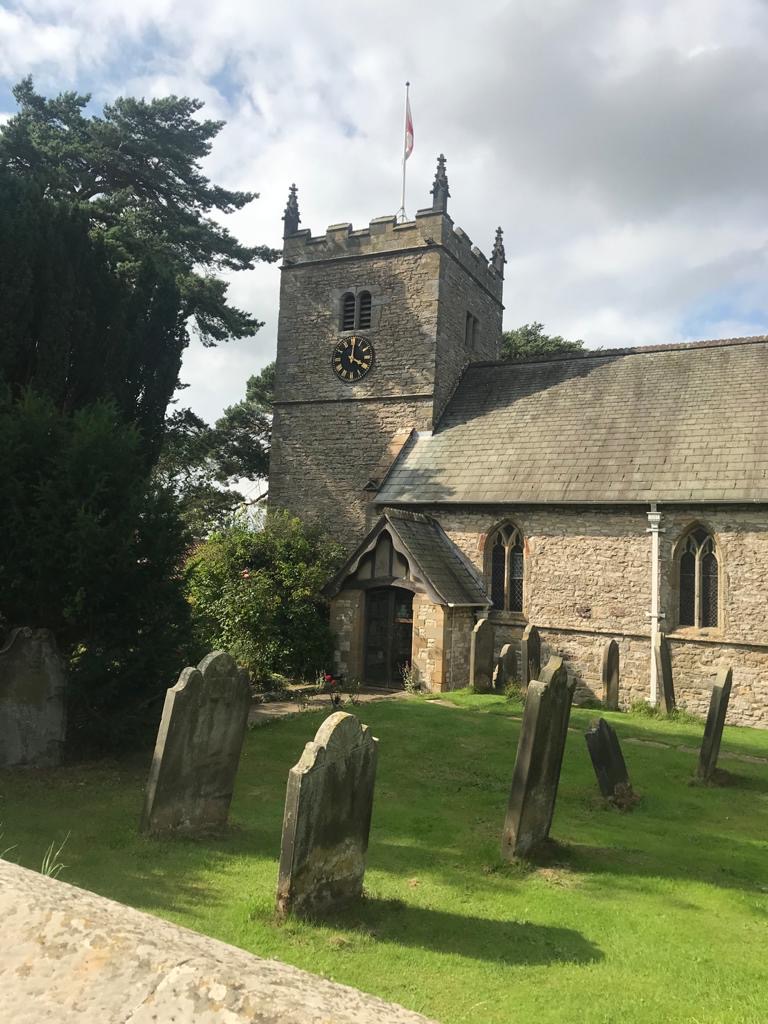
Nunnington Church where lies an effigy of a knight with an animal at its feet. Is it the brave knight Sir Peter Loschi and his faithful dog, or another knight entirely?

Some time ago I wrote about the Sockburn Worm which, as legend has it, terrorised an area around Darlington until it was slain by the brave Sir John Conyers. Many such tales have been passed down the centuries, and it is believed that the ‘worm’, which is a two-legged dragon also known as a wyvern, is actually an allegory for the marauding Saxons and Vikings who invaded Britain between the fifth and 11th centuries.

When I was first born, my dad was village bobby in Oswaldkirk, and just two miles from there is Nunnington, a pretty North Yorkshire village with its own stately home, two art galleries and a church, whose origins date from the 13thcentury. This tiny place has its very own ‘worm’ legend, as I discovered when I read Dad’s column from 23rd August 1980.

The legend goes back to the Saxon era: The villagers of Nunnington were celebrating the annual summer gathering of the hay on top of the hill where the church now stands. They had crowned their ‘queen’, an 18-year-old local girl, who was being paraded around on a cart carrying the symbolic final load of hay, flanked by half a dozen youths.

Suddenly, above the joyful noise of the festivities came a dreadful sound, like ‘thousands of angry geese all hissing together’. Everyone stopped still, their voices instantly hushed, the music fading quickly into silence.

Into the light stepped a terrifying monster with the head of a dragon and the body of a serpent, poisonous flames and fumes bursting from its mouth. Everyone scattered in terror, dashing to their homes and bolting their doors behind them. The poor festival queen was marooned on her cart as the youths scarpered, and she froze with fear. The deathly serpent coiled itself around her and carried her off to its lair on nearby Loschy Hill, and she was never seen again.

Although some attempts were made to tackle the creature, none possessed the skills and courage to succeed, apart from one man. That was local knight, Sir Peter Loschi, who had been away defeating Saxons and other enemies of King Arthur, as well as single-handedly recovering the king’s standard, rescuing countless damsels and fighting off lions, dragons, and numerous other dastardly beasts. He had just returned with his faithful dog to have a well-deserved rest.

But, on hearing the plight of the young maiden, this brave hero could not sit back and do nothing, especially as the hideous beast continued to abduct the terrified young residents of his home village.

He had a special suit of armour made that was studded with razor-sharp blades. He also possessed a special sword with a Damascene blade, the same as King Arthur’s famous Excalibur.

When everything was ready, he took his dog and headed to the lair. The beast ran out to confront him, and Sir Peter lashed out with his sword while his dog bit it on the legs and tail. But every time the creature was injured, it instantly healed itself again. Sir Peter tried and tried, but made no headway with the ever-healing animal and he eventually grew tired, so that the worm was able to coil itself around him.

It looked like all was lost, until the blades of Sir Peter’s armour sliced the end of its tail clean off. Before it could heal again, the dog grabbed the piece and ran away with it. With renewed strength, Sir Peter lashed out with his mighty sword, and every piece of the animal that he severed was grabbed by his dog and carried away so that the diminishing monster could not heal itself. Finally only the head was left, and with one final hiss, the dragon died.

As he made his triumphant way back to the village, the fearless knight’s dog jumped up and licked Sir Peter on the face. Sadly, the dog’s tongue and breath were laced with the dragon’s poison, and within minutes, both these gallant victors were dead.

In Nunnington Church lies an effigy of a knight with an animal at his feet. Although most say it is Sir Walter de Teye, who died in 1325, others prefer to believe it depicts the heroes of this story. Whatever you think, why not visit Nunnington Church (when it is open) and decide for yourself?

Read more at countrymansdaughter.com. Follow me on Twitter @countrymansdaug

This column appeared in the Darlington & Stockton Times on 21st August and the Gazette & Herald on 19th August 2020

Steps to Devon

I’ve just come back from a little trip away with my boys. I decided some time ago that as soon as restrictions were lifted on guest houses opening, I would head up to the Yorkshire Dales to stay in my friends’ bed and breakfast, which they had purchased not long before lockdown, and had barely opened before they had to shut again.

Thankfully, they were able to open properly as of 4th July, and have been almost fully booked ever since with people determined to get away within our own shores, rather than take the risk of travelling abroad. It was a wonderful few days with fine weather, and an absolute treat to go walking in the glorious landscape around Grassington and Nidderdale. With my friends’ help, we found some routes that were slightly off the beaten track, so had no worries about overcrowding that we have seen in other popular destinations.

As I have mentioned before, when we were growing up, my dad preferred to spend his time off work exploring all that this country had to offer, rather than going abroad. In fact, I can count on the fingers of one hand the times he did go further afield (although that might also have had something to do with raising a family of four children on a meagre policeman’s salary!).

We usually went to the Lake District for one week in August for our annual family jollies, however I have discovered from Dad’s archives that in July 1978, he and my mum took a trip to Devon. This came as news to me, as they had very few holidays without us, and I can’t remember this trip at all. As I would have been 11, it’s not something I thought I would have forgotten, so I phoned my mum to ask her all about it.

As it turns out, it adds another piece to the jigsaw of my dad’s life that I am discovering since he died, things that I didn’t know before, or of which I only had a patchy knowledge. When this happens, it makes you wonder why you didn’t ask about these things before. But then again, you always think you have plenty of time to ask your parents questions until, suddenly, it’s too late.

The beginning of this tale actually started when Dad was still alive. He once told me the story of when he was press officer for North Yorkshire Police, and he’d been doing the job for a few years. He was thoroughly enjoying the role when a new chief constable was appointed.

The new chief called my dad into his office an announced in words to this affect: “I’m going to employ a civilian to become our press officer, Walker. In the police, we’re not trained for that sort of thing, we don’t have the skills. You need a professional who knows what he’s doing when it comes to dealing with the media and writing press releases and all that. It’s not that you’re not doing a good job, Walker, but my last press officer was a proper writer. He’d had nine crime novels published, you know.”

“Oh really?” replied my dad, “I’ve had 29 published.”

He let him keep his job.

So going back to the phone call with my mum, I found out that this trip was a result of that initial conversation with his chief constable, who still sent my dad down to Devon to meet this press officer because he thought he could teach my dad a thing or two. As was quite common in those days, my mum was allowed to go with him, but once they arrived, the press officer, upon speaking with my dad, came to the conclusion that there really was nothing he could teach him. He suggested that my parents not waste the trip, but instead turn it into a holiday, which they duly did!

And so, as was often the case with my dad, the trip provided plenty of material for subsequent books and columns, and there were many places in Devon, which really impressed him, including Dartmoor, Princetown, Plymouth and Buckfastleigh – although, from what I have read, what impressed him most were the Devon cream teas!

I wonder what he would have thought of the idea of me taking over his columns? I guess I should have asked him. 

Read more at countrymansdaughter.com. Follow me on Twitter @countrymansdaug

This column appeared in the Darlington & Stockton Times on 14th August and the Gazette & Herald on 12th August 2020

The measure of things

E4DAA641-DB7B-44E2-BEEA-D542CCCB3986
An old milestone a reader spotted while queuing for the Kingswear to Dartmouth ferry in Devon

Following my column about milestones a couple of weeks back, I received a fascinating message from a reader who kindly sent me a picture of an old milestone he had spotted while queuing for the Kingswear to Dartmouth ferry in Devon (see picture).

He asked me to guess what the initials M-F-P stood for. I wasn’t sure, but was determined not to look online (And before I give you the answer, have a look at the picture above and see if you know what they stand for – and no cheating!).

In my dad’s column from 9th August 1980, he too had been contacted by a reader following his mention of milestones a couple of weeks before. A Mr G.R. Pennock from Barningham, near Richmond, told my dad of a very old stone ‘outside the Smallways Inn on the road from Bowes to Scotch Corner, now the A66.’

That stone, I believe, is still there, a short, squat thing with four sides with the following carved into each face: ‘CATTE RICK ROAD; BK14 1774; GREATA BRIDGE ROAD; RICHMOND ROAD’ and on one of the faces is also an arrowhead with a line across the top.

If you look at the picture with this piece, you will see that it also has the same arrowhead on the side (Another puzzle for you if you don’t already know what that means…).

The Smallways milestone is pretty easy to understand apart from ‘BK14’ which also has ‘1774’ beneath it. My dad guesses that ‘BK’ could be ancient initials for Barnard Castle, but then the ‘14’ isn’t right, as it is only around eight miles or so to Barnard Castle from there. They could perhaps refer to Bishop Auckland, which is 17 miles away, and as I have mentioned before, measurements for miles could vary in days of yore, so ‘14’ is not too far away from 17. If anyone has the definitive answer though, please do get in touch.

Going back to the arrow with a line across the top, when I showed the picture of the above milestone to my brother, he knew straight away what it was (I am convinced that my brother knows everything!).

And of course, my dad knew too, and he explains in his column that it would be a later addition to the ancient stone, and is a tool used by map makers Ordnance Survey to indicate that they have used this point to measure height above sea level. If you look at an OS map, there will be a contour line going through that very spot showing how high it lies. The marks can be found in all sorts of places, not just on way markers. They are inscribed on cairns on the moors, on the walls of houses, in fact anywhere where a contour line passes through. However, due to things like property development, land movement and just natural decay and destruction, they are no longer classed as a reliable source of information, and far more sophisticated systems are used these days for the accuracy of height above sea level.

Going back to the picture on this page, have you worked it out yet? I guessed the ‘M’ meant ‘mile’, and the ‘F’ meant ‘furlong’, but it was my mum who knew that the ‘P’ meant ‘perch’ or others might know it as ‘pole’. It is yet another ancient unit of measurement, the smallest of the three.

In other words, Newton is 16 miles, six furlongs and 24 perches/poles away from Kingswear, whereas Torquay is 12 miles, two furlongs and 14 perches/poles away. It strikes me that this is a very detailed description of distance, but I suppose if your only method of transport is your feet, then it helps to know as then you can judge exactly how long it might take you to walk to your destination.

These days it is far easier to find out such things. You just put your destination into an app and it will tell you how far away it is, and how long it should take you to get there, depending on your mode of transport.

For anyone who’d like to know though, according to Google Maps, it would take you 10 hours to walk the 34 miles, six furlongs and 29 poles from Kingswear to Exeter.

It makes me rather grateful to have a car.

Read more at countrymansdaughter.com. Follow me on Twitter @countrymansdaug

This column appeared in the Darlington & Stockton Times on 7th August and the Gazette & Herald on 5th August 2020

Our own special day

92EBE20A-3A2A-4882-8118-5A8C3276FA3E
The white rose was associated with the first Duke of York, Edmund Langley, in the 15th century, before it came to represent the whole of Yorkshire in later years

Of all the inhabitants of our nation, us Yorkshire folk have a justifiable claim to be the most proud of where we come from, as is demonstrated by the fact that ours is the most famous of all the county ‘days’.

Yorkshire Day fell this Saturday, August 1st, and it is celebrated not just within our own borders, but by thousands living elsewhere, some of whom may only have the slightest connection to God’s Own Country.

This special day isn’t actually that old, and was first marked in 1975 as a protest by the Yorkshire Ridings Society which objected to boundary changes placing the areas around Beverley, Driffield, Bridlington and Hull into a new county called Humberside. Residents of the old East Riding were understandably miffed, and never felt they were anything other than Yorkshire folk.

The new county lasted a mere 21 years before it was consigned to the dustbin and the old county of East Yorkshire was reinstated.

Yorkshire is believed to have existed for around 1,100 years from the time when invading Vikings were still active. The word ‘riding’ is derived from the Danish word ‘thridding’ which means ‘a third’ and the 600-mile boundary was divided into three, North, West and East. A kind of ‘Yorkshire Parliament’ was established, where representatives from each ‘thridding’ would have discussions and negotiations with one another. It also explains why we have only ever had three rather than four ‘ridings’.

If you were out and about on August 1st then you will have come across the Yorkshire flag, which features our white rose on a bright blue background. Although the flag has been flown for well over 50 years, it was only in 2008 that it was officially recognised by the UK Flag Institute, once again thanks to much lobbying by the Yorkshire Ridings Society.

The use of the white rose as a heraldic symbol dates back to the first Duke of York, Edmund of Langley, who died on 1st August, 1402. Although initially only associated with the House of York (particularly during the wars against the House of Lancaster in the 15th century, dubbed the ‘Wars of the Roses’ in the 19th century) the flower later came to represent the county as a whole.

One of the most well-known tales surrounding the white rose involves the Seven Years’ War when French forces had worked their way across Western Germany, capturing many important towns and cities en route. On August 1st 1759, the Anglo-German allies, which included the King’s Own Yorkshire Light Infantry, fought and defeated the French. The story goes that the soldiers plucked wild white roses as they passed the hedgerows in the town of Minden, which they pinned to their lapels or headwear to commemorate their fallen comrades. To this day, all the battalions in the King’s Own Yorkshire Light Infantry wear white roses in their caps on 1st August, Minden Day, to remember those lost in conflict. Their permanent cap badge is also unique in featuring a curled musical horn with a Yorkshire rose at its centre.

On the subject of roses, following my column a couple of weeks back about St John’s Wort and ‘Rose of Sharon’, I received the following from reader Neil Buckley: ‘There are some useful clues in a book I have called Wild Flowers of Britain…The fact that your dad linked it to St John’s Wort appears quite logical…St John’s Wort is from the genus Hypericum, of which there are a number of species…There are also trailing species (H. humifusum) and a bushy species (H. androsaemum) known as Tutsan. The book discusses the origin of this name, and I include some details below; “When fresh, the leaves of Tutsan have no particular smell, but a day or so after drying and for four years or so thereafter they emit a subtle, pleasant odour, which is likened to that of ambergris, the costly scent-base found in the intestines of certain sperm whales…Its dried leaves have been used as scented book-marks, particularly in prayer books and bibles….The ‘Rose of Sharon’ has biblical origins, and is another name for Jesus, which seems to link nicely with the use of the dried leaves in bibles…Evidently, Sharon is a plain and it is one of the largest valley-plains in all of Palestine.”

With many thanks to Neil for that fascinating information, and I wish you all a belated Happy Yorkshire Day!

Read more at countrymansdaughter.com. Follow me on Twitter @countrymansdaug

This column appeared in the Darlington & Stockton Times on 31st July and the Gazette & Herald on 29th July 2020

A saint rushes in

A6865A7E-E336-4D3E-A305-146B1C3C590F
Bamburgh Castle which sits atop a great rocky hill rising 150 feet above sea level.         Picture: Owen Humphreys/PA Wire

In the mid-1980s I studied at Newcastle University and in our free time we loved to ride up into the wilds of nearby Northumberland, which (after North Yorkshire of course) has to be one of the most beautiful of our counties. Maybe the fact that it has its own share of remote hills and moors is why and I liked it so much.

In his column from 26th July 1980, Dad writes about a family visit there in which we saw various places, including Alnwick, Warkworth, Alnmouth and finished our day with an evening walk along the beach by Bamburgh Castle. This imposing fortress sits atop a great rocky hill rising 150 feet above sea level, its nine acres commanding views stretching miles over the surrounding land and ocean.

It is little wonder that this coveted spot was chosen by the sixth century Anglo-Saxon kings as their capital of Northumbria. Ida the Flamethrower was the first to build a significant wooden structure there in AD547, and when he died, his grandson, Aethelfrith, took over, sending his sons Oswald and Oswi to the Scottish island of Iona to be baptised and educated by the Christian monks there.

It was Oswald who became the most famous Anglo-Saxon king of Northumbria. Born in AD604, he was king from AD634 until his death in AD642. During his reign he was considered the most powerful king in Britain and is credited with promoting the spread of Christianity across the north. He was defeated and killed at the Battle of Maserfield on 5th August AD642 by the pagan king of Mercia, Penda.

The Venerable Bede, writing around 100 years after Oswald’s death, provides the only record we have of his life and reign, and he describes him as a very ‘saintly’ king, citing his generosity to strangers and the poor. A story goes that a servant came to tell him that the poor were in the streets begging for alms. He ordered the food from his table to be distributed among them, and also that the silver platters from which his gathering were eating be broken up and distributed.

As a devout Christian, Bede’s version of the king is likely to be a rather biased, and he glosses over his reputation as a seasoned warrior. After Oswald was killed, the myth of his holy stature quickly gained momentum so that the place where he fell became renowned for inspiring miracles. It is said that so many people took a handful of earth from that very spot that a hole as deep as a full-grown man was left behind.

St Oswald was supposedly killed near the Shropshire town of Oswestry, or ‘Oswald’s Tree’, so-called because legend has it that a raven took one of Oswald’s severed arms and perched on a nearby tree, which then became associated with miracles. The raven is then said to have dropped the arm, and a sacred spring appeared at the very spot that it hit the ground. Whatever its true origins, that spring is still there to this day and goes by the name of St Oswald’s Well. However, according to historians, his true place of death is more likely to be much further north.

In days gone by, church floors were nothing more than earth, and so were covered in sweet-smelling rushes to absorb the muck and odours that were brought in on the feet of the faithful. These rushes were changed once a year in a ceremony known as a ‘Rush Bearing Festival’. Parishioners would parade through the village, usually on or around the church’s saint’s day, and the new rushes would be placed in the church, followed by a special service. The practice died out in the 19th century as stone flags replaced earthen floors. However, it survived in some villages including Kirkoswald in Cumbria, where St Oswald is reputed to have preached. Incidentally, my dad was village bobby in Oswaldkirk, which means ‘Church of St Oswald’, and became ‘Aidensfield’ in his ‘Constable’ (Heartbeat) books.

Today, though, only five Cumbrian villages still have a rush bearing festival and these are Ambleside, Great Musgrave, Urswick, Warcop and Grasmere, whose church is also dedicated to St Oswald. In fact, William Wordsworth and his family are buried in the graveyard, and while he was alive, the great poet himself is said to never have never missed a rush bearing ceremony.

Read more at countrymansdaughter.com. Follow me on Twitter @countrymansdaug

This column appeared in the Darlington & Stockton Times on 24th July and the Gazette & Herald on 22nd July 2020

A country mile

30D1DEE7-743D-4371-AE4F-018EDDEE24F0
It it believed to be the Romans who first introduced waymarkers, or milestones, into this country

It’s a constant mystery to me why we in this country have not settled on one system of measuring things like weight and distance. When my children were born, their weight was recorded in pounds and ounces, and yet their height was given in centimetres. I’m not sure how old they were when we started to measure their height in feet and inches, but today I know my oldest son is six foot three, but I couldn’t tell you off the top of my head what that is in centimetres (it is actually around 192cm, but I had to look it up!).

Similarly if I read that someone is 165cm taIl I have to really think about what that might look like. I will visualise how high a metre might be (because we were taught about metres and centimetres in school) then add about two thirds of a metre on to that to give me a picture of their actual height. If, however, I read that someone is five foot five inches tall (which is around 165cm), I wouldn’t need any time to think about that as I know what that looks like straight away.

Other European countries have fully adopted the metric system of measurement, using centimetres for height, kilograms for weight and kilometres for distance. If any of my European friends tell me they weigh 65 kilos, I would not immediately know that that it is around 10 stone. I’d get there eventually, but it’s not something that comes to me instantaneously.

The Americans are a bit like us in that they use metric for some things, and imperial for others. They prefer to use just pounds for weight and centimetres for height. However, like us, they are one of the few countries that still uses miles to measure distance.

I do wonder why the UK did not adopt kilometres like the rest of our European neighbours, although there was a time when we did seriously consider changing our system for calculating distance. As my dad writes in his column from 19th July 1980: ‘I wonder how long the mile will survive in our modern society? Already our children have learned nothing about inches and yards, and talk only in centimetres.’

As with many things, the Romans taught us a thing or two about measurements, and it was they who started to put distance markers at the sides of roads to help with understanding how far on your journey you’d gone, and how far you had yet to go. These markers were also a way of reminding Roman Britons of who was in charge, with the name of the ruling emperor often inscribed in prime position at the top of the stone.

There are around 100 of these ancient markers still in existence today, and one of the most well known lies just off Dere Street, the ancient Roman route that linked Eboracum (York) and Caledonia (Scotland). Some of today’s modern routes follow Dere Street, including parts of the A1 and also the A68 northwest of Newcastle. It is just off this road, at West Woodburn, that the ancient granite milestone can still be seen.

Milestones became much more important with the dawning of the age of the stagecoach, helping coach operators establish timetables for the drivers to adhere to. Having said that, the distance between each milestone wasn’t always accurate and some ‘miles’ were much longer than others. The Roman mile was about 1600 yards, but in 1593 Queen Elizabeth I introduced the ‘modern’ mile which was 1760 yards. Despite this statutory measurement being passed down by Royal decree, many localities kept their own measurements for the mile, and so there were wide variations depending on where in the country you were. In Yorkshire alone, there were ‘miles’ measuring from 2,200 yards to 3,300! It was the Turnpike Act of 1766 which decreed that milestones be compulsory at every crossroads, although it wasn’t until the 1800s that the 1760-yard mile became a nationwide standard.

In 1980, Dad was convinced that we would eventually adopt the kilometre: ‘I suppose we’ll soon have kilometre posts in place of milestones, and when that day comes, I very much doubt whether the Yorkshire kilometre will be any different from the others. Well, that’s the price of progress.’

Well, Dad, clearly we haven’t made any progress yet!

Read more at countrymansdaughter.com. Follow me on Twitter @countrymansdaug

This column appeared in the Darlington & Stockton Times on 17th July and the Gazette & Herald on 15th July 2020

St John and the rose


940EC106-1F48-43D2-B1D7-0AC77E7C4EE8
St John’s wort. Is it only in Yorkshire that this plant is also called Rose of Sharon?

3C03156F-1BF0-4A23-9A82-DCF6CBDF89B8

86340D58-9931-4E16-90EB-ADF6AB6E93DB
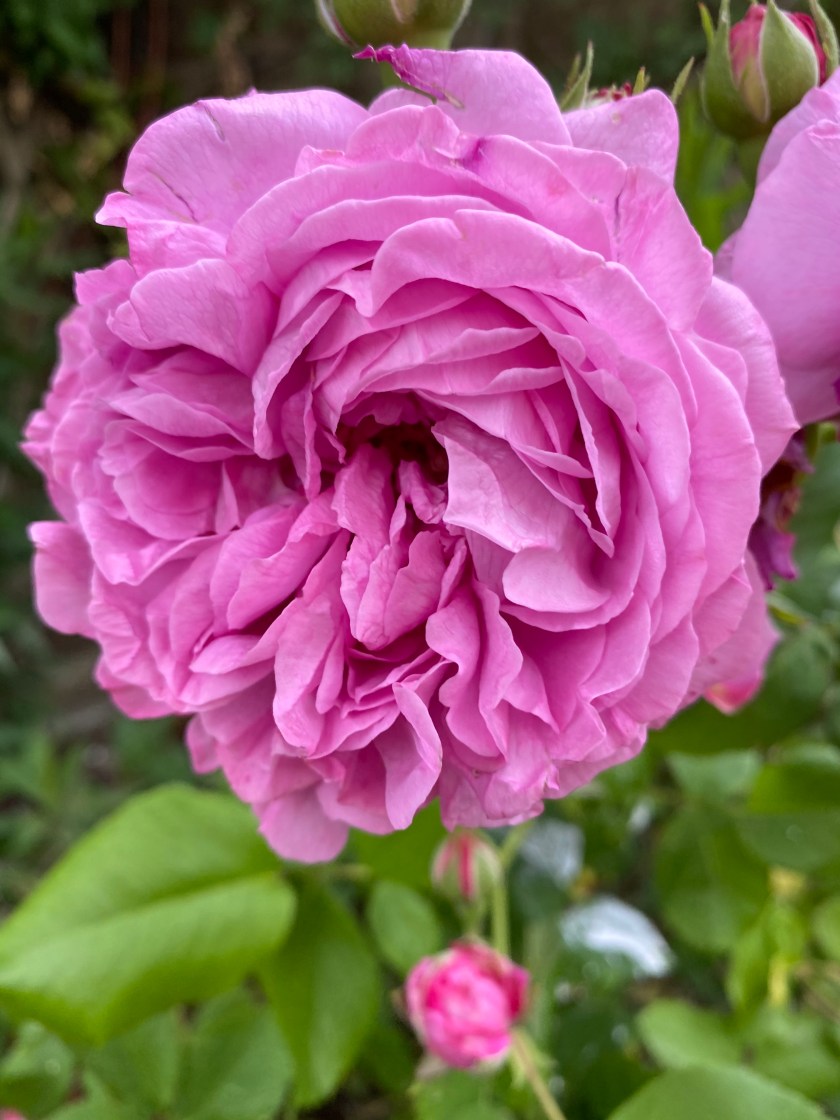
The roses in my mum’s garden are doing really well this year

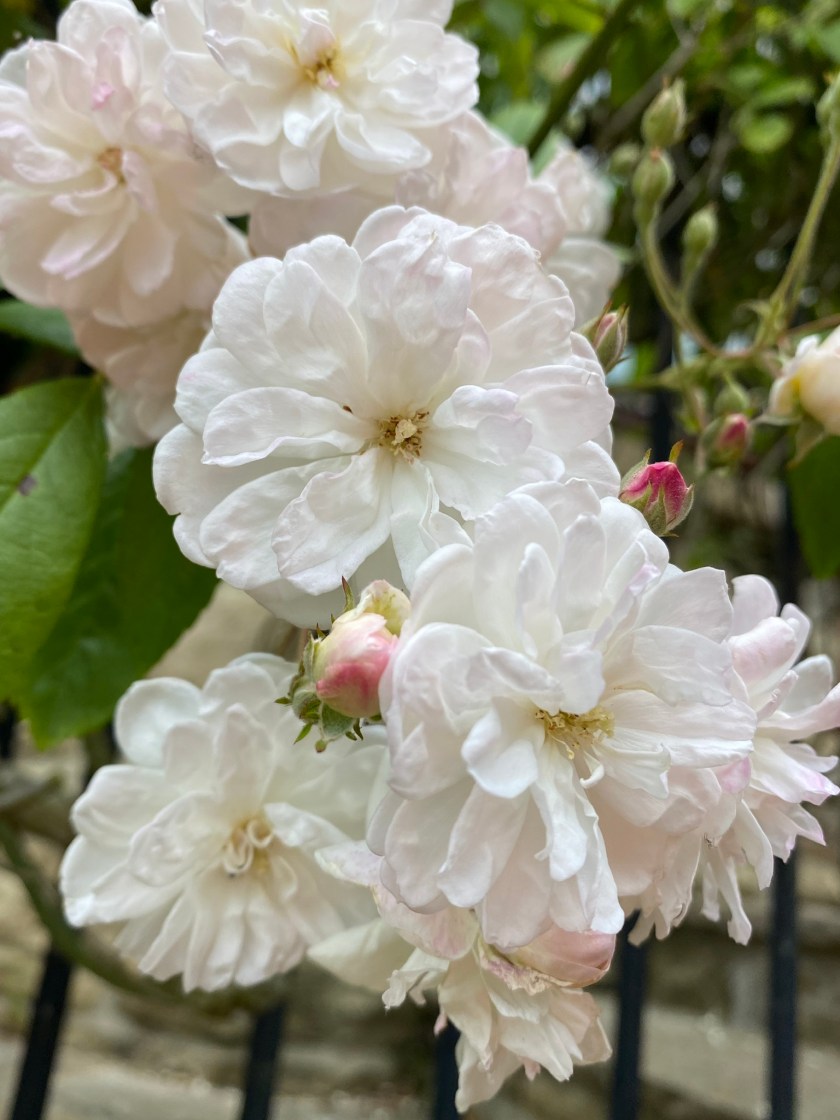
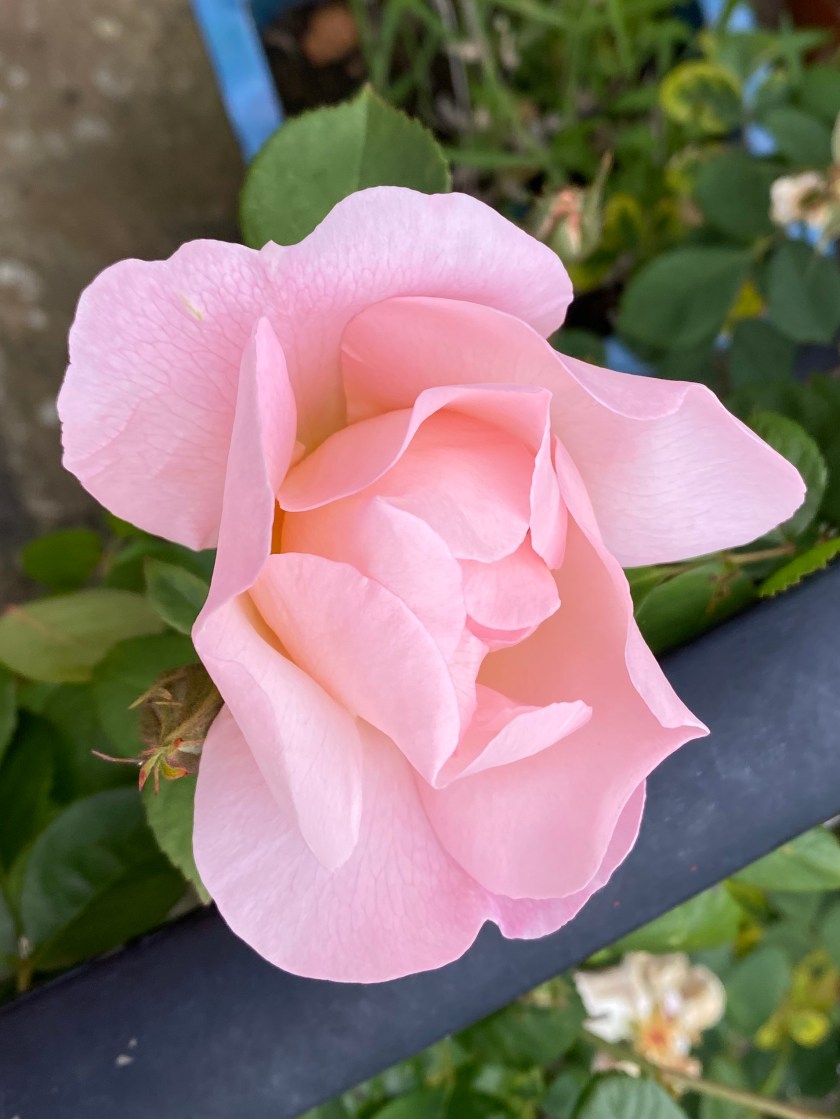
This year seems to be a very good one for roses. The ones in my mum’s garden are thriving, producing so many blooms that her flowerbeds, borders and patio are bursting with wonderful explosions of colour. I am not very knowledgeable when it comes to varieties, but the scented ones are especially lovely, filling the air with their glorious perfume as you walk past.

But when is a rose not a rose? When it is the Rose of Sharon, a name which is commonly associated with the hibiscus syriacus, a shrub from the mallow family. Trying to get to the bottom of why it is called ‘Rose of Sharon’ is nigh on impossible as there is a plethora of different plants with this name, including species of iris, peony, apple, and Chinese hibiscus, but no actual roses.

Unsurprisingly perhaps, the name has biblical associations, as my dad mentions in his column from 12th July 1980, appearing in the Old Testament (Song of Solomon): ‘I am the Rose of Sharon and the Lily of the Valleys’. There is debate to this day as to what the ‘Rose of Sharon’ actually was, and what the phrase really means. Floral contenders include the crocus, the tulip, the lily and the narcissus.

According to Dad, this flower of many identities is also known as St John’s Wort. He explains, though, that very few of his reference books mentioned Rose of Sharon in association with St John’s Wort and he had to refer back to the notes of his esteemed predecessor, Major Jack Fairfax-Blakeborough, to find one. Unfortunately, I wasn’t able to lay my hands on the notes Dad was referring to, although he does go on to say that the flower was one of the major’s favourites and he occasionally sported one in his buttonhole. I did eventually find out that it is mainly in Britain that St John’s Wort is sometimes known as Rose of Sharon, so I wonder if it is an old Yorkshire name? Perhaps one of you knows the answer, and can shed some light on why Rose of Sharon is linked to St John’s Wort.

St. John’s Wort can be seen both in gardens and growing wild, although it has to be treated with caution as it spreads very easily and can dominate other less robust plants. Common St John’s Wort has upright woody stems that grow up to a metre tall, with bright yellow star-shaped flowers speckled with black. It is also known as ‘perforate’ thanks to the fact that its narrow oval leaves are covered with translucent dots that can be seen when held up to the light making it look like it is covered in tiny perforations.

The plant has been associated with mystic qualities for centuries, not least because when its stems are broken, a blood-red substance seeps out. Some likened the tiny holes to the wounds on Christ’s hands and feet, and on the eve of St John the Baptist’s Day (24th June), the plant would be burned to ward off evil spirits and the charred herbs would then be hung in houses, stables, byres, or upon the necks of horses and dogs. One reference to the herb which dad found came from 1525 and states: ‘If it be putte in a mannes house there shall come no wyked spryte therein.’

I’ve recently rediscovered a small book written by Dad in 1995 called ‘Yorkshire Days’, a collection of notable dates celebrated within the county’s boundaries. It is St John’s Wort day on 29th August, the day when Roman Catholics commemorate John the Baptist’s death. You might be familiar with the story of Salome, King Herod’s step-daughter, who danced for him at a banquet and he was so enthralled that he granted her any wish. She asked for the head of John the Baptist to be served on a platter. Interestingly, John is one of only two saints (the other being the Virgin Mary) who have days to mark both their birth and their death. Most saint days occur on the date they died.

Although St John’s Wort can be poisonous to livestock, it has long been highly prized for its medicinal properties and, when applied in the right way, it has been shown to help heal wounds and burns, and ease the symptoms of insomnia, the menopause and depression.

Read more at countrymansdaughter.com. Follow me on Twitter @countrymansdaug

This column appeared in the Darlington & Stockton Times on 10th July and the Gazette & Herald on 8th July 2020

An egg-straordinary tale

B1D1C270-2CED-4E99-924F-70B412A68D49
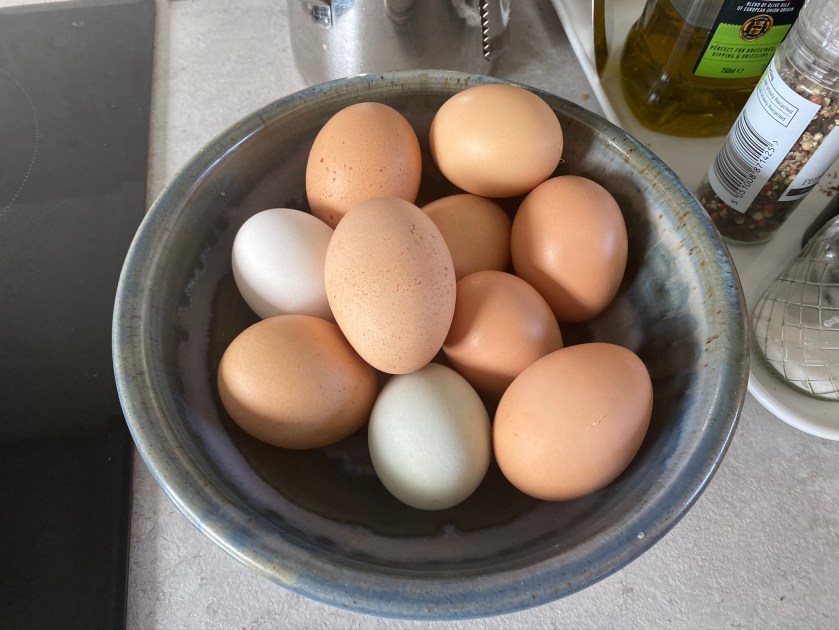
My latest haul of fresh eggs from a roadside barrow
48CF53C6-9104-404A-A696-500F676ED5DC
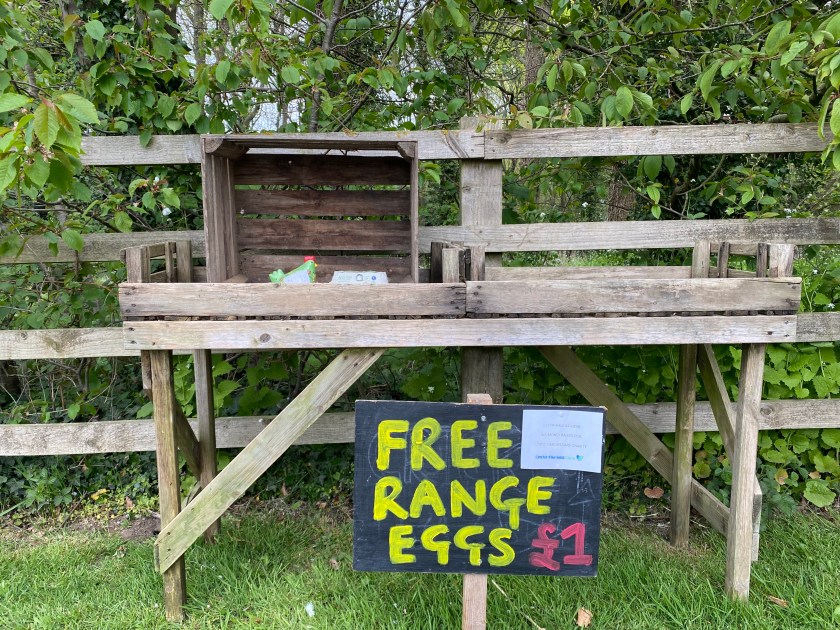
One of my regular stopping points for fresh eggs
214906CD-5853-4972-B9CC-4807CD869B9C
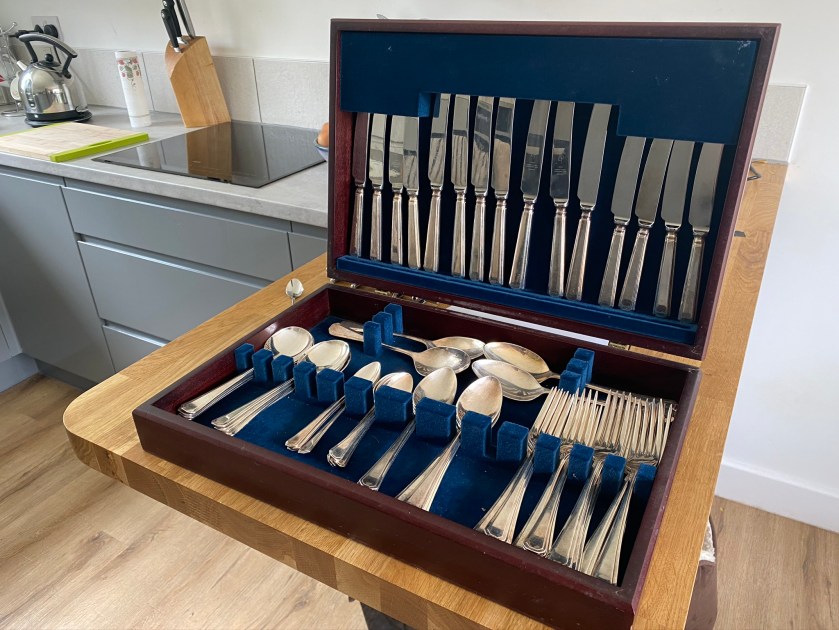
The expensive canteen of cutlery that I ruined with silver dip 26 years ago before I had chance to use it
5E51BCBE-8300-47A9-AD26-B9E94E6197D3
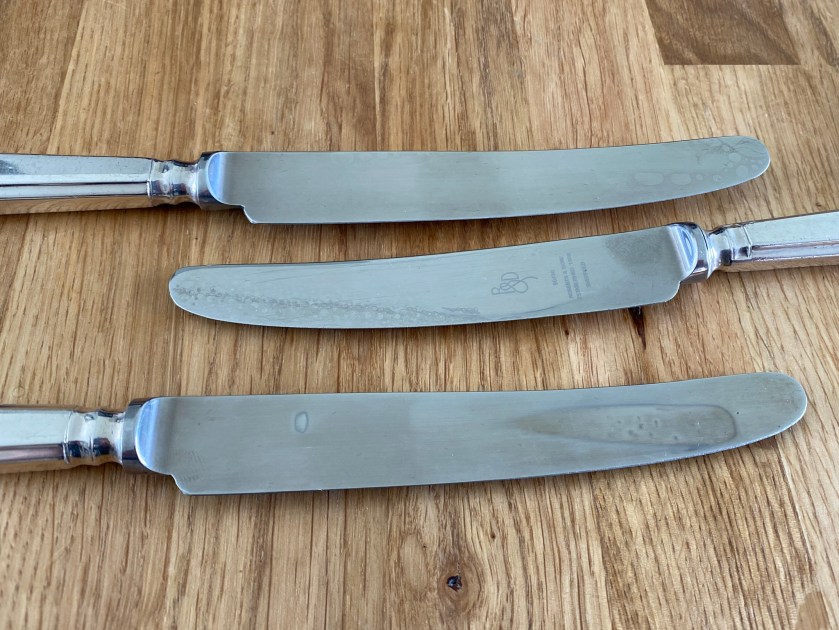
The effect of the silver dip on the knife blades can still be seen 26 years later

I came across a story in the news this week about a woman who has hatched ducks from eggs that she bought at the supermarket. After seeing a video on YouTube, Charli Lello, aged 29 from Hertfordshire, decided to incubate some Clarence Court duck eggs from Waitrose to see what happened.

After a month in the incubator, she was amazed to hear faint cheeping from inside the eggs and, sure enough, soon three little ducklings hatched. She has named them Beep, Meep and Peep, and is raising them alongside her chickens, explaining that as she’s on furlough she has the spare time to properly look after the demanding motherless babies.

It is such an amazing story because supermarket eggs are meant to be unfertilised, and therefore this shouldn’t happen. However I have discovered that this is not always the case, especially with eggs from the Braddock White duck, which is what Charli Lello bought. Normally, male and female ducks are kept separate, but if a drake does somehow manage to get in among the ladies, he is extremely difficult to spot because he looks exactly the same as the females.

I have mentioned before how much I love eggs, and that I eat them in some form most days. I would usually choose free range eggs from local shops that are produced on a largish scale by Yorkshire suppliers. During lockdown, however, I have found a number of places where fresh eggs are available to buy from roadside barrows and they are on another level of freshness and deliciousness. The shells seem thinner and easier to break, and the yolks are a vibrant orange-yellow that you don’t often get from supermarket eggs. The colour of the yolk depends on what the birds eat, so if its diet is rich in things like natural paprika and marigold, then you are likely to end up with a very robust colour.

When I took my dad’s 5th July 1980 column out of its folder to prepare for this column, a small cutting fell from between its folds. It featured a letter from a John Boulton from Leamington Spa who had written in response to an earlier column where dad had talked about the methods of cooking an egg (you might remember me referring to it back in March). Dad’s discussion had prompted a comment about the effect eggs have on silver and the fact that if you dip a silver spoon into an egg, it will be immediately tarnished with black stains.

This happens because silver reacts with sulphur and sulphur-containing compounds, such as eggs, and once a silver item is stained in this way, it is very difficult to restore it back to its previous glory. So, with that in mind, you would think you should not use silver cutlery at all when eating eggs.

However John Boulton pointed out that these compounds are soluble in hot water, so of all the ways of cooking eggs that my dad had listed, only poaching would bring the inside of the egg into contact with hot water. Therefore, rest assured, you can still use your silver cutlery to eat a poached egg. Well thank goodness for that, I hear you cry!

This reminds me of an embarrassing story concerning a very expensive canteen of cutlery that our parents gave us as a wedding gift. A few weeks after getting married, I decided to polish the cutlery in readiness for visitors that weekend.

As there were 60 separate pieces to clean, I decided to take a short-cut and use a silver dip where you put a special solution in a bowl, chuck in your cutlery and, hey presto, it comes out sparklingly clean.

Fifteen minutes in, I checked the cutlery and to my utter horror found that every single knife blade had gone black. Although I furiously tried to polish them, the solution had stripped the blades of their layer of silver plate and, worst of all, we hadn’t even had chance to use them yet! To this day, 26 years on, the damage can still be seen.

I’ll never forget what I said to my new husband when he came home later: “You know when we got married, and we vowed ‘For better, for worse’? Well this is our very first ‘for worse’ moment.”

It took him a while, but he did see the funny side. Eventually.

Read more at countrymansdaughter.com. Follow me on Twitter @countrymansdaug

This column appeared in the Darlington & Stockton Times on 3rd July and the Gazette & Herald on 1st July 2020

Green, green grass of home

C4D42803-0E6F-4885-9263-7AE7F2FAF5D2
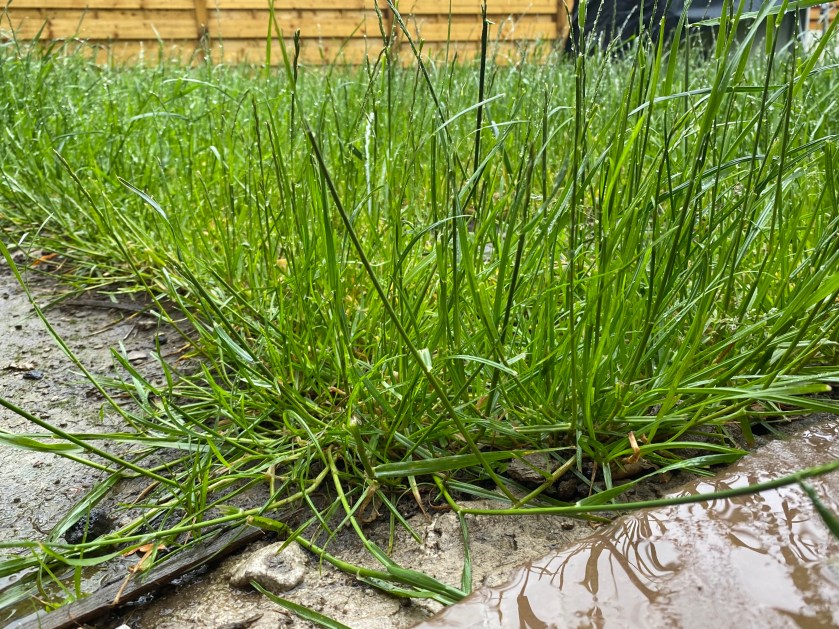
The rampant ryegrass in my garden that grows so fast you can almost see it happening 
B0F30020-C989-4ED1-A9CB-3F136B65788F
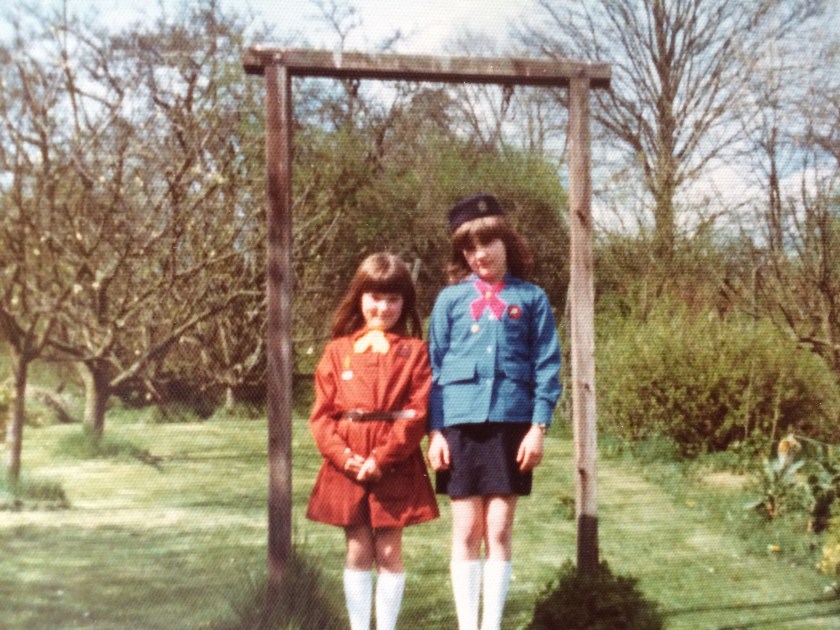
Me and my sister Tricia in our back garden in the 1970s. Dad used to cut the grass with a Flymo hover mower that was notoriously difficult to start

The house I live in now has recently had an extension added on to the side. Because of the building work, the lawn was ruined, so my landlord re-seeded the garden in the hope of repairing the damage.

Over time, the new grass established itself and the hour came for its first cut. It had grown very long by then, so I was looking forward to having a garden that did not resemble a young cereal crop.

I was delighted once the lawn had been mown, as it was so much tidier, and much nicer to look at. A week went by, and I realised the grass needed cutting again as it was already almost back to the original length. I assumed that must be what happened with young grass that still hadn’t matured. So we duly did the job, and spent the next couple of days admiring our handiwork. But by day three, the grass had visibly grown several inches, and by day seven, it was over our ankles again. This continued to happen week after week.

I was mystified, and informed my landlord that whatever seed had been sown was growing so rapidly that I could almost see it happening. He was skeptical, thinking I was exaggerating. So when he announced he was coming back to do more work for a week, I mowed the lawn as short as I possibly could on the Monday and, when he arrived, said: ‘Just wait until Friday’.

Sure enough, by Friday the grass was ankle-deep again, and the landlord confessed that it wasn’t your everyday ‘domestic’ grass that he’d put down. Never one to pass up a bargain, he’d been offered the mysterious seed for free by a helpful farmer who had too much. At the time he didn’t know what it actually was, but I have now identified it as perennial ryegrass, which is ideal for hay, silage and grazing, but not so good for a domestic lawn (unless you happen to own sheep).

He apologised and pledged to replace it with a more manageable grass. However, that was at the end of last summer, and before he got round to it, the weather grew cooler, the growth slowed down and it became less of a problem. More recently though, our bionic grass has taken off again, but with the current situation as it is, it might be sometime before we get a ‘normal’ lawn.

Thankfully, I have invested in a rather swanky lawnmower which is powered by a rechargeable battery. That means no petrol and no annoying electric cable, so it is very easy to use. It has certainly earned its keep since this grass arrived though!

According to my dad in his column from 28th June 1980, the lawn mower is a relatively recent invention and was the brainchild of a Mr Edwin Budding in 1830. Mr Budding was an engineer in the weaving industry and was intrigued by a machine that was used to trim the cloth’s nap. The machine had a cutting cylinder with a bladed wheel that rendered the rough woven cloth smooth to the touch.

His engineering brain realised that it could be adapted to cut grass, and if it was mounted in a wheeled frame and rolled across the surface of a lawn, it would be far more efficient and provide a much more satisfactory result than using a scythe, hand shears, or sheep, which were the alternatives of the time. Although these original machines were very heavy, the design is remarkably similar to many of today’s models. Significant developments over the years included adding an engine which could be powered by either steam or petrol, and in the 1960s Flymo introduced the very popular rotary hover mower.

I remember my dad’s 1970s Flymo and the struggles of trying to start the thing by yanking violently on a pull cord. It would tease him by sounding like it was about to catch, only to then fade and threaten to cut out. So Dad would pull furiously on the cord again and again until, after much persistence, the unwilling mower would finally burst into ear-splitting life.

As he says in his column, “I have had plenty of practice starting my mower, and sometimes I wonder if it should be in a museum.”  Well, forty years on, I bet that it is!

Read more at countrymansdaughter.com. Follow me on Twitter @countrymansdaug

This column appeared in the Darlington & Stockton Times on 26th June and the Gazette & Herald on 24th June 2020