Well, I do declare!

Screenshot
Using low-noise fireworks will make sure that we can still enjoy a captivating spectacle without turning our furry friends into quivering wrecks (picture courtesy of Dynamicfireworks.co.uk)


In response to my column about binning the bang in fireworks, reader John Gallon contacted me. I believe retailers should sell low-noise fireworks, and not stock very loud ones at all due to the impact they have on our pets, livestock and wildlife. I love fireworks for the beautiful spectacle they provide, rather than for the accompanying noise.

John says: “I agree with you totally concerning noisy fireworks, there is no need. But fireworks with a bang are over in a second. The spectacular light-show fireworks burn for 10, 20, 30 times longer and if thrown around on the ground (as bangers are) have more potential for property damage.”

I agree with John on his point about the potential for damage and he is right that fireworks continue to burn and remain hot far longer than the noise they create, which is another worry. But even though the individual bangs last just seconds, most fireworks contain many bangs in quick succession, and a formal display lasts at least 20 minutes. Urban areas experience lots over several nights and weekends, so the noise aspect is a real issue. Neither problem is worse than the other, it’s rather a question of what is workable for the majority to keep enjoying fireworks with the least harm.

John added: “Many pet owners rush to hold and comfort their pets which only intensifies the feeling of a threat. Far better to throw them a small treat with smile that says: ‘There is nothing wrong, you even get a treat.’ The same goes for thunder; don’t show your own fear.”

Having looked after dogs of all sizes and breeds for more than ten years, I can say with some authority that some are not bothered by fireworks at all, others come to you for a cuddle of reassurance, and others are absolutely bone-shakingly petrified. It has nothing to do with my own fear on display because I am not fearful at all. His suggestion of offering a treat will not work on a dog that is terrified because they are in fear for their lives, desperate to escape the perceived threat. Chucking them a treat, no matter how tasty, has no effect whatsoever. I have tried everything, and I know that if we at least reduce the noise while still being able to enjoy the annual spectacle, then that will go some way to help.

Reader Horacio Romeo (who lives in Brazil!) explained that over there, only low-noise fireworks are legal, although there are still people who break that law. In reference to me mentioning that a lover of fireworks is known as a ‘pyrophile’, he said: “I am a moderate oenophile (lover of wine), a turophile (lover of cheese), a xenophile (lover of foreign things), cinephile (lover of films), a sapiophile (lover of intelligent people), a paleophile (lover of ancient things).  Plus carphile, musicphile, travelphile (time and money allowing…). I just made up these words; I don’t know the ‘proper’ ones in English!”

On the subject of words, my current audiobook is Sir Arthur Conan Doyle’s ‘Sherlock Holmes – The Definitive Collection’ read wonderfully by Stephen Fry. It’s a compilation of seven novels, the first being ‘A Study in Scarlet’ to which I have just finished listening. Written in 1886, it was Doyle’s debut novel and the archaic language raised a few giggles thanks to the fact that certain meanings have evolved over the intervening 138 years.

There was one in particular that made me laugh aloud every time I heard it. Now, before I mention it, I suggest you put down anything you are drinking, or if you are eating, finish your mouthful (Disclaimer: I am about to be very immature).

On many occasions, Dr Watson and Sherlock Holmes can be heard ejaculating.

Of course, because you are mature, educated people, you will already know that in Victorian times, ‘ejaculate’ had the same meaning as ‘exclaim’ or ‘declare’. I say ‘in Victorian times’, but it does still have that meaning today if you take the time to look it up in a dictionary, it’s just that we choose not to use it in the Doyle-esque context for reasons I hope I do not need to explain.

It makes me wonder, though, are there any words you know that have completely different meanings today compared to the past?

Do you have opinions, memories or ideas to share with me? Get in touch with me via the ‘Contact’ tab at the top right of this page.

This column appeared in the Darlington & Stockton Times on Friday 22nd Nov and the Ryedale Gazette and Herald on Wednesday 20th Nov 2024

Time to ban the bang?


Screenshot
Fireworks don’t need to be noisy to be impressive. For the sake of our wildlife, livestock and our furry loved ones, it’s time to ditch the bang


Fireworks season is upon us, having been heralded weeks ago by youths obsessed with watching things explode extremely loudly in the air. A number of them have been letting off rockets not far from our house, transforming some of our otherwise relaxed doggy residents into quivering wrecks who scurry to hide behind things or under things and shake with fear, no matter how reassuring we try to be. To an animal, the sudden earth-shaking booms are terrifying.

I am not against fireworks at all. In fact I love them, and for years, my children and I would head out to watch a display at a local cricket club. For a small club, it was utterly fantastic, and hundreds of people would turn up to eat hotdogs, drink warm beer and watch the show with choruses of ‘Oooooo’ and ‘aaaahhhh’ as the fountains of sparkles burst above us. The excitement would build and build towards the end, when the largest and most impressive sequence of exploding balls of lights and stars filled the sky. It was magnificent.

It was only once I started to look after dogs ten years ago that I began to understand the impact the noise had on them. It’s impossible explain to an animal that the loud explosions will not do them any physical harm, and when you factor in that dogs have far more sensitive hearing than we humans, then you can imagine how distressing it is. Owners often ask me what they can do to make it less stressful for their pets, and my suggestions include getting a thunder vest (or shirt). This is a tight-fitting garment that wraps around the dog, giving them the feeling of being enveloped in an anxiety-reducing hug and are recommended for anything that makes them nervous, such as trips to the vet, rides in the car and the like. There are also natural calming supplements, treats, sprays and toys that claim to help. I have no idea if any of these things work, and suggest you talk to your vet if you want more expert advice.

Saying that, there is already a perfect solution available, and I cannot understand why it has not been adopted by everyone yet. That is, low noise fireworks. They are often referred to as ‘silent’, but they are not totally quiet because the explosive charge needed to launch them from the ground does make some sound. I have seen some absolutely stunning fireworks that burst into enormous balls of sparkles while expelling a small ‘pop’. They are no less impressive than their brash, noisier counterparts.

I am delighted to see that supermarkets like Asda, Aldi and Lidl are blazing the community-friendly low-noise trails, having stocked them for a number of years now, and more and more retailers are following suit, which is encouraging. However, they still hedge their bets by continuing to offer the noisy ones alongside them.

My only experience of the effect fireworks has on animals is through domestic pets and wildlife in and around my home, so I would be interested to hear from those of you in the agricultural and equine sectors as to the impact loud fireworks have on your livestock. I do think someone in a position of authority should take the lead and recognise that the trend towards low noise fireworks is increasing, sending a clear message as to what the public wants.

I know there will be some of you who like the noisy bangs and explosions, and I do agree that they are a lot of fun, if only they did not cause such distress to our furry friends.

Interestingly, I have learned today that a person who is obsessed by fireworks is known as a pyrophile (never call someone this when you are drunk, otherwise you could end up in a world of trouble). I also now know what an oenophile is (lover of wine), a turophile (lover of cheese), ailurophile (lover of cats), a xenophile (lover of foreign things), an astrophile (lover of starry things), phonophile (lover of vinyl records), cinephile (lover of films), a sapiophile (lover of intelligent people) and lastly, a paleophile (lover of ancient things).

For reference, the future Mr Walker, whoever he turns out to be, will have to be a combination of at least the last two.

Do you have opinions, memories or ideas to share with me? Get in touch with me via the ‘Contact’ tab at the top right of this page. 

This column appeared in the Darlington & Stockton Times on Friday 1st Nov and the Ryedale Gazette and Herald on Wednesday 30th Oct 2024

What’s wrong with Priya the poorly Poodle?

IMG_8057
Priya the poodle’s health was deteriorating but we didn’t know why. She wasn’t her normal bouncy self.


RenderedImage
Priya, seen here with Joey, was diagnosed with Addison’s Disease which can be fatal. Now she’s on  medication and is full of beans once again

We’ve had another dog-related drama this week, and as it is something I’ve not personally had to deal with before, despite ten years of looking after other people’s pooches, I am assuming there are some of you who also may not know about it. Therefore it is an important story to share.

We were looking after a couple of poodles, Joey, a miniature and Priya, a standard, who are regular guests of ours. A week after they had returned home the owner contacted us to ask if anything had happened while the dogs were with us, as Priya was a bit below par. There was nothing we could put our fingers on. She had eaten well, played happily and was enthusiastic to go on dog walks.

Her owner explained that she had become a bit lethargic and had lost her appetite. He had been to the vet with her, but they just said to keep an eye on her. The dogs were due to come back to us because the family were going on a long-awaited holiday abroad. We agreed that they should still come, even though by the time they dropped the dogs off, Priya still wasn’t herself.

Over the weekend, my son Jasper and I became increasingly concerned. Priya refused all food despite tempting her with treats like cheese and roast chicken that dogs usually gobble up. She spent most of the time sleeping, and whenever she did get up, her normally waggy tail was limp and lifeless.

Thankfully, one of my other customers is a vet and is our go-to if we are worried about any of our charges (if you run a professional dog care business, it is a requirement of your license to be registered with a vet, even if you don’t own a dog yourself). When I messaged her with the symptoms, she quickly replied that we should take her to the emergency surgery right away.

The owner’s own vet was based a good hour away, so we needed his permission for them to share Priya’s health details with the practice we wanted to use which was much closer. It meant we had to interrupt his holiday to let him know what was happening and to ensure we got the necessary consent.

Permission gained, Jasper whisked Priya to our vet who took blood from her to conduct tests in the hope of getting to the root of the problem. She was also hooked up to a drip and had to spend the night in the animal hospital.

The vet who did the initial examination had a suspicion of what it might be. “Addison’s disease, or something like that,” Jasper explained to me when he got back. I thought he must have the name wrong, because that was a human disease, wasn’t it?

When I looked it up, it was indeed a rare autoimmune disease of the adrenal glands that afflicts around 9,000 people a year. However, it is also found in dogs, and when I read the symptoms, it was spot on – lethargy, lack of appetite, and ‘just not themselves’. Other symptoms include vomiting and diarrhoea, increased thirst and limb weakness. Symptoms can come and go, too, but they get progressively worse, so it is important to not delay in getting a dog checked out. Although pretty rare in humans Addison’s Disease is quite common in dogs.

The results of the blood tests came the next day and confirmed Priya had the disease. It is caused by the adrenal glands ceasing production of two essential steroid hormones, cortisol and aldosterone, both of which are essential for life. It can affect any dog but is most common in certain pedigree breeds between the ages of four and six, such as the Standard Poodle, West Highland White Terrier, Great Dane and St Bernard’s. Left untreated the condition is fatal.

From now on, Priya needs to take a steroid pill every day for the rest of her life to replace the cortisol and also needs an injection once a month to replace the aldosterone. She quickly recovered and is back to her old self.

If you have pet insurance that you started before any symptoms appear, then you should be covered. If not, then I’m afraid a diagnosis of Addison’s Disease will be a rather costly affair!

I’d love to hear from you about your opinions, memories and ideas for columns. Use the ‘Contact’ button on the top right of this page to get in touch. This column appeared in the Darlington & Stockton Times on Friday 12th and the Ryedale Gazette and Herald on Wednesday 10th July 2024.

Nobody wants a hot dog

IMG_3233
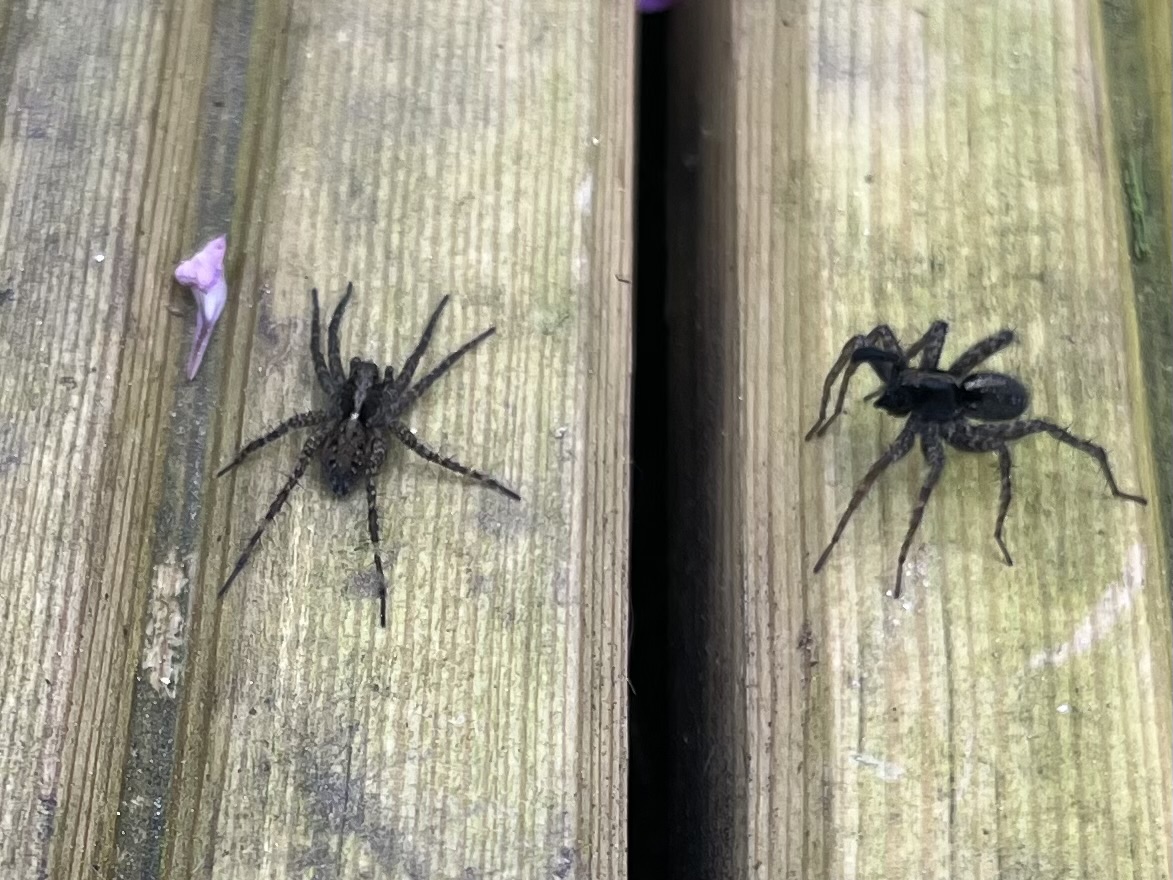
A couple of spiders had a stand-off on my decking during a recent warm spell


I write this column some time before it is published, and today as I put finger to keyboard, it is gloriously sunny. I am outside basking in the rare heat, determined to make the most of it while I can, even if I can barely see what I am writing on my screen. As we Brits know only too well, this beautiful weather is likely to be short lived so I’m happy to squint as I work.

It is blissful and I think the wildlife in my garden are celebrating too. The birds seem extra chirpy and excitable, the bees and flies extra busy and buzzy, and the ants and beetles extra industrious as they hurry about their daily business.

My attention is caught by a couple of spiders on the decking having a standoff. They look to be eyeing each other up, keeping very very still, until one moves a bit, then so does the other, without getting too close. It is quite a captivating little dance and I wonder if it is some kind of mating ritual, or whether one is preparing to attack the other. Unfortunately, I don’t get the chance to find out, as something startles them, and they scuttle off to safety below the decking.

The swift change in temperature over the past couple of days has come as a shock to the system. It seemed to increase almost overnight by a whopping 15 degrees and took many of us by surprise when it comes to knowing what to wear. Moseying about town, some people were in coats and sweaters, while others wore shorts and flip flops.

It has also affected our four-legged friends, who are certainly unprepared. I have noticed them panting more and drinking far more water and we have cut short our dog walks, using routes that offer plenty of shade. It takes dogs a lot longer than us to adjust to changing weather conditions, and even when it seems pretty cool, they can still overheat.

My son Jasper was walking along a local shaded path when he came across a distressed woman with a large Dalmatian. Although she didn’t know Jasper, they had crossed paths regularly on their walks and so she asked him for help. The dog was panting very heavily and kept lying down and refusing to move. Thankfully, they were not far from our house and they managed to coax the dog into walking and once it got here, it promptly flopped down on the lawn while Jasper dashed in for a bowl of water. The owner was clearly upset, and said she only lived 15 minutes away, but was fearful that her dog would not survive that short distance without a drink.

She was right to be concerned, because heat exhaustion can affect a dog very quickly, and can be fatal. A dog pants to cool itself down but finds it hard to regulate its body temperature in warm conditions. If you notice excessive panting, then it’s best to take it into the shade and give it some water as soon as possible. Other signs of heat exhaustion include difficulty breathing, excessive drooling, lethargy and lack of coordination.

If you think your dog has been affected, the immediate priority is to bring its temperature down. Cool tap water sprinkled across its body is best, making sure to avoid the head (a gasping dog can inhale water into its lungs). Avoid excessively cold water though, as this can cause the animal to go into shock. Don’t be tempted to cover it with wet towels either as this can trap heat in and make the situation worse. Keep sprinkling the water over the dog until the panting eases. Try offering it small drinks of water too. If you are at all concerned, take it straight to the vet.

What I didn’t know was that, according to the RSPCA, heat-related illnesses affect 10 times more dogs than leaving them in hot cars, and the charity is running a campaign to raise awareness of the issue.

I’m delighted to report that the Dalmatian made a full recovery and the grateful owner, who happened to own a café, has offered myself and Jasper a free meal to say thank you.

Now that’s what I call a happy ending.

I’d love to hear from you about your opinions, memories and ideas for columns. Use the ‘Contact’ button on the top right of this page to get in touch. This column appeared in the Darlington & Stockton Times on Friday 31st and the Ryedale Gazette and Herald on Wednesday 29th May 2024.

Doggy do do Down Under

IMG_3281
Sarah Tyson from Australia composts her dog poo in biodegradable bags


Who knew that the debate about dog poo disposal would resonate across the globe? Sarah Tyson got in touch all the way from Hahndorf in South Australia with this interesting idea: “I discovered, entirely by accident, that dog poo composts very well if placed in an open-bottomed bin with an equal volume of vegetable matter. I have two large dogs who generate the poo, and two large teenagers who generate a lot of food and paper scraps. I place both kinds of waste in my 220L compost bin and they disappear very quickly. And no smell! (caveat: I have affixed a mesh base to the open bottom of the bin to deter rodents).”

This message sparked so many questions in my head that I wanted to ask Sarah directly, so I got back in touch with her. I particularly wanted to know how well the rat-deterring mesh worked. Sarah replied that although she has been rat-free for the past five years, it was a case of trial and error before she got it right.

“We did have an issue with rodents after the first six months,” she says. “I tackled this by moving to another spot (it took them a while to learn where the bin went, and I needed the first layers to start decomposing, and not be eaten!).” Sarah tried nailing a circle of wire mesh across the base but it dawned on her that if the mesh was soft enough for her to cut through with her snippers, it was unlikely to be any match to a determined rat’s incisors. But then she had an idea. She cut a circle of mesh matching the circumference of the bin, then laid it on top of a few sheets of chicken wire, which she overlapped in different directions to make the holes smaller. “I chose the chicken wire because it was just there and available, along with some crummy scrunched up wire lying around on my friend’s farm.” It worked, and since then the eco-friendly compost bin has not attracted any rodents. I hope the up-cyclers among you are impressed with Sarah’s ingenuity!

I wondered if, like here, there are thoughtless dog owners in Australia who also toss poo bags into trees. It’s interesting to discover how other countries deal with the same problems as ours, so I hope you’ll forgive me for devoting quite a bit of space to Sarah’s reply.

“The issue with poo bags depends on where you walk,” she says. “In most dog parks some people leave their bags where paths meet but almost always pick them up on the return journey. I have found that people pick mine up too which is fantastic, especially if I am having a bad day. In return I always pick up other people’s bags when I am having a good day!”

As for the open countryside (which Australians call ‘bushland’) she says: “I have never seen bags or unbagged poo left behind in natural bushland.” Applause for the Aussies then!

But stop applauding now, because it is a different story in public parks. “I often see poo on bike and walk tracks in the more formal parks and bikeways and it almost always has been stepped in or ridden through so it’s EVERYWHERE and so, so gross!” She adds, however, that in towns and on suburban footpaths no-one leaves dog mess or bags behind. Resume your applause!

She continues: “There are always poo bag dispensers everywhere and plenty of rubbish bins to put them in. The bins at dog parks are very very full and although they are emptied regularly, they stink and I feel sorry for anyone living within smelling range.” That sounds very familiar to us, doesn’t it! But Sarah has a suggestion: “Perhaps the council should adopt my idea of compost and poo. It would be pretty simple for them to drive past and dump some plant clippings in once a week. Our poo bags recently changed from regular plastic to biodegradable plastic. I think this may sow the thought of composting with other dog owners.”

Are any of you tempted to have a go at composting your own dog poo? Or should we suggest it to our local council? It could just be the answer to a very messy and long-standing problem.

I’d love to hear from you about your opinions, memories and ideas for columns. Use the ‘Contact’ button on the top right of this page to get in touch. This column appeared in the Darlington & Stockton Times on Friday 24th and the Ryedale Gazette and Herald on Wednesday 22nd May 2024.

Dogged by Trouble

IMG_3909
One of the holes dug up by the naughty dogs

IMG_3933
Do your dogs punish you if you go away?

IMG_3932
Another hole in the garden

Many of us self-employed writers need other sources of income thanks to the fact that writing alone does not cover all our living expenses. Indeed when my dad decided to retire to concentrate on writing full time, he only felt confident doing it because, after 30 years in the force, he would benefit from a police pension.

I make sure I have a number of strings to my bow too. My children used to plead with me to get a dog, and I held out for years, until I eventually (sort of) caved in, but in a way that suits us all. Instead of owning our own dog, we now look after other people’s. But after doing it for the past 10 years, I have a question: Do any of you feel that your pets punish if you go away? I have heard several owners say such things, that their dogs or cats go into sulks, or misbehave as a way of getting their own back for leaving them.

I was recently house-sitting with two young Hungarian Vizslas. These beautiful chestnut-red hounds are traditionally gun dogs and can make excellent family pets. They’re really intelligent and affectionate, but are bursting with energy, a bit like the canine versions of Tigger.

These particular dogs were were not allowed into the smarter rooms in the house, nor upstairs, and spent most of their time in the large open-plan kitchen/living room. Halfway through the stay, though, I had to go away for one night, so someone else cared for them. The morning after getting back, I was jolted from a deep sleep by a tremendous thundering noise. Springing awake, I sat up to see the bedroom door fling open and the two hounds bounding towards me. They leapt up and crash landed on top of me.

Not only had they managed to open the kitchen door (which they had never done before), but they had galloped up the stairs to find me, something that was absolutely forbidden. I reasoned it must be because I’d slept in and they were starving. But when I checked the time, it was still only 7.30am, half an hour before their breakfast time. They had clearly decided I needed an alarm call!

That was just the start of the punishment. The two normally well-behaved dogs were little blighters the whole day long. I let them out into the garden to play, only for them to come back inside a few minutes later with their noses and paws covered in mud. When I went out to investigate, I was horrified to find they’d dug a great big hole in the flowerbed outside the back door. Not only that, but they had sprayed mud all over the patio, and then paddled it indoors.

I filled the hole, and cleaned the patio and kitchen floor, satisfied that the house-proud homeowners would not be able to tell what had happened. By the time I had done that, I turned round to see two more huge holes had appeared at the other end of the garden, and some newly planted flowers had been uprooted and catapulted across the lawn.

I swore inwardly, then took my shovel and filled the new holes as best I could, trying to salvage whatever flowers were not completely destroyed.

But it didn’t end there. Every time my back was turned, more holes appeared in the lawn and flowerbeds. I resorted to staying outside whenever they were outside, assuming they wouldn’t dare do it while I was in the vicinity. I was checking emails on my tablet, and then looked up to see they’d gone back to the same spots and dug up the flowers again. In silence! How did they do that without me hearing a thing when I was only a few feet away? Cunning little devils.

In the end, I gave up filling in the holes, and resorted to placing garden tubs and furniture in the spots to try to divert them away. It seemed to work, and for the rest of the stay, the dogs behaved mostly very well. I’m convinced they had sentenced me to one day of punishment for the crime of going away.

It makes me wonder, do your dogs ever punish you?

I’d love to hear from you about your opinions, memories and ideas for columns. Use the ‘Contact’ button on the top right of this page to get in touch. This column appeared in the Darlington & Stockton Times on Friday 19th April and the Ryedale Gazette and Herald on Wednesday 17th  April 2024.

Watch out for super-sleuth mums!

IMG_9442
Minnie Benson with one of her many ‘Lassies’. Picture by Camilla Veale

I was delighted to hear from reader Andy Brown who was inspired to get in touch after seeing my column featuring the Ryedale Folk Museum and the cobbler’s where my dad took me, not to get my shoes mended, but to get a haircut.

Andy said: “I loved your column…I can just about remember these old village tradespeople where you would get your bike puncture repaired at the garage or something mended at the forge or sawmill. I lost my dad this year and he was a truly frugal Yorkshireman. Utilising the local cobbler, if he had been entrusted to get my hair cut, would have been just the sort of thing he would do – that is if he didn’t resort to the sheep clippers! Your recollections made me smile.”

When I was a child, two sisters, Minnie and Fanny Benson, owned the petrol garage in the village and offered a bike repair service where a puncture could be mended for 10p a pop. They also offered baby-sitting, a service of which my parents took advantage most Saturday nights when they nipped across the road to the pub. The sisters owned a succession of border colliers, all of whom were called ‘Lassie’, the logic being that they only needed to shout one name for them all to come. I used to beg them to bring the dogs with them whenever they looked after us. Minnie would turn up, dogless, because she knew my mum was not a fan. But when the coast was clear, Fanny would often arrive with whichever Lassie it was, and the dog would then bound up the stairs with me to settle on my bed.

Lassie would be taken home before my parents returned, and I kept her visit just between myself and the sisters, or so I thought. It was only later that Mum told me she always knew when the dogs had been because of the trail of hair they left in their wake.

I wonder if you agree when I say that most mothers have superhuman detecting abilities that make Hercule Poirot look like an amateur. On one occasion, when I was very tiny, I was rummaging around my mum’s bedroom drawers when I found a strip of little round sweets, possibly blue or pink, which looked very appetising to me. There were lots in the packet so I was sure my mum would not notice one missing and was mildly disappointed to find that they tasted of nothing at all. You can imagine my shame when Mum confronted me the very next day about the missing pill, warning me about the dangers of eating something that I didn’t know what it was, even if it did look like a sweetie.

Of course, I was too young to know about contraceptive pills, and the fact that if ‘Tuesday’ had been eaten by someone other than Mum, it would be a dead giveaway. Now that I am a mother myself, I understand how unwitting young children leave trails of forensic evidence behind them, and thus we mothers can perpetuate our mythical super-sleuth status.

In the same column where I talked about my visit to the Ryedale Folk Museum, I also mentioned my concern about preserving my dad’s study. Andy Brown had an idea: “I understand your dilemma with your dad’s office. I always picture you leafing through his books and documents either for inspiration or to expand on your own ideas and have always felt you were the best possible custodian of his memory. But life does have a habit of needing to move on.

“Maybe the solution presents itself in your column – could your dad’s archive be donated to the Ryedale Folk Museum? I know it won’t be the same as having it with you but as your dad was such a key figure in preserving the folk culture of the Moors it would seem an appropriate location.”

I agree with Andy, and he might be surprised to learn that I did approach the museum several years ago with that very suggestion. Although they looked into it, at the time, they didn’t think they had an appropriate space for it, nor the resources to set it up.

I am looking at alternatives, though, and will warmly welcome any bright ideas!

Read more at countrymansdaughter.com. Follow me on Twitter @countrymansdaug

This column appeared in the Darlington and Stockton Times on 6th and Ryedale Gazette and Herald on 4th October 2023

Like a virgin

CD768BD3-6675-46A0-BF7C-51CBC7534421

A8703957-3405-428D-AE93-0FF817FE7F0F
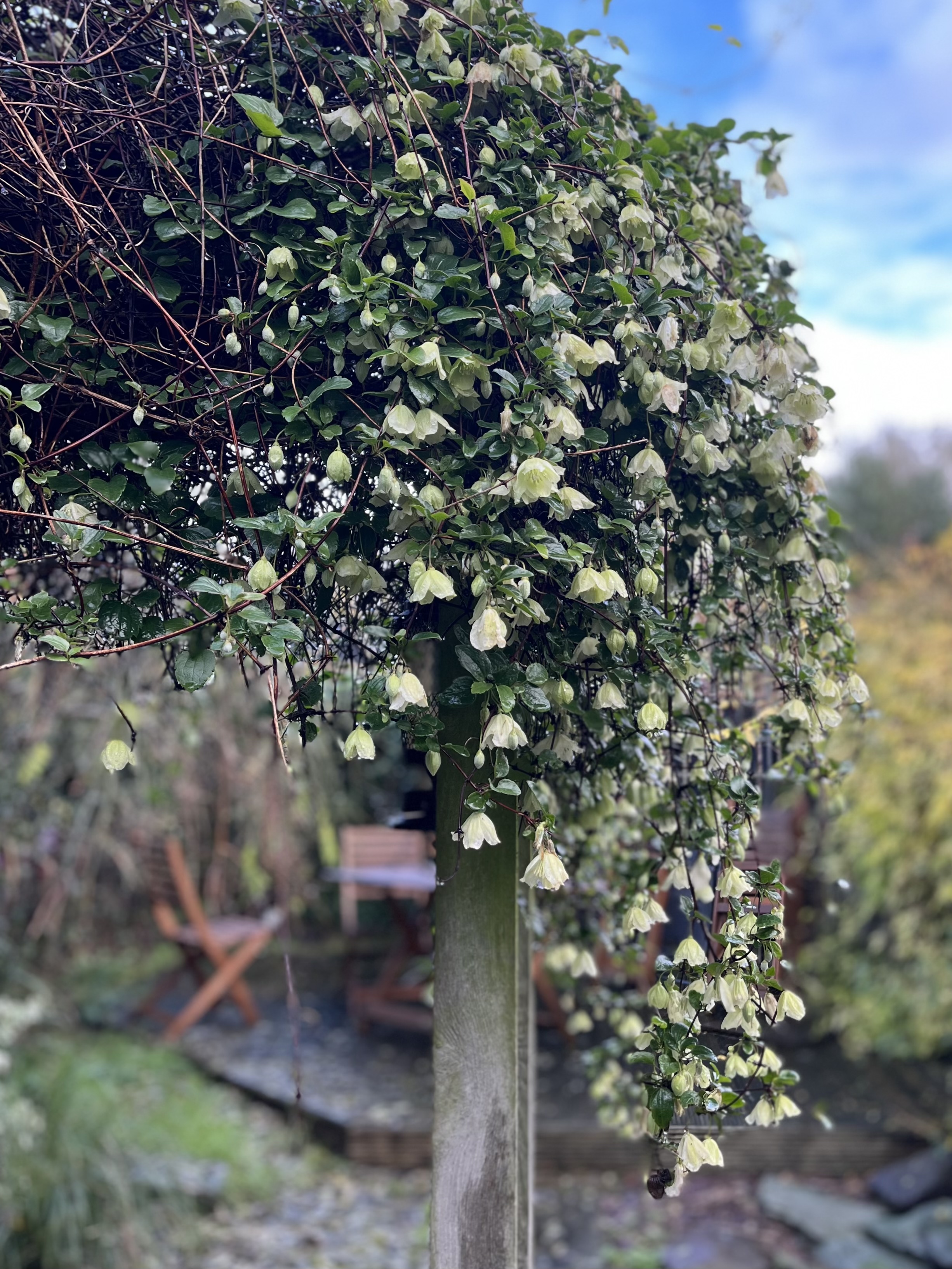
The Early Virgin’s Bower clematis that is currently blooming in my garden


On a grotty, damp morning recently I was visiting a house for work and was taken into the back yard to look around. Creeping along the retaining wall was very pretty plant heavy with blooms and I remarked that it was uplifting to see it on such a miserable day. It had small dark green leaves and an abundance of delicate creamy white bell-shaped flowers and the owner said was a species of clematis. She explained that it would continue showing right through the winter, but didn’t know the full name of it.

When I returned home, I mentioned it to my mum, who is an experienced gardener, but my woeful description didn’t help her identify it. Not long after that, we took a trip to a local garden centre and toured in hope around all the clematis species on view, but couldn’t find the one I had seen. We gave up trying, and promptly forgot all about it. 

It was only today, back in my new house that, when I let the dogs out, I saw right there in the middle of the garden, a wooden arbour festooned with the very same plant. How I’d not noticed it sooner, goodness only knows, but harnessing the magical power of the plant-identifying app on my phone, I knew I would soon discover its name.

Ladies and gentlemen (drum roll please) the mystery plant is the grandly-named ‘Early Virgin’s Bower’. It is the prettiest of winter flowers and the little white bells are a welcome sight amongst the evergreen shrubs and leafless trees. I discovered that it is a Mediterranean creeping variety that needs to be supported by a trellis or other structure. It’s important to know that most (possibly all) species of clematis are poisonous, and that toxins are contained in every part of the plant. However, it is only really a problem if ingested, causing blistering in the mouth and stomach upset. Extensive handling can result in painful skin rashes, so it’s best to wear gloves when dealing with it.

It can also be a danger to animals if they eat it, which some over-curious pets might just do. However, it is extremely bitter in taste and therefore those tempted to try it will likely spit it out. It is not considered life-threatening to animals, but if they start displaying symptoms such as excessive drooling, vomiting and diarrhoea then the advice is to get them to a vet ASAP.

I tried to find out more about this quirkily-named creeper, thinking there may be folklore related to it, but when I checked in my reference books and online, I couldn’t find any mention of it. Instead, my search led me unexpectedly to Virgin Mary’s Nuts (if you have just experienced an inappropriate snigger, then you are as childish as me!). Virgin Mary’s Nuts are also called Sea Beans, Molucca Beans or simply Lucky Beans. 

These beans originate from countries in the Caribbean and South America and tend to wash up on the western shores of the UK, having hitched a ride on the Gulf Stream. They’ve been found since at least the 17th century, and the larger ones are meant to bring good fortune. In Richard Carew’s 1602 book ‘Survey of Cornwall’ he describes these ‘nuts’ being found on beaches alongside colourful sea shells and says they resemble a sheep’s kidney ‘save that they are flatter; the outside consisteth of a hard dark-coloured rind, the inner part a kernel devoid of any taste, but not so of virtue, especially for women travailing in childbirth, if at least old wives’ tales may deserve any credit.’

That last sentence could explain why they were given the name ‘Virgin Mary’s Nuts’, but they do sound an awful lot like kidney beans, which are thought to have originated in Peru. However, a single raw kidney bean can cause severe sickness, diarrhoea and stomach pains, so back then would they have known that unless they were boiled for at least 10 minutes they would be toxic? Or that if they were cooked at too low a temperature, the toxicity would increase? It must have been quite a risky business trying out new and exotic foodstuffs 400 years ago!

Thankfully, we don’t have to resort to beach-combing to source the key ingredients for our chillis, and also have the luxury of knowing that we can eat them straight from the can. 

Read more at countrymansdaughter.com. Follow me on Twitter @countrymansdaug

This column appeared in the Darlington and Stockton Times on 9th and Ryedale Gazette and Herald on 7th December 2022

Dare you grasp the nettle?

97A496C4-E213-4EEF-841E-252F32E49EBA
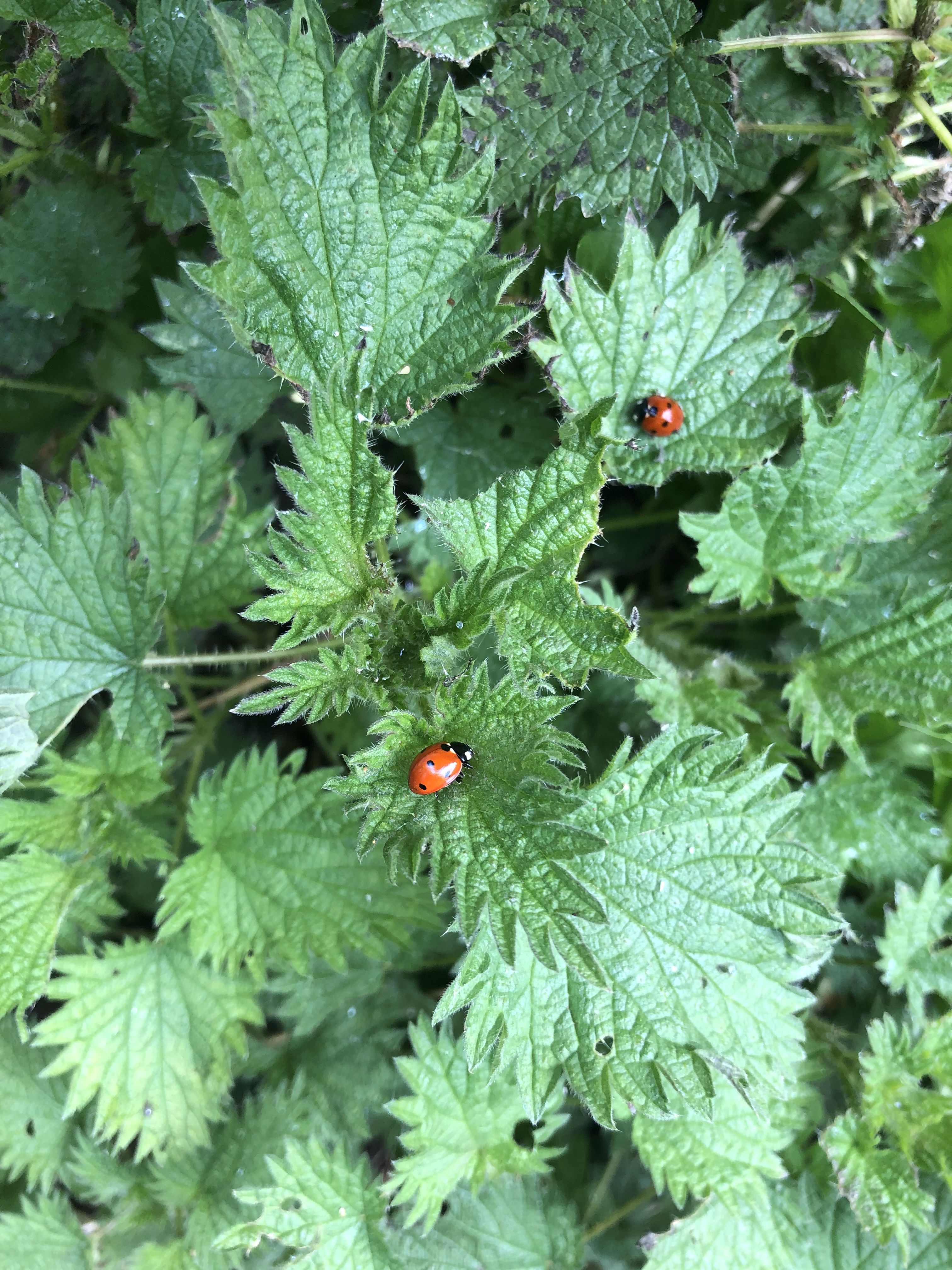
Nettles can be dangerous to dogs, but don’t sting when they are very young

We are now firmly en route to summer, and one of the more annoying aspects of the increase in plant growth is that stinging nettles are starting to shoot up and, as I am often walking dogs on countryside paths, they can be a bit of a nuisance.

I was out with a little Shorkie (a Yorkshire terrier crossed with a shitszu), and she kept stopping to lick her paw. So I picked her up to see what was wrong, and couldn’t find anything. No nails were split, and there were no thorns embedded in the pad. However, I did notice that there were some nettles just beginning to peep through the undergrowth and came to the conclusion that they must be the culprits.

I have since found out that indeed, over-exposure to stinging nettles can have very serious consequences for dogs. If they run back and forth through a patch, not only can they get stung, but they can also ingest poisonous chemicals thrown into the air by the disturbance.

Dogs with thick skins, lots of hair and tough paw pads and noses are unlikely to suffer much, but thinner-haired and thinner-skinned breeds can be prone to nettle poisonings, so it pays to be aware of the symptoms. These include furious licking of the affected area, and high agitation after just emerging from the nettle patch. There can also be swelling and redness around the stings, shaking, drooling, vomiting, diarrhoea and even breathing problems.

If your dog displays any of these symptoms, take them to the vet immediately. Deaths from nettle poisonings are very rare, but the vet will advise you on how to make your pet more comfortable until the irritation subsides. There are lots of suggestions for at-home remedies online, but I’m not in a position to know how well they work, if they work at all.

Although nasty little blighters, nettles are very clever pieces of engineering by Mother Nature. Their leaves and stems are covered in tiny hollow hairs called trichomes which contain poisonous chemicals in their very brittle tips. The slightest touch causes the tips to break off, and they act like medical syringes, attaching themselves to the invaders and injecting toxins into the skin. We all know how that feels, that the pain intensifies in the first moments after the incident, and can be felt for many hours afterwards.

Usually, where you find nettles, you also find dock leaves, and growing up, I was told that if you get stung by a nettle, rub the area with a dock leave and spittle. I do believe it works, in that it offers some relief, although I can’t say if it would work on a dog and would only try it on milder incidents of stinging. In the old days, you were supposed to recite a charm as you rubbed the affected area to guarantee that it worked:

‘Nettle in, dock out. Dock in, nettle out.
Nettle in, dock out. Dock rub nettle out.’

Some believed that if you placed a some nettles under a sick person’s pillow, that would predict if that person would live or die. Stay green, and the patient would recover. Go brown, and the Grim Reaper was waiting in the wings. Others believed it was bad luck to speak aloud of the medicinal qualities of nettles. To ensure their healing powers would work, they had to venture out to gather them only at midnight.

In my dad’s archive, I found a piece where he tells us that some people believed it was the Romans who introduced nettles into this country, although that is not actually true. What is true is that they brought plants with them on invasions as it was very useful and easy to grow. It was woven into clothing and a highly nutritious source of food, packed with vitamins and minerals, that could be quickly cooked in a similar way to spinach.

So it has been with us for many, many centuries, and judging by how many I see on my walks, I don’t think it is yet under any environmental threat.

In my dad’s article, he quotes this poem about nettles:
‘Tender-handed stroke the nettle, and it stings you for your pains.
Grasp it like a man of mettle, and it soft as silk remains.’

So who among you will dare to grasp the nettle?

Read more at countrymansdaughter.com. Follow me on Twitter @countrymansdaug

This column appeared in the Darlington and Stockton Times on 8th April and Ryedale Gazette and Herald on 6th April 2022.