The secret is out!

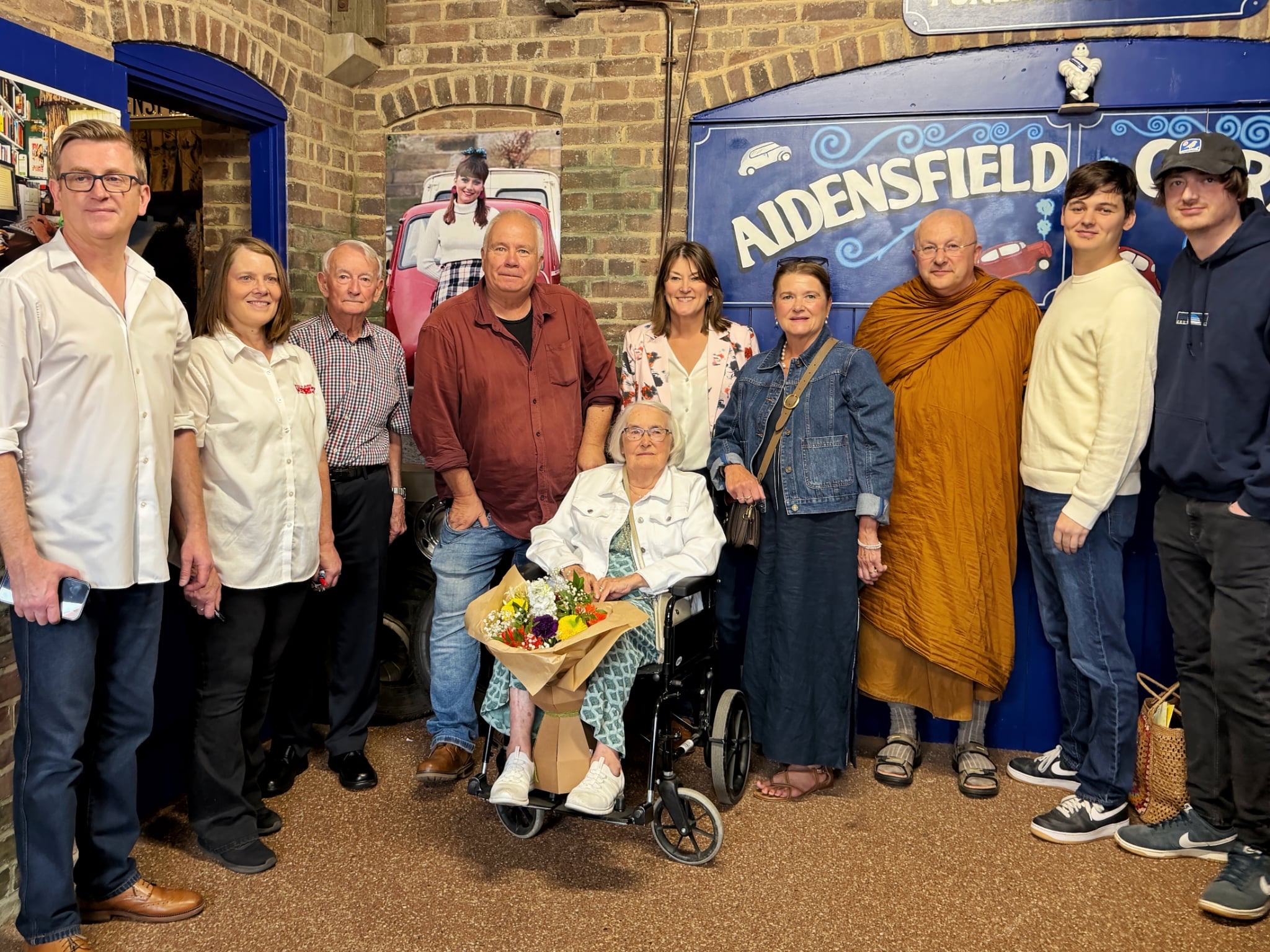
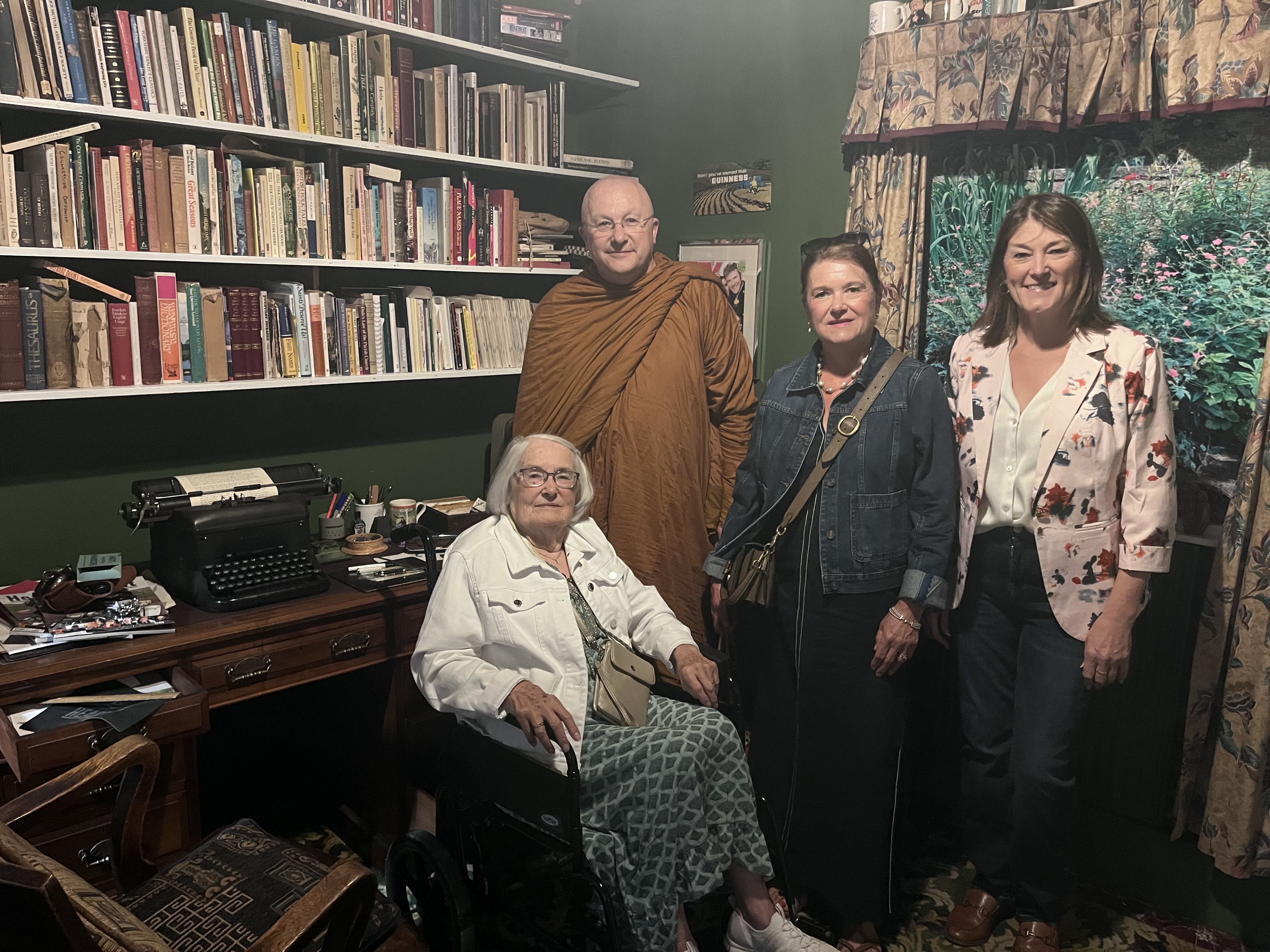
Dad at work in his study which is being recreated at the World of James Herriot in Thirsk. It will be opened by Heartbeat star David Lonsdale on Saturday 29th August at 1pm. You are all invited.

I’ve been harbouring a secret for a while now but the time has come to share it…

My dad’s study has been saved!

I’ve written in the past about my concerns as to what is going to happen to it when we have to sell the family home. It’s been a weighty burden because it is tied so closely to Dad and his career. What were we to do with all the stuff that was so important to him?

Dad’s study is THE place where I feel closest to him, THE place where I can still feel his presence, the hub of his creativity. It’s a visual representation of what was going on in his head and how he organised his many ideas and resulting stories. For 35 years he toiled in that small room, producing book after book, column after column, article after article. The shelves are packed with reference books on all manner of topic, the most-important and most-used of them on the shelf just in front of where he sat. There are also filing cabinets stuffed full of 60 years-worth of papers and cuttings he’d collected, stored in an order that made sense to him. He created a card index that sat on top of the cabinets, without which it would be impossible for the rest of us to find anything. Beneath his chair, a hole is worn in the carpet from all his wheeling backwards and forwards to reach for things off the shelves or out of the cabinets.

The walls tell a story themselves, adorned as they are with Heartbeat-related knicknacks, such as an ‘Aidensfield’ village sign, a Claude Jeremiah Greengrass teddy bear, a framed copy of the cover of TV Times magazine from 23rd – 29th June 2007 featuring barmaid Gina Ward and PC Phil Bellamy’s much anticipated wedding. Nestled among the Heartbeat mementoes are more personal items, such as a framed photo his mother, my Nana Walker, taken when she was young woman, while elsewhere are a wooden rosary and a postcard of Pope John Paul II, a reflection of Dad’s Catholic faith. One of his proudest moments was when, as Press Officer for North Yorkshire Police, he was tasked with handling the media aspect of the Pope’s 1982 visit to York and he was able to attend the huge open-air mass held on the city’s Knavesmire.

I’m sure you can imagine how the prospect of it vanishing forever was simply too much to bear. We approached a few places a while back, but were disappointed when no-one was willing or able to take it.

A few months ago, though, I got a phone call from Ian Ashton, the Managing Director of the World of Jame Herriot in Thirsk. We had talked to him a couple of years ago, but at the time, the museum was not in a position to be able to help. However, times have changed!

They are creating a whole new Heartbeat-themed attraction within the museum, and at the centre is a recreation of my dad’s study. Not many people know that Alf Wight (James Herriot) was our local vet and even treated our cat! These two men were at the same time writing humorous tales about the quirky characters of North Yorkshire, both of which would be turned in to hugely successful TV shows. Thanks to them we now have the tourism honey-pots of Herriot Country and Heartbeat Country. What a lucky county we are!

I have (with some able helpers) spent the past couple of weekends packing up boxes while taking photos as I go so that the study can be recreated as accurately as possible. Heartbeat favourite David Lonsdale, who played loveable David Stockwell in the TV show, will unveil the study at 1pm on Saturday 29th August – and you are all invited! Just Google ‘World of James Herriot’ to find it.

Dad was such a humble man that he would have been bewildered by all the fuss.

But if you are the reason behind a TV phenomenon that attracted millions of viewers, that still has millions of fans around the world 16 years after it ended, and who in a large part is responsible for a tourism boom in Goathland and the North York Moors, then the least you deserve is a bit of fuss.

Do you have opinions, memories or ideas to share with me? Get in touch with me using the ‘Contact’ button on the top right.

This column appeared in the Darlington & Stockton Times on Friday 21st and the Ryedale Gazette and Herald on Wednesday 19th August  2026

What can’t you live without?

I can’t live without my ear pods. They are the reason I am able to maintain a relatively clean house.

Following my column a couple of weeks ago about personal treasures that are worth more to us than money, Lucien Smith got back in touch to say: “Oh wow, Sarah! My mother would be thrilled not only how much I cherish her painting, but that it made the cover of pic of you post! Thank you.”

If you remember, Lucien treasured a painting done by his late mother when she was only 22 and called it his ‘save from a burning building’ item. I used a picture of the painting in my column, and then also on a social media post.

It led me to ask what would be your ‘save from a burning building’ item, and self-confessed maximalist Clare Proctor responded: “That is an impossible question! I would want to save my photos, my African treasures from my childhood, my tapestries that I have made over the last 40 years, the copy of Van Gogh’s sunflowers that my dad did, and Howard’s dad’s MBE….no hope of choosing one item!”

She added: “I love Lucien’s mum’s painting. We did that technique at school. We had to take a still life item and interpret it as something else. I chose the jaw bone of a cow and painted a washing line full of clothes! I think it’s in the attic…better add that to my rescue list.”

I’m not sure Clare would make it out of a burning building carrying that lot!

Janet Pearce is slightly more restrained and added: “My late husband’s love letters to me, journals, birthday cards and other jottings of his. They are all together…And my Dachshund!”

Once you start to think about it, your rescue list can get longer and longer. At least Hendrix, Janet’s beloved little dog, made it on to hers!

Sarah Mason agrees with Clare when it comes to pictures, but adds a couple of other items: “The photos and DVDs of my children. And Mum’s jewellery. Oh, and Mum!”

I’m not sure what Sarah’s mum would think about her order of priorities. I still have many photos kept in physical albums and would hate to lose them and the memories they represent. I am of that crossover generation where the first years of my children’s lives are all documented by physical photos, but then, come the advent of tablets and smartphones, I gradually switched to digital pictures only. I diligently printed them and put them into albums up until 2012 and then that’s where the albums stop. I remember feeling guilty at the time that I was letting the pictures mount up, and pledged that I would one day get them printed out. But the albums I had bought in readiness for that task still remain empty nearly 15 years later. Weirdly, I still haven’t got rid of them, despite knowing that it is unlikely they will ever get filled now. What can you do with empty photo albums? I’d love to hear your suggestions.

This subject also led me to wonder if there is anything you use on a daily basis that you didn’t realise you needed until it was invented (internet, computers, smartphones and tablets etc excepted). Clare’s answer to that is as follows: “I’m thrilled with my birthday present from my daughter – an electric throw to wrap around my cold tootsies in the winter.” Here’s another question – can we can rule out foot spas, spiralizers, and the Sinclair C5 as being useful inventions?

My ‘can’t live without’ is my ear pods – small wireless earphones that slot comfortably into the ear and connect via the Bluetooth to my iPad. The reason I can’t live without them is that I hate cleaning; it may be necessary but why does it have to be soooo boring? With these little techy miracles, I can put on a true crime podcast and my mind is magically transported away from the tedium. Because there are no wires, and I am not physically connected to my device, I can wander all over the house and never miss the plot twist of a gripping story. I can still hear it even when I put the vacuum cleaner on, so with no need to crank up the volume, neighbourly harmony is maintained.

Tell me then, what are your ‘burning building’ or ‘can’t live without’ items?

Do you have opinions, memories or ideas to share with me? Get in touch with me using the ‘Contact’ button on the top right.

This column appeared in the Darlington & Stockton Times on Friday 14th and the Ryedale Gazette and Herald on Wednesday 12th August  2026

What would you save?

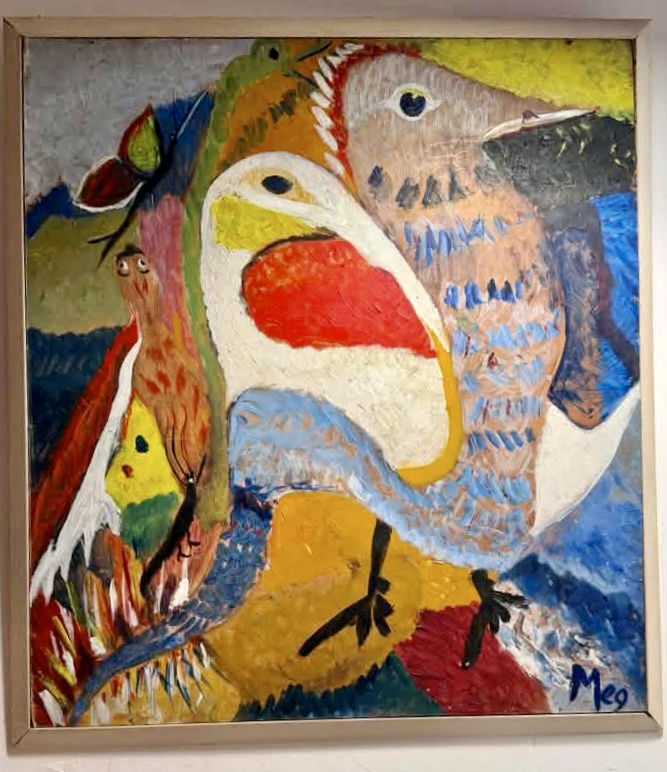
The painting Lucien Smith’s mother Margaret created in 1952 when she was 22 and called ‘Quirky Birds’. “It’s my ‘run back into a burning building’ item,” says Lucien. What would you save from a burning building?

Following my column about the reunion I had with my dad’s Jaguar, it prompted me to ponder how it is that physical things can mean so much to us.

Reader Lucien Smith got in touch because he has similar feelings about a painting created by his late mother Margaret. I had wondered if anyone still owned an object to which they had an unusually strong attachment.

“Yes I do. This painting by my mum, which she created in 1952 when she was 22. ‘Quirky Birds’ she called it and her teacher at college used a technique where they drew shapes on the canvas, then found the picture within. It’s my ‘run back into a burning building’ item.”

It is a wonderful memento of Lucien’s mother, who died in 2024. Its value to others may be negligible, but to Lucien it is priceless.

Former teacher Lynette Atkinson also got in touch after reading my Jaguar column and said: “What a fabulous story. No wonder it made you emotional. I have kept many items that were made by children I taught and they are treasures to me. A pine cone, a Christmas angel, a trinket box, a bracelet, a painted plate and many more.”

Gurli Smith, who lives in Denmark, contacted me about a different topic: “Reading your column this past Monday (A cheep of faith) made me think of something that happened a few years ago.

“I was sitting in my favourite armchair reading when I heard a loud bang. Something had hit the windowpane and left a big mark on it. I ran outside and saw a young kestrel lying on the ground. I thought it was dead and called my brother.

“By the time he arrived, the kestrel was able to hop around a bit (it had just passed out from the ‘encounter’ with the window!). However, we were afraid that it had broken a wing, so my brother placed it in a safe spot, and a few hours later it was ready to fly again.”

Gurli recalled a second memory prompted by reading my piece about tuberculosis a few weeks back. Her mother had told her this story many years ago.

“In the 1940s Mum trained as a nurse at a small hospital. It was before penicillin and if patients came to the hospital with pneumonia, it meant death for them.

“The specific story was about a young woman (a wife and mother) with pneumonia, and doctors and nurses were sure that she would die. But at a hospital in Aarhus they had penicillin which was driven by ambulance up to my mum’s hospital, and the life of the young woman was saved.

“My mum had tears in her eyes when she told the story and said that the use of penicillin was the greatest thing she had experienced as a nurse.”

We can’t imagine life without antibiotics today, and I have no doubt that they saved the life of my son when he had life-threatening sepsis at the age of three.

It makes me wonder what of life’s inventions that have appeared in your lifetime could you not live without today? Of course there are the obvious things, like the Internet, mobile phones, tablets and the like, but is there anything else you use on a daily basis that you didn’t realise you needed until it was invented?

I have a few personal treasures that will mean nothing to anyone else, but the absolute world to me. I will never forget the moment when I was in my dad’s study not long after he had died. It was the place I would go to feel close to him and on his desk was an A4 diary in which he used to plan out his time for the weeks and months ahead.

I flicked through a few pages and there, written in his distinctive hand, were the words ‘Out for dinner for Sarah’s birthday.’ My heart broke all over again when it dawned on me that he had looked forward to the occasion with no idea he would no longer be alive to enjoy it. Of course, I will never be able to throw that diary away now.

So what is your ‘run back into a burning back into a burning building’ item?

Do you have opinions, memories or ideas to share with me? Get in touch with me using the ‘Contact’ button on the top right.

This column appeared in the Darlington & Stockton Times on Friday 31st and the Ryedale Gazette and Herald on Wednesday 29th July 2026

The heart of the matter


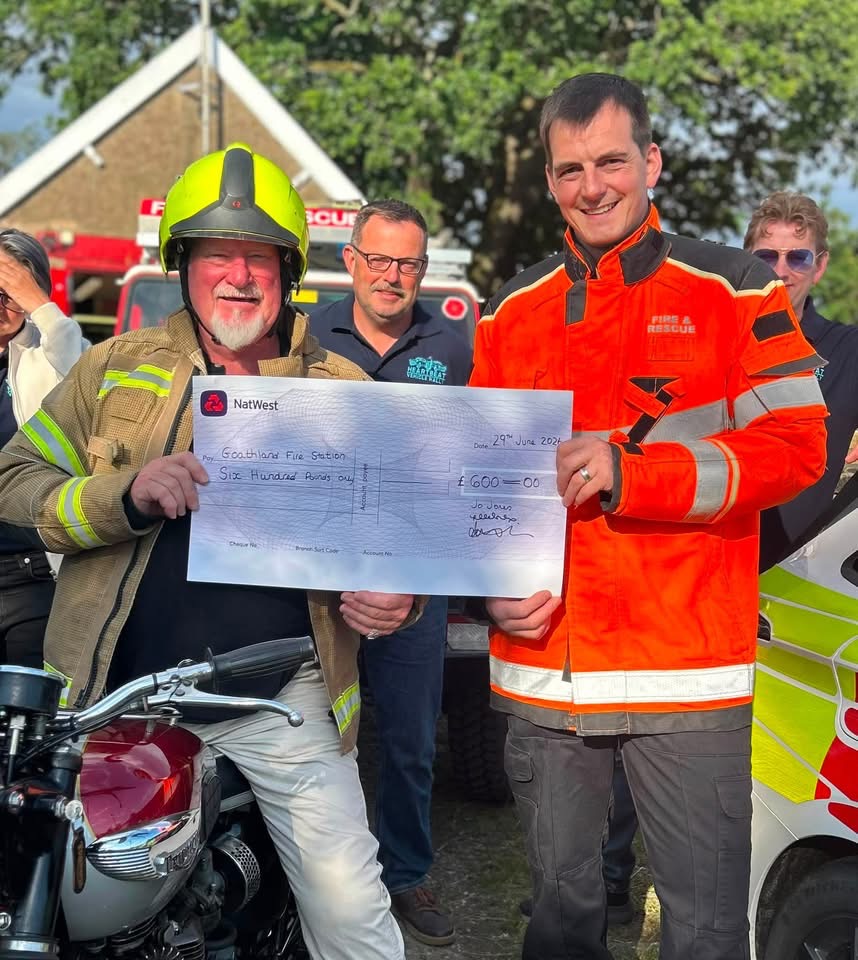
London’s Burning actor Sean Blowers presents a cheque for £600 to Volunteer On-Call Crew Manager Jack Atkinson from Goathland Volunteer Fire Station. Jack and his colleagues were part of the team who tackled the worst fire in North York Moors history last year, centred around Langdale Forest. Picture by Lee Jones.

I am still basking in the glow of another wonderful weekend in Goathland at the annual Heartbeat Vehicle Rally. We were blessed again with lovely weather and we estimate that there were around 6,000 visitors over the two days. Of course, if you read last week’s column, you will already know that my family were reunited with my dad’s old Mark 2 Jaguar, which was an absolute treat.

What I didn’t mention was that as I approached the car for the first time, there was a chap chatting with Richard James, the current owner and the man responsible for the amazing restoration. As the stranger saw me approach, he turned and introduced himself as Keith, saying: “I drove Peter Walker’s daughter Sarah to her wedding in that car!”

So I replied: “I am Sarah!” You should have seen the look on his face! He hadn’t recognised me – which I put down to the fact I was wearing a hat and sunglasses, rather that the 30+ years of aging that have taken place since! Keith was the mechanic who restored it in 1994 and revealed that he was rather stressed in that final week. But he pulled it out of the bag in time, and was thrilled to be my bridal chauffeur.

Considering how many people were gathered in once place, the rally ran very smoothly, with dozens of fans queuing patiently for ages to see the stars and the stars in turn patiently signing hundreds of autographs and posing for hundreds of pictures. This year we had four actors: David Lonsdale, who played bumbling David Stockwell, Vanessa Hehir who played mechanic Rosie Cartright, Ryan Early, who played PC Tom Nicholson and Sean Blowers, who made two memorable guest appearances and was also known for playing John Hallam in London’s Burning, an ITV series about the fire service.

Sean’s appearance was especially fitting because this year, we were delighted that he was able to hand a £600 cheque to Goathland Volunteer Fire Station, while another £600 went to the village primary school.

I was also thrilled to hear from Elsie Smith, trustee of Goathland Village Hall, who sent me a lovely message after the event having seen my family’s emotional reunion with the Jaguar. She reported that the hall did a roaring trade in teas, coffees and cakes, and so benefitted from a nice little windfall too!

Of course, there are drawbacks to hosting such a popular occasion and as ever some selfish drivers were too tight to pay the modest fee for parking (between £2 and £4.50 for a full day). In total there were four separate car parks available with bags of room, and yet a frustrating minority insisted on plonking their cars on the beautiful verges that are such an iconic part of our moorland setting. Despite advance posts on social media showing where to park, plus signage, marshalls and ‘Keep Off’ signs on the day, some people were just too ignorant to pay heed, showing no respect for the historic grazing land nor to the residents who call Goathland home.

When I stand back and look at the event, I do wonder what my dad would think of it all. I’m pretty sure he would be amazed that 16 years after the series came to an end, the fans are still loyal and passionate enough to make the effort to travel all the way to Goathland. One lady I spoke to had come all the way from Boston, USA! She loves Heartbeat, and made the trip for the first time last year. Because she enjoyed it so much, she decided to come back again.

There was one incident that shocked me though. A car went past with the passenger casually hanging her arm out of the window. In her hand was a lit cigarette.

It was one of the most thoughtless and stupidest things I saw all weekend. The moors are tinder dry, and one spark from a cigarette could lead to catastrophe.

If only those fire fighters at Goathland Fire Station – who last year participated in the exhausting battle to control the most devastating blaze in the history of the North York Moors in Langdale Forest and Fylingdales Moors – had had a polite chat with her.

I wonder what they would have said?

Do you have opinions, memories or ideas to share with me? Get in touch with me using the ‘Contact’ button on the top right.

This column appeared in the Darlington & Stockton Times on Friday 17th and the Ryedale Gazette and Herald on Wednesday 15th July 2026

Rallying myself for a special reunion

L-R Me with my niece Eleanor and her baby, Annabelle, my son Joey, my sister Janet  and my mum Rhoda reunited with my dad’s beautiful Mark 2 Jaguar at the Heartbeat Vehicle Rally in Goathland


I’m just home from a very special weekend. We were finally reunited with my dad’s beloved Mark 2 Jaguar.


Dad had always dreamed of owning a Mark 2, and bought one in the early 1970s. However, it failed its MOT in 1979 and languished in the garage for the next 15 years until, following the success of Heartbeat, he was able to get it fixed in time for my wedding in 1994.

As a family, we loved that car, and it stayed with us for more than 40 years until Dad’s death in 2017. We made the heartbreaking decision to sell it then because we feared we could not give it the kind of care it deserved. We thought we’d never see it again.

But, like a knight in shining armour, Jaguar fan Richard James came to the rescue. He’d found the car about a year ago and it had been reduced to a rusty old heap. Only after he bought it did he discover who the previous owner was. He tracked me down through social media, and pledged to bring the car, fully restored, to this year’s Heartbeat Vehicle Rally on the last weekend in June.

The anticipation of seeing it had me in tears even before I’d set eyes on it because it was so tied up with my dad, the treasured memories and the devastating grief at his loss. I know the same goes for the rest of my family too, and so the reunion was made extra special by the fact my mum, my sister, my son, my niece and my six-week-old great-niece – four generations of our family – were at the rally to greet it.


Watching my mum’s face as she saw it come into view is something I’ll never forget – surprise, joy and raw emotion all bundled into one expression. She couldn’t wait to sit in the driving seat and once there, was reluctant to leave it. She recalled that, at five feet tall on a good day, she could barely reach the pedals when she used to drive it to work. She’d perch on the edge of the seat, pushed as far forward as it could possibly go, peeping over the steering wheel and long bonnet, barely able to see out.


She worked at Ampleforth College, and remembered how the schoolboys would gather round the classroom window to watch as she manoeuvred the great thing into a parking spot, bewildered at how a diminutive secretary had such a large fancy car.


What they didn’t know was that the Jaguar guzzled petrol and so it was more economical for Dad to drive our small Ford Anglia the 20 miles to police headquarters in Northallerton while Mum’s journey was just one mile.


Richard had done a remarkable job of the restoration, the paintwork and chrome gleaming as if new. The interior was equally impressive, and the stunning walnut dashboard for which Jaguars are known had been painstakingly crafted back to life. If I am honest, it was in much better condition than when we had it! But then, it was a family car, and with four squirming kids squished into the back on trips out, it perhaps wasn’t given quite the respect it enjoys now.


My dad used to complain about its reliability, or rather, lack of it, and it was renowned for conking out so I was very relieved to hear that it had completed the 350-mile round trip to the rally and back to Richard’s home again without missing a beat.


The best moment was when we got to have a ride in it, with mum in the front passenger seat, and we girls in the back. The familiar low chugging of the engine took me straight back to the last time I had heard that noise, the day it had left us forever. I could quite happily listen to that sound for the rest of my life.


I had a lump in my throat at the end of the day as it sailed off down the road back towards its new home. But Richard has given us a very special memento – Dad’s Jag in miniature mounted on a plaque with a special dedication to honour him.


I don’t think I could have asked for much more.

Do you have opinions, memories or ideas to share with me? Get in touch with me using the ‘Contact’ button on the top right.

This column appeared in the Darlington & Stockton Times on Friday 10th and the Ryedale Gazette and Herald on Wednesday 8th July 2026

Does this ring any bells?


I always make sure my bicycle bell works to warn people that I am approaching


I had a bit of a ‘to-do’ yesterday when I was walking a dog on a path that was shared between pedestrians and cyclists.


The dog (lets call him Fido) is young and led by his nose which means that he is genetically programmed to not walk in a straight line. He zig zags with every fascinating scent that lands in his nostrils, which is about once every 10 seconds. He is also strong, so I am dragged about on the end of his lead like a ribbon hanging from a kite (Please note, I walk other people’s dogs, so am not responsible for the lack of doggy decorum).


Yesterday, captivated by an irresistible whiff, Fido suddenly pulled to right, and of course I went with him. At that, the noise of screeching brakes and skidding tyres came from behind as we stepped into the path of a bicycle.


Thankfully no-one was hurt, and because it was raining and I had my hood up, I had not heard him coming.


As a cyclist myself, if I am approaching a dog walker, I slow down, ring my bell several times and as I pass, thank the thoughtful owners for bringing their hounds under control. If we respect other path users, then we can all enjoy our outing, however we may be transporting ourselves.


Sadly not everyone thinks the same, with some cyclists pedalling as if they are trying to win a sprint at the Tour de France, and walkers who believe that their dogs running dangerously loose in front of them is a hazard not of their making.


I like to think I am a responsible walker, and make a point of gathering in loose pooches at the approach of anything on wheels. Dogs – and animals in general – are unpredictable, and can be spooked into bolting by things unseen or noises unheard.


I have to admit that I was a in a bit of a grump yesterday and one of my bugbears is cyclists not using bells to warn you they are approaching from behind. I did apologise for stepping into his path, but explained that I did not hear him coming. When he grumpily moved past us, I mumbled “If you’d rung your bell, I’d have heard you.”


Seconds later, he stopped again and gave me such a dirty look that it lit a touch paper within me. “He’s a dog, he moves about! How can I move out of your way if I can’t hear you coming?” I asked angrily.


That sparked a heated debate about whether it was a cycle path or a footpath (it was both) and why he should he get a bell when he said most people can’t hear him anyway, and why I was being so miserable.


The funny thing is, I started to giggle inwardly at the ridiculousness of it all, and chastised myself for my rash response that triggered the confrontation. If I had said nothing, he would have simply cycled on, and we both would have been a bit annoyed, but that’s all.

It reminded me of a course I was sent on for work many years ago. The tutor asked why, when we get behind the wheel of a car, we transform from calm, rational individuals into reactive, fist waving banshees.


She reminded us that the person at whom we are gesticulating could have a machete in their glove box. If someone annoys you, it is much safer to curse inwardly at them and send them a choice manual greeting from below the cover of the dashboard.


This was in the late 1990s, around the same time that the ruthless gangster Kenneth Noye was convicted of the fatal stabbing of 21-year-old Stephen Cameron after a road rage incident on an M25 slip road. Whatever happened to spark the fight, it cannot have been worth a young man losing his life. It demonstrates that you have no idea who the opposing driver might be.


Thanks to that tutor’s wise words, I became far more tolerant behind the wheel. I was forced to admit to myself that I am not a perfect driver, that I too make mistakes, and occasionally might annoy other road users with a selfish manoeuvre.


Despite that, I always make sure my bicycle bell works.

Do you have opinions, memories or ideas to share with me? Get in touch with me using the ‘Contact’ button on the top right.

This column appeared in the Darlington & Stockton Times on Friday 26th and the Ryedale Gazette and Herald on Wednesday 24th June 2026

Hog your ground for good weather

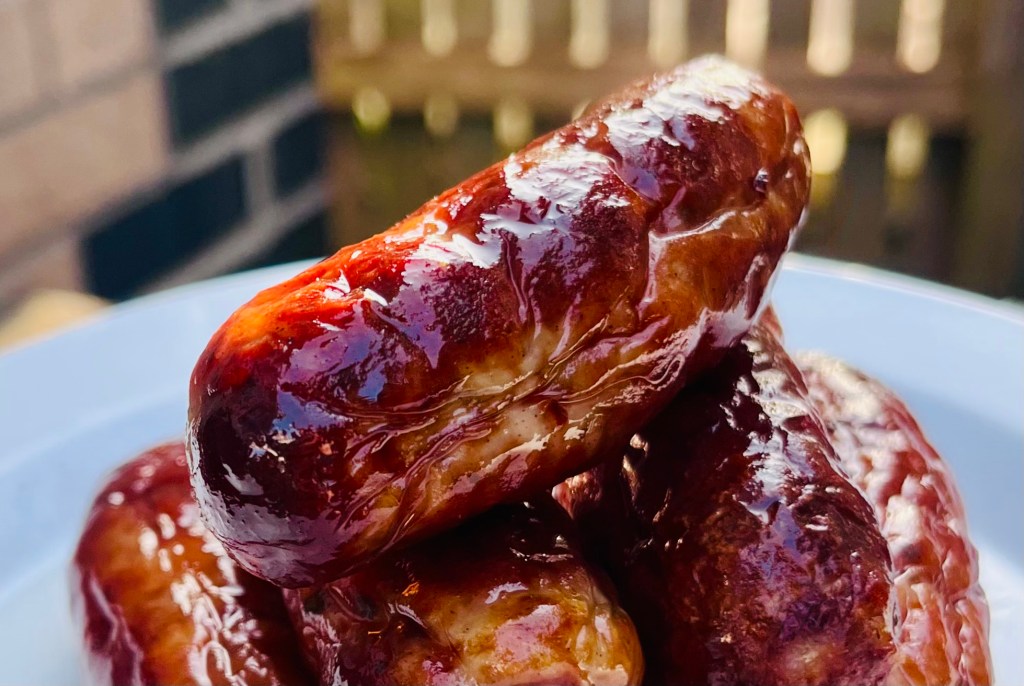
Burying a sausage is supposed to bring good weather for your wedding. Where did this idea come from?

I am at that stage in my life where I have to admit that I am too old and too lazy to keep myself up to speed with all the new stuff with which my kids’ generation busies itself.

My children are at the age where their peers are getting married and having babies and the trends that were around when I married and started my family are now considered prehistoric. They don’t know how lucky they are not needing to be a contortionist to get a squirming screaming toddler strapped safely into a car seat in the cramped space in the back of the car. Instead of facing towards the seat in front, they are now mounted on a pivot enabling them to be swiftly swivelled to face you at the car door. Why it took so long for us to work out that was a sensible idea baffles me. Having said that, I’m pleased for all the physiotherapists across the world who benefitted from the extra work the old seats created.

It’s coming up to wedding season and I wonder if certain traditions we used to embrace have bitten the dust too, such as not seeing your groom the night before, or making sure you wear something old, new, borrowed and blue. Do Gen Z still do theses things? Gen Z refers to anyone born between 1997 and 2012, the first generation to have had access to the internet, social media, and smart devices for their whole lives.

For those of us startled by that fact, we can be comforted in the knowledge that one thing has remained constant – the unpredictability of our weather. I know that global warming means we experience more severe weather events than we used to, be it days of torrential rain, or days of hot sun. But we still cannot be certain that it won’t pour down when we plan an outdoor occasion.

But fear not. There is a tried and tested method to be sure of fair weather for your nuptials; for brolly-free wedding photos, you have to bury a sausage.

Yes. Bury a sausage.

I’m sure dozens of questions are right now flashing through your head, such as does it matter what kind of sausage? Is it cooked or raw? Does it have to be a particularly big sausage to give yourself a better chance of success? Where are you supposed to bury the sausage? And how long in advance of your wedding should you put it in the ground? Who should bury the sausage? Bride? Groom? Celebrant? And lastly, has anyone measured the success rate of sausage burying?

To find out more, I went straight to an expert, my Gen Z niece, who was married three years ago at a very risky time of year, October, where you’d think the chance of adverse weather put it firmly in sausage-burying territory. But the day was really beautiful, with the golden autumn sunlight providing a stunning backdrop for the photos. Had they concealed a fortuitous frankfurter to achieve it?

She replied: “We did not…I’d actually never heard of it until last week – my friend was at a wedding and they did it.”

Apparently it is the social media platform TikTok that is responsible for the viral trend, and its origins are shrouded in mystery. Google tells me that German-speaking countries, famous for their plethora of porky delights, are responsible, but when I asked my Bavarian friend about it he said he had never heard of such a custom.

As for the dozens of questions you might have, some sources say it has to be a raw sausage, others cooked. Some say bury it at the bride’s home, others at the wedding venue. Some say conceal it the night before, others a week before. As for the kind of sausage, I think you have free rein from chunky bratwurst to skinny chipolata.

I did find one source that suggested it descended from the tradition of Groundhog Day, where the beaver-like mammal comes out of hibernation to predict the weather for the coming months. The connection is that a hog is a kind of pig, which is the source of most sausages, and putting it in the ground means you bury it. Hence groundhog.

Personally, I think everything I’ve just written is a load of old groundhogwash.

Do you have opinions, memories or ideas to share with me? Get in touch with me using the ‘Contact’ button on the top right.

This column appeared in the Darlington & Stockton Times on Friday 5th and the Ryedale Gazette and Herald on Wednesday 3rd June 2026

Keeping up with the post


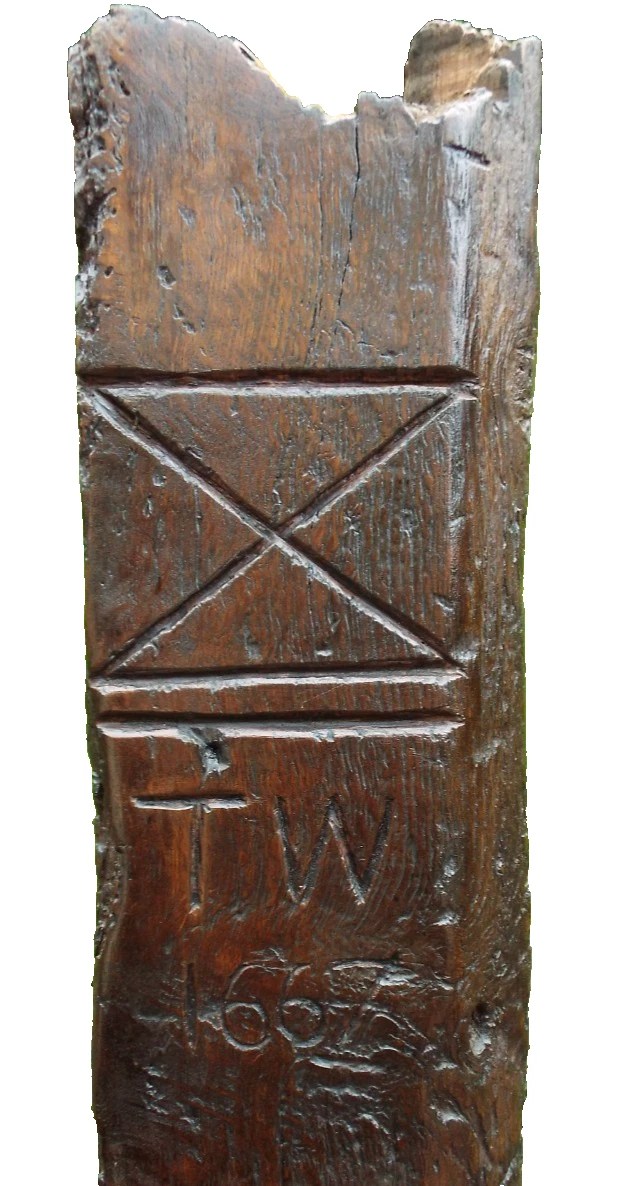
The picture of a witch post sent to me. By Stanislav Stefane


I never know who is going to contact me, nor where they come from, and so I was intrigued when I received the following message from a gentleman called Stanislav Stefane:

“Will you be publishing your father’s papers on the so-called witch posts? There is limited information available online, and I find them fascinating. I am also interested in one that is for sale, dated 1667. Is there perhaps an example with this date mentioned in your father’s papers?”

I replied to him that Dad had composed a whole book about them but sadly died before the final draft made it into print. At the moment there are no plans to publish it, but his extensive historical research is still there in his study. Dad had a very strong Catholic faith and his findings prompted him to believe that many so-called witch posts were not connected to witches at all, but were in fact related to the famous Catholic Martyr of the Moors, Father Nicholas Postgate.

I discovered that Stanislav was based in Slovenia, and asked him what sparked his interest.

“I collect carved oak antiques from the 17th and 18th centuries, mainly pieces that have a carved date and the initials of their owners. By chance, I came across a reference to the so-called ‘witch post,’ which also occasionally bears a carved date. I find the story surrounding them most fascinating. There is one currently for sale, and I thought that perhaps it might have been known to your father. I am not sure whether the post is even original, but if it had been seen by your father, there would be no doubt about its authenticity. I hope you will publish your father’s findings on them. They are probably among the most mysterious and misunderstood of British oak antiques.”

It sounds like Stanislav may have caught the ‘witch post’ bug which affected my dad in the later years of his life, and he would certainly agree with Stanislav’s use of the term ‘misunderstood’. Having started to research them, Dad became more and more fascinated, and began to believe that many of these ‘witch posts’ were not to ward off evil but to indicate ‘safe houses’ for persecuted Catholics.

Even though the full book has not been published Dad did produce an interim pamphlet in 2008, in which he explains why he became so captivated by the topic.

“I began my research more than a year ago but the subject has developed so greatly and produced so many surprises that I have still not completed my investigations…The task is almost complete and it has proved a most enjoyable and enlightening experience.”

Among his files I found a letter to an interested party in which Dad admits that he made mistakes in earlier writings due to the existing information upon which he was relying being incorrect or inaccurate, of which he was unaware at the time. He only realised this once he’d embarked on his own quest to find out more.

“My research into witch posts has revealed quite a lot of errors on my part (and on the part of earlier writers). I hope my recent efforts will rectify some of those – I relied too heavily on earlier works by authors I thought were infallible!”

As yet I have been unable to find Stanislav’s particular post in my dad’s files, but I will keep looking. It has made me think that I ought to do something about all this information that Dad put so much time and effort into researching.

On another note, Katherine Hill has been back in touch after attending a reunion of the Bean family. Katherine contacted me after reading a column where I mentioned Peep o’Day Farm near Husthwaite. She thought her grandfather, Samuel Bean, may have been born there.

A posse of Beans gathered on Sunday March 1st, including her 99-year-old aunt Sylvia, who was a Bean until she married in 1953. “It was a very enjoyable time reminiscing about our childhood at Burton Garth, Knapton.”

Thanks to the endeavours of some very helpful readers, particularly Rex North, I was able to pass on much more information about the Bean family history to her. I wish Katherine all the best with her continuing research and hope there are more Beans yet to be discovered!

Do you have opinions, memories or ideas to share with me? Get in touch with me using the ‘Contact’ button on the top right.

This column appeared in the Darlington & Stockton Times on Friday 20th  and the Ryedale Gazette and Herald on Wednesday 18th March 2026

Building family foundations

One of the buildings on the Hanging Stones Walk in Rosedale that Nick Harland helped to construct (that’s my friend Dave in the window, looking down at his confused dog Frank).
Andrew Goldsworthy gave Nick Harland this signed book with a hand-drawn picture of the Hanging Stones


I’ve been contacted by readers Ian and Catherine Wilson who had a great titbit about middle names. They wrote: “We would like to add an important advantage to ancestors having maiden names as middle names. When doing family history research the inclusion of a maiden name has often helped to confirm a link.”

I had never thought about that aspect before. They add: “McLaren is an ancestral name that is extremely common in Perthshire not helped by William passing through the generations. Thankfully one generation included Sorley as a middle name and it unlocked our research.”

It makes me think of all the hard work put in by my dad’s brother, Charles Walker, who spent huge amounts of time compiling our family tree. His side of the family had the common name of Walker, and my mum’s side had the even more common Smith. Trying to trace the correct members to create an accurate family tree was extremely tricky, especially when there were first names that were very popular among families of the North York Moors with the same surname. There were dozens of Johns, Henrys and Williams, and Mary’s, Hannahs and Helens too. Uncle Charles’ job was made slightly easier because some of the descendants were given maternal maiden names for middle names. My mum’s eldest brother, was Henry Harland Smith after his paternal grandmother, and her second brother was John Lacy Smith, from his mum’s maiden name. The name Lacy was passed down the next two generations to Henry’s son Richard, and on to his son Charles.

I don’t think this tradition was followed on my dad’s side of the family though, and tracing the Walker line did prove tricky as Uncle Charles wrote back in 2004: “I have a number of possible Walkers living around Lingdale/Skinningrove/Hinderwell. Can Peter remember any names of brothers/sisters of our Grandfather Walker?” He then lists a number of names of possible ancestors. Clearly, trying to sort out who was who was quite the task.

Funnily enough, I was contacted not long ago by Nick Harland, and we discussed whether we might be related through my mum’s side. As mentioned above, her paternal grandmother was a Harland – Edith Richardson Harland. Edith’s parents were William and Ann Harland, and as you might have guessed from Edith’s middle name, Ann’s maiden name was Richardson. Are you keeping up? This is just one tiny segment of our family tree, and I can imagine how mind-boggling it must be when you go down the rabbit hole of trying to piece it all together.

Nick and I didn’t know off the top of our heads if we were related, but that was not the reason he was getting in touch. He wrote: “My father Dennis Harland has often spoken about your dad over the years and I when I first started work, Mary Walker (my dad’s mother) often got me to do little jobs for her as she lived opposite the Glaisdale Institute…my dad’s parents used to live in Brinkburn, the house above where Mary used to live, opposite the institute.”

Nick has a link to the Andrew Goldsworthy ‘Hanging Stones Walk’ in Rosedale about which I wrote a couple of years ago. “All the ten Andy Goldsworthy projects which have been put together have been done with the help of our building firm,” he said.

The Hanging Stones Walk is an amazing feat of creativity, engineering and construction so I am hoping some time to chat more to Nick so he can explain how they did what they did. It is really an art project, rather than simply a walk, and is sponsored by the Ross Foundation (an organisation that supports initiatives related to art, community, sport, music and education) which commissioned sculptor Andrew Goldsworthy, famous for his spectacular pieces of land art. He transformed tumbling down agricultural buildings into amazing pieces that blend seamlessly into their moorland surroundings.

Nick finished by saying: “Another thing you touched on a while ago was about making stone troughs. I make a lot of stone troughs, up to five foot long. There is an easy way and a hard way but it is good fun seeing one completed.”

I think if Nick and I meet, we will have an awful lot to talk about!

Do you have opinions, memories or ideas to share with me? Get in touch with me using the ‘Contact’ button on the top right.

This column appeared in the Darlington & Stockton Times on Friday 19th and the Ryedale Gazette and Herald on Wednesday 17th Dec 2025

Don’t call me Nanny!

My boys with their Dutch grandparents, who were known as Opa (Grandad) and Oma (Grandma). At home, we used Nonny and Grandad to refer to their English grandparents.

A couple of weeks ago I discussed the subject of nominative determinism where a person ends up in a career that reflects their surname. My ballet teacher was called Miss Toes, and my son reminded me that his boss, who was a joiner, was called Mr Stick. Such names sound like characters from Roger Hargreaves’ Mr Men books, with famous examples including Mrs Berry the Baker (Mary), Mr Bolt the Sprinter (Usain), Miss Stepanova the Hurdler (Marina), and Mr Crapper the Sanitary Engineer (Thomas)

Lynn Catena used to know a music teacher called C. Sharp, and Deborah Steed revealed: “My husband worked at a bank with a guy called Nick Money and I used to refer clients in need of a medical to Dr Death.”

I’m not sure how I’d feel being sent to see Dr Death! I am sure there are many more wonderful examples out there, so do get in touch if you have any to share.

I was contacted by Mary Harrison again after she’d read my column featuring her story about a new baby named ‘Mr Harry’ after her husband, who’d raced the expectant parents to hospital in his car.

“Great amusement among my family to see my name in print!” she says. “Since our 55-year-old son was four when we left Kenya, Mr Harry will probably be 51. Sadly, we have no photographs of him; but if he went on to secondary school he would probably have changed his name. Pupils had to confirm their names when filling in the forms for their final exams, and were told they would not be able to change them again afterwards…thank you for all the interesting articles you write!”

I also revealed last week that my sister and husband are due to become grandparents in May next year, and are wondering what they might be called when the time comes.

Alison Davies got in touch to say: “I’m plain old Grandma but love it. I have two beautiful grandsons. I think you refer back to what you called your own grandparents. I’m not a fan of Nanna – just personal preference…My mum as a great grandma is known as GG.”

She is not the only GG I’ve come across. Mary Raynar says: “I’m Granny. My granny was Nanna and my mum was Granny Marie to my children and GG to her great grandson.”

In my own case, we referred to my grandparents as Nana and Grandad Walker and Nana and Grandad Smith, which seems quite formal. By the time my own children were born, Nana Walker was the only remaining great grandparent, and they referred to her less formally as Nana Mary.

Billy Goode states firmly: “It’s Granny and Grandad. If you’re another name you’re the secondary grandparents.” He’s saying that tongue in cheek, of course, and clarifies: “I’m just making the point that everyone thinks what they say is the right one! My mum had a nana not a granny. I’ll ask Dad what he had!”

I wonder if there is competition between the opposing ‘grands’ as to nabbing the preferred term first. For my children, the boxing gloves were not needed because their paternal grandparents were Dutch, and thus Oma and Opa.

Janet Pearce has a lovely name: “I am Bibi, which is Swahili for grandmother because I was born in Tanzania and my daughter suggested it.”

A friend suggested it should be up to the children to decide what they want to call their grandparents (which is how my mum came to be Nonny). But of course, these names only come about once your baby can talk, and so a decision does need to be made before that. Some grandparents can be quite determined, as Clare Proctor discovered: “My maternal grandmother was something of a snob and said she was Grandma, not Nanny, because “Nannies are people you pay to look after the children!” I became a Grammy in April – my daughter suggested it as an alternative to Granny, which I thought I would hate (so aging, darling!) but actually I am so besotted with my beautiful granddaughter that I don’t care what she calls me!”

And that is a sentiment that I am sure I will share if I am ever fortunate enough to experience grandparenthood.

Do you have opinions, memories or ideas to share with me? Get in touch with me using the ‘Contact’ button on the top right.

This column appeared in the Darlington & Stockton Times on Friday 28th and the Ryedale Gazette and Herald on Wednesday 26th Nov 2025