What would you save?

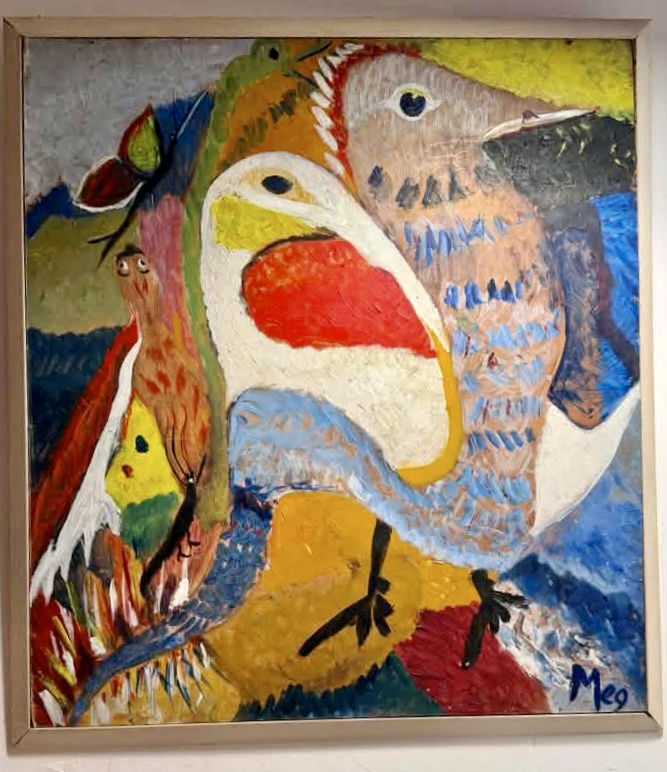
The painting Lucien Smith’s mother Margaret created in 1952 when she was 22 and called ‘Quirky Birds’. “It’s my ‘run back into a burning building’ item,” says Lucien. What would you save from a burning building?

Following my column about the reunion I had with my dad’s Jaguar, it prompted me to ponder how it is that physical things can mean so much to us.

Reader Lucien Smith got in touch because he has similar feelings about a painting created by his late mother Margaret. I had wondered if anyone still owned an object to which they had an unusually strong attachment.

“Yes I do. This painting by my mum, which she created in 1952 when she was 22. ‘Quirky Birds’ she called it and her teacher at college used a technique where they drew shapes on the canvas, then found the picture within. It’s my ‘run back into a burning building’ item.”

It is a wonderful memento of Lucien’s mother, who died in 2024. Its value to others may be negligible, but to Lucien it is priceless.

Former teacher Lynette Atkinson also got in touch after reading my Jaguar column and said: “What a fabulous story. No wonder it made you emotional. I have kept many items that were made by children I taught and they are treasures to me. A pine cone, a Christmas angel, a trinket box, a bracelet, a painted plate and many more.”

Gurli Smith, who lives in Denmark, contacted me about a different topic: “Reading your column this past Monday (A cheep of faith) made me think of something that happened a few years ago.

“I was sitting in my favourite armchair reading when I heard a loud bang. Something had hit the windowpane and left a big mark on it. I ran outside and saw a young kestrel lying on the ground. I thought it was dead and called my brother.

“By the time he arrived, the kestrel was able to hop around a bit (it had just passed out from the ‘encounter’ with the window!). However, we were afraid that it had broken a wing, so my brother placed it in a safe spot, and a few hours later it was ready to fly again.”

Gurli recalled a second memory prompted by reading my piece about tuberculosis a few weeks back. Her mother had told her this story many years ago.

“In the 1940s Mum trained as a nurse at a small hospital. It was before penicillin and if patients came to the hospital with pneumonia, it meant death for them.

“The specific story was about a young woman (a wife and mother) with pneumonia, and doctors and nurses were sure that she would die. But at a hospital in Aarhus they had penicillin which was driven by ambulance up to my mum’s hospital, and the life of the young woman was saved.

“My mum had tears in her eyes when she told the story and said that the use of penicillin was the greatest thing she had experienced as a nurse.”

We can’t imagine life without antibiotics today, and I have no doubt that they saved the life of my son when he had life-threatening sepsis at the age of three.

It makes me wonder what of life’s inventions that have appeared in your lifetime could you not live without today? Of course there are the obvious things, like the Internet, mobile phones, tablets and the like, but is there anything else you use on a daily basis that you didn’t realise you needed until it was invented?

I have a few personal treasures that will mean nothing to anyone else, but the absolute world to me. I will never forget the moment when I was in my dad’s study not long after he had died. It was the place I would go to feel close to him and on his desk was an A4 diary in which he used to plan out his time for the weeks and months ahead.

I flicked through a few pages and there, written in his distinctive hand, were the words ‘Out for dinner for Sarah’s birthday.’ My heart broke all over again when it dawned on me that he had looked forward to the occasion with no idea he would no longer be alive to enjoy it. Of course, I will never be able to throw that diary away now.

So what is your ‘run back into a burning back into a burning building’ item?

Do you have opinions, memories or ideas to share with me? Get in touch with me using the ‘Contact’ button on the top right.

This column appeared in the Darlington & Stockton Times on Friday 31st and the Ryedale Gazette and Herald on Wednesday 29th July 2026

The heart of the matter


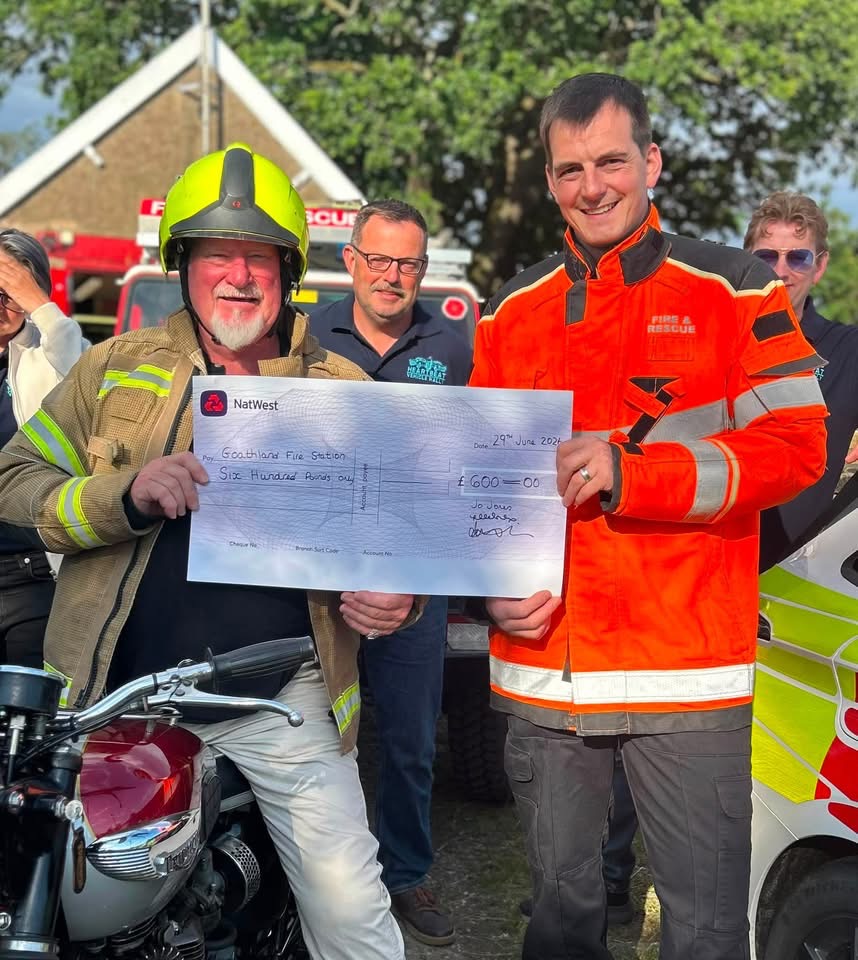
London’s Burning actor Sean Blowers presents a cheque for £600 to Volunteer On-Call Crew Manager Jack Atkinson from Goathland Volunteer Fire Station. Jack and his colleagues were part of the team who tackled the worst fire in North York Moors history last year, centred around Langdale Forest. Picture by Lee Jones.

I am still basking in the glow of another wonderful weekend in Goathland at the annual Heartbeat Vehicle Rally. We were blessed again with lovely weather and we estimate that there were around 6,000 visitors over the two days. Of course, if you read last week’s column, you will already know that my family were reunited with my dad’s old Mark 2 Jaguar, which was an absolute treat.

What I didn’t mention was that as I approached the car for the first time, there was a chap chatting with Richard James, the current owner and the man responsible for the amazing restoration. As the stranger saw me approach, he turned and introduced himself as Keith, saying: “I drove Peter Walker’s daughter Sarah to her wedding in that car!”

So I replied: “I am Sarah!” You should have seen the look on his face! He hadn’t recognised me – which I put down to the fact I was wearing a hat and sunglasses, rather that the 30+ years of aging that have taken place since! Keith was the mechanic who restored it in 1994 and revealed that he was rather stressed in that final week. But he pulled it out of the bag in time, and was thrilled to be my bridal chauffeur.

Considering how many people were gathered in once place, the rally ran very smoothly, with dozens of fans queuing patiently for ages to see the stars and the stars in turn patiently signing hundreds of autographs and posing for hundreds of pictures. This year we had four actors: David Lonsdale, who played bumbling David Stockwell, Vanessa Hehir who played mechanic Rosie Cartright, Ryan Early, who played PC Tom Nicholson and Sean Blowers, who made two memorable guest appearances and was also known for playing John Hallam in London’s Burning, an ITV series about the fire service.

Sean’s appearance was especially fitting because this year, we were delighted that he was able to hand a £600 cheque to Goathland Volunteer Fire Station, while another £600 went to the village primary school.

I was also thrilled to hear from Elsie Smith, trustee of Goathland Village Hall, who sent me a lovely message after the event having seen my family’s emotional reunion with the Jaguar. She reported that the hall did a roaring trade in teas, coffees and cakes, and so benefitted from a nice little windfall too!

Of course, there are drawbacks to hosting such a popular occasion and as ever some selfish drivers were too tight to pay the modest fee for parking (between £2 and £4.50 for a full day). In total there were four separate car parks available with bags of room, and yet a frustrating minority insisted on plonking their cars on the beautiful verges that are such an iconic part of our moorland setting. Despite advance posts on social media showing where to park, plus signage, marshalls and ‘Keep Off’ signs on the day, some people were just too ignorant to pay heed, showing no respect for the historic grazing land nor to the residents who call Goathland home.

When I stand back and look at the event, I do wonder what my dad would think of it all. I’m pretty sure he would be amazed that 16 years after the series came to an end, the fans are still loyal and passionate enough to make the effort to travel all the way to Goathland. One lady I spoke to had come all the way from Boston, USA! She loves Heartbeat, and made the trip for the first time last year. Because she enjoyed it so much, she decided to come back again.

There was one incident that shocked me though. A car went past with the passenger casually hanging her arm out of the window. In her hand was a lit cigarette.

It was one of the most thoughtless and stupidest things I saw all weekend. The moors are tinder dry, and one spark from a cigarette could lead to catastrophe.

If only those fire fighters at Goathland Fire Station – who last year participated in the exhausting battle to control the most devastating blaze in the history of the North York Moors in Langdale Forest and Fylingdales Moors – had had a polite chat with her.

I wonder what they would have said?

Do you have opinions, memories or ideas to share with me? Get in touch with me using the ‘Contact’ button on the top right.

This column appeared in the Darlington & Stockton Times on Friday 17th and the Ryedale Gazette and Herald on Wednesday 15th July 2026

Rallying myself for a special reunion

L-R Me with my niece Eleanor and her baby, Annabelle, my son Joey, my sister Janet  and my mum Rhoda reunited with my dad’s beautiful Mark 2 Jaguar at the Heartbeat Vehicle Rally in Goathland


I’m just home from a very special weekend. We were finally reunited with my dad’s beloved Mark 2 Jaguar.


Dad had always dreamed of owning a Mark 2, and bought one in the early 1970s. However, it failed its MOT in 1979 and languished in the garage for the next 15 years until, following the success of Heartbeat, he was able to get it fixed in time for my wedding in 1994.

As a family, we loved that car, and it stayed with us for more than 40 years until Dad’s death in 2017. We made the heartbreaking decision to sell it then because we feared we could not give it the kind of care it deserved. We thought we’d never see it again.

But, like a knight in shining armour, Jaguar fan Richard James came to the rescue. He’d found the car about a year ago and it had been reduced to a rusty old heap. Only after he bought it did he discover who the previous owner was. He tracked me down through social media, and pledged to bring the car, fully restored, to this year’s Heartbeat Vehicle Rally on the last weekend in June.

The anticipation of seeing it had me in tears even before I’d set eyes on it because it was so tied up with my dad, the treasured memories and the devastating grief at his loss. I know the same goes for the rest of my family too, and so the reunion was made extra special by the fact my mum, my sister, my son, my niece and my six-week-old great-niece – four generations of our family – were at the rally to greet it.


Watching my mum’s face as she saw it come into view is something I’ll never forget – surprise, joy and raw emotion all bundled into one expression. She couldn’t wait to sit in the driving seat and once there, was reluctant to leave it. She recalled that, at five feet tall on a good day, she could barely reach the pedals when she used to drive it to work. She’d perch on the edge of the seat, pushed as far forward as it could possibly go, peeping over the steering wheel and long bonnet, barely able to see out.


She worked at Ampleforth College, and remembered how the schoolboys would gather round the classroom window to watch as she manoeuvred the great thing into a parking spot, bewildered at how a diminutive secretary had such a large fancy car.


What they didn’t know was that the Jaguar guzzled petrol and so it was more economical for Dad to drive our small Ford Anglia the 20 miles to police headquarters in Northallerton while Mum’s journey was just one mile.


Richard had done a remarkable job of the restoration, the paintwork and chrome gleaming as if new. The interior was equally impressive, and the stunning walnut dashboard for which Jaguars are known had been painstakingly crafted back to life. If I am honest, it was in much better condition than when we had it! But then, it was a family car, and with four squirming kids squished into the back on trips out, it perhaps wasn’t given quite the respect it enjoys now.


My dad used to complain about its reliability, or rather, lack of it, and it was renowned for conking out so I was very relieved to hear that it had completed the 350-mile round trip to the rally and back to Richard’s home again without missing a beat.


The best moment was when we got to have a ride in it, with mum in the front passenger seat, and we girls in the back. The familiar low chugging of the engine took me straight back to the last time I had heard that noise, the day it had left us forever. I could quite happily listen to that sound for the rest of my life.


I had a lump in my throat at the end of the day as it sailed off down the road back towards its new home. But Richard has given us a very special memento – Dad’s Jag in miniature mounted on a plaque with a special dedication to honour him.


I don’t think I could have asked for much more.

Do you have opinions, memories or ideas to share with me? Get in touch with me using the ‘Contact’ button on the top right.

This column appeared in the Darlington & Stockton Times on Friday 10th and the Ryedale Gazette and Herald on Wednesday 8th July 2026

A festive labour of love

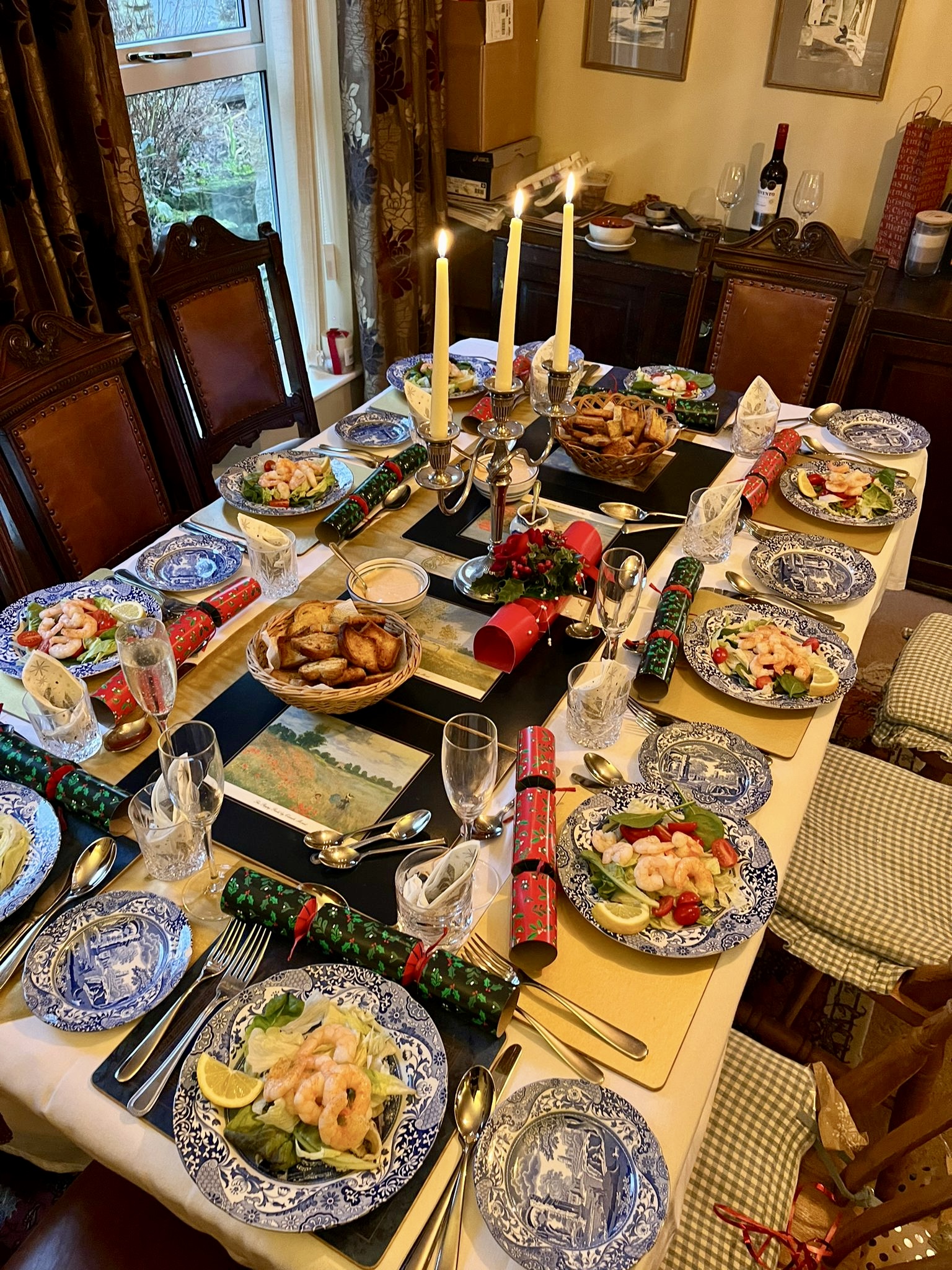
For myself and others the marathon task of preparing Christmas dinner is an expression of love for those about to eat it


I’ve had some interesting feedback following my highly controversial column suggesting Yorkshire puddings belonged on the Christmas dinner table, while cauliflower cheese did not.

Reader Mary Raynar says she always makes everything from scratch for Christmas lunch, and adds, startlingly: “And yes to both Yorkshire puddings and cauliflower cheese! It’s a real labour of love and I always joke that next year it’ll be beans on toast, but of course it never is!”

I will forgive Mary’s lapse in judgement on the cauliflower cheese, because, like her, all the hassle and work that I put into that one lunch is my expression of love for those about to eat it. The lengthy preparation is an essential seasonal ritual, capped off by the other ritual of photographing the banquet laid out in all its glory on the festive table.

Yorkshire-born Lynn Catena lives in North America and says: “We didn’t eat Yorkshire puds this Christmas (I wasn’t cooking), but they’re usually on the table. We prefer prime beef rib over turkey because we often celebrate Canadian (October) and US (November) Thanksgiving holidays with turkey.” Lynn didn’t completely miss out on her beloved Yorkshires though: “I did make a few, days before, with beef stew.”

I can understand how Lynn would be all turkey’d out by Christmas after the double Thanksgiving, and some would argue that there are far tastier meats to grace the table than the traditional big bird, which can be quite dry and tasteless, depending on how it is cooked (or who is cooking it!).

Judith Barber is not a fan of roast dinners generally and says: “As someone who hates gravy, I like cauliflower cheese with Christmas dinner. Yorkshire puddings we rarely eat, and I have no preference to their presence at Christmas.”

She adds: “But KFC, I would never, ever eat because of the way their chickens are treated – as a mass commodity – which is why local farmers are so important. And fresh, not fast, food.”

Judith is right about the importance of local farmers and fresh food, and is referring to the Japanese custom of eating Kentucky Fried Chicken (KFC) on Christmas Day, which I also discussed in my column.

The popularity of KFC at Christmas boomed in Japan in the 1970s after branch manager Takeshi Okawara overheard some foreign customers declaring they missed turkey so were ordering a bucket of chicken for Christmas instead. In the blink of an eye Colonel Sanders was dressed in a Santa suit and adverts were being rolled out showing families gathered around a festive bucket of the crispy delicacy. ‘Kentucky at Christmas’ was an instant hit, and 50 years later, four million customers across Japan queue around the block to pick up their Christmas party barrels.

According to KFC’s UK website, the company will only work with suppliers committed to good animal husbandry and welfare standards. They also say they support the global ‘Five Freedoms of Animal Welfare’ which are as follows: 

1. Freedom from hunger or thirst by ready access to fresh water and a diet to maintain full health and vigour.

2. Freedom from discomfort by providing an appropriate environment including shelter and a comfortable resting area.

3. Freedom from pain, injury or disease by prevention or rapid diagnosis and treatment.

4. Freedom to express normal behaviour by providing sufficient space, proper facilities and company of the animal’s own kind.

5. Freedom from fear and distress by ensuring conditions and treatment, which avoids mental stress.

All very noble, and yet a 2022 undercover investigation showed that these standards were not being met at one of KFC’s main suppliers. The chain undertook to investigate and promised to ensure practices improved. I haven’t been able to find out whether that has happened or not.

The thing is, fast food is enjoyed by so many people in this country, including me on occasion, that it is not going anywhere anytime soon, and therefore the best way forward is to keep putting pressure on giants like KFC and other fast food chains to maintain standards and they in turn will put pressure on their suppliers to maintain good animal welfare practices too.  

I think Liz Davidson echoes the thoughts of many a traditionalist Brit when she says simply: “ I don’t really fancy KFC for Christmas lunch.”

Do you have opinions, memories or ideas to share with me? Get in touch with me using the ‘Contact’ button on the top right.

This column appeared in the Darlington & Stockton Times on Friday 9th and the Ryedale Gazette and Herald on Wednesday 7th Jan 2026

Building family foundations

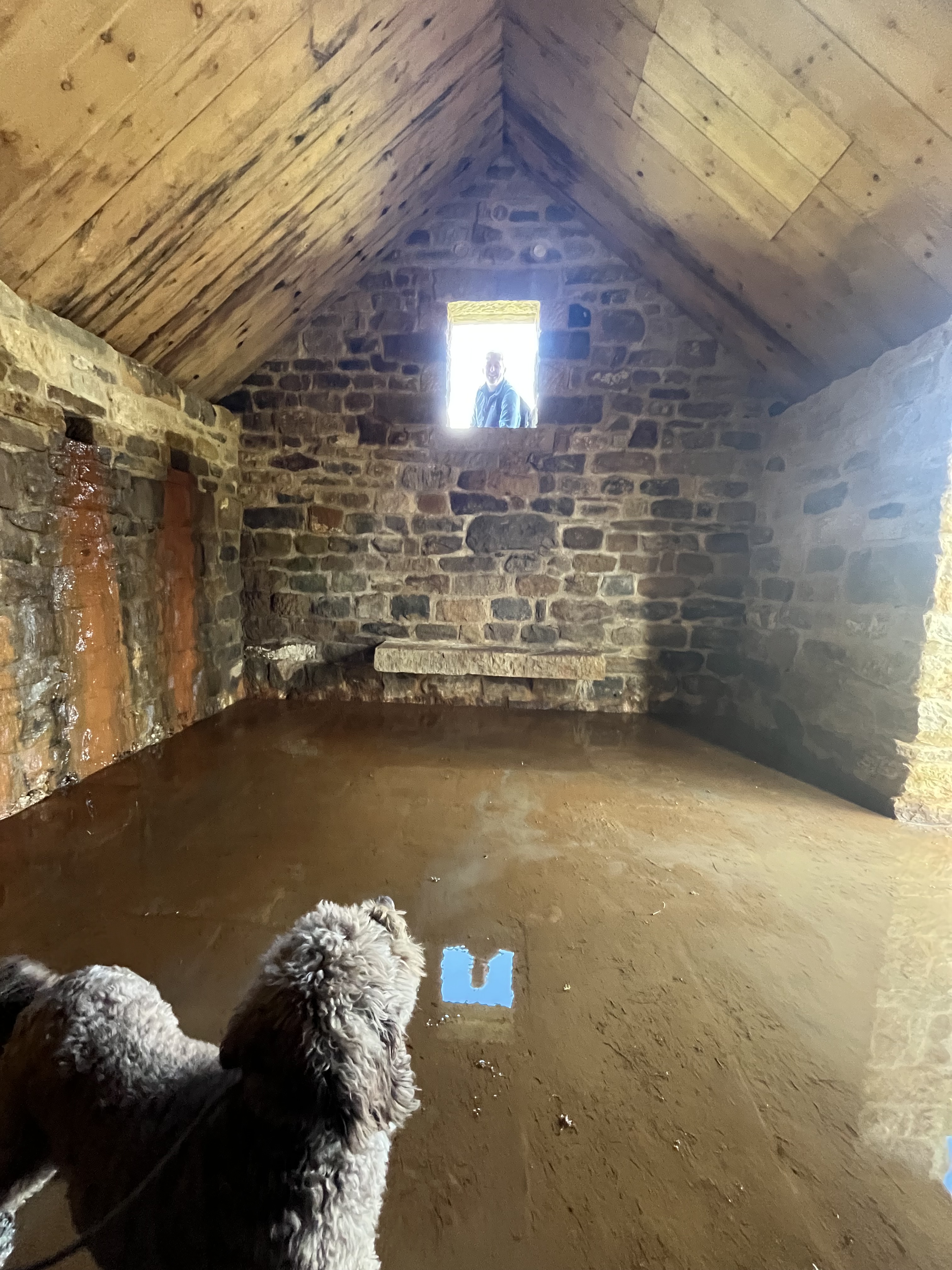
One of the buildings on the Hanging Stones Walk in Rosedale that Nick Harland helped to construct (that’s my friend Dave in the window, looking down at his confused dog Frank).
Andrew Goldsworthy gave Nick Harland this signed book with a hand-drawn picture of the Hanging Stones


I’ve been contacted by readers Ian and Catherine Wilson who had a great titbit about middle names. They wrote: “We would like to add an important advantage to ancestors having maiden names as middle names. When doing family history research the inclusion of a maiden name has often helped to confirm a link.”

I had never thought about that aspect before. They add: “McLaren is an ancestral name that is extremely common in Perthshire not helped by William passing through the generations. Thankfully one generation included Sorley as a middle name and it unlocked our research.”

It makes me think of all the hard work put in by my dad’s brother, Charles Walker, who spent huge amounts of time compiling our family tree. His side of the family had the common name of Walker, and my mum’s side had the even more common Smith. Trying to trace the correct members to create an accurate family tree was extremely tricky, especially when there were first names that were very popular among families of the North York Moors with the same surname. There were dozens of Johns, Henrys and Williams, and Mary’s, Hannahs and Helens too. Uncle Charles’ job was made slightly easier because some of the descendants were given maternal maiden names for middle names. My mum’s eldest brother, was Henry Harland Smith after his paternal grandmother, and her second brother was John Lacy Smith, from his mum’s maiden name. The name Lacy was passed down the next two generations to Henry’s son Richard, and on to his son Charles.

I don’t think this tradition was followed on my dad’s side of the family though, and tracing the Walker line did prove tricky as Uncle Charles wrote back in 2004: “I have a number of possible Walkers living around Lingdale/Skinningrove/Hinderwell. Can Peter remember any names of brothers/sisters of our Grandfather Walker?” He then lists a number of names of possible ancestors. Clearly, trying to sort out who was who was quite the task.

Funnily enough, I was contacted not long ago by Nick Harland, and we discussed whether we might be related through my mum’s side. As mentioned above, her paternal grandmother was a Harland – Edith Richardson Harland. Edith’s parents were William and Ann Harland, and as you might have guessed from Edith’s middle name, Ann’s maiden name was Richardson. Are you keeping up? This is just one tiny segment of our family tree, and I can imagine how mind-boggling it must be when you go down the rabbit hole of trying to piece it all together.

Nick and I didn’t know off the top of our heads if we were related, but that was not the reason he was getting in touch. He wrote: “My father Dennis Harland has often spoken about your dad over the years and I when I first started work, Mary Walker (my dad’s mother) often got me to do little jobs for her as she lived opposite the Glaisdale Institute…my dad’s parents used to live in Brinkburn, the house above where Mary used to live, opposite the institute.”

Nick has a link to the Andrew Goldsworthy ‘Hanging Stones Walk’ in Rosedale about which I wrote a couple of years ago. “All the ten Andy Goldsworthy projects which have been put together have been done with the help of our building firm,” he said.

The Hanging Stones Walk is an amazing feat of creativity, engineering and construction so I am hoping some time to chat more to Nick so he can explain how they did what they did. It is really an art project, rather than simply a walk, and is sponsored by the Ross Foundation (an organisation that supports initiatives related to art, community, sport, music and education) which commissioned sculptor Andrew Goldsworthy, famous for his spectacular pieces of land art. He transformed tumbling down agricultural buildings into amazing pieces that blend seamlessly into their moorland surroundings.

Nick finished by saying: “Another thing you touched on a while ago was about making stone troughs. I make a lot of stone troughs, up to five foot long. There is an easy way and a hard way but it is good fun seeing one completed.”

I think if Nick and I meet, we will have an awful lot to talk about!

Do you have opinions, memories or ideas to share with me? Get in touch with me using the ‘Contact’ button on the top right.

This column appeared in the Darlington & Stockton Times on Friday 19th and the Ryedale Gazette and Herald on Wednesday 17th Dec 2025

Don’t call me Nanny!

My boys with their Dutch grandparents, who were known as Opa (Grandad) and Oma (Grandma). At home, we used Nonny and Grandad to refer to their English grandparents.

A couple of weeks ago I discussed the subject of nominative determinism where a person ends up in a career that reflects their surname. My ballet teacher was called Miss Toes, and my son reminded me that his boss, who was a joiner, was called Mr Stick. Such names sound like characters from Roger Hargreaves’ Mr Men books, with famous examples including Mrs Berry the Baker (Mary), Mr Bolt the Sprinter (Usain), Miss Stepanova the Hurdler (Marina), and Mr Crapper the Sanitary Engineer (Thomas)

Lynn Catena used to know a music teacher called C. Sharp, and Deborah Steed revealed: “My husband worked at a bank with a guy called Nick Money and I used to refer clients in need of a medical to Dr Death.”

I’m not sure how I’d feel being sent to see Dr Death! I am sure there are many more wonderful examples out there, so do get in touch if you have any to share.

I was contacted by Mary Harrison again after she’d read my column featuring her story about a new baby named ‘Mr Harry’ after her husband, who’d raced the expectant parents to hospital in his car.

“Great amusement among my family to see my name in print!” she says. “Since our 55-year-old son was four when we left Kenya, Mr Harry will probably be 51. Sadly, we have no photographs of him; but if he went on to secondary school he would probably have changed his name. Pupils had to confirm their names when filling in the forms for their final exams, and were told they would not be able to change them again afterwards…thank you for all the interesting articles you write!”

I also revealed last week that my sister and husband are due to become grandparents in May next year, and are wondering what they might be called when the time comes.

Alison Davies got in touch to say: “I’m plain old Grandma but love it. I have two beautiful grandsons. I think you refer back to what you called your own grandparents. I’m not a fan of Nanna – just personal preference…My mum as a great grandma is known as GG.”

She is not the only GG I’ve come across. Mary Raynar says: “I’m Granny. My granny was Nanna and my mum was Granny Marie to my children and GG to her great grandson.”

In my own case, we referred to my grandparents as Nana and Grandad Walker and Nana and Grandad Smith, which seems quite formal. By the time my own children were born, Nana Walker was the only remaining great grandparent, and they referred to her less formally as Nana Mary.

Billy Goode states firmly: “It’s Granny and Grandad. If you’re another name you’re the secondary grandparents.” He’s saying that tongue in cheek, of course, and clarifies: “I’m just making the point that everyone thinks what they say is the right one! My mum had a nana not a granny. I’ll ask Dad what he had!”

I wonder if there is competition between the opposing ‘grands’ as to nabbing the preferred term first. For my children, the boxing gloves were not needed because their paternal grandparents were Dutch, and thus Oma and Opa.

Janet Pearce has a lovely name: “I am Bibi, which is Swahili for grandmother because I was born in Tanzania and my daughter suggested it.”

A friend suggested it should be up to the children to decide what they want to call their grandparents (which is how my mum came to be Nonny). But of course, these names only come about once your baby can talk, and so a decision does need to be made before that. Some grandparents can be quite determined, as Clare Proctor discovered: “My maternal grandmother was something of a snob and said she was Grandma, not Nanny, because “Nannies are people you pay to look after the children!” I became a Grammy in April – my daughter suggested it as an alternative to Granny, which I thought I would hate (so aging, darling!) but actually I am so besotted with my beautiful granddaughter that I don’t care what she calls me!”

And that is a sentiment that I am sure I will share if I am ever fortunate enough to experience grandparenthood.

Do you have opinions, memories or ideas to share with me? Get in touch with me using the ‘Contact’ button on the top right.

This column appeared in the Darlington & Stockton Times on Friday 28th and the Ryedale Gazette and Herald on Wednesday 26th Nov 2025

Hey Nonny! No?

My niece Eleanor and husband Ben shared some exciting news this week! Baby Walker is due in May next year!

Do you remember two weeks ago I mentioned that I had no immediate relatives that would be able to carry on the family name of Walker? That was until my niece Eleanor happened to marry into a totally separate family of Walkers.

Her mum, my sister Janet, was delighted: “It’s lovely to have another Walker back in the family.”

Having read the column, my own mum said: “I wasn’t bothered to lose my surname ‘Smith’ as there were still millions of ‘Smiths’ in the world. But now I’m a ‘Walker’ and there are millions of them too!”

Alison Davies recommended a rather drastic way to reclaim your own surname: “Get divorced! I did and went back to my family name.” She adds: “I did sneak Davies in as a middle name for my eldest.” Although having said that, getting divorced is not that drastic if you consider around half of us married people do it in the end.

Jane Ridley did the same as Alison when naming her son: “I couldn’t bear to give up my maiden name as I’m the last of the Ridleys. Bobby’s middle name is Ridley. My husband’s middle name is his grandmother’s maiden name of Powell.”

Since I’ve become aware of the convention of preserving a family name in children’s middle names, I discovered that so many people have embraced it, and yet it never occurred to me to do it with any of my boys.

Sarah Mason says: “Both my boys have Mason as part of their middle names. I wanted them to have my surname somewhere! Hopefully they might continue the tradition, although it may well be difficult for my youngest as his partner is from Chile and they keep their mother’s surname and just add to it.”

That’s an interesting convention, and I feel it’s rather enlightened of Chile to ensure the female name is so prominent. But does it also mean that it leads to really long surnames?

Janet Pearce adds: “My late husband was the last male of his family to have children. He had three sons but none of them have had children and are unlikely to, so that branch of the family name will die out. He was sad about it, but I don’t worry about these things!”

Kate Broad says: “I will never understand why women changed and continue to adopt their husband’s name.”

And I agree to some extent, because if I had my time again, I probably would not adopt my husband’s name, or at least would combine mine and his in some way.

Clare Powell’s family used an interesting method to preserve a name: “My husband’s dad had Slingsby as a middle name, as did his grandfather. It was a family surname, but we didn’t use it – unless you count naming the cat Slingsby!”

Of course, we live in a patriarchal society that has been that way for centuries, where the male line dominates. But there are cultures across the world where women have always led the way. In India, the Khasi tribe has a matriarchal structure where children take on their mother’s name and girls inherit the wealth. Mosuo (China) and Minangkabau (Indonesia) both have matriarchal societies where women are heads of the household and property is passed down the female line. In Kenya there is a village called Umoja which was founded by women who rebelled against patriarchal oppression and domestic violence.

Since I wrote my original piece, I have received some absolutely wonderful news! Eleanor and husband Ben are expecting their first child and Baby Walker is due in May next year. It is all rather fitting, because both my dad and myself were born in May (and even though it is not our family branch, we are very happy to hang on to the coattails of another set of Walkers!).

My sister and imminent grandparent Janet is debating how she would like to be referred to once the baby comes along. Should she be Granny, Grandma, Nan or Nana? Families often have their own quirky names for grandparents and I’ve heard ‘Gangan’, ‘Pops’ and ‘Runny and Dumper’. When my eldest began to talk, he could not pronounce ‘Granny’ and so my mum became ‘Nonny’. Twenty-nine years later, Nonny she remains.

Did you call your grandparents anything unusual? Let me know!

Do you have opinions, memories or ideas to share with me? Get in touch with me using the ‘Contact’ button on the top right.

This column appeared in the Darlington & Stockton Times on Friday 14th and the Ryedale Gazette and Herald on Wednesday 12th Nov 2025

Baby naming keeps us on our toes

Rob Ainsley’s mum Barbara holding a 1961 photo of her sons John (left) and Rob. She was so convinced Rob was going to be a girl she didn’t have a boys’ name ready when he was born.

Rob Ainsley and his mum Barbara at a recent family wedding.

Not since I wrote about the highly controversial topic of Yorkshire puddings back in 2019 have I received as much reader feedback as I have about family names. It has been fascinating to hear all your stories.

Mary Harrison wrote: “My husband and I were reminded of the time we were teaching in Western Kenya. One of the workers on the compound rushed round to ask John to take his pregnant wife to the hospital…John says he had never driven so quickly as she was already in labour. A few hours later we had a visit from the proud father to tell us his new son had been called ‘Mr Harry’ (after Harrison) – in recognition of John’s help.”

When I was pregnant with my first child, I used to refer to my baby as ‘he’ for no other reason than ease. By then, the mid-1990s, you could find out the sex at your 20-week scan, but we had no desire to know in advance. During one examination, as my midwife felt around my large bump, we were discussing the imminent arrival. When I used the word ‘he’, she stopped, looked up and said: “You mean she.” I was shocked, and a little upset, because she knew I wanted to experience that ‘Ahhh, it’s a boy/girl’ moment when you meet your baby for the first time. But how could she tell? Was it the shape of my bump? Or was she using some midwifery magic to determine the sex?

From then on, I was convinced I was having a girl, although we made sure we had both female and male names ready. Of course, if you were paying attention in previous weeks, you will already know that my first baby was not a girl at all, and we called our little boy Oliver. It would have been Hannah had he been a girl.

Rob Ainsley contacted me to say: “My mum was so confident I was a girl, she’d decided on ‘Joan’. It was 1960, so way pre-scanning. When I popped out I clearly was a boy, so there was some hurried rethinking. Mum tried ‘Robin’, but Dad thought that wasn’t strong enough, so they compromised on ‘Robert’. I’ve never especially liked it, but I suppose ‘Joan’ could have been problematic for me in 1960s Britain. Not that it stopped the artist Joan Miró, of course.”

I’m intrigued as to why his mum was so certain he would be a girl when there was absolutely no proven way back then to know what sex your baby was going to be. Was it some old wives’ indicator, like a small neat bump meaning it was a going to be a boy, and a more spread-out bump was a girl, as I was told.

Clare Proctor says: “My mum was so convinced my eldest brother would be a boy that she refused to choose a girl’s name.” As Rob’s mother discovered, that kind of conviction is not always accurate, but in this case, Clare’s mum was spot on, and Peter was born in 1950. He made a rather exciting entrance into the world as Clare describes: “My dad had to deliver him in the back of a Land Rover with my mum (a trained midwife) telling him what to do, in between asking if it was a boy. He just said, “Let’s get it out first, then check!””

I asked Clare if he’d been nervous: “Apparently, he was surprisingly calm, but then he had been chased out of Burma (literally) by the Japanese army when he served in WW2, so I guess delivering a baby was a doddle!”

My first-born is now 29, and his partner Gigi messaged me on the subject of names: “Have you heard of nominative determinism? It’s a phenomenon where people with certain names end up in professional fields relating to the name, such as John Bones ends up a doctor, or Olivia Sweet becomes a pastry chef. It’s so interesting!”

My childhood ballet teacher was called Miss Toes and it always makes me giggle (it was probably spelled Toase but I didn’t know that when I was little!).

I bet some of you have some cracking examples of such names, and by now you should know the drill – get in touch using the methods below.

Do you have opinions, memories or ideas to share with me? Get in touch with me using the ‘Contact’ button on the top right.

This column appeared in the Darlington & Stockton Times on Friday 7th and the Ryedale Gazette and Herald on Wednesday 5th Nov 2025

Walking the family line

My niece Eleanor preserved the family name by a happy accident when she married Ben. Picture by Bella Bradford Photography

You might remember that a couple of weeks back I talked about family names, and reader Wendy Sissons mentioned that her father’s side of the family use ‘Leedham’ as a middle name for some of the men in the family. She wasn’t sure where it came from, but assumed it was the surname of a relative.

Since then, I‘ve been talking to my mum, and she remarked that her eldest brother, Henry (b.1932), had the middle name ‘Harland’, which was the surname of their father’s mother. Her second brother, John (b.1935), was given the middle name ‘Lacy’ which was their mum’s maiden name.

Was this a convention to preserve the surnames of the female lines due to the fact that women surrendered their own surnames upon marriage? By including it as a given name in the male line of descendants it would not only ensure the ancestors were memorialised, but there would be less chance that the family names would vanish altogether, should there be no other males to carry it forward as a surname.

Do you know the middle names of your aunts, uncles and cousins? I certainly didn’t, and that’s where our family tree came in handy. Using that, I discovered that, interestingly, my Uncle Henry’s son, my cousin Richard (b.1964), was given the middle name ‘Lacy’, and he also passed it on to his own son Charles (b.1997). As far as I am aware, that’s where the references to the family name ‘Lacy’ end. I do wonder why Henry chose ‘Lacy’ for his son, rather than the ‘Harland’ of his own name, and I can’t see any others on the tree with that as a middle name either. My mum had five siblings in total, but the rest were all girls (my mum being the eldest, born in 1937).

I wonder if there exists a field of expertise that focuses on the history of surname usage, and how practices have changed down the centuries? A family name was, and still is, a source of great pride for lots of us, but with many women now opting to keep their own surname on marriage, there is perhaps less likelihood of them disappearing from the family line. It is also a fact that in 2025 there are more couples who choose not to get married at all and therefore the choice as to whether to keep your own or take on your spouse’s name is irrelevant.

When I was young, we associated double-barrelled surnames with ‘posh’ people, but today they are much more common among we plebs. Unmarried parents will often link their surnames together when children are born. There are also more divorces and more second marriages, and children born through a second marriage are sometimes given the surname of both parents combined which will also mean they have a name in common with their older step siblings.

I have mentioned before that I was married to a Dutch man, and in the more enlightened Netherlands, the convention is for women to keep their own surname which they add to that of their husband when they marry so that it becomes double-barrelled (with the woman’s surname last). However, it only applies to the wife, so any children born of that marriage will still have just the husband’s last name.

I divorced ten years ago, and kept my married name for a long time afterwards, simply because it was the same as my children who were still in their teens when we split up. I wanted to keep some kind of normalcy for them as we navigated a very difficult period. However, as they grew into adulthood, having the same name as them grew less important, while wanting to go back to my own became more so, particularly after I lost my dad and sister Tricia, who was still a Walker. With them gone, and my eldest sister Janet married and my Buddhist monk brother switching to a chosen Buddhist name, there was just my mum who still had the surname ‘Walker’. Therefore, once I took over these columns, I decided to reclaim my family name.

My little story doesn’t quite end there. My eldest niece, Eleanor Bradshaw – daughter of Janet – got married in 2023 and took her husband’s name.

And that name? Of course, it is Walker.

Do you have opinions, memories or ideas to share with me? Get in touch with me using the ‘Contact’ button on the top right.

This column appeared in the Darlington & Stockton Times on Friday 24th and the Ryedale Gazette and Herald on Wednesday 22nd Oct 2025

All you have to do is tri

I hi-fived my loved ones who were waiting by the finish line. Their support got me to the end.


Seeing my loved ones with home-made signs cheering me from the sidelines kept me going


Do you remember that way back in January I announced that in a moment of madness, I had applied to take part in a triathlon? I wrote: “For those not familiar with this ridiculous athletic challenge, a triathlon is three sporting disciplines performed back-to-back in this order: Swim, cycle, run. There are various distances and mine is a 400-metre swim, followed by a 20-kilometre bike ride and a five-kilometre run.” I’d had this latent desire to do a triathlon for many years which I can’t really explain, and neither can I explain why I waited until I was old and creaky to actually get round to giving it a go.

I can now reveal that I have done it! It was held at York Sport Village with around 400 competitors from all over the country. I completed it in under two hours without sinking, falling off my bike or tripping over. My legs and knees are still reminding me of it every minute of every day but I have to admit, the sense of achievement feels pretty damn good. This was my first attempt at doing anything like this, so I took it nice and steady, my goal being to preserve energy for the final run to ensure I actually made it to the end without collapsing in exhaustion.

I was not tempted to chase other people who sailed by me in the pool, whizzed past on fancy racing bikes, or glided effortlessly by on the run. The competitor in me resisted the urge to try and go a bit faster or to push harder, because the fear of failing after I had told so many people I was going to do it was greater than the fear of being overtaken by speedier participants.

As for the training that I had pledged to do at the start of the year, well, it was patchy at best, and I would not recommend that anyone follow my example when preparing for an athletic endeavour. I bought my bike three weeks before the race from a second-hand shop for £85 and I can count on the fingers of one hand the number of times I have been in the pool since the start of the year. As for running, I did a few long walks and threw in a bit of running now and then. I’m not sure the Brownlee brothers would be impressed with my preparation.

That’s not to say I didn’t do any physical activity. I play racquet sports regularly, and relied on the fitness I gain from that to see me through. One thing that helped was the fact that I managed to shed a few pounds (to get into that bridesmaid’s dress for the July wedding that I mentioned in my January column). It meant there was a bit less of me to drag around the course.

I was very nervous before the event though, nervous of the unfamiliarity of it all, of being surrounded by people who had done proper training and preparation, people looking like they knew what they were in for, people who seemed ready and confident. But it was a lovely and supportive atmosphere, and as I trotted around the route, those who overtook me offered words of encouragement to keep going.

The best thing was having my friends and family on the sidelines. On every lap, I could see my little posse of loved ones holding huge signs with my name on that I could easily spot. Although they were all cheering, the voice I could hear most was my friend Hayley (the bride from said wedding) shouting words of encouragement. I can’t tell you how much I looked forward to seeing and hearing them on every lap, knowing that every time I spotted them I was another step closer to the finish.

What I didn’t expect was the surge of emotion on nearing the end. My friend Stefan (who has done six of these so far!) had completed the event earlier in the day and we were both taking part in memory of our mutual friend Andy Wilkinson who passed away from pancreatic cancer a few years ago. He had been a proper triathlete, and I hope he’d be proud that I kept going and made it over the finish line.

This column appeared in the Darlington & Stockton Times on Friday 5th Sept and the Ryedale Gazette and Herald on Wednesday 3rd Sept 2025