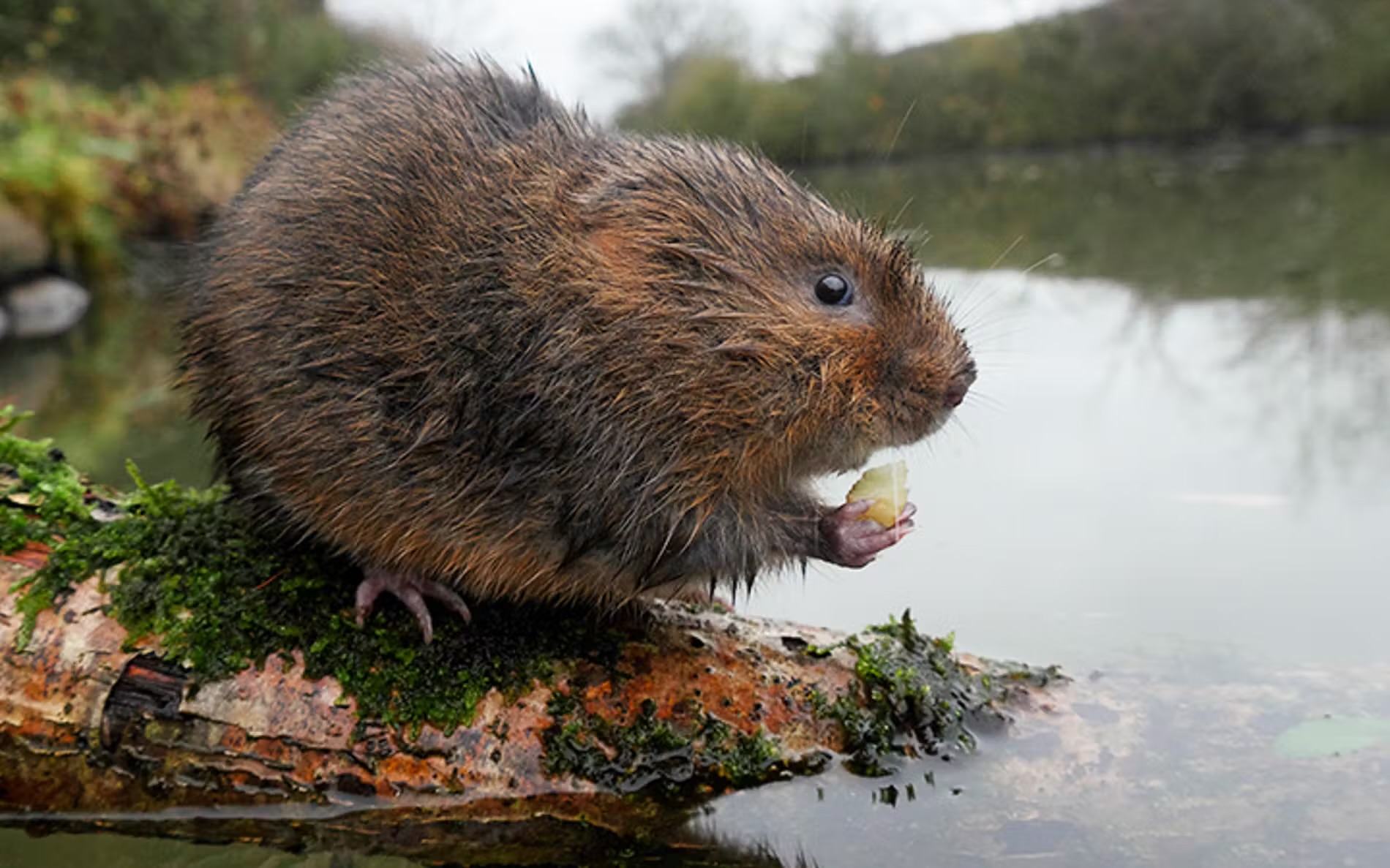
A native water vole, not to be confused with a brown rat. Image: Canal and River Trust Following my recent columns about invasive plant and animal species, Martin Lacy contacted me on the subject of crayfish. If you recall, our smaller native white-claw is under serious threat from its larger American cousin, the signal. Martin said: “On our great chalk streams they hold regular hunting sessions (for signal crayfish) and invite locals to come along and help with the promise of a feast at the end…They taste quite delicious.” It’s certainly one way to reduce the population, but before you race to your local waterway to catch yourself a tasty free dinner, hold your horses. You need to get permission from the Environment Agency who are monitoring the handling of the troublesome crustacean and don’t grant permission to any old Tom, Dick or Harry. You must give valid justification for removing them from the water, and evidence that they will be dealt with responsibly. Having what might be termed a ‘Crayfish Drive’ like the one Martin describes, is a tried and tested way of controlling the pest. There are some companies who have taken this concept to a commercial level and supply the hospitality trade with wild signal crayfish. But the rules and regulations are rigidly applied to ensure the disaster of ‘farms’ that led to this crisis does not happen again. They use specially-designed traps that do not impinge on the other flora and fauna within the waterways, and ensure habitats are left as undisturbed as possible. Once caught, the crayfish have to be kept in special tanks with secure lids. Companies are not allowed to sell ‘live’ crayfish (we don’t want them escaping again!), but use what they describe as humane methods to ‘despatch’ them so that they have an instant and pain-free end. When you understand the harm caused by these invaders, it must surely be preferable to support this industry than import them from countries such as China, which is where the bulk of the current crayfish supply comes from. Crayfish thrive in chalk streams, and the businesses I found operate in Hampshire and East Anglia. Although their activities help our native white-claw, they only have the capacity to operate on limited stretches of water, which means signals are still far too numerous in waterways that are not fished. However, there are some successes, such as the release earlier this year by the Yorkshire Crayfish Forum of 182 juvenile white-claws into Haverdale Beck on the North York Moors that were successfully bred in a hatchery based at Flamingo Land near Pickering. While researching this, I came across more information about our precious water vole, whose numbers have been slashed by another invasive pest, the American mink. It has been reported that over the past 50 years, numbers of water voles have reduced by over 90%. It is our most threatened mammal. If you are familiar with Ratty from Wind in the Willows, then you will know what a water vole looks like. They are often mistaken for a water rat, but are not closely related to that rodent. I also discovered another startling fact – there is no such thing as a water rat in Britain. What many people call water rats are in fact brown rats or water voles. Water voles, like white-clawed crayfish, are truly beneficial to our waterways, and help maintain the right environment and water quality for it and other creatures to prosper. It is often mistaken for a rat, as they are similar in colour and size, although the vole is more brown, while the rat more grey with a pale belly. Voles have a blunt nose, while the rat’s is pointed. Voles have a furry tale and ears that are close to its head. Rats have pink hairless tails, and pink ears that point up from its head. Lastly, water voles are herbivores, while rats eat any old rubbish, be it meat or veg. It’s not all doom and gloom though. In April this year, Yorkshire Water reported unexpectedly healthy colonies of water voles at locations in the Peak District and South Pennines. They can also be seen in the River Esk on the North York Moors, thanks to a lottery- funded preservation project. Have you been lucky enough to see a water vole in the wild? Do let me know!
Do you have opinions, memories or ideas to share with me? Get in touch with me using the ‘Contact’ button on the top right.
This column appeared in the Darlington & Stockton Times on Friday 16th Oct and the Ryedale Gazette and Herald on Wednesday 14th Oct 2026
Janice Brabban has been back in touch after she first contacted me looking for consistent advice on the control of the invasive species Himalayan Balsam that had found its way on to her land.
She says: “What a wealth of information your column has produced re. the Himalayan Balsam. I am so pleased I got in touch.”
She was delighted that there were contributions from fishermen and bee-keepers: “As much as I like honey I wouldn’t go for the Balsam type, it would seem unpatriotic!”
She was also very impressed with the advice from Chloe Lawrence, Invasive Species Project Manager at Tees Rivers Trust: “Really good that they have got other groups involved. I think that’s what’s needed and maybe the £3m grant means more publicity for Himalayan Balsam…It was interesting that if plants are removed from site, it is considered controlled waste and needs a licence. I will have to remember that – and how would that tie in with the advice from Darlington Borough Council to put it in a garden skip? But yes – burning on a woodland site, well, you just wouldn’t do it!… Some of the verges round here now seem to have been cut right back to hedge, so that should help. Thanks again for mentioning HB in your column!”
Mick Garratt also contacted me to share his experiences. “Last winter, the Tees Rivers Trust was actively seeking local volunteers to help survey and remove Himalayan Balsam along the River Leven. Unfortunately, I was away when the training was scheduled, and the opportunities didn’t happen after I returned…However, I did record sightings on the INNS Mapper app, as they had requested (INNS = invasive non-native species).
“I also know of a property-owner in Yarm along the riverbank who has chosen not to remove the plant because they think it looks pretty!”
That is one of the drawbacks. Its prettiness means people do not appreciate the damage it is doing to our riverbanks and the flora and fauna that surrounds them. They may also be mistaking them for similar-looking more welcome plants, such as Rosebay Willowherb and Purple Loosetrife, which have similar leaves and flowers.
On another note, I’m delighted when people find my old columns which trigger memories prompting them to get in touch. Regular reader Les Myers wrote me a message after reading some of my archive pieces (which can be found at www.countrymansdaughter.com). He came across one from February 2018, published following the death of well-known Daleswoman Hannah Hauxwell.
Les wrote: “I met Hannah Hauxwell when she must have been near the end of her life. She lived in a tiny cottage in Cotherstone next to the Red Lion pub. I was a meter reader.”
One day, Les had gone inside her house to take her readings. “She was a person who never threw anything away if she thought it would come in useful. She must have had 100 Utterly Butterly tubs piled up, as well of lots of other junk. She wore a pair of trousers with at least six patches on them.”
Hannah was from that ‘Make Do and Mend’ generation where lack of money and scarcity of materials, alongside a very stoic attitude, meant that rather than throw anything away, you fixed things that were broken, and darned or patched worn out clothes. In her day, these skills were essential for survival and so everyone learned them, bar of course the most wealthy who could afford to employ help.
The world is recognising the value of second-hand clothes, and it is now a badge of honour to declare your outfit is made up of charity shop finds. I’m due to attend a wedding in Spain soon and need several outfits. With the cost of the flights and hotel, I can’t justify spending even more money on new clothes. Therefore I’ve been glued to Vinted (the online platform that allows people to buy and sell unwanted clothing). I’ve got some fantastic bargains, unworn items at a fraction of the cost of new.
The downside is that it is addictive, and I am am not sure I have actually saved any money, for hanging on the back of my bedroom door now are several ‘new to me’ dresses that don’t even fit.
I will have to sell them on Vinted!
Do you have opinions, memories or ideas to share with me? Get in touch with me using the ‘Contact’ button on the top right.
This column appeared in the Darlington & Stockton Times on Friday 2nd Oct and the Ryedale Gazette and Herald on Wednesday 30th September 2026
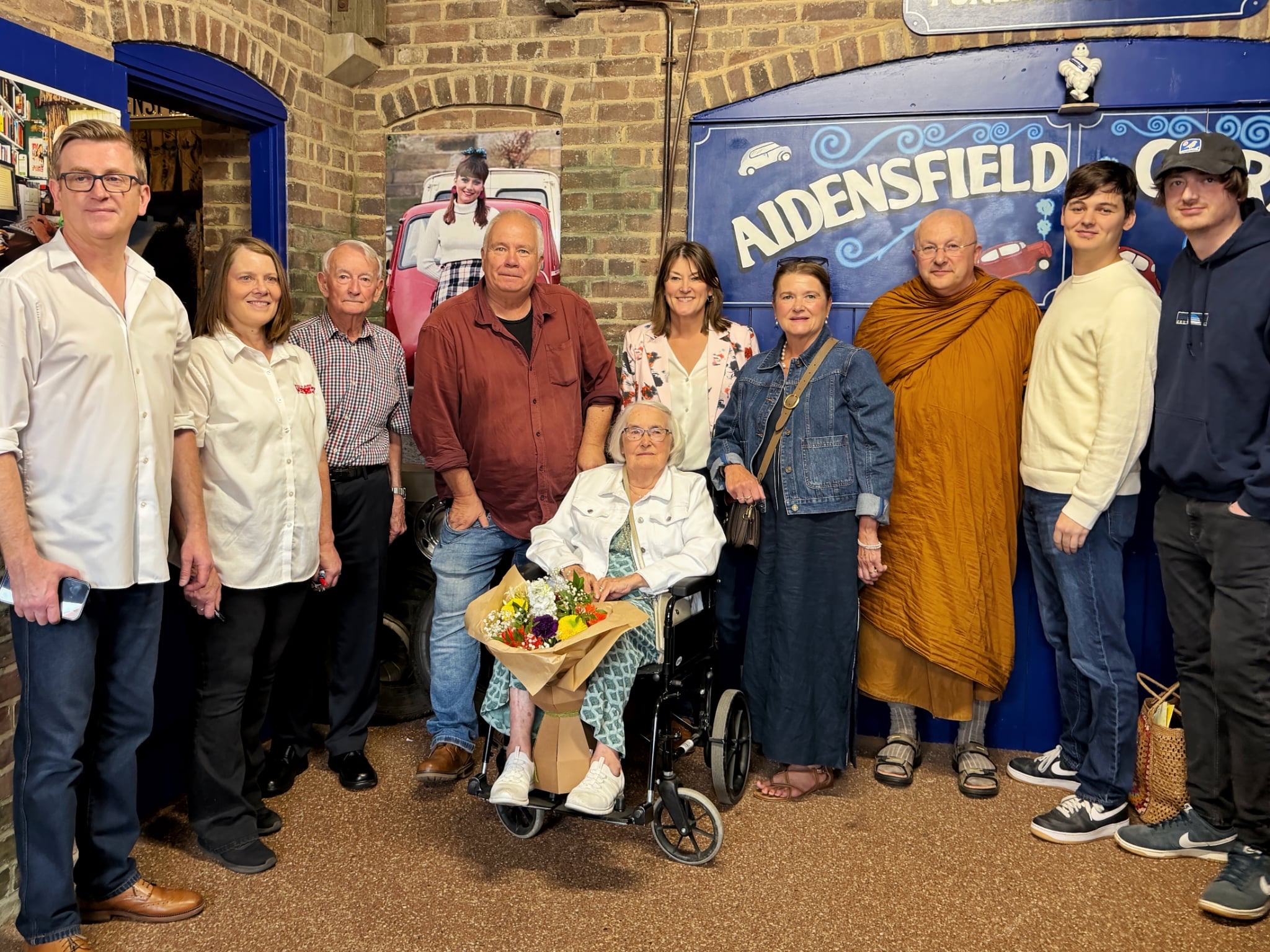
The opening of the Heartbeat Experience at the World of James Herriot taken 29/08/26. L-R Neil Jones, Kate, Pawlett & Ian Ashton (all from the WOJH), actor David Lonsdale who played David Stockwell in Heartbeat, Mum, myself, my sister Janet, brother, plus my sons Joseph and Oliver. Picture by PMH Images.
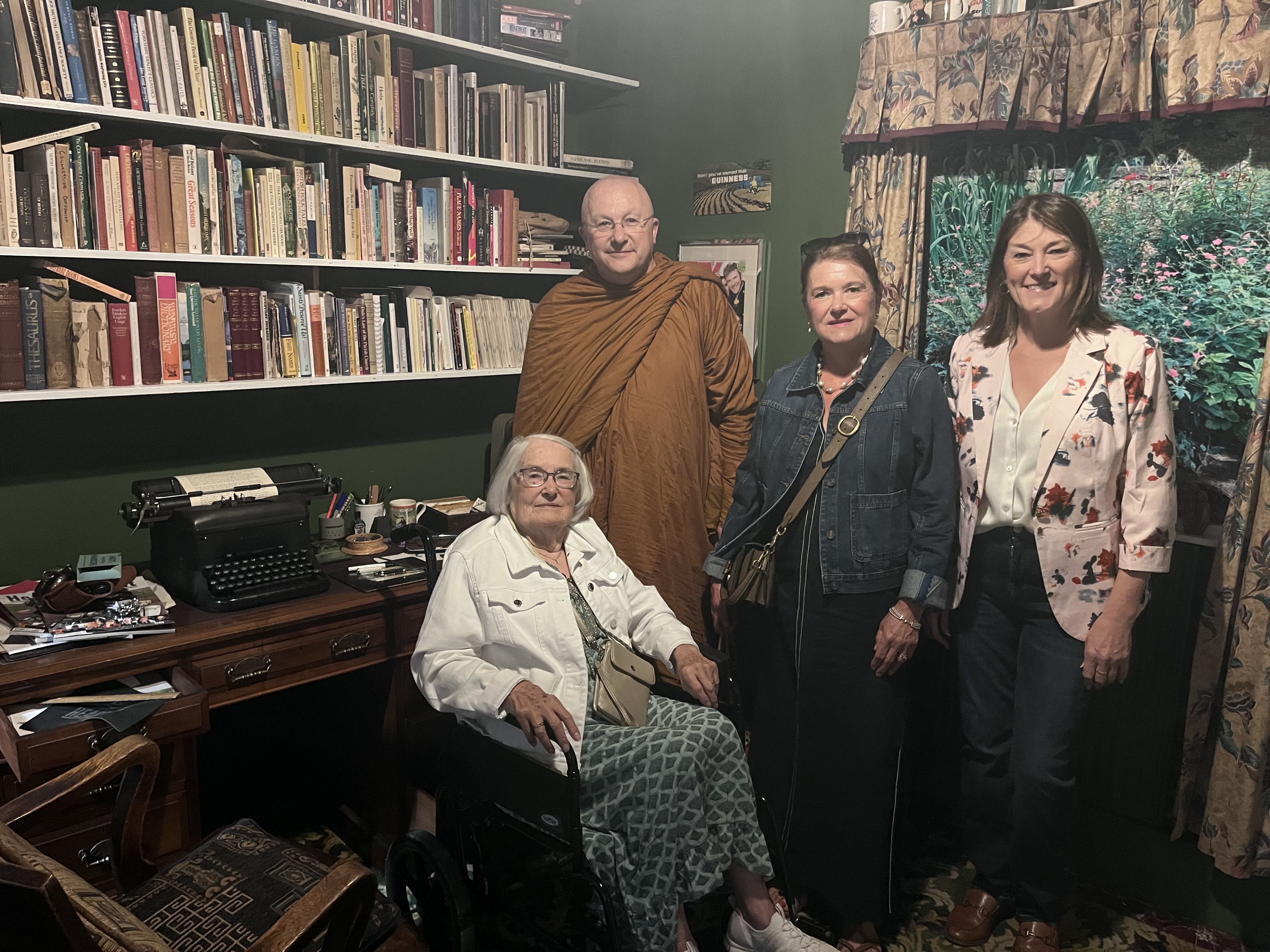
L-R: My mum Rhoda, my brother Andrew, my sister Janet and myself in the recreation of my dad’s study at the World of James Herriot in Thirsk.
What a weekend I had over the August bank holiday! As I revealed a few weeks ago, the World of James Herriot offered to recreate my dad’s study in a brand-new Heartbeat-themed attraction at their museum in Kirkgate, Thirsk, with the ‘big reveal’ on Saturday 29th August.
I’d been brooding for a few years over what to do with the place where my dad spent so many years creating stories and plotting out books and columns. So when the offer came through, it was the lifting of a substantial emotional burden.
Packing up the study and transporting it to Thirsk has been hard work. We had to photograph and itemise everything we sent and hand it over in such a way that it made sense to those unpacking at the other end to enable them to rebuild it as accurately as possible. And with 40+ years of dust disturbed when we removed all those books, we sneezed a LOT!
There were emotional wobbles along the way, as you might expect when you see something you treasure so much being systematically taken apart and removed. We had to trust that the museum was going to take good care of it and do their utmost to recreate it. If it didn’t have the same look and feel that we loved and knew so well, then we would have questioned whether it had all been worth it.
I need to give credit to those tasked with that burdensome job – Ian Ashton, Managing Director, and his two fellow directors Kate Pawlett and Neil Jones, who were are at pains to ensure they did their best within the limitations of a room of a slightly different in shape and size. The worry of not getting it right was etched on their faces whenever we met them.
But in the end, it was such a relief for all of us when the final recreation absolutely embodied the spirit of my dad’s special place.
It’s not just about the study though, because alongside that, they have also created a whole Heartbeat-themed section, including a life-sized replica of Scripps garage doors, two genuine motorbikes from the TV show and a huge board of captioned photos of the main characters from the 18 series (thanks to Heartbeat Vehicle Rally stalwarts Jason Bullard and Lee Jones). Not only that, but a fresh-faced bobby can be seen about to enter the ‘police house’ wearing my dad’s very own North Yorkshire Constabulary-issue woollen cape and helmet.
There was one person whose approval was paramount – my mum’s. She was understandably hesitant about letting us take Dad’s things away, things that were personal and treasured, things she and he had collected together. How would she feel about the empty space left behind?
But when she saw it for herself for the first time, her fears melted away. She was amazed at how accurately her husband’s study had been recreated, almost exactly as it was. The old carpet was there, complete with the original holes caused by the wheels of his chair, and Mum’s home-made flowery curtains framed the two ‘windows’ that magically looked out onto our very own garden and drive. A dim glow shone from a familiar glass lampshade on to Dad’s collection of Heartbeat-themed fridge magnets that dotted the front of his grey filing cabinets, while rows of Heartbeat die-cast toy vehicles looked down from the bookshelves, just as they had at home. The walls were painted the same green, and decorated with the same items he had hung up – two framed TV Times magazine covers featuring Heartbeat cast members, some Guinness advertising plaques, an Aidensfield village sign, and a framed picture of his mother as a young woman. Most of the surfaces were scattered with collectibles, trinkets, books, mugs, pens and all sorts of clutter, just as Dad had left them.
Before, Mum had questioned why anyone would want to take the tatty carpet, her old curtains, or the dusty lampshade. But once she saw everything placed carefully where it should be, it all made sense. Dad’s study has found its permanent home for future generations to enjoy.
Whether you’re a fan of the show, a fan of the writer, or simply a fan of nostalgia, do go and have a look and tell me how you feel when you peer through the window into Dad’s study.
Do you have opinions, memories or ideas to share with me? Get in touch with me using the ‘Contact’ button on the top right.
This column appeared in the Darlington & Stockton Times on Friday 11th and the Ryedale Gazette and Herald on Wednesday 9th September 2026
Dad at work in his study which is being recreated at the World of James Herriot in Thirsk. It will be opened by Heartbeat star David Lonsdale on Saturday 29th August at 1pm. You are all invited.
I’ve been harbouring a secret for a while now but the time has come to share it…
My dad’s study has been saved!
I’ve written in the past about my concerns as to what is going to happen to it when we have to sell the family home. It’s been a weighty burden because it is tied so closely to Dad and his career. What were we to do with all the stuff that was so important to him?
Dad’s study is THE place where I feel closest to him, THE place where I can still feel his presence, the hub of his creativity. It’s a visual representation of what was going on in his head and how he organised his many ideas and resulting stories. For 35 years he toiled in that small room, producing book after book, column after column, article after article. The shelves are packed with reference books on all manner of topic, the most-important and most-used of them on the shelf just in front of where he sat. There are also filing cabinets stuffed full of 60 years-worth of papers and cuttings he’d collected, stored in an order that made sense to him. He created a card index that sat on top of the cabinets, without which it would be impossible for the rest of us to find anything. Beneath his chair, a hole is worn in the carpet from all his wheeling backwards and forwards to reach for things off the shelves or out of the cabinets.
The walls tell a story themselves, adorned as they are with Heartbeat-related knicknacks, such as an ‘Aidensfield’ village sign, a Claude Jeremiah Greengrass teddy bear, a framed copy of the cover of TV Times magazine from 23rd – 29th June 2007 featuring barmaid Gina Ward and PC Phil Bellamy’s much anticipated wedding. Nestled among the Heartbeat mementoes are more personal items, such as a framed photo his mother, my Nana Walker, taken when she was young woman, while elsewhere are a wooden rosary and a postcard of Pope John Paul II, a reflection of Dad’s Catholic faith. One of his proudest moments was when, as Press Officer for North Yorkshire Police, he was tasked with handling the media aspect of the Pope’s 1982 visit to York and he was able to attend the huge open-air mass held on the city’s Knavesmire.
I’m sure you can imagine how the prospect of it vanishing forever was simply too much to bear. We approached a few places a while back, but were disappointed when no-one was willing or able to take it.
A few months ago, though, I got a phone call from Ian Ashton, the Managing Director of the World of Jame Herriot in Thirsk. We had talked to him a couple of years ago, but at the time, the museum was not in a position to be able to help. However, times have changed!
They are creating a whole new Heartbeat-themed attraction within the museum, and at the centre is a recreation of my dad’s study. Not many people know that Alf Wight (James Herriot) was our local vet and even treated our cat! These two men were at the same time writing humorous tales about the quirky characters of North Yorkshire, both of which would be turned in to hugely successful TV shows. Thanks to them we now have the tourism honey-pots of Herriot Country and Heartbeat Country. What a lucky county we are!
I have (with some able helpers) spent the past couple of weekends packing up boxes while taking photos as I go so that the study can be recreated as accurately as possible. Heartbeat favourite David Lonsdale, who played loveable David Stockwell in the TV show, will unveil the study at 1pm on Saturday 29th August – and you are all invited! Just Google ‘World of James Herriot’ to find it.
Dad was such a humble man that he would have been bewildered by all the fuss.
But if you are the reason behind a TV phenomenon that attracted millions of viewers, that still has millions of fans around the world 16 years after it ended, and who in a large part is responsible for a tourism boom in Goathland and the North York Moors, then the least you deserve is a bit of fuss.
Do you have opinions, memories or ideas to share with me? Get in touch with me using the ‘Contact’ button on the top right.
This column appeared in the Darlington & Stockton Times on Friday 21st and the Ryedale Gazette and Herald on Wednesday 19th August 2026
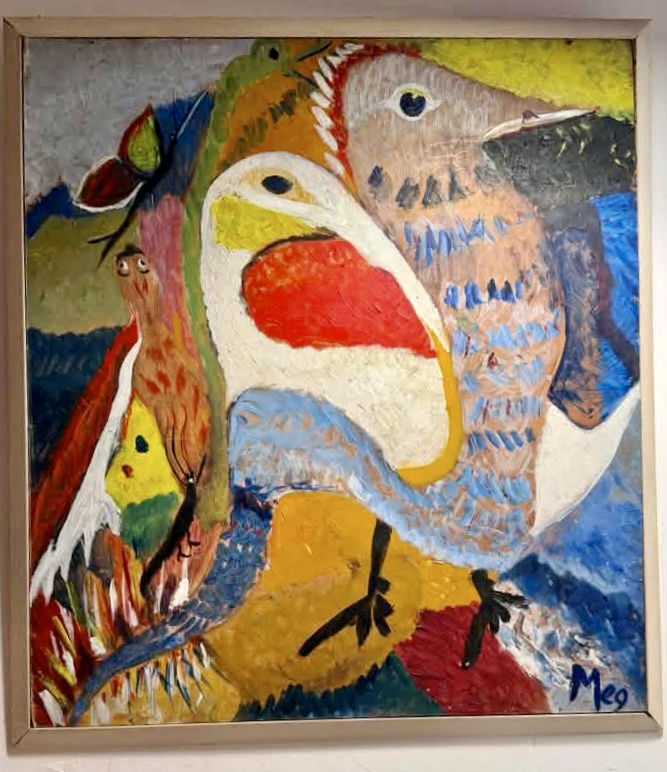
The painting Lucien Smith’s mother Margaret created in 1952 when she was 22 and called ‘Quirky Birds’. “It’s my ‘run back into a burning building’ item,” says Lucien. What would you save from a burning building?
Following my column about the reunion I had with my dad’s Jaguar, it prompted me to ponder how it is that physical things can mean so much to us.
Reader Lucien Smith got in touch because he has similar feelings about a painting created by his late mother Margaret. I had wondered if anyone still owned an object to which they had an unusually strong attachment.
“Yes I do. This painting by my mum, which she created in 1952 when she was 22. ‘Quirky Birds’ she called it and her teacher at college used a technique where they drew shapes on the canvas, then found the picture within. It’s my ‘run back into a burning building’ item.”
It is a wonderful memento of Lucien’s mother, who died in 2024. Its value to others may be negligible, but to Lucien it is priceless.
Former teacher Lynette Atkinson also got in touch after reading my Jaguar column and said: “What a fabulous story. No wonder it made you emotional. I have kept many items that were made by children I taught and they are treasures to me. A pine cone, a Christmas angel, a trinket box, a bracelet, a painted plate and many more.”
Gurli Smith, who lives in Denmark, contacted me about a different topic: “Reading your column this past Monday (A cheep of faith) made me think of something that happened a few years ago.
“I was sitting in my favourite armchair reading when I heard a loud bang. Something had hit the windowpane and left a big mark on it. I ran outside and saw a young kestrel lying on the ground. I thought it was dead and called my brother.
“By the time he arrived, the kestrel was able to hop around a bit (it had just passed out from the ‘encounter’ with the window!). However, we were afraid that it had broken a wing, so my brother placed it in a safe spot, and a few hours later it was ready to fly again.”
Gurli recalled a second memory prompted by reading my piece about tuberculosis a few weeks back. Her mother had told her this story many years ago.
“In the 1940s Mum trained as a nurse at a small hospital. It was before penicillin and if patients came to the hospital with pneumonia, it meant death for them.
“The specific story was about a young woman (a wife and mother) with pneumonia, and doctors and nurses were sure that she would die. But at a hospital in Aarhus they had penicillin which was driven by ambulance up to my mum’s hospital, and the life of the young woman was saved.
“My mum had tears in her eyes when she told the story and said that the use of penicillin was the greatest thing she had experienced as a nurse.”
We can’t imagine life without antibiotics today, and I have no doubt that they saved the life of my son when he had life-threatening sepsis at the age of three.
It makes me wonder what of life’s inventions that have appeared in your lifetime could you not live without today? Of course there are the obvious things, like the Internet, mobile phones, tablets and the like, but is there anything else you use on a daily basis that you didn’t realise you needed until it was invented?
I have a few personal treasures that will mean nothing to anyone else, but the absolute world to me. I will never forget the moment when I was in my dad’s study not long after he had died. It was the place I would go to feel close to him and on his desk was an A4 diary in which he used to plan out his time for the weeks and months ahead.
I flicked through a few pages and there, written in his distinctive hand, were the words ‘Out for dinner for Sarah’s birthday.’ My heart broke all over again when it dawned on me that he had looked forward to the occasion with no idea he would no longer be alive to enjoy it. Of course, I will never be able to throw that diary away now.
So what is your ‘run back into a burning back into a burning building’ item?
Do you have opinions, memories or ideas to share with me? Get in touch with me using the ‘Contact’ button on the top right.
This column appeared in the Darlington & Stockton Times on Friday 31st and the Ryedale Gazette and Herald on Wednesday 29th July 2026
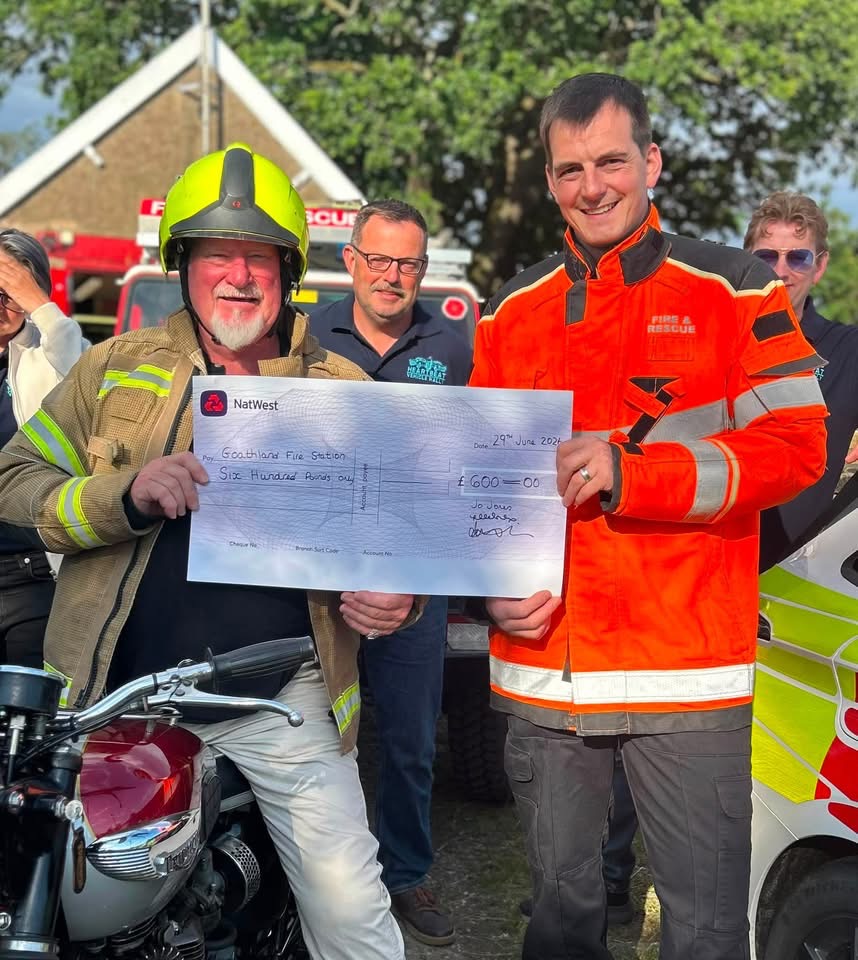
London’s Burning actor Sean Blowers presents a cheque for £600 to Volunteer On-Call Crew Manager Jack Atkinson from Goathland Volunteer Fire Station. Jack and his colleagues were part of the team who tackled the worst fire in North York Moors history last year, centred around Langdale Forest. Picture by Lee Jones.
I am still basking in the glow of another wonderful weekend in Goathland at the annual Heartbeat Vehicle Rally. We were blessed again with lovely weather and we estimate that there were around 6,000 visitors over the two days. Of course, if you read last week’s column, you will already know that my family were reunited with my dad’s old Mark 2 Jaguar, which was an absolute treat.
What I didn’t mention was that as I approached the car for the first time, there was a chap chatting with Richard James, the current owner and the man responsible for the amazing restoration. As the stranger saw me approach, he turned and introduced himself as Keith, saying: “I drove Peter Walker’s daughter Sarah to her wedding in that car!”
So I replied: “I am Sarah!” You should have seen the look on his face! He hadn’t recognised me – which I put down to the fact I was wearing a hat and sunglasses, rather that the 30+ years of aging that have taken place since! Keith was the mechanic who restored it in 1994 and revealed that he was rather stressed in that final week. But he pulled it out of the bag in time, and was thrilled to be my bridal chauffeur.
Considering how many people were gathered in once place, the rally ran very smoothly, with dozens of fans queuing patiently for ages to see the stars and the stars in turn patiently signing hundreds of autographs and posing for hundreds of pictures. This year we had four actors: David Lonsdale, who played bumbling David Stockwell, Vanessa Hehir who played mechanic Rosie Cartright, Ryan Early, who played PC Tom Nicholson and Sean Blowers, who made two memorable guest appearances and was also known for playing John Hallam in London’s Burning, an ITV series about the fire service.
Sean’s appearance was especially fitting because this year, we were delighted that he was able to hand a £600 cheque to Goathland Volunteer Fire Station, while another £600 went to the village primary school.
I was also thrilled to hear from Elsie Smith, trustee of Goathland Village Hall, who sent me a lovely message after the event having seen my family’s emotional reunion with the Jaguar. She reported that the hall did a roaring trade in teas, coffees and cakes, and so benefitted from a nice little windfall too!
Of course, there are drawbacks to hosting such a popular occasion and as ever some selfish drivers were too tight to pay the modest fee for parking (between £2 and £4.50 for a full day). In total there were four separate car parks available with bags of room, and yet a frustrating minority insisted on plonking their cars on the beautiful verges that are such an iconic part of our moorland setting. Despite advance posts on social media showing where to park, plus signage, marshalls and ‘Keep Off’ signs on the day, some people were just too ignorant to pay heed, showing no respect for the historic grazing land nor to the residents who call Goathland home.
When I stand back and look at the event, I do wonder what my dad would think of it all. I’m pretty sure he would be amazed that 16 years after the series came to an end, the fans are still loyal and passionate enough to make the effort to travel all the way to Goathland. One lady I spoke to had come all the way from Boston, USA! She loves Heartbeat, and made the trip for the first time last year. Because she enjoyed it so much, she decided to come back again.
There was one incident that shocked me though. A car went past with the passenger casually hanging her arm out of the window. In her hand was a lit cigarette.
It was one of the most thoughtless and stupidest things I saw all weekend. The moors are tinder dry, and one spark from a cigarette could lead to catastrophe.
If only those fire fighters at Goathland Fire Station – who last year participated in the exhausting battle to control the most devastating blaze in the history of the North York Moors in Langdale Forest and Fylingdales Moors – had had a polite chat with her.
I wonder what they would have said?
Do you have opinions, memories or ideas to share with me? Get in touch with me using the ‘Contact’ button on the top right.
This column appeared in the Darlington & Stockton Times on Friday 17th and the Ryedale Gazette and Herald on Wednesday 15th July 2026
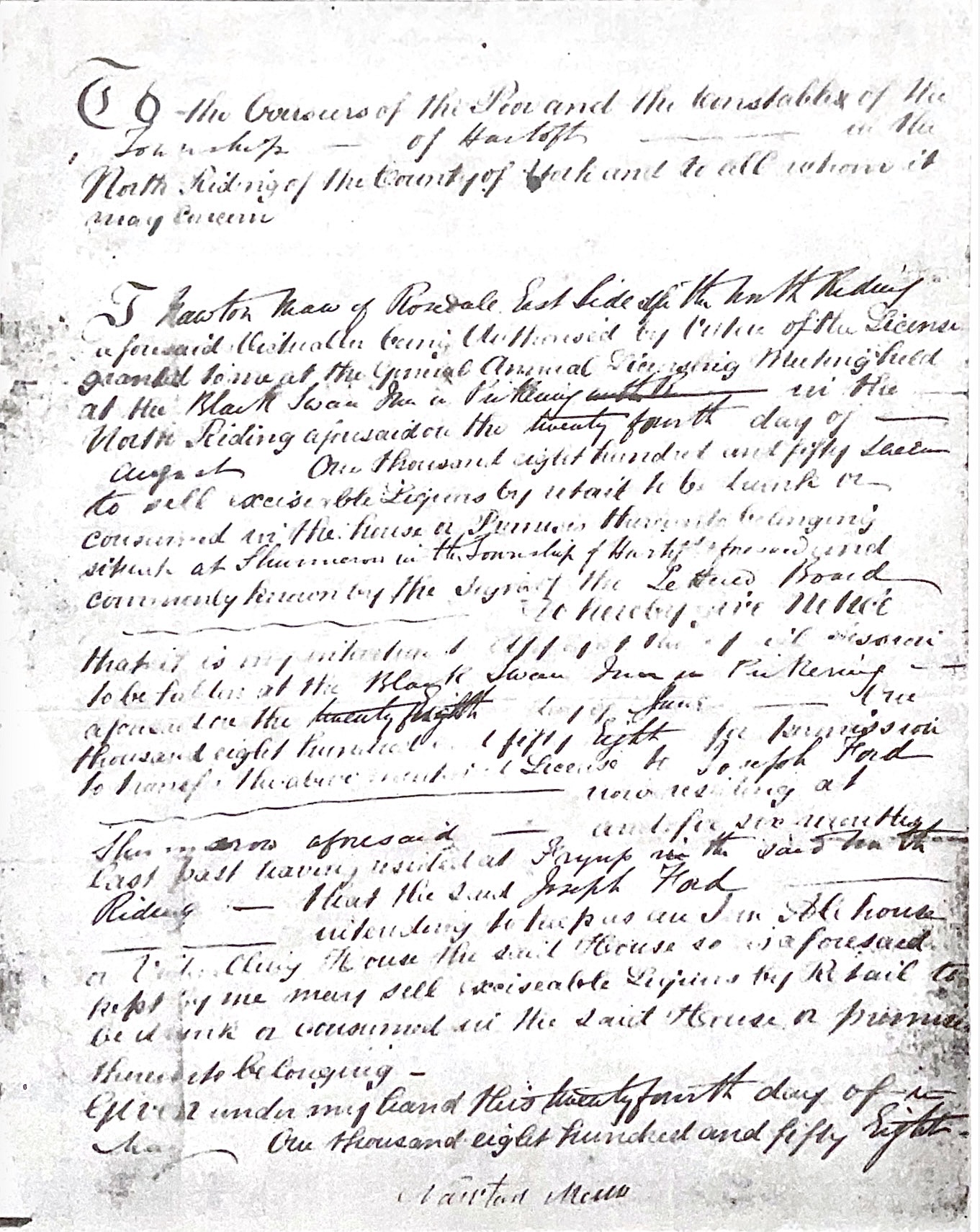
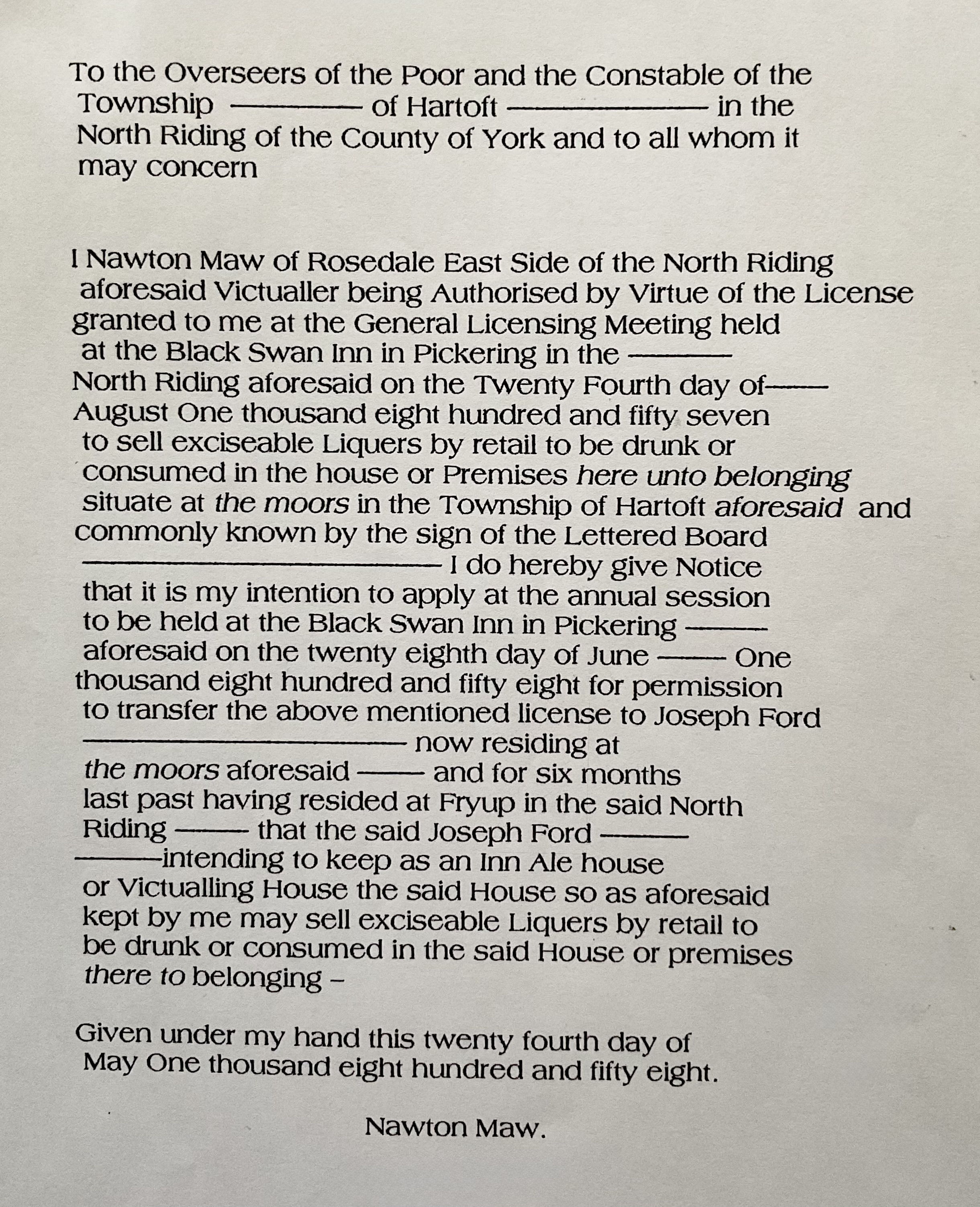
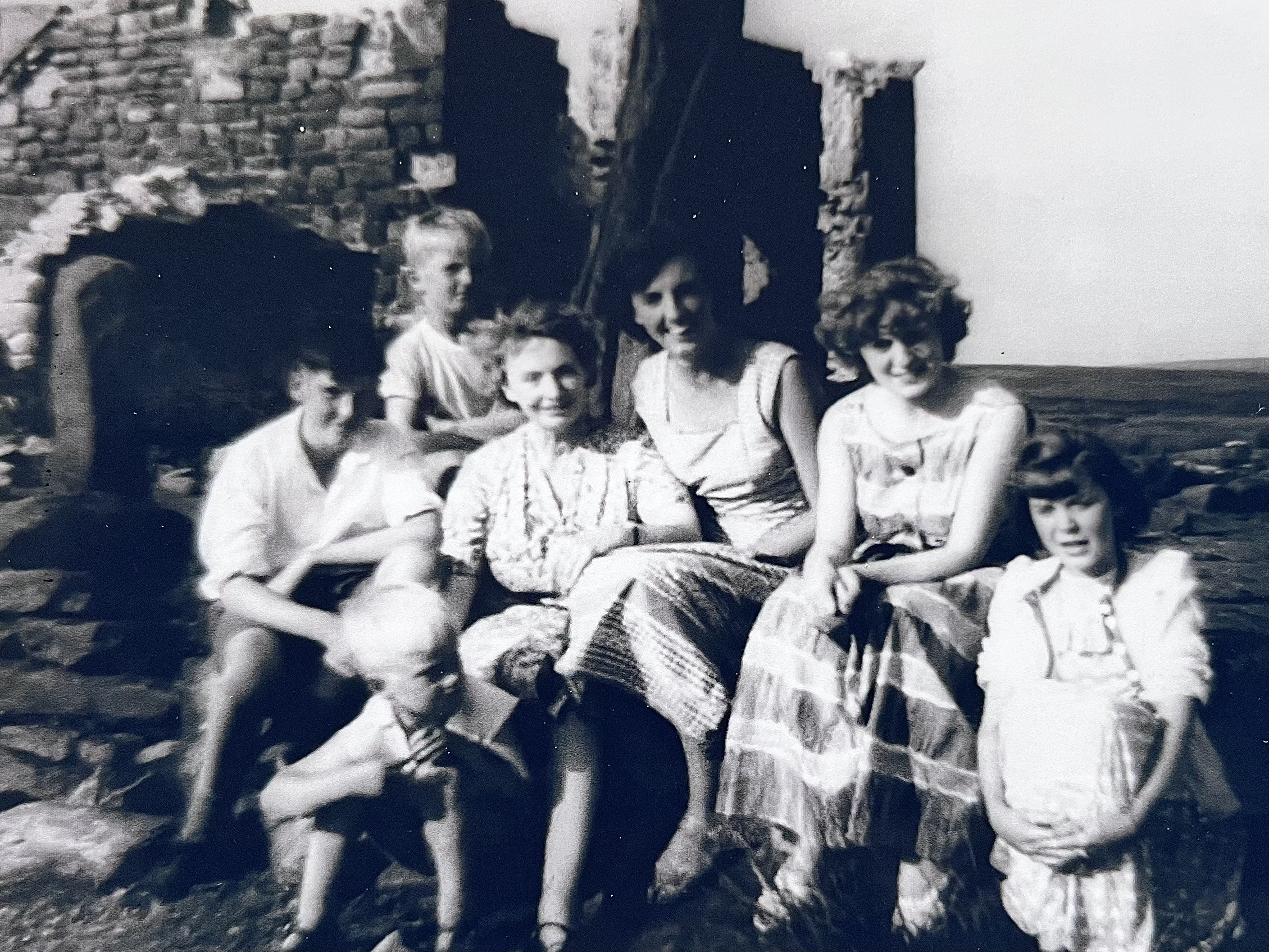
The copy of the liquor licence transferring the lease of the Lettered Board to Joseph Ford, dated ‘fourth day of May One thousand eight hundred and fifty eight’A transcript of the liquor licenceL-R Ian Ford, David Ford (back), Richard Ford (front), Ada Ford, Margaret Ford, Sylvia Ford and Eileen Roe on a family day out in about 1959. The ruins of Hamer House can be seen in the background.
I’m continuing to be surprised by how many memories my columns about Hamer Inn have jogged.
The latest contact came from reader Ian Ford. As his surname suggests, he is related to the Fords who were licensees of the inn in the mid-1800s. Ian is the cousin of David Ford, whose original message to me asking for photos of the inn sparked off this whole chain of columns. Ian is the great great grandson of Robert Ford who was born at Hamer in 1860. Robert was the son of Joseph Ford who took over the licence in 1858 and the brother of Joseph Ford Junior, who wrote a book about life on the North York Moors called ‘Some Reminiscences and Folk Lore of Danby Parish and District.’
Ian sent me copies of correspondence between himself and my dad from 2007 relating to Hamer, including some old family photos taken in the 1950s with the inn in the background, which by then was derelict but still clearly a building of some sort. As you know if you’ve read my previous columns, all that lies there today is a pile of old stones.
I’ve referred to Hamer as a property ‘of many names’ and they include The Lettered Board, The Wayside Inn, Hamer Inn and Hamer House. Ian revealed there was yet another name – Haymoor House. Surely that is its ‘posh’ name, because if you say it in a local accent, you get to Hamer (pronounced Hay-mer).
Ian included a copy of the original licence from when Joseph Ford took it over in 1858. You might recall that I mentioned that my dad had a copy of that licence:
‘Hamer’s role as an inn declined after 1870, the year a local writer called Joseph Ford was born at the remote house. His father was landlord and I have a copy of a licensing application dated 1858 in which the liquor licence of the Lettered Board was transferred to Joseph Senior.’
I searched for the licence in my dad’s files, but was disappointed when I was unsuccessful. What I didn’t know then was that there was a reason I could not find it, and that reason was revealed in the letters that Ian sent me.
Ian had contacted my dad after reading his book ‘Murders and Mysteries From the North York Moors’ in which both Joseph Fords are mentioned. He cites the tales Dad covered in the book, including those about the Lettered Board, and goes on to explain his family connection. He’d asked if he could see a copy of the old liquor licence transferring the lease to from the previous landlord to Joseph Ford.
Dad’s letter of reply states: “So far as the liquor licence for The Lettered Board at Hamer is concerned, I enclose my copy of it. It is dated 1858 and Joseph’s name was quite clear. It is an ancient photocopy – and I can’t remember where I got it from – but I doubt if it would reproduce any better on our modern equipment. As I can’t think I am likely to have any further use for it, please accept it with my compliments.”
So my dad had given it to Ian – no wonder I couldn’t find it! Yet another minor mystery solved thanks to you wonderful readers.
Incidentally, Ian reminded me that he had been in touch with me a couple of years ago regarding Joseph Pilmoor, the illegitimate son of Joseph Foord, the groundbreaking hydro engineer who came up with ways of ensuring remote moorland communities were served with fresh running water. Foord had had a liaison with a lady called Sarah Pilmoor from Fadmoor near Kirkbymoorside, and as a result, he was thrown out of the Quakers. Born in 1739, his son, inspired by founder of Methodism John Wesley, grew up to be one of the most successful preachers who travelled to the USA to recruit followers. Today there are around six million Methodists 30,000+ churches in the USA. He has countless plaques and memorials dedicated to him in many states and is described by them as a ‘pioneer missionary’. A remarkable feat for a lad from North Yorkshire.
Ian thinks both families might be connected, and indeed his branch used to spell their surname ‘Foord’ until the 19th century. Does anyone out there know for sure?
This column appeared in the Ryedale Gazette and Herald on 8th and the Darlington and Stockton Times on 10th April 2026
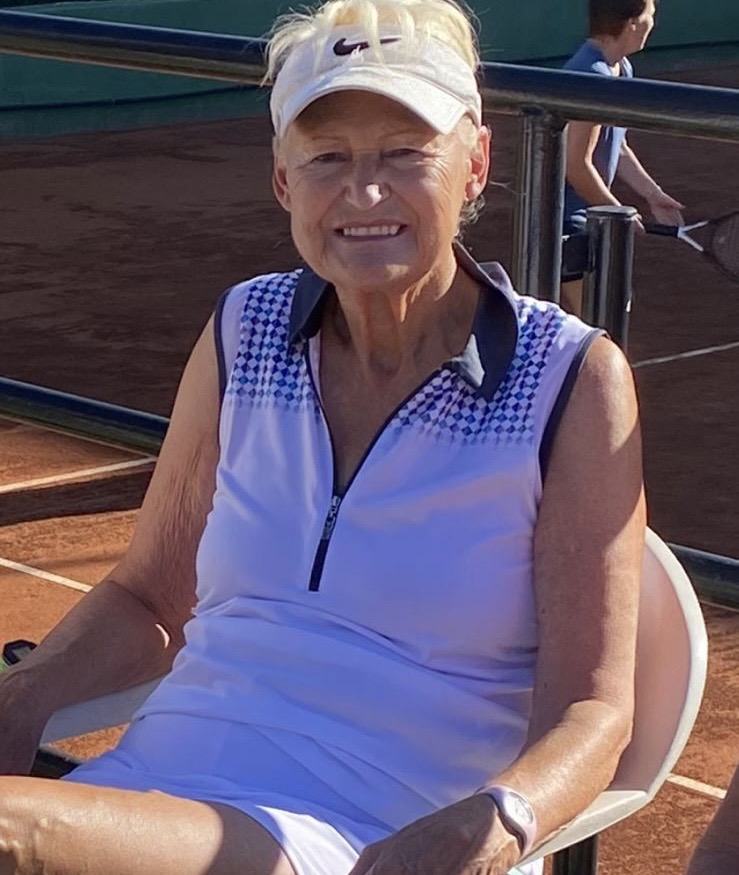
Kath Brammah was fit as a fiddle until she broke her hip playing padel tennis
In my New Year column I featured a number of funny quotes from famous people about diet and exercise, and ended with the following anonymous philosophical quip:
“Eat Right. Exercise. Die Anyway.”
Clare Proctor got in touch to say: “That last quote sums it up for me. An old lady once said to me that her doctor kept telling her to do all sorts of things to help her live to 100, to which she said, ‘Why? My friends are already dying, my family have pretty much gone, so why do I want to live to 100, alone and dribbling in a care home?’ She may have a point…although, the older you get, the younger 100 looks!”
Lucien Smith added: “My mum lived to 94 and by then she had outlived almost all her friends of her own age. She still had lots of younger friends, but it’s not quite the same…That generation see their friends either passing away or confined to a care home. It can’t be easy!”
I’m sure we’d all love to live longer IF we could guarantee not to have to deal with the kinds of physical and mental ailments that we witness our parents’ and grandparents’ generations suffer, but sadly, the older I get, the more I realise that those who do manage to remain spritely are the exceptions rather than the rule.
One such person is my friend’s mum Kath. Until a week ago, 77-year-old Kath was as fit as a fiddle. Sadly, she took a tumble and broke her hip. The thing is, when she took that tumble she was racing like a teenager around a padel tennis court. When the hospital doctor asked how much physical activity she did, she replied that she played tennis and padel twice – sometimes even three times – a day! She also fit golf and countryside walks into her weekly calendar,
I don’t know many 47-year-olds who can manage that level of activity without physical repercussions, let alone 77-year-olds. But as I mentioned, people like Kath are the exception. Thankfully, she is back home and recovering.
I try to keep fit and, like Kath, love playing padel. You may have noticed courts springing up all over, and it seems the nation has become hooked on it. It’s highly addictive, but I am one of the many of a certain age who have been thwarted by their body letting them down.
Just before Christmas my right foot suddenly stopped working normally. I couldn’t lift it upwards, couldn’t wiggle my toes and was getting tingling sensations down that leg.
I was diagnosed with foot drop, something new to me. At first the GP thought it was a compression of the common peroneal nerve which runs off the sciatic nerve, down your leg and wraps around the calf bone. It controls the muscles that operate the ankle, foot and toes.
When I am injured, I turn to my amazing chiropractor to set me right and get me back on court (I’ve lost count how many times I’ve needed his services!). A chiropractor specialises in treating musculoskeletal issues like neck and back pain, and understands the relationship between the nervous system and your bones and muscles. I happened to mention that the tingling sensations had started to appear on the other side of my body too and, alarmingly, he sent me straight to A&E.
There’s a condition called Cauda Equina Syndrome. The cauda equina is a collection of nerves at the base of the spine that fan out like a horse tail, which is what ‘cauda equina’ means in Latin. In rare cases these nerves can become compressed, for example by a slipped disc. It is an emergency situation, and if you arrive in A&E with these symptoms, you will need an immediate MRI scan followed by treatment.
To my utter relief, my scan showed that the compression was further up my spine affecting the a sciatic nerve, and therefore not an emergency. Although I can’t play the sports I love at the moment, the outlook is positive for recovery, as long as I do certain exercises and wear an ankle brace to help with my floppy old foot.
I shall let you if I make it back to the padel court!
This column appeared in the Ryedale Gazette and Herald on 28th and the Darlington and Stockton Times on 30th January 2026
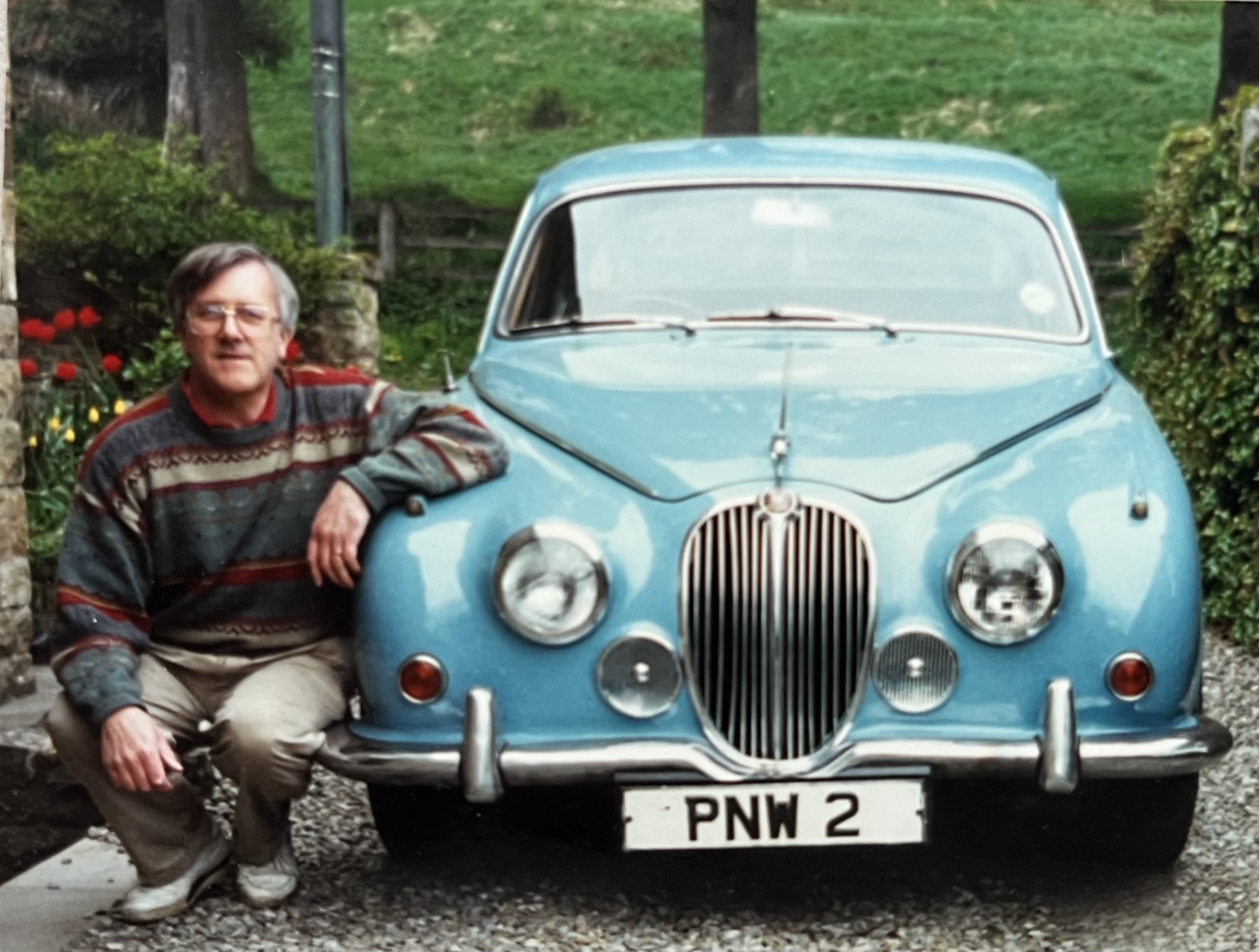
It’ll be emotional when I am reunited with my dad’s old Jaguar at the Heartbeat Vehicle Rally in June. I’ve not seen it since 2017. If you’d like to help me by sponsoring the event in some way, please get in touch with this paper or through my web page.
A couple of weeks ago I was looking for information about a needlework sampler that featured York Minster, as well as information about a group of girls creating samplers around the village of Lastingham. I’d been contacted by Sarah Duce whose great aunt Hannah Stonehouse completed a different sampler in 1808 and which was one of four about which Sarah was trying to find out more. “I believe one might have been by a Mary Wilson who was born around 1791 in Hartoft, and wondered if there might have been some sort of connection…I believe my Great Grandma x5, Sarah Harding (nee Smith), may have been the teacher of these girls…She was schoolmistress of Lastingham following the death of her schoolmaster husband from consumption at the young age of 30.”
The Minster sampler was sewn by a girl called Ann Raw and I wondered if she had actually been sitting in front of the building to create it. Reader Gillian Hunt contacted me to say: “The York Minster sampler – same motif on another sampler, which suggests the girls were following a design by someone else – maybe by their needlework teacher?” It means they probably did it in a classroom setting.
Gillian specialises in researching samplers like this, and two years ago was very helpful in relation to helping me understand the significance of the needlework motifs on one that hung in my mum’s kitchen by a young girl called Hannah Raw. Is she related to Ann Raw? We don’t yet know.
Gillan informed me in 2023: “Hannah’s sampler has two sets of initials after the date – MR and what looks like ER…If ER is in dark thread, they are most likely to have died before Hannah completed her sampler.”
Gillian discovered that the initials represented Hannah’s parents Matthew and Ellis Raw. Ellis’s initials were in a dark thread and further research confirmed she had indeed passed away. Matthew Raw died a few years after the sampler was created, when Hannah was still a teenager.
Gillian’s help, among others, led us to being able to fill out much of Hannah’s life story. Best of all, we found a living relative, a direct descendant of Hannah’s brother John Raw. My ultimate goal is to find a living relative of Hannah herself.
On another note, I took a trip up to Goathland last weekend to meet the posse who are responsible for organising the annual Heartbeat Vehicle Rally. This year’s event is scheduled for the weekend of 27th and 28th June.
The rally has boomed over the years, and last time attracted around 6,000 visitors over the two days. They flocked to the village to meet star guests and to study the collection of wonderful vintage vehicles, some of which appeared in the TV show. The local businesses do a roaring trade, with hotels, B&Bs and holiday homes fully booked many months in advance. The local cafes and shops are overflowing, and with the car parks bursting at the seams, some prefer to arrive by steam on the North York Moors Railway. It brings a huge financial boost into the area, and yet those who organise it don’t make a penny from it (And, for the record, neither does my family!).
It’s a truly wonderful, family occasion, and those involved in its planning put in hours of hard work, as well as their own money, all for the love of Heartbeat. Any profits raised are donated to Goathland Primary School.
As the event grows in size, the work and challenges, both financial and practical, increase. This year we are looking for sponsorship to help with the mounting costs involved. Please contact me via this paper or my web page if you are willing to help. I will also be knocking on a few business doors over the coming weeks as the event looms.
This year there is one particular vehicle that I cannot wait to see. It is my dad’s very own vintage Mark II Jaguar. That car had been part of our family since I was a child, but sadly we had to sell it in the wake of his death in 2017. I thought I’d never see it again. But now it’s been found and is coming to the rally.
It’s going to be one heck of an emotional reunion!
Do you have opinions, memories or ideas to share with me? Get in touch with me using the ‘Contact’ button on the top right.
This column appeared in the Darlington & Stockton Times on Friday 27th and the Ryedale Gazette and Herald on Wednesday 25th March 2026
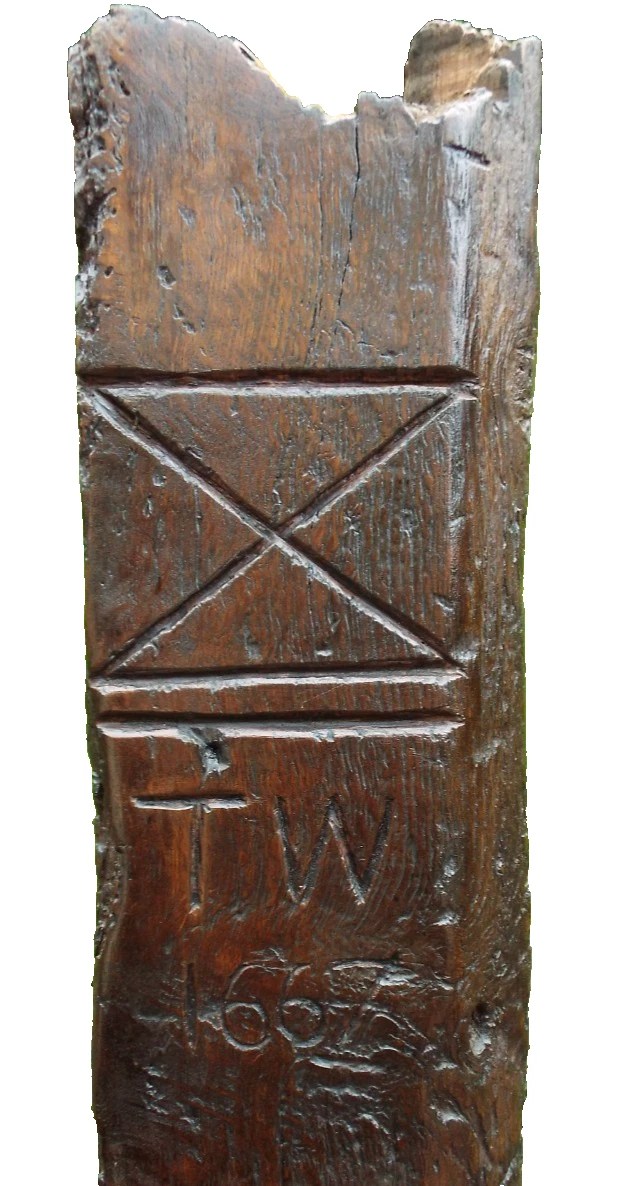
The picture of a witch post sent to me. By Stanislav Stefane
I never know who is going to contact me, nor where they come from, and so I was intrigued when I received the following message from a gentleman called Stanislav Stefane:
“Will you be publishing your father’s papers on the so-called witch posts? There is limited information available online, and I find them fascinating. I am also interested in one that is for sale, dated 1667. Is there perhaps an example with this date mentioned in your father’s papers?”
I replied to him that Dad had composed a whole book about them but sadly died before the final draft made it into print. At the moment there are no plans to publish it, but his extensive historical research is still there in his study. Dad had a very strong Catholic faith and his findings prompted him to believe that many so-called witch posts were not connected to witches at all, but were in fact related to the famous Catholic Martyr of the Moors, Father Nicholas Postgate.
I discovered that Stanislav was based in Slovenia, and asked him what sparked his interest.
“I collect carved oak antiques from the 17th and 18th centuries, mainly pieces that have a carved date and the initials of their owners. By chance, I came across a reference to the so-called ‘witch post,’ which also occasionally bears a carved date. I find the story surrounding them most fascinating. There is one currently for sale, and I thought that perhaps it might have been known to your father. I am not sure whether the post is even original, but if it had been seen by your father, there would be no doubt about its authenticity. I hope you will publish your father’s findings on them. They are probably among the most mysterious and misunderstood of British oak antiques.”
It sounds like Stanislav may have caught the ‘witch post’ bug which affected my dad in the later years of his life, and he would certainly agree with Stanislav’s use of the term ‘misunderstood’. Having started to research them, Dad became more and more fascinated, and began to believe that many of these ‘witch posts’ were not to ward off evil but to indicate ‘safe houses’ for persecuted Catholics.
Even though the full book has not been published Dad did produce an interim pamphlet in 2008, in which he explains why he became so captivated by the topic.
“I began my research more than a year ago but the subject has developed so greatly and produced so many surprises that I have still not completed my investigations…The task is almost complete and it has proved a most enjoyable and enlightening experience.”
Among his files I found a letter to an interested party in which Dad admits that he made mistakes in earlier writings due to the existing information upon which he was relying being incorrect or inaccurate, of which he was unaware at the time. He only realised this once he’d embarked on his own quest to find out more.
“My research into witch posts has revealed quite a lot of errors on my part (and on the part of earlier writers). I hope my recent efforts will rectify some of those – I relied too heavily on earlier works by authors I thought were infallible!”
As yet I have been unable to find Stanislav’s particular post in my dad’s files, but I will keep looking. It has made me think that I ought to do something about all this information that Dad put so much time and effort into researching.
On another note, Katherine Hill has been back in touch after attending a reunion of the Bean family. Katherine contacted me after reading a column where I mentioned Peep o’Day Farm near Husthwaite. She thought her grandfather, Samuel Bean, may have been born there.
A posse of Beans gathered on Sunday March 1st, including her 99-year-old aunt Sylvia, who was a Bean until she married in 1953. “It was a very enjoyable time reminiscing about our childhood at Burton Garth, Knapton.”
Thanks to the endeavours of some very helpful readers, particularly Rex North, I was able to pass on much more information about the Bean family history to her. I wish Katherine all the best with her continuing research and hope there are more Beans yet to be discovered!
Do you have opinions, memories or ideas to share with me? Get in touch with me using the ‘Contact’ button on the top right.
This column appeared in the Darlington & Stockton Times on Friday 20th and the Ryedale Gazette and Herald on Wednesday 18th March 2026