What would you save?

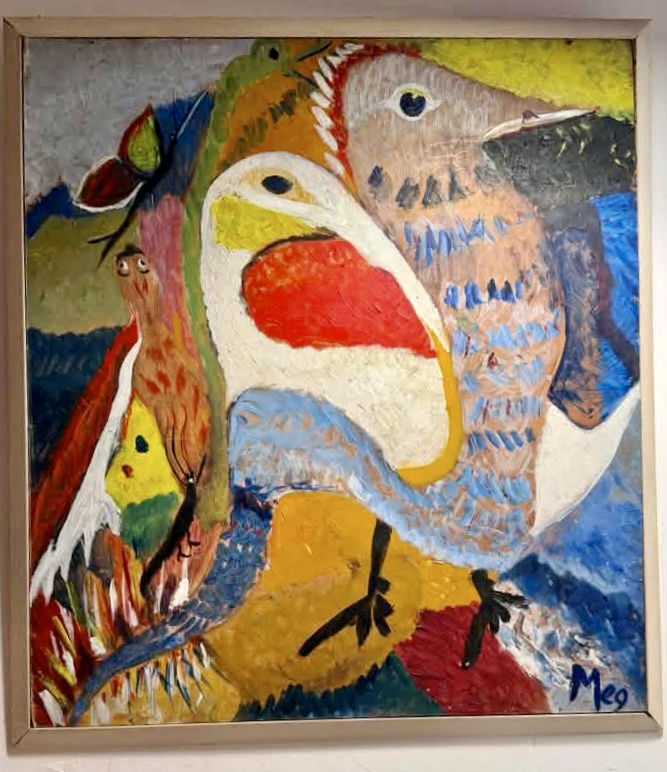
The painting Lucien Smith’s mother Margaret created in 1952 when she was 22 and called ‘Quirky Birds’. “It’s my ‘run back into a burning building’ item,” says Lucien. What would you save from a burning building?

Following my column about the reunion I had with my dad’s Jaguar, it prompted me to ponder how it is that physical things can mean so much to us.

Reader Lucien Smith got in touch because he has similar feelings about a painting created by his late mother Margaret. I had wondered if anyone still owned an object to which they had an unusually strong attachment.

“Yes I do. This painting by my mum, which she created in 1952 when she was 22. ‘Quirky Birds’ she called it and her teacher at college used a technique where they drew shapes on the canvas, then found the picture within. It’s my ‘run back into a burning building’ item.”

It is a wonderful memento of Lucien’s mother, who died in 2024. Its value to others may be negligible, but to Lucien it is priceless.

Former teacher Lynette Atkinson also got in touch after reading my Jaguar column and said: “What a fabulous story. No wonder it made you emotional. I have kept many items that were made by children I taught and they are treasures to me. A pine cone, a Christmas angel, a trinket box, a bracelet, a painted plate and many more.”

Gurli Smith, who lives in Denmark, contacted me about a different topic: “Reading your column this past Monday (A cheep of faith) made me think of something that happened a few years ago.

“I was sitting in my favourite armchair reading when I heard a loud bang. Something had hit the windowpane and left a big mark on it. I ran outside and saw a young kestrel lying on the ground. I thought it was dead and called my brother.

“By the time he arrived, the kestrel was able to hop around a bit (it had just passed out from the ‘encounter’ with the window!). However, we were afraid that it had broken a wing, so my brother placed it in a safe spot, and a few hours later it was ready to fly again.”

Gurli recalled a second memory prompted by reading my piece about tuberculosis a few weeks back. Her mother had told her this story many years ago.

“In the 1940s Mum trained as a nurse at a small hospital. It was before penicillin and if patients came to the hospital with pneumonia, it meant death for them.

“The specific story was about a young woman (a wife and mother) with pneumonia, and doctors and nurses were sure that she would die. But at a hospital in Aarhus they had penicillin which was driven by ambulance up to my mum’s hospital, and the life of the young woman was saved.

“My mum had tears in her eyes when she told the story and said that the use of penicillin was the greatest thing she had experienced as a nurse.”

We can’t imagine life without antibiotics today, and I have no doubt that they saved the life of my son when he had life-threatening sepsis at the age of three.

It makes me wonder what of life’s inventions that have appeared in your lifetime could you not live without today? Of course there are the obvious things, like the Internet, mobile phones, tablets and the like, but is there anything else you use on a daily basis that you didn’t realise you needed until it was invented?

I have a few personal treasures that will mean nothing to anyone else, but the absolute world to me. I will never forget the moment when I was in my dad’s study not long after he had died. It was the place I would go to feel close to him and on his desk was an A4 diary in which he used to plan out his time for the weeks and months ahead.

I flicked through a few pages and there, written in his distinctive hand, were the words ‘Out for dinner for Sarah’s birthday.’ My heart broke all over again when it dawned on me that he had looked forward to the occasion with no idea he would no longer be alive to enjoy it. Of course, I will never be able to throw that diary away now.

So what is your ‘run back into a burning back into a burning building’ item?

Do you have opinions, memories or ideas to share with me? Get in touch with me using the ‘Contact’ button on the top right.

This column appeared in the Darlington & Stockton Times on Friday 31st and the Ryedale Gazette and Herald on Wednesday 29th July 2026

Mutual response to TB epidemic

The 1910 postcard sent to his wife Lolly from Benenden Sanatorium patient Gilbert showing snow on the floor and on his bed thanks to the windows in his room being left wide open, no matter what the weather. It was the prescribed treatment for TB in the days before antibiotics became widely available. Picture from the Benenden Health archives.


I was at home chatting to my mum recently, and she was reminiscing about days gone by.

One story she mentioned was very sad indeed. A local family’s 10-year-old son had fallen over while playing and he suffered a nasty graze due to the rough road surface. He developed an infection and died. Mum is not sure exactly when it was, but thinks sometime in the 1930s when antibiotics were not readily available.

It’s startling to think that something as everyday as a child falling over could lead to a family losing their child. Now, if a wound becomes infected, your doctor will prescribe you antibiotics which should quickly clear it up. Today’s parents rarely need to worry if their child has a minor mishap in the playground.

Although some forms of antibiotic were discovered earlier, it was Alexander Fleming’s discovery of penicillin in 1928 that led to a revolution in healthcare. Antibiotic use really took off in the 1940s after chemists Ernst Chain and Howard Florey developed a way to purify penicillin enabling it to be mass produced.

Initially it was strictly rationed and during World War II was restricted to the military, but once the war was over, it became available to the general public via their local doctors. However, it would still have only been available to those who could afford to buy it. Not until the introduction of the National Health Service in 1948 was the whole population able to benefit.

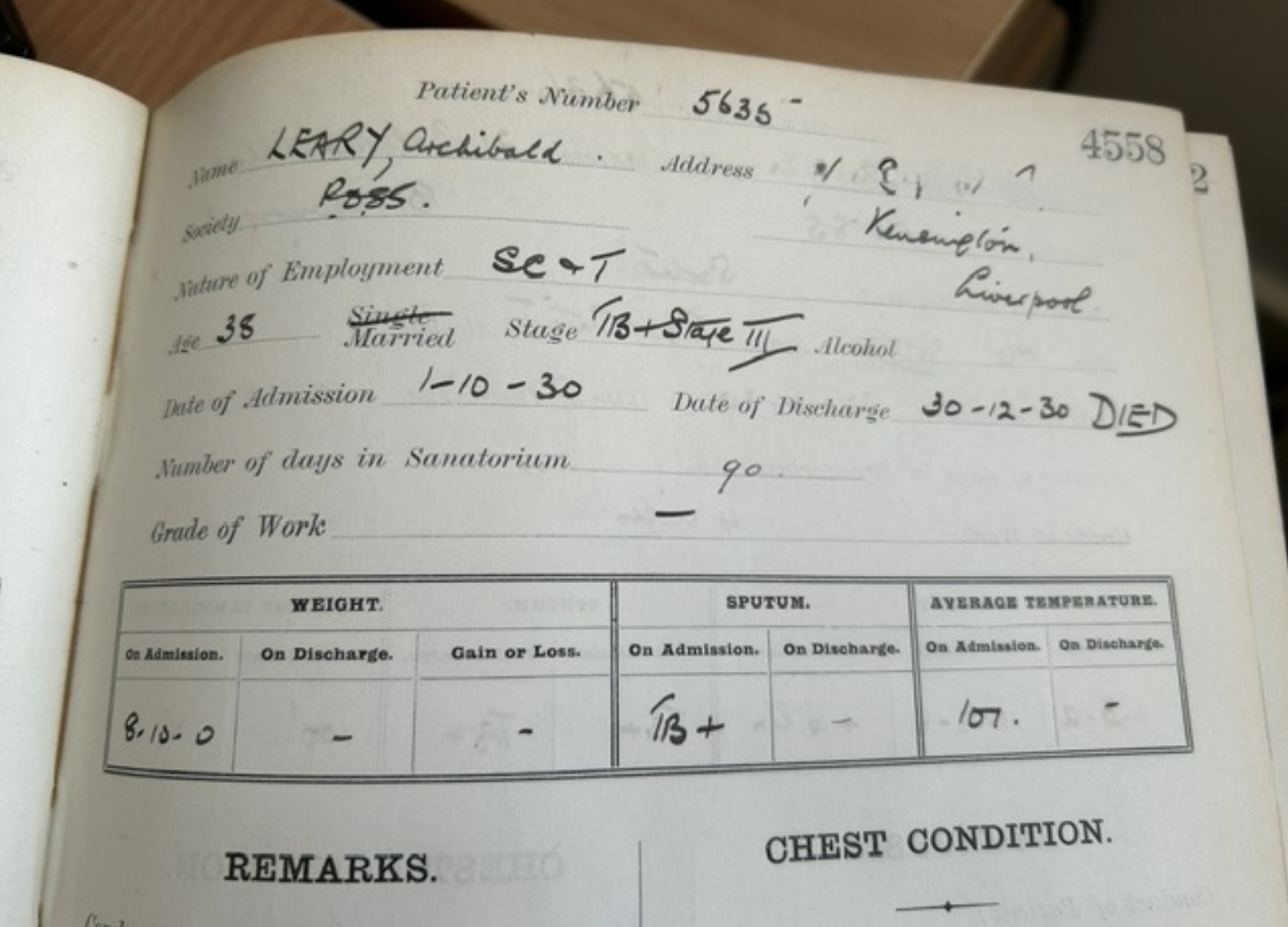
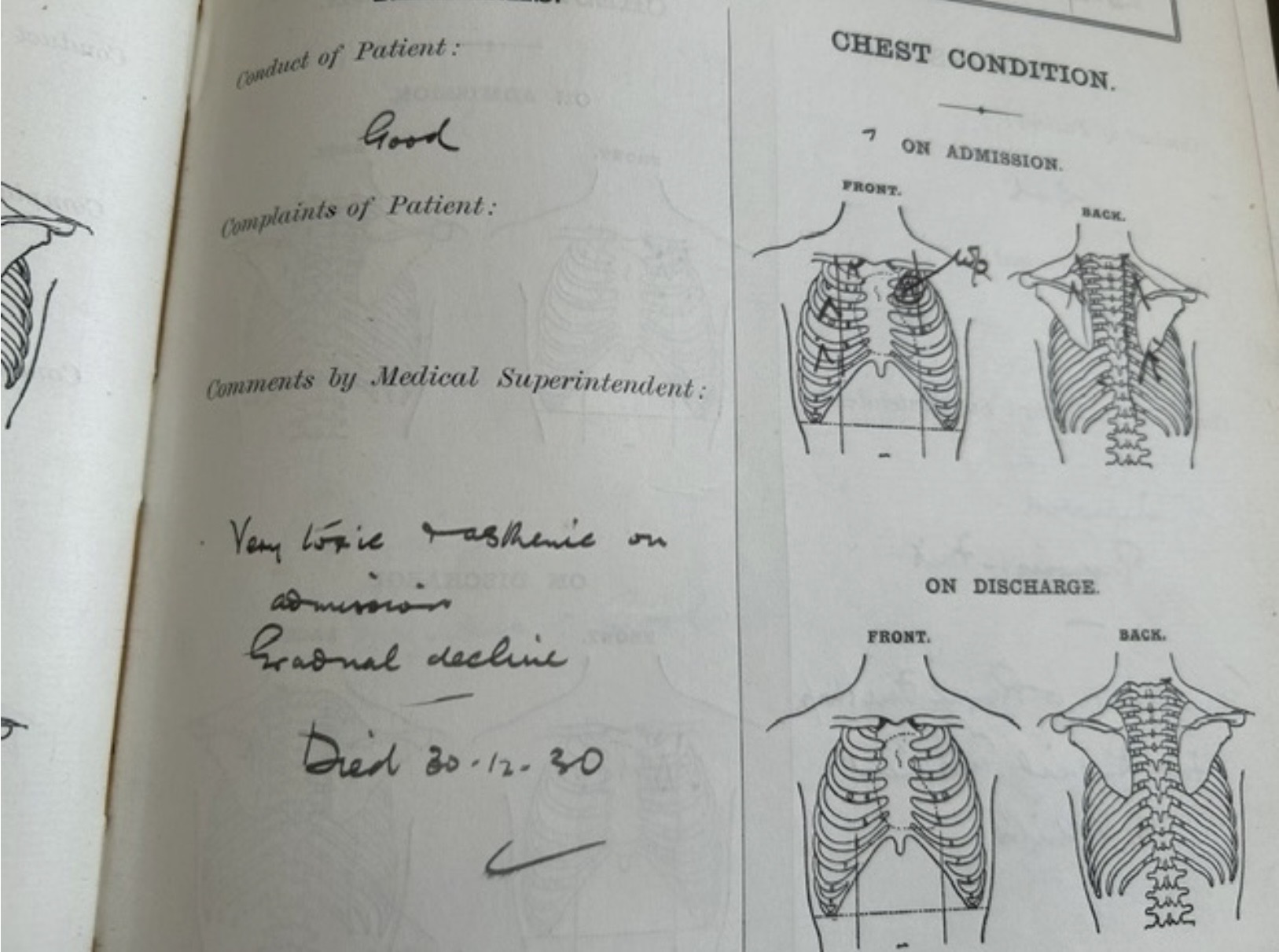
In the early 2000s, I was commissioned to write the history of the Benenden Healthcare Society, a mutual health organisation originally established to combat high rates of deaths from Pulmonary Tuberculosis among postal workers. My research on that book taught me the devastating consequences TB had on the service and its employees.

In the late 1800s, Post Office clerk Charles Garland was appalled at the plight of his many colleagues who were contracting and dying from tuberculosis. In 1900, about 300,000 people nationally were suffering, but only 22,000 a year could be treated. The dusty, cramped offices in which sorting clerks and telegraphists worked were ideal conditions for the airborne disease to flourish. These employees earned just a few pounds a week and could not afford to pay for healthcare. Even if a worker did take time off for treatment, it meant no income for their family, so there was enormous pressure for them to return to their jobs, which they often did before they were fully cured. This meant they would continue to infect co-workers, and would likely die from the disease anyway.

Garland suggested a ‘mutual’ way of helping his colleagues. If he and the thousands of his fellow Post Office employees each contributed a small amount of their wages into a fund, they could raise enough money to help those who contracted TB.

His idea took off, and his new society was able to fund the building of a sanatorium near the village of Benenden in Kent which welcomed its first Post Office patients in March 1907. It was long before an effective cure for TB was found, so the main treatment was rest, fresh air and hope. Patients would be wheeled outside in their beds every morning, no matter how cold it was, and doors and windows remained open day and night. In 1910, one long suffering patient wrote a postcard to his wife: ‘Dear Lolly. This picture shows the result of the snow storm I told you about some time back. I did not sleep so cold as you might think it was, colder last night than I have ever known it to be here. With fondest love from Gilbert.’

Receiving treatment at the sanatorium meant employees did not return to work until they were fully cured, and thus infection rates reduced. However it was not until the early 1950s that fewer patients meant empty beds and the effectiveness of antibiotics on TB were finally being felt. The Society refocussed its core services away from TB and towards things like cancer and diagnostic consultations.

TB is still around today, although much less prevalent in the UK. It used to be known as the ‘artists’ disease’ thanks to fact that several writers, painters and composers succumbed to it, most notably Emily and Anne Bronte, Franz Kafka, Chopin, Modigliani and George Orwell.

Do you have opinions, memories or ideas to share with me? Get in touch with me using the ‘Contact’ button on the top right.

This column appeared in the Darlington & Stockton Times on Friday 19th and the Ryedale Gazette and Herald on Wednesday 17th June 2026