Fishing for the answer


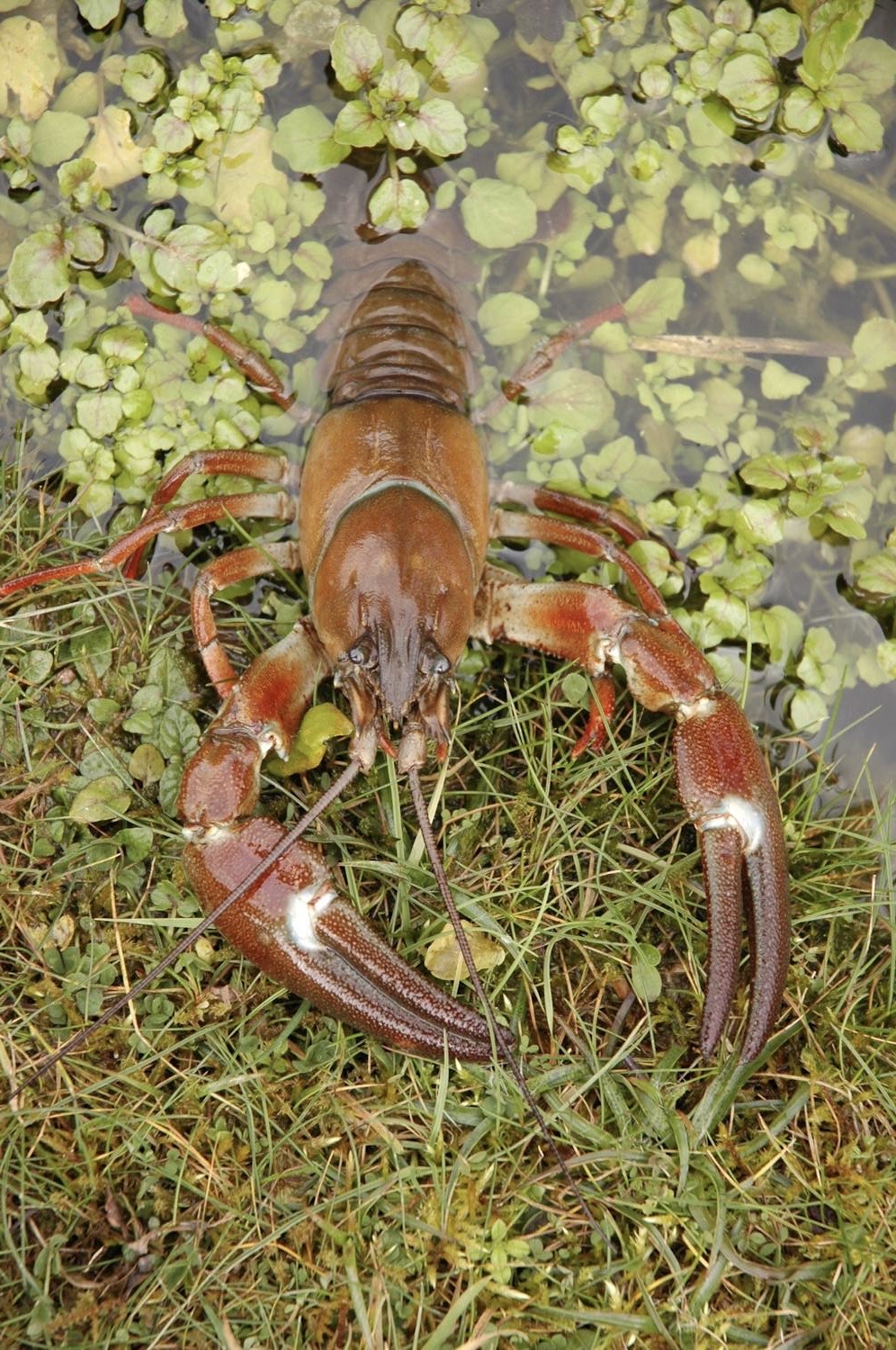
The aggressive and non-native signal crayfish with its distinctive flash of white at its claw joint. This voracious beast is driving our native species towards extinction. Picture from the Non Native Species Secretariat website.

As I mentioned last week, I came across a reserve for the white-clawed crayfish on a recent walk near Threshfield Quarry in the Yorkshire Dales where information boards explained the threat from its foreign cousin, the signal crayfish. The reserve was a small pond designed with the specific needs of the crayfish in mind such as places to hide from predators, the right food, and of course, no sign of the dastardly enemy.

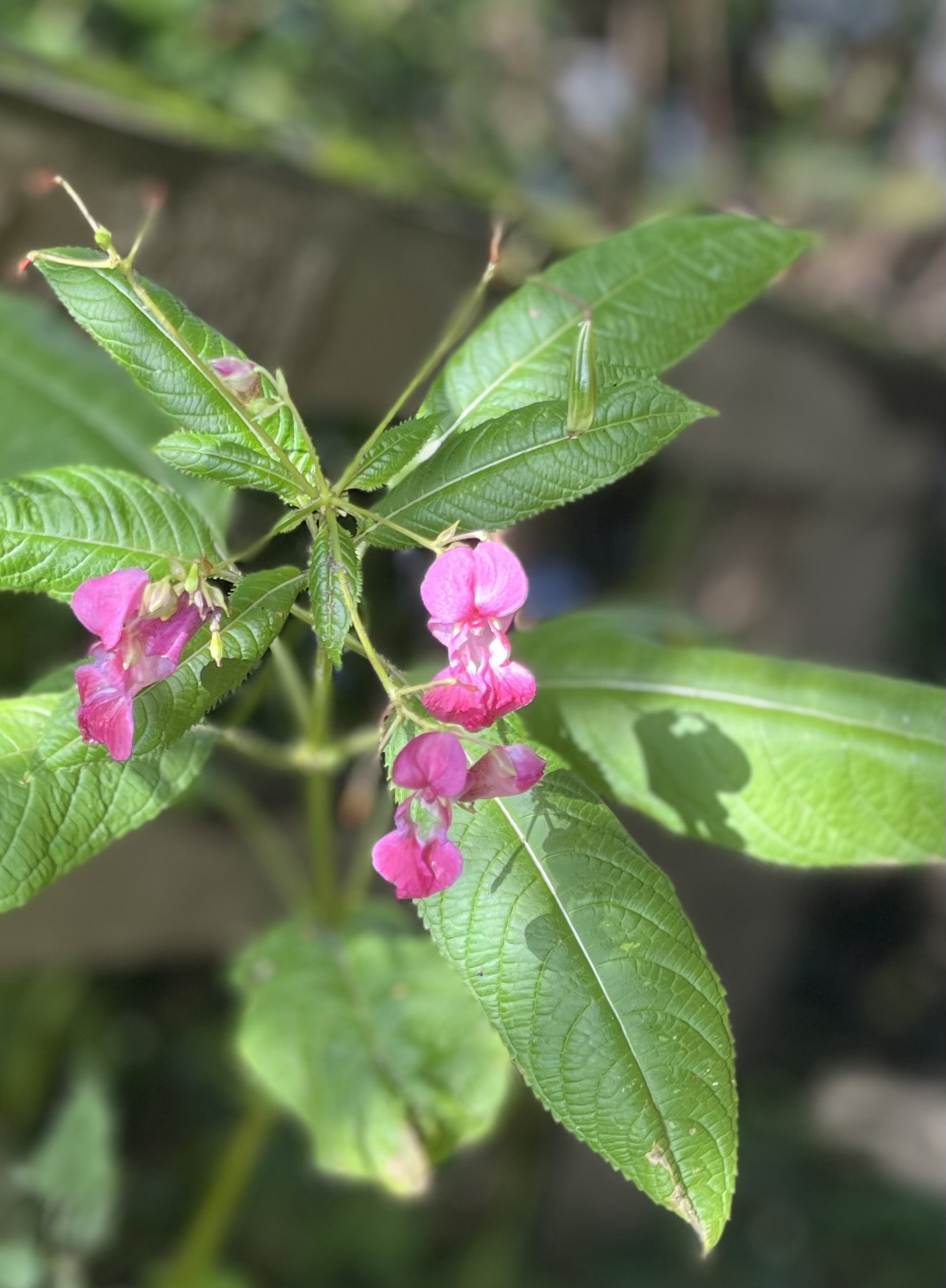
This problem was mentioned by reader John Aston from Thirsk who listed it among a number of invasive plant and animal species affecting our waterways. He’d read my columns about the troublesome invader, Himalayan Balsam, which prompted him to get in touch.

On that note, you may remember that it was the appearance of Anna on The Great British Sewing Bee TV programme that sparked a whole series of columns on this particular invasive species. Anna had highlighted the issue by featuring the pretty pink bloom on an outfit she had created and I was rooting for her because not only was she exceptionally creative, but she came from our very own York. I watched the final last night and guess what? She won! Go Anna!

The white-clawed crayfish is our only native species of crayfish and populations have been decimated by its bigger and brasher American counterpart. This vicious marauder was brought over from the north-west USA in the 1970s and 80s to become a delicacy on fine dining restaurant menus.

Demand led to commercial farms breeding them, but what they did not take into account was that, unlike salmon and trout which, due to a distinct lack of limbs, obligingly remained confined to their ponds, these crafty crustaceans had legs and therefore were able to climb out of the ponds and amble to freedom. If they couldn’t escape over land then, thanks to their scarily big sharp claws, another option was to burrow into the muddy banks until they were beyond the boundaries of the farm. Failing that, option three was to scuttle into the water pipes feeding the pond (which they did to protect themselves from predators) to find that these pipes led somewhere, and so they kept on scuttling, ultimately finding themselves at the opposite end. With one splash they were frolicking in open water.

Once liberated, these prolific breeders began to make whoopee, kicking the smaller, more passive and less randy native white-clawed crayfish out of their homes, leaving them exposed to hungry otters and that other ‘liberated from breeding farms’ pest, the mink. But that was not all – the poor white-clawed crayfish were left with very slim pickings for food, as the greedy Yanks were always first to the table, and just for good measure they also infected their British counterparts with the delightful ‘crayfish plague’ for which they had no resistance due to the fact they’d never been exposed to it before. It was a crayfish calamity which is still having repercussions today.

Round of applause then for those short-sighted idiots who brought signal crayfish over here without a thought for the potential impact on our one and only native species. The scientific blinkers were on, wilfully ignoring past disasters caused by introducing invasive species into the country in the vain hope that all would be OK; that a crayfish wouldn’t think to use its legs to simply crawl to pastures new. How could that be? The American mink catastrophe was still at the forefront of many people’s minds too (brief summary – American mink were imported and bred for their fur. They also escaped their farms through inadequate security and a few well-meaning but dim anti-fur campaigners who thought setting them free was a good idea. Our now almost extinct native water vole would beg to differ).

There are some very hardworking organisations and volunteers who are desperately trying to help these threatened species survive, but unless the invasive predators are brought under control, it is highly unlikely that our freshwater crayfish or our water vole will ever recover.

So if on your travels you see a white-clawed crayfish reserve, also known as an ‘ark’, then stop a while and take time to read those information boards explaining what the conservationists are trying to do. And hopefully, one day, we will learn from our past mistakes.

One day.

Do you have opinions, memories or ideas to share with me? Get in touch with me using the ‘Contact’ button on the top right.

This column appeared in the Darlington & Stockton Times on Friday 25th and the Ryedale Gazette and Herald on Wednesday 23rd September 2026
Experts sowing the seeds of change

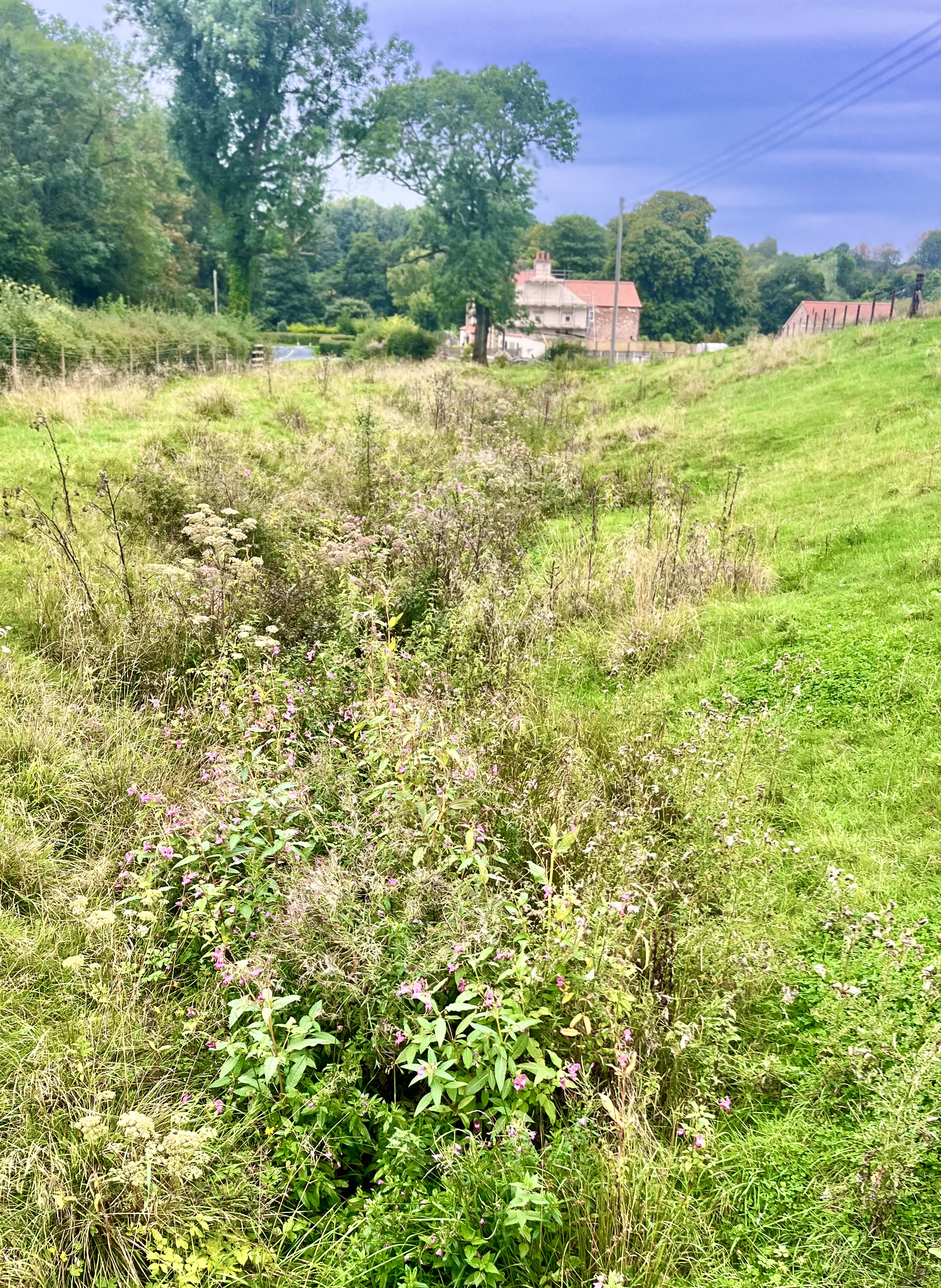
The invasive Himalayan Balsam is colonising the banks of our streams and rivers leading to erosion and the decline of native insects and plants. But experts have told me how it should be tackled

My plea for specialist advice on how to tackle Himalayan Balsam has borne fruit. Reader Janice Brabban owns some woodland near Darlington and was horrified to discover it had been invaded by the troublesome plant. She was having difficulty finding out the best way to deal with and dispose of it, and felt she hadn’t received consistent advice from the places she had tried so got in touch with me.

Thankfully, help has come from a proper expert, in the form of Chloe Lawrence, Invasive Species Project Manager at Tees Rivers Trust, who explained that there isn’t one single body with responsibility making the situation more complicated. “Landowners, under the Wildlife and Countryside Act, are responsible for ensuring they don’t spread onto other land, although they don’t have to eradicate them. Councils and local authorities are responsible for invasive species on public land, but not private land. There are also several government bodies, including the Environment Agency, DEFRA and the Non-Native Species Secretariat, all of which have different roles in areas such as prevention, early detection and management.”

She advises: “Himalayan balsam is relatively easy to manage by pulling it out by the roots, making sure the stem is snapped below the first node. It can also be strimmed or scythed, and there is even a biological control being used.”

Chloe acknowledges that although management is easy in theory, the plant is prolific across the UK. “Unless management starts at the source, ideally at the highest point of a watercourse, seeds will continue to spread downstream from upstream populations. Balsam has explosive seed pods which can spread up to seven metres, with each plant producing up to 800 seeds.”

But there is hope, because the Tees Rivers Trust has been awarded a £3 million National Lottery Heritage Fund grant specifically for an invasive species programme, which aims to establish a more unified approach.

Further advice came from George Winn-Darley, a member of the Yorkshire Derwent Catchment Partnership and the Yorkshire Esk and Coastal Streams Catchment Partnership, who is very familiar with our irksome bloom.

“It’s important that balsam is managed before it goes to seed,” he says, “particularly as the hot weather this year has meant it is seeding earlier than usual…The plants can be left in a pile away from any watercourses and will wilt down within a few weeks…They can also be burned on site, although I’d be particularly mindful of the wildfire risk across the UK.

“Seeds only remain viable for about two growing seasons, so if you can stop it going to seed for two consecutive years then you should be able to eradicate that patch…It is shallow-rooting and very easily pulled up by hand but if you lie it on the ground it is likely to root again so you need to hang it over a branch or something so that it dries out and dies which it will do very quickly. You can just knock the flower heads off before they start to create seed, cut it or strim it or just beat it with a stick to prevent it flowering and seeding…By and large you don’t see it in fields that are cultivated or grazed because those activities stop it from thriving.”

Balsam crowds out other vegetation on river banks, but dies back in frosty wether leaving exposed bare soil which is then washed away by winter rains causing the banks to erode, which also leads to water quality problems.

John Aston, from Thirsk, added, “Bees like it, and my beekeeping friends report that balsam honey is excellent. But most fishermen (and I’ve been one since 1963) loathe the stuff.”

John agrees with the methods on how to get rid of it but warns: “It’ll be back. All it needs is a seed on a walker’s boot or in an angler’s net.”

He lists other invasive species affecting our waterways, such as poisonous giant hogweed, knotweed, signal crayfish, demon shrimps, mitten crabs and American mink, all of which have thrived to the detriment of local flora and fauna.

Coincidentally, I came across a native white-clawed crayfish reserve on a walk near Threshfield Quarry in the Dales where information boards explained the threat from its foreign cousin.

But I’ll save that story for a future column.

Do you have opinions, memories or ideas to share with me? Get in touch with me using the ‘Contact’ button on the top right.

This column appeared in the Darlington & Stockton Times on Friday 18th and the Ryedale Gazette and Herald on Wednesday 16th September 2026

Not so blooming marvellous


Himalayan Balsam is pretty but not a native species and needs to be tackled
Following my column about Himalayan Balsam, a very pretty yet invasive species of plant, reader Janice Brabban got in touch.

“Thank you for your article drawing attention to non-native invasive species affecting our countryside. I am a woodland owner in the Darlington area. An ancient spring arises in the wood and forms a stream lower down in the paddock. Last year I was horrified to find the stream surrounded by Himalayan Balsam, which I immediately removed (the roots are very shallow and can be pulled out easily). I have had to do the same this year albeit to a lesser extent. I found it difficult to obtain any advice regarding its control and disposal. Mine had come from surrounding hedgerows. The council advised disposing of the plants in the garden waste skip at the local recycling centre – I didn’t do that, bad advice, I thought.”

Janice wondered whose responsibility it was to control these types of invaders, particularly when they have such a detrimental effect on our own flora and fauna, but her efforts produced little useful advice. “I ended up drying and burning. I can see that it is still growing happily in local hedges around here, the Heighington area, and as far as I can see it will continue as no-one seems to know what it is or what to do with it. So thank you for bringing the problem to the attention of your readers.”

A few days later, Janice provided a further update: “I think I have got rid of mine for now but will check every year and pull it out. I know the organisations are low on resources, so don’t want to point the finger. Since finding it on my land I have become more eagle-eyed and spotted it in places in back of hedges etc. where I had just never noticed before.”

We have to thank people like Janice for taking the matter seriously and doing what they can to limit the damage. Nevertheless it would it would be good to hear from someone who is familiar with Himalayan Balsam and knows the best way to deal with it. Are there any protocols in place when a new invasive species is found, I wonder? Do get in touch if you can enlighten us further (contact details at the end of this column).

I was also contacted by Richard Simpson after he had read my piece about tuberculosis and the sanatorium at Benenden in Kent. The sanatorium was established in 1905 after many postal workers fell ill with TB but could not afford to take time off for treatment, and thus continued to infect their colleagues.

“My grandfather’s cousin Archibald Leary was a post office worker in Wigan who contracted TB and died in the Benenden Sanatorium on 30th December 1930 aged 38. From his Post Office sickness pay records, he was given sick pay for just short of 12 months before being ‘sacked’ on 14th July 1929. It was good to see he was still able to use the sanatorium even though he was no longer an employee…He was buried in Wigan on the 2nd January 1931…It is quite remarkable how quickly he was buried following his death considering the need to transport his body over the New Year period.”

It’s sad to know that Archibald may have been saved had antibiotics been available then. Yet he did have access to the best help and knowledge around at the time through belonging to the Post Office society. Even after his employment ceased he was still treated at Benenden Sanatorium (although you’d have hoped so seeing as it is likely his working conditions may have contributed to his illness!).

Richard added: “Are you aware of any records of admissions to the sanatorium so that I can do some more research?”
I passed on some ideas to Richard as to where to go to find out more information. When I wrote the society’s history book in 2005, they had a museum, as well as the ‘Rising Mercury Society’, a ‘club’ for ex-patients that had been going for many, many years and which may be able to help Richard to access historical records.

Let’s hope he gets back in touch if he finds out any more about Archibald’s touching story.

Do you have opinions, memories or ideas to share with me? Get in touch with me using the ‘Contact’ button on the top right.

This column appeared in the Darlington & Stockton Times on Friday 28th and the Ryedale Gazette and Herald on Wednesday 26th August 2026

New homes lead to cross words

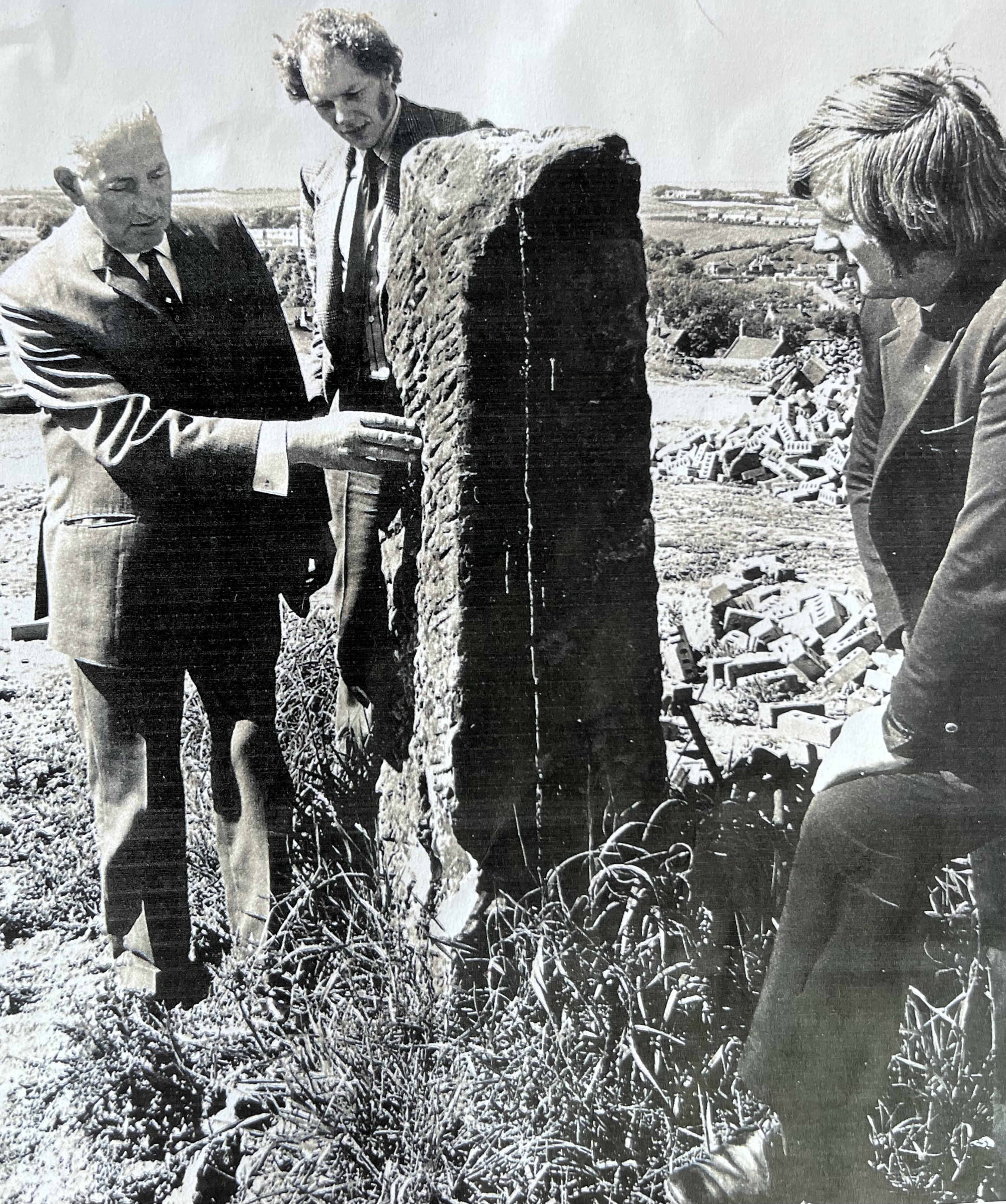
Beryl Richardson’s father Bob Carter, left, inspects the stone on Seymour Hill Loftus, which became the trouble-hit Westfield Estate. Reverend John Theobald is on the right, with a Mr Colari from Cleveland Museums in the middle.

Last week when I wrote about a mystery carved stone I had found on a regular walking route, I mentioned Beryl Richardson who comes from Skelton-in-Cleveland. She had a theory about my stone: “The measurements suggest it could be part of an ancient gate post or boundary marker. Some similar to this are on the North York Moors and relate to the boundaries between landowners’ estates.”

She mentioned that her late father, Bob Carter, who came from Loftus, spent many days looking for these boundary stones which he then included in local history talks.

Since then, Beryl has sent me a copy of a photograph, seen here, of her father and a similar carved stone with a mystery attached to it, which makes another interesting-stone related story that readers might be able to flesh out for me.

Beryl is not sure of the exact date of the photo which shows her father Bob, who is touching the stone, alongside a Mr Colari from Cleveland Museums (middle) and on the right, the Reverand John Theobald, Rector of Loftus.

She explains that her father believed this stone to have originally been a cross because it showed traces of a type of lime mortar which would have been used to fix the cross head in place. However, that had long gone. “The old stone cross on Seymour Hill, Loftus, was shown on an Ordnance Survey map from 1858 and was destroyed when building the Westfield Estate in 1974. My father believed the stone marked a burial site,” says Beryl. Her father asked the authorities concerned to open up the site before any houses were built so that they could inspect it for graves, but his pleas fell on deaf ears. Beryl points out that the stone was in direct line of sight towards the Anglo-Saxon burial ground discovered at Street House Farm, three miles northeast of Loftus where 112 graves were found, including that of the ‘Saxon Princess’. It was an incredible archaeological discovery and included artefacts such as gold brooches and pendants and glass beads suggesting royal connections. These finds can now be seen at Kirkleatham Old Hall Museum in Redcar.

Beryl’s old photo must have accompanied a news story about the stone and judging from the piles of bricks and rubble in the background, was taken at the very start of development when the site was being cleared before building work began, which dates it to either late 1973 or early 1974.

The construction of 320 new council houses on Seymour Hill, which became the Westfield Estate, was highly controversial. The development cost the local authority £2.25m (around £21m today) and was dubbed ‘Colditz’ by some of the incoming tenants. The architect came in for a lot of criticism, not only for the general ugliness, but also for not having included back doors in some of the properties, meaning there was no secondary exit should a fire break out blocking the only external door. There were other complaints, such as only being able to hang out washing right outside the lounge window, doors locking automatically leaving children stranded outside, and no central heating upstairs.

In an article from the Middlesbrough Evening Gazette in October 1974 Rev Theobald, who was also a local councillor, described the situation as a ‘tragedy’. “During my calls on my new tenants as Rector of Loftus, people have drawn my attention to a number of factors which point to bad design – all of which are apparent to even the humblest layman,” he said.

I don’t know Loftus well and would welcome any information from people who do, to let me know whether the estate is still there, and if residents still have the same views as they did back in 1974. I do know that it was regenerated about 18 years ago.

It is not uncommon for housing developments to be built on ancient burial sites, but there are rules that developers have to adhere to in terms of respecting human remains and the heritage of any archaeological discovery.

Was the Westfield Estate built on an ancient burial site, as Bob Carter believed? If the local authorities and developers ignored or even destroyed evidence, such as the old cross, were the catalogue of troubles it experienced the ghosts from the past making their displeasure felt?

Do you have opinions, memories or ideas to share with me? Get in touch with me using the ‘Contact’ button on the top right.

This column appeared in the Darlington & Stockton Times on Friday 4th and the Ryedale Gazette and Herald on Wednesday 2nd July  2025

Beavering away to tackle flooding

Beavers have incredible skills when it comes to building dams (Picture: Forestry Commission)
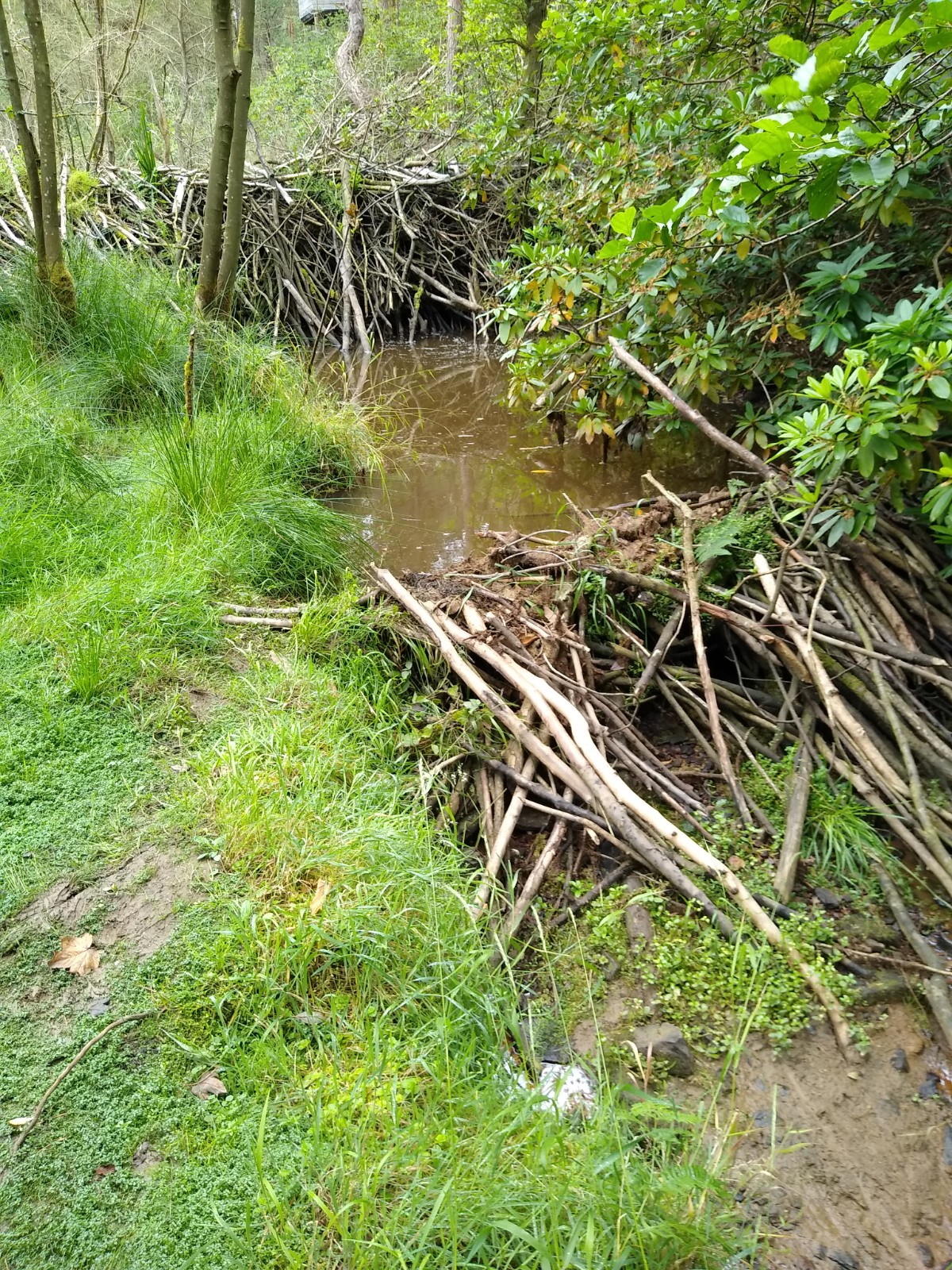
A beaver dam that is part of the Slowing The Flow, Pickering project which embraces natural resources to help to prevent flooding downstream


I received a fascinating email from reader Mike Potter, who got in touch via my Countryman’s Daughter webpage (countrymansdaughter.com).

Mike told me that in 2008 he was part of a study with three universities to examine and improve flood management in the Calder Valley area. Named ‘Slow The Flow’ (STF), it evolved into a national charity which educates the public, government and private agencies in natural flood management, sustainable drainage systems and other renewable methods of managing and working with the environment. Living in a flood-prone yet beautiful county like North Yorkshire, we must applaud people like Mike and his colleagues, many of whom are volunteers.

Mike set up the ‘Slowing the Flow, Pickering’ scheme where they have embraced the amazing skills of beavers to build dams upstream from areas prone to flooding. These dams calm the water flow, meaning that when we have sudden and significant rainfall, they act as ‘brakes’ on the speed of the current, reducing the likelihood of devastating flooding further downstream. This approach has been remarkably successful and adopted elsewhere, as reported in this paper on a number of occasions.

Mike explained: “Slowing the Flow at Pickering is exploring new approaches to flood management, working with nature to try and store more water in the landscape and slow its passage downstream. Whilst this will not prevent all flooding, it is expected to reduce the frequency of future floods in Pickering, as well as deliver a range of other benefits to the local environment and community.”

On a slight tangent, Mike also wrote: “I‘ve just been ploughing through the transcript of a 2008 interview with Malcolm Shaw, a retired senior drainage board engineer, which mentioned that the River Ure changes its name to the Ouse below Swale Nab.”

This piqued his interest, and he found an article about it with a logical suggestion that OS map surveyors had created the error and that the name should really change at Swale Nab, which is the confluence of the Ure and Swale. “It would appear that this was Mr Shaw’s understanding too. That still didn’t explain the name change from Ure to Ouse though, but the article coincidentally referenced the interesting and plausible theory in one of your articles about the possible origin of the name York coming from Ure/Yore, and the reason for the two different river names.”

The article he was referring to was my column from way back in April 2021 where I wrote about the fact that the River Ure changes its name to the River Ouse a few miles south of Boroughbridge. Back then I said: “An unusual feature of the Ure is that after it passes a place called Cuddy Reach just west of the village of Linton-on-Ouse, it is thenceforth known as the River Ouse. Usually, when one river flows into another, it takes on the name of the main waterway. So when the rivers Swale and Nidd enter the Ure, that is where they end, and the water continues its south-eastern voyage under the name ‘Ure’.  However, when the water reaches Cuddy Reach, a seemingly insignificant stream called Ouse Gill Beck enters the Ure and in an audacious takeover, snatches the grander river’s name and from then on the waterway is known as the Ouse all the way down to the Humber. So why the name change?”

We still don’t know, but at the time I wondered if it was down to the Old Bretonnic language and the fact that the Ure stemmed from an old word meaning ‘fast-flowing’, and the Ouse from a word that meant ‘slow flowing’. Those familiar with the river know that up in the Dales, it runs fast but slows downs once it hits the lower plains of the Vale of York, and hence the two names reflect the change in character of the flowing water. I believe their origins lie in the oral evolution of the language spoken by those living around the river.

I just love stuff like this which can only come from readers like you getting in touch with me. I truly welcome your messages and will always reply. If you have written to me and think you’ve not had a response, please check your junk and spam email folders – or try me again

Do you have opinions, memories or ideas to share with me? Get in touch with me using the ‘Contact’ button on the top right.

This column appeared in the Darlington & Stockton Times on Friday 20th and the Ryedale Gazette and Herald on Wednesday 18th June 2025