Growers forcing the issue

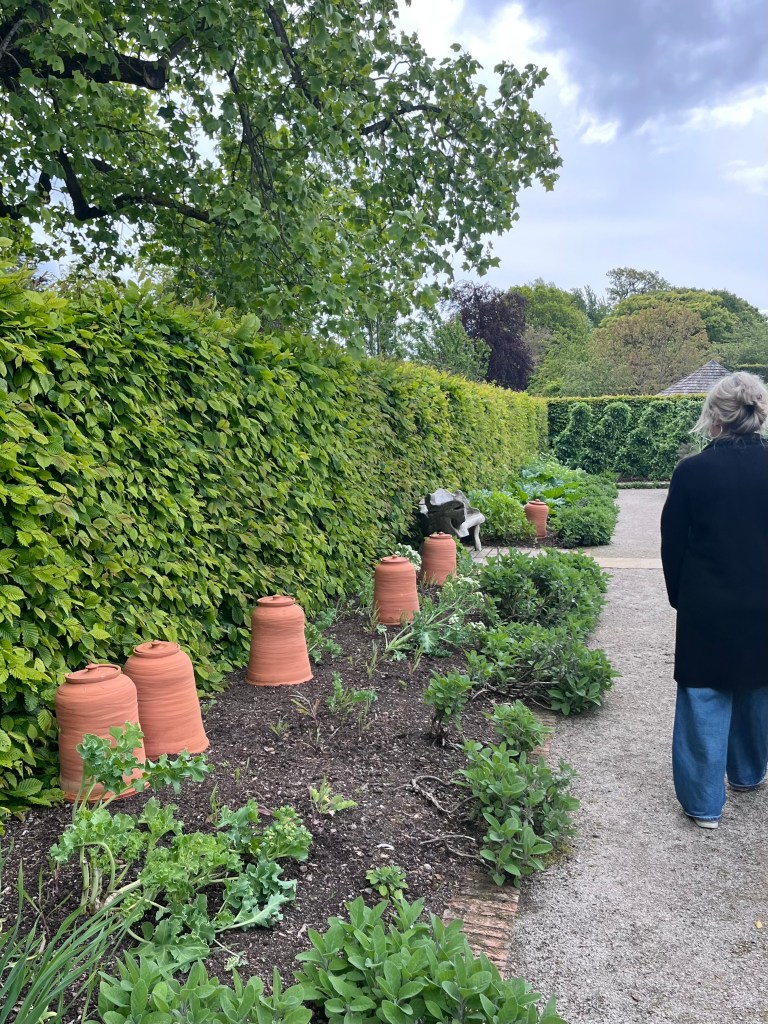
Bell-shaped terracotta pots are used to ‘force’ rhubarb in the kitchen garden at Rudding Park Hotel’s Michelin-starred restaurant ‘Fifty Two’.

I’ve been lucky to have another short trip away, this time to the swanky Rudding Park Hotel near Harrogate for a spa break with my best friend. We started doing this in 2021 when we realised we had been friends for 50 years. We felt that was something worth celebrating, and ever since have made sure just the two of us get away once a year for a weekend of pampering somewhere nice.

We had an afternoon in the spa followed by some relaxing treatments and ended up with a delicious meal in the restaurant. It is a very impressive place, and the staff are clearly well trained, doing everything to make sure your stay is as trouble free and relaxing as possible.

The next morning we were not in any hurry to leave, and decided to have a potter about the grounds. This time of year is hands down my favourite, and we admired the magnificent horse chestnut trees swathed in blossom candles and the rhododendron and azalea shrubs resplendent in their floral frocks of pink, orange, yellow and purple.

There was also a kitchen garden where they grow a huge variety of produce to supply the Michelin-starred restaurant, Fifty Two, which sits just next door. Guests are welcome to wander round and jealously marvel at how healthy and robust the 500 varieties of fruit, veg and herbs look. I’m impressed by people who can grow things. I manage to kill every green specimen that crosses my path, even the herbs that you get from the supermarket. As soon as I put a pot of coriander on my kitchen windowsill, it keels over and dies.

We were intrigued by some strange elongated bell-shaped terracotta pots dotted about the growing beds, and discussed what we thought they might be. In the end we asked one of the gardeners who was busy weeding. Turns out we were speaking to head gardener Emma Pugh, who is extremely knowledgeable about all things horticultural and she explained it was for forcing rhubarb. I’ve heard of ‘forced’ rhubarb and know that in Yorkshire we have the famous Rhubarb Triangle where commercial growers produce rhubarb in huge sheds that do not let in the sunlight. However, I hadn’t before stopped to think about why they might do that.

Emma explained that by restricting the light, the rhubarb is ‘forced’ to grow quicker in a quest to find the sun, and this produces a much sweeter, flavoursome variety than those left to grow au naturel. The stems are longer and thinner, and less stringy too. The lack of sun also means it has a bright pink stalk as opposed to the more bitter red-green ones we associate with the rhubarb from our back gardens. The dark environment also means rhubarb leaves are yellow rather than green.

The terracotta domes were replicating the forced atmosphere so that the chef can create prettier, sweeter and tastier desserts for his diners. The pots are placed over the rhubarb ‘crowns’ in January, and the plant behaves as if it is still underground, forever reaching up towards the daylight. However, a rhubarb plant should only be forced for one season before it is rested, as it really takes it out of the plant having to put so much effort into trying to find something it never will. So the pots are moved around, with the same plant only being forced once every few years.

Emma also explained that the chef had asked her to experiment with forcing other vegetables to see if it improved their taste too. Other commonly forced vegetables include chicory, sea kale and asparagus, and the technique was popularised by the Victorians who wanted to grow produce out of season. Forcing does not just refer to the lack of light, but also to creating warmer temperatures, such as in greenhouses, to encourage plants to grow more quickly, or out of their normal growing period. And it’s worth remembering, for your next pub quiz, that rhubarb is not a fruit, but a vegetable due to its lack of seeds. 

Do you remember a while back I tried ‘wilting’ dandelion leaves in the way you would cook spinach, after reading a column my dad had written suggesting it? It was awful, chewy and bitter.

I wonder if forced dandelion leaves would taste better?

Do you have opinions, memories or ideas to share with me? Get in touch with me using the ‘Contact’ button on the top right.

This column appeared in the Darlington & Stockton Times on Friday 29th May and the Ryedale Gazette and Herald on Wednesday 27th May 2026

Bugged by same problem each year

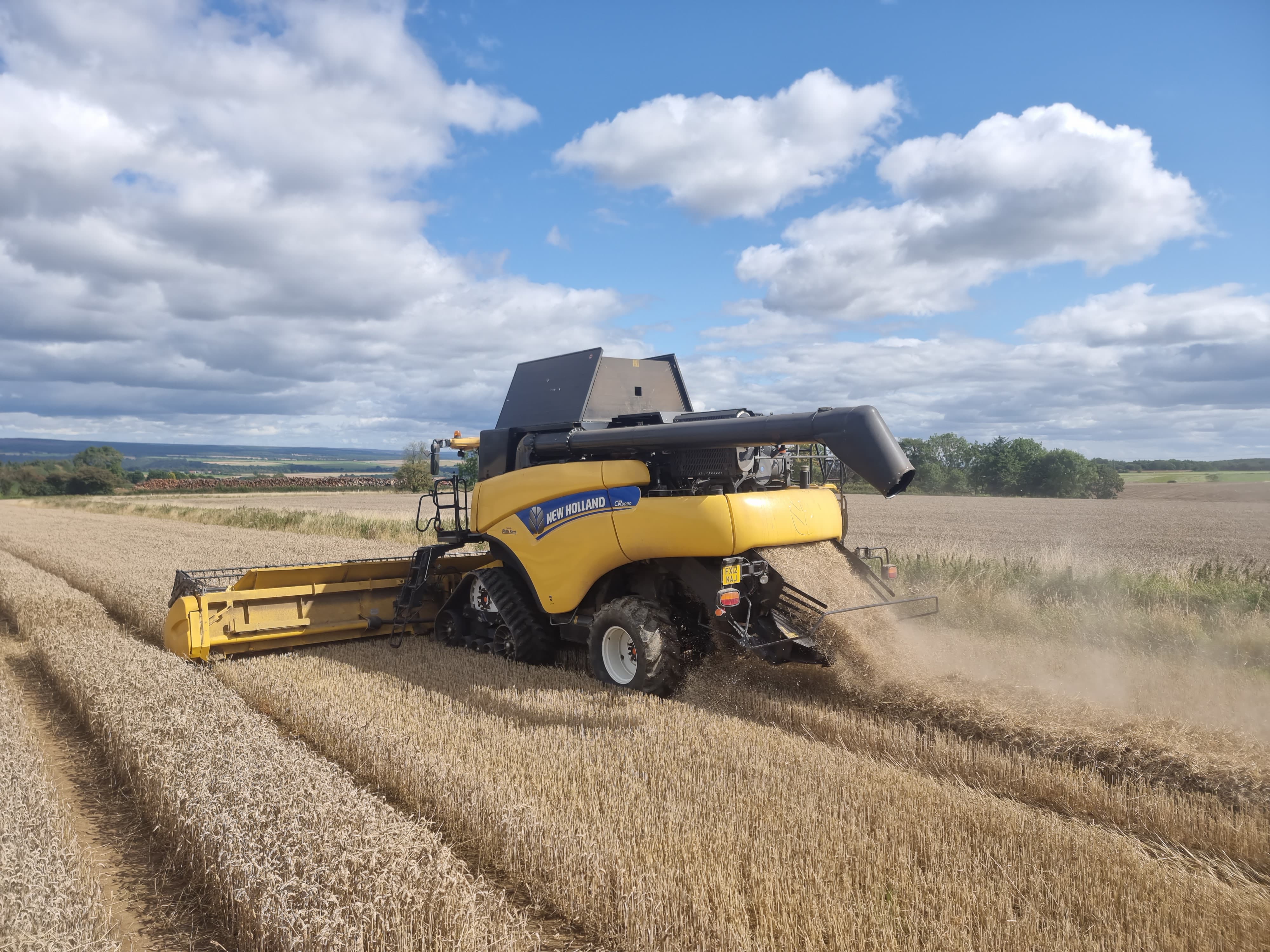
Thrips are a persistent problem for crop farmers – and are getting worse each year according to Billy Goode. Picture by Billy Goode

Thrips look like a tiny splinter against the skin, and make you itch like mad! Picture by Billy Goode.

I was contacted by a friend, Billy Goode, who farms and runs a kiln-dried log business not far from the top of Sutton Bank.

He sent me a link to a July 1905 Guardian newspaper column called ‘A Country Lover’s Diary’ which had struck a chord with him. Entitled ‘The Trouble with Thrips’ the piece describes what an utter nuisance these insects can be, especially to farmers.

He’d sent it not only because it might be of interest, but also because they were making his working day a misery. He explained: “It’s every year as soon as the temperature is above 24 degrees. We call them harvest bugs or thunder bugs – it’s markedly worse than it was five years ago.” Not only are they a pest for farmers, but they also land on our skin and clothes, and can be very irritating, as described in the 1905 Guardian article below:

‘Thrips are a plague to the farmer and a cause of much annoyance to everyone else; they are so very tiny, measuring only about one-twelfth of an inch, that it seems absurd to think that they can damage wheat. Unfortunately it is their small size that makes them so difficult to deal with, and the tiny larvae suck the juices from the growing grain and cause it to shrivel up. Those of us who are not farmers are not much troubled by the male thrip, for it is wingless, but the flying female bumps up against our faces, settles and walks about, unless it is unfortunate enough to fly right into our eyes, when it dies a watery death, much to our discomfort.’

I know exactly the tiny black bug in question. They are very thin, longer than they are wide, and look a little like a splinter on the skin. I also know how much it tickles when, on a close summer’s day, they land on your skin and wriggle about. Imagine dozens of the things plaguing you while you’re trying to work!

There are at least 150 species in the UK, with males and females both winged and wingless (some of which hitched rides on cargo ships to land on our shores after 1905), and most are named after the particular plant they are most commonly found upon, such as the pea, onion, gladiolus, privet and honeysuckle, as well as the western flower thrip and the glasshouse thrip. We ordinary folk would probably not be able to tell the difference between them, but we will have seen the evidence, such as pea pods with a grey/brown blight on the outside, flower petals with white squiggly lines on them where the pigment has disappeared, leaves with a whitish bloom on them, or malformed buds and foliage, all signs of thrip activity. This is caused by the way the little blighters feed – by puncturing the outside layer of the plant and sucking out the juicy insides.

Another sign of thrips are tiny black speckles on leaves, which is evidence they have used that particular bit of plant as a toilet.

Although plants can recover, the damage can affect crop yields and if you are a commercial farmer, your customers will not be happy with disfigured produce. For example people are unlikely to buy your peas if the pods are covered in blight, even if the peas inside are perfectly fine. You will not be able to sell flowers if the petals have marks or the leaves black speckles all over them.

Thrip activity can introduce viruses that cause far greater problems, particularly for cereal and vegetables crops. The virus is transmitted into the plant because of the thrips breaching the outer protective layer leaving an open channel for it to enter, in the same way we humans can contract an infection through an open wound.

Thrips are difficult to stop because they breed for most of the year, each producing one to two eggs per day over their 45-day life cycle. They go from egg to full grown adult in around two weeks.

Obviously there are chemical solutions, but a more planet-friendly method is to encourage natural predators, such as lacewings, ladybirds and thrip-loving mites that disrupt the breeding cycle.

Do you know a tried and tested method of thrip control you can pass on to poor Billy?

Do you have opinions, memories or ideas to share with me? Get in touch with me using the ‘Contact’ button on the top right.

This column appeared in the Darlington & Stockton Times on Friday 15th Aug and the Ryedale Gazette and Herald on Wednesday 13th 2025

A tasty kind of dandy

67ef9b59-baba-43e9-94fa-9d7f033f218d.jpeg
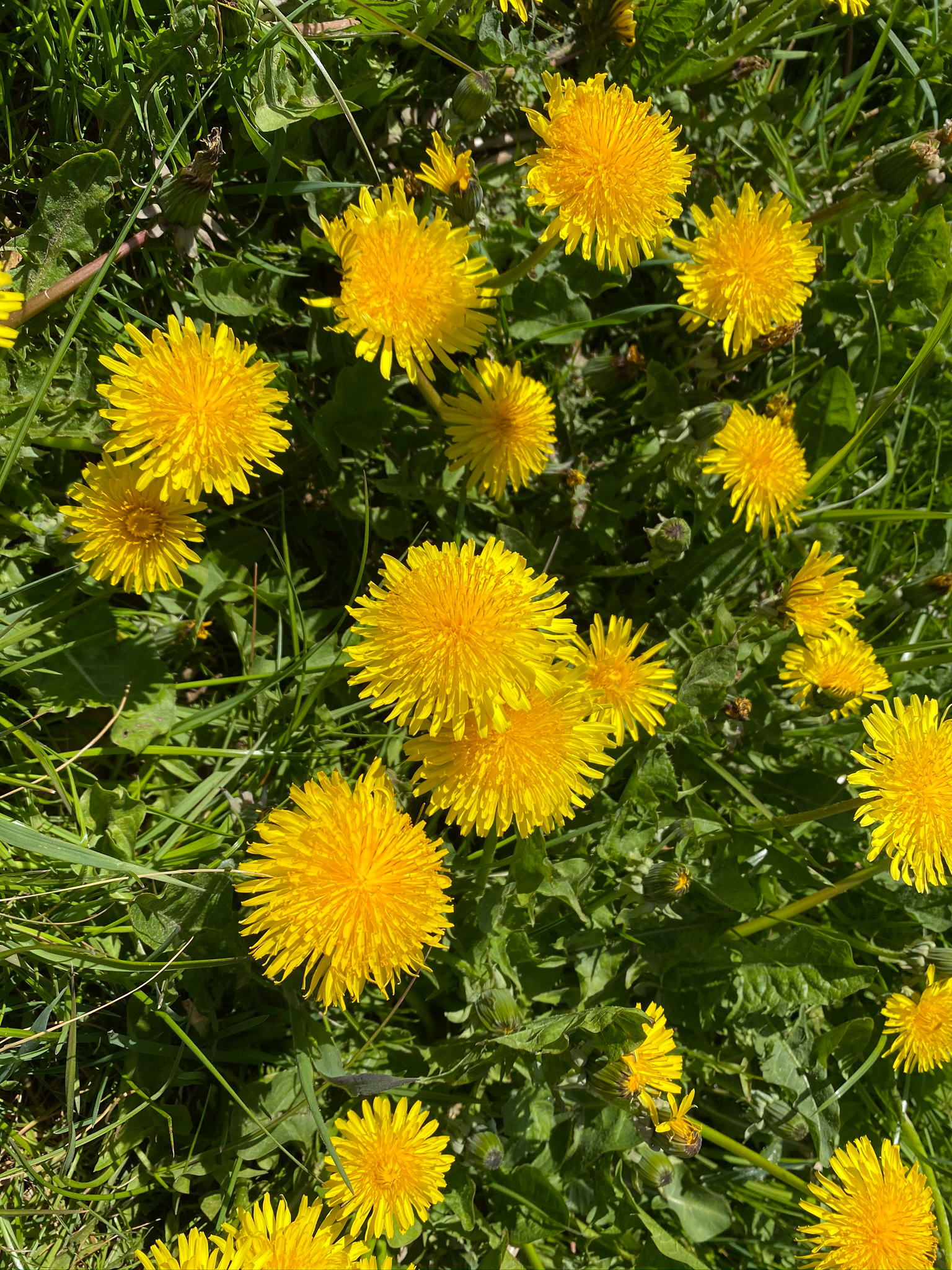
Dandelions are so much more than just a pesky weed

117D59DD-0829-426D-A2FC-62BA801634BA
The dandelion possesses one of the most effective ways of spreading seeds thanks to its trademark clock

I am to gardening what Freddy Kruger is to precision surgery. In my hands, the blade of a trowel and prongs of a fork are lethal to any living thing. Where some people have beautifully manicured lush green lawns, mine is a scraggy, patchy, overgrown mess. Moss, daisies and dandelions are perfectly at home among the scruffy tufts of various grass species that inhabit the patch of land surrounding my home.

I don’t despair though, because I see it as part of my job to encourage wild flowers (otherwise known as weeds) as they are so important to help our vital pollinating insects to thrive. In the past, the dandelion was one of the most accursed of visitors, its strong roots growing so deep into the ground that you had to possess almost superhuman strength to pull it up. And even when you did, often the roots would snap, leaving the ends deep in the soil, ensuring it would soon re-emerge.

But the reputation of dandelions has transformed over the years, and they are now recognised as very useful plants indeed. Those who still regard them as unwelcome invaders of their herbaceous borders might not be pleased to know that a quick look on the internet will throw up lots of advice on how to propagate and grow them successfully. As every frustrated and exhausted gardener knows, the distinctive dandelion clock is one off the most efficient ways of spreading seeds and is one of the reasons they are so hard to eliminate entirely.

I think my dad was ahead of the curve 40 years ago when he suggested that we should consider growing it as a crop in his column from 16th May 1981. “Why do we insist that the dandelion is a weed? It has wonderful properties and could be a most useful asset to the human race,” he writes.

It is well known that the leaves can be eaten in a salad or, as my dad suggests, wilted it in a pan with butter as you would spinach. As my lawn is home to what one might term a ‘healthy crop’, I decided to test out these suggestions. After throughly washing a few leaves, I took a bite out of one while I tried to wilt more with butter.

First of all, the leaves didn’t wilt like spinach, but just kind of shrivelled up, and secondly, they were about as tasty as the brown stuff my mum used to paint on my nails to stop me biting them. I’ve still got the bitter aftertaste in my mouth as I write, so I’m not sure I will ever be tempted to add them to a salad. However, there are lots of recipes online, and if anyone has one that will prove me wrong, please feel free to send it my way.

Another curious revelation my dad makes is that the roots can be roasted to make a healthy and caffeine-free alternative to coffee. He claims that it is ‘barely distinguishable’ from real coffee, which I found hard to believe until I did a bit more research. Sure enough, most reviews I found said that it was possibly the closest alternative to real coffee, but tasted less acidic and slightly sweeter. You can try digging up and roasting your own roots, although it does seem like a bit of a palaver, so if you fancy giving it a whirl, it might be easier to try one of the suppliers online who sell it relatively cheaply.

People have also been known to make dandelion beer and wine, although one friend reported that when she tried it, the resulting brew ‘smelled like the bottom of a beck’. So I won’t be tempted to give it a go.

The English name for this versatile flower is a corruption of the French ‘dent de lion’, which means ‘lion’s tooth’, a reflection of the spiky shape of its leaves. I also wonder whether the bright yellow ‘mane-like’ flower has something to do with it. It is known colloquially by many other names such as blowball, cankerwort, milk witch and monk’s head to name but a few.

Another well-known alternative name refers to the fact that it has an undesirable side-effect if you consume too much of it. This side effect is revealed in the name itself: ‘wet-a-bed’!

Contact me, and read more, at countrymansdaughter.com. Follow me on Twitter @countrymansdaug

This column appeared in the Darlington & Stockton Times on 21st and the Gazette & Herald on 19th May 2021