Fishing for the answer


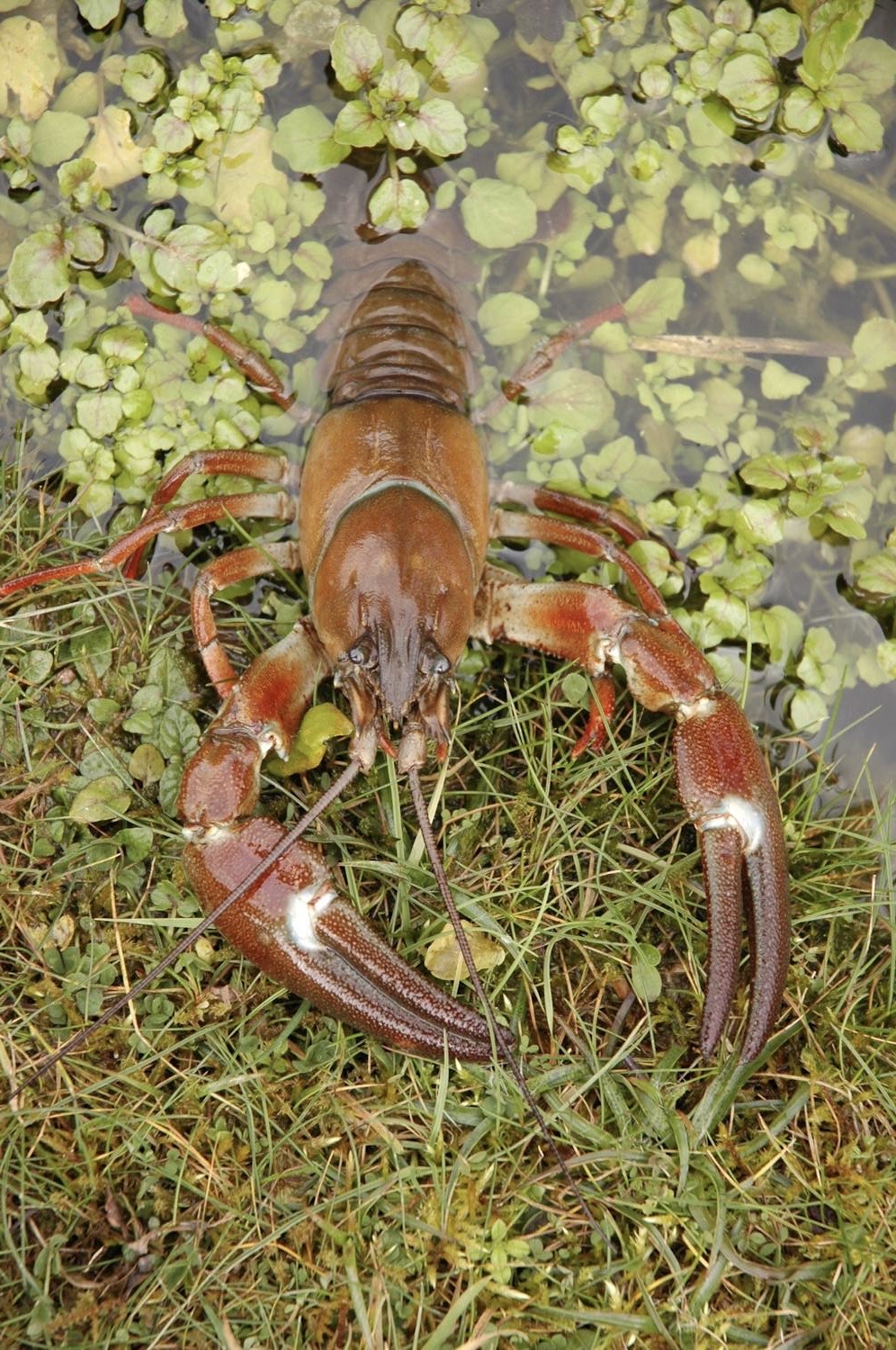
The aggressive and non-native signal crayfish with its distinctive flash of white at its claw joint. This voracious beast is driving our native species towards extinction. Picture from the Non Native Species Secretariat website.

As I mentioned last week, I came across a reserve for the white-clawed crayfish on a recent walk near Threshfield Quarry in the Yorkshire Dales where information boards explained the threat from its foreign cousin, the signal crayfish. The reserve was a small pond designed with the specific needs of the crayfish in mind such as places to hide from predators, the right food, and of course, no sign of the dastardly enemy.

This problem was mentioned by reader John Aston from Thirsk who listed it among a number of invasive plant and animal species affecting our waterways. He’d read my columns about the troublesome invader, Himalayan Balsam, which prompted him to get in touch.

On that note, you may remember that it was the appearance of Anna on The Great British Sewing Bee TV programme that sparked a whole series of columns on this particular invasive species. Anna had highlighted the issue by featuring the pretty pink bloom on an outfit she had created and I was rooting for her because not only was she exceptionally creative, but she came from our very own York. I watched the final last night and guess what? She won! Go Anna!

The white-clawed crayfish is our only native species of crayfish and populations have been decimated by its bigger and brasher American counterpart. This vicious marauder was brought over from the north-west USA in the 1970s and 80s to become a delicacy on fine dining restaurant menus.

Demand led to commercial farms breeding them, but what they did not take into account was that, unlike salmon and trout which, due to a distinct lack of limbs, obligingly remained confined to their ponds, these crafty crustaceans had legs and therefore were able to climb out of the ponds and amble to freedom. If they couldn’t escape over land then, thanks to their scarily big sharp claws, another option was to burrow into the muddy banks until they were beyond the boundaries of the farm. Failing that, option three was to scuttle into the water pipes feeding the pond (which they did to protect themselves from predators) to find that these pipes led somewhere, and so they kept on scuttling, ultimately finding themselves at the opposite end. With one splash they were frolicking in open water.

Once liberated, these prolific breeders began to make whoopee, kicking the smaller, more passive and less randy native white-clawed crayfish out of their homes, leaving them exposed to hungry otters and that other ‘liberated from breeding farms’ pest, the mink. But that was not all – the poor white-clawed crayfish were left with very slim pickings for food, as the greedy Yanks were always first to the table, and just for good measure they also infected their British counterparts with the delightful ‘crayfish plague’ for which they had no resistance due to the fact they’d never been exposed to it before. It was a crayfish calamity which is still having repercussions today.

Round of applause then for those short-sighted idiots who brought signal crayfish over here without a thought for the potential impact on our one and only native species. The scientific blinkers were on, wilfully ignoring past disasters caused by introducing invasive species into the country in the vain hope that all would be OK; that a crayfish wouldn’t think to use its legs to simply crawl to pastures new. How could that be? The American mink catastrophe was still at the forefront of many people’s minds too (brief summary – American mink were imported and bred for their fur. They also escaped their farms through inadequate security and a few well-meaning but dim anti-fur campaigners who thought setting them free was a good idea. Our now almost extinct native water vole would beg to differ).

There are some very hardworking organisations and volunteers who are desperately trying to help these threatened species survive, but unless the invasive predators are brought under control, it is highly unlikely that our freshwater crayfish or our water vole will ever recover.

So if on your travels you see a white-clawed crayfish reserve, also known as an ‘ark’, then stop a while and take time to read those information boards explaining what the conservationists are trying to do. And hopefully, one day, we will learn from our past mistakes.

One day.

Do you have opinions, memories or ideas to share with me? Get in touch with me using the ‘Contact’ button on the top right.

This column appeared in the Darlington & Stockton Times on Friday 25th and the Ryedale Gazette and Herald on Wednesday 23rd September 2026
Experts sowing the seeds of change

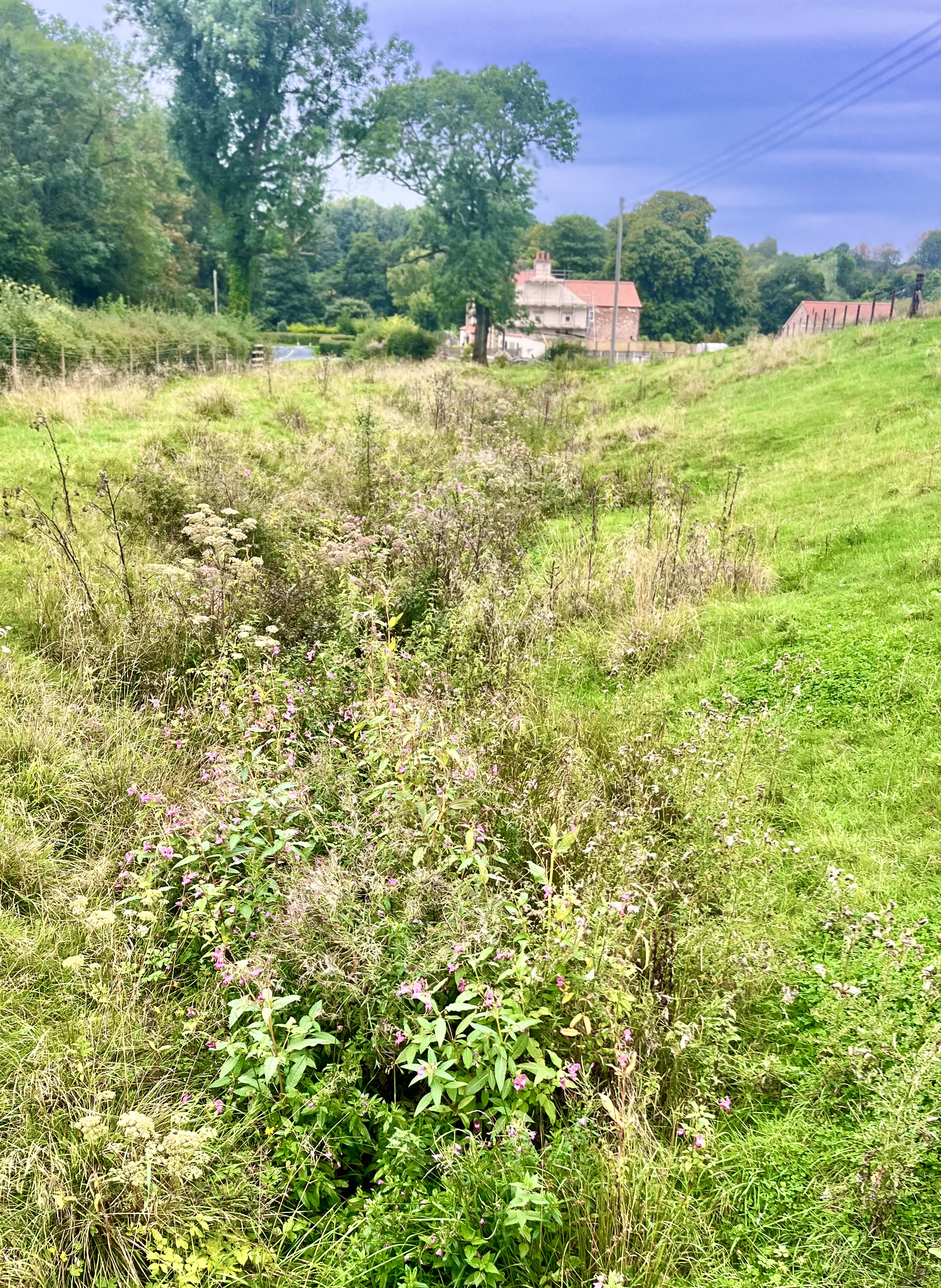
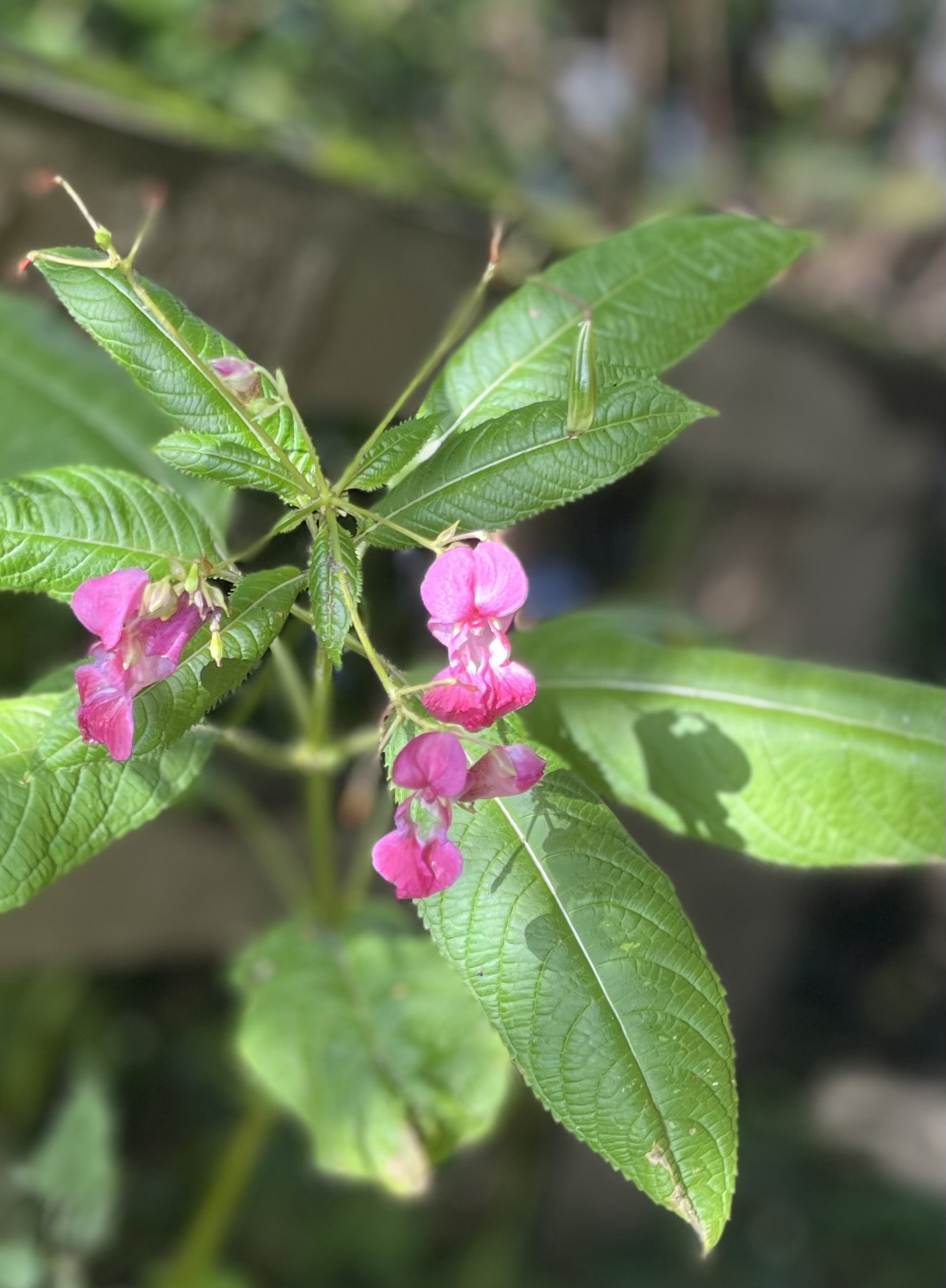
The invasive Himalayan Balsam is colonising the banks of our streams and rivers leading to erosion and the decline of native insects and plants. But experts have told me how it should be tackled

My plea for specialist advice on how to tackle Himalayan Balsam has borne fruit. Reader Janice Brabban owns some woodland near Darlington and was horrified to discover it had been invaded by the troublesome plant. She was having difficulty finding out the best way to deal with and dispose of it, and felt she hadn’t received consistent advice from the places she had tried so got in touch with me.

Thankfully, help has come from a proper expert, in the form of Chloe Lawrence, Invasive Species Project Manager at Tees Rivers Trust, who explained that there isn’t one single body with responsibility making the situation more complicated. “Landowners, under the Wildlife and Countryside Act, are responsible for ensuring they don’t spread onto other land, although they don’t have to eradicate them. Councils and local authorities are responsible for invasive species on public land, but not private land. There are also several government bodies, including the Environment Agency, DEFRA and the Non-Native Species Secretariat, all of which have different roles in areas such as prevention, early detection and management.”

She advises: “Himalayan balsam is relatively easy to manage by pulling it out by the roots, making sure the stem is snapped below the first node. It can also be strimmed or scythed, and there is even a biological control being used.”

Chloe acknowledges that although management is easy in theory, the plant is prolific across the UK. “Unless management starts at the source, ideally at the highest point of a watercourse, seeds will continue to spread downstream from upstream populations. Balsam has explosive seed pods which can spread up to seven metres, with each plant producing up to 800 seeds.”

But there is hope, because the Tees Rivers Trust has been awarded a £3 million National Lottery Heritage Fund grant specifically for an invasive species programme, which aims to establish a more unified approach.

Further advice came from George Winn-Darley, a member of the Yorkshire Derwent Catchment Partnership and the Yorkshire Esk and Coastal Streams Catchment Partnership, who is very familiar with our irksome bloom.

“It’s important that balsam is managed before it goes to seed,” he says, “particularly as the hot weather this year has meant it is seeding earlier than usual…The plants can be left in a pile away from any watercourses and will wilt down within a few weeks…They can also be burned on site, although I’d be particularly mindful of the wildfire risk across the UK.

“Seeds only remain viable for about two growing seasons, so if you can stop it going to seed for two consecutive years then you should be able to eradicate that patch…It is shallow-rooting and very easily pulled up by hand but if you lie it on the ground it is likely to root again so you need to hang it over a branch or something so that it dries out and dies which it will do very quickly. You can just knock the flower heads off before they start to create seed, cut it or strim it or just beat it with a stick to prevent it flowering and seeding…By and large you don’t see it in fields that are cultivated or grazed because those activities stop it from thriving.”

Balsam crowds out other vegetation on river banks, but dies back in frosty wether leaving exposed bare soil which is then washed away by winter rains causing the banks to erode, which also leads to water quality problems.

John Aston, from Thirsk, added, “Bees like it, and my beekeeping friends report that balsam honey is excellent. But most fishermen (and I’ve been one since 1963) loathe the stuff.”

John agrees with the methods on how to get rid of it but warns: “It’ll be back. All it needs is a seed on a walker’s boot or in an angler’s net.”

He lists other invasive species affecting our waterways, such as poisonous giant hogweed, knotweed, signal crayfish, demon shrimps, mitten crabs and American mink, all of which have thrived to the detriment of local flora and fauna.

Coincidentally, I came across a native white-clawed crayfish reserve on a walk near Threshfield Quarry in the Dales where information boards explained the threat from its foreign cousin.

But I’ll save that story for a future column.

Do you have opinions, memories or ideas to share with me? Get in touch with me using the ‘Contact’ button on the top right.

This column appeared in the Darlington & Stockton Times on Friday 18th and the Ryedale Gazette and Herald on Wednesday 16th September 2026

Not so blooming marvellous


Himalayan Balsam is pretty but not a native species and needs to be tackled
Following my column about Himalayan Balsam, a very pretty yet invasive species of plant, reader Janice Brabban got in touch.

“Thank you for your article drawing attention to non-native invasive species affecting our countryside. I am a woodland owner in the Darlington area. An ancient spring arises in the wood and forms a stream lower down in the paddock. Last year I was horrified to find the stream surrounded by Himalayan Balsam, which I immediately removed (the roots are very shallow and can be pulled out easily). I have had to do the same this year albeit to a lesser extent. I found it difficult to obtain any advice regarding its control and disposal. Mine had come from surrounding hedgerows. The council advised disposing of the plants in the garden waste skip at the local recycling centre – I didn’t do that, bad advice, I thought.”

Janice wondered whose responsibility it was to control these types of invaders, particularly when they have such a detrimental effect on our own flora and fauna, but her efforts produced little useful advice. “I ended up drying and burning. I can see that it is still growing happily in local hedges around here, the Heighington area, and as far as I can see it will continue as no-one seems to know what it is or what to do with it. So thank you for bringing the problem to the attention of your readers.”

A few days later, Janice provided a further update: “I think I have got rid of mine for now but will check every year and pull it out. I know the organisations are low on resources, so don’t want to point the finger. Since finding it on my land I have become more eagle-eyed and spotted it in places in back of hedges etc. where I had just never noticed before.”

We have to thank people like Janice for taking the matter seriously and doing what they can to limit the damage. Nevertheless it would it would be good to hear from someone who is familiar with Himalayan Balsam and knows the best way to deal with it. Are there any protocols in place when a new invasive species is found, I wonder? Do get in touch if you can enlighten us further (contact details at the end of this column).

I was also contacted by Richard Simpson after he had read my piece about tuberculosis and the sanatorium at Benenden in Kent. The sanatorium was established in 1905 after many postal workers fell ill with TB but could not afford to take time off for treatment, and thus continued to infect their colleagues.

“My grandfather’s cousin Archibald Leary was a post office worker in Wigan who contracted TB and died in the Benenden Sanatorium on 30th December 1930 aged 38. From his Post Office sickness pay records, he was given sick pay for just short of 12 months before being ‘sacked’ on 14th July 1929. It was good to see he was still able to use the sanatorium even though he was no longer an employee…He was buried in Wigan on the 2nd January 1931…It is quite remarkable how quickly he was buried following his death considering the need to transport his body over the New Year period.”

It’s sad to know that Archibald may have been saved had antibiotics been available then. Yet he did have access to the best help and knowledge around at the time through belonging to the Post Office society. Even after his employment ceased he was still treated at Benenden Sanatorium (although you’d have hoped so seeing as it is likely his working conditions may have contributed to his illness!).

Richard added: “Are you aware of any records of admissions to the sanatorium so that I can do some more research?”
I passed on some ideas to Richard as to where to go to find out more information. When I wrote the society’s history book in 2005, they had a museum, as well as the ‘Rising Mercury Society’, a ‘club’ for ex-patients that had been going for many, many years and which may be able to help Richard to access historical records.

Let’s hope he gets back in touch if he finds out any more about Archibald’s touching story.

Do you have opinions, memories or ideas to share with me? Get in touch with me using the ‘Contact’ button on the top right.

This column appeared in the Darlington & Stockton Times on Friday 28th and the Ryedale Gazette and Herald on Wednesday 26th August 2026

Deflowering the Truth

Himalayan Balsam, although pretty, is a threat to many native species of plant and wildlife. Picture by Hans at Pixabay


I love a Great British ‘Whatever’ competition show. I’ve avidly watched every episode of Menu, Bake Off, Pottery Throwdown and Sewing Bee. I’m not sure why they captivate me because I’m not an enthusiastic cook or baker; the last time I made pottery was when I was 12; as for sewing, I was thrown out of the Needlework class and dumped in Art because I was so bad. The last straw came when I accidentally sliced clean through my school tie as I was trying to cut a thread on the sewing machine. I was concentrating so hard on the thread that I failed to notice my tie dangling dangerously close to the scissors.

In the latest series of Sewing Bee, I’m rooting for Anna because she comes from our very own York. She’s also really really good, not only at sewing, but at coming up with exceptionally creative ideas for the very difficult challenges that are set every week.

The theme of the most recent episode I watched was Reduce, Reuse and Recycle and each of the three tasks challenged competitors to repurpose garments that had had a previous life.

On that note, I’m delighted that it is now cool to buy things from charity shops, when in the past it was assumed that only people who could not afford to buy from new darkened those doors. The amount of waste created by what we wear is mind boggling and I’m proud to admit that as I write this I’m wearing a dress that I’ve had for at least ten years. A few years ago, it would have been embarrassing to admit such a thing. Like most of us, I’m not a saint though, and still possess far too many clothes made in countries with dubious environmental and employment track records.

Last night, our girl Anna won the prestigious ‘Garment of the Week’ by producing an outfit with a clear and poignant environmental message about the threat of ‘invasive species’.

She chose Calico cotton which was used in India as far back as the 11th century. Named after the port city of Calicut in the province of Kerala, the unbleached cotton became popular in England thanks to the rise of the East India Company (1600 – 1874). Home-grown manufacturers of wool and silk were up in arms as their businesses suffered drastic reductions in revenue as their products fell out of favour thanks to this ‘invasive’ new material. It led to the Government introducing the Calico Acts of 1700 and 1721 which curtailed the import and wearing of Indian Calico.

Anna’s second nod to ‘invasive species’ came in the printed design that she placed onto the fabric. She chose the delicate pink flower of the Himalayan Balsam plant. It is indeed a very pretty bloom which looked gorgeous against the neutral palate of the unbleached cotton. But this plant is a wolf in sheep’s clothing.

According to the Royal Horticultural Society, the species was transported from the Himalayas in 1839 and planted in private gardens. But its fantastic ability to self-propagate meant that it soon transgressed its domestic boundaries and infiltrated the wild, settling among the moist surroundings of our waterways. When mature, its seed pods explode, casting the contents far and wide. It grows quickly, depriving native plants of space and light. Our bees and dragonflies lose places to forage while the natural habitat of our river-dwelling wildlife diminishes.

Anna’s stunning dress reminded us of the dangers of introducing species from another climate into our own, no matter how beautiful they may look. Most sensible adults today know the risks of smuggling living things from foreign shores into this country. There are unmissable warning signs at airports and ports that leave you in no doubt about the risks involved.

So I was flabbergasted when someone I had only just met admitted that she loved gardening – and had stashed some bulbs from her holiday in Australia in her luggage which she had then planted in her garden. Just like those who planted Himalayan Balsam in their 18th century gardens, not for one moment did she pause to consider what might happen if the plant crept beyond her own wall.

I can forgive an 18th century gardener who would have had little knowledge of the potential consequences.

But that’s as far as my forgiveness goes.  

Do you have opinions, memories or ideas to share with me? Get in touch with me using the ‘Contact’ button on the top right.

This column appeared in the Darlington & Stockton Times on Friday 7th and the Ryedale Gazette and Herald on Wednesday 5th August  2026

Mark my woods

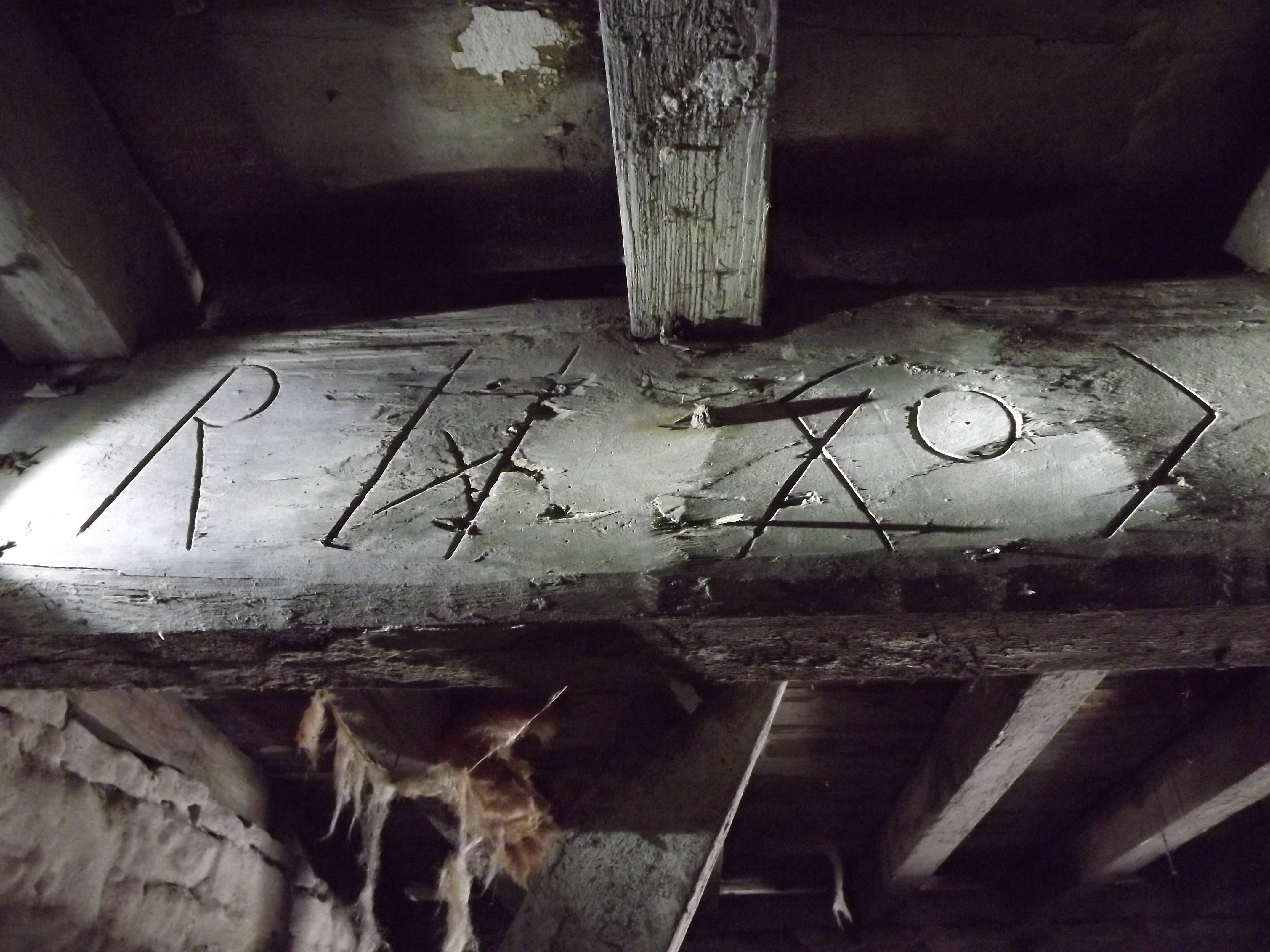
In the 19th century large timbers shipped across from the Baltic and would have come into ports such as Hull. The marks are a code for where and who supplied and shipped the timbers, but their meaning is still not known. Pictures by John Buglass

Following my column about ancient reused timbers in house construction a few weeks ago, I’ve been contacted by a couple of experts who kindly took the time to put me straight on a few points.

Marine archaeologist and timber expert John Buglass was the first to correct an oft-repeated story:

“I am afraid that the reuse of ‘shipwreck’ in old buildings is a long held belief that has very little or no actual evidence. Several things to consider about ‘shipwreck’ timbers: firstly they are a wreck so are often badly damaged and salt affected (and often in remote locations); secondly if it was from a broken up ship at the end of its working life…then that is 30-40 years in a marine environment; thirdly, why would you go to great expense and time to haul timbers from the coast to an inland site when other closer sources would be available? That is not to say there aren’t some coastal buildings that have reused ships’ timbers but they are very few in number.”

So the romantic story that I have perpetuated is a load of old cobblers. How disappointing! I have a feeling my dad would be raising an eyebrow at me from above for not having dug a little deeper. I am always happy to be corrected by people with more expertise than me though!

John added: “We are only too familiar with the claim of many historic property owners that their house is made from ships’ timbers, despite the fact that it is located many miles from the nearest navigable waterway, let alone the coast. But this does little to dissuade the long held and cherished belief…This even extended to an inspection of Wordsworth’s Dove Cottage which could plausibly have had timbers from boats operating on nearby Grasmere, but sadly this was not the case. There are, of course, the exceptions which prove the rule. Probably the most extensive example is Chesapeake Mill on Bridge Street in Wickham, Hampshire. This Grade II* listed building is substantially built from American longleaf pine from the dismantled remains of the American warship Chesapeake which was captured in 1813 by HMS Shannon and dismantled in Portsmouth in 1819.”

He continued: “Hauling large timbers from the coast into the Dales is true in some cases…some large timbers in 19th century buildings have what are known as Baltic timber marks. These are from large timbers shipped across from the Baltic where the forests still had large trees that could be used for substantial buildings. They would have come into ports such as Hull and been hauled inland on oxen carts. But these are new timbers, not reused ones. The marks are a code for where and who supplied and shipped the timbers, but I’m not sure how they are decoded.”

John agreed to look at the marks on the timbers I featured in my article, but I will save his comments for a future article.

Jim Coulson is a wood scientist and member of the International Wood Committe of the International Council On Monuments and Sites. He has a spent more than 30 years working with timber and backed up John’s comments:

“The reuse of old timbers is a common thing to have done, but almost never from ships – that is just an Old Wives’ Tale. Most ships’ timbers were the wrong dimension and shape for building houses, and it was far more common to reuse timbers from barns or other disused buildings.”

He added: “Reused beams are found in many older properties, but it is usually impossible to say where they came from…Identification of such beams is possible as to wood species, but their origins would be almost impossible to pin down without some sort of documentary evidence.”

As for the marks I noticed on the beams in ‘my’ house, he states: “The marks…are usually carpenters’ marks, often used to identify the particular craftsman, but sometimes, in very old mediaeval buildings, they were used to ward off evil, and known as ‘witches’ marks’.”

I’ve written about witches’ marks myself, and my dad was an expert, his theory being that some were connected to Catholic martyr Father Nicholas Postgate.

Were they, as Dad believed, a decoy to fool Catholic persecutors into thinking that a safe house was occupied by pagans rather than treasonous Catholics?

Do you have opinions, memories or ideas to share with me? Get in touch with me using the ‘Contact’ button on the top right.

This column appeared in the Darlington & Stockton Times on Friday 24th and the Ryedale Gazette and Herald on Wednesday 22nd July 2026

A cheep of faith

I was at an appointment recently standing at the window waiting for a client.

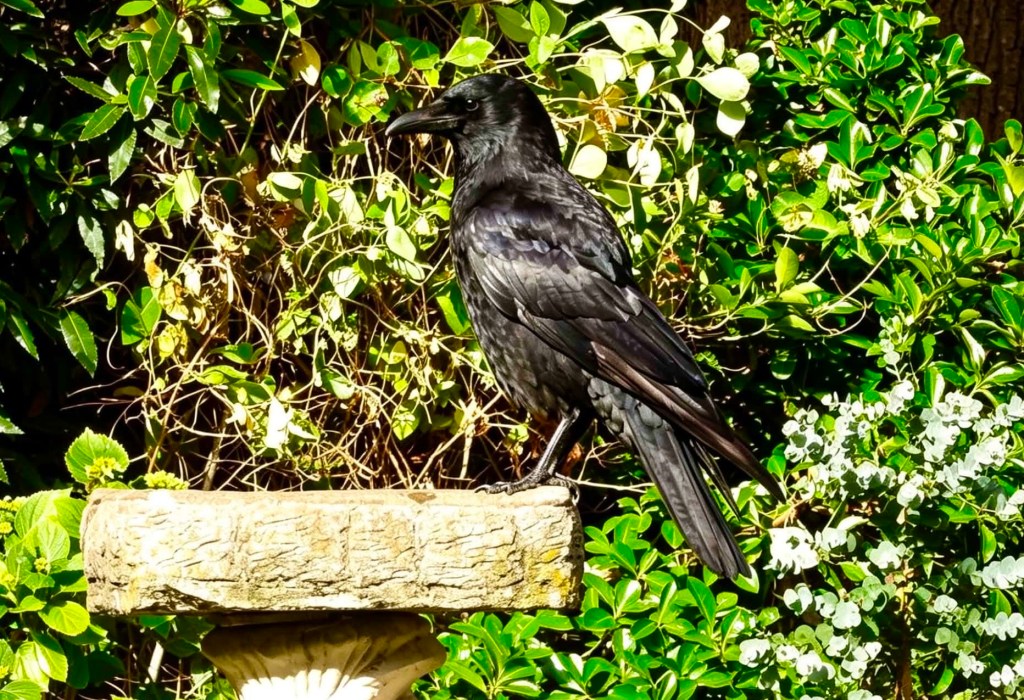
Suddenly, a big glossy crow swooped into view flying at my eye-level across the front of the house before disappearing around the corner. A few seconds later it flew back the way it came with something chunky in its mouth. It looked like a piece of wood, or even a piece of masonry. There was building work going on, so perhaps it had been skip diving? It seemed to know exactly where it was going and what it wanted. But what it would be doing with such a hefty piece of rubbish? It was surely too big for nest building, and definitely not edible, so what would a crow need it for? I welcome suggestions from you bird experts out there.

On the walk there, I’d seen a pigeon fly up off a drive to perch on a roof. It had been standing by something on the ground, and as I drew closer, I realised that sadly it was a deceased baby bird. I wondered how it had ended up there, because it was too young to fly and too far away from any nest to have fallen out. Had it been dropped by an airborne predator perhaps? The pigeon stayed close by, and I have a feeling it may have been its parent, which sparked a pang of sadness. But at this time of year we see a fair amount of avian casualties, such as sickly chicks flung out of nests by parents or siblings. Sometimes fledglings test their wings too soon and end up marooned on the floor.

I’ve mentioned this before, but if you find a young bird on the ground, the RSPB advise to not interfere unless absolutely necessary. Its parents will likely be watching unseen, or off gathering food. To remove a fledgling from its environment has to be a very last resort, and then only if it is injured, in immediate danger, or you have established that it has been abandoned or orphaned.

Another day, I heard a commotion in a nearby fig tree. It was a posse of five or six little black and white birds, all chattering excitedly away. They started off on a low branch, then one hopped to the next branch up, followed by the others, and then seconds later they all hopped up again and so they kept on going up the tree, cheeping away, until they were almost at the top. They stayed there for a few more seconds, before one leapt off, followed by another, and then the rest all at once.

Well, almost the rest. There was one wee chick still left on the tree. It was as if he was plucking up the courage to leap into the unknown, a little afraid of what was to come. Then he did it, jumped off the branch, dropped alarmingly before recovering and following in the direction of his buddies. My guess is that they were fledgling pied wagtails out on the town for the first time.

It reminded me of days in the school playground where there was always a ringleader surrounded by hangers on trying to be cool by association. Then there were those on the periphery trying to fit in but not really managing it, lacking in confidence and battling their demons to try to keep up with the cool kids. If only they realised then that being different and individual is a good thing. Just ask Bill Gates!

The bird’s wobbly flight path also reminded me of the time as a young reporter I had to leap off a cliff for a story. I was strapped to the pilot of a hang glider and needed to gather all my courage to do it. When we took off, I expected to drop like that little chick, but instead, we were lifted upwards on a thermal, which was quite spectacular to experience.

Unfortunately, the thermal soon disappeared, the wind dropped and instead of landing back on the top of the hill as we were meant to, we floated lower and lower down, eventually crash landing at the bottom! Thankfully, we were unhurt. The glider, however, was stuck nose down in the ground.

Let’s hope the brave little chick didn’t end up the same way!

Do you have opinions, memories or ideas to share with me? Get in touch with me using the ‘Contact’ button on the top right.

This column appeared in the Darlington & Stockton Times on Friday 12th and the Ryedale Gazette and Herald on Wednesday 10th June 2026

That ol’ chestnut

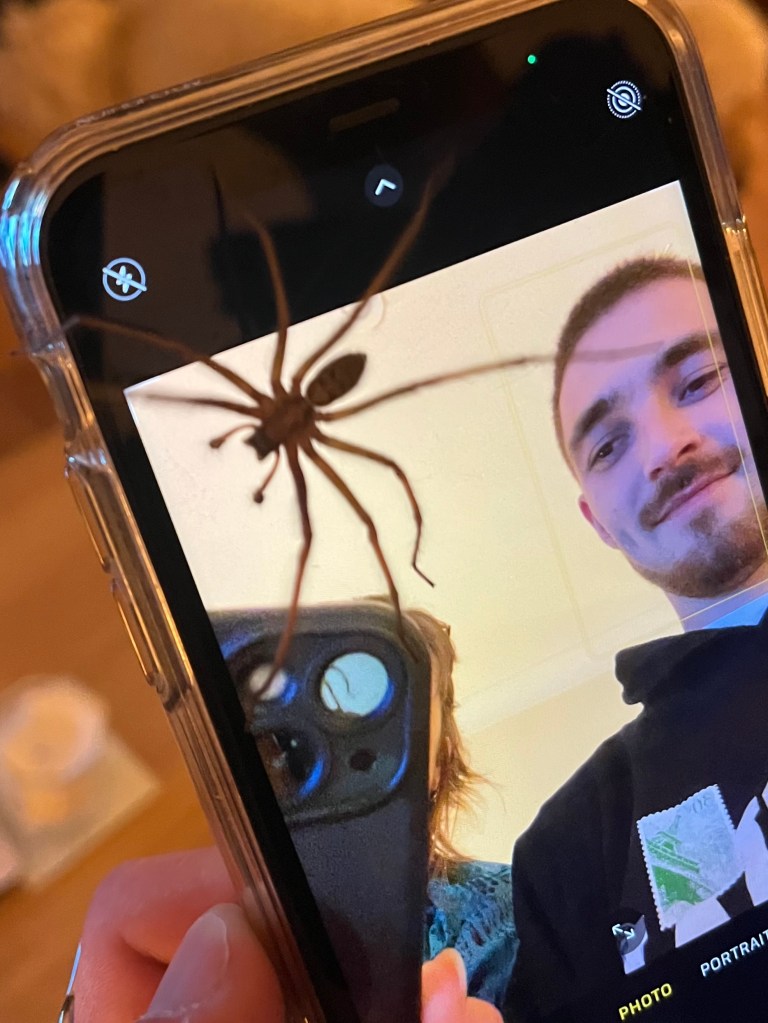
My son Jasper in an old photo that reappeared on Facebook recently. I have since discovered that disposing of house spiders outisde might not be the most humane thing to do after all!

I’ve had a couple of interesting spider-related experiences this week. The first was in a lofty old house which had vaulted ceilings, beautiful mature oak beams and hanging chandeliers.

The owner was apologising because she had noticed the amount of cobwebs dotted around the high beams and light fittings. She explained that the webs had quickly reappeared thanks to fact she had removed the bowls of chestnuts she usually kept around the house to deter spiders from setting up home.

“Are you sure it works?” I asked. She nodded emphatically and said the cobwebs had been absent while the chestnuts were in situ yet materialised very quickly after they’d gone. She believed the nuts emitted a pungent smell that was repugnant to our arachnid housemates.

I became very excited at the prospect of reducing my household dusting burden by the mere introduction of a few nuts, and checked whether she meant plain chestnuts or horse chestnuts. She used the plain chestnut and I vowed to find out more.

What I discovered was that whole, fresh chestnuts are surprisingly difficult to get from your local supermarket after Christmas. Thankfully, they are available online and I’m sure you could pick some up at a wholefood shop too.

The recommendation to use chestnuts to deter spiders has been around for a long time. The following was published in Nature magazine in May 1874: “Can any of your readers establish the truth of the following assertion? Spiders’ webs are never found upon beams from the Spanish or sweet chestnut tree, even when the timber is several centuries old. The keeper of the ruins of Beaulieu Abbey, in Hampshire, asserts that this is a fact, and the buildings of the Abbey, where beams of Spanish chestnut are used, are free from the invasion of spiders. His attention was drawn to this four years ago, and since then his observations have not thrown any doubt upon its accuracy.”

I could not find the answer to the writer’s question, but I have found several sources that say the claim has never been scientifically proven and is just an old wive’s tale. Some Cornish schoolchildren did their own experiment a few years ago with spiders and conkers which, along with walnuts, are also said to posses spider-repelling properties. However, the critters trotted merrily over the conkers, none the worse for being in contact with the noxious nuts. I will put some chestnuts around my house and see what happens. I’d love to know if you have tried it – or anything else – to keep your home spider and cobweb free.

The second spider-related incident came when I opened up Facebook and at the top of my feed was a picture of my son holding up his mobile phone upon which sat a huge eight-legged monster. It was a photo I had posted 18 months ago after having an unsettling encounter with the beastie. For some reason, a friend had recently commented on it which set off a whole new chain of reactions and comments from friends, some of whom hadn’t realised it was an old post, and that they had already commented when it originally appeared in 2024!

Despite the fact it was old news, it was fun to revisit it and read all the comments of horror, with some people suggesting that an arachnid of such proportions must have hitched a ride from a distant land. Our native house spider can grow surprisingly large and yet is harmless, while being really good at keeping down the population of other annoying pests like flies and mosquitoes.

During my research, I read something that made me quite distraught. We do not kill spiders at home, but capture them and deposit them outside on the assumption that it is the most humane way to deal with them. 

Apparently not. According to what I have read, house spiders cannot live outside for very long, so unless they are able to find somewhere warm and sheltered where they can spin a web to catch food, they will die.

If there is a spider scuttling about my bedroom, I will never be able to sleep, and yet, if I chuck it outside like I have been doing, I might be sentencing it to a lingering death.

So what the heck am I supposed to do now?

Do you have opinions, memories or ideas to share with me? Get in touch with me using the ‘Contact’ button on the top right.

This column appeared in the Darlington & Stockton Times on Friday 23rd and the Ryedale Gazette and Herald on Wednesday 21st Jan 2026

Bugged by same problem each year

Thrips are a persistent problem for crop farmers – and are getting worse each year according to Billy Goode. Picture by Billy Goode

Thrips look like a tiny splinter against the skin, and make you itch like mad! Picture by Billy Goode.

I was contacted by a friend, Billy Goode, who farms and runs a kiln-dried log business not far from the top of Sutton Bank.

He sent me a link to a July 1905 Guardian newspaper column called ‘A Country Lover’s Diary’ which had struck a chord with him. Entitled ‘The Trouble with Thrips’ the piece describes what an utter nuisance these insects can be, especially to farmers.

He’d sent it not only because it might be of interest, but also because they were making his working day a misery. He explained: “It’s every year as soon as the temperature is above 24 degrees. We call them harvest bugs or thunder bugs – it’s markedly worse than it was five years ago.” Not only are they a pest for farmers, but they also land on our skin and clothes, and can be very irritating, as described in the 1905 Guardian article below:

‘Thrips are a plague to the farmer and a cause of much annoyance to everyone else; they are so very tiny, measuring only about one-twelfth of an inch, that it seems absurd to think that they can damage wheat. Unfortunately it is their small size that makes them so difficult to deal with, and the tiny larvae suck the juices from the growing grain and cause it to shrivel up. Those of us who are not farmers are not much troubled by the male thrip, for it is wingless, but the flying female bumps up against our faces, settles and walks about, unless it is unfortunate enough to fly right into our eyes, when it dies a watery death, much to our discomfort.’

I know exactly the tiny black bug in question. They are very thin, longer than they are wide, and look a little like a splinter on the skin. I also know how much it tickles when, on a close summer’s day, they land on your skin and wriggle about. Imagine dozens of the things plaguing you while you’re trying to work!

There are at least 150 species in the UK, with males and females both winged and wingless (some of which hitched rides on cargo ships to land on our shores after 1905), and most are named after the particular plant they are most commonly found upon, such as the pea, onion, gladiolus, privet and honeysuckle, as well as the western flower thrip and the glasshouse thrip. We ordinary folk would probably not be able to tell the difference between them, but we will have seen the evidence, such as pea pods with a grey/brown blight on the outside, flower petals with white squiggly lines on them where the pigment has disappeared, leaves with a whitish bloom on them, or malformed buds and foliage, all signs of thrip activity. This is caused by the way the little blighters feed – by puncturing the outside layer of the plant and sucking out the juicy insides.

Another sign of thrips are tiny black speckles on leaves, which is evidence they have used that particular bit of plant as a toilet.

Although plants can recover, the damage can affect crop yields and if you are a commercial farmer, your customers will not be happy with disfigured produce. For example people are unlikely to buy your peas if the pods are covered in blight, even if the peas inside are perfectly fine. You will not be able to sell flowers if the petals have marks or the leaves black speckles all over them.

Thrip activity can introduce viruses that cause far greater problems, particularly for cereal and vegetables crops. The virus is transmitted into the plant because of the thrips breaching the outer protective layer leaving an open channel for it to enter, in the same way we humans can contract an infection through an open wound.

Thrips are difficult to stop because they breed for most of the year, each producing one to two eggs per day over their 45-day life cycle. They go from egg to full grown adult in around two weeks.

Obviously there are chemical solutions, but a more planet-friendly method is to encourage natural predators, such as lacewings, ladybirds and thrip-loving mites that disrupt the breeding cycle.

Do you know a tried and tested method of thrip control you can pass on to poor Billy?

Do you have opinions, memories or ideas to share with me? Get in touch with me using the ‘Contact’ button on the top right.

This column appeared in the Darlington & Stockton Times on Friday 15th Aug and the Ryedale Gazette and Herald on Wednesday 13th 2025

Find your nesting instinct

Our fake wasp nest made from a brown paper bag hung on the gazebo to deter the buzzy pests

As I write this, I have just come back from a weekend away where one of my closest friends got married. It was a super occasion, small and informal, in which we celebrated the official union of two lovely people.

The day after they held a garden party where we could gather again to mull over the celebration. Several of us chose to sit in a spot under a gazebo while we chatted and enjoyed our drinks.

No sooner had we sat down than we began to be pestered by wasps. There were lots of them hovering around, determined to steal a sip of whatever we were drinking, or to take a closer look at our faces, our hairstyles or our clothes. It was extremely annoying and put a bit of a dampener on our enjoyment.

Some people are not troubled by wasps, calmly ignoring them or batting them away, while others shriek, leap from their chairs and flee as if pursued by wolves. I’m on the calmer end of the wasp-fear spectrum and my favourite dispersal method is waiting until they are close and then blowing at them as hard as I can so they are tossed away in a mini hurricane. This method is fine if they appear just once or twice, but if they are a persistent nuisance then the constant blowing makes it appear that my lung has collapsed.

Although wasps are more likely to sting than bees, they are still only supposed to do that when they feel threatened. However they are extremely territorial about their nests, and if they deem anyone or anything to be a danger to it, they will attack. I used to think it was an old wive’s tale that if you kill a wasp, its mates will come to take revenge, but in fact it is sort of true. A squished wasp emits a pheromone that alerts its comrades nearby who rush to the scene to leap into defensive action.

There are those who will defend this polarising insect. A few years ago I got talking to a country gentleman about wasps and mentioned my natural dislike of them. He insisted they got a bad press and went on to explain why they behave like they do in late summer, which I must admit, made me sympathise a bit with their irritating behaviour around this time of year. Although I have mentioned this tale before, it is worth repeating.

He explained that the wasps that annoy us are usually worker wasps and they are a bit Jekyll and Hyde. For the first half of the year, they are the benign Dr Jekyll, their job being to maintain the nest and provide food for the growing colony. In these early days of summer, insects and grubs are plentiful, and the busy wasp is too preoccupied finding enough protein to feed the ever-hungry brood so have no need to bother us humans. Once the colony is established, however, they are no longer of use and are cast out like a layer of surplus middle management. Suddenly they are homeless, and food supplies run thin. Competition with other redundant hungry wasps is fierce and in a desperate bid to survive, they will take whatever they need wherever they can find it. At this time of year, they crave sugar, and our penchant for al-fresco dining provides them with an oasis of sweetness in an otherwise barren landscape.

On the positive side, wasps are excellent pollinators for our fruits, flowers and crops, and also extremely efficient at pest control. Some sources I’ve read say that if it wasn’t for the wasp, we would be overrun with destructive insects that would make our lives misery.

Back to my garden party. One of the guests suggested a tactic to inflate a brown paper bag and hang it up nearby, shaping it to look like a nest. This then fools the wasps into thinking that they have infiltrated another colony’s territory, and so they buzz off in fear of being attacked to bother someone else.

So we did exactly that. We found a paper bag and hung it up. Sure enough, within a few minutes, the wasp botherers had vanished. Try it out for yourself and let me know your results!

What pest-deterring tactics do you recommend?

Do you have opinions, memories or ideas to share with me? Get in touch with me using the ‘Contact’ button on the top right.

This column appeared in the Darlington & Stockton Times on Friday 18th and the Ryedale Gazette and Herald on Wednesday 16th July  2025

Beavering away to tackle flooding

Beavers have incredible skills when it comes to building dams (Picture: Forestry Commission)
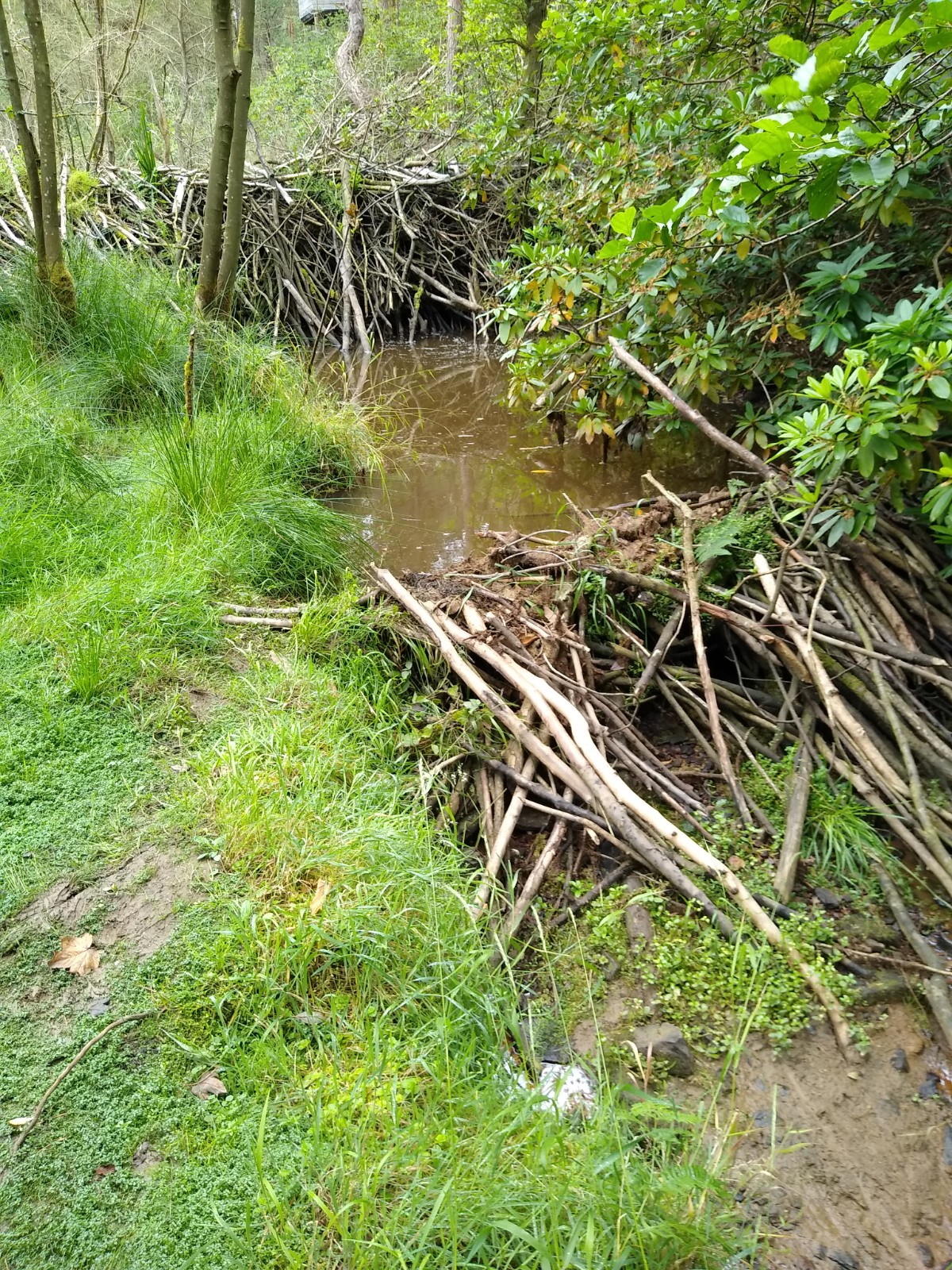
A beaver dam that is part of the Slowing The Flow, Pickering project which embraces natural resources to help to prevent flooding downstream


I received a fascinating email from reader Mike Potter, who got in touch via my Countryman’s Daughter webpage (countrymansdaughter.com).

Mike told me that in 2008 he was part of a study with three universities to examine and improve flood management in the Calder Valley area. Named ‘Slow The Flow’ (STF), it evolved into a national charity which educates the public, government and private agencies in natural flood management, sustainable drainage systems and other renewable methods of managing and working with the environment. Living in a flood-prone yet beautiful county like North Yorkshire, we must applaud people like Mike and his colleagues, many of whom are volunteers.

Mike set up the ‘Slowing the Flow, Pickering’ scheme where they have embraced the amazing skills of beavers to build dams upstream from areas prone to flooding. These dams calm the water flow, meaning that when we have sudden and significant rainfall, they act as ‘brakes’ on the speed of the current, reducing the likelihood of devastating flooding further downstream. This approach has been remarkably successful and adopted elsewhere, as reported in this paper on a number of occasions.

Mike explained: “Slowing the Flow at Pickering is exploring new approaches to flood management, working with nature to try and store more water in the landscape and slow its passage downstream. Whilst this will not prevent all flooding, it is expected to reduce the frequency of future floods in Pickering, as well as deliver a range of other benefits to the local environment and community.”

On a slight tangent, Mike also wrote: “I‘ve just been ploughing through the transcript of a 2008 interview with Malcolm Shaw, a retired senior drainage board engineer, which mentioned that the River Ure changes its name to the Ouse below Swale Nab.”

This piqued his interest, and he found an article about it with a logical suggestion that OS map surveyors had created the error and that the name should really change at Swale Nab, which is the confluence of the Ure and Swale. “It would appear that this was Mr Shaw’s understanding too. That still didn’t explain the name change from Ure to Ouse though, but the article coincidentally referenced the interesting and plausible theory in one of your articles about the possible origin of the name York coming from Ure/Yore, and the reason for the two different river names.”

The article he was referring to was my column from way back in April 2021 where I wrote about the fact that the River Ure changes its name to the River Ouse a few miles south of Boroughbridge. Back then I said: “An unusual feature of the Ure is that after it passes a place called Cuddy Reach just west of the village of Linton-on-Ouse, it is thenceforth known as the River Ouse. Usually, when one river flows into another, it takes on the name of the main waterway. So when the rivers Swale and Nidd enter the Ure, that is where they end, and the water continues its south-eastern voyage under the name ‘Ure’.  However, when the water reaches Cuddy Reach, a seemingly insignificant stream called Ouse Gill Beck enters the Ure and in an audacious takeover, snatches the grander river’s name and from then on the waterway is known as the Ouse all the way down to the Humber. So why the name change?”

We still don’t know, but at the time I wondered if it was down to the Old Bretonnic language and the fact that the Ure stemmed from an old word meaning ‘fast-flowing’, and the Ouse from a word that meant ‘slow flowing’. Those familiar with the river know that up in the Dales, it runs fast but slows downs once it hits the lower plains of the Vale of York, and hence the two names reflect the change in character of the flowing water. I believe their origins lie in the oral evolution of the language spoken by those living around the river.

I just love stuff like this which can only come from readers like you getting in touch with me. I truly welcome your messages and will always reply. If you have written to me and think you’ve not had a response, please check your junk and spam email folders – or try me again

Do you have opinions, memories or ideas to share with me? Get in touch with me using the ‘Contact’ button on the top right.

This column appeared in the Darlington & Stockton Times on Friday 20th and the Ryedale Gazette and Herald on Wednesday 18th June 2025