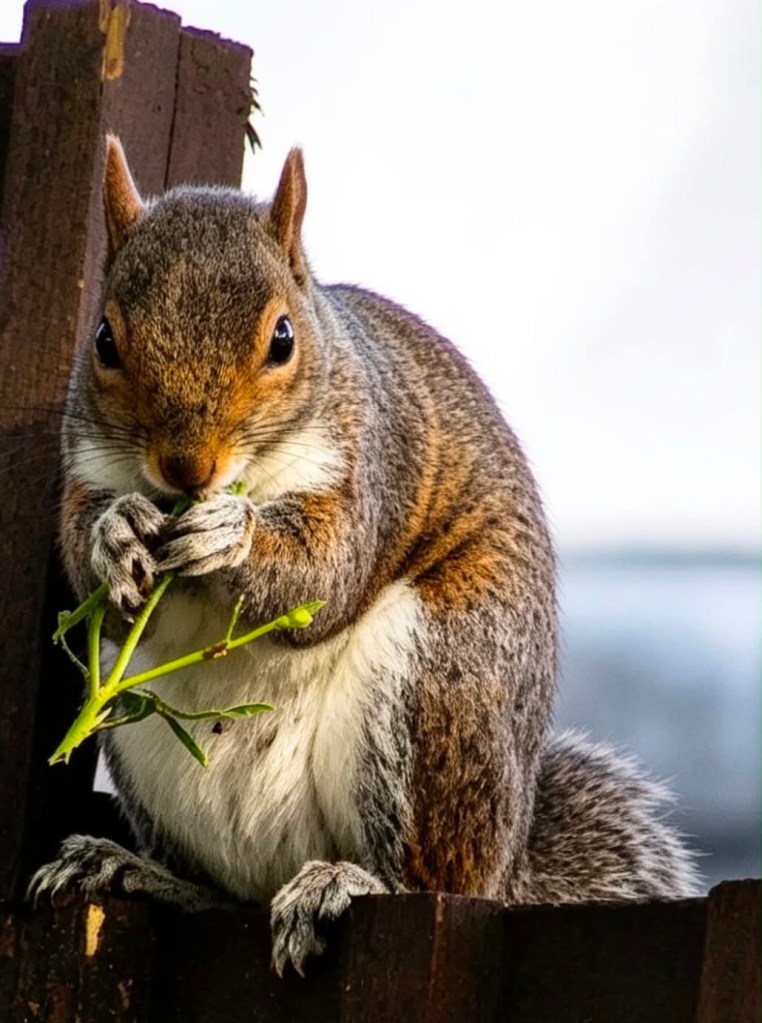
Autumn is well and truly established now, and the signs of Nature preparing for winter are all around us. The trees are shrugging off their beautiful cloaks of reds, browns and yellows as the leaves let go of their hosts and tumble to the ground.
I was on one of my regular dog-walking routes the other day when I passed a small enclosed area near an electric substation and was surprised to see no less than four squirrels ferreting around on the ground. When they noticed me they all froze mid-movement, as if the tune had suddenly stopped during a game of musical statues. Seconds later they scattered in unison to the safety of the nearby foliage.
The ground was covered in a carpet of freshly fallen leaves and, as I suspected, the tree they had tumbled from was an oak. The squirrels were of course hunting for acorns.
You may have noticed that squirrels are highly active at the moment. These industrious bushy-tailed rodents have a fair bit of work to do to prepare for the cold weather. Because they do not hibernate, squirrels need to stock up on enough food for the barren days ahead as well as insulate their home with layers of leaves and moss so they survive the chilly months of hardship.
You can spot their nests high up in the trees, at least six metres from the ground, looking like giant scruffy basketballs lodged in the branch forks. They can be mistaken for the nests of big birds like magpies or crows, but to spot the difference (if you have good eyesight or a pair of binoculars) is to look for twigs with leaves woven into the sides of the nest. Birds only use leafless sticks for their home-building projects.
The squirrel is arguably one of our cleverest mammals, as demonstrated by the way it ensures its own survival. When food is plentiful, it will collect the surplus to store for later in a habit known as ‘caching’, which comes from the French word ‘cacher’ meaning ‘to hide’. The grey squirrel digs small shallow holes to conceal such delicacies as acorns, beech nuts, chestnuts and walnuts. Rather than bury them all in the same place, they scatter them around a wide area surrounding their nest, thus ensuring that if one cache is found by a thief, they will not lose all their loot in one fell swoop.
They try not to broadcast to others where they are burying their precious edible treasures either and are known to dig a hole and pretend to bury a nut if they think they are being watched by a rival. Then they scamper off to find a safer place to stash their booty.
At the risk of upsetting fans of their much admired and less prolific relative, the red squirrel, I think the grey was given the bulk of the intelligence genes when they were handed out. Reds have a habit of hiding their winter stash in a single spot (known as a ‘midden’) which means they leave easy pickings for eager competitors like the grey. You’d think they’d learn once their hoard had been stolen a couple of times, but alas not.
If you stay still and watch a squirrel for a while, you might spot another clever trait such as shaking or sniffing an acorn or a nut. By doing this, the squirrel is testing whether it has been invaded by a weevil because its sound and smell will be abnormal. If they detect the grub, these omnivores will consume the food immediately, weevil and all. Had they buried it, it would either have gone rotten, or it would have been consumed by the weevil by the time winter came.
There is some debate as to how accurate the squirrels are in retrieving their own stashes, which often occurs months after they buried them. There is evidence that they use their powers of smell alongside their memories to detect the exact spot where they secreted a particular nut. However they regularly steal supplies hidden by their neighbours too. Whether they think they’ve found their own nuts, or are aware they belong to someone else, is hard to tell.
My guess is that these Artful Dodgers of the natural world know full well but just don’t care.
I’d like to pass on my sincere condolences to the family of Mick Gisbourne who passed away last week and whose wonderful squirrel photo accompanies this week’s piece. It is one of many excellent images he allowed me to use over the years. RIP Mick.
Do you have opinions, memories or ideas to share with me? Get in touch with me using the ‘Contact’ button on the top right.
This column appeared in the Darlington & Stockton Times on Friday 13th and the Ryedale Gazette and Herald on Wednesday 11th Oct 2026

