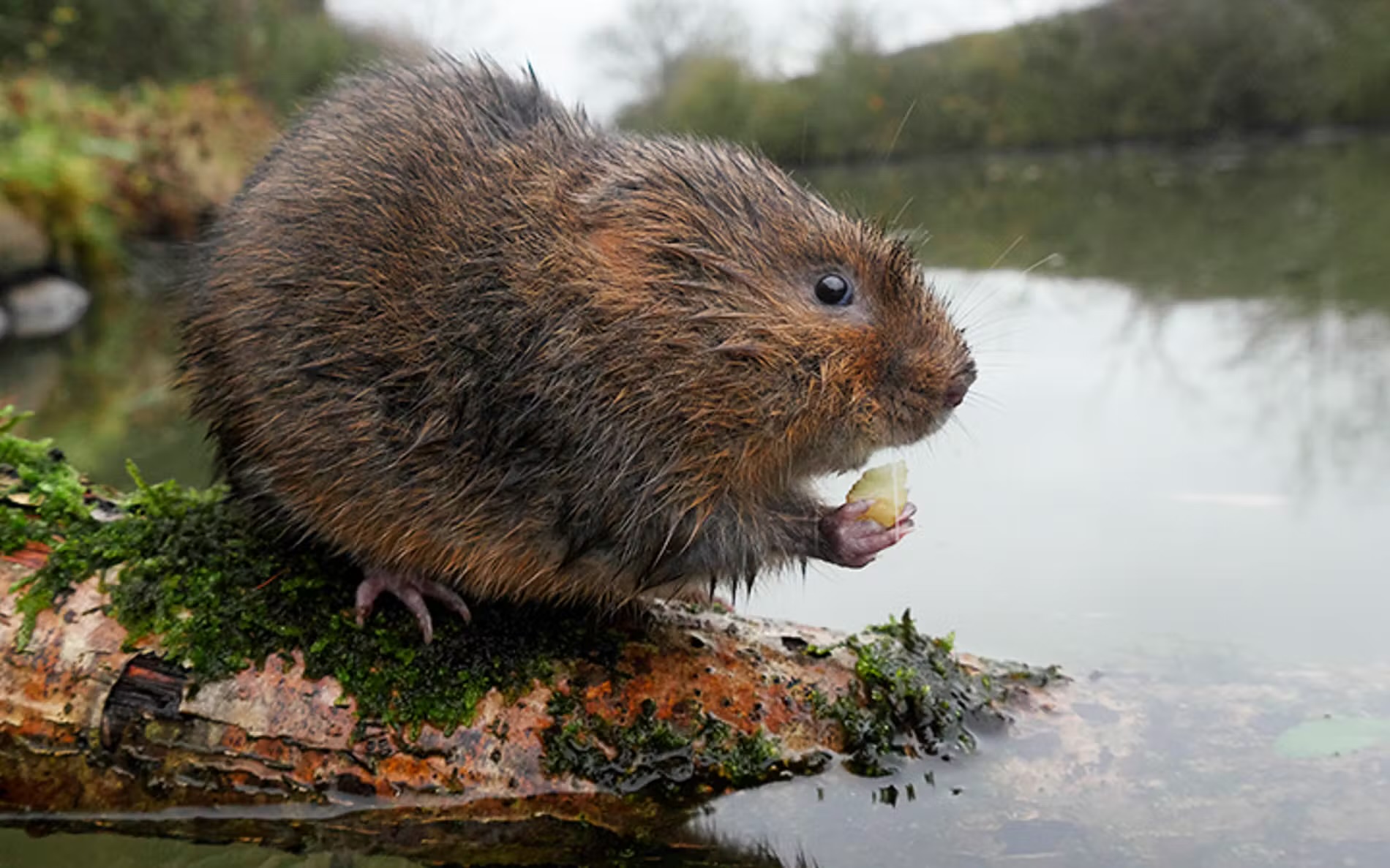
A native water vole, not to be confused with a brown rat. Image: Canal and River Trust
Following my recent columns about invasive plant and animal species, Martin Lacy contacted me on the subject of crayfish. If you recall, our smaller native white-claw is under serious threat from its larger American cousin, the signal.
Martin said: “On our great chalk streams they hold regular hunting sessions (for signal crayfish) and invite locals to come along and help with the promise of a feast at the end…They taste quite delicious.”
It’s certainly one way to reduce the population, but before you race to your local waterway to catch yourself a tasty free dinner, hold your horses. You need to get permission from the Environment Agency who are monitoring the handling of the troublesome crustacean and don’t grant permission to any old Tom, Dick or Harry. You must give valid justification for removing them from the water, and evidence that they will be dealt with responsibly. Having what might be termed a ‘Crayfish Drive’ like the one Martin describes, is a tried and tested way of controlling the pest.
There are some companies who have taken this concept to a commercial level and supply the hospitality trade with wild signal crayfish. But the rules and regulations are rigidly applied to ensure the disaster of ‘farms’ that led to this crisis does not happen again.
They use specially-designed traps that do not impinge on the other flora and fauna within the waterways, and ensure habitats are left as undisturbed as possible. Once caught, the crayfish have to be kept in special tanks with secure lids. Companies are not allowed to sell ‘live’ crayfish (we don’t want them escaping again!), but use what they describe as humane methods to ‘despatch’ them so that they have an instant and pain-free end. When you understand the harm caused by these invaders, it must surely be preferable to support this industry than import them from countries such as China, which is where the bulk of the current crayfish supply comes from.
Crayfish thrive in chalk streams, and the businesses I found operate in Hampshire and East Anglia. Although their activities help our native white-claw, they only have the capacity to operate on limited stretches of water, which means signals are still far too numerous in waterways that are not fished. However, there are some successes, such as the release earlier this year by the Yorkshire Crayfish Forum of 182 juvenile white-claws into Haverdale Beck on the North York Moors that were successfully bred in a hatchery based at Flamingo Land near Pickering.
While researching this, I came across more information about our precious water vole, whose numbers have been slashed by another invasive pest, the American mink. It has been reported that over the past 50 years, numbers of water voles have reduced by over 90%. It is our most threatened mammal.
If you are familiar with Ratty from Wind in the Willows, then you will know what a water vole looks like. They are often mistaken for a water rat, but are not closely related to that rodent. I also discovered another startling fact – there is no such thing as a water rat in Britain. What many people call water rats are in fact brown rats or water voles.
Water voles, like white-clawed crayfish, are truly beneficial to our waterways, and help maintain the right environment and water quality for it and other creatures to prosper.
It is often mistaken for a rat, as they are similar in colour and size, although the vole is more brown, while the rat more grey with a pale belly. Voles have a blunt nose, while the rat’s is pointed. Voles have a furry tale and ears that are close to its head. Rats have pink hairless tails, and pink ears that point up from its head. Lastly, water voles are herbivores, while rats eat any old rubbish, be it meat or veg.
It’s not all doom and gloom though. In April this year, Yorkshire Water reported unexpectedly healthy colonies of water voles at locations in the Peak District and South Pennines. They can also be seen in the River Esk on the North York Moors, thanks to a lottery- funded preservation project.
Have you been lucky enough to see a water vole in the wild? Do let me know!
Do you have opinions, memories or ideas to share with me? Get in touch with me using the ‘Contact’ button on the top right.This column appeared in the Darlington & Stockton Times on Friday 14th Oct and the Ryedale Gazette and Herald on Wednesday 12th Oct 2026