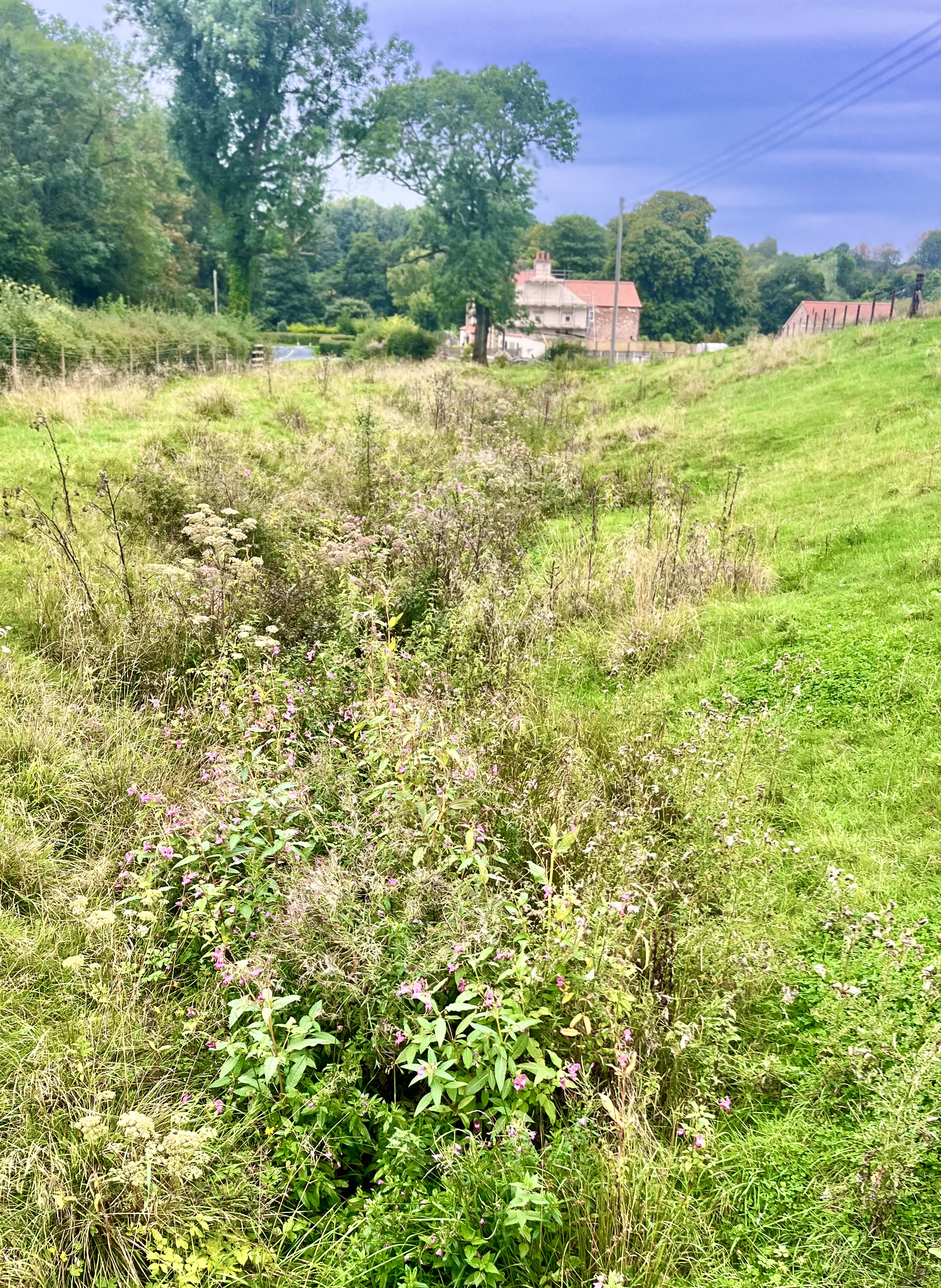
My plea for specialist advice on how to tackle Himalayan Balsam has borne fruit. Reader Janice Brabban owns some woodland near Darlington and was horrified to discover it had been invaded by the troublesome plant. She was having difficulty finding out the best way to deal with and dispose of it, and felt she hadn’t received consistent advice from the places she had tried so got in touch with me.
Thankfully, help has come from a proper expert, in the form of Chloe Lawrence, Invasive Species Project Manager at Tees Rivers Trust, who explained that there isn’t one single body with responsibility making the situation more complicated. “Landowners, under the Wildlife and Countryside Act, are responsible for ensuring they don’t spread onto other land, although they don’t have to eradicate them. Councils and local authorities are responsible for invasive species on public land, but not private land. There are also several government bodies, including the Environment Agency, DEFRA and the Non-Native Species Secretariat, all of which have different roles in areas such as prevention, early detection and management.”
She advises: “Himalayan balsam is relatively easy to manage by pulling it out by the roots, making sure the stem is snapped below the first node. It can also be strimmed or scythed, and there is even a biological control being used.”
Chloe acknowledges that although management is easy in theory, the plant is prolific across the UK. “Unless management starts at the source, ideally at the highest point of a watercourse, seeds will continue to spread downstream from upstream populations. Balsam has explosive seed pods which can spread up to seven metres, with each plant producing up to 800 seeds.”
But there is hope, because the Tees Rivers Trust has been awarded a £3 million National Lottery Heritage Fund grant specifically for an invasive species programme, which aims to establish a more unified approach.
Further advice came from George Winn-Darley, a member of the Yorkshire Derwent Catchment Partnership and the Yorkshire Esk and Coastal Streams Catchment Partnership, who is very familiar with our irksome bloom.
“It’s important that balsam is managed before it goes to seed,” he says, “particularly as the hot weather this year has meant it is seeding earlier than usual…The plants can be left in a pile away from any watercourses and will wilt down within a few weeks…They can also be burned on site, although I’d be particularly mindful of the wildfire risk across the UK.
“Seeds only remain viable for about two growing seasons, so if you can stop it going to seed for two consecutive years then you should be able to eradicate that patch…It is shallow-rooting and very easily pulled up by hand but if you lie it on the ground it is likely to root again so you need to hang it over a branch or something so that it dries out and dies which it will do very quickly. You can just knock the flower heads off before they start to create seed, cut it or strim it or just beat it with a stick to prevent it flowering and seeding…By and large you don’t see it in fields that are cultivated or grazed because those activities stop it from thriving.”
Balsam crowds out other vegetation on river banks, but dies back in frosty wether leaving exposed bare soil which is then washed away by winter rains causing the banks to erode, which also leads to water quality problems.
John Aston, from Thirsk, added, “Bees like it, and my beekeeping friends report that balsam honey is excellent. But most fishermen (and I’ve been one since 1963) loathe the stuff.”
John agrees with the methods on how to get rid of it but warns: “It’ll be back. All it needs is a seed on a walker’s boot or in an angler’s net.”
He lists other invasive species affecting our waterways, such as poisonous giant hogweed, knotweed, signal crayfish, demon shrimps, mitten crabs and American mink, all of which have thrived to the detriment of local flora and fauna.
Coincidentally, I came across a native white-clawed crayfish reserve on a walk near Threshfield Quarry in the Dales where information boards explained the threat from its foreign cousin.
But I’ll save that story for a future column.
Do you have opinions, memories or ideas to share with me? Get in touch with me using the ‘Contact’ button on the top right.
This column appeared in the Darlington & Stockton Times on Friday 18th and the Ryedale Gazette and Herald on Wednesday 16th September 2026

