Experts sowing the seeds of change

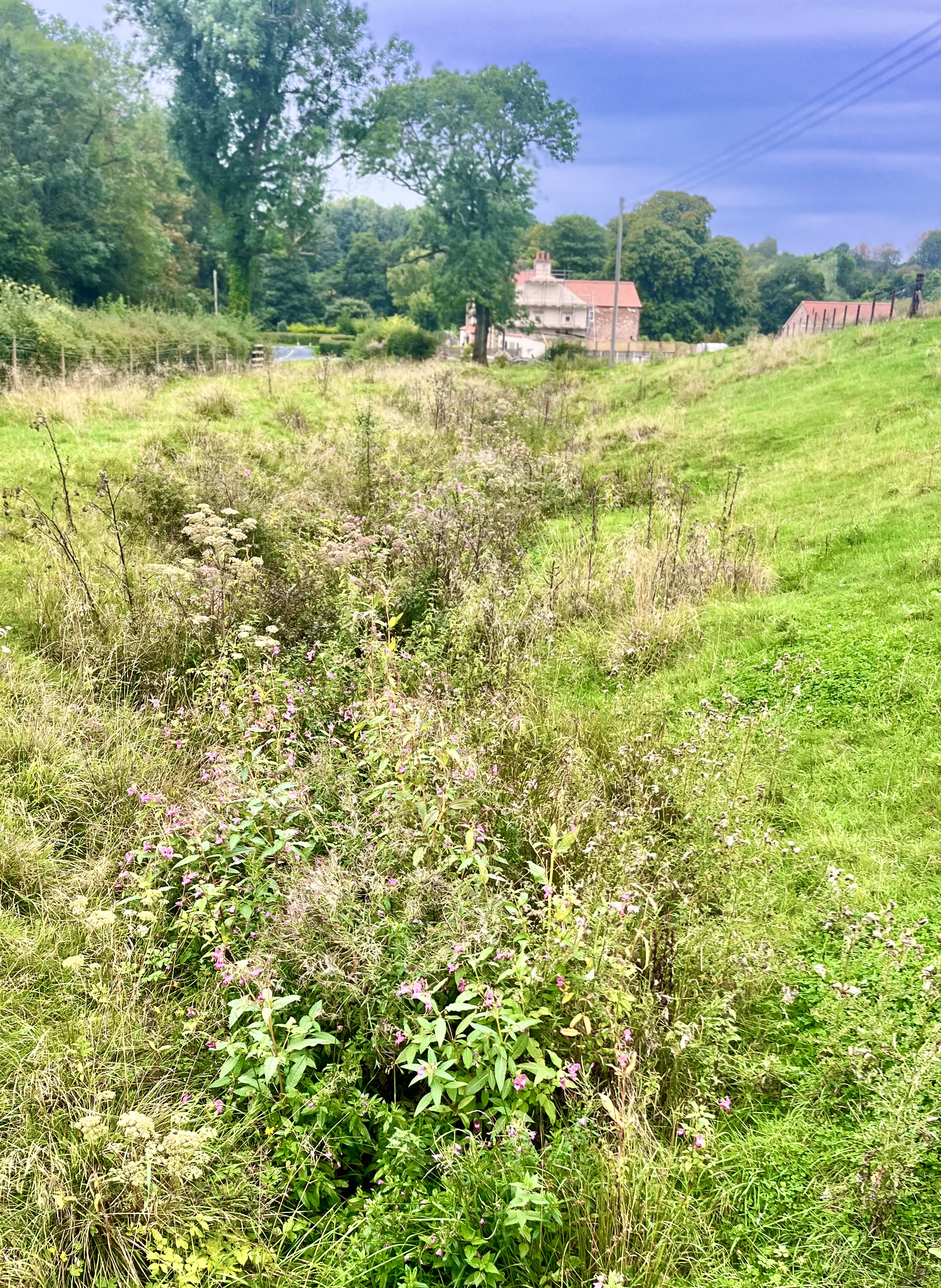
The invasive Himalayan Balsam is colonising the banks of our streams and rivers leading to erosion and the decline of native insects and plants. But experts have told me how it should be tackled

My plea for specialist advice on how to tackle Himalayan Balsam has borne fruit. Reader Janice Brabban owns some woodland near Darlington and was horrified to discover it had been invaded by the troublesome plant. She was having difficulty finding out the best way to deal with and dispose of it, and felt she hadn’t received consistent advice from the places she had tried so got in touch with me.

Thankfully, help has come from a proper expert, in the form of Chloe Lawrence, Invasive Species Project Manager at Tees Rivers Trust, who explained that there isn’t one single body with responsibility making the situation more complicated. “Landowners, under the Wildlife and Countryside Act, are responsible for ensuring they don’t spread onto other land, although they don’t have to eradicate them. Councils and local authorities are responsible for invasive species on public land, but not private land. There are also several government bodies, including the Environment Agency, DEFRA and the Non-Native Species Secretariat, all of which have different roles in areas such as prevention, early detection and management.”

She advises: “Himalayan balsam is relatively easy to manage by pulling it out by the roots, making sure the stem is snapped below the first node. It can also be strimmed or scythed, and there is even a biological control being used.”

Chloe acknowledges that although management is easy in theory, the plant is prolific across the UK. “Unless management starts at the source, ideally at the highest point of a watercourse, seeds will continue to spread downstream from upstream populations. Balsam has explosive seed pods which can spread up to seven metres, with each plant producing up to 800 seeds.”

But there is hope, because the Tees Rivers Trust has been awarded a £3 million National Lottery Heritage Fund grant specifically for an invasive species programme, which aims to establish a more unified approach.

Further advice came from George Winn-Darley, a member of the Yorkshire Derwent Catchment Partnership and the Yorkshire Esk and Coastal Streams Catchment Partnership, who is very familiar with our irksome bloom.

“It’s important that balsam is managed before it goes to seed,” he says, “particularly as the hot weather this year has meant it is seeding earlier than usual…The plants can be left in a pile away from any watercourses and will wilt down within a few weeks…They can also be burned on site, although I’d be particularly mindful of the wildfire risk across the UK.

“Seeds only remain viable for about two growing seasons, so if you can stop it going to seed for two consecutive years then you should be able to eradicate that patch…It is shallow-rooting and very easily pulled up by hand but if you lie it on the ground it is likely to root again so you need to hang it over a branch or something so that it dries out and dies which it will do very quickly. You can just knock the flower heads off before they start to create seed, cut it or strim it or just beat it with a stick to prevent it flowering and seeding…By and large you don’t see it in fields that are cultivated or grazed because those activities stop it from thriving.”

Balsam crowds out other vegetation on river banks, but dies back in frosty wether leaving exposed bare soil which is then washed away by winter rains causing the banks to erode, which also leads to water quality problems.

John Aston, from Thirsk, added, “Bees like it, and my beekeeping friends report that balsam honey is excellent. But most fishermen (and I’ve been one since 1963) loathe the stuff.”

John agrees with the methods on how to get rid of it but warns: “It’ll be back. All it needs is a seed on a walker’s boot or in an angler’s net.”

He lists other invasive species affecting our waterways, such as poisonous giant hogweed, knotweed, signal crayfish, demon shrimps, mitten crabs and American mink, all of which have thrived to the detriment of local flora and fauna.

Coincidentally, I came across a native white-clawed crayfish reserve on a walk near Threshfield Quarry in the Dales where information boards explained the threat from its foreign cousin.

But I’ll save that story for a future column.

Do you have opinions, memories or ideas to share with me? Get in touch with me using the ‘Contact’ button on the top right.

This column appeared in the Darlington & Stockton Times on Friday 18th and the Ryedale Gazette and Herald on Wednesday 16th September 2026
Not so blooming marvellous


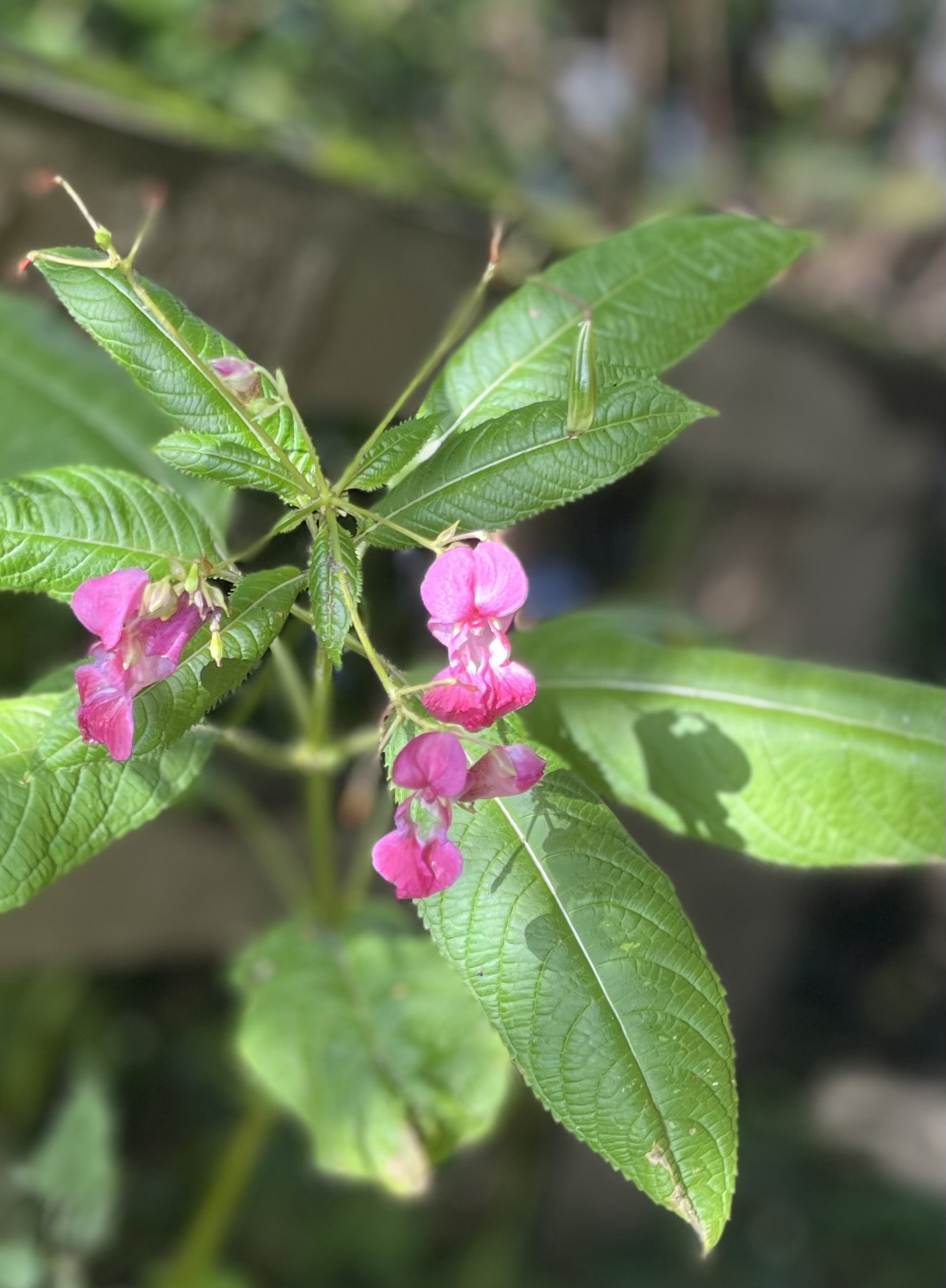
Himalayan Balsam is pretty but not a native species and needs to be tackled
Following my column about Himalayan Balsam, a very pretty yet invasive species of plant, reader Janice Brabban got in touch.

“Thank you for your article drawing attention to non-native invasive species affecting our countryside. I am a woodland owner in the Darlington area. An ancient spring arises in the wood and forms a stream lower down in the paddock. Last year I was horrified to find the stream surrounded by Himalayan Balsam, which I immediately removed (the roots are very shallow and can be pulled out easily). I have had to do the same this year albeit to a lesser extent. I found it difficult to obtain any advice regarding its control and disposal. Mine had come from surrounding hedgerows. The council advised disposing of the plants in the garden waste skip at the local recycling centre – I didn’t do that, bad advice, I thought.”

Janice wondered whose responsibility it was to control these types of invaders, particularly when they have such a detrimental effect on our own flora and fauna, but her efforts produced little useful advice. “I ended up drying and burning. I can see that it is still growing happily in local hedges around here, the Heighington area, and as far as I can see it will continue as no-one seems to know what it is or what to do with it. So thank you for bringing the problem to the attention of your readers.”

A few days later, Janice provided a further update: “I think I have got rid of mine for now but will check every year and pull it out. I know the organisations are low on resources, so don’t want to point the finger. Since finding it on my land I have become more eagle-eyed and spotted it in places in back of hedges etc. where I had just never noticed before.”

We have to thank people like Janice for taking the matter seriously and doing what they can to limit the damage. Nevertheless it would it would be good to hear from someone who is familiar with Himalayan Balsam and knows the best way to deal with it. Are there any protocols in place when a new invasive species is found, I wonder? Do get in touch if you can enlighten us further (contact details at the end of this column).

I was also contacted by Richard Simpson after he had read my piece about tuberculosis and the sanatorium at Benenden in Kent. The sanatorium was established in 1905 after many postal workers fell ill with TB but could not afford to take time off for treatment, and thus continued to infect their colleagues.

“My grandfather’s cousin Archibald Leary was a post office worker in Wigan who contracted TB and died in the Benenden Sanatorium on 30th December 1930 aged 38. From his Post Office sickness pay records, he was given sick pay for just short of 12 months before being ‘sacked’ on 14th July 1929. It was good to see he was still able to use the sanatorium even though he was no longer an employee…He was buried in Wigan on the 2nd January 1931…It is quite remarkable how quickly he was buried following his death considering the need to transport his body over the New Year period.”

It’s sad to know that Archibald may have been saved had antibiotics been available then. Yet he did have access to the best help and knowledge around at the time through belonging to the Post Office society. Even after his employment ceased he was still treated at Benenden Sanatorium (although you’d have hoped so seeing as it is likely his working conditions may have contributed to his illness!).

Richard added: “Are you aware of any records of admissions to the sanatorium so that I can do some more research?”
I passed on some ideas to Richard as to where to go to find out more information. When I wrote the society’s history book in 2005, they had a museum, as well as the ‘Rising Mercury Society’, a ‘club’ for ex-patients that had been going for many, many years and which may be able to help Richard to access historical records.

Let’s hope he gets back in touch if he finds out any more about Archibald’s touching story.

Do you have opinions, memories or ideas to share with me? Get in touch with me using the ‘Contact’ button on the top right.

This column appeared in the Darlington & Stockton Times on Friday 28th and the Ryedale Gazette and Herald on Wednesday 26th August 2026

Deflowering the Truth

Himalayan Balsam, although pretty, is a threat to many native species of plant and wildlife. Picture by Hans at Pixabay


I love a Great British ‘Whatever’ competition show. I’ve avidly watched every episode of Menu, Bake Off, Pottery Throwdown and Sewing Bee. I’m not sure why they captivate me because I’m not an enthusiastic cook or baker; the last time I made pottery was when I was 12; as for sewing, I was thrown out of the Needlework class and dumped in Art because I was so bad. The last straw came when I accidentally sliced clean through my school tie as I was trying to cut a thread on the sewing machine. I was concentrating so hard on the thread that I failed to notice my tie dangling dangerously close to the scissors.

In the latest series of Sewing Bee, I’m rooting for Anna because she comes from our very own York. She’s also really really good, not only at sewing, but at coming up with exceptionally creative ideas for the very difficult challenges that are set every week.

The theme of the most recent episode I watched was Reduce, Reuse and Recycle and each of the three tasks challenged competitors to repurpose garments that had had a previous life.

On that note, I’m delighted that it is now cool to buy things from charity shops, when in the past it was assumed that only people who could not afford to buy from new darkened those doors. The amount of waste created by what we wear is mind boggling and I’m proud to admit that as I write this I’m wearing a dress that I’ve had for at least ten years. A few years ago, it would have been embarrassing to admit such a thing. Like most of us, I’m not a saint though, and still possess far too many clothes made in countries with dubious environmental and employment track records.

Last night, our girl Anna won the prestigious ‘Garment of the Week’ by producing an outfit with a clear and poignant environmental message about the threat of ‘invasive species’.

She chose Calico cotton which was used in India as far back as the 11th century. Named after the port city of Calicut in the province of Kerala, the unbleached cotton became popular in England thanks to the rise of the East India Company (1600 – 1874). Home-grown manufacturers of wool and silk were up in arms as their businesses suffered drastic reductions in revenue as their products fell out of favour thanks to this ‘invasive’ new material. It led to the Government introducing the Calico Acts of 1700 and 1721 which curtailed the import and wearing of Indian Calico.

Anna’s second nod to ‘invasive species’ came in the printed design that she placed onto the fabric. She chose the delicate pink flower of the Himalayan Balsam plant. It is indeed a very pretty bloom which looked gorgeous against the neutral palate of the unbleached cotton. But this plant is a wolf in sheep’s clothing.

According to the Royal Horticultural Society, the species was transported from the Himalayas in 1839 and planted in private gardens. But its fantastic ability to self-propagate meant that it soon transgressed its domestic boundaries and infiltrated the wild, settling among the moist surroundings of our waterways. When mature, its seed pods explode, casting the contents far and wide. It grows quickly, depriving native plants of space and light. Our bees and dragonflies lose places to forage while the natural habitat of our river-dwelling wildlife diminishes.

Anna’s stunning dress reminded us of the dangers of introducing species from another climate into our own, no matter how beautiful they may look. Most sensible adults today know the risks of smuggling living things from foreign shores into this country. There are unmissable warning signs at airports and ports that leave you in no doubt about the risks involved.

So I was flabbergasted when someone I had only just met admitted that she loved gardening – and had stashed some bulbs from her holiday in Australia in her luggage which she had then planted in her garden. Just like those who planted Himalayan Balsam in their 18th century gardens, not for one moment did she pause to consider what might happen if the plant crept beyond her own wall.

I can forgive an 18th century gardener who would have had little knowledge of the potential consequences.

But that’s as far as my forgiveness goes.  

Do you have opinions, memories or ideas to share with me? Get in touch with me using the ‘Contact’ button on the top right.

This column appeared in the Darlington & Stockton Times on Friday 7th and the Ryedale Gazette and Herald on Wednesday 5th August  2026