Mark my woods

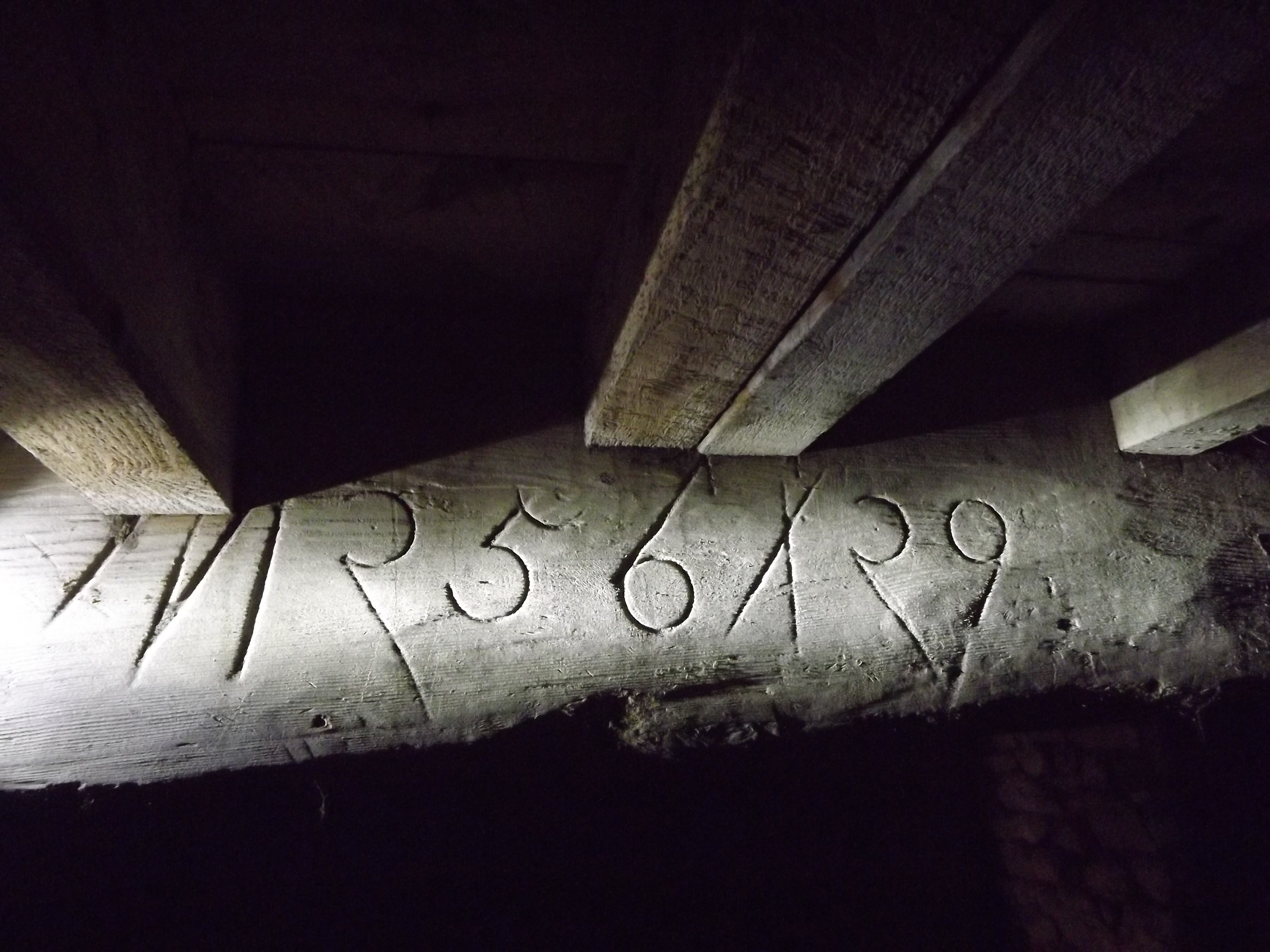
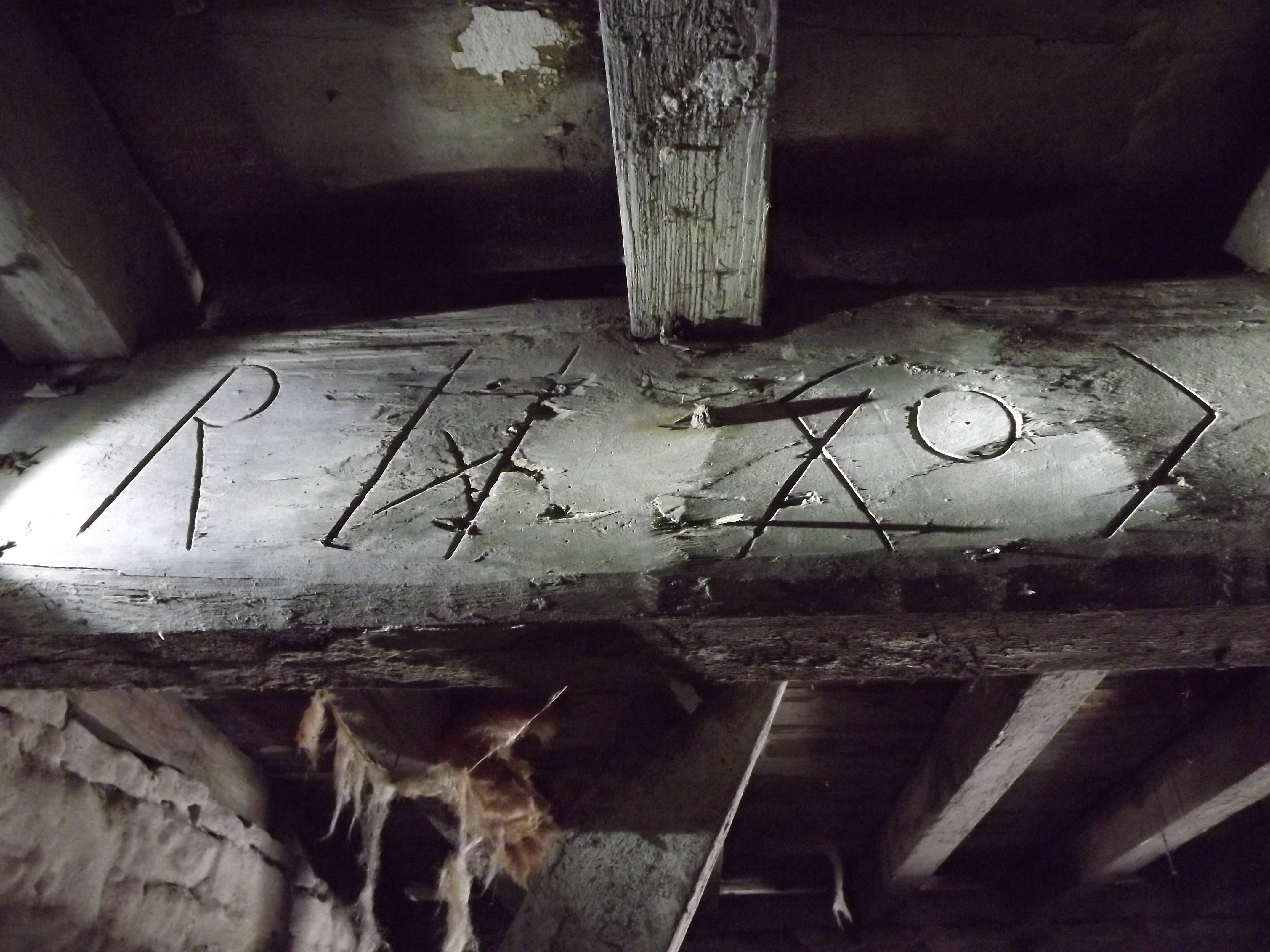
In the 19th century large timbers shipped across from the Baltic and would have come into ports such as Hull. The marks are a code for where and who supplied and shipped the timbers, but their meaning is still not known. Pictures by John Buglass

Following my column about ancient reused timbers in house construction a few weeks ago, I’ve been contacted by a couple of experts who kindly took the time to put me straight on a few points.

Marine archaeologist and timber expert John Buglass was the first to correct an oft-repeated story:

“I am afraid that the reuse of ‘shipwreck’ in old buildings is a long held belief that has very little or no actual evidence. Several things to consider about ‘shipwreck’ timbers: firstly they are a wreck so are often badly damaged and salt affected (and often in remote locations); secondly if it was from a broken up ship at the end of its working life…then that is 30-40 years in a marine environment; thirdly, why would you go to great expense and time to haul timbers from the coast to an inland site when other closer sources would be available? That is not to say there aren’t some coastal buildings that have reused ships’ timbers but they are very few in number.”

So the romantic story that I have perpetuated is a load of old cobblers. How disappointing! I have a feeling my dad would be raising an eyebrow at me from above for not having dug a little deeper. I am always happy to be corrected by people with more expertise than me though!

John added: “We are only too familiar with the claim of many historic property owners that their house is made from ships’ timbers, despite the fact that it is located many miles from the nearest navigable waterway, let alone the coast. But this does little to dissuade the long held and cherished belief…This even extended to an inspection of Wordsworth’s Dove Cottage which could plausibly have had timbers from boats operating on nearby Grasmere, but sadly this was not the case. There are, of course, the exceptions which prove the rule. Probably the most extensive example is Chesapeake Mill on Bridge Street in Wickham, Hampshire. This Grade II* listed building is substantially built from American longleaf pine from the dismantled remains of the American warship Chesapeake which was captured in 1813 by HMS Shannon and dismantled in Portsmouth in 1819.”

He continued: “Hauling large timbers from the coast into the Dales is true in some cases…some large timbers in 19th century buildings have what are known as Baltic timber marks. These are from large timbers shipped across from the Baltic where the forests still had large trees that could be used for substantial buildings. They would have come into ports such as Hull and been hauled inland on oxen carts. But these are new timbers, not reused ones. The marks are a code for where and who supplied and shipped the timbers, but I’m not sure how they are decoded.”

John agreed to look at the marks on the timbers I featured in my article, but I will save his comments for a future article.

Jim Coulson is a wood scientist and member of the International Wood Committe of the International Council On Monuments and Sites. He has a spent more than 30 years working with timber and backed up John’s comments:

“The reuse of old timbers is a common thing to have done, but almost never from ships – that is just an Old Wives’ Tale. Most ships’ timbers were the wrong dimension and shape for building houses, and it was far more common to reuse timbers from barns or other disused buildings.”

He added: “Reused beams are found in many older properties, but it is usually impossible to say where they came from…Identification of such beams is possible as to wood species, but their origins would be almost impossible to pin down without some sort of documentary evidence.”

As for the marks I noticed on the beams in ‘my’ house, he states: “The marks…are usually carpenters’ marks, often used to identify the particular craftsman, but sometimes, in very old mediaeval buildings, they were used to ward off evil, and known as ‘witches’ marks’.”

I’ve written about witches’ marks myself, and my dad was an expert, his theory being that some were connected to Catholic martyr Father Nicholas Postgate.

Were they, as Dad believed, a decoy to fool Catholic persecutors into thinking that a safe house was occupied by pagans rather than treasonous Catholics?

Do you have opinions, memories or ideas to share with me? Get in touch with me using the ‘Contact’ button on the top right.

This column appeared in the Darlington & Stockton Times on Friday 24th and the Ryedale Gazette and Herald on Wednesday 22nd July 2026

Wood you know this?

Marks on a beam in an old house I visited recently
Marks known as ‘Cats’ paws’ on some kitchen cupboard doors
I wonder if this beam had a previous life?

As the writer of a weekly column, I am always on the lookout for topics, and am often the cause of long delays on walks or trips out as I pause to take pictures and investigate something that has caught my eye.

It could be a flower in the grass, a bird in a bush, a crop at the side of the road or a door in a building –  if the moment takes me, I can be distracted by just about anything!

This week my attention was drawn to the varieties of wood found in a house I was visiting that had beautiful exposed beams and a hand built kitchen. The house was constructed in the 1800s and every piece of timber had its own unique character.

The kitchen was the first to captivate me because it was built from a rich sandy-gold timber with distinctive patches of what I assumed were small knots in the wood. Looking more closely, I could see they were really rather beautiful, each a little cluster with its own distinct patterns, colours and characteristics, the sort you only find in material crafted by nature. Obviously this kitchen was much younger than the house’s supporting beams and struts, but it nevertheless fascinated me.

A bit of net surfing when I got home led me to discover that this particular wood is known as ‘cluster elm’ and the patches that I was looking at are sometimes referred to as ‘cats’ paws’ thanks to their resemblance to a paw print. The clusters are actually dormant buds that have been prevented from growing for some reason, such as an injury to the tree or a disease. Elm is prized for the beautiful patterns created by the swirling nature of the grain which, alongside the cats’ paws, can become a stunning feature on a piece of furniture.

I then spent some time looking closely at the various oak timber beams, A-frames and Y-frames that were holding this lovely old house up. As I mentioned, each piece had its own unique character, with some carved in asymmetrical shapes, and others marked with a series of nicks or puncture marks all over the beam. I wondered why these were created, because it seemed to me that they had been done with purpose, although I was not sure what that purpose was. Were they to allow the wood to breathe, for example? I have since seen other more modern pieces of oak that have also been marked in a similar way. Perhaps a timber expert or someone who works with wood can enlighten me!

I do know that back in the old days, salvaged materials were commonplace, and wood from shipwrecks would be rescued and used in the construction of houses. Some of these beams appeared to have come from one such misfortune, and I could visualise the aged interior of an old sailing ship or the mast upon which the giant sails would be hoisted. I wondered about the tales they could tell and from what kind of ship they had come – was it a trade ship, carrying precious cargo that had perished in a storm, or perhaps a pirate ship, causing havoc on the high seas until karma came a calling, despatching it to a dreadful end on our coastal rocks?

In the 19th century, the North Sea was one of the most perilous stretches of water to sail upon due to frequent storms and scant interest in safety. Shipwrecks were commonplace and if you visit some of the old houses in places like Whitby, Staithes and Robin Hood’s Bay, you’ll see that residents were not shy about reclaiming the timber that had once sailed proud upon the ocean wave.

However it would take an expert to correctly identify where these beams were from, because the house is some way from the coast. Useful timber was also salvaged from buildings that had collapsed or burned down and from what I have read, the style of the markings and the types of joints will tell us more about the original place from which they were salvaged.

I have more photos, but sadly there is not enough room for them all to fit on this page, so if an expert out there is reading this, please get in touch and I will send them on to you!

Do you have opinions, memories or ideas to share with me? Get in touch with me using the ‘Contact’ button on the top right.

This column appeared in the Darlington & Stockton Times on Friday 3rd and the Ryedale Gazette and Herald on Wednesday 1st July 2026