Hog your ground for good weather

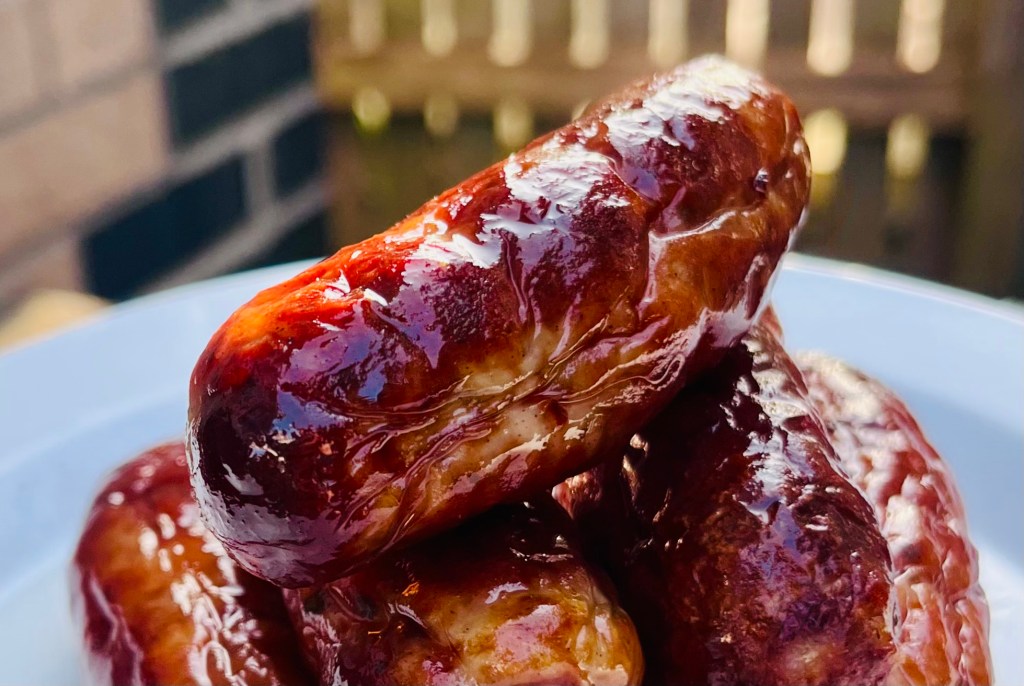
Burying a sausage is supposed to bring good weather for your wedding. Where did this idea come from?

I am at that stage in my life where I have to admit that I am too old and too lazy to keep myself up to speed with all the new stuff with which my kids’ generation busies itself.

My children are at the age where their peers are getting married and having babies and the trends that were around when I married and started my family are now considered prehistoric. They don’t know how lucky they are not needing to be a contortionist to get a squirming screaming toddler strapped safely into a car seat in the cramped space in the back of the car. Instead of facing towards the seat in front, they are now mounted on a pivot enabling them to be swiftly swivelled to face you at the car door. Why it took so long for us to work out that was a sensible idea baffles me. Having said that, I’m pleased for all the physiotherapists across the world who benefitted from the extra work the old seats created.

It’s coming up to wedding season and I wonder if certain traditions we used to embrace have bitten the dust too, such as not seeing your groom the night before, or making sure you wear something old, new, borrowed and blue. Do Gen Z still do theses things? Gen Z refers to anyone born between 1997 and 2012, the first generation to have had access to the internet, social media, and smart devices for their whole lives.

For those of us startled by that fact, we can be comforted in the knowledge that one thing has remained constant – the unpredictability of our weather. I know that global warming means we experience more severe weather events than we used to, be it days of torrential rain, or days of hot sun. But we still cannot be certain that it won’t pour down when we plan an outdoor occasion.

But fear not. There is a tried and tested method to be sure of fair weather for your nuptials; for brolly-free wedding photos, you have to bury a sausage.

Yes. Bury a sausage.

I’m sure dozens of questions are right now flashing through your head, such as does it matter what kind of sausage? Is it cooked or raw? Does it have to be a particularly big sausage to give yourself a better chance of success? Where are you supposed to bury the sausage? And how long in advance of your wedding should you put it in the ground? Who should bury the sausage? Bride? Groom? Celebrant? And lastly, has anyone measured the success rate of sausage burying?

To find out more, I went straight to an expert, my Gen Z niece, who was married three years ago at a very risky time of year, October, where you’d think the chance of adverse weather put it firmly in sausage-burying territory. But the day was really beautiful, with the golden autumn sunlight providing a stunning backdrop for the photos. Had they concealed a fortuitous frankfurter to achieve it?

She replied: “We did not…I’d actually never heard of it until last week – my friend was at a wedding and they did it.”

Apparently it is the social media platform TikTok that is responsible for the viral trend, and its origins are shrouded in mystery. Google tells me that German-speaking countries, famous for their plethora of porky delights, are responsible, but when I asked my Bavarian friend about it he said he had never heard of such a custom.

As for the dozens of questions you might have, some sources say it has to be a raw sausage, others cooked. Some say bury it at the bride’s home, others at the wedding venue. Some say conceal it the night before, others a week before. As for the kind of sausage, I think you have free rein from chunky bratwurst to skinny chipolata.

I did find one source that suggested it descended from the tradition of Groundhog Day, where the beaver-like mammal comes out of hibernation to predict the weather for the coming months. The connection is that a hog is a kind of pig, which is the source of most sausages, and putting it in the ground means you bury it. Hence groundhog.

Personally, I think everything I’ve just written is a load of old groundhogwash.

Do you have opinions, memories or ideas to share with me? Get in touch with me using the ‘Contact’ button on the top right.

This column appeared in the Darlington & Stockton Times on Friday 5th and the Ryedale Gazette and Herald on Wednesday 3rd June 2026

Growers forcing the issue

Bell-shaped terracotta pots are used to ‘force’ rhubarb in the kitchen garden at Rudding Park Hotel’s Michelin-starred restaurant ‘Fifty Two’.

I’ve been lucky to have another short trip away, this time to the swanky Rudding Park Hotel near Harrogate for a spa break with my best friend. We started doing this in 2021 when we realised we had been friends for 50 years. We felt that was something worth celebrating, and ever since have made sure just the two of us get away once a year for a weekend of pampering somewhere nice.

We had an afternoon in the spa followed by some relaxing treatments and ended up with a delicious meal in the restaurant. It is a very impressive place, and the staff are clearly well trained, doing everything to make sure your stay is as trouble free and relaxing as possible.

The next morning we were not in any hurry to leave, and decided to have a potter about the grounds. This time of year is hands down my favourite, and we admired the magnificent horse chestnut trees swathed in blossom candles and the rhododendron and azalea shrubs resplendent in their floral frocks of pink, orange, yellow and purple.

There was also a kitchen garden where they grow a huge variety of produce to supply the Michelin-starred restaurant, Fifty Two, which sits just next door. Guests are welcome to wander round and jealously marvel at how healthy and robust the 500 varieties of fruit, veg and herbs look. I’m impressed by people who can grow things. I manage to kill every green specimen that crosses my path, even the herbs that you get from the supermarket. As soon as I put a pot of coriander on my kitchen windowsill, it keels over and dies.

We were intrigued by some strange elongated bell-shaped terracotta pots dotted about the growing beds, and discussed what we thought they might be. In the end we asked one of the gardeners who was busy weeding. Turns out we were speaking to head gardener Emma Pugh, who is extremely knowledgeable about all things horticultural and she explained it was for forcing rhubarb. I’ve heard of ‘forced’ rhubarb and know that in Yorkshire we have the famous Rhubarb Triangle where commercial growers produce rhubarb in huge sheds that do not let in the sunlight. However, I hadn’t before stopped to think about why they might do that.

Emma explained that by restricting the light, the rhubarb is ‘forced’ to grow quicker in a quest to find the sun, and this produces a much sweeter, flavoursome variety than those left to grow au naturel. The stems are longer and thinner, and less stringy too. The lack of sun also means it has a bright pink stalk as opposed to the more bitter red-green ones we associate with the rhubarb from our back gardens. The dark environment also means rhubarb leaves are yellow rather than green.

The terracotta domes were replicating the forced atmosphere so that the chef can create prettier, sweeter and tastier desserts for his diners. The pots are placed over the rhubarb ‘crowns’ in January, and the plant behaves as if it is still underground, forever reaching up towards the daylight. However, a rhubarb plant should only be forced for one season before it is rested, as it really takes it out of the plant having to put so much effort into trying to find something it never will. So the pots are moved around, with the same plant only being forced once every few years.

Emma also explained that the chef had asked her to experiment with forcing other vegetables to see if it improved their taste too. Other commonly forced vegetables include chicory, sea kale and asparagus, and the technique was popularised by the Victorians who wanted to grow produce out of season. Forcing does not just refer to the lack of light, but also to creating warmer temperatures, such as in greenhouses, to encourage plants to grow more quickly, or out of their normal growing period. And it’s worth remembering, for your next pub quiz, that rhubarb is not a fruit, but a vegetable due to its lack of seeds. 

Do you remember a while back I tried ‘wilting’ dandelion leaves in the way you would cook spinach, after reading a column my dad had written suggesting it? It was awful, chewy and bitter.

I wonder if forced dandelion leaves would taste better?

Do you have opinions, memories or ideas to share with me? Get in touch with me using the ‘Contact’ button on the top right.

This column appeared in the Darlington & Stockton Times on Friday 29th May and the Ryedale Gazette and Herald on Wednesday 27th May 2026

A festive labour of love

For myself and others the marathon task of preparing Christmas dinner is an expression of love for those about to eat it


I’ve had some interesting feedback following my highly controversial column suggesting Yorkshire puddings belonged on the Christmas dinner table, while cauliflower cheese did not.

Reader Mary Raynar says she always makes everything from scratch for Christmas lunch, and adds, startlingly: “And yes to both Yorkshire puddings and cauliflower cheese! It’s a real labour of love and I always joke that next year it’ll be beans on toast, but of course it never is!”

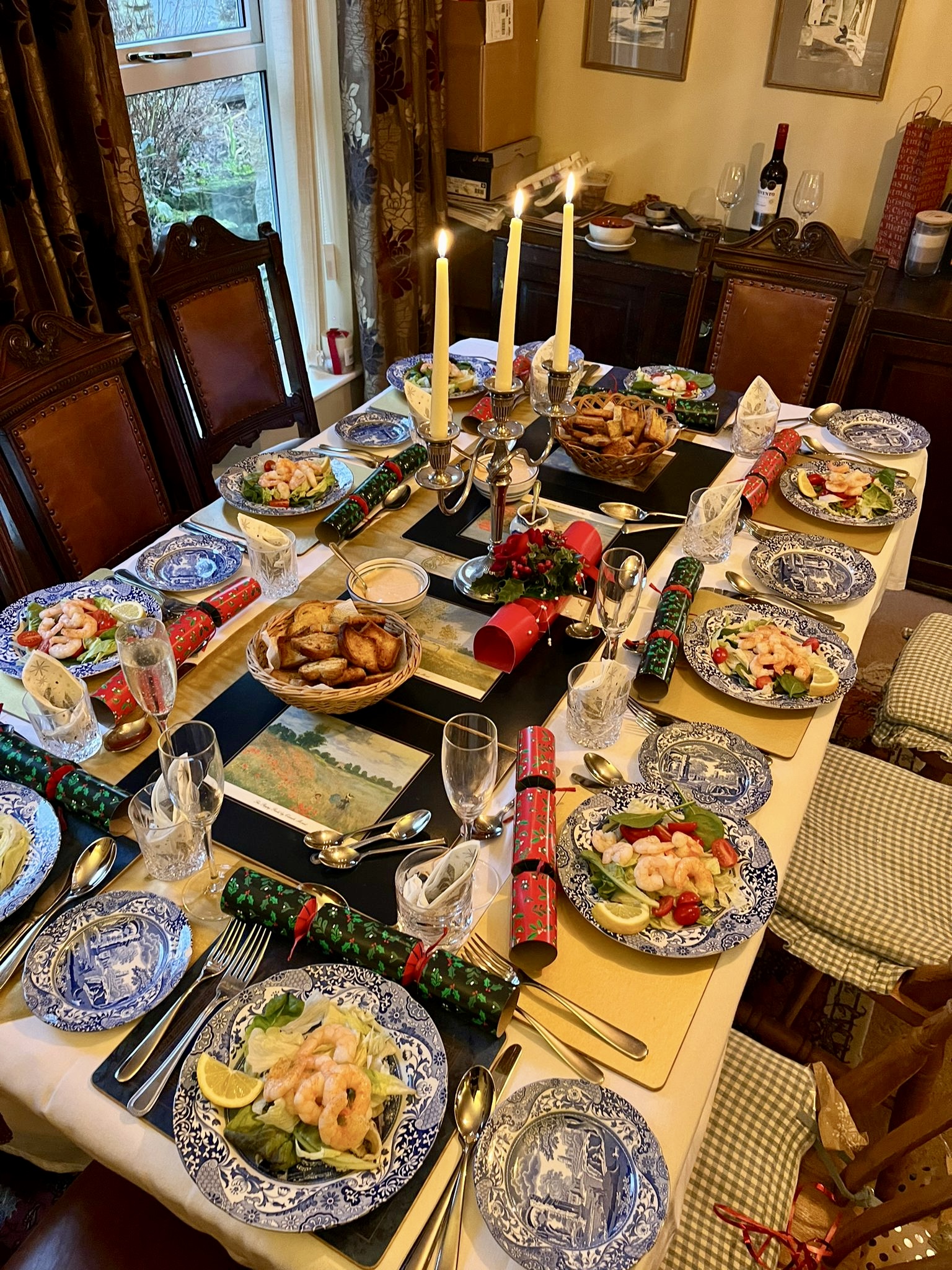
I will forgive Mary’s lapse in judgement on the cauliflower cheese, because, like her, all the hassle and work that I put into that one lunch is my expression of love for those about to eat it. The lengthy preparation is an essential seasonal ritual, capped off by the other ritual of photographing the banquet laid out in all its glory on the festive table.

Yorkshire-born Lynn Catena lives in North America and says: “We didn’t eat Yorkshire puds this Christmas (I wasn’t cooking), but they’re usually on the table. We prefer prime beef rib over turkey because we often celebrate Canadian (October) and US (November) Thanksgiving holidays with turkey.” Lynn didn’t completely miss out on her beloved Yorkshires though: “I did make a few, days before, with beef stew.”

I can understand how Lynn would be all turkey’d out by Christmas after the double Thanksgiving, and some would argue that there are far tastier meats to grace the table than the traditional big bird, which can be quite dry and tasteless, depending on how it is cooked (or who is cooking it!).

Judith Barber is not a fan of roast dinners generally and says: “As someone who hates gravy, I like cauliflower cheese with Christmas dinner. Yorkshire puddings we rarely eat, and I have no preference to their presence at Christmas.”

She adds: “But KFC, I would never, ever eat because of the way their chickens are treated – as a mass commodity – which is why local farmers are so important. And fresh, not fast, food.”

Judith is right about the importance of local farmers and fresh food, and is referring to the Japanese custom of eating Kentucky Fried Chicken (KFC) on Christmas Day, which I also discussed in my column.

The popularity of KFC at Christmas boomed in Japan in the 1970s after branch manager Takeshi Okawara overheard some foreign customers declaring they missed turkey so were ordering a bucket of chicken for Christmas instead. In the blink of an eye Colonel Sanders was dressed in a Santa suit and adverts were being rolled out showing families gathered around a festive bucket of the crispy delicacy. ‘Kentucky at Christmas’ was an instant hit, and 50 years later, four million customers across Japan queue around the block to pick up their Christmas party barrels.

According to KFC’s UK website, the company will only work with suppliers committed to good animal husbandry and welfare standards. They also say they support the global ‘Five Freedoms of Animal Welfare’ which are as follows: 

1. Freedom from hunger or thirst by ready access to fresh water and a diet to maintain full health and vigour.

2. Freedom from discomfort by providing an appropriate environment including shelter and a comfortable resting area.

3. Freedom from pain, injury or disease by prevention or rapid diagnosis and treatment.

4. Freedom to express normal behaviour by providing sufficient space, proper facilities and company of the animal’s own kind.

5. Freedom from fear and distress by ensuring conditions and treatment, which avoids mental stress.

All very noble, and yet a 2022 undercover investigation showed that these standards were not being met at one of KFC’s main suppliers. The chain undertook to investigate and promised to ensure practices improved. I haven’t been able to find out whether that has happened or not.

The thing is, fast food is enjoyed by so many people in this country, including me on occasion, that it is not going anywhere anytime soon, and therefore the best way forward is to keep putting pressure on giants like KFC and other fast food chains to maintain standards and they in turn will put pressure on their suppliers to maintain good animal welfare practices too.  

I think Liz Davidson echoes the thoughts of many a traditionalist Brit when she says simply: “ I don’t really fancy KFC for Christmas lunch.”

Do you have opinions, memories or ideas to share with me? Get in touch with me using the ‘Contact’ button on the top right.

This column appeared in the Darlington & Stockton Times on Friday 9th and the Ryedale Gazette and Herald on Wednesday 7th Jan 2026

Big in Japan

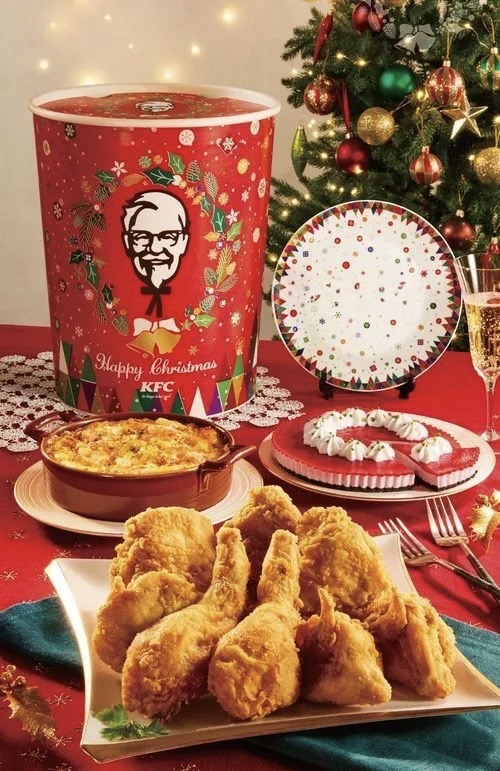
The Japanese KFC Christmas Bucket. Photo KFC Japan
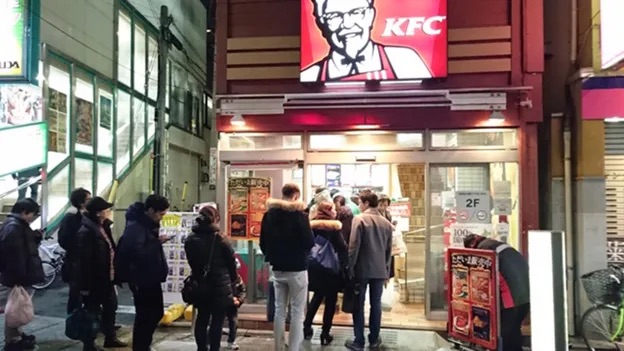
In Japan, people queue for hours to collect their KFC Christmas Bucket of crispy chicken. Photo: KFC Japan


So Christmas is finally here and the TV and radio are crammed with festive programmes, particularly around the food and drink that we will be consuming for Christmas Dinner (I say ‘finally’. It actually approached at breakneck speed and gets speedier with each passing year). I’m a traditionalist and our table will be groaning under the weight of an oversized turkey, piles of roast potatoes, mashed potato, mashed swede, sprouts (just for my mum), various other vegetables, pigs in blankets, oodles of stuffing, bread sauce, cranberry sauce, proper gravy and, of course, Yorkshire puddings.

For those of you who think that Yorkshire puds do not have a place on the festive dinner table, you are wrong. I’m not going to insult your intelligence by providing reasons why, but just know that you are, and always will be, wrong.

Something that definitely does NOT have a place on our table is cauliflower cheese. Anything that is accompanied by a cheese sauce has NO place on the same table as a gravy boat. Cheese sauce next to gravy? Ugh. It’s simply filthy.

Now that is cleared up, I hope your own Christmas lunch was everything you wanted it to be. I have been hearing about some very interesting food traditions in other countries, particularly in Japan where it is common to have Kentucky Fried Chicken on Christmas Day. Yes you read that right. KFC. On Christmas Day.

Sometimes, when I am up to my elbows in a raw turkey, and have not yet peeled the potatoes, carrots, or chopped the veg, and still have seven beds to make up, and the bathrooms to clean, while at the same time realising I have bought two presents for one person, none for another and will have to do some surreptitious present reshuffling, the attraction of nipping out to the nearest fast food place and buying a giant bucket of crispy chicken sounds quite attractive.

But I could go out and buy a giant bucket of crispy chicken any day of the year if I want to. There’s nothing remotely special about it, is there?

To millions of Japanese people, there is. The craze (if it’s fair to call it a craze) began way back in the 1970s. Takeshi Okawara had just opened the first Kentucky Fried Chicken outlet in the in the city of Nagoya, Japan, and according to what could be a myth, he overheard some foreign customers discussing how they missed eating turkey at Christmas and were ordering a bucket of chicken instead. Harvard-educated Okawara, who by 1984 had risen to become the CEO of KFC Japan, spotted a golden marketing opportunity. He started to promote ‘Party Barrels’ to mark Christmas, and the advertising encouraged people to gather and with friends and family to celebrate. The idea took off, and by 1974, Okawara’s idea was adopted nationally with the slogan ‘Kentucky for Christmas’. Knowing what a big deal Christmas was in the USA, Santa-lookalike Colonel Sanders was dressed in a red suit and hat to promote the special festive meal deal.

More people began to flock to the shops to get their seasonal bucket, using it as an opportunity to have a party with loved ones. With only one percent of the population Christian, Christmas it is not a holiday in Japan and purely a secular celebration, similar to the UK marking St Valentine’s Day. Most working families do not have the time to prepare a huge dinner and thus the KFC Christmas Barrel has become the quick and easy meal of choice.

Today, it is by far KFC’s busiest time, with Christmas accounting for a third of the chain’s annual turnover in Japan, and nearly four million people consuming Colonel Sanders’ secret recipe crispy chicken. Customers start ordering their party meals in November, and queue around the block to pick them up, just as we do our turkeys from the local butcher.

KFC Japan’s festive bucket includes pieces of crispy chicken, a ‘meat gratin’ (whatever that is) and a strawberry mousse cake. Here in the UK, we can also buy a similar festive bucket, alongside various other seasonal items, such as the Stuffing Stacker burger.

Next year, if everything gets a bit much, I might be tempted to give it a go. Would you?

However you celebrate, have very Happy Christmas!

Do you have opinions, memories or ideas to share with me? Get in touch with me using the ‘Contact’ button on the top right.

This column appeared in the Darlington & Stockton Times on Friday 26th and the Ryedale Gazette and Herald on Wednesday 24th Dec 2025

Getting it in the neck

Dad wrote more than 2000 Countryman’s Diary columns over 41 years

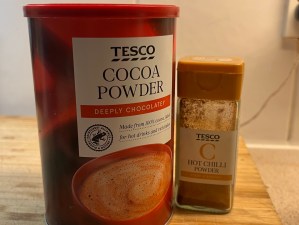
Will either of these help my cough symptoms?

Would you believe this is my 400th column since I took over from my dad in 2017? I’m pleased that I have made it this far without missing one, despite deaths, illnesses and pandemics trying to throw me off my stride.

Dad was committed to his column-writing duties and made sure he submitted them well before the deadline. Of course, my seven and a bit years pale into insignificance compared to his 41 years of service, which means he compiled more than 2000 of them. If ever I achieve that milestone, I will be 91 years of age, which is quite a thought!

Even then though, I’ll be some way off the record of the man who started this column in the first place, Major Jack Fairfax-Blakeborough. His first ‘Countryman’s Diary’ appeared in the Darlington and Stockton Times in 1922, and his last one at the very end of 1975 when he was aged 93. He died on New Year’s Day 1976, and my dad’s first column (a tribute) appeared on 10th January. That means the Major contributed more than 2750 columns, quite a feat. I’d be interested to know if anyone in this country has (or had) written a weekly column for longer.

We columnists are so attached to our little corners of glory that we are loathe to let anyone else step in, even when we are sick. As I mentioned last week, I was rather below par, and am thankfully much better now, although the nagging cough is hanging on. Everyone I speak to seems to have had it and offer the cheery warning that it will ‘go on for weeks’. I really hope not, and if you’ve been afflicted, then I hope you are not suffering too badly.

The fact it is persisting, even though I can function normally, means that I have ditched the Lemsip. I do not like to take medication for too long if I can help it, but the rattly chest is rather annoying so I have investigated some traditional ‘at home’ remedies that are supposed to help.

I have found plenty, although I am not sure I am going to give all of them a go. I am most tempted to try the first one – drinking hot chocolate. Dark chocolate with a minimum 70% cocoa content contains a good dose of theobromine which is a stimulant similar to caffeine. Recent research suggests it is better at suppressing an annoying cough than codeine, and if you melt it and turn it into hot chocolate by pouring into hot milk, the milk will also help you sleep. But I am a little confused. Does the milk override the stimulating effect of the theobromine? Or is it the other way round? I have yet to find out!

Another tip for a persistent cough is to eat mashed turnip. Not only is the vegetable packed full of vitamins (C, A and B) but it acts as an expectorant, that is, it loosens the mucus that causes you to cough. Spicy foods and curries are also believed to do the same thing, so perhaps if I add chilli powder to my mashed turnip I’ll be on to a winner.

There are some remedies that are more suited to survival experts like Bear Grylls than soft old columnists like me. According to Lady Eveline Camilla Gurdon in a self-help manual published in 1893 by the Folk Lore Society, you must place a large, live, flat fish on your bare chest and keep it there until it dies. It is supposed to help with congestion in the chest and ease coughing. She also advises eating roasted mouse or drinking milk that has already been ‘lapped by a ferret’.

If you are suffering from a sore throat and fever, then you can try basting your throat with lard or chicken fat before wrapping your neck with dirty socks. This is similar to the wartime advice of wrapping your neck with a rope dipped in tar. The fumes from the stinky socks & the toxic tar are supposed to help clear the lungs and a blocked nose. I suppose if you die from inhaling poisonous fumes then you won’t be so bothered about your fever, will you.

I don’t know about you but I will stick to eucalyptus oil soaked into a tissue, thank you!

Do you have any interesting home remedies?

Do you have opinions, memories or ideas to share with me? Get in touch with me via the ‘Contact’ tab at the top right of this page.

This column appeared in the Darlington & Stockton Times on Friday 31st Jan and the Ryedale Gazette and Herald on Wednesday 29th Jan 2025