Watch what you wish for


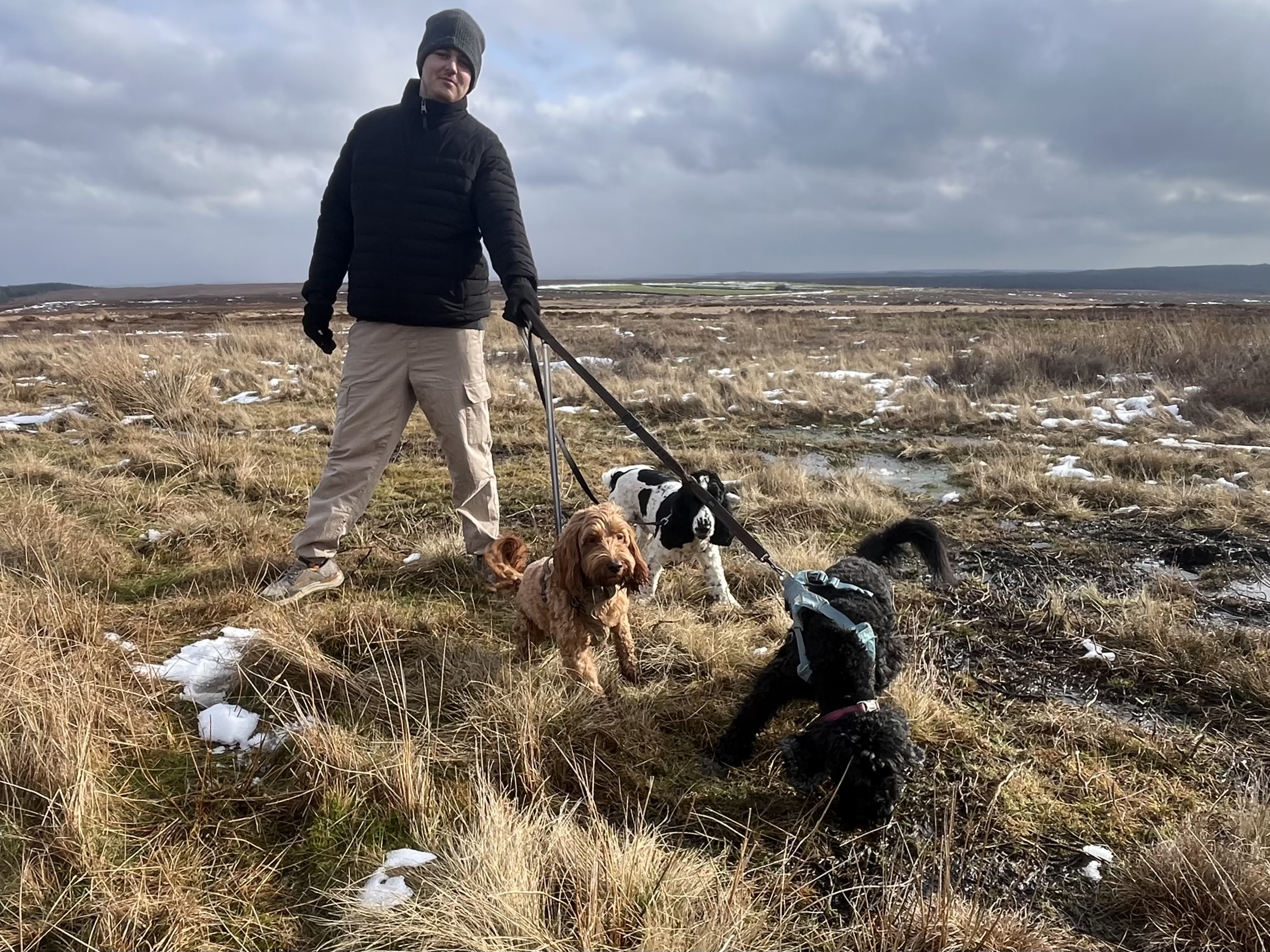
My son Joey and I went to the North York Moors near the site of Hamer Inn to look for the Corkseller’s Grave but were unsuccessful

I’ve had some interesting information about the Corkseller’s Grave that I mentioned a couple of weeks back. If you recall, I quoted a 1990s article written by Paul Grantham in which he explained that our corkseller would have been trekking the moors in the 18th century. Sadly, his threadbare clothes were not enough to protect him one savage winter, and he perished. Hard-up locals would not have been willing to bear the cost of a funeral and so they would have buried him where he was found, which was legal at the time.

My son Joey and I tried to find his grave, but were unsuccessful. I’m thrilled that the writer himself, Paul Grantham, got in touch after reading the column: “I was told, and shown, the Corkseller’s Grave by Dick Bell, the first head ranger of the Moors. He kept the grave marked, and tidied up the stones whenever he passed the site. He told me because he was sure that I would continue to keep it tidy. Sadly, it now appears to be neglected and is in desperate need of some TLC.

“I have records of many unconsecrated graves across the country, some in danger of being lost forever. There is (at least) one other grave on the Moors which beggars belief and will make a wonderful story if written up by someone more skilful than me. There is another story of a missing body which revolves around the little known group of cunning folk called St Mark’s Maidens who operate on the eve of St Mark’s Day. This is April 24th…so it will be here soon.”

I’m looking forward to hearing more from Paul about these mysterious tales, and will of course pass them on to you once I read them for myself.

His comment about St Mark’s Maidens made me want to find out about them, but there was not much that I was able to discover specifically with that name, although there is plenty about St Mark’s Eve.

St Mark the Evangelist was one of Christ’s 12 apostles and is best known for having one of the Bible’s four Gospel books of the New Testament attributed to him. He is the patron saint of many things, including lions, lawyers, opticians, pharmacists, painters, secretaries, interpreters, prisoners and people with insect bites!

I can’t find anything suggesting he is connected with predicting the future or romantic love, which is why it’s a bit odd that the day before his saint’s day is all about ‘divination’, specifically people trying to either find their life partner or determine who is going to die in the coming year.

All sorts of curious practices took place in the hope that at the end, the supplicant would discover the identity of their intended one. Both men and women performed these customs, so would it be that the women were known as St Mark’s Maidens? Would the men then be ‘Masters’?

Rituals included women walking backwards towards a well before circling it three times, also backwards, while wishing to see their future husband. After the second circle, she would peer into the water where the face of her intended would reveal itself. Presumably if she didn’t like the look of him, she’d not complete a third turn!

Another custom was to set the dinner table and leave the front door open. The next person through the door would be your true love. If you didn’t like cooking you could instead visit a church yard at midnight, pluck some grass from a grave and leave it under your pillow. When you awoke, the next person you saw would be THE one.

As for predicting who would pass away, ‘watchers’ would sit in the church porch and at midnight the apparitions of those to die in the coming year would file past. If the watcher at any time fell asleep, then they would be the one to perish. A similar custom was ‘chaff riddling’ where the watcher had to sit by a barn door riddling chaff all night. At midnight the spectres of those who would pass away would parade past. In his book ‘Yorkshire Days’, my dad tells the a story of a female watcher from Malton seeing a coffin being carried by two men.

She was dead within the year.

Do you have opinions, memories or ideas to share with me? Get in touch with me using the ‘Contact’ button on the top right.

This column appeared in the Darlington & Stockton Times on Friday 3rd  and the Ryedale Gazette and Herald on Wednesday 1st April 2026
Hamer Home a family story

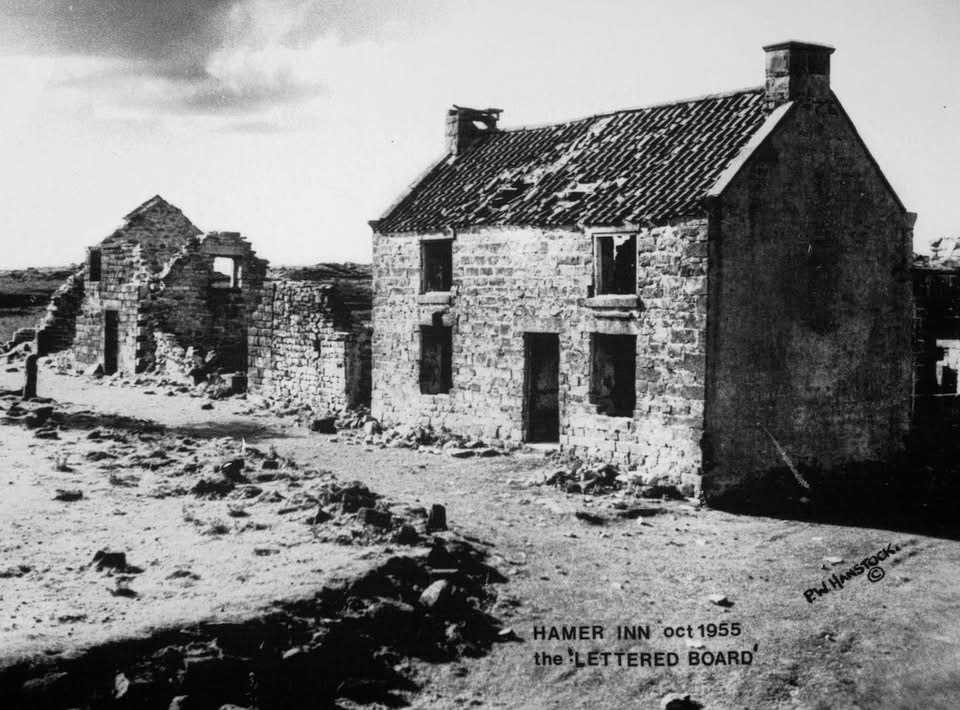
A 1955 photo of the ruins of Hamer Inn, previously known as the Lettered Board. David Ford’s ancestors lived there. Do you have a photo of the inn before it became derelict? Photo: P.W.Hanstock


I received an interesting message from reader David Ford: “I’ve just spotted a picture of the ruins of Hamer House on Facebook…My great grandfather Robert Ford was born there, along with several of his siblings. He emigrated to the USA as a young man seeking a better life, and tried gold mining. However he did not find it any easier over there and returned to Glaisdale. His brother Joseph wrote a book about life and times in Danby Dale…I would like a photo of Hamer when it was open as an inn.”

Although I’d heard of Hamer House, I didn’t know much about it. The first article that came up on Google was a piece written 15 years ago by none other than my dad. It jogged a memory of seeing it in one of his books and sure enough, on my very own bookshelf was a copy of Dad’s ‘Murders & Mysteries From The North York Moors’ with a whole section on Hamer.

Dad wrote: “It is believed the licence of this old inn continued until 1929, although it did survive as a private house into the 1930s. The last family living there was called Boddy, and I recall the old house still standing when I cycled past as a child.”

The building had a colourful past, and no doubt makes David’s family history research intriguing. The reason the inn was featured in the ‘Murders’ book is because there are three separate tales of deaths associated with it.

The inn stood at one of the highest parts of the moors, on the road between Glaisdale and Rosedale Abbey at the point where an old monk’s trod, or path, crossed it (where the Lyke Wake Walk traverses that road now). All that remains is a pile of stones, and yet the inn’s ghostly silhouette can be detected in the form of a wide expanse of smooth grass amongst the rough heather, hinting at what was once there – a busy, thriving coaching inn providing rest, warmth and succour for weary travellers. There were active coal mines nearby which drew men to the moors for work, and Eskdale farmers would send wagons of coal to supply places like Cropton, Hutton-le-Hole and Kirkbymoorside.

Although known by many as Hamer Inn, its previous name was the Lettered Board, and my dad believes it had been there for around three centuries. He talks about David’s ancestors in his book:

‘Hamer’s role as an inn declined after 1870, the year a local writer called Joseph Ford was born at the remote house. His father was landlord and I have a copy of a licensing application dated 1858 in which the liquor licence of the Lettered Board was transferred to Joseph Senior.

‘The younger Joseph Ford, who died in 1944, has left behind some stories of Hamer and they provide a vivid picture of the windswept and snowbound inn. He relates how elderly travelling salesmen would trek onto these moors, even in the height of winter, to sell trinkets.’

One sad story concerns a cork-seller who supplied local inn keepers and farmers, and Joseph Ford’s mother knew him well. He succumbed to the ferocious winter weather, and his skeleton was found much later not far from the Lettered Board Inn, his basket of corks lying nearby enabling his body to be identified.

The three cases of deaths at the inn include that of two apparently healthy guests retiring to bed, only to be found dead the next day with no apparent wounds or obvious cause. They may have been poisoned by noxious fumes resulting from recent replastering of the room, but no-one was ever sure.

The second case was a licensee who killed his wife, and quickly moved elsewhere in the dale. He was never prosecuted or imprisoned. The third story tells of a fight breaking out in the bar, and a man being bludgeoned to death with a poker.

Dad writes: “The only remnant of that tale was a heavy iron poker that was chained to the hearth to ensure this sort of thing never happened again. That poker was still there within the memory of my grandparents, but I never saw it.”

Can any of you reading this help David Ford track down a picture of Hamer Inn before it became derelict?

Do you have opinions, memories or ideas to share with me? Get in touch with me using the ‘Contact’ button on the top right.

This column appeared in the Darlington & Stockton Times on Friday 16th and the Ryedale Gazette and Herald on Wednesday 14th Jan 2026

Getting it in the neck

Dad wrote more than 2000 Countryman’s Diary columns over 41 years

Will either of these help my cough symptoms?

Would you believe this is my 400th column since I took over from my dad in 2017? I’m pleased that I have made it this far without missing one, despite deaths, illnesses and pandemics trying to throw me off my stride.

Dad was committed to his column-writing duties and made sure he submitted them well before the deadline. Of course, my seven and a bit years pale into insignificance compared to his 41 years of service, which means he compiled more than 2000 of them. If ever I achieve that milestone, I will be 91 years of age, which is quite a thought!

Even then though, I’ll be some way off the record of the man who started this column in the first place, Major Jack Fairfax-Blakeborough. His first ‘Countryman’s Diary’ appeared in the Darlington and Stockton Times in 1922, and his last one at the very end of 1975 when he was aged 93. He died on New Year’s Day 1976, and my dad’s first column (a tribute) appeared on 10th January. That means the Major contributed more than 2750 columns, quite a feat. I’d be interested to know if anyone in this country has (or had) written a weekly column for longer.

We columnists are so attached to our little corners of glory that we are loathe to let anyone else step in, even when we are sick. As I mentioned last week, I was rather below par, and am thankfully much better now, although the nagging cough is hanging on. Everyone I speak to seems to have had it and offer the cheery warning that it will ‘go on for weeks’. I really hope not, and if you’ve been afflicted, then I hope you are not suffering too badly.

The fact it is persisting, even though I can function normally, means that I have ditched the Lemsip. I do not like to take medication for too long if I can help it, but the rattly chest is rather annoying so I have investigated some traditional ‘at home’ remedies that are supposed to help.

I have found plenty, although I am not sure I am going to give all of them a go. I am most tempted to try the first one – drinking hot chocolate. Dark chocolate with a minimum 70% cocoa content contains a good dose of theobromine which is a stimulant similar to caffeine. Recent research suggests it is better at suppressing an annoying cough than codeine, and if you melt it and turn it into hot chocolate by pouring into hot milk, the milk will also help you sleep. But I am a little confused. Does the milk override the stimulating effect of the theobromine? Or is it the other way round? I have yet to find out!

Another tip for a persistent cough is to eat mashed turnip. Not only is the vegetable packed full of vitamins (C, A and B) but it acts as an expectorant, that is, it loosens the mucus that causes you to cough. Spicy foods and curries are also believed to do the same thing, so perhaps if I add chilli powder to my mashed turnip I’ll be on to a winner.

There are some remedies that are more suited to survival experts like Bear Grylls than soft old columnists like me. According to Lady Eveline Camilla Gurdon in a self-help manual published in 1893 by the Folk Lore Society, you must place a large, live, flat fish on your bare chest and keep it there until it dies. It is supposed to help with congestion in the chest and ease coughing. She also advises eating roasted mouse or drinking milk that has already been ‘lapped by a ferret’.

If you are suffering from a sore throat and fever, then you can try basting your throat with lard or chicken fat before wrapping your neck with dirty socks. This is similar to the wartime advice of wrapping your neck with a rope dipped in tar. The fumes from the stinky socks & the toxic tar are supposed to help clear the lungs and a blocked nose. I suppose if you die from inhaling poisonous fumes then you won’t be so bothered about your fever, will you.

I don’t know about you but I will stick to eucalyptus oil soaked into a tissue, thank you!

Do you have any interesting home remedies?

Do you have opinions, memories or ideas to share with me? Get in touch with me via the ‘Contact’ tab at the top right of this page.

This column appeared in the Darlington & Stockton Times on Friday 31st Jan and the Ryedale Gazette and Herald on Wednesday 29th Jan 2025

Teeny little money spinners

IMG_5083
If a money spider lands on you then ‘gold will rain down from heaven’. They build horizontal webs, like these, which look like silky hammocks.


I am beginning to wonder if I should apologise for reintroducing spiders to this column, a subject with which some of you might be getting fed up, especially if you are phobic of them. I implore the phobics among you to think of this as my way of offering you complimentary aversion therapy, which embraces the theory that the more I expose you to your worst fear, the less of a fear it becomes. Is it working yet?

Today though, you may have noticed that I have avoided subjecting you to any alarming pictures and am going to talk about a much less scary arachnid. I was prompted to write about this thanks to reader Billy Goode who quoted a bit of folklore to me: “If you ever find a money spider you put it in your hair for good luck. I was taught that by my grandad and have been doing it for 30 years.”

Now, the idea of putting a spider in your hair might be every arachnophobe’s Room 101, but I would like to know if these really teeny tiny weeny things spark the same kind of fear in you as their larger counterparts. To be honest, even the prospect of becoming rich would not tempt me to put one in my hair, but the superstition connected to money spiders pops to the front of my mind whenever I see one: if one lands on you, then it will bring you good luck of the financial variety, so you have to treat them with respect and kindness. Do otherwise, then fiscal ruin will head your way.

Different parts of the country have different rituals associated with this spider, which is also known as the money spinner. Some of these contradict the advice to do it no harm, including placing it in your pocket, tossing it over your shoulder or, bizarrely, eating it! In Berkshire, you are advised that if one lands on you, you have to pick it up by the silky strand upon which it drifted in, twirl it round your head three times, then deposit it back upon your clothes in the same spot it first landed.

According to my folklore bible, Steve Roud’s Guide to Superstitions, the first written account of this kind of belief appears in the 16th century poet and diarist Thomas Nashe’s book, Terrors of the Night (1594), although it is likely to have been around for much longer than that. Nashe writes: “If a spinner creep upon him he shall have gold rain down from heaven.”

Money spiders are less than 5mm long and belong to the Linyphiidae family which makes up about 40% of our spider population with more than 270 species. It is the shiny black ones, Erigone, that are particularly associated with luck thanks to their way of getting about which is known as ‘ballooning.’ They launch a silky strand into the ether which catches on the breeze, hoisting them heavenwards from the ground. At certain times of year, there are thousands upon thousands of these tiny creatures ‘flying’ through the air as they move to new ground, landing in whichever destination the prevailing wind sees fit, often your hair.

You will be able to see evidence of money spinner dwellings in your garden, particularly on dewy autumnal mornings. Look out for dozens of little silky hammocks decorating the exterior of hedges and shrubs. These are made by spiders weaving horizontal layers of web, suspended above and below by silk guide ropes. Unsuspecting prey trip over these barely visible ropes like drunk people on a campsite, propelling them into the sticky hammock where they are at the mercy of the hungry predator. I must admit, I always feel a pang of pity whenever I see a creature caught in a web, for the more they struggle, the more trapped they become, and as such their fate is inevitable. It’s like an entomological horror film.

It’s quite amazing to think that people like Billy and me are perpetuating a superstition that has been around for at least 500 years, even though in all the time I have been doing it, the most I have ever won on the lottery is £80. I suppose, though, by 16th century standards that is the equivalent of winning the jackpot.

I’d love to hear from you about your stories, memories, opinions and ideas for columns. Use the ‘Contact’ button on the top right of this page to get in touch.

This column appeared in the Darlington & Stockton Times on Friday 4th
and the Ryedale Gazette and Herald on Wednesday 2nd Oct  2024.