The Grassington Murder explained by one who was there

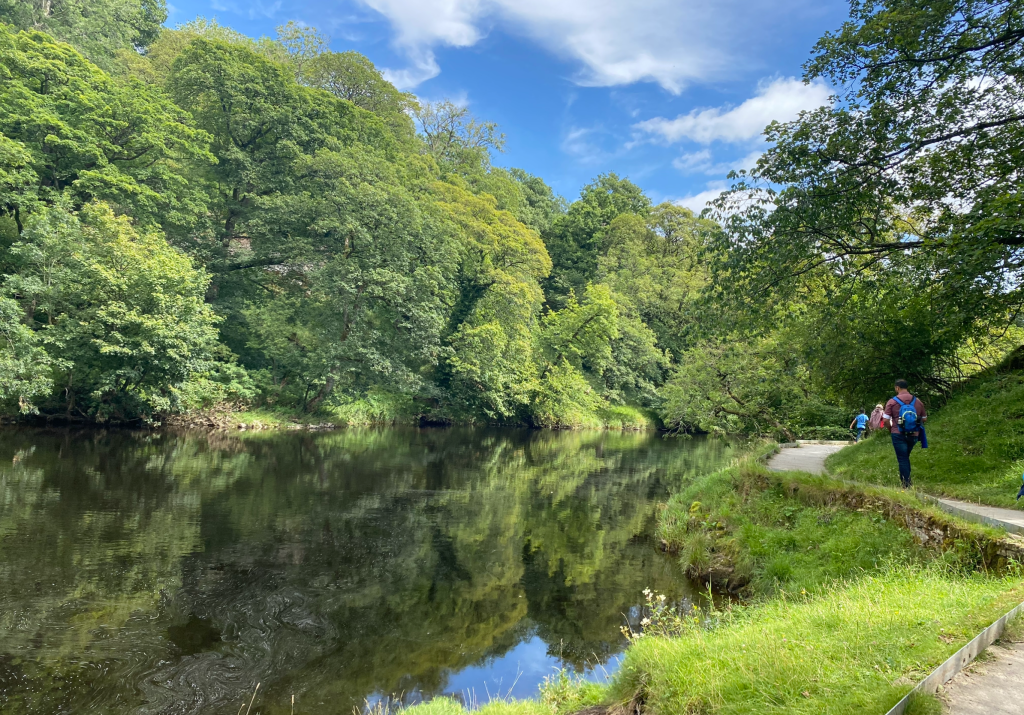
Dr Petty’s body was dumped in the River Wharf

The book, The Grassington Murder by Mark Bridgeman, has arrived! Tom Lee was executed in 1768 for the killing of Dr Richard Petty after he had already been tried in 1766, but acquitted for lack of evidence. It includes the deposition of John Burnup, Lee’s manservant, whose testimony led to the conviction two years after the murder itself.

First, I must clear up a little confusion. Last time I mentioned John Burnup, one newspaper account gave a different name, that of John Bowness. In fact, Bowness and Burnup were two different people, both involved in the dastardly plot. Further confusion arises thanks to varying spellings of people’s surnames. ‘Burnup’ is sometimes spelled ‘Burnap’ and ‘Bowness’ is also spelled ‘Bownass’ and ‘Bownas’.

As Bridgeman explains, Burnup’s testimony is published in the 28th July 1768 edition of the Stamford Mercury. It explains that Burnup was Tom Lee’s servant, but left his employment a couple of months after Petty was killed, going into service in Durham. It’s the closest we are ever likely to get to a contemporaneous version of what took place on that fateful night in April 1766:

‘On that day two years on which Mr. Petty was murdered he mentioned it to his then Master, who took him before a Justice of the Peace, to whom he related the particulars of the murder, whereupon Lee was committed a second time’.

There follows a fairly graphic and fascinating description of what happened, which reveals Lee did not act alone, and that his wife Jane was also involved. Here you go:

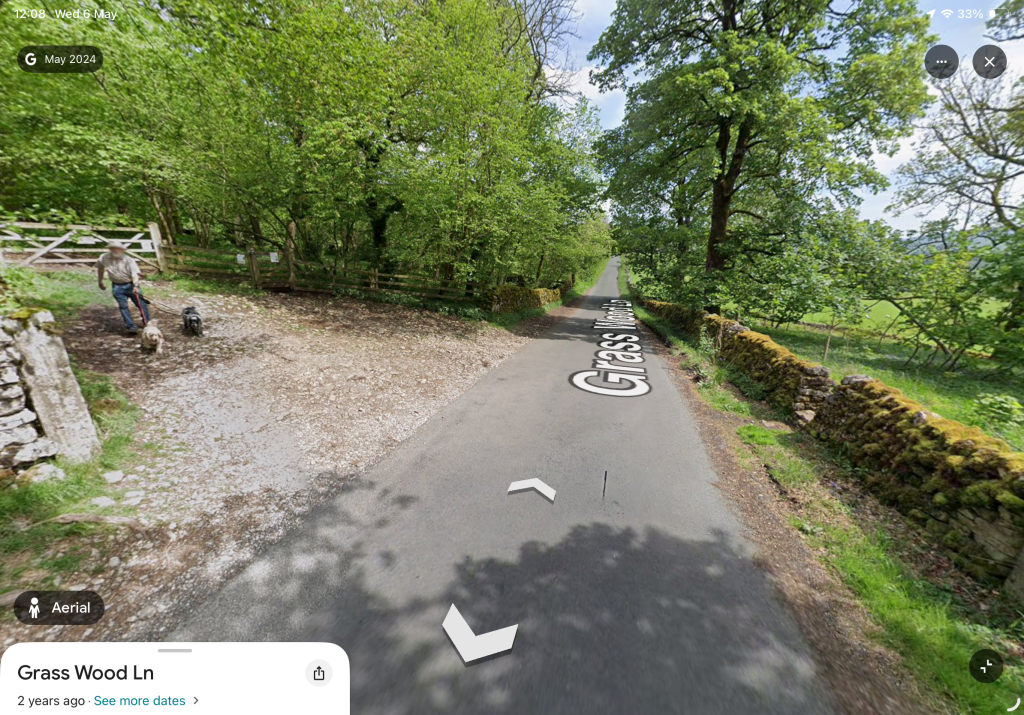
‘John Burnap deposed that Thomas Lee kept a public House at Grassington, and used to work in the Lead Mines; that he, Burnap, lived as a servant with him; that on Easter Eve, 1766, his Master, John Hully, John Bownas, and himself were in company at his said Master’s house; that they discoursed about Horse stealing and scarcity of Money; that Bowness said it was no crime to murder somebody and then take his money; that Lee said there would be money enough stirring at Kettlewell Cockings on the Tuesday following…on the morning they went to the Cockings, where Lee got into company with Mr. Petty, and it was concerted among them that Hully and Burnap…should place themselves at Grass Wood Gate, and bar it with a large Stone, to prevent any person passing that way; that Lee and Bownas were to make a noise to apprise Hully and Burnap of their approach; accordingly about Eight at night…Lee as had been concerted, quarrelled with Petty, or at least pretended so to do, and when he came near the Gate gave him a blow on the head with the thick of his Whip; that Hully thereupon came and pulled him off his horse, and held him by the throat till he was dead; that he, Burnap, rifled his pockets, and took thereout three Guineas and two half Guineas, wrapt in an Advertisement for Cockings; that they then removed the body, and laid it among some Reeds at Grass Wood; after that they removed the body three different times, and lastly, about five Weeks after the murder, threw it into the River, and dropped his Gloves by the water side, in order to make it be believed he was drowned; that Lee’s wife, Bownas and Hully always assisted in removing the body; and that he, Burnap, was threatened by Hully and Bownas, when Lee was first committed to the Castle, to be served in the same manner that Petty had been, if ever they said anything about it…Lee behaved in the most obdurate manner, denying the crime for which he suffered to his last moment. He is to be hung in Chains near the place where the murder was committed.’

Despite the testimony suggesting that it was Hully who actually killed Petty, both he and Bownas were acquitted at a later trial. For giving evidence, John Burnup was ‘discharged by proclamation’ and allowed to walk free. Lee’s wife Jane was never penalised for her part in the crime.

York Castle records explain that the murderer was to be ‘hung in chains at Grassington Gate’, i.e. displayed in a gibbet hung near the site of the murder, not only as as a deterrent to others, but also to heap posthumous shame upon Tom Lee.

Do you have opinions, memories or ideas to share with me? Get in touch with me using the ‘Contact’ button on the top right.

This column appeared in the Darlington & Stockton Times on Friday 15th May and the Ryedale Gazette and Herald on Wednesday 13th May 2026
A Petty Crime?

When I sat down today, I’d planned to do more research on the case of the Grassington Murderer Tom Lee, then write my column.

Well, four hours later, I’d still not typed a word, yet had written almost 12 pages of notes! I’d fallen down the proverbial rabbit hole, getting lost in the British Newspaper Archives (BNA), and reading as much was immediately available in an online excerpt from the most definitive recent account of the case (The Grassington Murder by Mark Bridgeman). I then had a long convoluted discussion with ChatGPT, and finally ended up ferreting around the National Archives where they hold witness depositions from the time. Mr Bridgeman features one such deposition in his book. I have ordered a copy which has yet to arrive.

Because my deadline is looming, I cannot wait, so in the meantime, I will outline the sorry tale, with thanks in particular to Mr Bridgeman, and a flamboyant account from 21st July 1876 from the Todmorden and Hebden Bridge Advertiser. Although the account is detailed, it was written more than 100 years after the murder, so is it reliable?

My impression from talking to people on the ground is that they ‘sort of’ know the story, but that it has reached almost mythical status. It will have been embellished and exaggerated with each retelling, and yet at its heart is an actual murder and father who was hanged for it.

It may surprise you to know that in 1766, 35-year-old Tom Lee was a well established businessman in Grassington while Richard Petty was the local doctor aged in his 30s. On the surface, Lee was respectable, married to Jane and father to three children. By the mid-1750s he was running the Blue Anchor Inn, and employed a manservant named John Burnup (also called ‘Bowness’ in the Todmorden Advertiser version). It was Burnup who would be the witness to come forward with the crucial evidence that led to Lee’s demise.

Lee had dodgy reputation though, and seemed to have more money than he could have earned from his regular business. It is also true that highway robberies and property break-ins surged once Lee had landed in the village. There was plenty of money flying about, thanks to the increase in mining in the area, and workers being paid in cash that was transported on horseback by a brave bank couriers.

Lee’s favourite pastimes were drinking and gambling at cock fights, and it is these that brought him into the path of Dr Petty who also enjoyed the cock fighting scene.

Lee’s downfall began when he tried to rob a bank courier on the road to Grassington. The courier was carrying a pistol and shot Lee in the leg. Badly injured, he fled, and the legend suggests he hid in the cave I mentioned when I first wrote about this story a few weeks ago. The severity of his injury meant that he needed help, so he turned to Dr Petty. Although Petty patched him up, he knew how it had occurred, but kept quiet – for the time being.

But when he had too much to drink, he would drop hints as to his secret, holding it over Lee’s head. At the time, such crimes incurred the death penalty, and Lee feared that the doctor’s loose lips would send him to the gallows.

After one drunken evening, the pair rode towards home, but only one made it back. Petty’s body was found later in Grass Wood, and although Lee was the main suspect, no-one had seen him do the deed. He was therefore acquitted at his first trial, but two years later his manservant John Burnup, came forward with new evidence. And it is that evidence that I am awaiting to read in Bridgeman’s book.

In the 1876 account, Lee is described as: ‘diabolical’, ‘avaricious’, ‘wicked’ and ‘revengeful’, while Dr Petty is ‘noted for his talents and his benevolence, and was held in great respect throughout the whole of Upper Wharfedale’.

But real life is never that black and white, is it? Both men were, it seems, avid gamblers and drinkers, and according to the same account, Petty taunted Lee about the secret he held, which belies his ‘benevolence’. I’m not saying Tom Lee was a saint, but there may be more to it that simple wickedness.

What do you think?

Do you have opinions, memories or ideas to share with me? Get in touch with me using the ‘Contact’ button on the top right.

This column appeared in the Darlington & Stockton Times on Friday 8th May and the Ryedale Gazette and Herald on Wednesday 6th May 2026

Hamer Home a family story

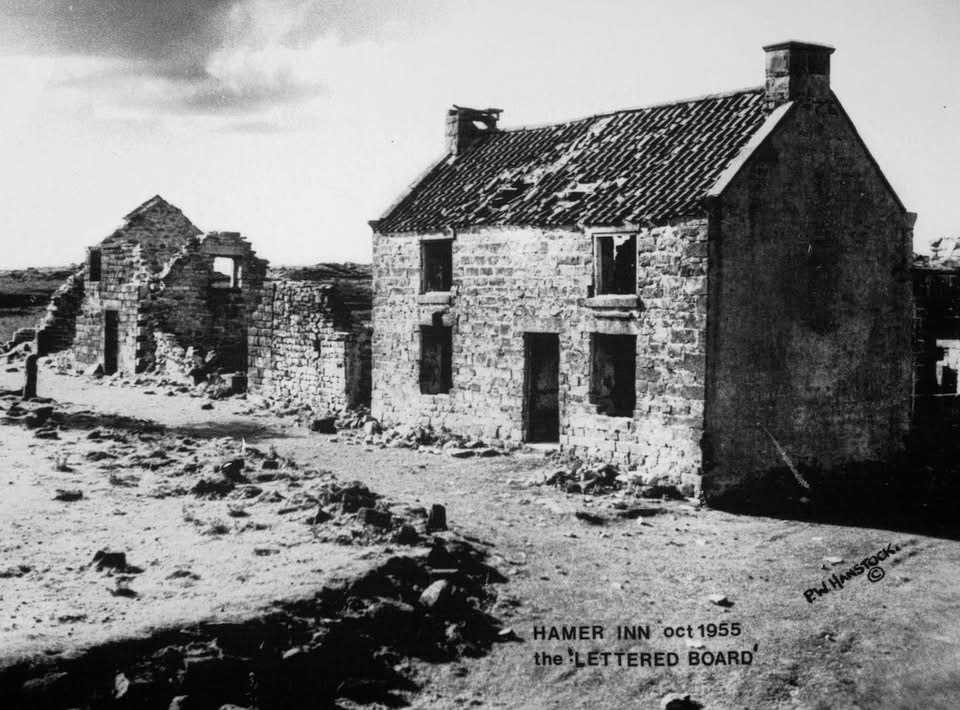
A 1955 photo of the ruins of Hamer Inn, previously known as the Lettered Board. David Ford’s ancestors lived there. Do you have a photo of the inn before it became derelict? Photo: P.W.Hanstock


I received an interesting message from reader David Ford: “I’ve just spotted a picture of the ruins of Hamer House on Facebook…My great grandfather Robert Ford was born there, along with several of his siblings. He emigrated to the USA as a young man seeking a better life, and tried gold mining. However he did not find it any easier over there and returned to Glaisdale. His brother Joseph wrote a book about life and times in Danby Dale…I would like a photo of Hamer when it was open as an inn.”

Although I’d heard of Hamer House, I didn’t know much about it. The first article that came up on Google was a piece written 15 years ago by none other than my dad. It jogged a memory of seeing it in one of his books and sure enough, on my very own bookshelf was a copy of Dad’s ‘Murders & Mysteries From The North York Moors’ with a whole section on Hamer.

Dad wrote: “It is believed the licence of this old inn continued until 1929, although it did survive as a private house into the 1930s. The last family living there was called Boddy, and I recall the old house still standing when I cycled past as a child.”

The building had a colourful past, and no doubt makes David’s family history research intriguing. The reason the inn was featured in the ‘Murders’ book is because there are three separate tales of deaths associated with it.

The inn stood at one of the highest parts of the moors, on the road between Glaisdale and Rosedale Abbey at the point where an old monk’s trod, or path, crossed it (where the Lyke Wake Walk traverses that road now). All that remains is a pile of stones, and yet the inn’s ghostly silhouette can be detected in the form of a wide expanse of smooth grass amongst the rough heather, hinting at what was once there – a busy, thriving coaching inn providing rest, warmth and succour for weary travellers. There were active coal mines nearby which drew men to the moors for work, and Eskdale farmers would send wagons of coal to supply places like Cropton, Hutton-le-Hole and Kirkbymoorside.

Although known by many as Hamer Inn, its previous name was the Lettered Board, and my dad believes it had been there for around three centuries. He talks about David’s ancestors in his book:

‘Hamer’s role as an inn declined after 1870, the year a local writer called Joseph Ford was born at the remote house. His father was landlord and I have a copy of a licensing application dated 1858 in which the liquor licence of the Lettered Board was transferred to Joseph Senior.

‘The younger Joseph Ford, who died in 1944, has left behind some stories of Hamer and they provide a vivid picture of the windswept and snowbound inn. He relates how elderly travelling salesmen would trek onto these moors, even in the height of winter, to sell trinkets.’

One sad story concerns a cork-seller who supplied local inn keepers and farmers, and Joseph Ford’s mother knew him well. He succumbed to the ferocious winter weather, and his skeleton was found much later not far from the Lettered Board Inn, his basket of corks lying nearby enabling his body to be identified.

The three cases of deaths at the inn include that of two apparently healthy guests retiring to bed, only to be found dead the next day with no apparent wounds or obvious cause. They may have been poisoned by noxious fumes resulting from recent replastering of the room, but no-one was ever sure.

The second case was a licensee who killed his wife, and quickly moved elsewhere in the dale. He was never prosecuted or imprisoned. The third story tells of a fight breaking out in the bar, and a man being bludgeoned to death with a poker.

Dad writes: “The only remnant of that tale was a heavy iron poker that was chained to the hearth to ensure this sort of thing never happened again. That poker was still there within the memory of my grandparents, but I never saw it.”

Can any of you reading this help David Ford track down a picture of Hamer Inn before it became derelict?

Do you have opinions, memories or ideas to share with me? Get in touch with me using the ‘Contact’ button on the top right.

This column appeared in the Darlington & Stockton Times on Friday 16th and the Ryedale Gazette and Herald on Wednesday 14th Jan 2026