The Grassington Murder explained by one who was there

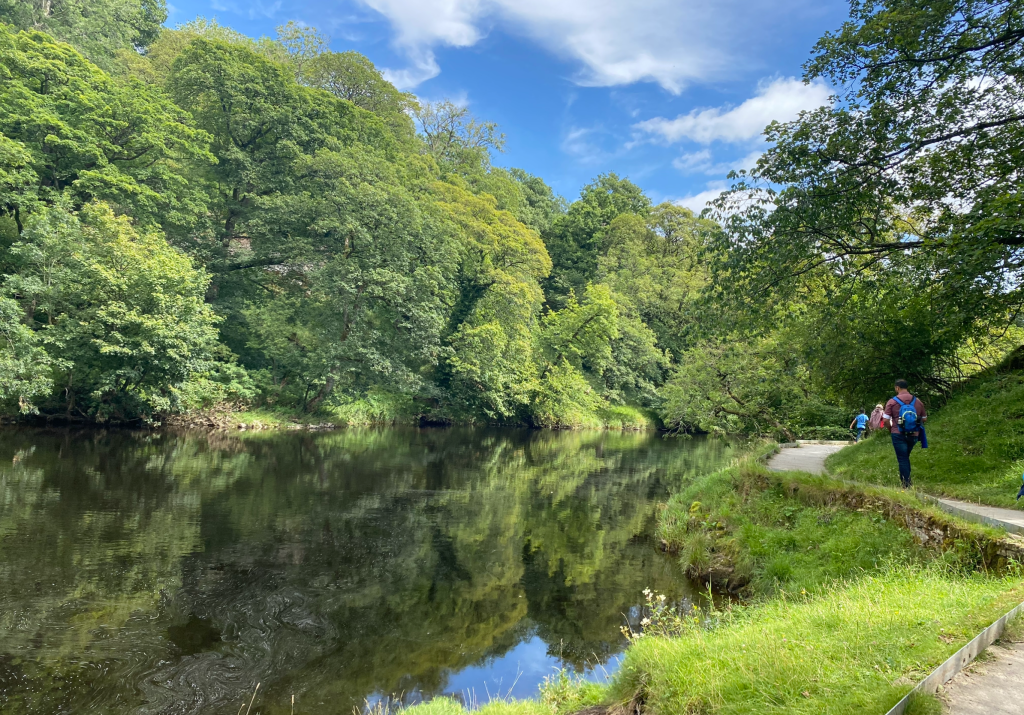
Dr Petty’s body was dumped in the River Wharf

The book, The Grassington Murder by Mark Bridgeman, has arrived! Tom Lee was executed in 1768 for the killing of Dr Richard Petty after he had already been tried in 1766, but acquitted for lack of evidence. It includes the deposition of John Burnup, Lee’s manservant, whose testimony led to the conviction two years after the murder itself.

First, I must clear up a little confusion. Last time I mentioned John Burnup, one newspaper account gave a different name, that of John Bowness. In fact, Bowness and Burnup were two different people, both involved in the dastardly plot. Further confusion arises thanks to varying spellings of people’s surnames. ‘Burnup’ is sometimes spelled ‘Burnap’ and ‘Bowness’ is also spelled ‘Bownass’ and ‘Bownas’.

As Bridgeman explains, Burnup’s testimony is published in the 28th July 1768 edition of the Stamford Mercury. It explains that Burnup was Tom Lee’s servant, but left his employment a couple of months after Petty was killed, going into service in Durham. It’s the closest we are ever likely to get to a contemporaneous version of what took place on that fateful night in April 1766:

‘On that day two years on which Mr. Petty was murdered he mentioned it to his then Master, who took him before a Justice of the Peace, to whom he related the particulars of the murder, whereupon Lee was committed a second time’.

There follows a fairly graphic and fascinating description of what happened, which reveals Lee did not act alone, and that his wife Jane was also involved. Here you go:

‘John Burnap deposed that Thomas Lee kept a public House at Grassington, and used to work in the Lead Mines; that he, Burnap, lived as a servant with him; that on Easter Eve, 1766, his Master, John Hully, John Bownas, and himself were in company at his said Master’s house; that they discoursed about Horse stealing and scarcity of Money; that Bowness said it was no crime to murder somebody and then take his money; that Lee said there would be money enough stirring at Kettlewell Cockings on the Tuesday following…on the morning they went to the Cockings, where Lee got into company with Mr. Petty, and it was concerted among them that Hully and Burnap…should place themselves at Grass Wood Gate, and bar it with a large Stone, to prevent any person passing that way; that Lee and Bownas were to make a noise to apprise Hully and Burnap of their approach; accordingly about Eight at night…Lee as had been concerted, quarrelled with Petty, or at least pretended so to do, and when he came near the Gate gave him a blow on the head with the thick of his Whip; that Hully thereupon came and pulled him off his horse, and held him by the throat till he was dead; that he, Burnap, rifled his pockets, and took thereout three Guineas and two half Guineas, wrapt in an Advertisement for Cockings; that they then removed the body, and laid it among some Reeds at Grass Wood; after that they removed the body three different times, and lastly, about five Weeks after the murder, threw it into the River, and dropped his Gloves by the water side, in order to make it be believed he was drowned; that Lee’s wife, Bownas and Hully always assisted in removing the body; and that he, Burnap, was threatened by Hully and Bownas, when Lee was first committed to the Castle, to be served in the same manner that Petty had been, if ever they said anything about it…Lee behaved in the most obdurate manner, denying the crime for which he suffered to his last moment. He is to be hung in Chains near the place where the murder was committed.’

Despite the testimony suggesting that it was Hully who actually killed Petty, both he and Bownas were acquitted at a later trial. For giving evidence, John Burnup was ‘discharged by proclamation’ and allowed to walk free. Lee’s wife Jane was never penalised for her part in the crime.

York Castle records explain that the murderer was to be ‘hung in chains at Grassington Gate’, i.e. displayed in a gibbet hung near the site of the murder, not only as as a deterrent to others, but also to heap posthumous shame upon Tom Lee.

Do you have opinions, memories or ideas to share with me? Get in touch with me using the ‘Contact’ button on the top right.

This column appeared in the Darlington & Stockton Times on Friday 15th May and the Ryedale Gazette and Herald on Wednesday 13th May 2026
Locked in love

IMG_4772
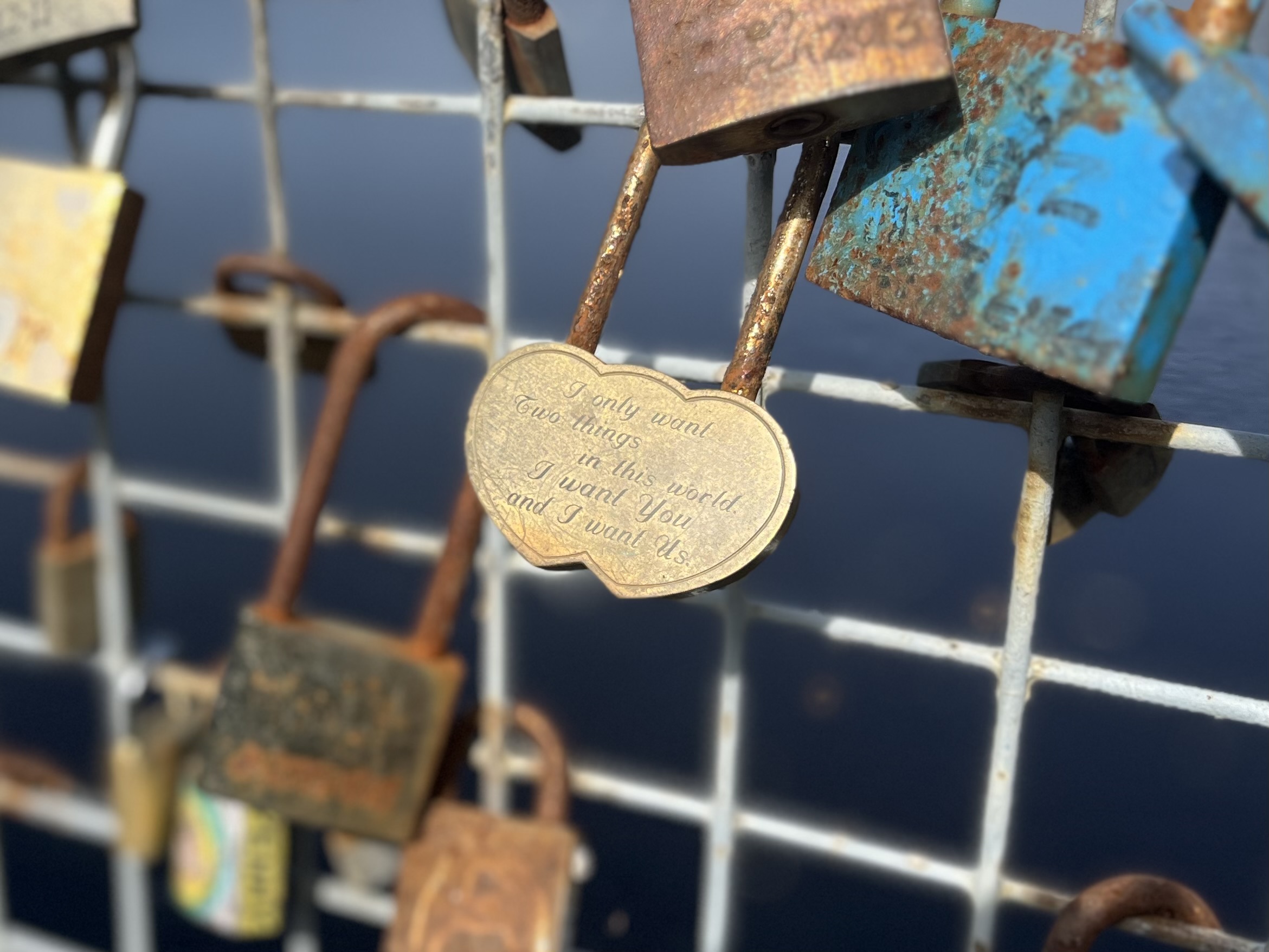
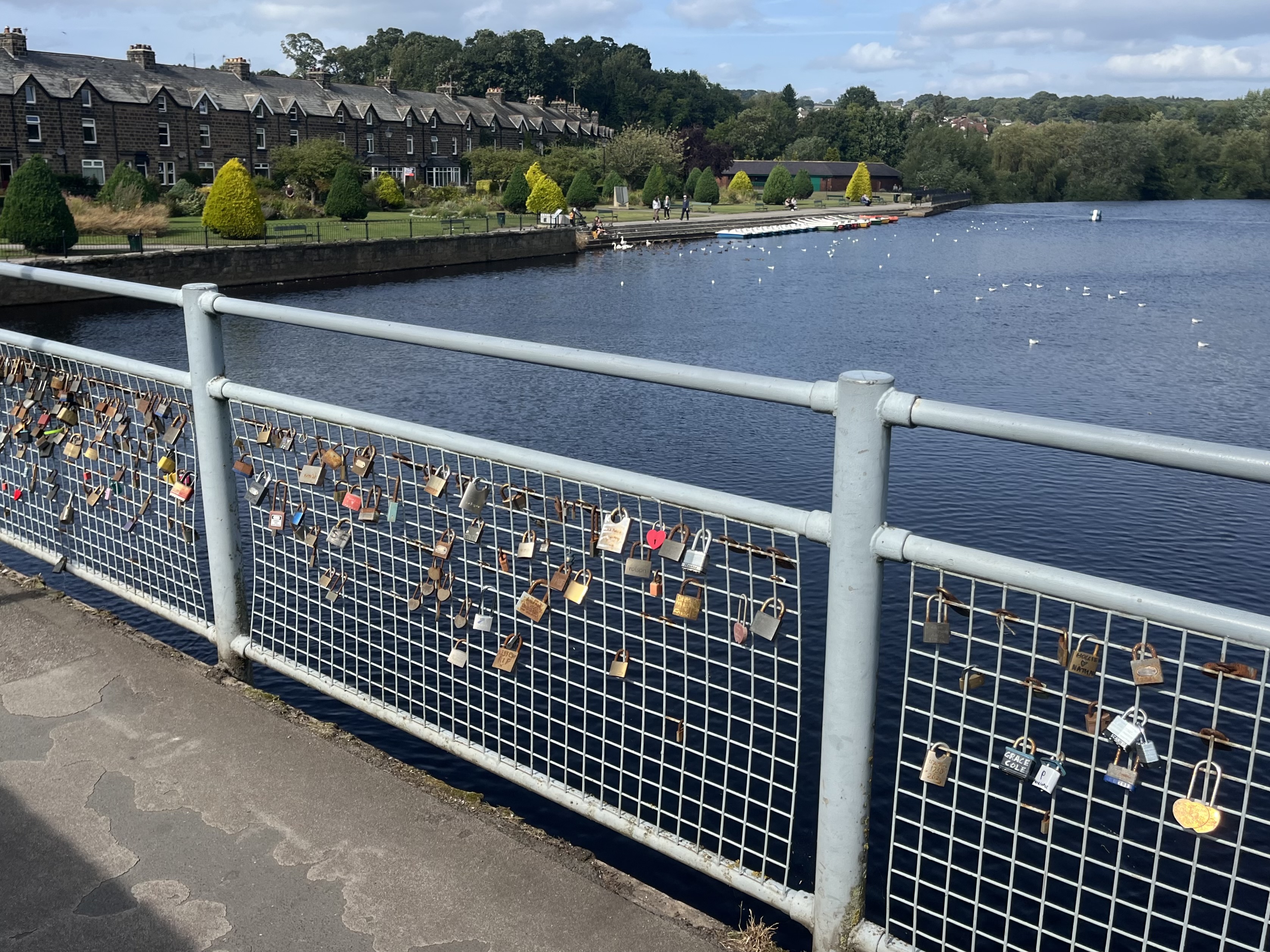
Love locks on the bridge over the River Wharfe in Otley

IMG_4770

Recently, I enjoyed a tranquil walk with my son and his girlfriend followed by lunch at a riverside restaurant in the lovely town of Otley. Afterwards, I went back to my car across the bridge spanning the Wharfe that links the north and south sides of the town.

A bridge has existed at this point on the river since around 1228 when it is said the then Archbishop of York, Walter de Gray, who also had the title Lord of the Manor of Otley, commissioned a crossing to enable him to get back to York more easily when travelling from the west. The bridge has had a couple of substantial rebuilds over the centuries, and in 1957, a pedestrian walkway was added to the eastern side.

It was this walkway that I was crossing when I noticed that there were dozens of padlocks attached to the metal railings facing the river. It made me wonder why people do this, and how long the tradition has been going on, if it is indeed classed as a tradition.

The idea is that a courting couple meet on the bridge and declare their everlasting love by fixing a padlock on to the bridge and throwing the key into the waters below ensuring the lock can never be undone.

The origins of love locks are not clear, and and it is up to you to decide which story you believe. One tale comes from China and involves the daughter of a wealthy man who falls in love with a poor boy. Her father forbids the relationship and forces her to become engaged to another rich man. On her wedding day, she runs away with her peasant lover and the couple flee to Mount Huangshan, or Yellow Mountain, and together leap from its heights to their deaths. And now, modern lovers mark the spot by securing padlocks to the railings there.

Another commonly repeated tale is of two Serbian lovers called Relja and Nada who used to meet each other on a bridge in their home town of Vrnjacka Banja. At the outbreak of World War I, Ralja was sent to defend his country, and was killed. From then on, women from the town bought padlocks and attached them to the bridge in the hope that their beloveds would return safely and their love would not be broken in the same way. A variation on that tale is slightly less romantic, in which Relja is posted to Greece where he falls in love with another woman and never comes back. Perhaps then the women of Vrnjacka Banja, fearing the same fate might befall them while their husbands and boyfriends were away for the war, placed the padlocks on the bridge as a superstitious gesture to secure their love’s return.

It is likely that these stories are just that, stories, and have little basis in reality. What we do know, though, is that the ‘tradition’ was popularised relatively recently by a 2006 Italian teen novel by Federico Moccia called ‘I Want You’ in which a couple fix a lock to a lamppost on the Milvian Bridge in Rome and toss the key into the River Tiber to signify their unbreakable love. The best-selling novel was turned into a film starring a popular Italian heartthrob, and soon swarms of infatuated teens began turning up to do the same thing. The bridge, which was built in 207BC and survived military invasions and centuries of heavy traffic, was no match for passionate padlock-wielding youngsters. The weight of the extra metal caused the lamppost to topple and by 2012, the padlocks had been permanently removed. Locals became so fed up with the damage being caused to the historic monument that police were deployed to guard it.

A similar fate befell the Pont des Arts in Paris, which from 2008 became a hotspot for love-struck couples after the film came out in France. By 2015, around one million locks had been placed onto the bridge adding an extra 45 tonnes of weight causing part of it to collapse. The locks were removed and the practice banned.

There are hundreds of ‘bridges of love’ around the world, where couples are still permitted to attach their tokens of affection. I wonder if Otley Bridge will ever be toppled by the weight of the love locks?

I’d love to hear from you about your stories, memories, opinions and ideas for columns. Use the ‘Contact’ button on the top right of this page to get in touch.

This column appeared in the Darlington & Stockton Times on Friday 6th and the Ryedale Gazette and Herald on Wednesday 4th  Sept  2024.