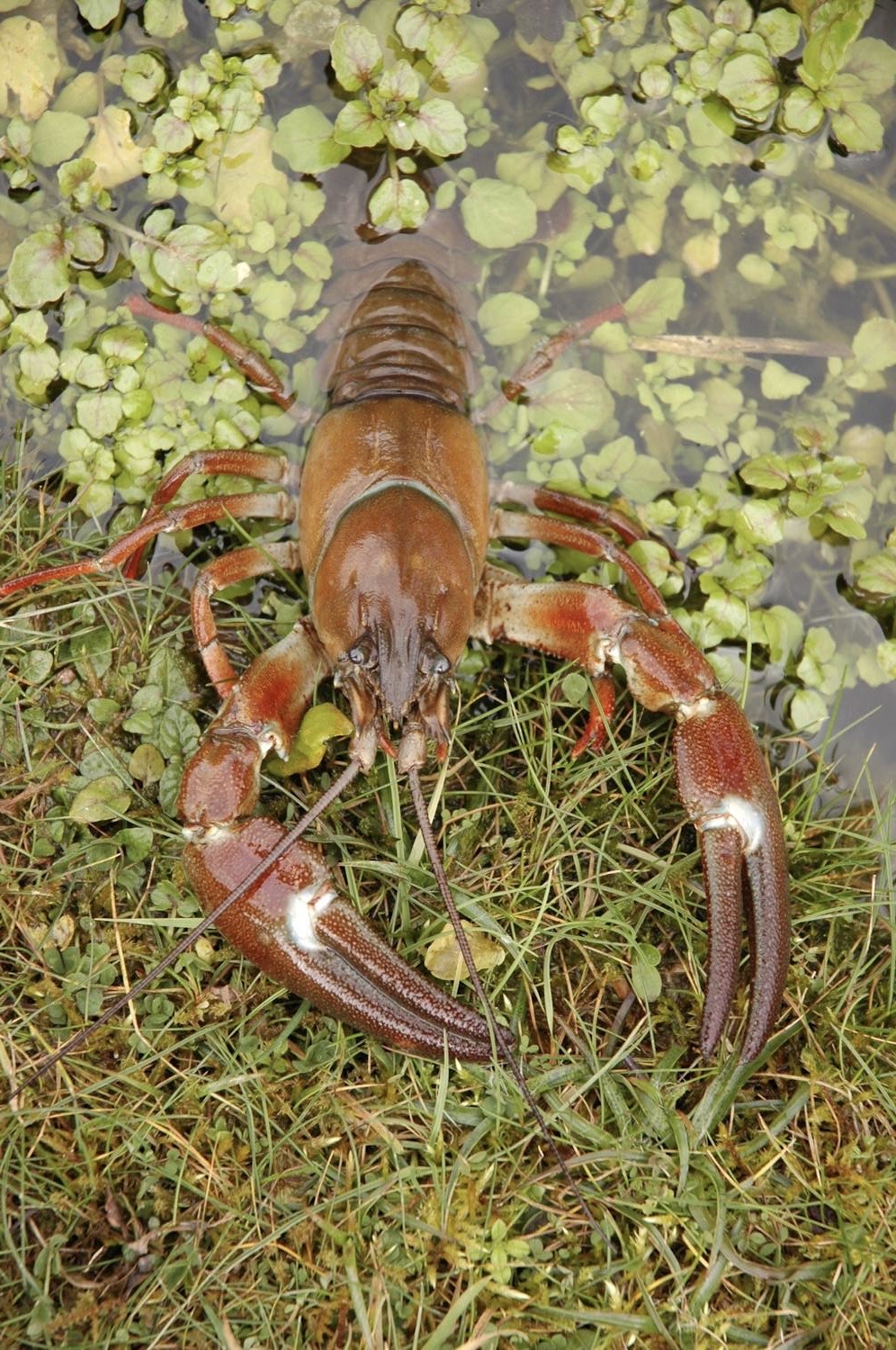
As I mentioned last week, I came across a reserve for the white-clawed crayfish on a recent walk near Threshfield Quarry in the Yorkshire Dales where information boards explained the threat from its foreign cousin, the signal crayfish. The reserve was a small pond designed with the specific needs of the crayfish in mind such as places to hide from predators, the right food, and of course, no sign of the dastardly enemy.
This problem was mentioned by reader John Aston from Thirsk who listed it among a number of invasive plant and animal species affecting our waterways. He’d read my columns about the troublesome invader, Himalayan Balsam, which prompted him to get in touch.
On that note, you may remember that it was the appearance of Anna on The Great British Sewing Bee TV programme that sparked a whole series of columns on this particular invasive species. Anna had highlighted the issue by featuring the pretty pink bloom on an outfit she had created and I was rooting for her because not only was she exceptionally creative, but she came from our very own York. I watched the final last night and guess what? She won! Go Anna!
The white-clawed crayfish is our only native species of crayfish and populations have been decimated by its bigger and brasher American counterpart. This vicious marauder was brought over from the north-west USA in the 1970s and 80s to become a delicacy on fine dining restaurant menus.
Demand led to commercial farms breeding them, but what they did not take into account was that, unlike salmon and trout which, due to a distinct lack of limbs, obligingly remained confined to their ponds, these crafty crustaceans had legs and therefore were able to climb out of the ponds and amble to freedom. If they couldn’t escape over land then, thanks to their scarily big sharp claws, another option was to burrow into the muddy banks until they were beyond the boundaries of the farm. Failing that, option three was to scuttle into the water pipes feeding the pond (which they did to protect themselves from predators) to find that these pipes led somewhere, and so they kept on scuttling, ultimately finding themselves at the opposite end. With one splash they were frolicking in open water.
Once liberated, these prolific breeders began to make whoopee, kicking the smaller, more passive and less randy native white-clawed crayfish out of their homes, leaving them exposed to hungry otters and that other ‘liberated from breeding farms’ pest, the mink. But that was not all – the poor white-clawed crayfish were left with very slim pickings for food, as the greedy Yanks were always first to the table, and just for good measure they also infected their British counterparts with the delightful ‘crayfish plague’ for which they had no resistance due to the fact they’d never been exposed to it before. It was a crayfish calamity which is still having repercussions today.
Round of applause then for those short-sighted idiots who brought signal crayfish over here without a thought for the potential impact on our one and only native species. The scientific blinkers were on, wilfully ignoring past disasters caused by introducing invasive species into the country in the vain hope that all would be OK; that a crayfish wouldn’t think to use its legs to simply crawl to pastures new. How could that be? The American mink catastrophe was still at the forefront of many people’s minds too (brief summary – American mink were imported and bred for their fur. They also escaped their farms through inadequate security and a few well-meaning but dim anti-fur campaigners who thought setting them free was a good idea. Our now almost extinct native water vole would beg to differ).
There are some very hardworking organisations and volunteers who are desperately trying to help these threatened species survive, but unless the invasive predators are brought under control, it is highly unlikely that our freshwater crayfish or our water vole will ever recover.
So if on your travels you see a white-clawed crayfish reserve, also known as an ‘ark’, then stop a while and take time to read those information boards explaining what the conservationists are trying to do. And hopefully, one day, we will learn from our past mistakes.
One day.
Do you have opinions, memories or ideas to share with me? Get in touch with me using the ‘Contact’ button on the top right.
This column appeared in the Darlington & Stockton Times on Friday 25th and the Ryedale Gazette and Herald on Wednesday 23rd September 2026

