I’m continuing to be surprised by how many memories my columns about Hamer Inn have jogged.
The latest contact came from reader Ian Ford. As his surname suggests, he is related to the Fords who were licensees of the inn in the mid-1800s. Ian is the cousin of David Ford, whose original message to me asking for photos of the inn sparked off this whole chain of columns. Ian is the great great grandson of Robert Ford who was born at Hamer in 1860. Robert was the son of Joseph Ford who took over the licence in 1858 and the brother of Joseph Ford Junior, who wrote a book about life on the North York Moors called ‘Some Reminiscences and Folk Lore of Danby Parish and District.’
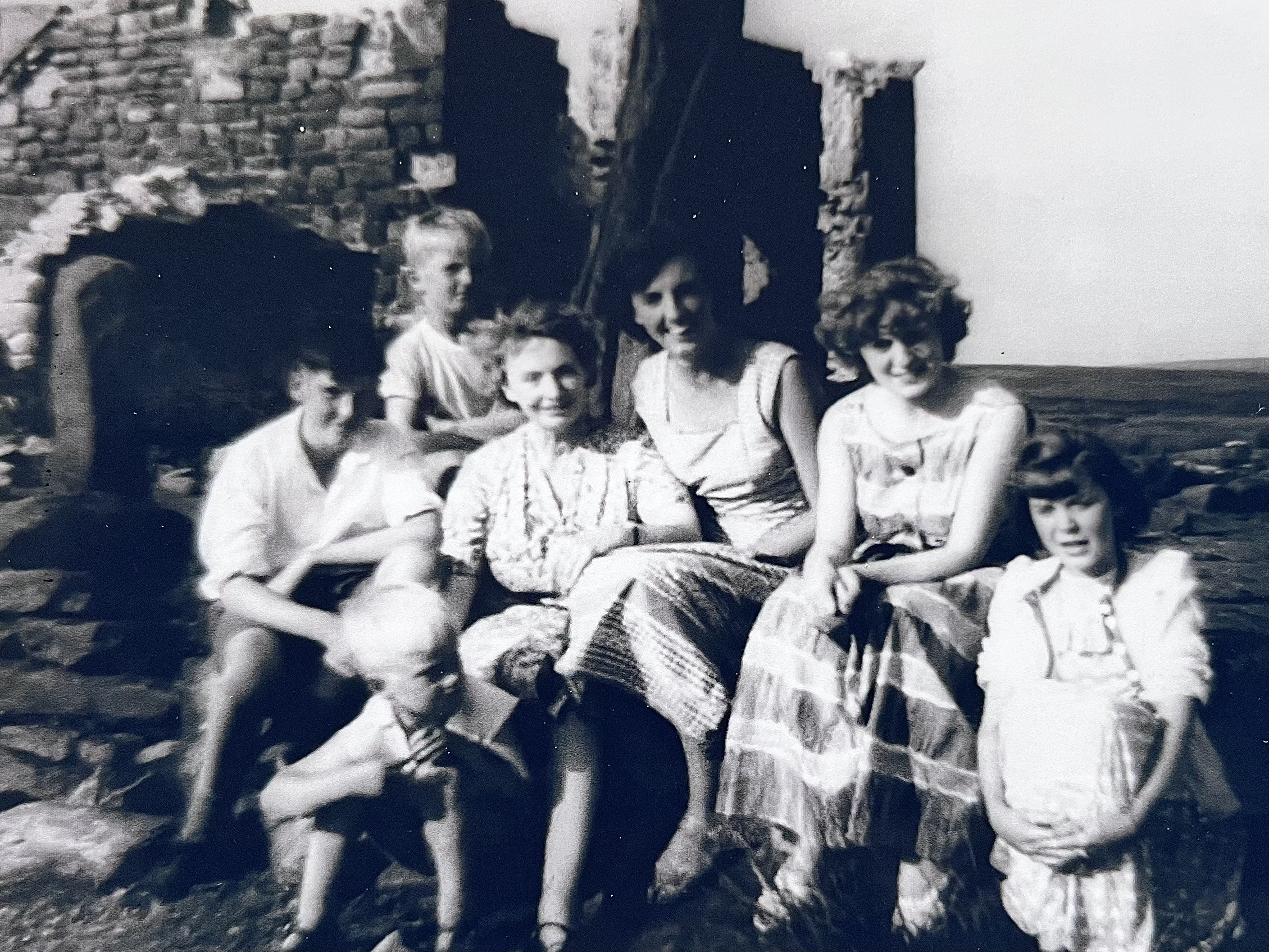
Ian sent me copies of correspondence between himself and my dad from 2007 relating to Hamer, including some old family photos taken in the 1950s with the inn in the background, which by then was derelict but still clearly a building of some sort. As you know if you’ve read my previous columns, all that lies there today is a pile of old stones.
I’ve referred to Hamer as a property ‘of many names’ and they include The Lettered Board, The Wayside Inn, Hamer Inn and Hamer House. Ian revealed there was yet another name – Haymoor House. Surely that is its ‘posh’ name, because if you say it in a local accent, you get to Hamer (pronounced Hay-mer).
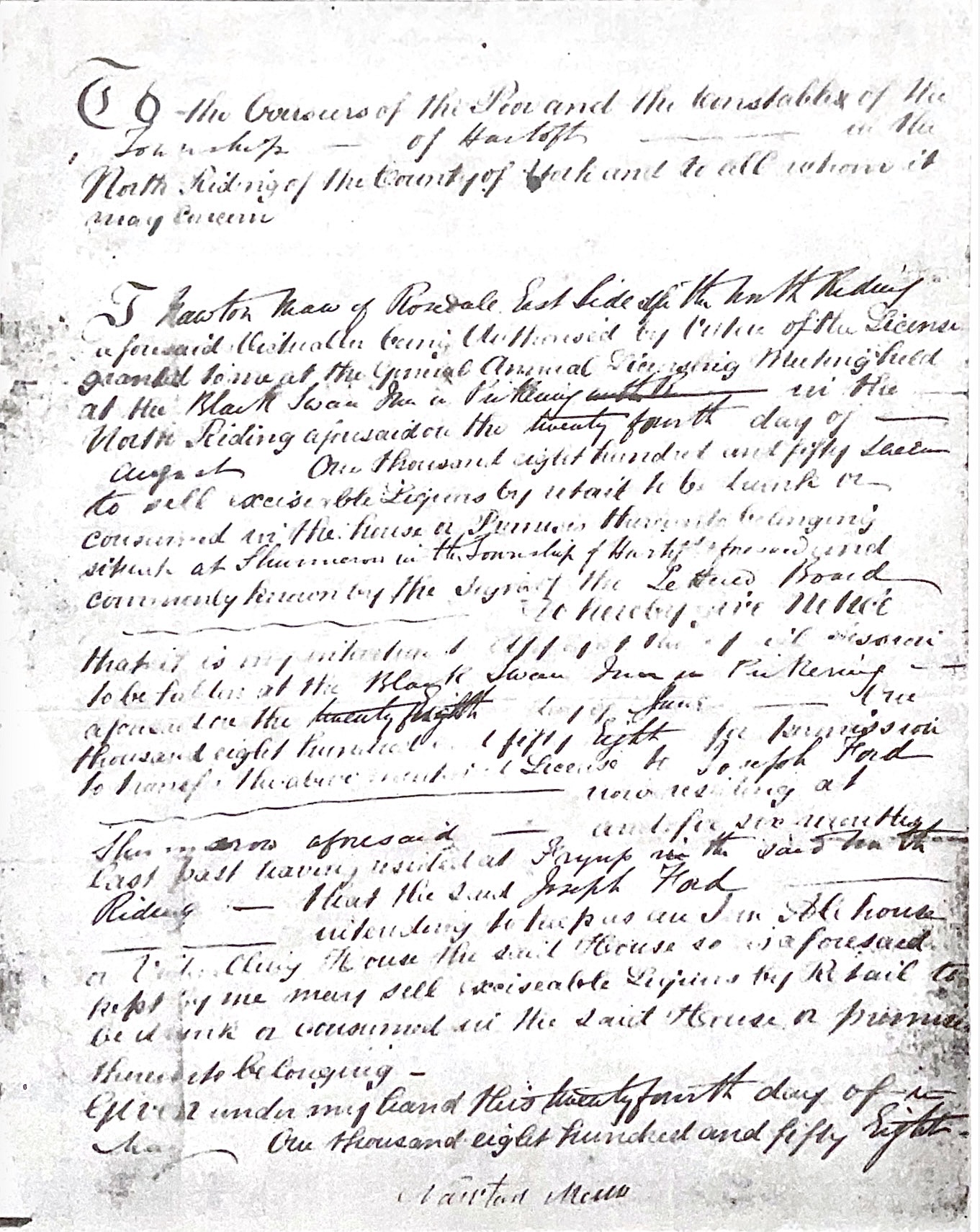
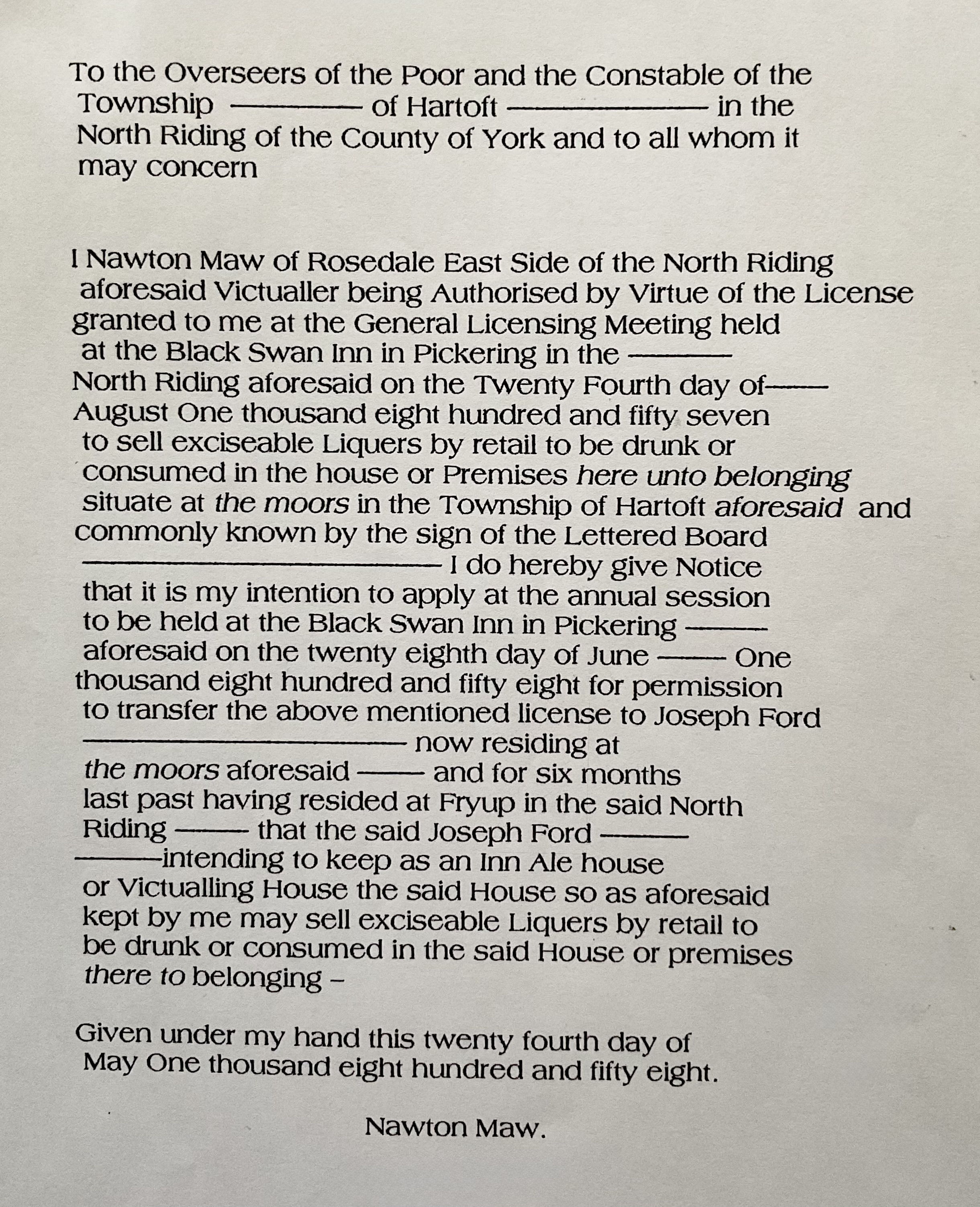
Ian included a copy of the original licence from when Joseph Ford took it over in 1858. You might recall that I mentioned that my dad had a copy of that licence:
‘Hamer’s role as an inn declined after 1870, the year a local writer called Joseph Ford was born at the remote house. His father was landlord and I have a copy of a licensing application dated 1858 in which the liquor licence of the Lettered Board was transferred to Joseph Senior.’
I searched for the licence in my dad’s files, but was disappointed when I was unsuccessful. What I didn’t know then was that there was a reason I could not find it, and that reason was revealed in the letters that Ian sent me.
Ian had contacted my dad after reading his book ‘Murders and Mysteries From the North York Moors’ in which both Joseph Fords are mentioned. He cites the tales Dad covered in the book, including those about the Lettered Board, and goes on to explain his family connection. He’d asked if he could see a copy of the old liquor licence transferring the lease to from the previous landlord to Joseph Ford.
Dad’s letter of reply states: “So far as the liquor licence for The Lettered Board at Hamer is concerned, I enclose my copy of it. It is dated 1858 and Joseph’s name was quite clear. It is an ancient photocopy – and I can’t remember where I got it from – but I doubt if it would reproduce any better on our modern equipment. As I can’t think I am likely to have any further use for it, please accept it with my compliments.”
So my dad had given it to Ian – no wonder I couldn’t find it! Yet another minor mystery solved thanks to you wonderful readers.
Incidentally, Ian reminded me that he had been in touch with me a couple of years ago regarding Joseph Pilmoor, the illegitimate son of Joseph Foord, the groundbreaking hydro engineer who came up with ways of ensuring remote moorland communities were served with fresh running water. Foord had had a liaison with a lady called Sarah Pilmoor from Fadmoor near Kirkbymoorside, and as a result, he was thrown out of the Quakers. Born in 1739, his son, inspired by founder of Methodism John Wesley, grew up to be one of the most successful preachers who travelled to the USA to recruit followers. Today there are around six million Methodists 30,000+ churches in the USA. He has countless plaques and memorials dedicated to him in many states and is described by them as a ‘pioneer missionary’. A remarkable feat for a lad from North Yorkshire.
Ian thinks both families might be connected, and indeed his branch used to spell their surname ‘Foord’ until the 19th century. Does anyone out there know for sure?
This column appeared in the Ryedale Gazette and Herald on 8th and the Darlington and Stockton Times on 10th April 2026

