An air of mystery

IMG_2038
What we believe is an ancient gatepost covered in moss and lichen spotted on the Cleveland Way by Paul Martin. But what is purpose of the hole at the top?


IMG_2042
A ‘daisy-chain’ of padlocks at a BT site. Each contractor will have their own lock and key so they can gain access at any time.


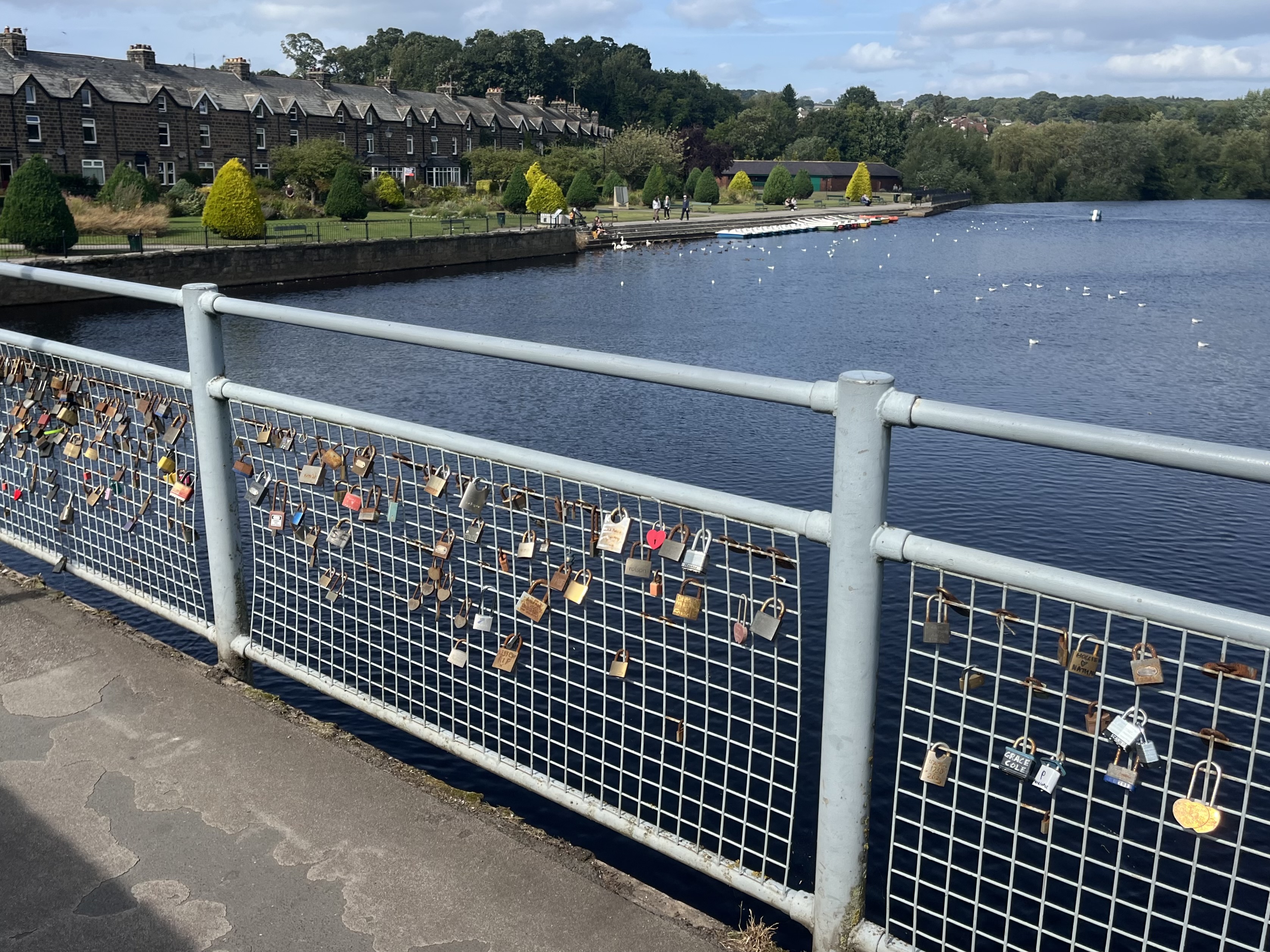
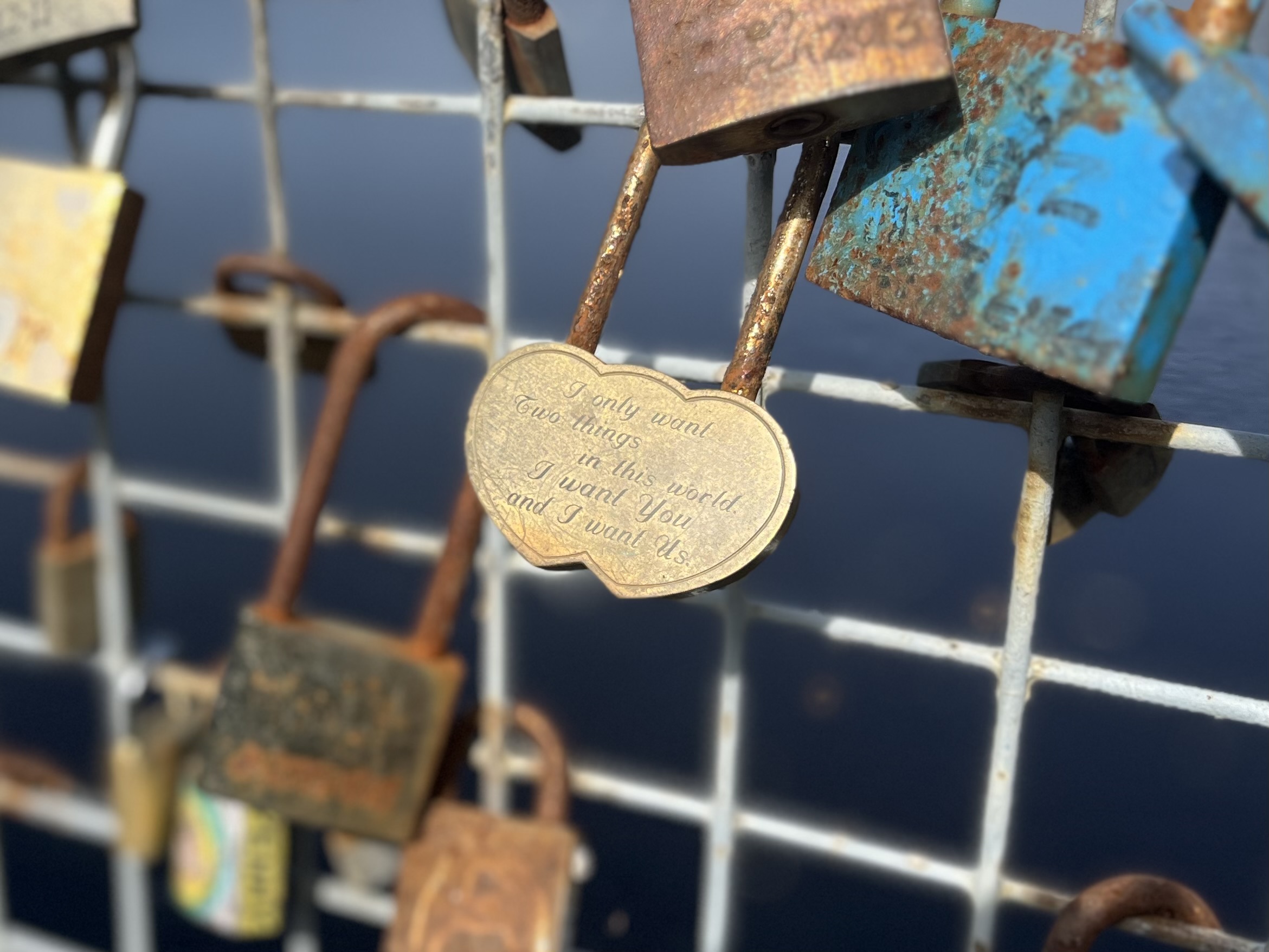
I’ve had a lovely message from a reader following my recent column about love locks. If you remember I wrote about the padlocks that are attached to the metal walkway over the River Wharfe in Otley. The idea is that a courting couple declare their everlasting love by fixing a padlock on to the bridge and throwing the key into the waters below ensuring the lock can never be undone. The practice has become widespread all over the world, most famously on the Milvian Bridge in Rome, the Pont Des Arts in Paris, and on Mount Huangshan in China.There are a number of tales purporting to be the origin of the practice, but it is not known if any any of them are actually true.

Betty McDonald got in touch with me about a September 2013 trip she made with her late husband to the War Museum in Arnhem in the Netherlands, and to the German dams which were the target of the famous Dambusters Raid in May 1943. She wrote: “We did a tour of two of the bridges which where breached, Eder Dam and the Mohne Dam…It was a very proud moment to actually walk and stand on the dam which helped us to win the war, although sad too as many villages were swept away, destroying a German bomb-making factory.”

She added: “It was our very first sight of the padlocks of love on the Mohne Dam…We wish we had known about the love locks as we both knew the Mohne dam would be on our tour, and maybe one of our last tours. We stayed looking at the many locks of love and when we left I blew a kiss to the locks, with a lovely memory of being there together with my husband knowing our love was truly locked.”

It makes me wonder how many of you reading this have secured a love lock to a bridge, and was your love sealed forever?

On a slight tangent, I saw a Facebook post by Paul Martin who was walking the Cleveland Way. He included some pictures of what he had seen en route, and one was a secure gate outside a BT property which had three padlocks attached to it. He explained: “Each contractor who has access to the BT site will have their own padlock in the ‘daisy chain’ meaning any of them can get access at any time. It is not one of those lovers’ things on bridges.”

What a good idea, that each contractor has their own lock and key. It makes me think of when we get our oil tank filled up. We have one of those newer bunded ones where the outlet for filling it is under a manhole on top and you always need a key to access it. More often the not the delivery driver does not carry one, so we have to either make sure we are at home, or leave the key in a safe place. The keys are universal, a bit like those that open electric meter cupboards, so wouldn’t it make more sense if the drivers simply carried their own?

Paul included another picture from his walk of what looked like an ancient gatepost with a hole in the top. He wondered what it was for, and we surmised that the hole could be for tethering horses, or that another part of the gate mechanism would have once been attached to it. I’ve included a picture so you can see for yourself. Let me know what you think was the purpose of the hole.

The markings on the right-hand side of the post particularly caught my eye. They reminded me of those made by moorland stonemasons, often herringbone in style, which I have written about before in relation to traditional house building. This time they are a series of a vertical strikes in the stone, which look deliberate, but only decorate one half of the post. Was this the signature of a particular mason?

The post is covered in vivid green moss and lichen, as is another waymarker that lies high on the Cleveland Way that Paul photographed. He explains that this occurs when the air is particularly clean and free of pollution.

Let’s hope our precious North Yorkshire countryside air will remain this way for many centuries to come.

This column appeared in the Darlington & Stockton Times on Friday 27th and the Ryedale Gazette and Herald on Wednesday 25th Sept  2024.
Locked in love

IMG_4772
Love locks on the bridge over the River Wharfe in Otley

IMG_4770

Recently, I enjoyed a tranquil walk with my son and his girlfriend followed by lunch at a riverside restaurant in the lovely town of Otley. Afterwards, I went back to my car across the bridge spanning the Wharfe that links the north and south sides of the town.

A bridge has existed at this point on the river since around 1228 when it is said the then Archbishop of York, Walter de Gray, who also had the title Lord of the Manor of Otley, commissioned a crossing to enable him to get back to York more easily when travelling from the west. The bridge has had a couple of substantial rebuilds over the centuries, and in 1957, a pedestrian walkway was added to the eastern side.

It was this walkway that I was crossing when I noticed that there were dozens of padlocks attached to the metal railings facing the river. It made me wonder why people do this, and how long the tradition has been going on, if it is indeed classed as a tradition.

The idea is that a courting couple meet on the bridge and declare their everlasting love by fixing a padlock on to the bridge and throwing the key into the waters below ensuring the lock can never be undone.

The origins of love locks are not clear, and and it is up to you to decide which story you believe. One tale comes from China and involves the daughter of a wealthy man who falls in love with a poor boy. Her father forbids the relationship and forces her to become engaged to another rich man. On her wedding day, she runs away with her peasant lover and the couple flee to Mount Huangshan, or Yellow Mountain, and together leap from its heights to their deaths. And now, modern lovers mark the spot by securing padlocks to the railings there.

Another commonly repeated tale is of two Serbian lovers called Relja and Nada who used to meet each other on a bridge in their home town of Vrnjacka Banja. At the outbreak of World War I, Ralja was sent to defend his country, and was killed. From then on, women from the town bought padlocks and attached them to the bridge in the hope that their beloveds would return safely and their love would not be broken in the same way. A variation on that tale is slightly less romantic, in which Relja is posted to Greece where he falls in love with another woman and never comes back. Perhaps then the women of Vrnjacka Banja, fearing the same fate might befall them while their husbands and boyfriends were away for the war, placed the padlocks on the bridge as a superstitious gesture to secure their love’s return.

It is likely that these stories are just that, stories, and have little basis in reality. What we do know, though, is that the ‘tradition’ was popularised relatively recently by a 2006 Italian teen novel by Federico Moccia called ‘I Want You’ in which a couple fix a lock to a lamppost on the Milvian Bridge in Rome and toss the key into the River Tiber to signify their unbreakable love. The best-selling novel was turned into a film starring a popular Italian heartthrob, and soon swarms of infatuated teens began turning up to do the same thing. The bridge, which was built in 207BC and survived military invasions and centuries of heavy traffic, was no match for passionate padlock-wielding youngsters. The weight of the extra metal caused the lamppost to topple and by 2012, the padlocks had been permanently removed. Locals became so fed up with the damage being caused to the historic monument that police were deployed to guard it.

A similar fate befell the Pont des Arts in Paris, which from 2008 became a hotspot for love-struck couples after the film came out in France. By 2015, around one million locks had been placed onto the bridge adding an extra 45 tonnes of weight causing part of it to collapse. The locks were removed and the practice banned.

There are hundreds of ‘bridges of love’ around the world, where couples are still permitted to attach their tokens of affection. I wonder if Otley Bridge will ever be toppled by the weight of the love locks?

I’d love to hear from you about your stories, memories, opinions and ideas for columns. Use the ‘Contact’ button on the top right of this page to get in touch.

This column appeared in the Darlington & Stockton Times on Friday 6th and the Ryedale Gazette and Herald on Wednesday 4th  Sept  2024.