
When Brian reader contacted me about his quirkily-named relatives Rocious, Fera and Ellengor last week, he also posed a question about his family’s history of serving during World War I.
He explained how his forebears had joined up: “Albert and his brother John Elliott were both in the Northallerton Borough Band and in the 4th Battalion Yorkshire Regiment band. Rocious and two of his brothers were also in the Yorkshire Regiment, John Jackson and James Edward (killed in action in France in 1918).”
Brian posed the question: “What was the maximum number of people from the same family serving in the same regiment?”
I’m not sure if Brian meant what was the ‘permitted’ maximum of soldiers from the same family serving in the same regiment (if there was a limit), or whether he meant what is the ‘record’ for the most people from the same family serving in the same regiment. Large families were common in the early 20th century, so it was possible that the number could have been a pretty high.
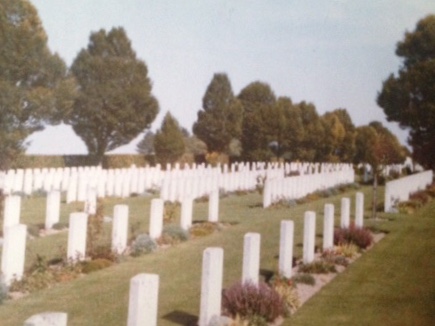
However, my guess is that large families serving in the same regiment would only have been recruited before 1916. You might remember that back in 2019 I wrote a piece about my family’s 1979 visit to the battlefileds of the Somme in France when I was 12 years old. My young self failed to understand the significance of the ground upon which I walked.
When they launched their River Somme offensive on July 1st 1916, the British Army expected little German resistance after a sustained artillery bombardment the week before. They couldn’t have been more wrong, and within the first hour, almost 20,000 of the 120,000 allied troops lay dead, while 37,000 were wounded. The Battle of the Somme lasted 141 days and resulted in around 1.5 million casualties on both sides, yet enabled our troops to advance a mere six miles.
The awful death toll led to the military abandoning their recruitment strategy known as the ‘pals’ battalions. To encourage men to join up, the army had canvassed potential soldiers in groups from the same locality, from workplaces, towns, villages, sports clubs and practically any community with a common interest. They promised them that they could serve alongside their family, friends, neighbours and work colleagues (in other words, their ‘pals’), rather than the usual method of being assigned randomly to regiments. Entering the unknown with familiar faces next to you was far more attractive than being thrust into a war alongside total strangers. The drive was highly successful, with ‘pals’ battalions being established all over the country.
It’s worth remembering that most of the soldiers recruited from places like the North York Moors would be farmers and labourers who would never before have ventured far from their own homes. National Service didn’t come in until after the Second World War and so the training would have been extremely limited and the men would have little concept of the atrocities they were about to confront. Entering this scary and unfamiliar world would be easier if you had family and friends coming along with you.
Sadly, as men from the same places served side by side, so it meant they were killed side by side. It left gaping holes in the communities to which they belonged, and devastated families who had sent fathers, sons and cousins to fight. Certain areas suffered far higher losses than they otherwise would had they been assigned randomly to regiments. One of the worst affected was the East Lancashire Regiment, better known as the Accrington Pals. Of the 700 members who all came from in and around that Lancashire town, 235 were killed and 350 were wounded in the space of 20 minutes on the first day of the Battle of the Somme.
Following the carnage, the army reverted to more traditional methods of recruitment to avoid anything like it happening again. Therefore it is unlikely that a high number of people from the same family would have been enlisted to serve in the same regiment after that date.
I wonder if Brian’s ancestors were recruited through the ‘pals’ scheme to fight in WWI? And do you have relatives who joined up through the ‘pals’ scheme? I’d be interested to hear any interesting war stories, so do get in touch.
Do you have opinions, memories or ideas to share with me? Get in touch with me using the ‘Contact’ button on the top right.
This column appeared in the Darlington & Stockton Times on Friday 26th and the Ryedale Gazette and Herald on Wednesday 24th Sept 2025
 The Countryman's Daughter