A wold of difference

IMG_7563
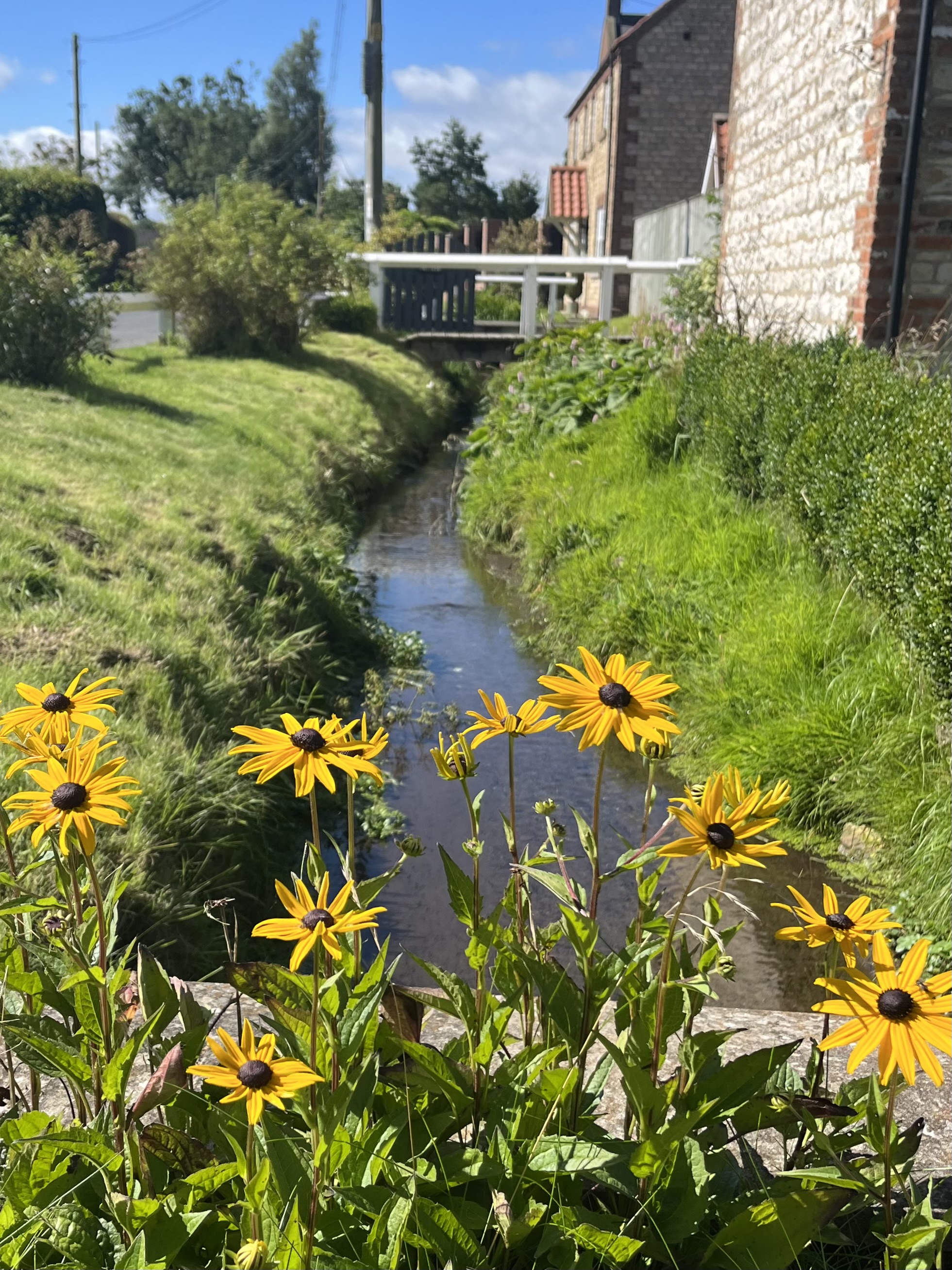
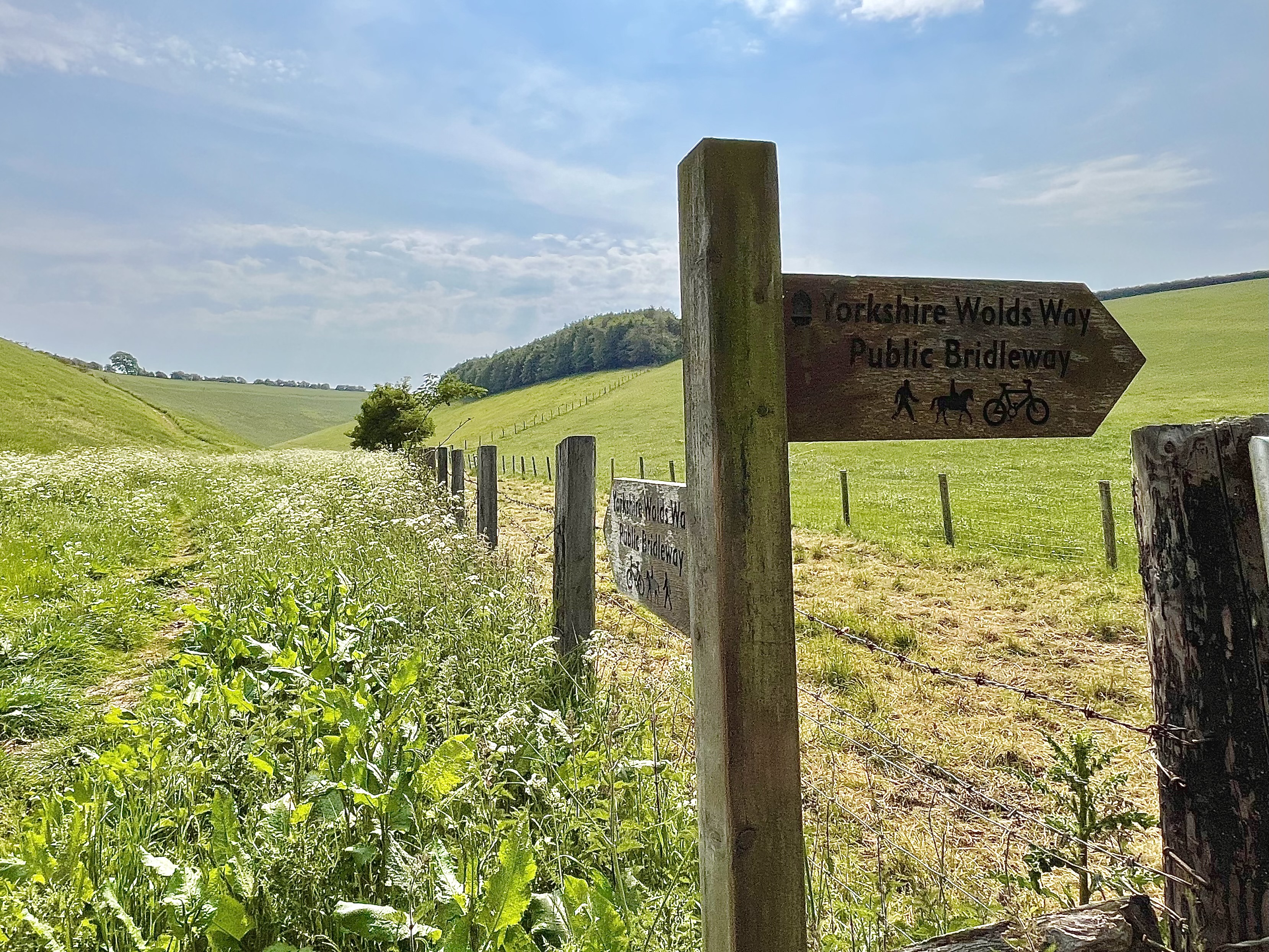
The Yorkshire Wolds seem to play bridesmaid to the more popular Moors and Dales.
IMG_7176
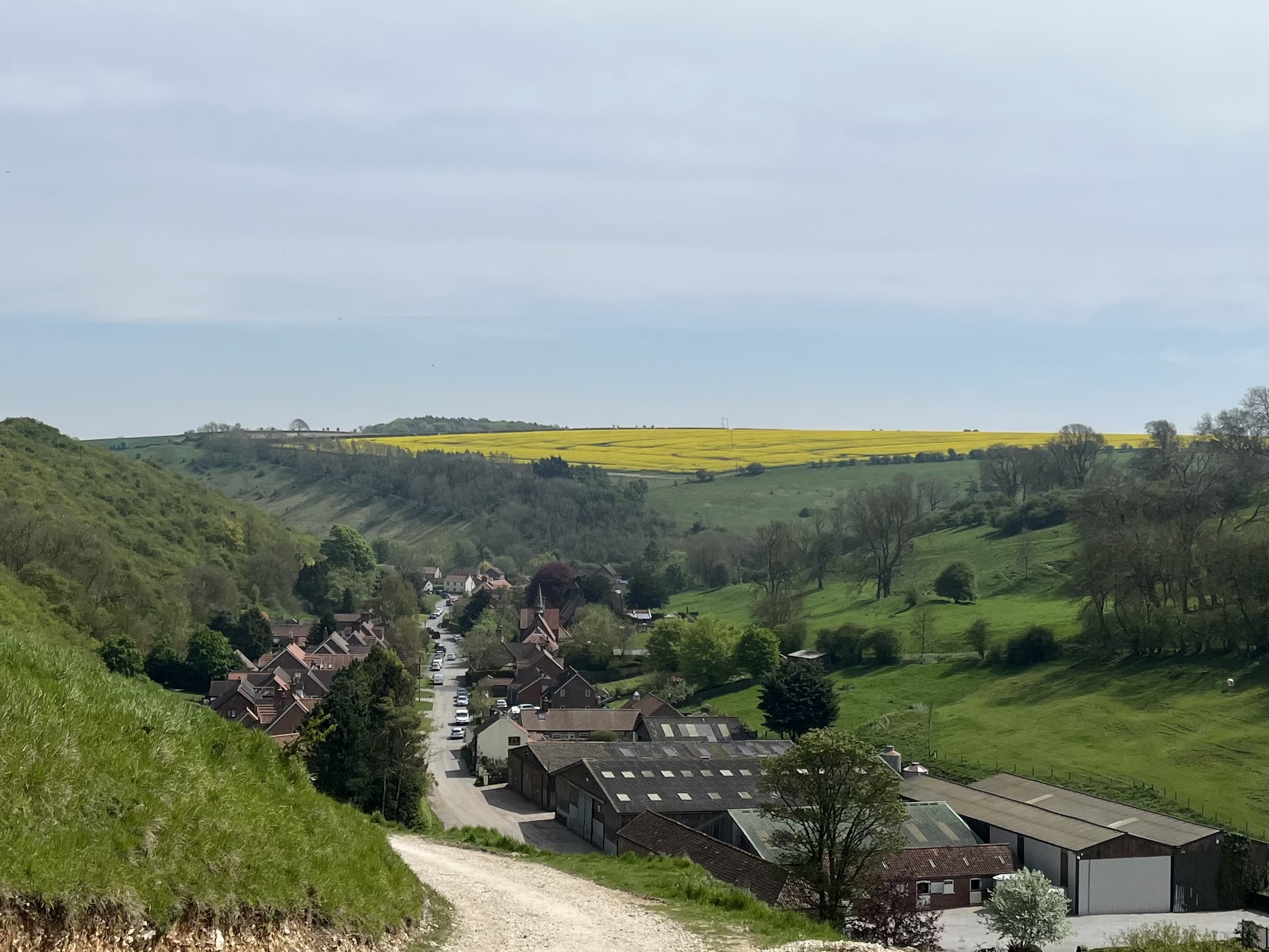
The sweeping valleys of the Yorkshire Wolds were created by the run-off from glaciers.
IMG_7558
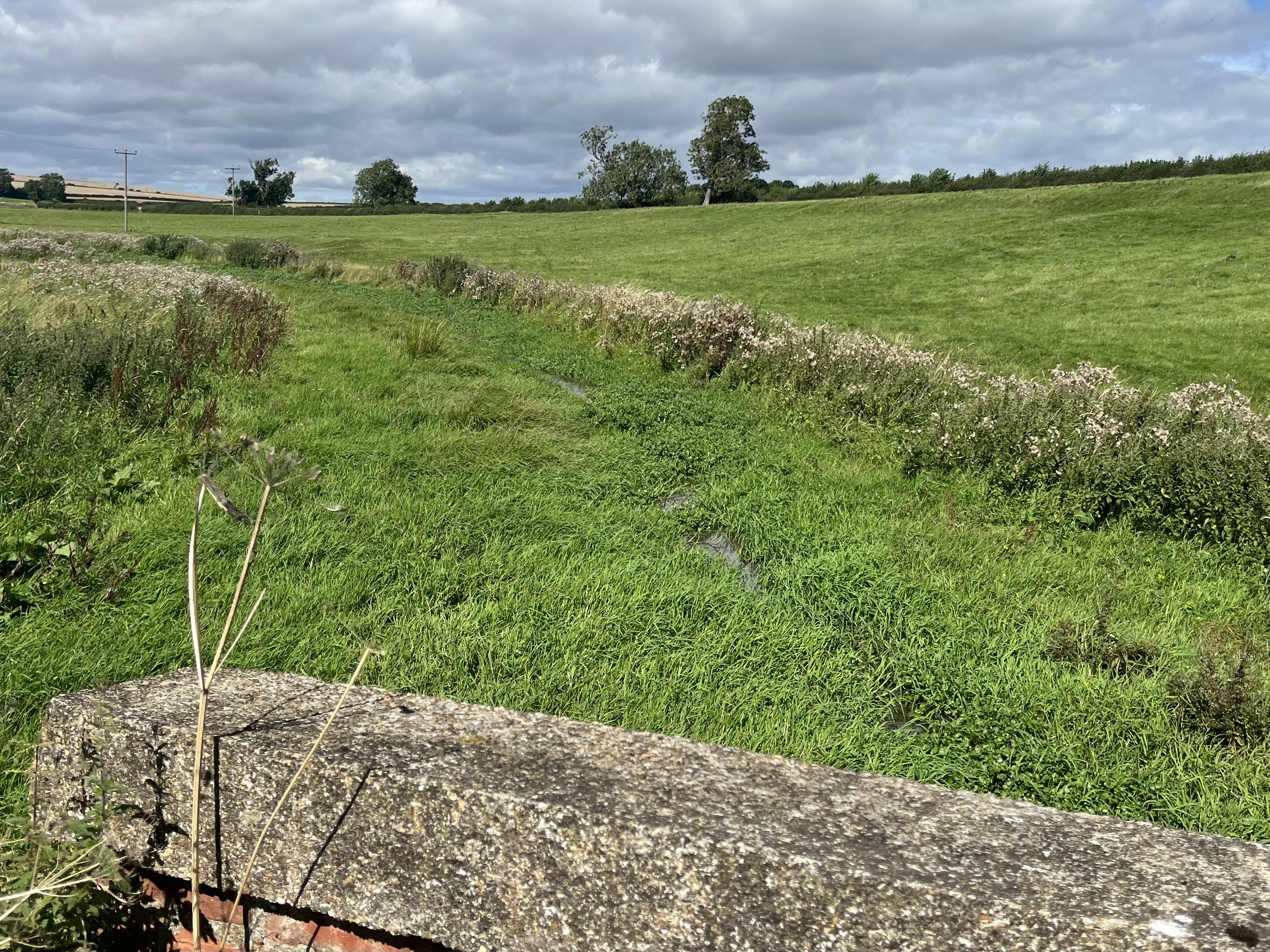
The dales have smooth steep sides, but are completely dry due to the quick-draining chalky soil

I have said this before, but I’m not going to apologise for repeating that here in North Yorkshire we are blessed to have outstanding countryside on our doorstep. When you hear visitors from more urbanised areas eulogising about it, it does make you grateful to be able to experience it every day.

What is so special is that within our border, we have two national parks in the Yorkshire Dales and the North York Moors, as well as two areas of outstanding natural beauty (AONB) in the Howardian Hills and Nidderdale.

But what I want to know is why do the Yorkshire Wolds seem to play bridesmaid the two brides of the Moors and Dales? I’ve recently been spending a bit more time exploring this part of the world and in my opinion, it is equally as stunning, and yet very different, to other parts of North Yorkshire.

Famously, artist David Hockney has a studio in Bridlington where he has worked on some enormous pieces of Wolds-themed art. He describes painting in the winter near Warter, a village between Pocklington and Driffield:

“There was far more colour than I expected. Occasionally a farmer would come and talk to me. They didn’t think I exaggerated the colour. They thought my paintings were very accurate, and talking to them I noticed that they knew just how beautiful it is here.”

Of course, North Yorkshire cannot lay claim to all of the Wolds, much of which do lie in the East Riding, but the part I was visiting recently was around the gorgeous village of Thixendale and the abandoned mediaeval settlement of Wharram Percy, all of which falls within the border of our county. The landscape is markedly different to the areas with which I am familiar, with no heather or bracken cloaking the gently undulating hills and dales, but rather crops and grazing meadows, which give you a clue to the type of agriculture that prevails.

The word ‘wold’ derives from the old German word ‘wald’, and originally referred to forested land, later coming to mean ‘upland forest’ then, once the forest had disappeared, grew simply to refer to upland areas in general. The Yorkshire Wolds are the most northerly chalk hills in the UK, and stretch from the bank of the River Humber near Hessle, curving north and east in a wide boomerang shape, ending up at the stretch of coast between Filey and Bridlington. The characteristics of the geology can clearly be seen in the sheer white cliffs at places like Flamborough Head and Bempton.

The chalky nature of the ground is evident as you trek among the rolling hills, with white pebbles scattered across the earth like never-melting hailstones. What truly sets this apart from other areas of North Yorkshire is the appearance of the dales. The steep-sided green valleys slice acutely into the landscape, barely visible from the tops of the hills. The sides are so smooth and neat that they look almost man-made, as if they’ve been cut by a giant cake slice. Unusually, the valleys have no rivers or streams running through them. The chalk was formed from marine limestone and deposited during the Upper Cretaceous period between 80 – 100 million years ago, with the dales being formed at the end of the ice age, around 18,000 years ago, when melting glaciers led to fast-flowing streams coursing across frozen ground, ultimately creating deep channels in the surface of the land. The chalky ground meant water easily drained away, and so the resulting valleys that we see today remain dry.

In contrast to the Moors and Dales, the way the land is farmed is topsy-turvy, with crops like oil-seed rape, wheat and barley being grown across the tops of the hills, while sheep and cattle graze the valleys.

There is plenty of evidence that the land has been occupied since prehistoric times, and perhaps one of the most famous and impressive locations is that of Wharram Percy, a settlement that at its peak in the 14th century was home to around 200 people spread across 40 or so dwellings, including a number of Viking-style longhouses, the footprints of which can still be seen on the ground.

There is an application ongoing for the Yorkshire Wolds to be declared an Area of Outstanding Natural Beauty, and I do hope they achieve it. Having walked there a few times now, they surely deserve that accolade.

Read more at countrymansdaughter.com. Follow me on Twitter @countrymansdaug

This column appeared in the Darlington and Stockton Times on 28th July and Ryedale Gazette and Herald on 26th July 2023

Ploughing through time

IMG_7496
The three strips of darker green in the middle of this picture are evidence of the ancient ploughing method, ridge and furrow

I was visiting a house for work recently, listening to my colleague talk about the field over the road which offered a tranquil countryside view from the back garden. The viewer had asked if there was a possibility that the field would get developed with housing, therefore spoiling the lovely rural outlook.

My colleague informed them that it would be unlikely due to the fact that in the field was evidence of the ancient ‘ridge and furrow’ method of agriculture, and therefore there was a chance that it was classed as a Scheduled Monument by English Heritage. My ears pricked up as the seeds of a column began to form. I had to find out more about this aspect of our agricultural history.

Ridge (or rig) and furrow is an ancient ploughing technique that dates from at least mediaeval times and possibly even earlier. You’ll likely have passed it and perhaps not have known what you were looking at. To spot it, keep an eye out for a grassy field that undulates smoothly at regular intervals, like a giant green corrugated roof. If you find one, you are looking at centuries-old evidence of the hard graft of a farmer who would have had to trudge up and down that field with his plough for hour after hour, year after year, to create the ridge and furrow effect.

In the days before Enclosure (a series of Acts of Parliament starting in the early 17th century that chopped up and enclosed vast swathes of land that used to be common), settlements would grow crops to feed the local population on common land in what was called the ‘open field’ form of agriculture. Villagers would draw lots and be allocated their own strip, or several strips, which they would cultivate using a single-sided ploughshare to carve up the soil ready for planting. Originally pulled by oxen, and later horses, the strip would be ploughed from the outside, and all the soil would be pushed into the centre, creating a ridge which increased the surface area of your plot, which meant you could sow more crops. They had to be canny with what they planted where, and used different types of crop, such as corn and wheat, in the same ridge that would tolerate either wet or dry conditions. The driest soil was obviously at the top of the ridge, and the wetter soil at the bottom, so judicious planting was a must to ensure that whatever the weather threw at you, enough would survive to provide food over the barren winter months. To assist with drainage, ridges were always ploughed in the direction of any slopes, rather than across them, with the furrows helping to drain water away.

Each strip was called a ‘land’ and as a rough guide, lands could be up to 22 yards wide and around 220 yards long, a measurement known as a ‘furlong’ (furrow-long). Some examples look like a rather large ‘S’ shape, and this is evidence that they were created by an ox-led plough, the curve of the ‘S’ being created by the ample space needed when the great beasts had to change direction. The straight examples will have been dug by horse-drawn ploughs.

The ridge and furrow method died out once the double-sided plough was invented, and many of the ridges were dug over or developed upon and have disappeared. However, some were just too large or too difficult to get rid of (reaching heights of up to six feet), which is why they can still be seen undulating like a series of rounded humps beneath the grassy surface of some fields today. These fields may be classed as Scheduled Monuments and protected by law, which means they cannot be removed or developed upon unless permission is granted by English Heritage.

A ‘furrow-long’ was considered the length a horse could plough in one day, or a pair of oxen could plough before they needed to rest and was the chosen method of measuring distance when the sport of horse-racing took off in the 1500s. To this day, furlong markers line British racecourses, and the length of any race shorter than a mile will be described in furlongs, which is an eighth of a mile. Despite suggestions that the system is outdated, there is no indication that our very traditional British racing industry is going to change any time soon.

Read more at countrymansdaughter.com. Follow me on Twitter @countrymansdaug

This column appeared in the Darlington and Stockton Times on 21st  July and Ryedale Gazette and Herald on 19th July 2023

And the beat goes on

IMG_7710
Patient Heartbeat stars Tricia Penrose, Vanessa Hehir and David Lonsdale spent hours signing autographs for fans.
IMG_7717
Myself with Heartbeat Vehicle Rally organiser Lee Jones, with his Austin A40 that was used by Dr Summerbee in the Heartbeat TV series

I had the pleasure recently to be able to join the annual Heartbeat Vehicle Rally that has taken place in Goathland for the past eleven years.

Thousands of fans flock to the village to see the impressive classic vehicles, some of which featured in the TV series inspired by my dad’s series of Constable books. It also attracts owners of other vintage cars, bikes, tractors and trucks as well as fans of the 1960s and families looking for an entertaining day out.

I was fortunate to have been invited by the organiser, Lee Jones, to join him and his merry band of helpers for the weekend. It’s not a money-making exercise, but simply a bunch of fans and vehicle enthusiasts who work together to create a memorable occasion all for the love of doing it.

Lee was supported by volunteers hailing from all over the country, including Wales, Scotland, the Midlands, Teesside, Durham, Lincolnshire and Suffolk to name just those I had the pleasure of meeting. Visitors came from even further afield, including from the USA, Sweden, Norway, Ireland, Devon, Cornwall, Dorset, Essex, Hampshire, Somerset, and even – wait for it – Lancashire!

A few of the stars were in attendance too, including Tricia Penrose, who played barmaid Gina Ward, David Lonsdale, who played hapless David Stockwell, and Vanessa Hehir who played Scripps Garage mechanic Rosie Cartright. Adoring and ever-patient fans queued for up to two hours in the bracing wind just for a chance to speak to their heroes. Despite sitting at tables exposed to the elements for several hours, the actors were completely gracious, and gave each individual the time for a short chat, an autograph and a photo, which clearly meant the world to them.

The considerable collection of classic vehicles was a significant draw, and the owners adore their cars with the kind of ferocious love that I save for my children (although it might be argued that they give their cars far more care and attention). The metal beauties were absolutely gleaming, and some were adorned with pictures of their appearances in the show, alongside Heartbeat memorabilia. A couple of owners (namely members of the Sunderland and District Classic Vehicle Society) dressed up as characters from the series, walking around rattling buckets to raise funds for Goathland Primary School and the Village Hall, while others were giving people lifts in these special cars for the same reason. It was a thoughtful touch to give something back to the community that hosted the event.

There was such a positive and friendly atmosphere, although for the villagers of Goathland, it must be rather daunting having so many people descend. I’d be intrigued to know how many people attended over the two days, and popularity like this is a double-edged sword, but I know the organisers were at pains to ensure the least upset to those who lived there. When the first short series was aired in 1992, no-one predicted that it would be so successful, that at its peak, Heartbeat would attract 18 million viewers, and last for 18 series over 18 years.

And yet, it is this kind of economical boost and public exposure that rural communities in North Yorkshire need, but very few get. I am sure some residents will object to the intrusion, and I absolutely understand that, but you cannot ignore the financial benefit that is brought into these often neglected areas by the tourism that results from film or TV success. Without the Heartbeat-inspired influx, how else would remote Goathland prosper? It is worth noting that almost all the businesses lining the village thoroughfare feature the word ‘Aidensfield’ either on their shop front or on the merchandise they are selling. My dad created that name, but our family does not benefit from any of it. All the money generated goes to those small businesses that sell it.

In 2023, we are 13 years on from when the last episode of Heartbeat was aired, but the popularity of the show is undiminished. It is repeated every day on ITV3 and available on various streaming services, remaining one of the most popular of all the British vintage shows. I do wonder what my dad, a humble soul, would think of it all, but I witnessed the years and years of hard graft that he put in to achieve that success.

I am one seriously proud countryman’s daughter.

Read more at countrymansdaughter.com. Follow me on Twitter @countrymansdaug

This column appeared in the Darlington and Stockton Times on 14th July and Ryedale Gazette and Herald on 12th July 2023

Our little book hides a big history

IMG_7644
The mass book, as it says here, was printed in 1688 at The Lamb in Holbourn, but my research suggests The Lamb pub was built later. Does our book prove historical records wrong?


IMG_6638
The mass book from 1688 that I found in my dad’s study, small enough to be easily hidden .


Following my piece about the tiny 17th century mass book I found in my dad’s study, I was contacted by reader Angela Fearneyhough in reference to the fact that the book was printed at The Lamb in Holborn in 1688.

Angela wrote: “I lived and worked in London from 1977 for ten years…From what I remember, The Lamb was a lovely old traditional pub and very popular.” Being in the heart of Bloomsbury, it was frequented by the literary elite, including Charles Dickens, Virginia Woolf, E.M Forster, Ted Hughes and Sylvia Plath among others.

Once I started digging, I discovered that this pub has a fascinating history, although I’m confused by the date it was founded. One online source says it was ‘built’ in the 1720s, and another that it was ‘established’ in 1779. However (and if you look at the photo with this article), it clearly states that our book was printed in 1688 for Mr Turner at The Lamb in Holborn (then spelled ‘Holbourn’). Are the online sources wrong?

The pub is named after a philanthropist named William Lambe (1495-1580), a wealthy cloth merchant who recognised the need for piped water to be made available to residents and businesses in the local area. We take running water for granted today, but back in the 16th century, until communal pumps were installed, water had to be manually carried from the nearest source back to your house. It was a fair old trek from Bloomsbury down to the Thames or the Fleet (now an underground sewer) and lugging heavy, open buckets of water over long distances was not an easy task. As a result there was a thriving mini-industry of people selling buckets of water to those who could not fetch it themselves. The pub’s address is ‘Lamb’s Conduit Street’, a conduit being a large channel serving those who were permitted to tap into it. Mr Lambe, at his own expense, built the conduit (long-since demolished) to supply the local area, along with a water pump for the public to use.

From its earliest days, the pub was associated with publishing, and the gentleman mentioned in the frontspiece of my book is Matthew Turner. I found very little out about him, apart from the fact that as well as this mass book, he was responsible for publishing a broadsheet comic strip that was distributed all over London in c.1682 (a copy of which is now in the British Museum). It is an attack on those responsible for the Popish Plot, a fictitious conspiracy involving Catholic Jesuits plotting to assassinate King Charles II. 

Entitled ‘A True Narrative of the Horrid Hellish Popish Plot’, it focuses on the trial of a very colourful character named Titus Oates who is credited with starting the whole thing off, stirring up anti-Catholic hysteria among the populations of England and Scotland between 1678 and 1681. Oates, alongside a fervent and supposedly insane Protestant cleric named Israel Tonge, compiled a lengthy manuscript outlining the non-existent plot which they showed to the king. They made 43 accusations against 541 Jesuits and other prominent Catholics which led to at least 22 innocent people being executed.

Having read up on Titus Oates, it is incredible that he was believed at all, as he had a well-known track record of lying, including faking a university degree, falsely accusing a schoolmaster of the capital offence of sodomy just to steal his job, fleeing the country on a ship when accused of perjury, being ejected from that ship when accused of sodomy himself, and again fleeing. Despite his shady past, he seemed to keep bouncing back, and won the ears of many influential people. For three years, he stirred up unrest and disorder at the expense of the Catholics, until certain voices began to express doubt about his accusations, most notably William Scroggs, Lord Chief Justice of England and Wales, who declared that many of the accused were indeed innocent. The tide turned against Oates, and when Catholic King James II came to the throne in 1685, Oates was finally convicted of perjury and sentenced to life in prison. 

Incidentally, Matthew Turner’s broadsheet, illustrated by Francis Barlow, is considered the earliest example of a comic strip featuring the first ever ‘voice balloons’.

Who’d have thought the little book on my dad’s shelf would lead to all this?

Read more at countrymansdaughter.com. Follow me on Twitter @countrymansdaug

This column appeared in the Darlington and Stockton Times on 7th July and Ryedale Gazette and Herald on 5th July 2023

Teas-ing out the confusion

IMG_1185
Lucien Smith remembers enjoying a ‘high tea’ at The Black Swan in Helmsley in his school days 

The question about what we call our daily meals, and what it says about our roots, has sparked a lively conversation. If you recall, I wrote about the difference between ‘afternoon tea’ and ‘high tea’, and the confusion between the two.

Reader Judith Barber remembers having high tea when she was a child in the 1950s. She writes: “‘High tea’ is a Scottish thing. I was born in England of Scottish parents. I remember it from our annual summer holidays visiting relatives. There was definitely something cooked, followed by cake or bread and jam. At home, our main meal, dinner, was always in the middle of the day. I would still rather have high tea than eating a big, cooked meal later in the evening. Whether Papa, my grandfather, needed something more after his day’s work as a gamekeeper, I can’t remember.”

Katie Westmorland is of Scottish descent and says: “Growing up we used to go out for high tea. Like you said, it was a hot meal, a cup of tea and followed by a selection of cakes! I loved it!”

Lynn Catena is British-bornbut now lives in Canada, and understands why people get confused. “I think the connotation of the word ‘high’ makes people believe that it’s the ‘posher’ of the two.” She adds: “I have happy memories of going to Betty’s Cafe for afternoon tea. Last time I was at the Betty’s in Harrogate was with my sister and mum, just before mum died.”

Lucien Smith (who I’m sure won’t mind me saying is a rather ‘posh’ friend of mine) associates ‘high tea’ with his boarding school days. When his parents came to visit, they would often eat out in nearby Helmsley.

 “ ‘High tea’ was at the Black Swan in Helmsley, something cooked circa 5pm, rather than ‘supper’ in school itself. We were definitely ‘lunch’, ‘tea’ (afternoon) and ‘supper’ at home, whereas we went out to ‘dinner’.”

However, his elder brother Quentin describes his evening meal as ‘tea’, and Lucien has chastised him about it, reasoning that they never used that word at home. Quentin just happened to be good friends with my brother, and in our less-than-posh house the evening meal was always called ‘tea’, so perhaps we are to blame? As Lucien points out, a couple of words can tell you so much!

Staying with Helmsley, Anna Lupton remembers: “In the 1970s The Crown in Helmsley served high teas which were gammon and eggs. Next door at the (posher) Black Swan it was afternoon tea as we know it today. They bought all the cakes, buns and tarts from Sanders cafe/bakery where I used to work in the school holidays. The buns were butterfly buns, chocolate or plain, or with icing and a cherry on top.”

Like many, Michel Laning seems to have confused the two types of teas, but I think we can forgive him, seeing as he’s from the Netherlands. Our strange ways and bizarre language must be rather baffling for foreign visitors. He says: “I did a ‘high tea’ with a friend of mine last year. I was the only man in a group of her invited female colleagues. I tried several blends of tea, but I preferred the scones and sandwiches. It was quite an interesting experience, but ‘high tea’ is not exactly my ‘cup of tea’. Next stop will be ‘high beer!’.

It sounds like Michel actually had ‘afternoon tea’ rather than a traditional ‘high tea’. Nevertheless, whatever traditional English tea he sampled, he doesn’t sound very impressed! Monica Gantz got in touch all the way from Chicago saying: “I grew up in America  with an Italian mother, so no high tea for us. Of course, we like the ritual of it. We all want something late afternoon. For the Italians it would be an espresso with a slice of cake or two cookies, then after 7pm a small dinner.”

I was also contacted by my former journalism colleague Jane Ridley, who now works for the New York Post. She was straight to the point, and said simply: “This has always perplexed me.”

Well, Jane, me too, because at at my mum’s tonight, my sister cooked tea, I ate dinner, and my mum had supper. But we all ate the same thing at the same time at the same table! No wonder we are all a bit confused!

Read more at countrymansdaughter.com. Follow me on Twitter @countrymansdaug

This column appeared in the Darlington and Stockton Times on 30th June and Ryedale Gazette and Herald on 28th June 2023

Little book of Mystery

IMG_6638
A mass book from 1688 that I found in my dad’s study

IMG_6643
The inside page of the mass book I found in my dad’s study. It was published at the Lamb Inn in Holborn, London, by Matthew Turner in 1688

I have had another letter from Jennie Sanderson, the direct descendant of Hannah Raw’s brother, John. To recap for anyone who has not been following this ever-evolving story, my family had no idea how we came to have Hannah’s sampler, which she embroidered in 1835 when she was nine years old. It was found rolled up in a drawer at my late Nana’s house, along with others done by my ancestors. We are not related to Hannah’s family.

I had sent Jennie a picture of Hannah’s sampler, and of her grave showing the the flowers that I had placed there after tracking it down with the help of readers. Jennie said she was very moved by it: “What a lovely thought to take the time to travel to the grave and lay flowers. On behalf of Great Aunt Hannah, thank you.”

Jennie also has a theory as to how we came to have Hannah’s sampler. She is descended from Hannah’s elder brother John, who was born two years before Hannah. She thinks my great great aunt, Jane Lacy, who made one of the samplers, must have been friends with Hannah, and writes: “I know that my Raw/Sanderson families were Methodists, so maybe the girls attended the chapel in Glaisdale (where John was baptised in 1823) and worked their samplers there. It’s very early for a ‘state’ school, so a Sunday school where the girls could learn their ‘letters and numbers’ seems quite likely.”

She adds: “Strange, isn’t it how the spirits of these little girls from the 1830s have materialised 188 years later via these samplers to rise your curiosity and, thankfully, because they were kept safe by your family, have found their way onto your mum’s kitchen wall, and have brought these little girls back to life.”

This story leads me on to another family mystery – if you can bear yet another one! In my dad’s study I noticed a little book tucked on a shelf, a book that I have been aware of for many years, but which I hadn’t paid much attention to.

It is a small leather bound mass book dating from 1688. I have no idea how it came into our family’s possession, but it belonged to one of my dad’s uncles. I would guess that, with my dad’s writing career and interest in Catholic history, his uncle felt that Dad was a suitable person to pass it on to. We have no idea how my uncle got hold of it, whether it was passed down by generations of our family, or if he simply picked it up in an antiques shop

The front page states that the book is a ‘Collection of Prayers Containing the Mass in Latin and English’ and was printed for a Mr Turner ‘at the Lamb in Holbourn, 1688’. Opposite, pasted to the inside the of the front cover, is a label with an and address (J.Walker, no relation), plus a handwritten note saying ‘page 305’.

When I turned to that page, there was a pencil mark next to a certain verse, which follows instructions on how devout Catholics must receive Holy Communion.

‘Let the tongue touch the inner side of the lip, to receive the Host, and bring it into the mouth, which being reverently held on the tongue, till it be moisten’d, is so to be let down into the Stomach without chewing.’

And the bit that has a pencil mark next to it reads: ‘Then take the Absolution, which is a little wine.’ We are then advised to return to our prayers and refrain from spitting, if we can!

Catholic persecution had begun after Pope Clement VII refused to annul Henry VIII’s marriage to Catherine of Aragon in 1534. Henry declared himself Supreme Head of the Church in England and had all Catholic monasteries destroyed, although it was during his daughter Elizabeth I’s reign (1558-1603) that it actually became illegal to practice Catholicism.

The date of the mass book, 1688, comes right at the end of a brief respite from persecution under King James II (1685-1688), but apart from that, practising Catholicism remained illegal until 1791, and so to carry such a book after 1688 would have been very dangerous. It might explain why it is so small, so that it could easily be hidden.

Can anyone out there shed any more light on this precious family treasure?

Read more at countrymansdaughter.com. Follow me on Twitter @countrymansdaug

This column appeared in the Darlington and Stockton Times on 23rd June and Ryedale Gazette and Herald on 21st June 2023

High and my tea

IMG_1541
My best friend Rhi’s family used to have afternoon tea most days when she was a child.

I used to think my best friend Rhi’s family were very posh because of how they took their daily meals. They would have a hot meal at 1pm, which they called ‘lunch’ and which might be something like sausages, or eggs (or my personal favourite, pyttipanna, a type of Swedish potato hash which seemed very exotic), then ‘tea’ would be eaten at 4pm, which would be sandwiches and cake, followed by ‘supper’ at 7pm, which would be the main meal of the day.

At our rather less posh house, we would have dinner in the middle of the day, which might be soup, a boiled egg, beans on toast or a sandwich, then tea at 6pm, which was the main meal of the day. We might also have a cup of tea in the middle of the afternoon with a biscuit or two. ‘Supper’ happened just before bed and was a hot drink or a glass of milk with a bowl of cereal.

What you call your mealtimes is a legacy of your roots. The working classes, who would have been doing hard physical labour for five or six hours by the time ‘dinnertime’ came around, would be ready for a substantial hot meal at noon. The upper classes on the other hand, would quite possibly have a hot ‘luncheon’, but their main meal would not be taken before 7pm and would either be a formal ‘dinner’ (often when guests were being entertained) or a less formal ‘supper’.

I was walking near Rosedale with a friend recently when we passed a farm which he remembered used to sell ‘high tea’ to passersby when he was a child. I immediately assumed he was referring to ‘afternoon tea’, the kind of dainty fare we are accustomed to buying from quaint little tea shops, and which consist of delicate sandwiches, cakes and scones.

But he wasn’t. He meant a different meal entirely, and one that seems to have died out out in recent years, or at least to have evolved into simply ‘tea’. ‘High tea’ was a substantial hot meal featuring meat or fish, vegetables and bread, and was always accompanied by a pot of tea. It would be served after 5pm once the working day was done. You would sit on high-backed chairs at the dining table, hence ‘high’ tea. My friend remembered eating things like gammon and eggs or a meat pie with potatoes in the dining room of the farmhouse. My guess is that the owners probably had plenty of food that they produced themselves, and therefore decided to make a bit of extra cash by offering it to travellers passing their way. And why not? They would be making a large meal for themselves anyway, so they may as well sell the excess to those who would appreciate having a hearty meal cooked for them.

Interestingly, I am not the only one who has confused these two traditional teas. When I started to research this piece, many references to ‘afternoon tea’ came up when what I was actually looking for was ‘high tea’. Only a handful of websites went to the effort of describing the difference between the two.

‘Afternoon tea’ very definitely has its roots among the upper classes, with Anna Russell, 7th Duchess of Bedford and lady-in-waiting to Queen Victoria, being given the credit of starting the trend in around 1840. The Duchess would find it difficult to last the long interval between luncheon at 1pm and dinner at 8pm without a light bite to eat. She asked for a tray of bread and cakes, along with a pot of tea, to be brought to her in her private quarters. It became a daily ritual, and soon she would ask her friends to come a share the tea with her. It was also referred to as ‘low tea’ due to the fact it was served on a lower table than a formal dining table, and consisted of foods that could be eaten with the fingers from a small plate while sitting on more comfortable chairs. It quickly became a fashion trend, and soon wealthy ladies could be found gathering in smart hotels for a gossip over afternoon tea.

Do you have any recollections of ‘high tea’, and what did you eat? Get in touch by contacting this paper, or at my contact page at http://www.countrymansdaughter.com.

Read more at countrymansdaughter.com. Follow me on Twitter @countrymansdaug

This column appeared in the Darlington and Stockton Times on 16th June and Ryedale Gazette and Herald on 14th June 2023

Hannah’s living relative found!

IMG_7335
Hannah Raw’s sampler that sparked my quest to find living descendants

IMG_1123

IMG_1124
Jennie Sanderson’s handwritten family tree that traces her line right back to Hannah’s parents and elder brother John

Something quite remarkable has happened this week, but before I tell you what it is, I am going to remind you of something I wrote back in March.

It concerns Hannah Raw, whose 19th century sampler we have on our kitchen wall, but about whom we knew nothing for many years. We had no idea how we came to have her sampler, which was found rolled up in a drawer at my late Nana’s house. Through the help of a mini-band of family history reader-sleuths, we managed to flesh out much of Hannah’s story, that she was born in 1825 to Matthew and Ellis Raw (nee Winspear) and was the third of seven children. By the time she had turned 13, Hannah was an orphan and living in service. In 1850, 24-year-old Hannah married joiner John Hall and they had two children, Sarah, and Ellis, and later eight grandchildren. Hannah died in 1890 at Lealholm aged 64 and John died in 1903 aged 87. Both are buried in the graveyard of the Church of St Thomas in Glaisdale. I was able to lay some flowers on her grave in February after tracking it down with the help of my merry band of reader-sleuths.

After several months of Hannah’s ever-evolving story, I wrote in March: “I feel it in my bones that we are not far away from tracking down the elusive living descendants of Hannah Raw!”

And guess what? It has happened – well, almost! We have found a living descendant of Hannah Raw’s family (not quite of Hannah herself, but pretty close nevertheless). We were contacted by Carol McLee from the Cleveland Family History Society (CFHS) who, as one of our reader-sleuths, had been so helpful in being able to flesh out some of Hannah’s story. Carol had received a letter from CFHS member Jennie Sanderson who had not seen any of my columns due to the fact she lives in London. However, being a society member, she was sent their journal in the post which contained a piece written by Carol about my appeal for descendants. I will let Jennie take it from here:

“How surprised and pleased I was to find a family link and appeal in the April CFHS journal under ‘Hannah’s Story’ as my 2x great-grandfather was John Raw, Hannah’s brother.”

Hannah’s brother? I nearly fell off my chair when I read that! And how serendipitous that despite living hundreds of miles away and not seeing any of my own appeals, she spotted the article in the CFHS journal, recognised the family link, and felt compelled to write to Carol, who then contacted us.

Jennie goes on to reveal the family line that descends from Hannah’s parents Ellis Winspear and Matthew Raw.

Jennie’s ancestor John Raw (spelled Roe in the birth register), was the second child of Ellis and Matthew and was born on 6th August 1823, two years before Hannah. In 1850, John married Mary Hebden, and their daughter Jane Raw married William Sanderson in 1877. William and Jane had nine children, including James Sanderson, born in 1888. James moved to County Durham and married Jane Ann Lowes in 1915 and the couple had eight children. Their son Frederick moved to London and married Doris Eileen Smith in 1945, and they had four children, and it is one of those children who is our Jennie Sanderson. Although not directly descended from Hannah, I am thrilled that we have at least tracked down a relative, a direct descendant of Hannah’s elder brother.

Jennie adds that she is delighted to discover that the 1835 sampler made by Hannah has survived and is in safe hands on our kitchen wall. “I wish Sarah Walker ‘good luck’ in finding descendants for Hannah, and to Sarah’s family for keeping the sampler safe for all these years, ‘thank you’.”

I am hoping to speak to Jennie in person soon (so far we have only communicated by letter), and all being well, I might one day even meet her. What would be the absolute icing on the cake would be somehow to trace someone who is directly descended from Hannah herself, and then, dear readers, I think we can say that our quest will be complete.

So if you think you have a tip, an inkling, or whatever little thing it is, no matter how small, do get in touch, either with this paper, or through my contact page at countrymansdaughter.com.

This column appeared in the Darlington and Stockton Times on 9th June and Ryedale Gazette and Herald on 7th June 2023

Have we found Polly?

Lacy grave Lealholm - 3
We believe Polly’s resting place is to the left of the ‘Dale’ headstone, where you can see the daffodils. Picture: Paul Wood

I’ve been continuing my quest to find the resting places of my mum’s grandparents, and we are almost there I think, thanks to the sterling work of Paul Wood, church warden of St James the Greater Church in Lealholm, and his wife Hanneke. Records over the years have not always been kept up to date, and what information is available is highly confusing. But the Woods have been doing their best to make sense of it all to see if they can work out where my great grandparents lie.

To recap, my mum’s family could not afford headstones when the grandparents on her mother’s side died. Mary and John Lacy passed away in 1934 and 1941 respectively and it was a source of sorrow to my nana that her parents’ graves were unmarked. You might recall that Mary is the person who created one of the three samplers on our kitchen wall. Her birth name was Atkinson, and everyone called her ‘Polly’ rather than Mary.

According to Paul, the two existing plans of the Lealholm grave plots do not tally with one another, so he is trying to create a definitive version which includes the plots both with and without headstones (many locals could not afford headstones for their loved ones). He describes the old ‘official’ map as “a bit of a mess”, but in relation to our Polly explains: “On this plan, there are three spaces not marked with a name between graves C23 (Dale) and C27 (Capstick). But…there are many spaces where there are gravestones which also don’t have anything marked. And many plots just have a surname, not initials.” But what complicates things even more is that what is on the ground doesn’t always tally with the plans he is working from, one reason being that it wasn’t uncommon for headstones featuring multiple names to be moved from the original spot so that they spanned two or more graves, presumably because the family could not afford, or didn’t want to pay for, another expensive headstone for the most recently deceased relative.

He says: “This is essentially illegal if done without proper records, but it was done all the same.”

Although they have a job on their hands, the Woods are making progress. As a very general rule, people were interred in the graveyard in the same order as they were listed in Lealholm Church’s handwritten burial register. That is unless, of course, they were placed in a grave that already had space reserved (for example, if a husband predeceased his wife, the family could pay for space to be left for her in his grave, and her name would then be added to the existing headstone after she died).

To work out where Mary ‘Polly’ Lacy lies, looking at the register of burials, the Woods found that a Mary Ann Dale was interred on 18th May 1934, and our Mary Lacy is next in line (August 24th 1934). The next burial listed after Mary Lacy is Hannah Mary Watson on September 22nd 1934, and she is followed by John Cook, who was laid to rest on 28th October 1934. So comparing this handwritten list of burials to what is actually in the graveyard, Mary Ann Dale has a headstone, while the next two people on the written list, our Mary Lacy and Hannah Mary Watson, do not. John Cook does have a headstone (his name appears on the same one as the Captsicks, mentioned in the paragraph above). On the ground, it is clear that there is enough space for there to be at least two graves between Mary Ann Dale’s and John Cook’s headstones, and therefore we can conclude that, following the sequence of the written burial list, that our Polly lies, unmarked, next to Mary Ann Dale.

As Paul adds: “Your enquiry has helped me realise that I can use the old registers to try to fill in the missing gaps for the whole churchyard, or at least show the most probable place for unmarked burials.”

That is very good news, as it means families in similar situations to ours have a chance of discovering the final resting places of their late ancestors. We are still working on Polly’s husband, John, who died seven years after his wife. We do have some clues, but not enough yet to say for sure where he is. I hope to bring you more news of him soon.

This column appeared in the Darlington and Stockton Times on 2nd June and Ryedale Gazette and Herald on 31st May 2023

Putting on a good show

IMG_7014

You could test your own dog’s skills at ‘fetch’ at the Duncombe Park Country Fair. 

I recently attended the Duncombe Park Country Fair, which is the first time I have done so for a number of years. I don’t think the show has fully recovered from the cancellations due to Covid in 2020 and 2021 but, to my untrained eye (and from the queues of vehicles waiting to get out), it looked pretty well attended. There were people from every stratum of society, from the very well-heeled to the not so well-heeled and one thing I particularly noticed was the number of pet dogs. Pooches of every shape, size and variety seemed to be there, with many relishing the chance to take their owners for a walk. Were there so many because owners of dogs are more likely to attend a country show, I wondered, or was it down to the ‘lockdown factor’ of people buying pet dogs to ease the boredom of being confined to their homes?

For nothing more than curiosity, you might like to know that (according to research carried out in 2021) around 3.2 million households acquired a new pet after the start of the pandemic, and those figures were reflected in a surge of demand for pet-related products from the supermarkets which led to a shortage of some brands of pet food. About 5% of those impulse purchases resulted in said pets being abandoned or given up after their new owners realised it was far more challenging than they expected.

Dogs aside, there was lots to see and do at the show, with local tradespeople and artisan producers promoting and selling their wares. Of course, the purpose of these events is to celebrate country life in all its forms, showcasing the food, skills, crafts and agriculture from that part of the world. The traditional baked goods were a particular draw for us, and we couldn’t resist the handmade Scotch eggs for ourselves, and a Yorkshire curd tart for my mum (and having sampled both, I can report that they were flipping delicious!).

Visitors could also try their hands at activities such as clay pigeon shooting, paintball and archery and, having had a go at the latter, I can boast that I hit the bullseye on my first arrow (I’m not going to admit it was luck, although for some reason I don’t feel the need to mention where the other five arrows ended up). You could also have a go at testing your own dog’s skills at agility. The ‘prey’ (a ball) was thrown to the end of a 50-metre course of straw bale jumps. The dog was timed as it fetched the prey and returned. Some performed absolutely brilliantly, flying effortlessly over the jumps to grab the prey before racing back and obediently dropping the ball at their proud owner’s feet. Others were just rubbish.

There were plenty of hopeful human competitors taking part in the various events, most of which involved horses and gundogs, and it was a treat to see how talented they were, to see these traditional skills and pastimes being celebrated and appreciated by the crowd. Having said that, the Mini Grand National was an eye-opener, and almost as chaotic as the real thing, with a posse of children atop their ponies haring around the ring at breakneck speed. They had to negotiate jumps made of straw bales and, just like the real thing, more than one of them came a cropper. Thankfully, the pliable bones of these bright young things meant those who were unseated soon got back up again.

There are hundreds of country shows like this taking place throughout spring and summer (details from the Yorkshire Agricultural Society website), and the one at Duncombe Park has been established since 1982. They have been proven to give the local economy a much-needed boost thanks to an increase in sales of goods and patronage of the hospitality and tourism sectors. These shows are what you might call the warm-up acts to the more famous county shows, which are similar, but far bigger events. The biggest and, arguably, the most well-known is, of course, the Great Yorkshire Show, which takes place over four days in Harrogate every July. With around 140,000 visitors, 8500 animals and the occasional royal in attendance, it is quite the celebration.

Do you have any memories of a favourite country show?

Read more at countrymansdaughter.com. Follow me on Twitter @countrymansdaug

This column appeared in the Darlington and Stockton Times on 26th and Ryedale Gazette and Herald on 24th May 2023