No horsing around

B2F55BE8-82D6-483B-BEB6-538D04CF3121
It used to be believed that someone who had a gift with horses possessed what was known as the ‘Horseman’s Word’. Picture by Alastair Smith
F8154C07-7D36-43DD-824D-57805AD4CC80
The badly-spelled letter I wrote to my parents when I was eight asking to buy me a black stallion
39440D0E-88C1-4144-BFAB-7FBD0EBF5FAE
Me, aged about 11, kitted out in my riding gear

As a little girl, I was mad about horses and when I was eight, I wrote a letter to my parents begging them to get me what I considered the perfect mount for a small child, a black stallion.

I also entered the annual ‘Win A Pony’ competition run by WH Smith in the hope that I’d beat the gazillion other children with the same dream, not stopping to consider whether my parents could afford to look after one, nor with any notion of where we’d put it. When I started to write this, I assumed that such competitions would be prohibited now, but it appears not. Nowadays, those offering winners a real pony have a duty to carry out ‘due diligence’ on entrants, which just wasn’t considered back in the 1970s. Thankfully, competition hopefuls now have to have parental consent and must prove they have the skills, finances and knowledge to take on the substantial commitment of owning a pony.

To my parents’ eternal gratitude, I never won the competition, but the disappointment was softened when they instead agreed to pay for me to have weekly riding lessons at a local stables. That kept me happy until about the age of 15 when, after a particularly miserable wet and cold day in the saddle, I’d had enough and gave up.

I was a distinctly average rider, and can’t say I had any special connection with any of the horses I ever rode. But there are those who have what you might call a ‘gift’ when it comes to communicating with these very intelligent and noble creatures. As my dad mentions in his column from 30th May 1981, people like this were believed to possess a charm known as the ‘Horseman’s Word’.

Those living and working in the equine field used to put great faith in this secret ‘word’, and believed that there were only a select few who knew what it was. When it was whispered into a horse’s ear, it had the effect of instantly calming even the most flighty of steeds.

In 1858, American horse trainer John Rarey brought a new style of training over to England. Rarey had a reputation for being able to rehabilitate vicious or abused horses, and perpetuated the idea of ‘natural horsemanship’ which went against the traditional approach of ‘if the stick doesn’t work, get a bigger stick’. Instead of trying to control a horse through fear, Rarey addressed things from the point of view of the horse, saying that if it kicked, bit or bucked you off, it would be because you had done something wrong, not the horse.

It was a revolutionary concept inspired by Spanish settlers known as the Vaquero who landed in America in the 16th century and brought with them a technique whereby riders worked with the horse’s nature, gaining its trust so that it felt safe and secure around humans. They understood that if you did that, then you were far more likely to get the horse to behave in the way you wanted it to without the need for physical intimidation.

The English assumed that Rarey had the gift of the ‘Horseman’s Word’, although it was never a term he used himself. He was summoned by Queen Victoria to visit a supposedly untameable mare. The queen watched in awe as Rarey placed his hands on the wild beast, which then placidly lay down, and Rarey lay next to it, resting his head on its hooves.

Today we would call someone like him a ‘horse whisperer’, thanks to the term being popularised by Nicholas Evans’ best-selling book of that name which was made into a successful film in 1998 starring Robert Redford. Although the main character is fictional, he is based upon an amalgamation of several people who were famous for training horses in this way, brothers Tom and Bill Dorrance, Ray Hunt and Buck Brannaman, the latter being the lead equine consultant on the film and a stunt double for Redford.

Brannaman took the approach one step further than his predecessors. He grew up being emotionally and physically abused by his father, and recognised that mistreated horses behave in similar ways to abused children. “They trust no-one and expect the worst. But patience, leadership, compassion and firmness can help them overcome their pasts,” he said.

Surely, right there is a lesson for us all.

Contact me, and read more, at countrymansdaughter.com. Follow me on Twitter @countrymansdaug

ENDS

This column appeared in the Darlington & Stockton Times on 4th and the Gazette & Herald on 2nd June 2021
Shoe the bad luck away

47B4535B-A0CB-496E-A67A-5899B7D8AAB5
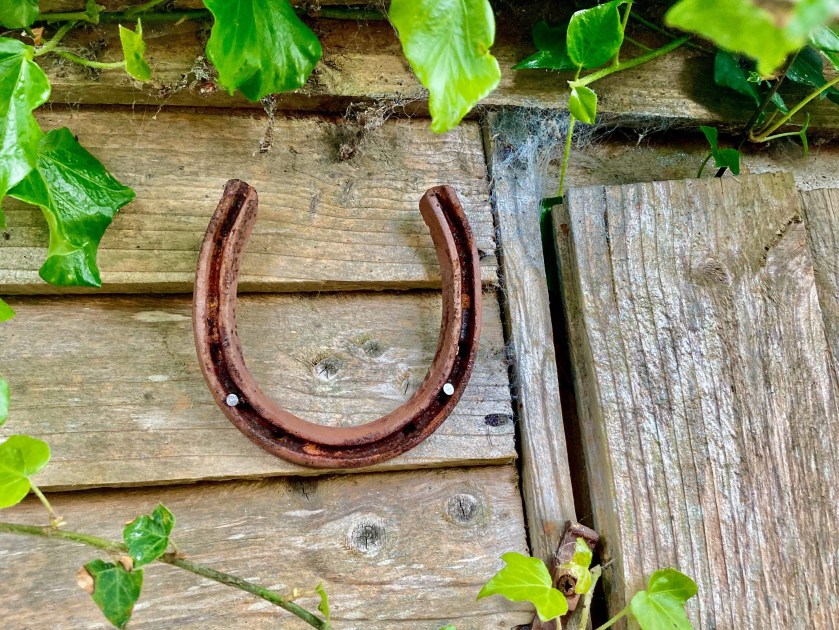
A lucky horseshoe outside a building in Bournemouth. Picture by Mick Gisbourne
2222AD76-B884-4820-8B01-B7976F5DDD0D
A horseshoe above a garage in Staithes, North Yorkshire. Picture by Alastair Smith

It’s funny how, despite all the advances in science and technology, some of us still hang on to old superstitions that common sense tells us cannot make any difference to our everyday lives.

We insist on saluting magpies, throwing salt over our shoulders and blessing people when they sneeze. One of the oldest and most persistent of superstitions surrounds the horseshoe, an item of equine foot protection that dates back to at least 400BC. The need to preserve the hooves of these hard-working animals was recognised almost as soon as horses were domesticated, and early versions, known to the Romans as ‘hipposandals’, were fashioned out of materials such as woven plants, leather and rawhide.

It wasn’t until around the sixth and seventh centuries AD that metal horseshoes began to be used in the colder Northern European climates to help steeds get a better grip on frozen terrain. They also shielded hooves that were easily damaged by hard daily toil over rough ground. It became apparent that if the hoof was covered, it enabled a horse to move faster, and therefore became an important tool not only in everyday life, but also in the sport of horse racing.

The first metal horseshoes were fashioned out of cast bronze, with iron following in the fourteenth century, the preferred material until relatively recently. Today though, you get horseshoes made of steel, aluminium, composite plastic and even rubber, the substance dependant upon what kind of activity the hooves will be subjected to. For example, steel is used for heavy horses and heavy work, whereas aluminium is appropriate for lighter duties and needs to be replaced more often. Composite and rubber shoes help to cushion the hoof and are useful on softer surfaces, or if the horse has an injury.

But why the association with luck? According to my dad in his column from 23rd May 1981, the origins of the connection are hard to pin down, but there are a number of theories. One is its shape; a horseshoe resembles a crescent moon, a motif that has so many links to historical symbolisms that it is impossible to explore them fully here. Another thread of discussion stems from the fact that ancient man would have found it hard to understand how a metal object could be nailed to a foot without causing any pain or spilling any blood. Also, when knocked against a stone, the shoe produces sparks, so it’s not hard to understand how a primitive mind might have associated this object with magical powers.

But which way up is the correct way to hang a lucky horseshoe? This again is a topic for debate. What is not disputed is that it needs to be hung either above the entrance to a building, or on an outside wall.

If you hang it like the letter ‘U’, then the idea is that it will ‘collect’ luck, like a bucket collects water. However, if you hang it the other way up, then it pours the luck over anyone who crosses the threshold. If there were seven holes in the shoe, it was important that you hung it using nails in all of them, as that was a lucky number. Some people would hang them sideways like the letter ‘C’, and this is supposed to symbolise Christ.

The amalgamation of paganism and Christianity clearly comes to the fore when it comes this practice. The horseshoe’s association with luck predates Christianity, and yet, as I referred to in the opening paragraph, people have always found it difficult to let go of long-held superstitions that haven been passed down from one generation to another. I wonder if some early Christians with pagan forefathers may already have had a horseshoe above their door and simply decided to turn it on its side to reflect the new religion? Nailing it in place also had the obvious connection with nailing Christ to the cross.

To this day, the horseshoe symbolises luck, and a quick scan of any card shop shelf will reveal a healthy crop of examples of the image. But I wonder how many readers still have horseshoes nailed above their doorways? And which way up is most commonly seen where you live? And has anyone spotted one that is turned on its side like the letter ‘C’?

Contact me, and read more, at countrymansdaughter.com. Follow me on Twitter @countrymansdaug

This column appeared in the Darlington & Stockton Times on 28th and the Gazette & Herald on 26th May 2021

A tasty kind of dandy

67ef9b59-baba-43e9-94fa-9d7f033f218d.jpeg
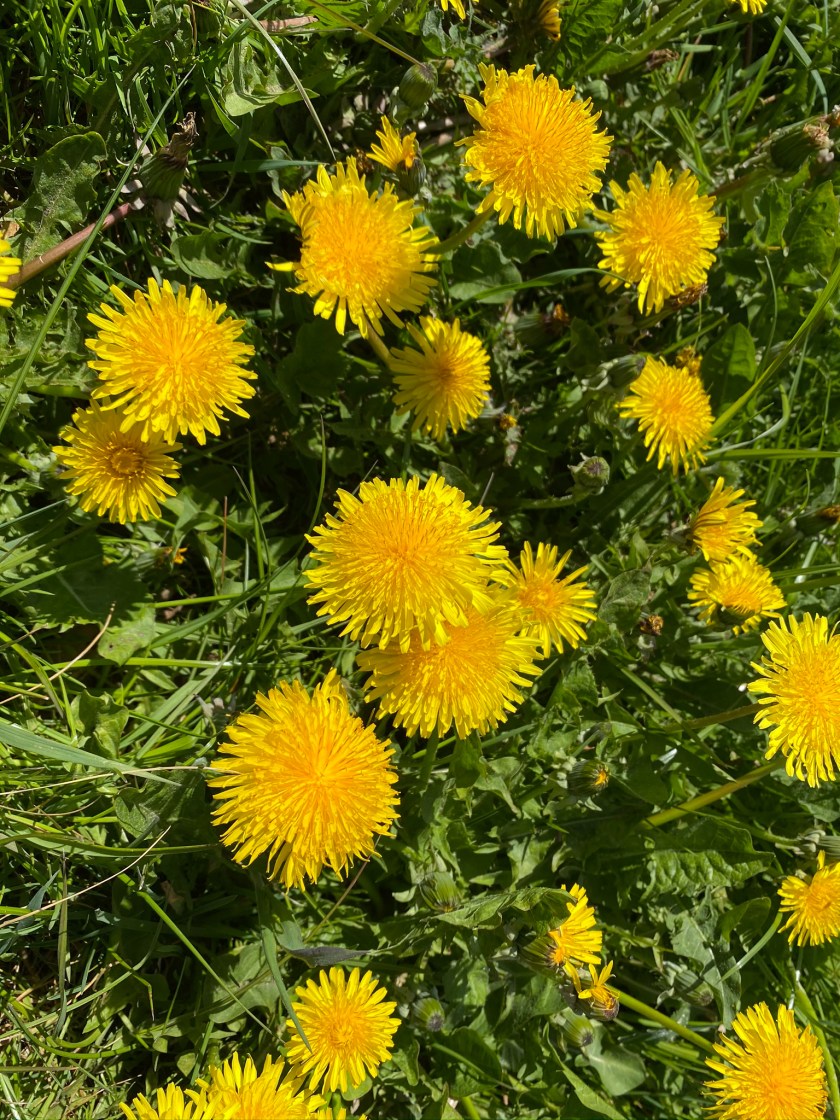
Dandelions are so much more than just a pesky weed
117D59DD-0829-426D-A2FC-62BA801634BA
The dandelion possesses one of the most effective ways of spreading seeds thanks to its trademark clock

I am to gardening what Freddy Kruger is to precision surgery. In my hands, the blade of a trowel and prongs of a fork are lethal to any living thing. Where some people have beautifully manicured lush green lawns, mine is a scraggy, patchy, overgrown mess. Moss, daisies and dandelions are perfectly at home among the scruffy tufts of various grass species that inhabit the patch of land surrounding my home.

I don’t despair though, because I see it as part of my job to encourage wild flowers (otherwise known as weeds) as they are so important to help our vital pollinating insects to thrive. In the past, the dandelion was one of the most accursed of visitors, its strong roots growing so deep into the ground that you had to possess almost superhuman strength to pull it up. And even when you did, often the roots would snap, leaving the ends deep in the soil, ensuring it would soon re-emerge.

But the reputation of dandelions has transformed over the years, and they are now recognised as very useful plants indeed. Those who still regard them as unwelcome invaders of their herbaceous borders might not be pleased to know that a quick look on the internet will throw up lots of advice on how to propagate and grow them successfully. As every frustrated and exhausted gardener knows, the distinctive dandelion clock is one off the most efficient ways of spreading seeds and is one of the reasons they are so hard to eliminate entirely.

I think my dad was ahead of the curve 40 years ago when he suggested that we should consider growing it as a crop in his column from 16th May 1981. “Why do we insist that the dandelion is a weed? It has wonderful properties and could be a most useful asset to the human race,” he writes.

It is well known that the leaves can be eaten in a salad or, as my dad suggests, wilted it in a pan with butter as you would spinach. As my lawn is home to what one might term a ‘healthy crop’, I decided to test out these suggestions. After throughly washing a few leaves, I took a bite out of one while I tried to wilt more with butter.

First of all, the leaves didn’t wilt like spinach, but just kind of shrivelled up, and secondly, they were about as tasty as the brown stuff my mum used to paint on my nails to stop me biting them. I’ve still got the bitter aftertaste in my mouth as I write, so I’m not sure I will ever be tempted to add them to a salad. However, there are lots of recipes online, and if anyone has one that will prove me wrong, please feel free to send it my way.

Another curious revelation my dad makes is that the roots can be roasted to make a healthy and caffeine-free alternative to coffee. He claims that it is ‘barely distinguishable’ from real coffee, which I found hard to believe until I did a bit more research. Sure enough, most reviews I found said that it was possibly the closest alternative to real coffee, but tasted less acidic and slightly sweeter. You can try digging up and roasting your own roots, although it does seem like a bit of a palaver, so if you fancy giving it a whirl, it might be easier to try one of the suppliers online who sell it relatively cheaply.

People have also been known to make dandelion beer and wine, although one friend reported that when she tried it, the resulting brew ‘smelled like the bottom of a beck’. So I won’t be tempted to give it a go.

The English name for this versatile flower is a corruption of the French ‘dent de lion’, which means ‘lion’s tooth’, a reflection of the spiky shape of its leaves. I also wonder whether the bright yellow ‘mane-like’ flower has something to do with it. It is known colloquially by many other names such as blowball, cankerwort, milk witch and monk’s head to name but a few.

Another well-known alternative name refers to the fact that it has an undesirable side-effect if you consume too much of it. This side effect is revealed in the name itself: ‘wet-a-bed’!

Contact me, and read more, at countrymansdaughter.com. Follow me on Twitter @countrymansdaug

This column appeared in the Darlington & Stockton Times on 21st and the Gazette & Herald on 19th May 2021

The flat and curlies

4220E8CC-22F9-43FD-9C93-0D66588B2EFE
Parsley is a herb associated with many superstitions 

When I was younger, we believed that if we had garlicky breath, the best way to get rid of it was to chew fresh parsley. As I was a big fan of garlic bread and a big hater of halitosis, I could regularly be found with a mouthful of this curly-leaved green herb. Eating it raw like this wasn’t very pleasant as it tasted not much better than the sawdust at the bottom of a bird cage, but I was prepared to martyr myself in the pursuit of non-stinky-post-garlic-bread breath.
Continue reading “The flat and curlies”

A grand old village

9324744A-6A13-4B07-9642-6E3C263CD909
The beautiful village of Crayke is steeped in history
761491A3-E835-4CB0-94B6-5DAC7892FBF1
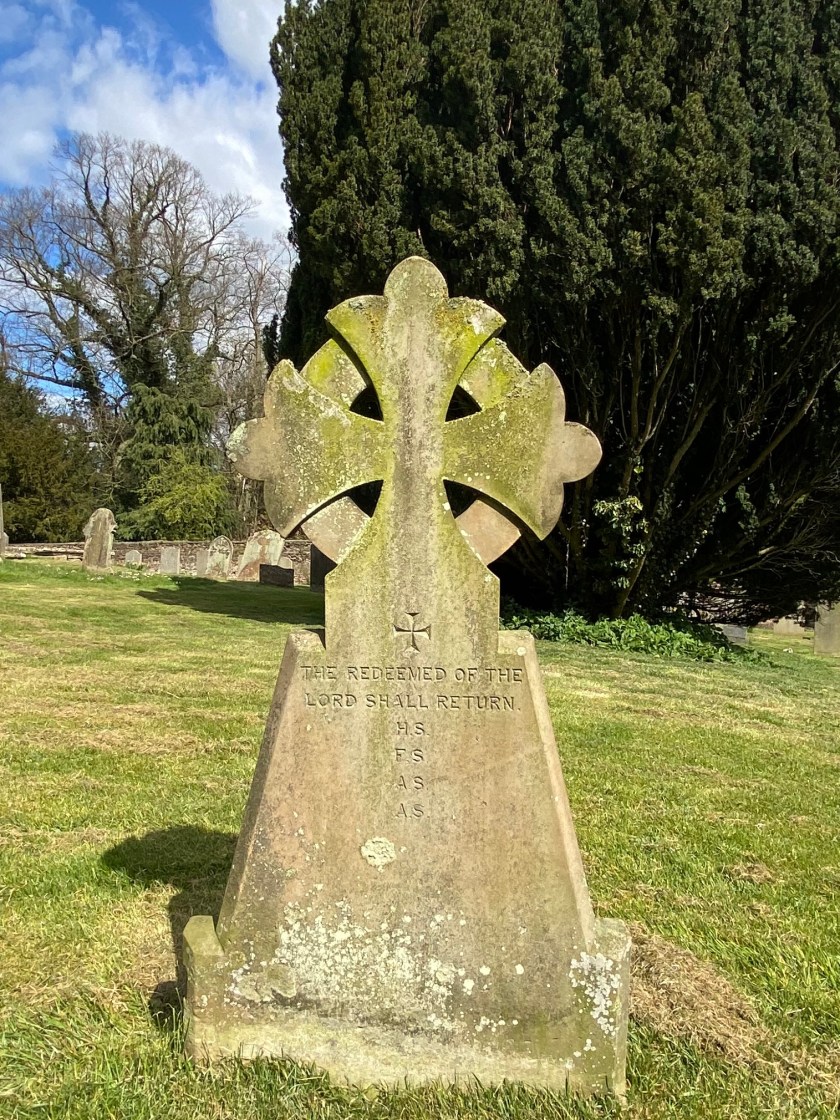
One of the gravestones in St Cuthbert’s Churchyard, Crayke, with just initials identifying the lost loved ones
18D000EA-9060-49CA-8BA7-0D85861BDE70
Another headstone in Crayke church yard with initials only. Why is this?

The end of April saw a spell of dry, sunny weather, and I made the most of it by playing lots of tennis and going out for plenty of walks. One of my routes takes me through the gorgeous village of Crayke, which lies on a hill almost 20 miles north of York.

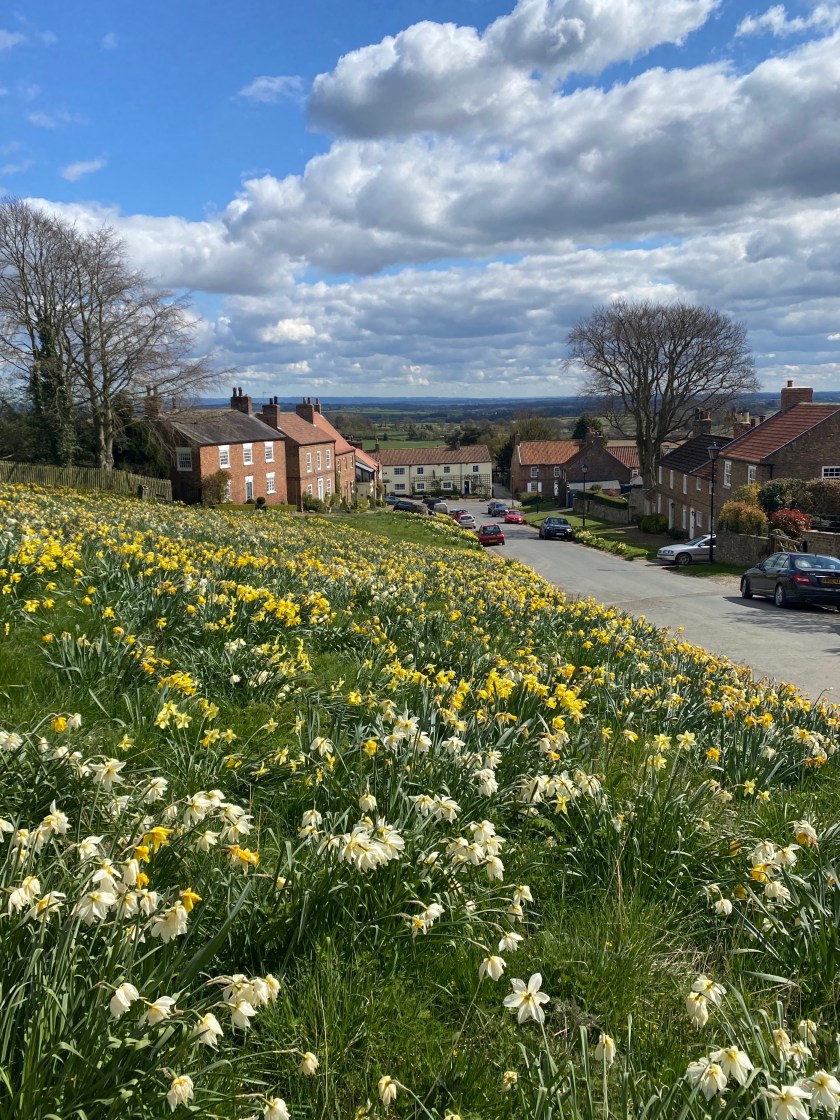
The main thoroughfare is Church Hill, so-called because St Cuthbert’s Church sits at the top. The hill was covered in late-blooming daffodils and looked absolutely beautiful, so I decided on the spur of the moment to stop and have a wander around.

It is a place steeped in history, and someone once told me that the hill was the one that the Grand Old Duke of York marched his 10,000 men up and down, although a brief search on the internet doesn’t suggest there is a connection with the famous rhyme. Nevertheless, strategically it is the perfect place to spot enemies coming from any direction as the summit of the hill commands spectacular views all around. Some say that there was a Roman watchtower on the hill, but it has never been proven, although Roman roads did pass close by and Roman artefacts have been found in the village.

According to my dad in one of his books (Folk Tales from the North York Moors), there was a timber castle in Saxon times, and this was replaced by a Norman motte-and-bailey castle in the 12th century, some of which still exists as part of the current Crayke Castle building, located at the highest point in the village. However, we know it was almost totally rebuilt and extended in the 15th century, thanks to accounts from 1441 which list the changes made. In the 17th century it was repaired and restored again, and this is more or less what stands to this day.

I took a walk around the beautiful church yard, and you can really get a feel for the age and history associated with that place. The original church was founded by St Cuthbert, who lived from around AD634 until 20th March AD687. He spent much of his time in the ancient kingdom of Northumbria, particularly at the monastery in Lindisfarne, and he was so admired for his spiritual devotion that King Ecgfrith gifted him the village of Crayke (then known as Crec) and lands for three miles around so that he had his own place to rest on his regular journeys between Lindisfarne and York. After Cuthbert died, he was initially interred at Lindisfarne, but there were fears that his grave might be destroyed by invading Vikings, and so his body was moved. It was carried to a number of different places over the centuries due to continuing unrest, one of which is believed to be Crayke, although his final shrine is in Durham Cathedral. Because of its connections to Cuthbert, Crayke was officially considered part of Durham right up to 1844 when it was returned to Yorkshire. The local pub is called The Durham Ox.

As I was walking around the graveyard, I noticed that a few of the headstones were inscribed with only initials, rather than the full name of the deceased, and very few further details, not even the date they died. I wondered why, as I have not come across this before. I asked my mum and brother if they had any any idea, and they didn’t. One theory we had was that they came from families that couldn’t afford a full inscription (if the stonemason charged by the letter). Another was that they were possibly criminals, or died in some kind of shame, and another suggestion was that they were in fact footstones, but I did not see a corresponding headstone at the other end of the graves.

No-one I spoke to had come across them before, but it was quite common in days gone by for people who could not afford a headstone to be buried with no marker at all. I wonder whether the stonemason used by the folk of Crayke was a kindly soul who offered to place markers on the graves of his fellow villagers who could not afford to pay him?

I’d be very interested to get to the bottom of this little mystery, so do get in touch either through this paper or via my webpage below if you know the answer.

Contact me, and read more, at countrymansdaughter.com. Follow me on Twitter @countrymansdaug

This column appeared in the Darlington & Stockton Times on 7th and the Gazette & Herald on 5th May 2021

No need to be blue

I had a rather eventful day last week. I work occasionally for an estate agent and was showing some people around a house they were interested in buying. I usually arrive early so that I can do things like switch on lights and make sure that there is nothing amiss before the viewers arrive. On this particular day, though, they were early and so I had not had time to go in and check it out.

I unlocked the front door and led them into the kitchen, only to be confronted with a huge hole in the ceiling, plaster all over the floor and water pouring in! Needless to say, they didn’t buy the house, although they were very gracious about the whole thing. One of their party then recounted a story of when she was also an estate agent and arrived to a house full of birds that had come in through an open window and couldn’t find their way out again. As a result every floor, surface and piece of furniture was covered in bird you-know-what.

According to my dad in his column from 25th April 1981, if blue tits get trapped in a building, they will start to tear paper into strips, either from the walls or from any source they can find. It’s not certain why they do this, but one theory is that they are trying to find food, and mimicking they way they rip away tree bark to find insects and grubs.

In 1981, we still had milk delivered to our doorstep in glass bottles which were sealed with foil tops, and somehow, blue tits knew that they contained something tasty. If you didn’t remember to leave out a pot or something else for the milkman to cover them, you would often wake up to find that the pesky wee birds had pecked through the foil to help themselves to the lovely cream, which we called ‘top of the milk’. In our house, it was a race to see who could get the ‘top of the milk’ to pour onto their cornflakes in the morning. As Dad was often the first up, he usually won.

Blue tits start looking for suitable nesting spots from February, and often return to the same places each spring, the adults living for an average of three years. They love a crack in a tree, a small hole in a wall, or a suitably-placed nesting box. When I was last at my mum’s we spotted them checking out the nesting box on our garage wall, and it always gives us a thrill to know they have moved in for another year. They’ve also been known to nest in rather unusual places, such as letter boxes, cigarette butt bins and hollow street lamps.

There is a tale told that in 1779 some blue tits decided to build a nest in a large stone bottle that was left to drain on a plum tree in an orchard belonging to Oxbridge Farm in Stockton-on-Tees. For the following 76 years, with the exception of 1851, the same bottle was occupied by successive generations of blue tits. This little bird produces one of the largest clutches among its avian peers, with the female laying between eight and 12 eggs, often more, and it was estimated that the bottle saw around 1000 chicks fledge from that spot.

The original plum tree was removed in 1820, and the bottle was moved to another tree, yet the birds still found it. In 1851, though, the blue tits found that the entrance to their favourite spot was blocked by an old nest as the farmer had forgotten to remove it, so they decamped elsewhere, only to return the following year once the problem had been rectified.

This tale was written down in an old book called ‘Whellan’s Durham County Directory for 1856’, and there are no further records of how long the bottle remained in situ, nor how long it was used as a nesting site for blue tits. A reader had written to Dad saying that he remembered the farmer telling him about the bottle in the 1920s, but unfortunately, Oxbridge Farm was eventually demolished.

If you have any stories about curious places that blue tits have been found nesting, do get in touch either via this paper, or via my web page (see below).

Contact me, and read more, at countrymansdaughter.com. Follow me on Twitter @countrymansdaug

ENDS

This column appeared in the Darlington & Stockton Times on 30th April and the Gazette & Herald on 28th April 2021

Go with the flow

The slow-flowing River Ouse

A couple of weeks ago I talked about the Vikings changing the name of York from the Anglo-Saxon Eoforwic to Jorvik, supposedly because it was easier for the invaders to pronounce.

I was contacted by the Reverend Canon Bill Ankers who recounted a discussion he’d had with his friend, Lord Nicholas Cunliffe-Lister, 3rd Earl of Swinton, who very sadly passed away last month.

Lord Swinton had an alternative theory about the name ‘Jorvik’. The Swinton estate has fishing rights for a large stretch of the River Ure around Masham and further upstream. In Wensleydale it used to be called the Yore and in fact, Wensleydale was once known as Yoredale, a name still seen in the area. Lord Swinton wondered if at one time, the river was called the ‘Yore’ all the way down to York, and thus gave the city its name.

It is a plausible theory because an unusual feature of the Ure is that after it passes a place called Cuddy Reach just west of the village of Linton-on-Ouse, it is thenceforth known as the River Ouse. Usually, when one river flows into another, it takes on the name of the main waterway. So when the rivers Swale and Nidd enter the Ure, that is where they end, and the water continues its south-eastern voyage under the name ‘Ure’. 

However, when the water reaches Cuddy Reach, a seemingly insignificant stream called Ouse Gill Beck enters the Ure and in an audacious takeover, snatches the grander river’s name and from then on the waterway is known as the Ouse all the way down to the Humber.

So why the name change?

This set my brother and I on a quest to work it out, delving in to our dad’s study stuffed full of files and reference books in an attempt to work out why the Ouse takes over the Ure. And we have come up with a theory.

Many of our ancient waterways have names that derive from the old Britonnic language spoken during the Iron and Roman ages. Names were influenced by a river’s characteristics and how the locals would refer to it. It is why we often get repetitions, such as five River Avons, four River Derwents, and five Ouses, all over the country.

The names ‘Yore’ and ‘Ure’ are likely to have derived from the Britonnic name ‘Isura’, with the Indo-European root ‘IS-‘ meaning ‘strong’ or ‘swift-flowing’. The influential Roman settlement Isurium was built in the first century A.D. just west of the Isura on the current site of the village of Aldborough near Boroughbridge. As the ancient language evolved, the intervocalic letter ‘s’ (i.e. a consonant that occurs between vowels) disappeared and hence we ultimately end up with ‘Yore’/‘Ure’ (in those days likely to have been pronounced ‘Yora’).

As for ‘Ouse’, the name derives from the ancient word ‘Udsos’ which is believed to mean simply ‘water’ or ‘slow-flowing’.

If you are familiar with the Ure, then you’ll know that as it tumbles through the hilly dales, it is indeed strong and swift-flowing. You may also be familiar with the River Ouse which, because it winds its way through mainly flat land, is a different kettle of river altogether, and therefore its ancient ‘slow-flowing’ name is far more appropriate.

In the first millennium A.D., traders would have used the river as one of their main forms of transport, sailing up and down between the main settlements. Those coming up river from the south would have referred to it as the Udsos/Ouse (slow-flowing), and those coming from the north would have called it the Yore/Ure (swift-flowing). So it is possible that the names would have overlapped at the stretch of river between York and Isurium where the land begins to flatten out and the river settles down. It is only in later centuries when we started to write things down and draw maps that we also began to hate such ambiguities as a river with two names. And so a definitive point was identified where the river switched names from Ure to Ouse.  

The Vikings were enthusiastic traders and it is entirely plausible that they would have followed what they called the Jore/Yore all the way to the southern capital of the ancient Kingdom of Northumbria, which they renamed ‘settlement (vik) on the Jore’ or ‘Jorvik’. 

So, could the late Lord Swinton be right?

Contact me, and read more, at countrymansdaughter.com. Follow me on Twitter @countrymansdaug

This column appeared in the Darlington & Stockton Times on 23rd April and the Gazette & Herald on 21st April 2021

New kit on the block

F9A9518C-92CE-4D9B-9E1C-45A8A175B392
Marmalade took a while to settle into our new home, but butter on her paws helped

Following last week’s feline theme, in his column from 11th April 1981, my dad mentions that a reader had sent him a letter asking if putting butter on a cat’s paws to make it stay in a new home worked.

Later that year we tried it for ourselves when we moved house. We didn’t go far, just to the other end of the village, but our cat, Marmalade, was most definitely not amused.

We relocated from an old cottage into a newly-built house, and all the carpets were brand-spanking, apart from a fetching brown, green and yellow swirly-patterned one that we rescued from our old front room and placed on the floor of my dad’s new study.

When we finally introduced Marmalade to the house, she crept slowly around the rooms commando-style, keeping as low to the ground as possible, her tummy almost touching the floor as she moved. She was quite bewildered, bless her, and found her way into my dad’s study and refused to come out for a quite some time. Obviously, it was because in there was the old carpet with its familiar scents which made her feel less disorientated.

She did eventually start to venture out of that room, but was still quite anxious, and so we resorted to the old butter on her paws trick. I think the idea is that they love butter, and by the time they have finished licking it off, they have grown so used to their new environment that they won’t try to run away.

Today, there is a lot more information available on the internet about how to settle your pet when you move house and, strangely, none seem to mention putting butter on paws!

To reduce the animal’s stress, what you should do is dedicate a whole room to it once you have moved, so that they do not feel overwhelmed by the size of the new home. Leave a litter tray, food and water in there with the door open so that it can venture out if it wants to. Make sure it has its own bed and perhaps a few items of your clothing so it has familiar scents around it.

One of the ways cats mark their territory is by rubbing themselves on walls, doors and furniture so that their scent is transferred, making them feel secure. Once they start doing this in your new home, that means they are beginning to feel more confident about where they are. If they are taking time to settle, you could try gently rubbing a soft cloth around their face and ears, then dabbing it around walls and furniture at cat height so that they are surrounded with a familiar smell .

Opinions vary as to how long you should keep a cat inside before daring to let it go outside. Some felines are quite content to stay indoors, while others resort to hovering by the door in the hope to make a dash for it when someone opens it.

We did keep Marmalade indoors for some time, although she soon began to want to go outside. I don’t think it was longer than a week before we let her out though, and it was a huge relief when she willingly returned. We had feared that she might try to find her way back to our old house, but I don’t think she ever did, and it wasn’t long before she began to feel at home in the new surroundings. She lived a long and happy life, and finally died at the ripe old of 18 in the late 1980s.

Advice for keeping them indoors ranges from a fortnight to four weeks, but I don’t know many adult cats that would be happy stuck inside for a month. One suggestion when it comes to letting them out for the first time is to sprinkle their used cat litter around the garden so that when they do go out, they know that it is their territory. It also acts as a signal to other cats in the area that there is a new kit in town.

Incidentally, that old carpet is still in my dad’s study, and I always think of dear old Marmalade when I look at it. It’s a bit tatty and worn now, but I’m not sure we will ever replace it.

Contact me, and read more, at countrymansdaughter.com. Follow me on Twitter @countrymansdaug

This column appeared in the Darlington & Stockton Times on 16th April and the Gazette & Herald on 14th April 2021

Hogging Time

AA300203-2BC2-4636-8A1F-9AB2B9925D09
A hogback carving at Durham Cathedral. Picture by Chris Booth

As I’ve mentioned before, to kill time during the most recent lockdown I’ve been watching some dramas based on historical novels such as Poldark which is set in 18th century Cornwall, and another called Outlander, which is set in 18th century Scotland. Poldark has taught me about coastal living in a tin and copper mining area, and Outlander about the Jacobite rising and the Battle of Culloden. I’ve recently stepped back another thousand years and am now slightly obsessed with the series ‘Vikings’ and ‘The Last Kingdom’, the latter based on Bernard Cornwell’s ‘The Saxon Stories’ novels. 

Artistic licence has been used extensively in these fictional adaptations. For example, my children and I laughed when we saw on screen a distant ‘view’ of Eoforwic, which is the Anglo-Saxon word for York. The 10th century city was nestling among rolling green hills. Those who live on York’s glacial plain know that the nearest significant hill to the city is about 15 miles away! The Vikings had trouble pronouncing Eoforwic, which is believed to mean ‘wild boar settlement’, so they changed it to the much easier-to-pronounce Jorvik, meaning ‘wild boar creek.’

Apart from some welcome escapism, the benefit of watching these shows is that it inspires me to read up on the real history behind them. I now know far more about the historical context that led up to the Battle of Culloden in 1746, and more about how the country of my birth was divided when the Vikings landed on our shores. 

This week, when I looked in the folder that contains my dad’s columns from 1981, I came across a clipping from the Letters Page from 28th March. A couple of readers had responded to a column he had written the week earlier in which he mentioned Viking ‘hogback coffins’ found at St Thomas’ Church, Brompton, near Northallerton. Similar examples had also been found in other places, such as Sockburn and Osmotherley, both not far from Brompton, while most of the rest were found elsewhere in the North and Scotland.

They were writing to tell him more about these fascinating things, but also to correct him. These stones, they said, were not coffins, but likely to have been grave markers. Ten of them were discovered at Brompton in 1867-8 when the church was being restored and are incredibly well preserved. Five remain there, but the rest have been moved to Durham Cathedral.

These sandstone blocks are around two feet high and three and a half feet long, have a curved top, and bow out slightly to the sides. They are carved with very distinctive patterns often seen in pagan art and were probably placed along the top of the grave. Many of these hogback stones have a lattice-type decoration running along the sides, believed to represent the tiles on the roof of a longhouse, a hall which lay at the centre of every Viking community and was home to the most important resident, the Earl.

Some theories suggest that the ‘hogback’ name derived from the carved pigs’ heads that often sit at either end of the stones. However, I’m not convinced, as those at Brompton are definitely not hogs, but muzzled bears complete with claws and fur.

One of the readers who contacted the paper said that the first ones to be discovered were found in the Lake District in the 1830s, and were so weathered that they thought the whole design was meant to represent a hog, which is how they got their name. However, if you stand back and look at the stones, their shape is very reminiscent of a curvature of the spine and the rounded belly of a pig or its wild cousin, the boar. So that’s my theory on the origin of the name, and I’m sticking to it.

The second reader mentions excavations at Coppergate in York where plans for Viking houses had been uncovered, showing the same overlapping roof tile design that was carved on the stones, confirming that they represented ‘houses of the dead’. Vikings believed that if you died a noble death, you would be rewarded with a glorious afterlife in the great hall of the gods, Valhalla.

If you want to see what they look like, then when you can, do visit the Jorvik Viking Centre which has stood on the exact spot of that discovery since 1984. 

Contact me, and read more, at countrymansdaughter.com. Follow me on Twitter @countrymansdaug

This column appeared in the Darlington & Stockton Times on 2nd April and the Gazette & Herald on 31st March 2021