Lend me your ear

IMG_6104
Listening to audiobooks in the car allows me to indulge in those I do not have the time to read. Audio versions are also useful for people living with impaired vision

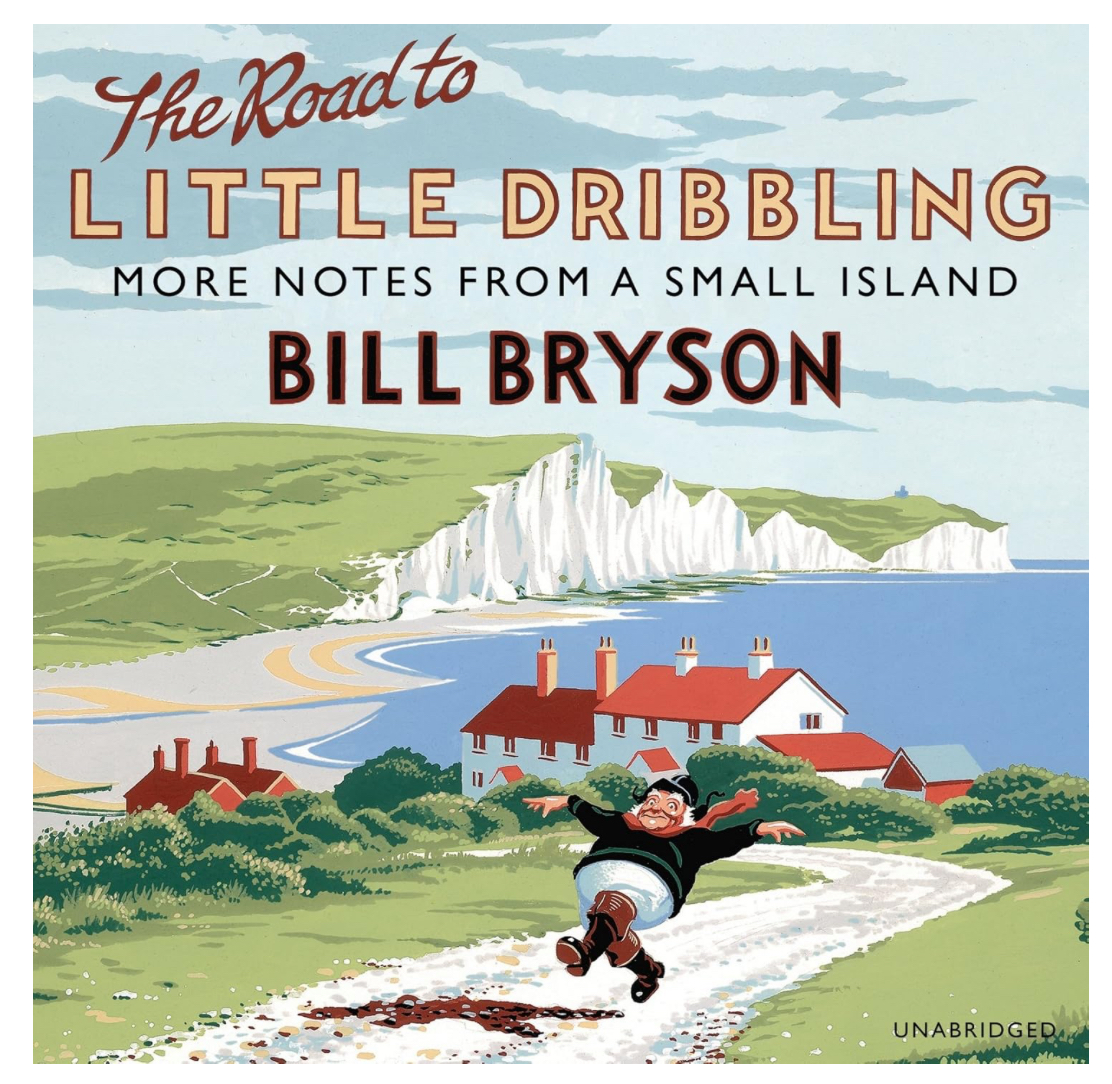
I’ve had some interesting comments from readers following my recent mentions of listening to audiobooks. I spend a lot of time driving and use that time to catch up on books that I otherwise would not get to read. One book led me to anger (about serial killers that was so awful that I stopped after the first chapter) but I have thoroughly enjoyed most of the others, including Bill Bryson’s Road to Little Dribbling. However, I did notice a few errors here and there, most notably Bryson’s narrator’s mispronunciation of the word ‘Minoan’ when referring to that famous ancient Greek civilisation. The reader kept saying ‘MinoNan’.

Leni Ella writes: “I listen to books in the car as so much driving is involved with the job. Some people read audiobooks like it’s the first thing they’ve ever read. Having said that I’ve listened to some absolute beauties too.”

She adds: “The Dutch House read by Tom Hanks was like being read to by a friend because his voice is so singular and familiar. Both the Obama books were excellent and inspiring listens and I also enjoy Sara Cox reading her own stuff.”

I do find that when writers narrate their own work, it is much more meaningful because it adds an extra dimension that you do not get through written words on a page. Through their voice, you hear their emotions and feelings as they read the sentences they have composed. It particularly comes across in autobiographies, where the writers are revisiting experiences and memories they have actually lived through. I first realised this when listening to Dave Grohl’s autobiography, The Storyteller (Grohl is the lead singer of the Foo Fighters, a band on my bucket list to see which I achieved earlier this year). Hearing him recall certain events in his life in his own voice where his tone, speed and volume would change depending on what he was reading, made the whole book burst with life. You could hear his emotion at the birth of his children, the shock and grief when Kurt Kobain died, the unbridled thrill of doing his first stadium concert,

Clare Powell, a self-confessed ‘ranter’, says: “I am new to audiobooks. I’m enjoying David Mitchell (the comedian) ranting in ‘Thinking About It Only Makes It Worse’ (having listened to his ‘Unruly’ first). He is a magnificent ranter but also an amusing historian. I highly recommend it.”

In the same column I referred to Bill Bryson’s condemnation of grammatical errors made by people who should know better.

Clare went on: “My guilty failure when writing is the excessive use of the exclamation mark!! However, my English teacher told us that creative writing allowed for certain grammatical ‘hiccups’. The rule is not to start a sentence with ‘and’, ‘but’ etc., but sometimes it is acceptable. He then quoted from a very famous piece of literature which, over 40 years later, I have no hope of remembering! I do remember his words of wisdom though.”

Lynne Wheatley confesses: “I am one of those people who just can’t enjoy audiobooks.” But my column did bring to mind her 1940s school days: “Our English teacher in 1947 was a demon. You did it her way, no deviation, spelling mistakes written out 100 times. I was an avid reader so soon got the hang of correct English. My first job was proof reading, and I loved it. My ‘driving nuts’ is spelling mistakes, especially on social media. I remember way back, with my small grandchildren, when they would write in schoolbooks with spelling mistakes. I used to point out the odd error, but was told, “Oh it doesn’t matter as it’s not an English lesson.” WHAT? I could see my English teacher turning in her grave. I must say, you’ve whetted my appetite, I might yet try the audio.”

It has occurred to me that audiobooks are a clever way for people who have problems with their eyesight to enjoy books they can’t see. Not everyone who has impaired vision knows how to read Braille, and I’m sure many of you who used to see perfectly well but no longer can, will miss being able to indulge in a good book.

My last paragraph then obviously begs the question, how are you reading this column? Maybe it’s time that I did an audio version.

Do you have opinions, memories or ideas to share with me? Get in touch with me via the ‘Contact’ tab at the top right of this page.

This column appeared in the Darlington & Stockton Times on Friday 6th Dec and the Ryedale Gazette and Herald on Wednesday 4th Dec 2024

Well, I do declare!

Screenshot
Using low-noise fireworks will make sure that we can still enjoy a captivating spectacle without turning our furry friends into quivering wrecks (picture courtesy of Dynamicfireworks.co.uk)


In response to my column about binning the bang in fireworks, reader John Gallon contacted me. I believe retailers should sell low-noise fireworks, and not stock very loud ones at all due to the impact they have on our pets, livestock and wildlife. I love fireworks for the beautiful spectacle they provide, rather than for the accompanying noise.

John says: “I agree with you totally concerning noisy fireworks, there is no need. But fireworks with a bang are over in a second. The spectacular light-show fireworks burn for 10, 20, 30 times longer and if thrown around on the ground (as bangers are) have more potential for property damage.”

I agree with John on his point about the potential for damage and he is right that fireworks continue to burn and remain hot far longer than the noise they create, which is another worry. But even though the individual bangs last just seconds, most fireworks contain many bangs in quick succession, and a formal display lasts at least 20 minutes. Urban areas experience lots over several nights and weekends, so the noise aspect is a real issue. Neither problem is worse than the other, it’s rather a question of what is workable for the majority to keep enjoying fireworks with the least harm.

John added: “Many pet owners rush to hold and comfort their pets which only intensifies the feeling of a threat. Far better to throw them a small treat with smile that says: ‘There is nothing wrong, you even get a treat.’ The same goes for thunder; don’t show your own fear.”

Having looked after dogs of all sizes and breeds for more than ten years, I can say with some authority that some are not bothered by fireworks at all, others come to you for a cuddle of reassurance, and others are absolutely bone-shakingly petrified. It has nothing to do with my own fear on display because I am not fearful at all. His suggestion of offering a treat will not work on a dog that is terrified because they are in fear for their lives, desperate to escape the perceived threat. Chucking them a treat, no matter how tasty, has no effect whatsoever. I have tried everything, and I know that if we at least reduce the noise while still being able to enjoy the annual spectacle, then that will go some way to help.

Reader Horacio Romeo (who lives in Brazil!) explained that over there, only low-noise fireworks are legal, although there are still people who break that law. In reference to me mentioning that a lover of fireworks is known as a ‘pyrophile’, he said: “I am a moderate oenophile (lover of wine), a turophile (lover of cheese), a xenophile (lover of foreign things), cinephile (lover of films), a sapiophile (lover of intelligent people), a paleophile (lover of ancient things).  Plus carphile, musicphile, travelphile (time and money allowing…). I just made up these words; I don’t know the ‘proper’ ones in English!”

On the subject of words, my current audiobook is Sir Arthur Conan Doyle’s ‘Sherlock Holmes – The Definitive Collection’ read wonderfully by Stephen Fry. It’s a compilation of seven novels, the first being ‘A Study in Scarlet’ to which I have just finished listening. Written in 1886, it was Doyle’s debut novel and the archaic language raised a few giggles thanks to the fact that certain meanings have evolved over the intervening 138 years.

There was one in particular that made me laugh aloud every time I heard it. Now, before I mention it, I suggest you put down anything you are drinking, or if you are eating, finish your mouthful (Disclaimer: I am about to be very immature).

On many occasions, Dr Watson and Sherlock Holmes can be heard ejaculating.

Of course, because you are mature, educated people, you will already know that in Victorian times, ‘ejaculate’ had the same meaning as ‘exclaim’ or ‘declare’. I say ‘in Victorian times’, but it does still have that meaning today if you take the time to look it up in a dictionary, it’s just that we choose not to use it in the Doyle-esque context for reasons I hope I do not need to explain.

It makes me wonder, though, are there any words you know that have completely different meanings today compared to the past?

Do you have opinions, memories or ideas to share with me? Get in touch with me via the ‘Contact’ tab at the top right of this page.

This column appeared in the Darlington & Stockton Times on Friday 22nd Nov and the Ryedale Gazette and Herald on Wednesday 20th Nov 2024

The word is not enough

IMG_2128
I have been listening to Bill Bryson’s audiobook on my travels, which was has been very entertaining

I have been contacted by a reader named Ron who, commenting on my recent ranty column about people getting their words wrong, said: “It reminded me of a local writer who was critical of another local writer (who was, by then, dead so could not respond). The comment was about the first writer having (and I quote) ‘no less than eight grammatical errors on one page’. Oh dear (I won’t insult your intelligence by telling you where he went wrong).”

If you are a writer who dares to show your work publicly, you open yourself up to an extra level of scrutiny. We have to be careful when criticising other writers because eagle-eyed critics will be waiting with pens poised in readiness to tear us down as soon as we slip up (although eight grammatical mistakes on one page IS a lot).

I happily admit (as my column revealed) that I am not perfect. In case you haven’t read it, I had a rant about people confusing the words ‘perverted’ and ‘perverse’. I had always believed that ‘perverse’ was when something happened that was the opposite to expectations, while ‘perverted’ was something that was sexually depraved. Therefore, when people used ‘perverse’ when they meant ‘perverted’ it really wound me up. Turns out, ‘perverse’ CAN also mean sexually depraved, so I was wrong and had to force feed myself humble pie.

I am also not perfect when it comes to grammar and am guilty of beginning sentences with ‘So’, ‘As’, ‘But’ and ‘And’. The grammar I was taught at school is just a hazy memory and I rely on my gut to tell me if I’m wrong, which it does now and then. Despite having a successful career as a prolific writer, my dad was not perfect either and having failed his English O’level, his understanding of the English language was largely self-taught.

My rant was inspired by an audiobook about serial killers by a so-called ‘TV psychology expert’. I barely got past Chapter One, not because of the ‘perverse’ v. ‘perverted’ hoo-ha, but because it was just rubbish. I switched to listening to Bill Bryson’s ‘The Road to Little Dribbling’, his sequel to the hugely successful ‘Notes from a Small Island’. He is American born but has lived in England since 1974 and has dual citizenship. His observations about the cultural quirks of our nation are hilarious, and this one I do recommend you try.

There were a few times that he had his own rant about English language usage and was scathing about people who muddled up ‘me’ and ‘I’. I shrank down a bit in my seat knowing that his list of offenders could include me (not I) too.

But (there I go again…) there were certain things in the reading of this book that were incorrect. In Mr Bryson’s defence, he was not narrating it himself, and on the whole the reader did a very good job. However, he did drop the odd clanger, the most notable being his pronunciation of ‘Minoan’ when referring to Knossos Palace. The narrator said ‘MinoNan’. The first time he said it, I let him off, because when you’ve read a whole chapter almost flawlessly, it must be an absolute pain to start again for the sake of one small mistake.

However, it turned out to not be one small mistake, and he said ‘MinoNan’ every single time it appeared. How could he get something as famous as the Minoan Civilisation wrong? Or was it his script that had it wrong? And (yep, another…) who had given the OK for it to be published with such a glaring error? It was not the only spoken error, but the one that most irked me.

While I’m on the subject of audiobooks, it would be remiss of me not to take the opportunity to drop in a shameless plug: if you haven’t listened to the Constable series by a certain Nicholas Rhea narrated delightfully by Philip Franks who starred in Heartbeat, then what are you waiting for?

And (there I go yet again) having listened to them all, there is the odd error here and there, particularly on some Yorkshire place name pronunciations, but I’m not going to be too critical.

After all, there but for the grace of God go I.

This column appeared in the Darlington & Stockton Times on Friday 15th Nov and the Ryedale Gazette and Herald on Wednesday 13th Nov 2024

Are you perverse or perverted?

IMG_5634
I thought I knew the difference between the words ‘perverse’ and ‘perverted’ until I consulted my 2004 Oxford English Dictionary

Brace yourself. I’m about to have a rant (before I do, as a highly trained journalist and consummate professional, rest assured that I do not rant unless I am 100% certain I have my facts right).

Is it just we writers who get upset when people get words wrong, or is it an affliction felt by regular mortals too? There are certain words that, when used in a misplaced context or misspoken, make me want to scream.

It is even more annoying when the mistakes are uttered by people who should know better. On car journeys, I entertain myself by listening to audiobooks and recently had chosen a new one about serial killers (as you do). The author, a ‘leading TV psychological expert’, narrated it herself and kept referring to the evil perpetrators as ‘perverse’, describing in unnecessary and gratuitous detail their ‘perverse’ habits.

Did she mean that they behaved in a way that was opposite to the norm for your regular serial killer? Was she going to say that instead of killing their quarry, they treated them to a fancy dinner and a family movie before setting them free? Because that would certainly be perverse for a serial killer.

Of course she didn’t. The word she should have used was ‘perverted’.

One of the reasons this particularly annoyed me was because it was being read from a published book, that literary thing with pages and sentences and such like, and which presumably has had a number of wordy professionals like editors and proofreaders look over the manuscript lots of times; the kinds of people who earn a living from the written and spoken word. And yet, she used it on so many occasions that by the end of the journey, every time she read out ‘perverse’ I was shouting ‘YOU MEAN PERVERTED!’ very loudly at my car’s audio system. Thankfully, it was a cold day and I had my windows shut, otherwise the ears of innocent pedestrians could have been harmed.

To understand the difference between the two words, this scenario might help. Imagine your Tory-sympathising granny unexpectedly decides to vote Labour. She is not offended when you accuse her of being perverse. She voted Labour, which you would never have expected her to do in a million years, and therefore her action is totally perverse.

If you then ask your granny why she voted perversely, and she replies it is because of a scandal involving a Tory MP, a nappy and some whipped cream, then her real reason for voting that way is because she thinks the Tory MP is a pervert who has done something perverted with a nappy and some whipped cream.

Perverse is when something happens that is the opposite to expectations, while perverted is something that is sexually depraved.

Isn’t it?

Approaching the end of this column, I remembered the first thing that I was taught at journalism school – to never assume anything and always check your facts. Therefore, being the aforementioned highly trained journalist and consummate professional, I decided I’d better do just that, even though I knew that I was 100% correct. I turned to my most trusted resource, my 2004 version of the Oxford English Dictionary which offered two definitions of the word ‘perverse’. The first read as follows: ‘Showing a deliberate and obstinate desire to behave unacceptably. > sexually perverted.’

Oh.

Have you lived for years with the certainly of knowing something to be 100% correct, only to be proven wrong beyond all doubt years later by a source you absolutely trust? And, because you can’t bring yourself to believe it, you try to convince yourself you are still right by consulting other trusted sources, only to be proven wrong time and again? And then do you slowly begin to understand what it must be like to be an advisor to Donald Trump?

And finally, do you realise, after writing almost a full column, that all you can do is admit that you were wrong and that your rant is completely unjustified? I suppose I owe an apology to the unnamed famous TV psychologist and to her audiobook’s editors then, although I shall not be listening to any more of it.

But here’s a thing. Does it mean I have just written a column that has ended up being totally perverse?

I’d love to hear from you about your stories, memories, opinions and ideas for columns. Use the ‘Contact’ button on the top right of this page to get in touch.

This column appeared in the Darlington & Stockton Times on Friday 25th and the Ryedale Gazette and Herald on Wednesday 23rd Oct 2024