An illegitimate prejudice

IMG_1531
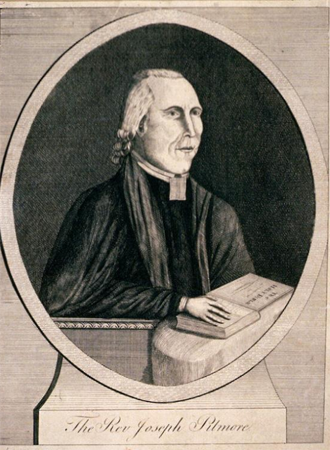
Joseph Pilmoor (or Pilmore) in later years (Picture courtesy of the New York Public Lubrary)


IMG_1580
Pilmoor in his younger days (Picture courtesy of the Smithsonian Collection)

Reader Neil McBride raised an interesting point after having read my piece about the Methodist preacher Joseph Pilmoor, who was raised in the tiny village of Fadmoor on the North York Moors yet went on to become a hugely influential preacher in the US colonies after being sent there by the founder of Methodism, John Wesley. Joseph was the son of pioneering engineer Joseph Foord, a Quaker, who brought fresh water to villages in the Tabular Hills in the 18thcentury. He was banished by the Quakers after having fathered his son out of wedlock. 

Neil says: “I wonder if Pilmoor spoke of illegitimacy in his sermons. If so, it would be interesting to know how he handled it.”

Neil’s comment set me off on my own pilgrimage across the internet to see if I could find any record of his speeches, or those of his mentor Wesley, that mentioned the Methodist attitude to children of unwed mothers.

The early Methodists were so-called because they approached their faith in a very methodical way. They pledged to obey three main rules, which in simple terms were ‘Do no harm’, ‘Do good’, and ‘Love God’. By sticking to this ‘method’, their lives, so Wesley preached, would be improved beyond measure and they would find salvation. Of course, there was a lot more to it than that, with various breakaway factions along the way disputing what true Methodism was, and there were dozens more lists of instructions as to how to fulfil those three apparently simple main rules. But fundamentally, unlike many of their contemporary faiths, Wesleyan Methodists believed that anyone, from whatever background or class, could be ‘saved’.

I could not lay may hands on any direct references by Wesley or Pilmoor to children being born out of wedlock. It doesn’t mean they don’t exist; it just means I don’t have the time to keep searching through all of their thousands of sermons to find them. However, it does appear that they considered unmarried women who gave birth ‘fallen’ and in need of ‘saving’. And by saved, of course, they meant converted. They were not turned away, as long as they embraced the Methodist way of life. Obviously though, the attitude was that it was all the woman’s fault and no doubt many prayers were said to help her tighten up her loose morals. I doubt that they ever felt the need to pray for the man involved in the physical transaction that resulted in a baby. 

I can imagine why this strategy was so successful in gaining followers, especially among the masses of displaced and dispossessed residents of the colonies. If you were a slave trapped in an abysmal life or a pregnant woman with no husband and no income, you would be desperate and miserable. Then someone comes along and tells you that by following three ‘simple’ steps, your life will change for the better forever. Why wouldn’t you give it a go? It’s an approach that has stood the test of time, with various advertisers today still offering a list of supposedly ‘simple’ steps to solve all your worldly woes. 

So perhaps Joseph Pilmoor used his own experience as an example to his flock. Look what happens, he’d have said, when you are saved? I went from a rejected bastard child to a globe-trotting, celebrity preacher blessed by God! He’s the 18th century Methodist version of a social media influencer. 

On the subject of the word ‘bastard’, regular reader Clare Proctor said: “When I was young the word ‘bastard’ was still being used to refer to children born out of wedlock. In fact, my father, jokingly, used to refer to my brother’s children (he was not married to their mother) as the three little ‘b’s!…Now my children have no concept of the relevance of whether their friends’ parents are married or not, they probably don’t even know. They certainly would not refer to them as bastards. It just gets used as a swearword. But if you don’t know its original meaning, then how is it offensive?” 

How attitudes change. Calling someone a ‘bastard’ when I was young suggested that the mother of said ‘bastard’ was morally lacking in some way. Thankfully, we have made some progress since then, and acknowledge that two people are responsible for a pregnancy and, generally, one of them is a man. 

This column appeared in the Darlington & Stockton Times on Friday 23rd and the Ryedale Gazette and Herald on Wednesday 21st Feb 2024.
The son is a preacher man

IMG_1534
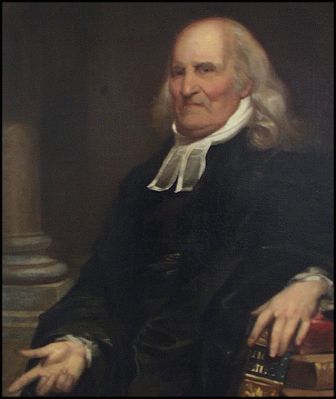
Joseph Pilmoor, born in Fadmoor, was instrumental in popularising Methodism in the USA

IMG_1530
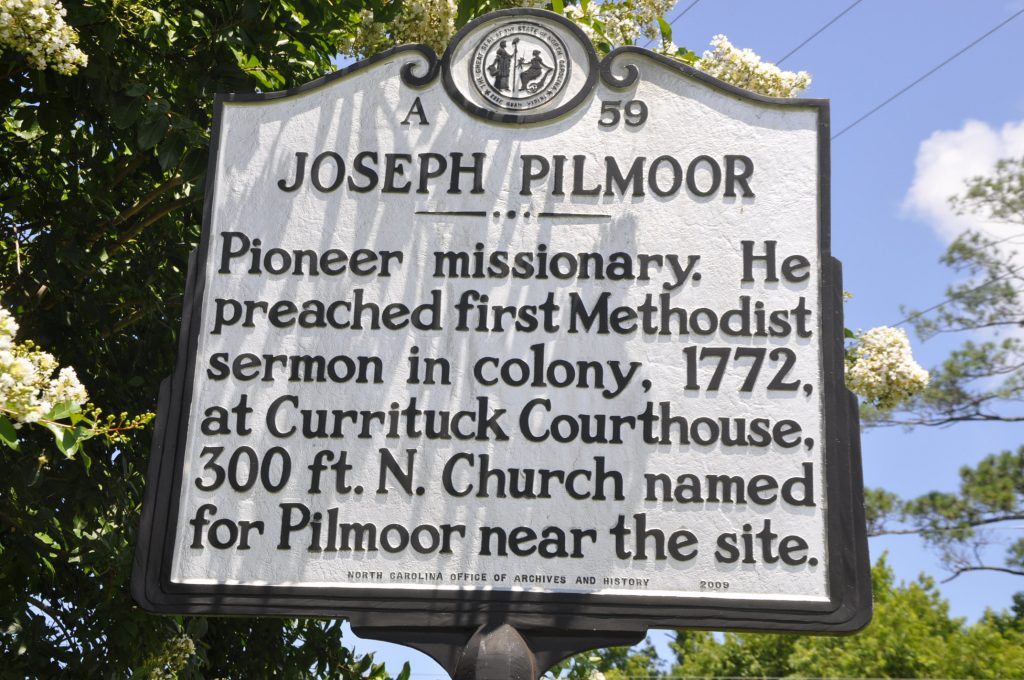
A memorial plaque dedicated to North Yorkshire-born Joseph Pilmoor in North Carolina. Picture by Laura Troy.

At last some readers have come forward following my appeal a few weeks ago to reveal the worst presents you have been given. There are a couple of corkers, such as a car bumper given to Fiona Lyons and an electric toothbrush given to Net Wiles. I don’t know if it is a surprise to learn that both gift-givers are now ex-husbands.

It is sometimes disappointing to receive two of the same thing, but one year Janet Pearce received no less than four Filofaxes (I’m sure most of you will remember these leather-bound personal organisers that were ever-so trendy in the 1980s and 1990s).

In my column, Clare Proctor had revealed that her husband Howard defied the male stereotype, showering her with gorgeous presents, but she confessed that she didn’t possess the same ‘nous’ when it came to choosing for him. One year, her misguided mother-in-law went to Clare rather than her son for advice on what to get them for Christmas, and consequently when Howard opened her gift, a hand-held vacuum cleaner, he declared bluntly: “I expected something more exciting for a present!” Poor Howard.

On another note, Ian Ford got in touch after coming across my column from October 2023 about the water engineer Joseph Foord. He thinks their families might be connected (the spelling of his own name dropping the second ‘o’ courtesy of his great, great, great grandfather, also called Joseph). Although he hasn’t yet firmly established that connection, he went on to talk about Foord’s illegitimate son – yet another Joseph – Joseph Pilmoor.

Pilmoor was born out of wedlock in 1739 after Foord had a liaison with a lady called Sarah Pilmoor from Fadmoor near Kirkbymoorside, and as a result, Foord was thrown out of the Quakers. This inauspicious start did not deter the young Pilmoor from following an extremely interesting path.

Pilmoor was educated at Kingswood School near Bristol, which was established by the founder of Methodism, John Wesley. In 1769, he travelled to Leeds along with his childhood friend, Richard Boardman from the neighbouring village of Gillamoor, to listen to John Wesley speak. Wesley’s passion and devotion to his cause had an immediate impact on the young men from the North York Moors, and they volunteered to become missionaries to the American colonies. Although Wesley had travelled there himself, he’d returned to England following a scandal over a woman who’d spurned his affection and to whom he’d refused to give communion.

Incidentally, this year marks the 250th anniversary of the publication of John Wesley’s controversial pamphlet, ‘Thoughts Upon Slavery’ in which he lambasts society’s tolerance of such an abhorrent practice upon which the colonies were built.

‘Where is the justice of taking away the lives of innocent, inoffensive men; murdering thousands of them in their own land, by their own countrymen; many thousands, year after year, on shipboard, and then casting them like dung into the sea; and tens of thousands in that cruel slavery to which they are so unjustly reduced?’ he wrote.

Wesley embraced the itinerant lifestyle of the travelling preacher and is said to have journeyed 250,000 miles on horseback and delivered 30,000 sermons during his lifetime. Inspired by their mentor the two young men travelled and preached extensively in the colonies, going to New York, Philadelphia and Georgia, staying in each place only for a short time before moving on. Although he returned to England for 10 years between 1774 and 1784, Pilmoor returned to the US to continue his mission and appears to have been far more successful in recruiting followers than his more famous founder. Today there are around six million Methodists across more than 30,000 churches in the USA.

Pilmoor’s influence is evident by the number of commemorative plaques that have been erected in various places, including in the grounds of St John’s College, Annapolis, where he is said to have delivered the ‘first Methodist sermon in Maryland’ on 11th July 1772 beneath the college’s famous ‘Liberty Tree’. Another plaque describes him as a ‘Pioneer missionary’ and marks the place where he preached the first sermon in the North Carolina colony at Curritick Courthouse on 28th September 1772. A church nearby was named after him.

When you think about it, that’s quite the achievement for an illegitimate lad from a tiny North Yorkshire village.

This column appeared in the Darlington & Stockton Times on Friday 9th Feb and the Ryedale Gazette and Herald on Wednesday 7th Feb 2024.

Flowing up the hill

IMG_9405
The outline of one of Joseph Foord’s water races can still be seen at Newgate Bank on the Helmsley to Stokesley Road

IMG_9419

I was contacted by reader Ted Naisbitt in connection with my columns on how ancient folk living in dry areas managed to get access to drinking water. Reader Jo Bird had suggested that perhaps wells were constructed, and I wondered if prehistoric humans had the engineering know-how to be able to dig deep wells. My research revealed that indeed they did, as evidenced by a sophisticated drainage system that has been discovered at the 4th century BC settlement of Skara Brae in the Orkneys.

Accessing fresh water was a continuous battle for people living in remote communities, and Ted mentioned a hydraulic engineer called Joseph Foord who was active on the North York Moors in the 18th century. He was prompted to find out more after a visit to Thirsk Tourist Information Office (where Ted volunteers) by Coxwold resident Ken Ward who used to live by one of these water channels. Ken was keen to find out about the engineer whom it is said performed ‘miracles’ by making water seemingly run up hills.

“Prior to the 18th century the towns and villages along the southern edge of the Moors (roughly the A170) did not have access to fresh running water,” says Ted, “But just a bit further north on the other side of the tabular hills there was plenty. This engineer managed to bring fresh water to these places by surveying for and digging out narrow ‘canals’ around them often for many miles and overcoming many obstacles on the way. In places an optical illusion made it seem as if the water was running uphill.”

Ted pointed me to an article about Foord on a website called ‘Yorkshiremoors.co.uk’, and I must give credit to that website for what appears in this column, as there doesn’t seem to be a great deal online about him. I will also have a look in my dad’s archives next time I go see my mum as I’d be surprised if he hasn’t written about him. What Foord achieved is highly noteworthy, and he deserves to be remembered.

Joseph was born in 1714 in Fadmoor near Kirkbymoorside into a Society of Friends (Quaker) family and at the age of 20, when his father Matthew passed away, he inherited their farm at Skiplam Grange, along with some mills and shares in mines at Ankness between Fadmoor and Bransdale. 1744 was a momentous year for Foord, as he was also ejected from the Quakers for having fathered an illegitimate child.

Foord became an engineer and a surveyor and, having grown up on the North York Moors, was well aware of the difficulties faced by inhabitants of remote villages on top of these limestone hills. They would have to transport heavy vessels of water over rough terrain and up steep inclines, making an already tough life even more so.

In about 1747, Foord came up with the idea of constructing channels, or ‘races’, to transport water from the springs on the high moors to the dry communities. His first experimental race ran for five miles and supplied Gillamoor and Fadmoor. What was particularly unique, though, was that these two villages sat high on the hills, and the task of getting water up the hill was the problem, or so it seemed.

According to Yorkshiremoors.org: “Gillamoor is about 525ft above sea level. The northern, highest, tip of the tabular hill that contains the village is at Boon Hill, about a mile and a half to the northwest. The ground at the base of Boon Hill is 650ft above sea level, and thus 125 feet higher than Gillamoor. Foord was thus able to construct a water course that could run downhill, while at the same time appearing to climb up the steep slopes below Gillamoor!”

In 1759, the water course was extended to Kirkbymoorside, then ultimately to Carlton, Newton, Pockley, Old Byland and Rievaulx, delivering precious fresh water to the residents. As he was so familiar with the geology and geography of the area, in the end, Foord was able to construct around 70 miles of water courses, some of which are still visible today, such as from Newgate Bank on the A1257 Helmsley to Stokesley road.

Foord died in January 1788 at his daughter Mary’s home in Fawdington near Thirsk. Despite never being welcomed back into the Society of Friends, he was interred as a non-member in their burial ground.

Read more at countrymansdaughter.com. Follow me on Twitter @countrymansdaug.

This column appeared in the Darlington & Stockton Times on Friday 20th and the Ryedale Gazette and Herald on Wednesday 18th October 2023.