Going for a Song

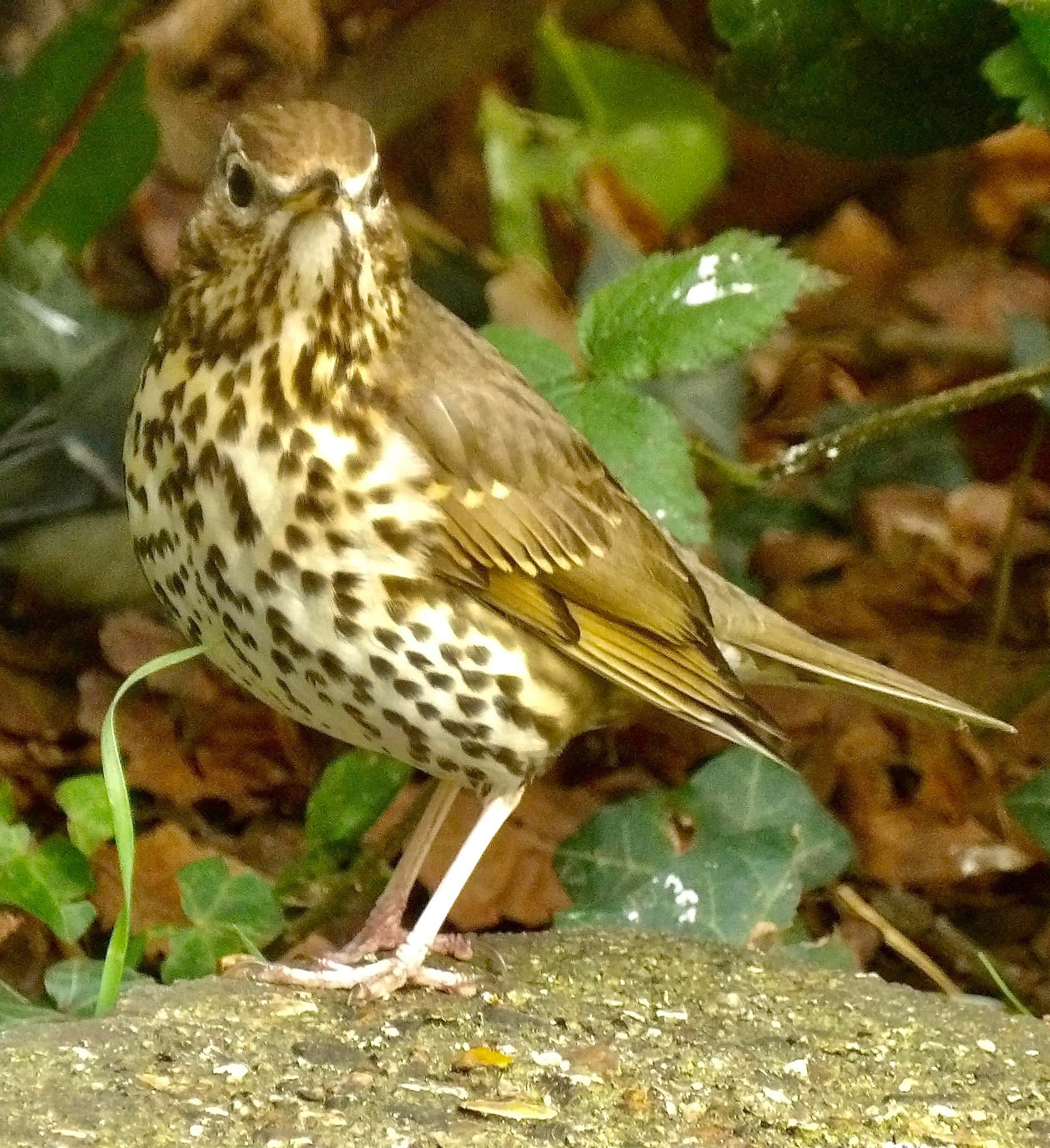
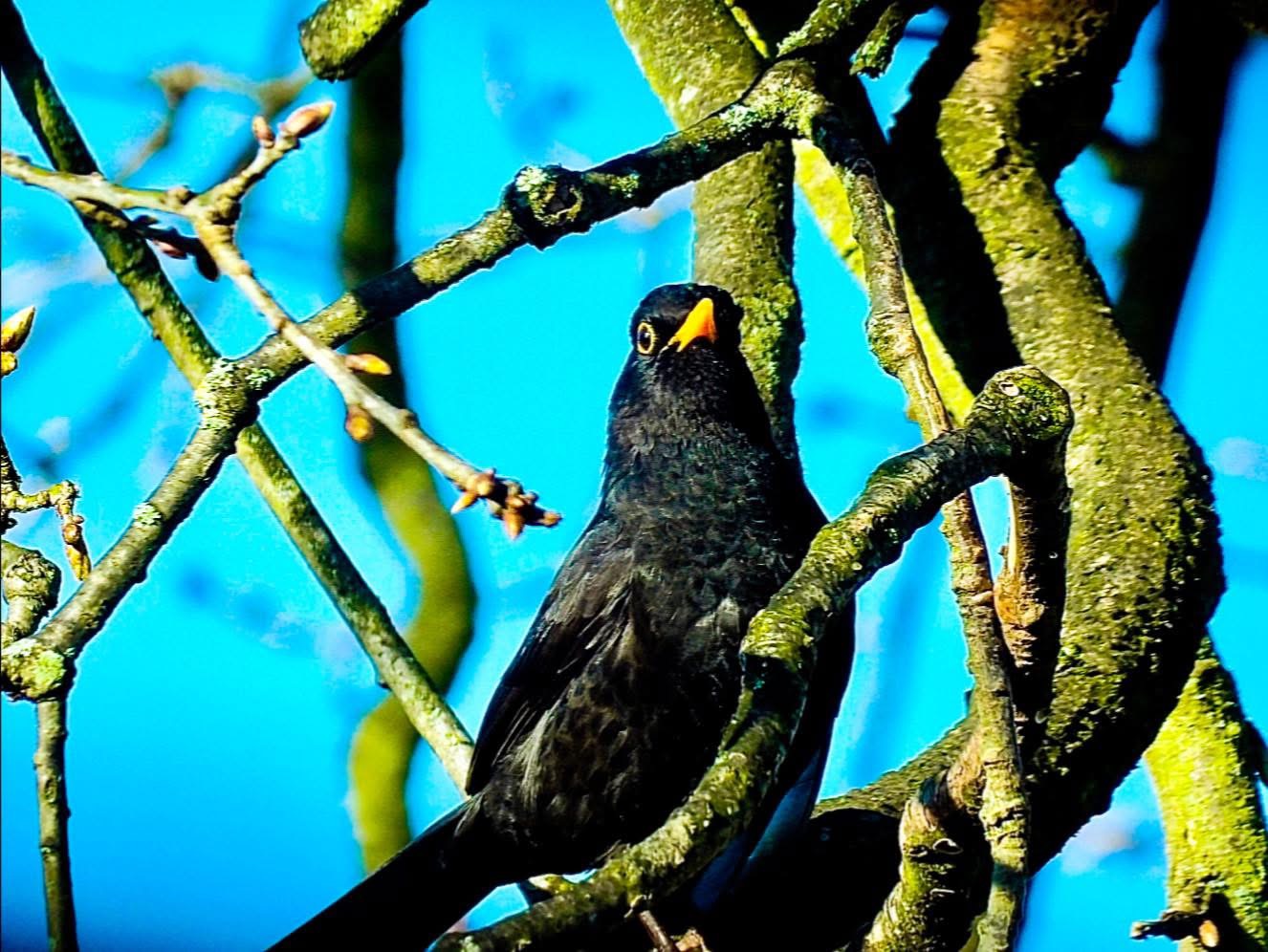
Birds like blackbirds, thrushes and magpies caught in local woods and fields were traded at Kirkham Bird Fair. Picture by Mick Gisbourne.

Reader Rex North has been in touch with some interesting contributions on recent topics. He says: “I was interested to hear about the ‘Bird Fair’ at Kirkham. It seemed to me that this must have happened during the 1840s, and prior to that if the band travelled by boat, as the York-Scarborough railway opened in 1845 and it would have then been possible to travel by train from Malton to Kirkham Abbey station more quickly.

“I have an 1840 directory of the East and North Ridings published by William White, and some reference is made to this fair, as follows: ‘A pleasure fair is held near the ruins (of Kirkham Priory) on Trinity Monday, when the principal traffic is in blackbirds, throstles (thrushes), magpies and other birds, taken in the neighbouring woods and plantations.’ This rather suggests a trade of wild birds caught and sold for their singing capabilities, with magpies being capable, I believe, of being taught tricks etc, so perhaps having a value in those days. I would suspect that the trade died out soon after the railway came, but it would be interesting to know more!”

It would, wouldn’t it, Rex, and the added details you have provided are fascinating indeed. I must admit I made the assumption that these avian trades would have involved birds like poultry, pigeons or birds of prey, that were used for food, competition or pest control. It never occurred to me that they would be kept for their singing! These days most of us wouldn’t dream of doing anything as cruel as snatching songbirds from the wild and placing them in a cage purely for our own entertainment. Their song may have sounded sweet, but I can’t imagine the birds were remotely content in their domestic prison.

I was also tickled by the use of the phrase ‘pleasure fair’. It conjures up images of a simpler time, where happiness was gained in less complicated ways than today.

Rex also has some information on Samuel Bean, known to reader Katherine Hill as ‘Grandpa Samuel’ whom she believed had been born at Peep o’Day farm near Husthwaite, Easingwold in the 1880s.

Rex writes: “I was also intrigued by the name ‘Peep o’Day Farm’, and, being interested in family history I found that Samuel Bean was in fact baptised at Acomb, near York, on 27th July 1879, the son and 4th child of Samuel and Sarah Bean. Samuel (senior) was born at Marton in the Forest, near Sheriff Hutton, being baptised at St Mary’s Church there on 19th November 1848, the son of James and Anne, who farmed at Marton Bridge. Sadly there seems to be no link to ‘Peep o’Day’ at Husthwaite as such, but by 1861 James and Anne had moved with their family to Rising Sun Farm at Easingwold, and had arrived at Acomb by 1871. Samuel and Sarah themselves were not only farming, but running the ‘Skip Bridge Inn’ on the York to Knaresborough Road by 1881, as well as managing the four young children. I wonder if your correspondent’s reference to ‘Peep o’Day’ might refer to ‘Rising Sun’, the meaning being virtually the same?”

I passed this information on to Katherine and she replied: “To get such a positive and interesting response is wonderful. The information is really helpful. My mum also told me that some of Grandpa Samuel’s family farmed at Rising Sun. This all links up with our information. Do you know where/which farm they went to in York? One source suggests they were at Rufforth Grange (enclosed by the airfield in WW2). We do know that Grandpa Samuel and siblings were brought up living at Grange Farm, Acomb.” 

I can’t answer her question, but perhaps Rex or another resourceful reader might be able to find out.

Katherine added: “My ‘Bean’ cousins and I are having a get together soon to talk about our family history. I am recording as best I can the information we’ve got and hope to put it together for a booklet for each branch of the family.”

I wish Katherine the best with her booklet and hope all the Beans have a wonderful family celebration! And if any of you reader sleuths can help further in her quest, do get in touch in the usual ways.


Do you have opinions, memories or ideas to share with me? Get in touch with me using the ‘Contact’ button on the top right.

This column appeared in the Darlington & Stockton Times on Friday 20th and the Ryedale Gazette and Herald on Wednesday 18th Feb 2026
T’in’t wat thoo ses, t’is t’way thoo ses it


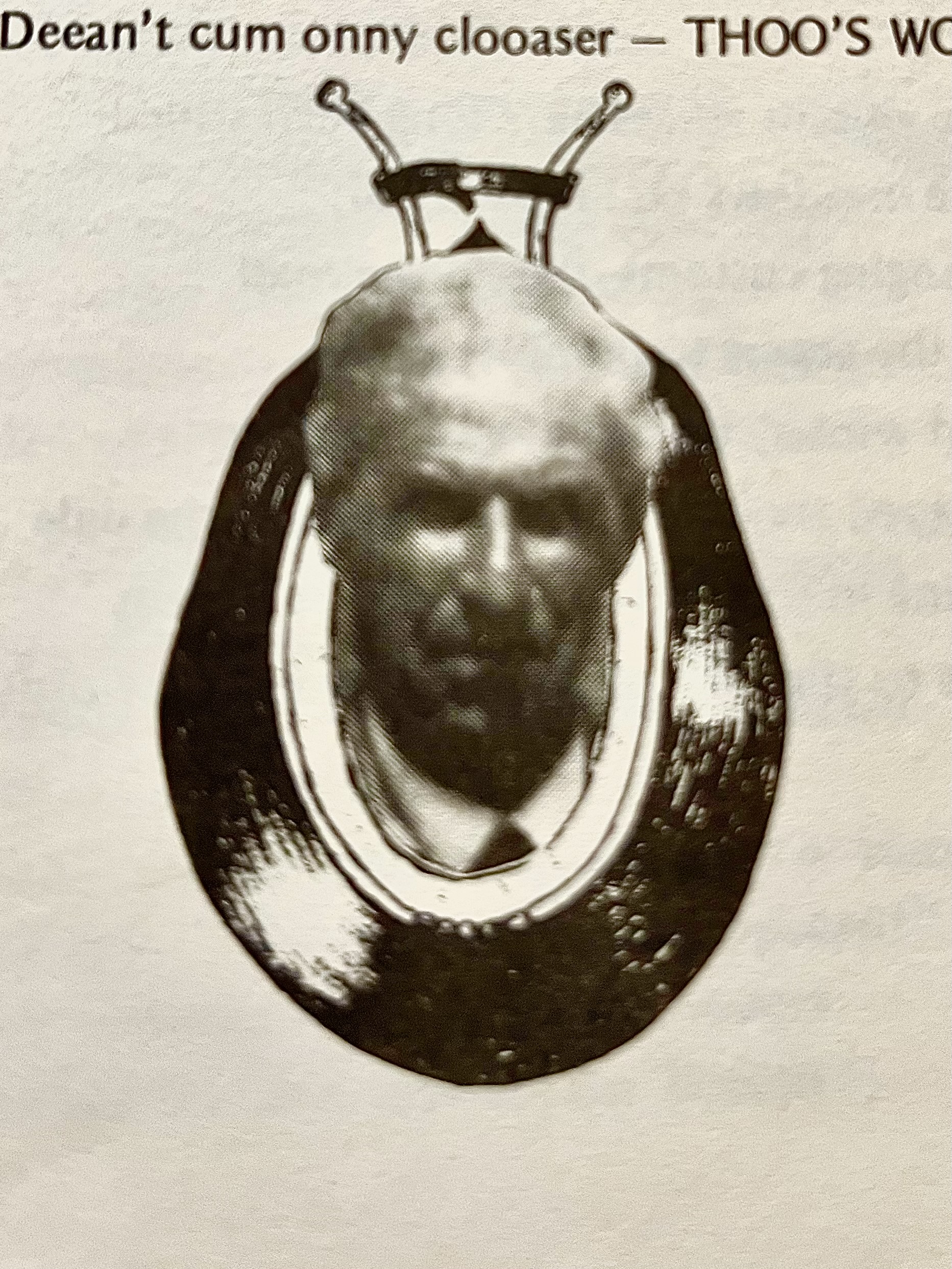
The poem ‘Grandad – through a barfin’ featured this picture of Pam Chester’s grandad George Coverdale. ‘Barfin’ is a dialect word for an oval horse collar.

An old photo from 1978 showing an alternative dialect ‘Beware of the Bull’ sign erected by Danby farmer Ralph Winspear after trouble with walkers straying across his land.

I’ve had some interesting correspondence following my two recent columns about the Danby dialect poet William E Fall who wrote under the name Erimus. If you remember, I was contacted by his great-granddaughter Sophie-Jean Fall who was searching for his books, and my dad happened to have been sent some copies.

Since then, she has revealed the discovery to her family and, following the publication of ‘Part Two’ of the story a couple of weeks ago, said: “Very excited and what an interesting image of Tom Boyes. Also, Gandan – AKA Erimus’ son – was really happy to hear about this all!” Hopefully ‘Gandan’ will also be interested in what the following readers can remember.

Pam Chester recalls: “My parents George and Ella Coverdale, my Grandad George Coverdale and myself lived at Danby Castle when Bill Fall and his wife Ella lived in a cottage at Castle Houses Farm, Danby. Bill would often walk up see my grandad. They would sit and chat about country life, hunting and farming…In the book ‘Poetry for t’Peasantry’ Bill wrote a poem about my grandad.”

I looked the poem up, and sure enough George Coverdale appears in ‘Grandad – through a Barfin’. Bill Fall states that Grandad George ‘Wi’ a dear auld nybour o’ mahn’, and the poem highlights one of Yorkshire’s most elegant of traditions – gurning. This refined skill involves people contorting their faces into gruesome expressions.

The poem describes a competition in which Grandad Coverdale took part. The competitors had to put their heads through a ‘barfin’, a dialect word for the large oval collar worn by cart horses. See if you can decipher the last verse of the poem – the language is bit ripe!

But then ‘e stopped – stood back aghast

Cos Grandad’s snitch was in ‘is gob!

‘Is chin was up – ‘is lugs stuck oot,

Wi’ t’ Judge wishin’ ‘e’d browd ‘is gun;

Freetened ti deeath, ‘e shooted oot,

“Deean’t cum onny clooaser – THOO’S WON!!!”

Pam wasn’t sure if her grandad ever really entered a gurning competition, but revealed that a picture on page 17 of the book is him with his head ‘through a barfin’.

She adds: “Bill and my grandad used to go and dig peats in the 1970s on the moor near the house to use as fuel in the winter months. He also used to follow the Glaisdale Hunt on horseback well into his 80’s. I remember him talking about Tommy Boyes.”

Janet Holt also contacted me: Bill “was our next door neighbour in Danby by our farm. My father had problems with straying walkers and Mr Fall came up with the idea of signs in the Yorkshire dialect. It caught the attention of the local press…He gave my parents a full set of the books.”

Her father was livestock farmer Ralph Winspear, who was fed up with walkers and children straying from the public footpaths across his land, damaging fences and leaving gates open. They ignored the polite signs asking them to keep to the official route and to shut gates. The last straw came in 1978 when two lambs escaped through an open gate and were killed on the nearby railway line. Bill Fall suggested erecting signs in Yorkshire dialect. One read: ‘if t’bull snorts, deean’t linger’, while another was very recognisably from Bill’s pen and entitled ‘Seestha’:

‘Noo, ye’ n’ me beeath need ti eeat

These beeasts’ll mak tasty meat

But not if fooakes gan runnin wild

Seea keep ti t’path n’ hod t’it child. Thankye’

The signs worked, as Ralph explained at the time: “We’ve had no trouble since they were erected because folk appear to be reading them carefully and the message gets home.” I wonder if anyone farming today has similar issues? Perhaps a warning sign in Yorkshire dialect might be worth a try!

I’d also like to thank Bill Filer who put me in touch with Dorothy Jackson from Helmsley, whose family knew Tom Boyes well. If you remember, Bill Fall dedicated a whole volume of poems to Boyes, and I featured a 1927 picture of a wedding at Danby Church in which Boyes could been seen accompanying the grand wedding car in his hunting finery.

But, alas, with me approaching my word count limit, I will have to leave Dorothy’s recollections until next time!


Do you have opinions, memories or ideas to share with me? Get in touch with me using the ‘Contact’ button on the top right.

This column appeared in the Darlington & Stockton Times on Friday 22nd Aug and the Ryedale Gazette and Herald on Wednesday 20th Aug 2025