A battle to be remembered


A June 1961 image of Roye New British Cemetery at Somme in France showing the conifer tree to the right of the stone cross memorial (Photo Commonwealth War Graves Commission copyright).
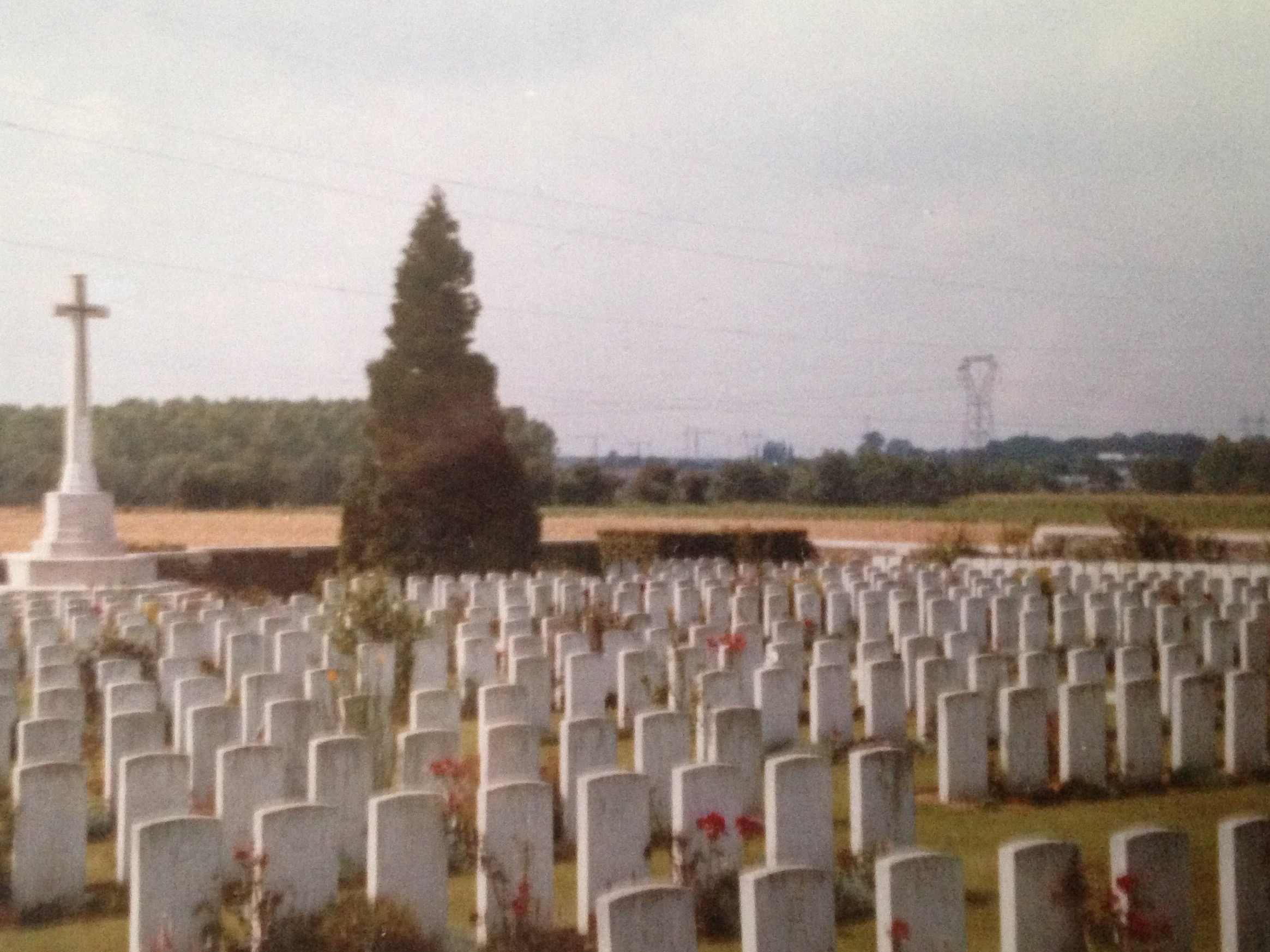
My dad’s 1979 photo taken from a similar spot. The conifer has grown somewhat.

A couple of weeks ago, I featured an old photo of a graveyard on one of the Somme battlefields and asked for your help to identify which one.

As usual, you have come up trumps! Reader Andrew Jackson says: “I think the photograph was taken in Roye New British Cemetery.”

Andrew directed me to a website documenting World War I cemeteries and commemorating the men interred there. It has recent pictures of Roye New British Cemetery, but it was difficult to work out if it was the same place. It was only when I came across some older photos that I began to recognise it. There was one in particular taken in June 1961 from the same vantage point as mine. The fir tree to the right of the stone cross memorial gives it away – although by the time my 1979 image was taken, it had grown somewhat! In the more recent photos, the tree has gone which is why it was harder to identify.

What makes the website so moving is that they have tracked down photos of some of the men interred there, putting faces to the names on the rows and rows of silent headstones. It brings home the stark reality of the massive sacrifice made by the soldiers and the families that had to continue to live without them. Interestingly, there are no special places for the higher-ranked men, no separating the rank and file from the captains and majors. As reader Tony Eaton from Northallerton pointed out, in death, everyone is equal.

Tony, a self-confessed World War I ‘buff’, enlightened me on a few things. I had wondered if the army had stopped recruiting members of the same families into the same regiment as a result of the disastrous ‘pals’ initiative, where the army canvassed groups from the same locality, enticing them with the promise that they could serve alongside people they knew (in other words, their ‘pals’), rather than randomly being assigned to regiments. Unfortunately, because they served side by side, so they died side by side, leaving gaping holes in communities and families. The strategy was abandoned after the Battle of The Somme in July 1916.

Tony explained: “You mentioned family brothers joining up which was common in the early part of the war and many households lost several of their sons during that conflict, but far as I know there was no embargo on family groups joining up until 1915, when the Conscription Act was passed, becoming law in 1916.

“The Somme showed the folly of the Pals Battalions. Conscription was the way of recruitment due to high numbers of highly qualified specialist personnel being taken out of the industrial and scientific side of prosecuting the war. This act may have precluded brothers being called up until the desperate times of 1918.”

Tony also mentioned a friend of his, Stanley Bewsher from Ripon, who went ‘over the top’ on that fateful day in July 1916. Despite his comrades being gunned down around him, Stanley bravely forged on, picking up a discarded machine gun and advancing towards the enemy.

“He was then struck in the helmet by a shell fragment that indented it into his head. He was taken from the battlefield back to England and after lengthy treatment and rehabilitation stayed in the army acting as a driver…he was awarded the Military Medal,” says Tony.

Tony also explains that the casualties of the Somme battle, although high, were not quite as high as I mentioned. “It is generally accepted that the Allies suffered c900,000 to 1,000,000 casualties…I highly recommend a book by Gordon Corrigan entitled ‘Mud, Blood and Poppycock’ where Corrigan states that 74% of all British and Empire troops that fought on the Somme came out without the proverbial scratch. It is true that on 1st July only six miles of ground was captured, but by the end of the battle, the Germans began withdrawing behind the Hindenburg Line some ten miles eastward.

“The Battle of Arras campaign in the spring of 1917 had a higher rate of attrition, dead and wounded than did the Battle of the Somme.”

Whatever the true number, we must never forget the sacrifice of every singe person whose life was lost during that terrible time of war.

Do you have opinions, memories or ideas to share with me? Get in touch with me using the ‘Contact’ button on the top right.

This column appeared in the Darlington & Stockton Times on Friday 10th and the Ryedale Gazette and Herald on Wednesday 8th Oct 2025

A night to remember

I have had a pleasing update following my appeal for help to find out more about King Henry’s Night. I had been contacted about a year ago by Linda Chambers from the Rosedale History Archive asking if could find anything out about it after an elderly gentleman had told her about the custom that centred around young people going out on a particular night and meeting up with likely suitors. Try as I might, I could find no reference to it in my usual trusty sources, such as my dad’s study, his books and the National Newspaper Archive.

However, Linda herself read my piece and got back in touch saying: “I happened to be at Ryedale Folk Museum last week to look at their exhibition ‘Believe It Or Not’ which highlights the folk traditions and witchcraft which were once very much part of moors life. I happened to see a panel which described The Kissing Ring, a charming old tradition where young people gathered outside late on a summer’s evening. It is believed this was last performed in Rudland in the 1930s when 40 young men and women held hands and danced in a ring singing the words which I have attached. The circle gradually diminished as couples broke away with a chosen partner and the young man would walk the girl home. I think we have the answer to King Henry’s Night!”

And having read the words to the ditty, I think Linda must be correct. They are as follows:

‘King Henry was King James’s son

And all the royal races ran

Upon his heart he wears a star

Right away to the ocean far

So choose to the East

And choose to the West

And choose the one that you love the best

If he’s not there to take her part

Choose another with all your heart.’

So it is likely those who took part in The Kissing Ring would have referred to the occasion as ‘King Henry’s Night’ thanks to the words of the song they would sing.

Linda adds: “While I was there, I bought the booklet, published by the Esk Valley News, which adds detail to what is seen in the exhibition – an excellent read, and I recommend the exhibition to anyone interested in our local folklore. It is so easy to lose sight of local traditions and stories, many of which must now be forgotten.”

It’s true that if we did not have places like the Ryedale Folk Museum, or indeed columns like this discussing old traditions and folklore, then such things will be lost. We should all support local museums and local newspapers in a world that seems to be being taken over by technology. Nothing can compete with real people telling us about real memories, because once they are gone it will be too late.

On the subject of preserving local history and traditions, I had the pleasure recently of travelling to a house up near Chop Gate for work. It was a beautiful old farmhouse that commanded glorious views south across the valley towards Bilsdale.

It was built in the early 1800s out of large stones in varying shades of sand and gold. But what caught my eye were the distinctive markings. They looked like they had been carved with a repeating arrow pattern, a little bit like the skeleton of a feather or a fish. Every stone carried this pattern, and it was as if they had been painstakingly hand-sculpted to create a beautiful effect, and one I believe is peculiar to this part of the world.

I know the pattern was not created by some frustrated sculptor working as a bricklayer, but that it is more to do with the way the bricks were made, thanks to friend Linda Harman who explained: “They cut the clay brick shape then take excess clay off with a brush which makes that pattern.” And Irene Sykes, who lives on the North York Moors, adds: “I think local quarries were excavating different types of stone and so they dressed the stone they excavated using different methods.”

Do you know any more about how these stones were made, and the local quarries they came from? Perhaps you had a relative who was a stone mason. Do get in touch as I’d love to know more!

I’d love to hear from you about your opinions, memories and ideas for columns. Use the ‘Contact’ button on the top right of this page to get in touch. This column appeared in the Darlington & Stockton Times on Friday 28th and the Ryedale Gazette and Herald on Wednesday 26th June 2024.

My French Angel

16A41456-0871-4A03-96F4-08ACECA793C1
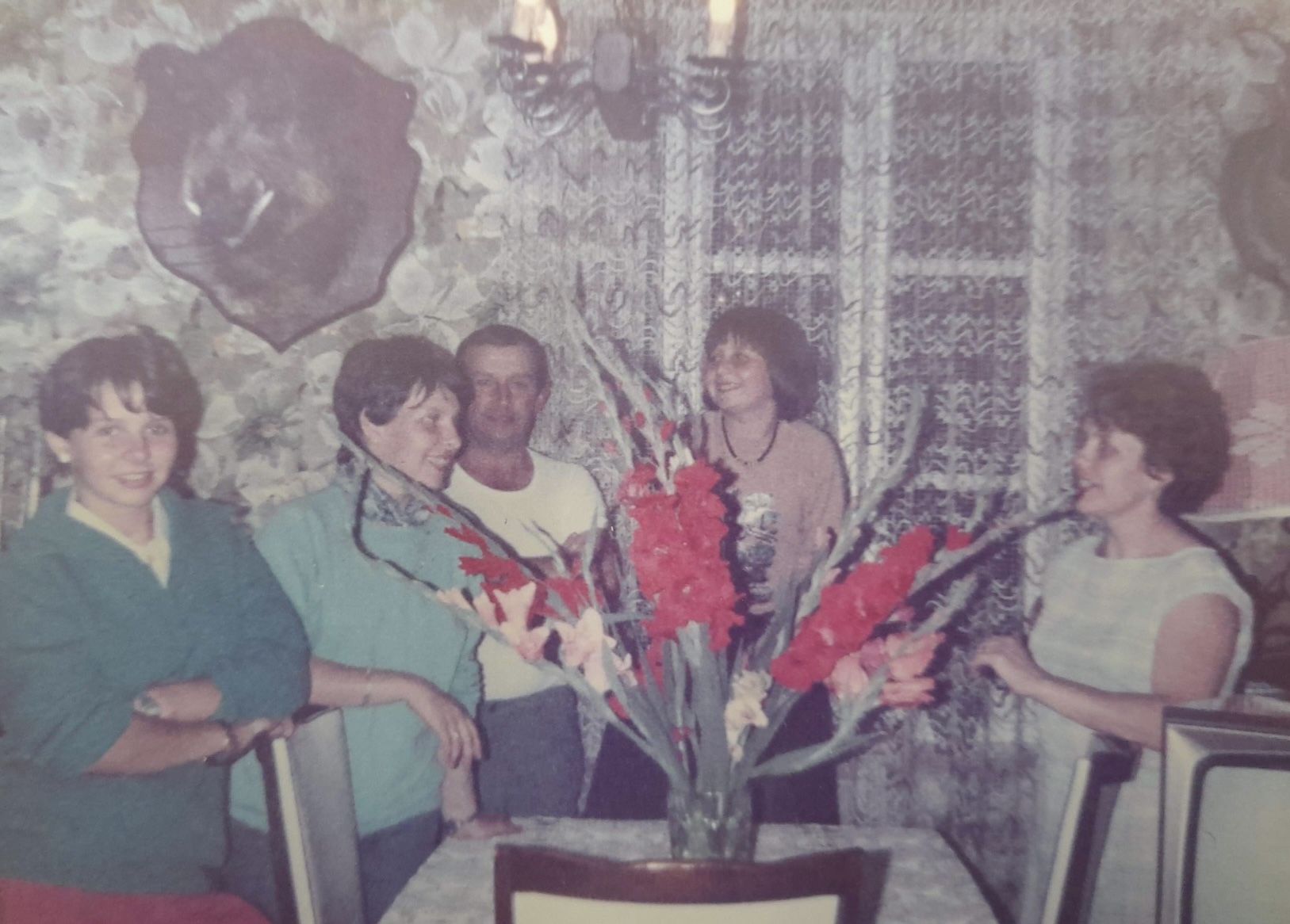
Me (far left) on my first exchange to France in 1983 with Angeline (far right) and her little sister Magali in the middle.

7642C210-03F2-4186-9362-793CE0AE888F
We kept in touch all those years and met up again in 2007

61D3031C-F7EB-4055-BE75-39738BB35FC7
The Garrault family were lovely, and meals times were often spent in fits of giggles

11B77B1D-A7C4-474B-8E5E-1D3EBDBDEDBC
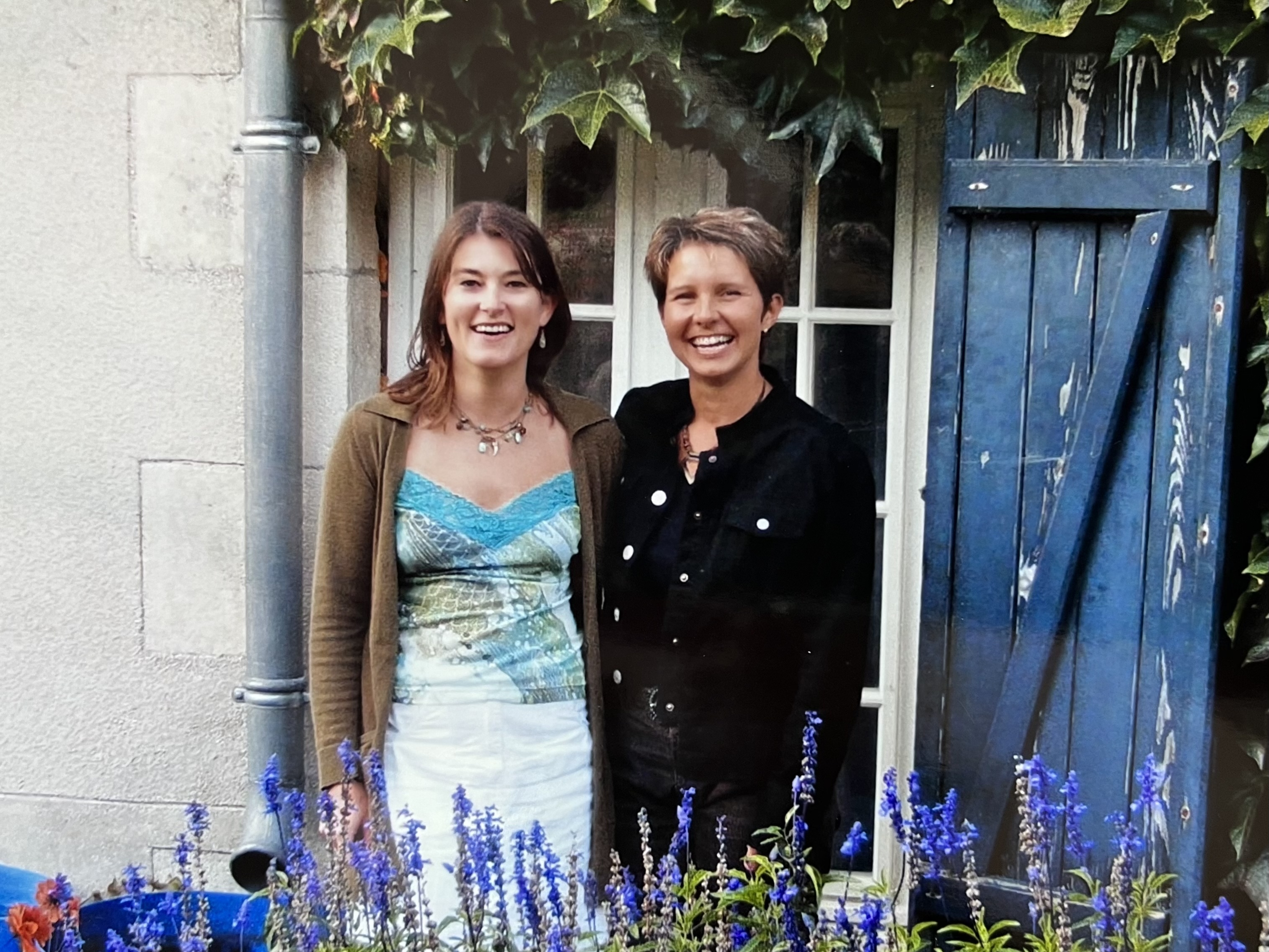
By the time we met up again in 2007, Angeline and I were both married with children.

When I was a teenager, I was offered the chance to welcome a French student into my home and Angeline Garrault came to stay with us for two weeks during the Easter holidays of 1982, with a view to me doing a return visit the following year.

These ‘exchanges’ were quite common, and always a risk, as there was no guarantee that the youngsters would get along. I’d heard plenty of stories of fallings-out and homesickness that had ruined the experience for all involved.

Thankfully, Angeline and I hit of off immediately. My French and her English weren’t up to much, but we muddled along thanks to the fact that we both seemed to have a similar sense of humour. We spent a lot of the time laughing.

What I didn’t realise at the time (and what my dad failed to mention) was that he had written about this visit in his column from 24th April 1982, and so it was a pleasant surprise when I came across it this week.

‘We have been honoured by the presence of a guest from France. She is a 14-year-old schoolgirl called Angeline from Sancerre, some 100 miles south of Paris,’ he wrote, ‘Much of the work of talking to Angeline and of showing her something of English life, has fallen onto the shoulders of my own 14-year-old daughter (me!), but the outcome is that they have become the firmest of friends, and each has learned a little more of the language of the other, something of a different way of life. For young ladies embarking on a busy life, that is a very good thing to do.’

What’s wonderful about reading this column now is that Dad reminds me of the things we did together, things I had completely forgotten. Angeline had brought with her some of the delicacies from her region, such as small rounds of goats cheese known as Crottin de Chavignol, after the tiny village from which they came. She also brought my parents several bottles of Sancerre wine (At the time I knew nothing about wine, and didn’t appreciate just how fine it was).

We took her to York and Harrogate, and she was delighted to see the newly opened International Conference Centre, which that year was to host the Eurovision Song Contest (on 24th April) after Buck’s Fizz had won the previous year with ‘Making Your Mind Up’ (Ah, the glory days! Now, we just wonder if we’ll be bottom or not!). We also took her to Kilburn to see the White Horse and the Mouseman furniture workshop, and, Dad adds: ‘It was interesting showing Angeline…the way we organise our lives so that the milk, the papers, the meat, the bread and other household necessities are delivered to the door and the way that rural folk in Yorkshire go about their daily lives’ (How things have changed!).

Angeline came from a rural part of France, and her parents were farmers. I remember more about my return trip the following year than I do about her visit here. It was the first time I’d been abroad without my family, so I was very worried about homesickness. But the Garraults were so warm and welcoming that I immediately felt at home. My most enduring memory is how much we all laughed. Every evening, the family would gather for the main meal of the day (Angeline had two sisters) and we never failed to end it in fits of giggles.

I recall one conversation around snoring, and her mum asked me if I snored. I replied, in French, that I didn’t know because I was asleep when I snored. The whole family exploded into hysterics, and soon there were tears streaming down our faces. I don’t know why it was so funny, or whether I’d unknowingly made a boob in French, but it was an absolutely joyous occasion.

We kept in touch for many years, and in 2007, I was able to go back to visit Angeline. By now, we were both married with children, and Angeline was a district nurse while her husband was a farmer. We returned to the house in which her parents still lived, and it was such a pleasure to see them once again.

I came away with several bottles of the finest Sancerre, but this time, I appreciated every single drop.

Read more at countrymansdaughter.com. Follow me on Twitter @countrymansdaug

This column appeared in the Darlington and Stockton Times on 22nd April and Ryedale Gazette and Herald on 20th April 2022.