Along came two spiders

IMG_0980
A massive house spider on my son Jasper’s hand. He’s not squeamish at all

The herringbone pattern has featured in a few of my columns of late, most notably in relation to patterns on stones used in Yorkshire moorland cottages, and as a decoration used by clock and watchmakers. But it also features somewhere I was definitely not expecting, and I challenge you to guess where. The answer lies further down this column.

Twice in the past week I have had to call on the services of my son Jasper to rescue me from being attacked by that most venomous and deadly of creatures, the house spider. OK, they are not venomous (well, not to us) and they are not deadly (again, not to us) but I don’t know if it is a result of global warming or what, but I am convinced they are getting bigger. Every year I come across them, they seem to be more monstrous than the year before.

I know by the way they scurry across the floor that they are more scared of me than I am of them. I am after all a gazillion times bigger, and I am not too worried if they remain at a respectable distance. I just don’t like the idea of them being ON me.

Jasper has no such qualms, which is why I summon him whenever I’m confronted by the not so wee beasties. Earlier this week, one was waiting at the top of the sitting room curtains, poised to pounce on me when I walked past, and the next night, another was skulking around my bedroom floor, no doubt waiting for me to get into bed so it could creep over my face while I was asleep.

Jasper’s way of dealing with them makes me shudder. He simply catches them, usually in his naked hand, then lets them wander around his arm a bit and has a good look at them while I panic in the corner. Finally he deposits them outside. It is utterly bonkers, isn’t it? Not the letting them go, but the letting them scuttle around his arm. The curtain one was quite high up, so he used his mobile phone as an aid, and the spider crawled on top of it. He then thought it was hilarious to wave it at me before putting it outside. For the record, we never kill spiders in our house because, as everyone knows, that will make it rain (But judging by our summers, there must be plenty of people who do!).

Anyway, back to herringbone – any ideas yet?

According to the Natural History Museum, a houses spider is: ‘A large spider with a brown cephalothorax (the fused head and thorax) and a tan-coloured abdomen that often has a characteristic ‘herringbone’ pattern. Six species of this group are commonly found in homes, and you may often find them in the bath or dashing across the living room floor.’ Although I did know what a house spider looked like, I had not heard a herringbone pattern mentioned before, and thus it provides a comforting (albeit slightly tenuous) link to my previous columns.

As the seasonal temperature cools, male house spiders leave their webs to look for mates, wandering into our homes through open windows, under doors, and down chimneys, making we unsuspecting inhabitants flip out when they pop out.

If you are not too squeamish to get close to one, you will be able to see its herringbone pattern quite clearly (or maybe you’d prefer to just look a picture up on the internet). Several other species seem to enjoy cohabiting with humans, including the daddy long legs, the lace web, the zebra jumping spider, the scary-sounding false widow spider, and the brilliantly named missing sector orb web spider. False widows look like their deadlier namesakes but are harmless (although they can give a small bite). The missing sector orb web spider is so called because of the way it weaves its web. From a distance, it looks like many traditional spiral webs that you find in your garden (called the ‘orb’ style in the trade), but with a couple of sections missing. When building its web, this spider will turn back every time it gets to that sector, so it never fills it in.

So next time you find a web with a big gap, you’ll know why!

I’d love to hear from you about your stories, memories, opinions and ideas for columns. Use the ‘Contact’ button on the top right of this page to get in touch.

This column appeared in the Darlington & Stockton Times on Friday 13th and the Ryedale Gazette and Herald on Wednesday 11th  Sept  2024.

Very hungry caterpillars

IMG_3715
The box tree caterpillar can decimate a tree within days
IMG_3717
They are very hard to control. These were found in the green waste bin some time after the tree had been chopped up and put in there


I popped in to see my friend Jane the other day and we sat on her terrace overlooking her beautiful garden. She spends hours making sure it is gorgeous, full of healthy-looking shrubs and flowering plants, but she said she had suffered somewhat of a tragedy over recent days. A shrub that she had planted more than 10 years ago seemed to die overnight.

She couldn’t recall its name but said: “It was beautiful with variegated green and yellow leaves, and one day it was fine, and the next it was completely dead!”

Jane had noticed in the days running up to its mysterious demise that it was covered in what looked like cobwebs, and then when it had died and she looked closer, she realised it was infested with caterpillars.

With the help of her husband, they dug up the sad tree, chopped it up and disposed of it in her green waste bin, at the same time as picking off and exterminating as many caterpillars as they could find. They both love animals and nature and weren’t happy at permanently getting rid of the creatures but reasoned that if they can destroy a whole shrub overnight, they cannot be a good thing to have in your garden. Sentimentality went out of the window.

I asked what the caterpillars looked like, and wondered which butterfly or moth they would eventually turn into. Jane showed me her bin with the remains of the brown and withered shrub and there were dozens of the critters still crawling around it. The caterpillars were a couple of inches long with green and black stripes and a black head, and clearly, they hadn’t managed to capture all of them.

Well, this is the kind of murder mystery that the Countryman’s Daughter thrives upon, and as soon as I got back home, I donned my detective hat and set to work. It took me a good minute of eager Googling to crack the case wide open.

Jane’s plant had been slaughtered by the Box Tree Strangler – I mean Caterpillar.

The Box Tree Caterpillar, which is active during spring and summer, is an invasive species that the RHS says is becoming one of the most common problems in British gardens. It predicts that 2024 will be a bumper year, with five times as many cases reported in the first four months of this year than last. This very hungry caterpillar stowed away on plants imported from east Asia in 2007, although the first moth found in a private garden was not reported until 2011. It quickly became a significant problem in the south east, and steadily began to make its way north, unfortunately landing in Jane’s garden this week.

The box tree is a common sight across the land, often being clipped into geometric shapes or animals by those fond of topiary. If you’ve been to places like Castle Howard, Broughton Hall or Beningbrough Hall, then you’ll have seen some fine examples. But if you have some in your own garden, you need to start regularly inspecting it for this particular critter. If you shake your box tree and moths fly out, then that’s a sure indicator they are laying eggs, so you need to get on the case pronto. The moth (Cydalima perspectalis) has white wings with brown borders, or sometimes is brown all over, and lays its eggs on the underside of box leaves. The eggs are flat and yellow and overlay each other, a bit like tiny fish scales. Initially, the problem can look like box blight, a fungal disease, but a tell-tale sign is the web-like substance that can appear all over the tree. The caterpillars weave this over their feeding area, and once you see that, they can decimate a whole tree within days.

Thankfully, they are only interested in the box tree, so a sure way of keeping them away is to not keep any in your garden. Even when a tree or hedge looks dead, though, it can be rescued with effort and persistence and there is lots of advice online. If you discover it, then you should report it (again online is the place to go to find out how).

One last question – if box tree caterpillars destroyed all the box in the land, would they die out or simply change their diet?

I’d love to hear from you about your opinions, memories and ideas for columns. Use the ‘Contact’ button on the top right of this page to get in touch. This column appeared in the Darlington & Stockton Times on Friday 7th and the Ryedale Gazette and Herald on Wednesday 5th June 2024.

Hard as snails

IMG_3022
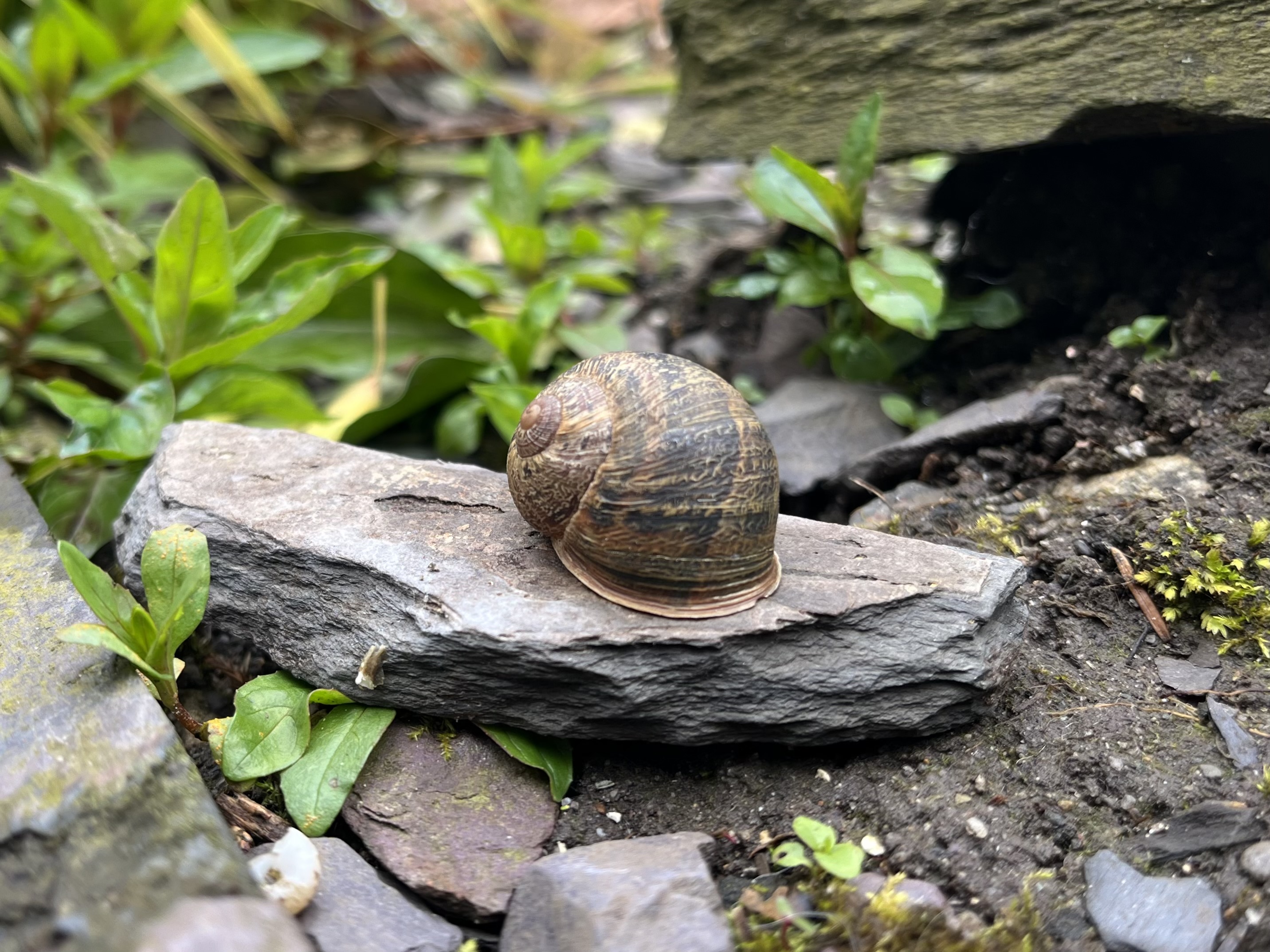
A cluster of garden snails found under a rock in my back yard
IMG_3035
A snail needs to consume lots of calcium-rich food as contained in green vegetables like spinach and broccoli to keep its shell strong
I love it when an idea for a column comes from something that I see every day and yet have not paid much attention to before. It was on a dog walk that I spotted a snail on the path on front of me and thought what an amazing pattern and colour its shell was. It struck me that I had no idea how these shells were formed, nor how they gained their colours and patterns.

I do know that snails are the bane of most horticulturists’ lives who will go to many lengths to deter or prevent these stubborn gastropods from ruining their much toiled over gardens. But you see, I am to gardening what Rab C Nesbit is to personal hygiene (willingly neglectful) and therefore I do not see snails as the enemy but instead am rather fascinated by them.

There are upwards of 120 different varieties of snail in this country, and the average British garden is home to several thousand at any given time. You probably know that they are hermaphrodites (i.e. have both male and female reproductive organs), but they need to mate and exchange sperm to have babies, which they do around February and March. They lay their fertilised eggs in dark moist places, often underground, and it takes around 15 to 21 days for them to hatch, depending on the species.

Initially, the baby snailettes, which are born with a wafer-thin flimsy shell, eat the calcium-rich eggshell from which they hatched to see them through the first five days or so. But after that, they have to go in search of more fodder to continue to thrive. As they emerge into the open air they are extremely vulnerable to an array of hungry predators which is the reason their average lifespan is a mere nine to 12 months, even though they can live longer. Their first and urgent mission is to find sources of calcium to grow and nourish their hardening protective shell.

Their distinctive shells are formed thanks to an organ called the ‘mantle’ which secretes layer upon layer of calcium carbonate to build size and thickness. Green vegetables such as broccoli, spinach, cabbage, and lettuce are particular delicacies, as are flowers like hosta, marigold and rudbeckia. The swirly shape is thanks to the way in which the calcium carbonate is secreted, and in almost every case flows in a right-handed, or clockwise, direction, otherwise known as dextral. There is the odd species that has a left-hand swirl which is referred to as ‘sinistral’, but they are pretty rare.

You can use pesticides to control the snail population in your garden, but there is a trend towards more environmentally friendly methods. There are a surprising number of snail-repellent flowers, vegetables and herbs (a quick Google search will tell you what they are) and you can take steps to make your patch an attractive des res for natural predators like birds and hedgehogs. Again, Google is your friend if you want tips on how to draw them in.

Incidentally, if you spot a rock that is surrounded by cracked snail shells, this is likely to be a bird’s anvil stone. Garden birds like the songthrush love eating snails, and cleverly use the rock to bash it and crack open the shell. If a snail is ever separated from its shell, it cannot survive.

Snails love to hide in the daytime in warm, moist places, so another suggestion is to lay planks within your flower borders before nightfall, and then first thing the next day, lift them up and collect any snails you find hiding underneath. They will graze an area of no more than about 20 metes around the spot where they were born and get very disorientated if they are moved further away so if you take them out into the countryside and set them free in a woodland, for example, they won’t be able to find their way back.

Of course, with thousands at a time dwelling in your garden, you might need to make a lot of trips. But perhaps, if you embrace all of these deterrent methods, alongside a healthy dose of persistence, you might just end up with a full crop of lettuce this year.

I’d love to hear from you about your opinions, memories and ideas for columns. Use the ‘Contact’ button on the top right of this page to get in touch. This column appeared in the Darlington & Stockton Times on Friday 3rd and the Ryedale Gazette and Herald on Wednesday 1st May 2024.

Do you hike, or saunter?

IMG_1369
John Muir (1838-1914) was the founder of the modern conservation movement 
IMG_9594
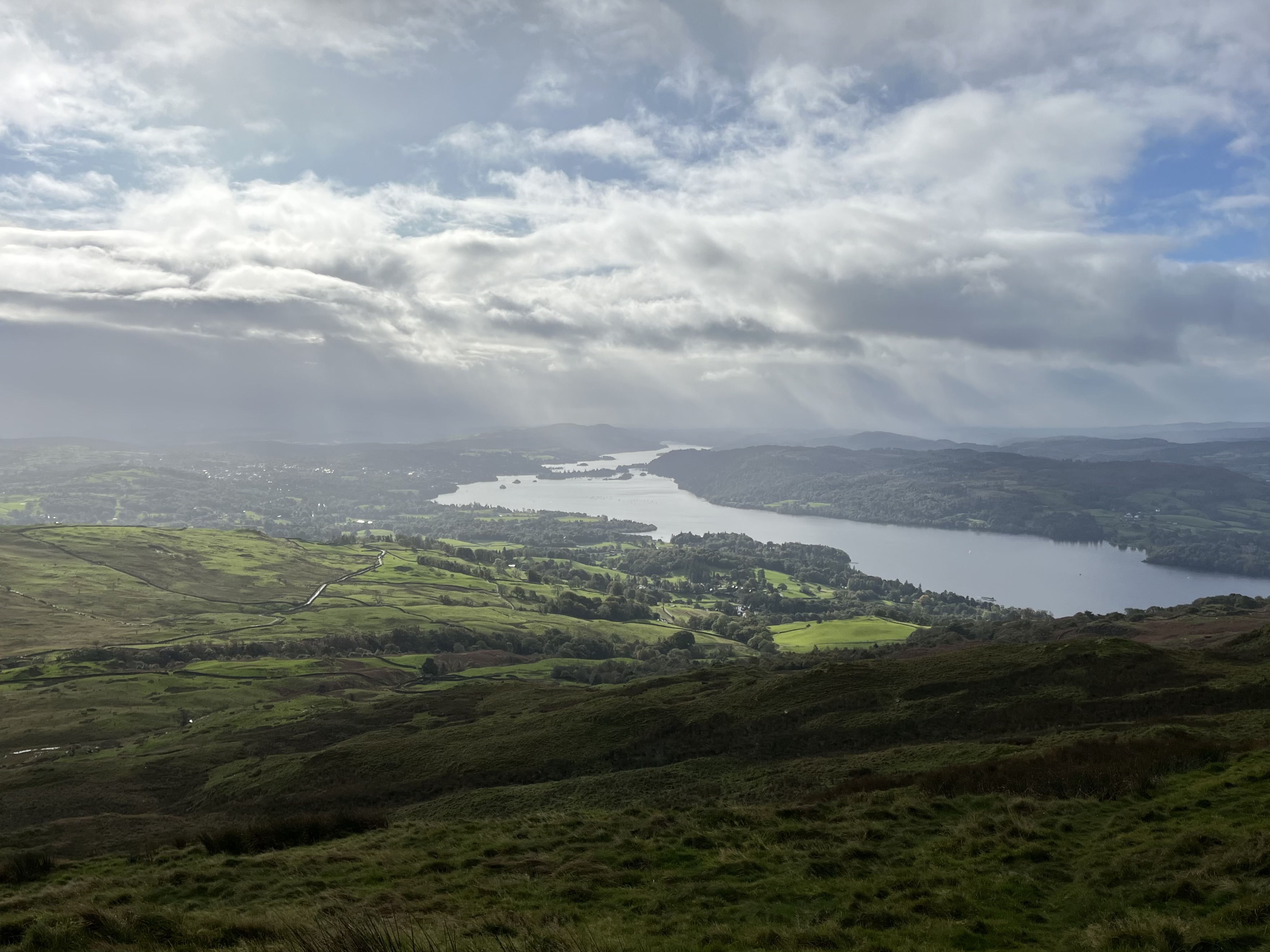
Whether it was a saunter or a hike up Wansfell Pike in the Lake District, the views from the top were worth the climb


Some of you might recall that during the first lockdown in 2020, I set up a Facebook group called ‘Picture That Walk’ where people could dump all those photos they were taking while they ambled about their local area on their permitted daily hour of exercise.

The group now has around 1500 members who continue to share their lovely pictures from all over the world. A regular topic of conversation is the various terms we use to describe a walk. For example, we have had bimble, potter, meander, stroll, ramble, amble and mosey to name just a few.

It was a member of the group who gave me the inspiration for this column after she posted a quote from the legendary John Muir (1838 – 1914) regarding the word ‘saunter’. Muir was objecting to ‘hikes’.

“Do you know the origin of that word ‘saunter?’” he says. “It’s a beautiful word. Away back in the Middle Ages people used to go on pilgrimages to the Holy Land, and when people in the villages through which they passed asked where they were going, they would reply, ‘A la sainte terre,’ ‘To the Holy Land.’ And so they became known as sainte-terre-ers or saunterers. Now these mountains are our Holy Land, and we ought to saunter through them reverently, not ‘hike’ through them.”

Muir was a Scottish-born mountaineer who was passionate about nature and the founder of the modern conservation movement. He was an active campaigner for the preservation of our wild places and wrote extensively about the physical and emotional benefits of immersing oneself in the countryside. His ideas were radical for the time and were based around the premise that the earth was not to be used simply as a resource for humankind but should be looked after, enjoyed and preserved in all its glory. He was instrumental in coming up with concept of national parks, his first being Yosemite in California (Muir’s family had moved to the USA when he was 11).

If you search for his name online and look up some of his more famous quotes, you will find that his words on nature are quite beautiful despite him declaring he wasn’t a particularly good writer. One that struck me was this one, encouraging people to get outside:

“Nature’s peace will flow into you as sunshine flows into trees. The winds will blow their own freshness into you and the storms their energy, while cares will drop off like autumn leaves.”

How lovely is that?

This weekend, I was party to quite a debate about the difference between a walk and a hike. I was spending the weekend in the beautiful Lake District for the ‘hen’ celebrations of my niece, who is due to get married this month. It was superbly organised by her sisters and mum, and on the itinerary for Saturday morning was a walk. ‘It won’t be too intense, don’t worry,’ we were told. It must be noted here that my niece is super fit, and recently completed the Yorkshire Three Peaks Challenge where she climbed Pen-Y-Ghent (2277 ft), Whernside (2415 ft) and Ingleborough (2372 ft) in one day.

Bearing in mind we’d had a rather heavy night the night before, many of the 17-strong-party were slightly jaded on Saturday morning, and the weather was cold, windy and rainy. You can imagine how delighted we were to discover that this ‘not too intense’ walk was a three-and-a-half-hour circuit starting at Troutbeck and climbing up and over the not inconsiderable 1600-foot Wansfell Pike.

There were a fair few mutterings about the description of this as a ‘walk’, when for some it was most definitely a hike. Despite the grumbles, the groans, the breathlessness, the cold, the wet, and the general pain, once we’d struggled to the top of the fell, we were handsomely rewarded. The views of Lake Windermere, Ambleside and the mountains beyond were absolutely stunning. By the time we got to the end a couple of hours later, the sun had come out, our hangovers had gone, our grumbles had stopped, and we were ready for a good old pub lunch.

I must confess, on the way up Wansfell Pike, I was definitely in ‘hike’ territory. But once I got to the top, and took in the fantastic view, I took a deep breath and gave the landscape the due reverence that John Muir declared it deserved.

Read more at countrymansdaughter.com. Follow me on Twitter @countrymansdaug.

This column appeared in the Darlington & Stockton Times on Friday 3rd and the Ryedale Gazette and Herald on Wednesday 1st November 2023.