Romans go underground

IMG_2051
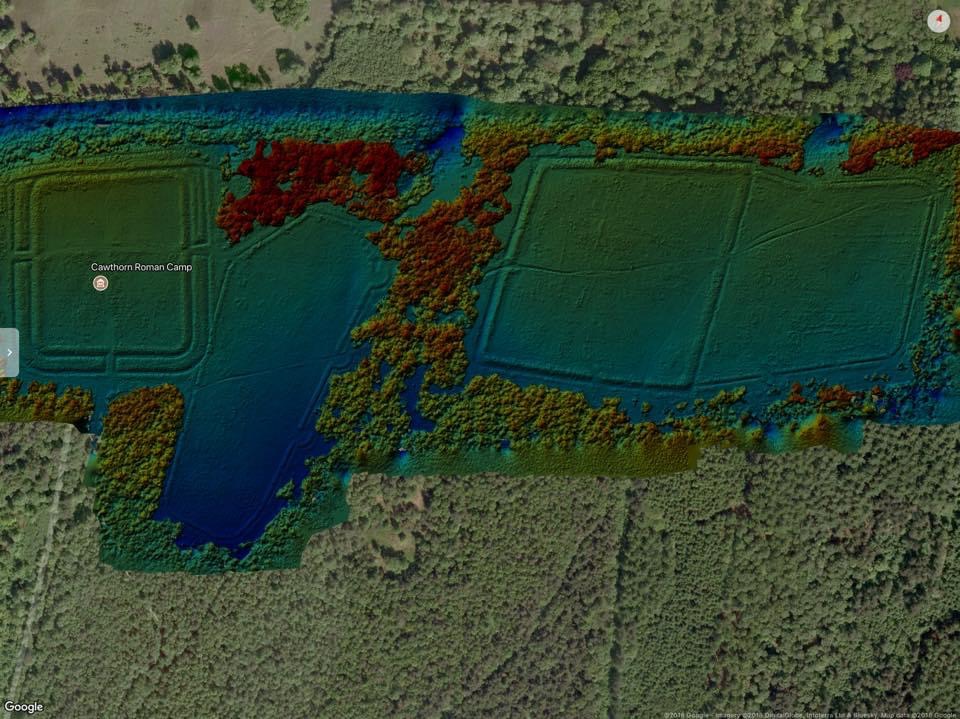
Images of the complete Cawthorne Camp near Pickering which comprises four elements which are (L-R) Fort D, Camp C, Fort A and Annexe B. Photo by Tony Hunt of Yorkshire Archaeological Aerial Mapping
IMG_2050
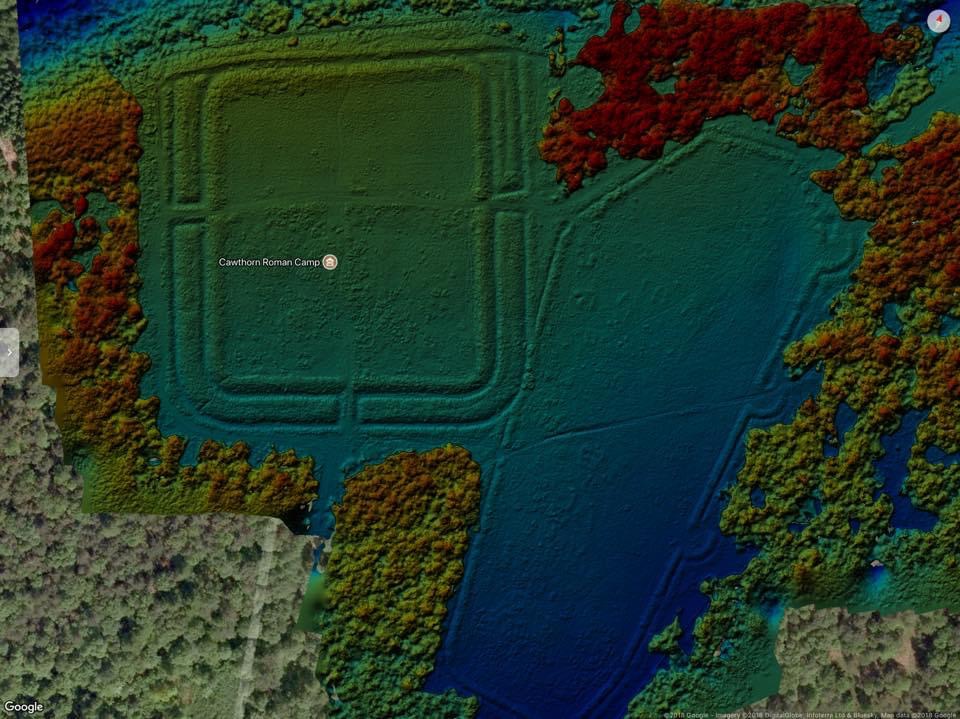
Fort D (left) whose boundary overlaps Camp C (right) which shows it was built later. Three clavicula gates can clearly be seen to the eastern boundary of Camp C. Pictures by Tony Hunt of Yorkshire Archaeological Aerial Mapping.

I studied Greek and Roman history at university and am fascinated by the ancient world and the remnants of the past that lie beneath the ground we walk upon today.

That’s why I was captivated by some pictures of Cawthorn Roman Camp taken from the air by Tony Hunt of Yorkshire Archaeological Aerial Mapping (YAAM) that popped up on Facebook. The specialist imaging revealed the camp in far more detail than can be seen with the naked eye, bringing it to life in a way I had not yet experienced.

Cawthorn Camp lies atop a rocky escarpment a few miles north of Pickering. I’ve mentioned it before in relation to Wade’s Causeway, sometimes referred to as the Roman Road, which runs across Wheeldale Moor from Goathland. Although only a short section is visible now, some believe it linked Whitby with a settlement at Amotherby near Malton, passing through Cawthorn Camp en route. Some archaeologists suggest it is much later and of mediaeval construction, while others think it dates from even earlier than the Romans, and attribute it to the Neolithic or Bronze ages. My theory is based on logic rather than expertise: perhaps the first moor-dwellers forged what they thought was the easiest route across the landscape, and then the Romans came along and rather than go to the trouble of digging out a whole new road across tricky unfamiliar terrain, used what was already there to create a more formal and recognisable highway. Then in the mediaeval period, more features were added. Thus, this mishmash of eras and styles has led to historians arguing as to which period the road officially belongs.

The camp dates from around AD75, although is believed to have been abandoned, re-inhabited, rebuilt and expanded several times over its lifetime. Although finds such as coins, tools and pots peter out after AD120, the camp would likely have been occupied after this date, possibly as a training ground, especially as the Romans occupied Britain until the start of the 5th century. We don’t really know why there are so few finds later than AD120 though.

There are four distinct elements across two separate plots, referred to as Fort A, Annexe B, Camp C and Fort D with A and B adjacent to each other at the eastern end, while C and D are a slight distance away towards the west. On the ground, although you get an idea of its scale through the deep ditches and mounds it is only through aerial photography that you can truly appreciate it. The forts, as the name suggests, will have been more permanent structures, with a building at their centre and ramparts surrounding them. The temporary camps will have served a more transient population of marching infantry. Similar settlements can be found along the routes of many of our Roman roads lying around 25 miles apart, the distance a cohort of soldiers would be expected to march in a single day.

Three of the plots are shaped like rounded-cornered rectangles, with gates facing every direction. We know Fort D was built later than its immediate neighbour, Camp C, thanks to the fact its boundary overlays that of Camp C, as seen in the accompanying YAAM image. Camp C is a bit of a rarity, shaped as it is like a coffin, and instead of having gates on every side as you’d expect, has three large portals along its eastern boundary. There is also one small opening on the western side, but no entrances to the north and south, which is very unusual.

The canny Romans knew a thing or two about building fortifications, and the three gateways (which are clearly visible in the YAAM image on the right side of Camp C), are known as Claviculae (vine tendrils), their curved shape meaning you cannot see in from the outside. The narrowing entrance would force any attacking enemies to shimmy through, trailing their cumbersome shields behind them as they tried to see where they were going with their sword arms before them, vulnerable and exposed, which allowed the defending Romans to easily disable them.

If space permitted, I could go on and on about Cawthorn Camp but I urge you to go and visit. There is still one question though; how much more lies beneath our feet that has yet to be discovered?

I’d love to hear from you about your stories, memories, opinions and ideas for columns. Use the ‘Contact’ button on the top right of this page to get in touch.

This column appeared in the Darlington & Stockton Times on Friday 11th and the Ryedale Gazette and Herald on Wednesday 9th Oct 2024
Wheeling back time

DB895377-6239-4795-B7B5-75D14AF14164
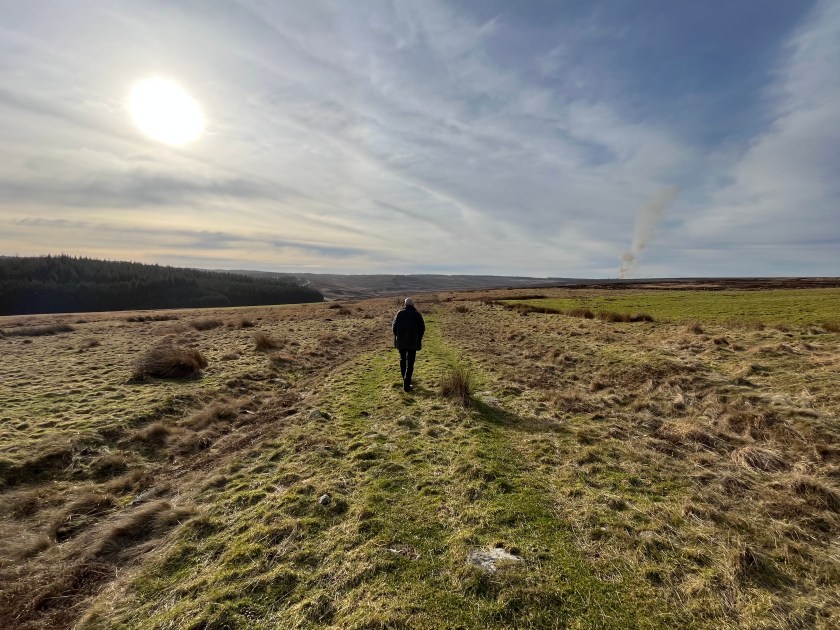
Wheeldale Road on the North York Moors is often called the ‘Roman Road’, but is it actually Roman in origin?

On a recent outing across the North York Moors, my companion and I opted for a quiet back road from Pickering, up through Newton-on-Rawcliffe towards Stape and beyond, which ultimately ends up in the village where my parents were married, Egton Bridge.

It is a road that is not for the faint-hearted because more or less all the way it is barely wider than a single track, so you have to be constantly on your guard for traffic coming in the other direction. There is an unwritten code among moorland drivers that, when faced with an oncoming vehicle, both of you slow down, and the one nearest to a suitable place to pull in does so to allow the other to pass. A flash of the headlights or a raised hand is always in order to thank the person who gave way, and they usually respond with friendly wave. Patience is the virtue of the North York Moors driver.

There are, of course, those that ignore that code, those who feel that they own the roads and everyone else should get out of their way. They simply refuse to pull in and head towards you with a stubborn pig-headedness that is selfish and irritating. We have a name for these kinds of drivers that I won’t repeat here!

The occasional bad driver did not detract from this gorgeous route though, which took us past the old Wheeldale Road, also known as Wade’s Causeway after the legend where the giant Wade builds a way for his wife Bel to more easily drive her flock of  sheep across the inhospitable landscape. It’s an ancient route that many refer to as the Roman Road, thanks to it appearing on a 1720 map, and in historical texts, with that name.

The thing is, it might not be Roman at all, as its constriction differs from other roads that are confirmed to be Roman in origin. Archaeologists debate to this day about who built it and when. There are characteristics which point away from the Italian invaders, such as the fact that its upper surface is made up of large stone slabs, whereas Roman roads were covered in gravel. Roman roads are also renowned for being dead straight, whereas the Wheeldale Road has a number of curves.

Although only a short section is visible today, some believe it linked Whitby with a Roman settlement at Amotherby near Malton, passing through the camp at Cawthorn near Pickering. Traces of an ancient road have been found in that direction, which adds weight to the theory. However, other archaeologists suggest it is much later and of mediaeval construction, while others think it dates from even earlier than the Romans, and attribute it to the Neolithic or Bronze ages.

Is it possible that it is a mish-mash of all those ideas? Perhaps ancient man forged what they thought was the easiest route across the landscape, and then the Romans came along and rather than go to the trouble of digging out a whole new road, used what was already there to create a more formal and recognisable road. Then in the mediaeval period, moor dwellers patched it up a bit, and added their own features, and as such, sparked a debate which has divided historians ever since. Of course, I know absolutely nothing about it really, so am hopeful that some expert reading this will put me straight.

On the subject of ancient highways, I am fascinated by stories of the old drove roads that criss-cross North Yorkshire, particularly with the idea that men would move great herds of livestock all the way from Scotland to London to sell at the markets there. Drovers were renowned for being extremely hardy, and I found a cutting from 1985 in my Dad’s files about a Yorkshire Dalesman named Jammy O’Sarah’s who drove a flock of sheep up hill and down dale through days of freezing blizzards to get to their new owner in Skirethorns.

When he finally emerged at his destination, the sheep’s fleeces ‘were so burdened by rain, sleet and snow and frozen by the wind that they could scarcely trudge through the gathering drifts.’ And all Jammy said was: “It’s been what you might call a comfortless journey,” before collapsing where he stood with cold and exhaustion.

Thankfully, he was saved from death after being fed with ‘enough rum to kill a weaker man’.

Read more at countrymansdaughter.com. Follow me on Twitter @countrymansdaug

This column appeared in the Darlington and Stockton Times on 3rd and Ryedale Gazette and Herald on 1st March 2023