Swanning about at Swinton

The Turret at Swinton Park which was an amazing place to stay


The spectacular circular bathroom in The Turret


The dining room is called ‘Samuel’s’ after textile millionaire Samuel Cunliffe-Lister who bought Swinton in 1888


A few years ago, my best friend and I realised that our relationship was about to pass a significant milestone – that of 50 years. We had met when her mum and my dad, who were both writers living in the same village, arranged a play date for us four-year-old girls.


We got on like a house on fire and have been the best of friends ever since. Our friendship is rather unusual in that we have never attended the same school and always had completely separate social circles. We went to different universities, moved to different cities, and lived and worked miles away from each other. And yet our friendship remained steadfast. Apart from my immediate family, she has known me longer than anyone else on the planet. Because we still live 200 miles apart, we don’t see each other as often as we’d like, so the time we do spend together is very precious.


As the half century anniversary approached, we felt it warranted a weekend break together. We had a wonderful time in a nice hotel, just the two of us pampering ourselves, eating good food and drinking good wine and chatting about everything and nothing. It was brilliant.


As happens with other occasions of such national importance, we decreed that it had to be honoured every year. We are both working mothers who have survived raising three children, who have also miraculously emerged (relatively) unscathed, and so it is only right that we get an annual pass out to indulge ourselves.


I’ve just returned from our latest jolly, the fourth, and it has pitched the bar rather high. We went to the swanky Swinton Park Hotel in Masham and found to our delight that, due to an issue with our original room, we had an upgrade – to a turret. Actually, not A turret, but THE Turret. There is only one at Swinton Park.


We had the whole turret to ourselves – all three floors of it. As you’d imagine, the rooms are round in shape and there are a lot of stairs, but the added bonus is that you can work off all the rich food and wine you consume by running up and down to the bathroom on the top floor and the sitting room on the bottom.


For many years, the house was known as Swinton Castle thanks to the Gothic nature of the architecture, with great towers, imposing gateways, battlements atop the walls, and of course the famous turret that stands proud at the main entrance. The original building was constructed in 1695 by the magnificently-named wool merchant, Sir Abstrupus Danby and then inherited by his son, also called Abstrupus, who continued to extend the grand home. But his son, William Danby, presumably miffed at being given such an ordinary name, just about obliterated the original building constructed by his grandfather and replaced it with an extraordinary ‘castle’.


The castle was sold in 1888 to Samuel Cunliffe-Lister, a multi-millionaire in the Bradford textile industry who decided that the turret simply wasn’t grand enough, so he made it bigger and more castley. And when you own the largest silk mill in the world and employ 11,000 people, I think you have earned the right to build a turret as big as you like.


It’s not just about the turret though. Swinton is a vast estate of 20,000 acres across the Yorkshire Dales, employing more than 200 mainly local people. Swinton Park Hotel covers just 200 of those acres, and the whole lot remains in Cunliffe-Lister hands. There was a major bump in the road in the mid-1970s when the family was forced to sell the house due to the rising costs of running the place, not helped by a whopping inheritance tax bill. However, the family were able to buy it back in 2000, and the current owners, Mark Cunliffe-Lister (the 4th Earl of Swinton) and his wife Felicity have transformed it into a thriving multi-faceted business, combining the historic local traditions of the land with our modern expectations of luxurious getaways.


There was a lot more that we didn’t get to see and do on our stay there, so I’m not sure just one night in a turret is enough. We may have to go back next year.


I do wonder, though, do you have a special friendship?


Do you have opinions, memories or ideas to share with me? Get in touch with me using the ‘Contact’ button on the top right. 

This column appeared in the Darlington & Stockton Times on Friday 4th and the Ryedale Gazette and Herald on Wednesday 2nd April 2025
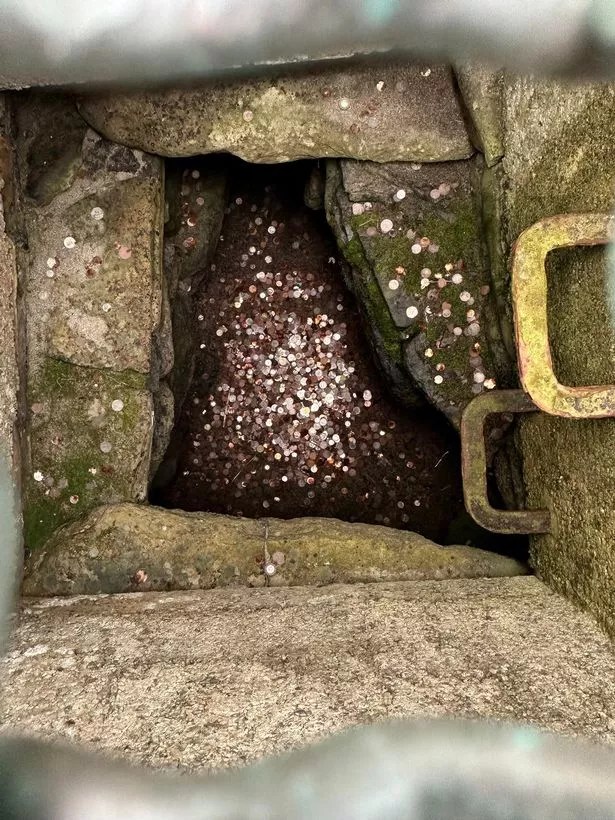
Wishes going down the drain

IMG_5559
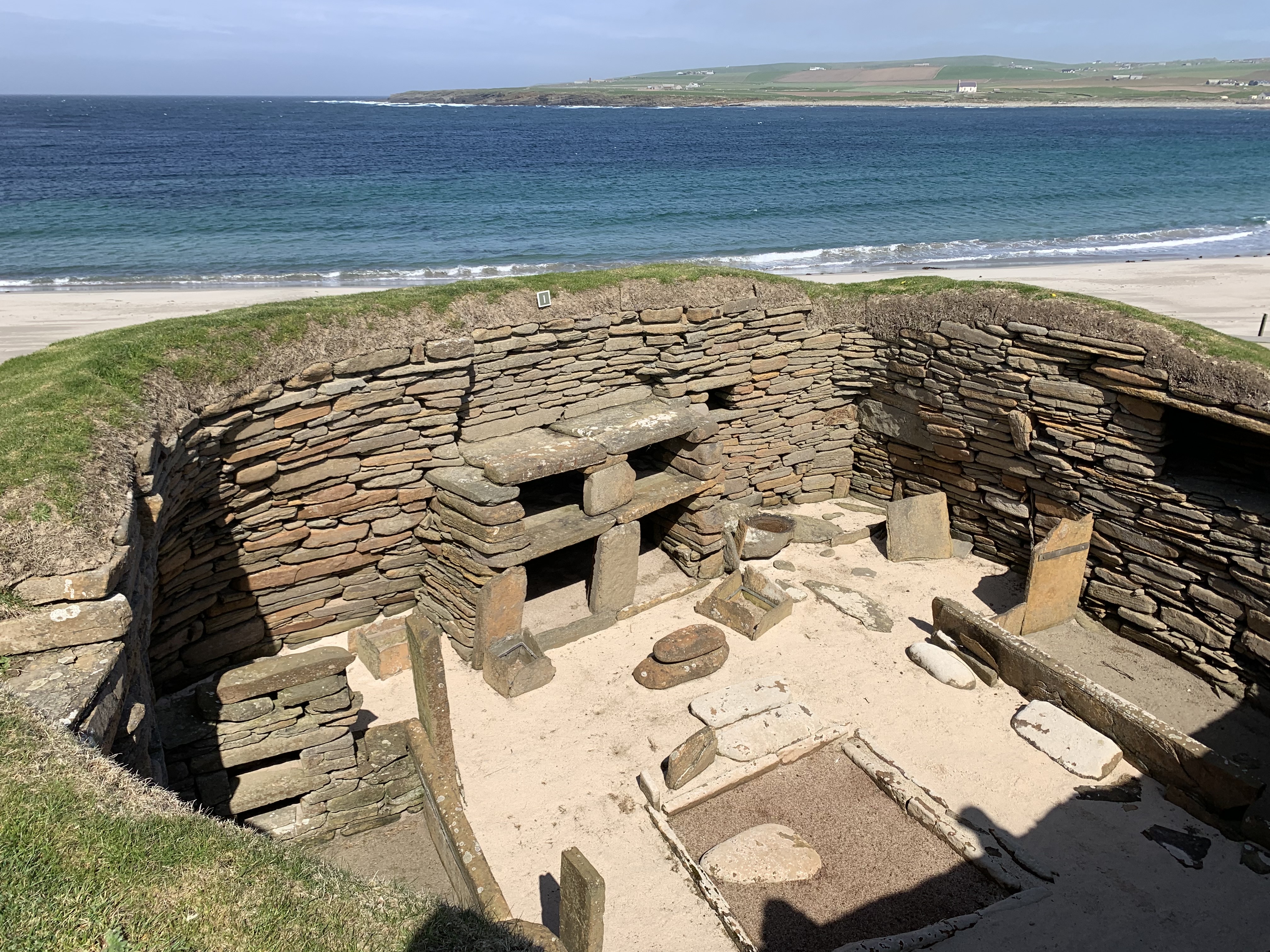
Skara Brae in the Orkneys, one of the best-preserved prehistoric villages in Western Europe. Pictures by Kinlay from Orkney Uncovered.

IMG_1294
Visitors to kara Brae throw coins into what they think is a wishing wel. In fact it is a sewage drain. Pictures by Kinlay from Orkney Uncovered.

The question about how the ancient residents of Thixendale sourced their water has been brought up again by reader Jo Bird. If you recall, there has been evidence of activity in the Thixendale area since the Mesolithic and the Neolithic periods (Middle Stone Age, 7,000-10,000 years ago and New Stone Age, 5,000-7,000 years ago) as shown by the discovery of man-made tools found in barrows, or burial mounds, dotted about the landscape. Settlements, for obvious reasons, grew up around sources of water, and yet Thixendale lies in a dry valley.

Jo observes: “I suspect that even if there has never been a water course, that in previous centuries when the water table was higher, there were wells…I was brought up in Norfolk where the underlying geology is chalk, as at Thixendale, and the village where I lived had no water course, but there were several wells which were in use until mains water was supplied, I recall in the early 1950s, but there is no sign of them now.”

She adds: “I remember the location of two wells in my Norfolk village, but there has been no trace of them for simply ages. There would have been more, I’m sure. You could perhaps ask anyone who lived at Thixendale before about 1950 if they knew of or used wells…it’s likely that there are lots of villages that once had wells but no trace of them now. People of 80ish or more might recall.”

Jo has a point about wells, and I would welcome any recollections from people old enough to remember how they got their household water before they were connected to the mains. I agreed with Jo’s suggestion that wells would likely have supplied Thixendale in later centuries, but wondered if the ancient inhabitants of the Mesolithic and Neolithic periods would have had the engineering skills to dig down far enough into the chalky layers below ground to access the fresh water lying beneath.

Of course, that set me off digging online and it surprised me to learn that in fact, they did. The oldest well dug by humans to access drinking water was found in the Jezreel Valley in Israel and dates from about 6500BC. Nothing similar from that era has yet been found on our shores but there is a settlement known as Skara Brae, a stone-built Neolithic village on Mainland, the largest island of the Orkneys. It is one of the best-preserved prehistoric villages in Western Europe, occupied from around 3000 BC until 2500BC, and has a sophisticated water and drainage system that includes toilets with facilities to flush waste away from the house through purpose-built channels. Although I can find no mention of a well, likely due to the fact that fresh water was readily available from the nearby Loch of Skaill, it proves that ancient Europeans did have the sufficient engineering skills.

Once I started reading about Skara Brae, I became captivated. We often credit the Romans with educating us about complicated engineering, but it seems the villagers of this remote island were already pretty clued up, establishing a thriving community hidden within a cluster of large middens (mounds of waste). This subterranean way of life ensured precious heat was preserved and homes were insulated from the harsh northern coastal weather conditions. A series of one-room houses of around 40 square feet were built using flat stone slabs, all connected by covered tunnels. As well as a functioning drainage system, each house had ‘built-in’ stone furniture which included beds, seating, a dresser, a central hearth and a tank in the ground which archaeologists believe would have been used to minimise the mess from the preparation of their main food source, fish. Among artefacts discovered were tools, gaming dice, food and drink vessels, stone carvings and jewellery in the form of beads, necklaces and pendants.

As I mentioned, the ancient residents of Skara Brae had no need to dig any wells. Nevertheless, we modern humans do have a tendency to chuck loose change down anything resembling a well while in the hope of bringing us good luck. At Skara Brae, visitors wishing for their dreams to come true have for years been throwing their pennies down what they thought was a well. Sadly, as one witty tourist guide pointed out, they have quite literally been throwing their money down the toilet!

Read more and contact me at countrymansdaughter.com. Follow me on Twitter @countrymansdaug

This column appeared in the Darlington and Stockton Times on 29th and Ryedale Gazette and Herald on 27th September 2023