Flowing up the hill

IMG_9405
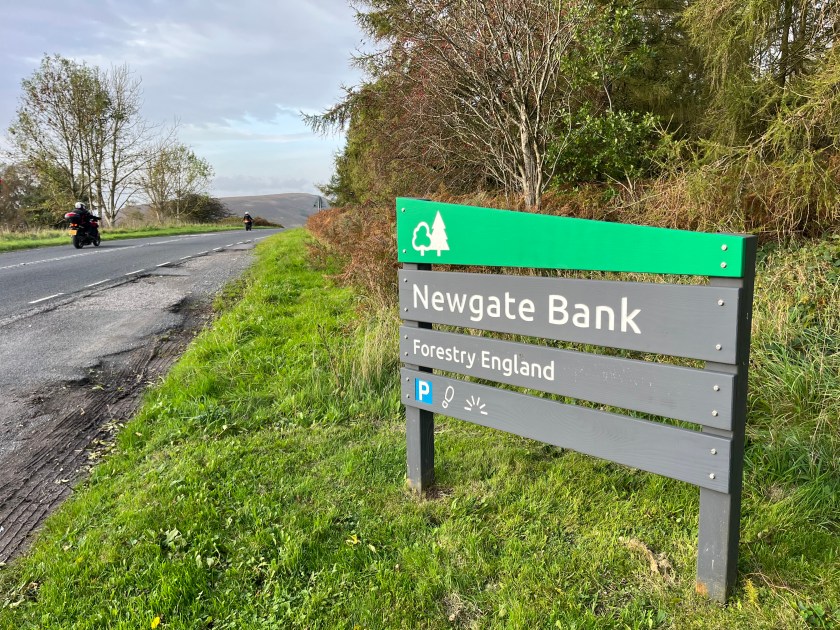
The outline of one of Joseph Foord’s water races can still be seen at Newgate Bank on the Helmsley to Stokesley Road

IMG_9419

I was contacted by reader Ted Naisbitt in connection with my columns on how ancient folk living in dry areas managed to get access to drinking water. Reader Jo Bird had suggested that perhaps wells were constructed, and I wondered if prehistoric humans had the engineering know-how to be able to dig deep wells. My research revealed that indeed they did, as evidenced by a sophisticated drainage system that has been discovered at the 4th century BC settlement of Skara Brae in the Orkneys.

Accessing fresh water was a continuous battle for people living in remote communities, and Ted mentioned a hydraulic engineer called Joseph Foord who was active on the North York Moors in the 18th century. He was prompted to find out more after a visit to Thirsk Tourist Information Office (where Ted volunteers) by Coxwold resident Ken Ward who used to live by one of these water channels. Ken was keen to find out about the engineer whom it is said performed ‘miracles’ by making water seemingly run up hills.

“Prior to the 18th century the towns and villages along the southern edge of the Moors (roughly the A170) did not have access to fresh running water,” says Ted, “But just a bit further north on the other side of the tabular hills there was plenty. This engineer managed to bring fresh water to these places by surveying for and digging out narrow ‘canals’ around them often for many miles and overcoming many obstacles on the way. In places an optical illusion made it seem as if the water was running uphill.”

Ted pointed me to an article about Foord on a website called ‘Yorkshiremoors.co.uk’, and I must give credit to that website for what appears in this column, as there doesn’t seem to be a great deal online about him. I will also have a look in my dad’s archives next time I go see my mum as I’d be surprised if he hasn’t written about him. What Foord achieved is highly noteworthy, and he deserves to be remembered.

Joseph was born in 1714 in Fadmoor near Kirkbymoorside into a Society of Friends (Quaker) family and at the age of 20, when his father Matthew passed away, he inherited their farm at Skiplam Grange, along with some mills and shares in mines at Ankness between Fadmoor and Bransdale. 1744 was a momentous year for Foord, as he was also ejected from the Quakers for having fathered an illegitimate child.

Foord became an engineer and a surveyor and, having grown up on the North York Moors, was well aware of the difficulties faced by inhabitants of remote villages on top of these limestone hills. They would have to transport heavy vessels of water over rough terrain and up steep inclines, making an already tough life even more so.

In about 1747, Foord came up with the idea of constructing channels, or ‘races’, to transport water from the springs on the high moors to the dry communities. His first experimental race ran for five miles and supplied Gillamoor and Fadmoor. What was particularly unique, though, was that these two villages sat high on the hills, and the task of getting water up the hill was the problem, or so it seemed.

According to Yorkshiremoors.org: “Gillamoor is about 525ft above sea level. The northern, highest, tip of the tabular hill that contains the village is at Boon Hill, about a mile and a half to the northwest. The ground at the base of Boon Hill is 650ft above sea level, and thus 125 feet higher than Gillamoor. Foord was thus able to construct a water course that could run downhill, while at the same time appearing to climb up the steep slopes below Gillamoor!”

In 1759, the water course was extended to Kirkbymoorside, then ultimately to Carlton, Newton, Pockley, Old Byland and Rievaulx, delivering precious fresh water to the residents. As he was so familiar with the geology and geography of the area, in the end, Foord was able to construct around 70 miles of water courses, some of which are still visible today, such as from Newgate Bank on the A1257 Helmsley to Stokesley road.

Foord died in January 1788 at his daughter Mary’s home in Fawdington near Thirsk. Despite never being welcomed back into the Society of Friends, he was interred as a non-member in their burial ground.

Read more at countrymansdaughter.com. Follow me on Twitter @countrymansdaug.

This column appeared in the Darlington & Stockton Times on Friday 20th and the Ryedale Gazette and Herald on Wednesday 18th October 2023.

Wishes going down the drain

IMG_5559
Skara Brae in the Orkneys, one of the best-preserved prehistoric villages in Western Europe. Pictures by Kinlay from Orkney Uncovered.
IMG_1294
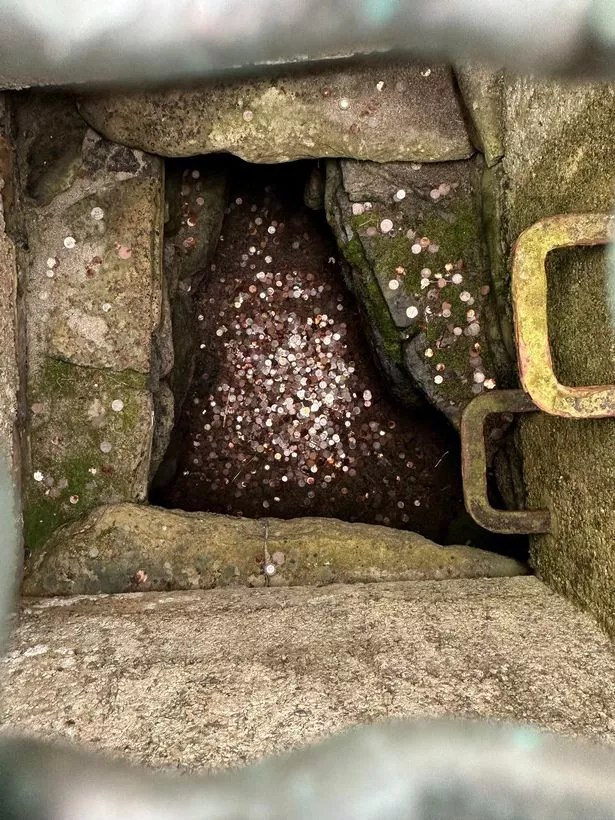
Visitors to kara Brae throw coins into what they think is a wishing wel. In fact it is a sewage drain. Pictures by Kinlay from Orkney Uncovered.

The question about how the ancient residents of Thixendale sourced their water has been brought up again by reader Jo Bird. If you recall, there has been evidence of activity in the Thixendale area since the Mesolithic and the Neolithic periods (Middle Stone Age, 7,000-10,000 years ago and New Stone Age, 5,000-7,000 years ago) as shown by the discovery of man-made tools found in barrows, or burial mounds, dotted about the landscape. Settlements, for obvious reasons, grew up around sources of water, and yet Thixendale lies in a dry valley.

Jo observes: “I suspect that even if there has never been a water course, that in previous centuries when the water table was higher, there were wells…I was brought up in Norfolk where the underlying geology is chalk, as at Thixendale, and the village where I lived had no water course, but there were several wells which were in use until mains water was supplied, I recall in the early 1950s, but there is no sign of them now.”

She adds: “I remember the location of two wells in my Norfolk village, but there has been no trace of them for simply ages. There would have been more, I’m sure. You could perhaps ask anyone who lived at Thixendale before about 1950 if they knew of or used wells…it’s likely that there are lots of villages that once had wells but no trace of them now. People of 80ish or more might recall.”

Jo has a point about wells, and I would welcome any recollections from people old enough to remember how they got their household water before they were connected to the mains. I agreed with Jo’s suggestion that wells would likely have supplied Thixendale in later centuries, but wondered if the ancient inhabitants of the Mesolithic and Neolithic periods would have had the engineering skills to dig down far enough into the chalky layers below ground to access the fresh water lying beneath.

Of course, that set me off digging online and it surprised me to learn that in fact, they did. The oldest well dug by humans to access drinking water was found in the Jezreel Valley in Israel and dates from about 6500BC. Nothing similar from that era has yet been found on our shores but there is a settlement known as Skara Brae, a stone-built Neolithic village on Mainland, the largest island of the Orkneys. It is one of the best-preserved prehistoric villages in Western Europe, occupied from around 3000 BC until 2500BC, and has a sophisticated water and drainage system that includes toilets with facilities to flush waste away from the house through purpose-built channels. Although I can find no mention of a well, likely due to the fact that fresh water was readily available from the nearby Loch of Skaill, it proves that ancient Europeans did have the sufficient engineering skills.

Once I started reading about Skara Brae, I became captivated. We often credit the Romans with educating us about complicated engineering, but it seems the villagers of this remote island were already pretty clued up, establishing a thriving community hidden within a cluster of large middens (mounds of waste). This subterranean way of life ensured precious heat was preserved and homes were insulated from the harsh northern coastal weather conditions. A series of one-room houses of around 40 square feet were built using flat stone slabs, all connected by covered tunnels. As well as a functioning drainage system, each house had ‘built-in’ stone furniture which included beds, seating, a dresser, a central hearth and a tank in the ground which archaeologists believe would have been used to minimise the mess from the preparation of their main food source, fish. Among artefacts discovered were tools, gaming dice, food and drink vessels, stone carvings and jewellery in the form of beads, necklaces and pendants.

As I mentioned, the ancient residents of Skara Brae had no need to dig any wells. Nevertheless, we modern humans do have a tendency to chuck loose change down anything resembling a well while in the hope of bringing us good luck. At Skara Brae, visitors wishing for their dreams to come true have for years been throwing their pennies down what they thought was a well. Sadly, as one witty tourist guide pointed out, they have quite literally been throwing their money down the toilet!

Read more and contact me at countrymansdaughter.com. Follow me on Twitter @countrymansdaug

This column appeared in the Darlington and Stockton Times on 29th and Ryedale Gazette and Herald on 27th September 2023