A war to remember

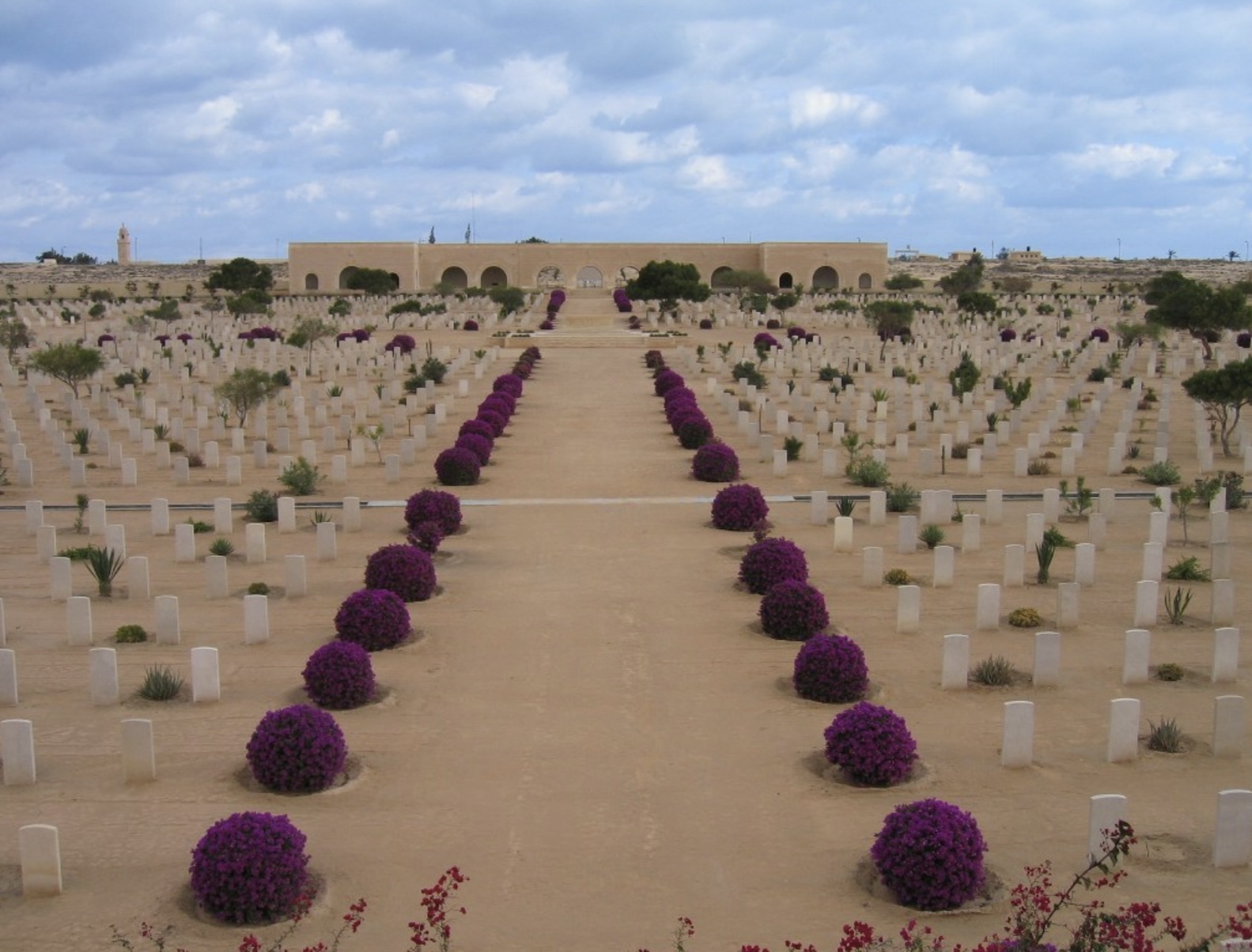
The Alamein Memorial at the entrance to the El Alamein War Cemetery in Egypt which commemorates WW2 fallen servicemen who fought in the North Africa campaign and whose remains have never been found. Lynn Catena’s uncle, Arthur Pearce, can be found on Column 32 (Picture CWGC)
The huge El Alamein War Cemetery in Egypt which commemorates more than 20,000 fallen servicemen (Picture CWGC)

In response to my column about the six Smith Brothers of Barnard Castle, five of whom were killed in World War I, Lynn Catena contacted me to say: “My mum’s brother was killed in action on December 19th, 1941, at 24 years of age. Apart from a tatty telegram there was no further word (that I know of). Several years ago I discovered the Commonwealth War Graves Commission (CWGC). I messaged them with the scant details I had and within 24 hours they responded with a list of the deceased (including my uncle), along with the cemetery and memorial reference. His name is etched on Column 32 at the Alamein Memorial in Egypt. He was my grandparents’ only son.”

His name was Arthur Pearce, and Lynn’s grandmother was long gone before the record was found. I can’t imagine the grief she must have suffered knowing her only son died in a country more than 3,000 miles away. The lingering pain of not knowing where his remains lay, of not being able to visit his final resting place, must have been acute. Did the fact that many other familles were suffering in the same way at the same time help, alongside the fact that they died heroes defending the freedom of their home and country? Sadly, most of those who could answer this question are no longer with us, but do let me know if you have ever spoken to your relatives about it. They came from a generation that was not used to discussing such deep internal emotions, and therefore may not ever have felt able to express their memories openly.

Lynn’s message prompted me to visit the CWGC website again, to see if I could find her uncle’s record – and sure enough I did, but not before I had to scroll past pages and pages of names engraved on the Alamein Memorial. It was truly sobering to see hundreds of fallen men, most of whom were aged in their 20s and 30s. The oldest was 50, and the youngest a mere 16 years old. They came from the various countries that united in the North Africa campaign to oppose German and Italian forces in a battle over control of the Mediterranean. The sea gave access to the East via the Suez Canal, a vital supply route leading to Russia via the oil-rich Middle Eastern block. As well as the UK soldiers from the Royal Artillery, there was air support from Australia, and infantry from New Zealand, South Africa and a few other countries.

What caught my attention was that 9th December 1941 was a particularly bad day for casualties. Where most dates listed from a few deaths into the 10s and 20s, on 9th December more than 300 servicemen were killed. My knowledge of WWII is what you might call at ‘headline’ level, and I know even less about the North Africa campaign. I felt I owed it to the men whose memorial I was looking at to educate myself a bit more.

The 9th December 1941 was just two days after the Japanese bombing of the US naval base Pearl Harbour on the island of Hawaii which prompted the States and a number of other countries to officially enter the war. It was also around the mid-point of Operation Crusader, the allied offensive to once and for all take the strategically important Mediterranean port of Tobruk on the north Libyan coast, 150km west of the border with Egypt. Rommel’s German troops supported by Italian allies had been trying to capture the port since the previous April in what is called The Siege of Tobruk. The new offensive, made up of British, Indian, New Zealand, South African and Free French forces, drove the Germans and Italians back into Libya enabling allied troops to gain firm control of the port.

The Alamein Memorial forms part of the huge El Alamein War Cemetery where more than 20,000 fallen commonwealth soldiers are commemorated. There are around 8,000 graves (812 of which are unidentified), and nearly 12,000 more names listed on the memorial because, like Lynn’s uncle, their remains have never been located.

Statistics like that make me grateful that I have never had to face the horror of a world war. I hope such a thing is never allowed to happen again.

Do you have opinions, memories or ideas to share with me? Get in touch with me using the ‘Contact’ button on the top right.

This column appeared in the Darlington & Stockton Times on Friday 21st and the Ryedale Gazette and Herald on Wednesday 19th Nov 2025
Royal intervention for grieving mother

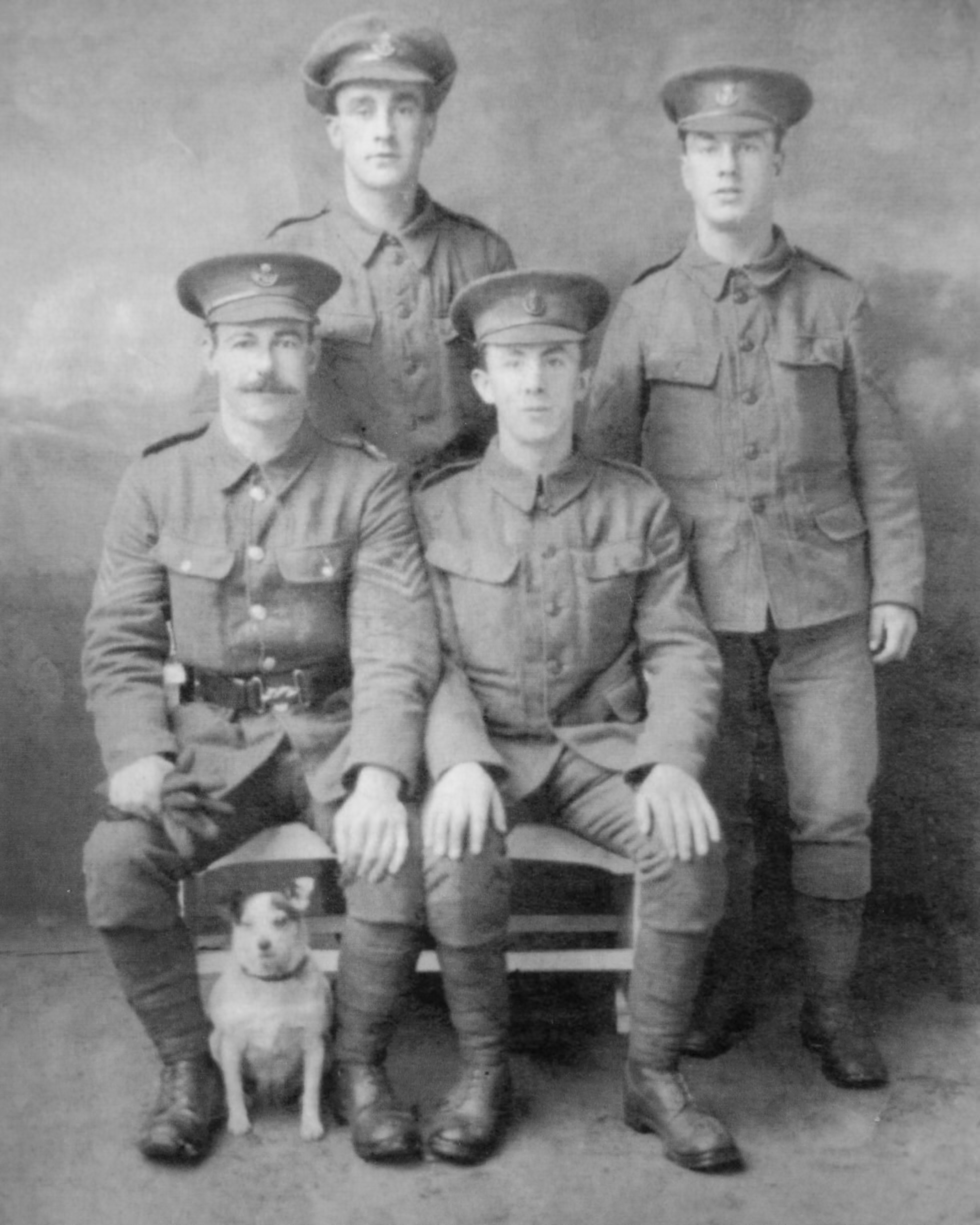
Brothers John, Alfred, Frederick and George Smith from Barnard Castle who were all lost during  World War I. The first son to be killed, Robert, is not on this photograph, so perhaps it was taken after he had died. Credit: Smith family


As we approach Remembrance Day (11th November), it seems appropriate to continue on the theme of the brave souls who perished while serving their country in war.

Claire Dunstan has been in touch to mention a memorial garden with benches that she remembers at the top of Broughton Road in the town of Malton. She says they were placed there as a tribute by school friends of the fallen men. I could find out very little about this small garden, so next time I am in Malton, I will go and have a look for myself (it is separate to the main Malton War Memorial at the junction of Horsemarket Road and Yorkersgate).

She also recalls: “There was woodwork by Mousey Thompson in the Green Man Hotel in memory of the Malton soldiers that never came home. Such a shame that it is shut now…the Mouseman furniture was paid for by family and friends.”

It makes me wonder what furniture it was and and in what form the soldiers were commemorated – presumably by having their names inscribed on the furniture? Perhaps there is someone reading this who knows the full story, and can tell us where that furniture ended up.

Claire used to live in the Welsh village of Llangwn which commemorated the 100th anniversary of the First World War in 2014 with a specially-written opera. According to the Llangwyn Local History Society, there were at least five sets of brothers from the area who served. One of the saddest stories involved the John brothers. In 1917, older brother Edwin John was shot at Lens in Northern France. His younger sibling, James, went to his aid but was killed while cradling his body.

The trauma experienced by families after such tragedy is hard to imagine, and similar stories will have been repeated time and again. But there can be few that are more poignant than the one to which reader Tony Eaton drew my attention. Tony first contacted me after reading my column mentioning the Pals Battalions a few weeks ago. This time he wrote: “On the theme of lost brothers…on the Barnard Castle War Memorial there are the names of five Smith brothers who died in World War I. There was a sixth son and their mother petitioned Queen Mary for help in having him brought home.”

Barnard Castle resident Margaret Smith suffered more than anyone should when she lost five of her six sons to WWI. Her story echoes the plot of the 1994 Steven Spielberg film Saving Private Ryan, where a group of soldiers are sent on a mission to locate James Ryan and return him to his family following the deaths of his three other brothers.

In our real life case, Private Robert Smith, 22, of the Durham Light Infantry, died on September 19, 1916, followed by Corporal George Smith, killed in action in November 1916, aged 26. Private Frederick Smith, aged 21, and eldest son John, 37, were killed in action in 1917. And lastly, Alfred, 30, perished in August 1918.

It was the local vicar’s wife, Mrs Bircham (not in fact the boys’ own mother) who was so moved by the tragedy that she felt compelled to write to Queen Mary, consort to King George V, on Margaret Smith’s behalf. She received the following reply from the Queen’s private secretary:

“I am commanded by the Queen to … convey to Mr and Mrs Smith of Bridgegate, Barnard Castle, an expression of Her Majesty’s deep sympathy with them in the sad losses they have sustained by the death of their five sons. He added that the Queen “has caused Mr and Mrs Smith’s request concerning their youngest son to be forwarded for consideration of the war authorities.”

With Her Majesty’s intervention, Margaret’s last remaining son, 19-year-old Wilfred, was allowed to return home to be with his mother. He went on to marry and have a family of his own, and died in 1968 at the age of 69. His descendants still live locally, and the war memorial featuring his five brothers’ names can be seen in the grounds of the Bowes Museum in Barnard Castle.

Do you have opinions, memories or ideas to share with me? Get in touch with me using the ‘Contact’ button on the top right.

This column appeared in the Darlington & Stockton Times on Friday 31st and the Ryedale Gazette and Herald on Wednesday 29th Oct 2025

A battle to be remembered


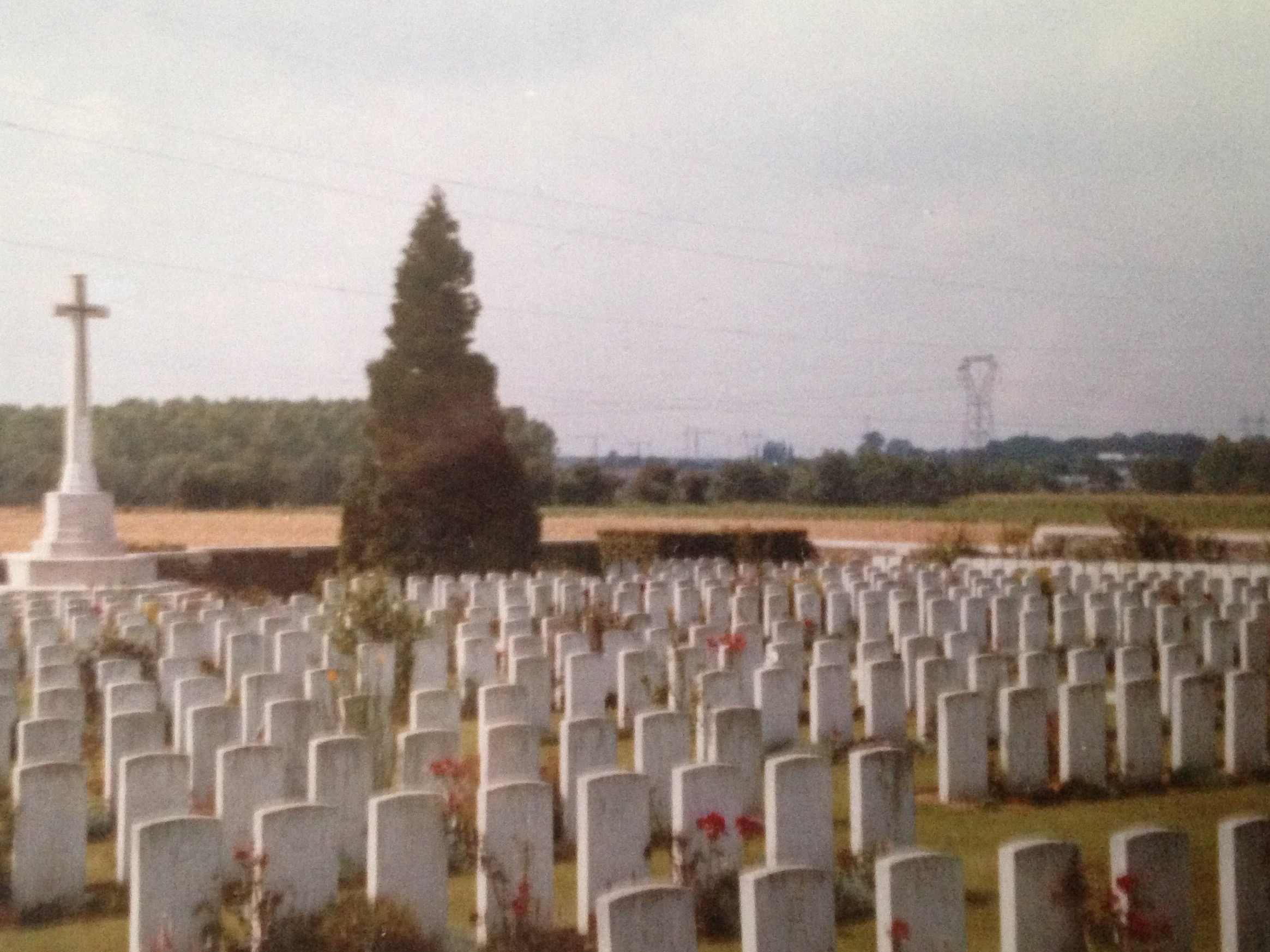
A June 1961 image of Roye New British Cemetery at Somme in France showing the conifer tree to the right of the stone cross memorial (Photo Commonwealth War Graves Commission copyright).

My dad’s 1979 photo taken from a similar spot. The conifer has grown somewhat.

A couple of weeks ago, I featured an old photo of a graveyard on one of the Somme battlefields and asked for your help to identify which one.

As usual, you have come up trumps! Reader Andrew Jackson says: “I think the photograph was taken in Roye New British Cemetery.”

Andrew directed me to a website documenting World War I cemeteries and commemorating the men interred there. It has recent pictures of Roye New British Cemetery, but it was difficult to work out if it was the same place. It was only when I came across some older photos that I began to recognise it. There was one in particular taken in June 1961 from the same vantage point as mine. The fir tree to the right of the stone cross memorial gives it away – although by the time my 1979 image was taken, it had grown somewhat! In the more recent photos, the tree has gone which is why it was harder to identify.

What makes the website so moving is that they have tracked down photos of some of the men interred there, putting faces to the names on the rows and rows of silent headstones. It brings home the stark reality of the massive sacrifice made by the soldiers and the families that had to continue to live without them. Interestingly, there are no special places for the higher-ranked men, no separating the rank and file from the captains and majors. As reader Tony Eaton from Northallerton pointed out, in death, everyone is equal.

Tony, a self-confessed World War I ‘buff’, enlightened me on a few things. I had wondered if the army had stopped recruiting members of the same families into the same regiment as a result of the disastrous ‘pals’ initiative, where the army canvassed groups from the same locality, enticing them with the promise that they could serve alongside people they knew (in other words, their ‘pals’), rather than randomly being assigned to regiments. Unfortunately, because they served side by side, so they died side by side, leaving gaping holes in communities and families. The strategy was abandoned after the Battle of The Somme in July 1916.

Tony explained: “You mentioned family brothers joining up which was common in the early part of the war and many households lost several of their sons during that conflict, but far as I know there was no embargo on family groups joining up until 1915, when the Conscription Act was passed, becoming law in 1916.

“The Somme showed the folly of the Pals Battalions. Conscription was the way of recruitment due to high numbers of highly qualified specialist personnel being taken out of the industrial and scientific side of prosecuting the war. This act may have precluded brothers being called up until the desperate times of 1918.”

Tony also mentioned a friend of his, Stanley Bewsher from Ripon, who went ‘over the top’ on that fateful day in July 1916. Despite his comrades being gunned down around him, Stanley bravely forged on, picking up a discarded machine gun and advancing towards the enemy.

“He was then struck in the helmet by a shell fragment that indented it into his head. He was taken from the battlefield back to England and after lengthy treatment and rehabilitation stayed in the army acting as a driver…he was awarded the Military Medal,” says Tony.

Tony also explains that the casualties of the Somme battle, although high, were not quite as high as I mentioned. “It is generally accepted that the Allies suffered c900,000 to 1,000,000 casualties…I highly recommend a book by Gordon Corrigan entitled ‘Mud, Blood and Poppycock’ where Corrigan states that 74% of all British and Empire troops that fought on the Somme came out without the proverbial scratch. It is true that on 1st July only six miles of ground was captured, but by the end of the battle, the Germans began withdrawing behind the Hindenburg Line some ten miles eastward.

“The Battle of Arras campaign in the spring of 1917 had a higher rate of attrition, dead and wounded than did the Battle of the Somme.”

Whatever the true number, we must never forget the sacrifice of every singe person whose life was lost during that terrible time of war.

Do you have opinions, memories or ideas to share with me? Get in touch with me using the ‘Contact’ button on the top right.

This column appeared in the Darlington & Stockton Times on Friday 10th and the Ryedale Gazette and Herald on Wednesday 8th Oct 2025