Totting things up for new year

IMG_2704
I love to see in the new year with a bit of a shindig with friends

With Christmas done and dusted, I hope that Santa resisted giving you something practical for the house – unless that’s what you wanted of course! Thankfully these days I benefit from a more reliable set of gift-givers than my ex-husband.

As much as I enjoy it, I am quite relieved that the stress of the preparations for December 25th are over and await the start of the next year with mixed feelings. I don’t look forward to the coming couple of months because the fun times are over and the weather is generally rubbish. To compensate, I organise visits to old friends and walks in North Yorkshire’s beautiful countryside to cheer myself up.

I do like to end the year with a bit of a shindig on New Year’s Eve though, followed by a big roast dinner the next day, a kind of end of season blowout before settling down to a healthier lifestyle for the coming 12 months (yeah, right!).

New Year parties are not everyone’s cup of tea. “At every party there are two kinds of people – those who want to go home and those who don’t. The trouble is, they are usually married to each other,” said Ann Landers (‘Ask Ann Landers’ was an advice column in the Chicago Sun-Tribune). And Bill Vaughan, another American columnist, wrote: “Nothing is more irritating than not being invited to a party you wouldn’t be caught dead at.”

There are many superstitions associated with New Year, and if the most notable one bears any truth, then I might be in trouble. It states that whatever activity you are engaged in when the clock strikes midnight will influence your life for the coming 12 months. Back in the day, few people would go to bed before 12, and even the old and sick would force themselves to stay awake in the hope that it would mean they would not be permanently asleep by the following New Year.

You were not to wear black at the crucial moment either because you would be inviting death into the house. People who were still in mourning would try to get around this by tying a white apron over their clothes in an attempt to shoo the chance of another death away. It made me think of Queen Victoria, who famously wore black for 40 years after the death of her beloved husband Albert. The Victorians were notoriously superstitious, so did the Queen don a white apron each year too, I wonder?

The dawn of a new year was also the chance for a new start, if one was needed, and it was customary in the week between Christmas and New Year to give the home a good old spruce up, signifying the dispensing of the old and tarnished, and welcoming a fresh, unblemished start. The fire, which would be cleared of old ashes and a new one laid, had to burn all night on the last day of the old year until the end of the first day of the new one. If it went out, bad luck would follow.

My dad wrote about a custom with which he was very familiar, that of ‘first footing’. Indeed, when he became the village bobby in Oswaldkirk in 1964, he was asked by a number of households to perform the task of first footer, which he describes in the third book of his Constable series, Constable Around the Village.

The term means “first into the house” and it should be a man, ideally a stranger, with dark hair, who is not cross-eyed, not flat-footed, and must not have eyebrows that meet in the middle. He must arrive as soon after midnight as possible and bring with him a piece of coal to symbolise heat and light, a coin or some salt to symbolise wealth, and a piece of bread to symbolise sustenance. In Oswaldkirk, a sprig of holly was also traditionally carried to represent everlasting life.

The villagers were delighted when this new bobby arrived, because he ticked all of those boxes and thus was asked to fulfil this important task by no less than eight different homes. Even though he was on duty, Dad ended his shift by falling into bed at 2am New Year’s Day rather the worse for wear after being too polite to turn down the warming tots he was offered at every household he visited.

This column appeared in the Darlington & Stockton Times on Friday 29th and the Ryedale Gazette and Herald on Wednesday 27th December 2023.

The giving spirit of Christmas

IMG_0888
Even if  Christmas has become too commercial I still want to get a luxurious  present!


I can’t quite believe that this is my last column before Christmas, and as I write, I am wondering what to wear for my annual works night out tonight. We usually end up having a great time, thanks to the free-flowing wine and cocktails, and end the night embarrassing ourselves with some energetic mum/dad dancing in a local bar. It was American stand-up comedian and actress Phyllis Diller who said: “What I hate about office Christmas parties is looking for a job the next day.” I’m hoping I will still have mine in the morning!

I’m sure these sentiments are familiar to many of you, and I’d be interested to hear your cringe-worthy party stories. If you do have any, don’t keep them to yourself but share them with us by getting in touch via the contact details at the bottom of this column (of course, anonymity is guaranteed!).

Good old Les Dawson bemoaned the fact that his family didn’t have much money with which to celebrate: “We were so poor that we couldn’t afford a turkey. We gave the budgie chest expanders. It was five a side to a cracker.”

This time of year can be stressful, especially with having to buy presents for a lot of people, all with different personalities and tastes. There is a stereotype that suggests men are not very good at buying gifts for their other halves. Now I know it is a sweeping generalisation, but stereotypes are stereotypes because they are, on the whole, true. One year, my mum was less than enamoured by the fact that my dad had bought her some pans, and my ex-husband would buy me practical things for the house, like towels, or crockery. It’s not exactly romantic and is an indication of how they see us – as their domestic home helps rather than the love of their lives.

If, until you began to read this, you were considering buying your dearest love pans or crockery, I suggest you take this advice from English comedian Jeff Green: “Women do not consider the following to be gifts: diet books, cooking utensils, cleaning products, petrol for the car, anything from the Pound Shop”. I would add to that that if you want to make sure that you and your partner are still talking to each other once the presents have been unwrapped, then you can’t go far wrong with jewellery (made from precious metals and stones and not from the supermarket), expensive perfume or after shave (not the sort you get from the garage shop), or fancy toiletries (again, not from the supermarket). If you’re struggling, go to your local Boots or department store, follow the waft of perfume to the luxury scent counter and ask the assistant for advice. Believe you me, most of us would prefer one thing of high quality than a whole drawerful of cheap tat. And by high quality, I don’t mean a Dyson vacuum cleaner. Your gift has to leave the recipient with the feeling that they are being spoiled and, more importantly, that you have thought about what they might actually like to receive rather than what you think will make the job of cleaning the house easier.

I’m not the sort of person who will let on how disappointed I am when I get a rubbish present but I think I was justified on what I now call My Worst Christmas Ever. A receipt for a pair of expensive earrings had been carelessly left on the desk in our study weeks before Christmas, and I’d pretended I hadn’t seen it, awaiting the big day with eager anticipation. For once, I thought, I was not getting something useful, but something luxurious and just for me.

Unfortunately, the earrings ended up under another woman’s tree.

Of course, there are those who complain that the true meaning of Christmas has been lost, a victim to commercialism, overindulgence and greed. And I do think it does us good to remember how it all began, and who we should be thinking about at this time of year. With that in mind, I’m going to wish you happiness and joy over the coming festive period, and will give my last words to someone with a great deal more wisdom than me, Bart Simpson:

“Aren’t we forgetting the true meaning of Christmas – the birth of Santa?”

Contact me via my webpage at countrymansdaughter.com, or email gazette@gazetteherald.co.uk.

This column appeared in the Darlington & Stockton Times on Friday 22nd and the Ryedale Gazette and Herald on Wednesday 20th December 2023.

Race to the finish

IMG_0591
Trainers come from miles around to use Langton Wold Gallops

IMG_0562
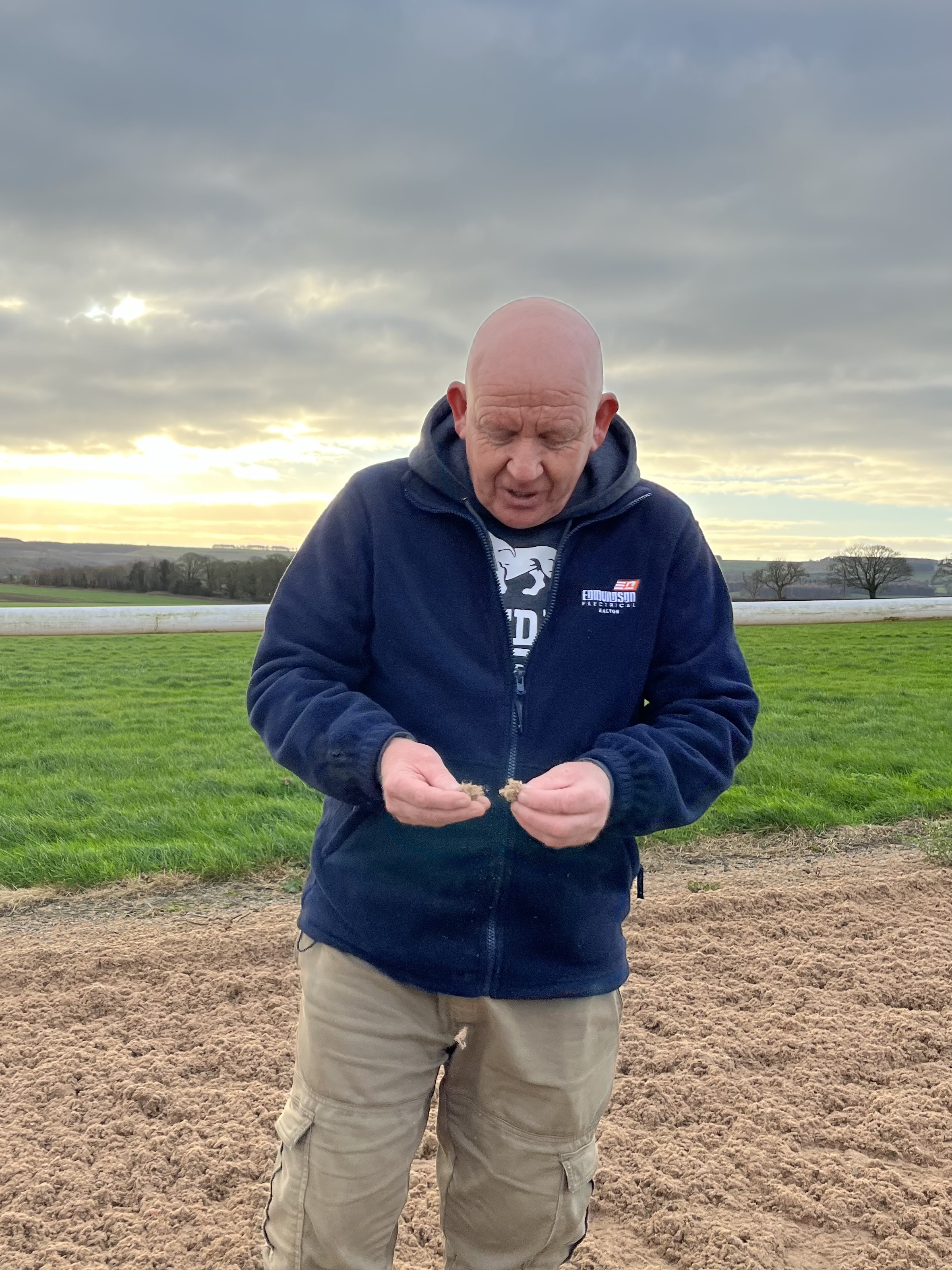
Gallops manager Andy Bennison inspects the quality of the all-weather track surface

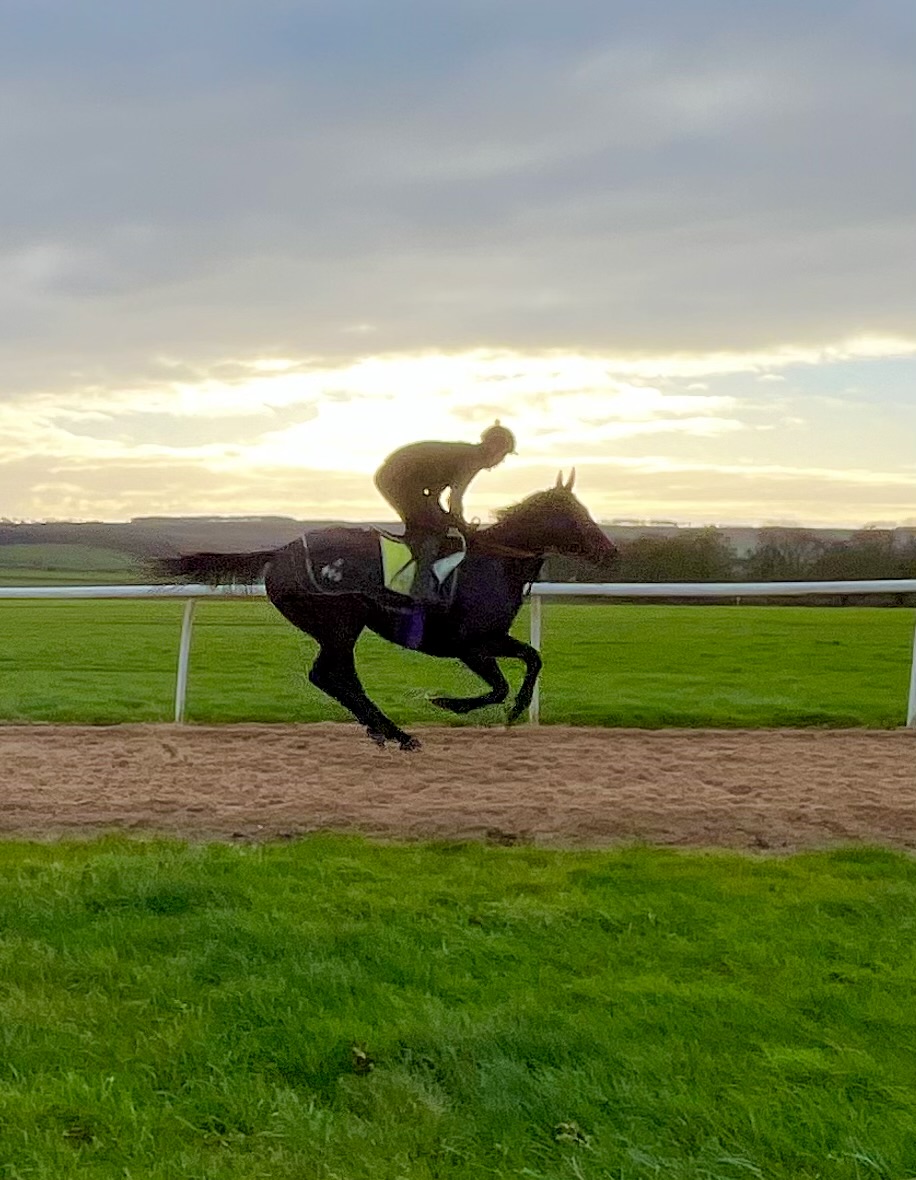
A couple of weeks ago, I had the pleasure of having a tour around Langton Wold Gallops, a facility used by racehorse trainers who come from miles around to use it. Run by manager Andy Bennison, the 200-acre site sits atop a hill on the Langton Road, about three miles south of Malton on the edge of the Yorkshire Wolds.

Andy was asked to help turn the place around by trainers Nigel Tinkler, Brian Ellison and Steve Brown, who as a committee lease the land from the Langton Estate. The gallops were in a bad way, mainly due to lack of funding. Since Andy took over, the committee have invested significantly to create a facility that is unrivalled locally. He has developed six-furlong and 10-furlong all-weather tracks, as well as grass gallops, both on the flat and uphill. There are starting gates to acclimatise young mounts to the sensation of being in the gates, as well fences and hurdles of various widths and heights. Horses who are at the start of their training journey have a special enclosed narrow strip of track with a few hurdles which encourages them to jump the obstacles in front of them rather than run around them.

We joined Andy at 9am, but he had already been there for several hours as patrons had been arriving since daybreak. Trailers queued up for their turn and some had travelled from as far away as Darlington for a chance to train on the best ground available. Andy explained how much works goes in to maintaining it, and it is evident that he is passionate, and deservedly proud, about what he does. In the summer, the grass grows so quickly that as soon as he finishes cutting, he has to start at the beginning all over again ‘like the Forth Road Bridge’ he says. Thankfully he has the help of his young assistant Tom, and it is clear that they are both supremely dedicated to what they do, demonstrated by the fact that if it snows overnight, they sleep on-site, each taking two-hour shifts to constantly clear the tracks so that everything is ready for when the jockeys start arriving the following morning. It’s the kind of commitment that is born out of love for the job.

Malton has been associated with horse racing for centuries, with meetings recorded as far back as 1686, although they likely occurred even before then. Under Puritan ruler Oliver Cromwell, the belief had been that the harder you worked, the closer you were to God. Anything deemed fun would lead you to the Devil and thus all sport and entertainment, such as horse racing and gambling, had been banned. But by the mid-1650s, the population had grown tired of Crowell’s strict rules, and by his death in 1658, he was a figure of hate. The monarchy was restored under Charles II in 1660 and, liberated from the shackles of Puritanism, the ‘sport of kings’ boomed.

By 1692, the official Malton Racecourse was on common land just across the road from the current Langton Wold Gallops, and trainers and horse breeders began to congregate around the town, sealing its reputation as a hub of the sport. Owners and enthusiasts descended from all over the country and hotels like the Talbot Inn were bursting at the seams with the racing elite. Such was Langton Wold’s reputation that in 1747, King George III offered 100 guineas in prize money, around. £20,000 today.

The town’s racing scene peaked in the mid-1800s, and more visitors than ever were arriving, thanks to the extension of the railway network. But disaster struck in 1862. To the horror of the racing community, the beloved Langton Wold track was ploughed up after it was sold to a private buyer under the Enclosure Acts, a series of Acts of Parliament between 1604 and 1914 that chopped up and enclosed vast swathes of common land. Racing in Malton never properly recovered, even though a track was briefly set up at Orchard Fields (1867-1870) then later at HighField House (1882-1903).

Although the town has not seen racing for more than 100 years, it is still home to several successful yards and studs. And with its prestigious history in mind, it is a joy to see the name of Langton Wold thriving once again under the expert stewardship of Andy Bennison.

Contact me via my webpage at countrymansdaughter.com. Follow me on Twitter @countrymansdaug.

This column appeared in the Darlington & Stockton Times on Friday 15th and the Ryedale Gazette and Herald on Wednesday 13th December 2023.

Giving us an earful

IMG_0603
My brother Andrew and I in our ‘posh’ lounge celebrating his 18th birthday in 1980. We were allowed in the room on special occasions, or sometimes to play our records too loudly on the radiogram.

When I sit down to write these columns, I often don’t know what I’m going to write about, and occasionally still turn to my Dad’s archive to inspire me. This week, I’m sitting here in a state of indecision as I’m finding it difficult to choose a topic from one of his columns that I dug out from 1976 in which he writes about various things, including the month of November, noise, magpies, sweet chestnuts, and an old dialect poem. And each little section is fascinating, but I only have enough space to consider one of them. Which one would you choose? And which do you think I will? Read on…

Dad was a countryman through and through and was never more content than when he was sitting in his conservatory with my mum, taking his morning break from writing, chatting over their coffee while overlooking the gorgeous view of their garden and the peaceful valley beyond. The thought of living in a bustling noisy town had always made him shudder, as this 1976 extract reveals: ‘Modern society has produced many more sounds, some of a very aggravating nature.’

He adds: ‘Modern disco dances thrive on brilliant moving lights and outrageous noise, so harmful to the youngsters’ eardrums, and teenagers turn up the volume on their TV sets or record players to a level far higher than necessary.’

Despite these words, Dad was pretty tolerant of the youngsters playing music in his own home. In our ‘posh’ lounge (which was used on special occasions, or when people we wanted to impress visited) we had a mahogany-veneer radiogram. It was roughly the size of a semi-detached house and now and then we’d be allowed in the room to play our vinyl records. Mum and Dad had bought it in the 1960s, and it was considered very ‘with it’ at the time. I remember that my elder sister had been given a Pinky and Perky record called ‘Celebration Day’ one Christmas. It was bright green, and I know Mum and Dad were thrilled to hear the squeaky tones of those two little pigs drifting through the house singing classics like ‘Donald, Where’s Your Troosers’ and ‘Grandfather’s Clock’ over and over and over and over and over and over and over again. How disappointed they must have been when cassette tapes were invented which meant we could play our music on more portable devices that we kept in our bedrooms with the doors shut (although my brother was soon to become a punk fan, and the floorboards that separated the kitchen from his room above were no match for the Sex Pistols on full blast).

We still have concerns today for our teenagers’ eardrums because almost every one of them listens to content through headphones ALL the time. They don’t seem to be able to walk anywhere, or take any journey, without a mobile device attached to them via wireless earphones, and when they get home, they head to their rooms to continue watching stuff on their PC through another, usually bigger and more powerful, set of headphones. At least we parents don’t have to suffer their dodgy taste in music blaring through the house anymore, but we cannot monitor the volume at which they listen to it. You can’t help but think they must be doing long-term damage to their hearing, but will they take notice of our warnings? Of course they won’t, because since the dawn of time, teenagers have ignored all parental portents of doom concerning their health and well-being. It is one of the more enjoyable aspects of being a teenager.

I used to tell my dad off for having the TV on too loud, and it is ironic though, that these days my children tell me off for having the TV on too loud. I warn them that my worsening hearing is a result of not listening to my parents when I was a teenager. They tell me it’s just because I’m getting old.

Whichever is true (and don’t tell them, but I do think it’s actually more to do with ageing) I look forward to the day when they have their own children who, when they become teenagers, won’t listen to a thing their parents say. And I will knowingly look on with more than a degree of smug satisfaction.

Contact me via my webpage at countrymansdaughter.com. Follow me on Twitter @countrymansdaug.

This column appeared in the Darlington & Stockton Times on Friday 8th and the Ryedale Gazette and Herald on Wednesday 6th December 2023.

Defoe-ing the odds

IMG_1449
Recent storms have been battering the towns and villages along the east coast, including Runswick Bay, seen here (Picture by Alastair Smith)


As we wish November goodbye, we are well into storm season which started in this part of the world on September 1st. At the time of writing, we have had four so far, starting with Agnes in late September, followed by Babet in mid-late October, then Ciarán in early November, and most recently Debi in mid-November.

The part of the world where a storm originates is the one which has the privilege of naming it and in the US, they have been doing that since the 1950s. Our storms have only been given names since 2015, the idea being to raise awareness of their impending arrival, making it easier for us to be prepared. Originally, the Met Office asked the public for suggestions but now, more often than not, it is the various weather services that choose. Here in the UK, the Met Office collaborates with the Irish weather service, Met Éireann, and the Dutch KMNI agency to come up with them. Norway, Sweden and Denmark collaborate in a separate north European group, while southern countries such as Portugal, Spain and France, join forces to name storms originating there.

Records of storms began in 1766, but it is one that occurred before that in November 1703 that has the reputation as the worst this country has ever known. The south coast was the worst hit, and one of the most famous accounts of the disaster was published by Daniel Defoe, who released his book ‘The Storm’ in 1704. Defoe, most famous to us for writing Robinson Crusoe in 1719, was already well known as a political satirist and commentator. Having lived through the storm, he not only wanted to document it, but was keen to hear the stories of others who had been affected.

He placed an advert in the London Gazette asking for eyewitnesses to get in touch. He had an enthusiastic response, and subsequently included around 60 of the stories in his book, which he describes as follows: ‘A collection of the most remarkable casualties and disasters which happened in the late dreadful tempest both by sea and land.’

The book has since been credited as being the first substantial work of modern journalism, even though it is criticised for sensationalism and exaggeration. But Defoe, just like the tabloid editors of today, understood that attention-grabbing headlines and promises of gory first-hand accounts were what would entice readers to part with their money. ‘No pen could describe it, nor tongue express it, nor thoughts conceive it unless by one in the extremity of it,’ he declared.

When describing coastal towns, such as Portsmouth, after the storm, he says they ‘looked as if the the enemy had sackt them and were most miserably torn to pieces.’ He also describes the lead on the roofs of churches and public buildings being ‘rolled up like a roll of parchment and blown in some places clear off the building.’

Defoe’s enthusiasm for telling the real story coincided with a growth in the public’s appetite for current, up-to-date news, rather than the tedious lengthy ramblings of the partisan editors that they were used to. Although newspapers were being produced a couple of times a week, it was on 11th March 1702 that the first ever daily paper hit the streets. The single-sheet Daily Courant featured two columns of foreign news on the front, with paid advertisements on the back.

The editor, an ‘E.Mallet’, stated that he ‘would not take it upon himself to give any comments or conjectures of his own, but will relate only matter of fact, supposing other people to have sense enough to make reflections for themselves.’ In other words, the paper vowed to be free from bias.

But who was this mysterious ‘E.Mallet’ with such an enlightened, sensible approach to sharing news? It was in fact a woman called Elizabeth Mallet, who hid behind a male persona for fear of ridicule and censorship.

At the bottom of Ludgate Hill in London, just before it turns into Fleet Street, there is a blue plaque fixed to a wall which states: ‘In a house near this site was published in 1702 The Daily Courant First London Daily Newspaper’.

Isn’t it about time that Elizabeth Mallet, a clearly enterprising woman way ahead of her time, had her name added to that plaque, or indeed, a plaque all of her own?

Contact me via my webpage at countrymansdaughter.com. Follow me on Twitter @countrymansdaug.

This column appeared in the Darlington & Stockton Times on Friday 1st Dec and the Ryedale Gazette and Herald on Wednesday 29th November 2023.

Beside myself at the seaside

IMG_9910
Will beautiful coastal towns like Scarborough rediscover the status and glory they once enjoyed?

When I visited Scarborough a few weeks ago, I was struck by the size and grandeur of the buildings lining The Esplanade, the main seafront road that spans the South Cliff where I was staying. The properties have spectacular views out to sea and as with most resort towns, some of the houses were well looked after, while others were in need of a fair bit of TLC.

Scarbrough is said to be Britain’s first proper seaside resort, thanks to a woman called Thomasin Farrer who in 1626 discovered a mineral-laden spring trickling down the South Cliff. In 1660, a book written by Dr Robert Wittie extolling the health-giving virtues of this spring led to an influx of people seeking cures for their various ailments. This in turn led to the first ‘Spaw House’, built in the early 1700s on the site of the current Scarborough Spa building, and soon wealthy families from as far away as London were travelling up north to take in the sea air, bathe, and benefit from the medicinal properties of this now famous spring water. Scarbrough became a very fashionable place to be seen and was one of the first to use bathing machines, mini beach huts on wheels that could be rolled into the sea so that the modesty of the well-to-do swimmers could be preserved as they entered the water.

When I trained as a journalist in the early 1990s, I was sent to the south coast town of Hastings in East Sussex on a six-month residential training course. My trip to Scarbrough reminded me of my time there, both towns having that air of shabby elegance about them. I knew nothing about Hastings back then, except that the famous Battle of 1066 was named after it.

I found it unexpectedly beautiful, perched on the edge of the English Channel with glorious ocean views from the wide boulevard that spanned the width of the town. And yet, there was an air of abject neglect that hung around the huge and very beautiful Georgian, Victorian and Edwardian buildings, a contrast which was difficult to reconcile in my young head. The term ‘faded grandeur’ could not have been more apt, and I was genuinely saddened to see these beautiful pieces of architecture lapsing into dereliction.

You could tell that this was once a most fashionable seaside destination. It was the Napoleonic Wars (1803-1815) that were instrumental in bringing to an end the tradition of the ‘Grand Tour’, a ‘coming of age’ trip made by English society’s affluent youth who travelled down through Europe and into Italy. This, along with the expansion of the steam railway network, meant that these bright young things searching for fashionable destinations in which to be seen landed in coastal resorts like Hastings. Hastings, which had been a small fishing town until the early 1800s, expanded rapidly, and imposing town houses, along with assembly rooms, dance halls, coffee shops, shopping arcades, theatres and recreation parks began to be built to cater for this influx of the rich and influential, whose bathing machines began lining up on the beach.

The resort thrived until well into the 20th century, and one of the most striking buildings is where we had our training school, Marine Court, otherwise known as The Ship due to the fact its Art Deco design was based on the recently launched Cunard liner, the Queen Mary. The white building, which at the time of opening in 1938 was the largest residential apartment block in the country, can be seen for miles around, and now, like more than 500 other buildings in Hastings, has Grade II listed status. Our digs were round the corner in Warrior Square, a beautiful green park surrounded on all sides by Georgian and Victorian town houses, most of which were badly run down.

The demise of these once splendid resorts is attributed in the most part to the rise of affordable foreign travel. I haven’t been back to Hastings for years, but a quick look via the trickery that is Street View on Googles Maps shows that most of the buildings are in a much better condition than when I was there. There is evidence of scaffolding on many, suggesting they are being regenerated, which must be a good sign. Will these beautiful coastal towns rediscover the glory and status they once enjoyed?

Contact me via my webpage at countrymansdaughter.com. Follow me on Twitter @countrymansdaug.

This column appeared in the Darlington & Stockton Times on Friday 24th and the Ryedale Gazette and Herald on Wednesday 22nd November 2023.

Never cheesed off in the Dales

On a recent trip to the Dales with a couple of cheese-mad friends, I went to the Wensleydale Creamery, home of the most famous of Yorkshire cheeses.

I found the whole visit fascinating, learning about the process of cheese-making from a very entertaining chap who made a 500g truckle in front of us during his 20-minute talk. Afterwards, we were able to sample the dozens of varieties, all of which were delicious, and if that wasn’t enough, we then sat down in the café to order from a cheese-themed menu. For anyone with an aversion to cheese a place like this must be hell on earth.

The skill of cheese-making goes back thousands of years, and the very first version of what we now know as Wensleydale was produced in around 1150 using ewe’s milk, the recipe having been brought over by Cistercian monks from the Roquefort region of France. They established themselves at a place called Fors on the banks of the River Ure, about four miles east of the current creamery at Hawes (which has existed since 1897). I couldn’t find it on any map, no doubt because mine are not detailed enough, but after several crop failures, leading to critically low food and animal-feed supplies, the monks were forced to move. A patron offered them better-quality land 16 miles away at East Witton, and it was there that the abbey of Jervaulx was established.

The abbey and its unique dairy product thrived for 400 years until it was destroyed in 1537, victim of Henry VIII’s campaign to wipe out the Catholic faith during the dissolution of the monasteries. But the might of the king was not sufficient to obliterate the Dales’ most precious cheese recipe. The fleeing monks had entrusted it into the care of local farmers whose wives then began to make it. By then, they were using mainly cow’s milk with a drop of ewe’s milk to give it its signature taste, and it is them that we need to thank for preserving and perpetuating the ingredients and techniques that were the foundations of the Wensleydale Cheese we currently enjoy.

The first cheese produced by the monks was not the pure creamy white variety so loved by Wallace and Gromit, but a blue-veined Roquefort-style version. It was only once a commercial creamery was established in 1897 that a more refined and standardised version using cow’s milk began to be produced thanks to a chap called Edward Chapman who set up ‘The Old Dairy’ in Hawes, sourcing the purest and best cows’ milk from local farms. He began to produce on a large scale, ensuring consistency in size, shape, quality and taste. 

The origins of cheese lie much further back in history, and although it is generally accepted that it was around 7,000BC in the Middle East that this wonderful and versatile foodstuff was first produced, how it was discovered is still unclear. Like many amazing inventions, most versions agree that it was a happy accident. One suggestion is that it was discovered because milk was stored in containers made from the stomach of animals such as sheep and goats. These stomachs contained the enzyme rennet, which is essential in the production of cheese because it causes milk to separate into Little Miss Muffet’s favourite meal – cottage-cheese like curds, and translucent liquid whey.

Another theory is that milk was stored in terracotta pots, which were only recent inventions themselves, and this combined with the Middle Eastern hot climate led the cheese to coagulate. Other ancient preservatives included salt and acidic fruit juices, both of which could cause milk to curdle in the right conditions. Perhaps all of these theories are right! 

The art of cheese-making spread across the Near East and Europe, with murals from 4,000BC Egyptian tombs showing the practice. In Homer’s epic 8th century BC poem, The Odyssey, the one-eyed giant Polyphemus (otherwise known as Cyclops) made his own cheese by pouring curdled milk into baskets which drained off the whey, much in the way Greek Feta is made now. Feta is very salty, so perhaps that is the explanation of how the Greeks came to discover how to make cheese. The clever Romans developed techniques for making harder varieties of cheese that were longer lasting, easier to transport and therefore easier to trade.

And cheese fans across the globe have never looked back.

Contact me via my webpage at countrymansdaughter.com. Follow me on Twitter @countrymansdaug.

This column appeared in the Darlington & Stockton Times on Friday 17th and the Ryedale Gazette and Herald on Wednesday 15th November 2023.

Babet’s seaside frenzy

IMG_9812
Evidence of Storm Babet’s displeasure could be seen all over Scarborough the next day.

IMG_9750
There are hundreds of memorial benches along Scarborough’s seafront.

I was fortunate a few weekends ago to spend a couple of days in a friend’s flat on the Esplanade in Scarborough which overlooks the South Bay, just above Scarborough Spa. Unfortunately, it happened to coincide with the weekend that Storm Babet decided to visit too.

The reason for my trip was to go and see a long-awaited concert at the Spa. My friend and I had planned a gentle afternoon walk on the beach followed by fish and chips overlooking the ocean view before heading to the show.

Well, very grumpy Babet had other ideas, didn’t she, descending on the town and causing absolute mayhem wherever she went. She whipped the sea into a boiling frenzy, sending huge waves crashing over the wall in front of the Spa, battering the building and flooding the car park. The concert was cancelled.

Obviously, we also abandoned the beach walk, but were determined to have our fish and chips. We headed out, opting to take the car as the shop was a fair bit away, and by then, Babet was at the peak of her incandescent rage. Away from the sea front, we were protected somewhat by the buildings, but as we turned the corner back on to the Esplanade, Babet powered up her giant wind machine and pointed it right at us. We had to park quite a way from the flat, and it was a battle to stay upright when we got out of the car. I hung on to my friend for dear life for fear of literally being swept off my feet. I don’t think I have ever felt wind like it, and the deafening roar of the sea just below us made any kind of conversation impossible. Once we’d battled our way back inside, we felt like we’d just survived a polar expedition. It meant we enjoyed our fish and chips even more from the safety of our warm and cosy cocoon as we listened to furious Babet battering the windows and brawling along the sea front.

By the next morning, Babet had grown bored with Scarborough and moved on, but had left plenty of evidence of her displeasure, with dozens of broken branches littering paths and a trail of sandy scum along the seafront roads. She’d even tossed a van onto its side on Marine Drive. I was glad to see the back of her.

I took a walk around the Spa gardens, determined to get some sea air into my lungs and grateful that the wind and rain had subsided. What struck me most on my ramble was just how many memorial benches there are. It is understandable that this stirring view out to the North Sea is a favourite for many, as it is undeniably beautiful, and seeing the rows and rows of benches, each with their own little memorial plaque and moving personal dedication to whomever had passed away, made me feel just a wee bit sad for those left behind. But when we lose a loved one, we all appreciate a special place go to remember them, and a bench is a fitting way to do it, especially when it is placed in a favourite spot.

My dad was not a big fan of such benches though because, although he acknowledged it was a lovely idea, he declared that it might not occur to people that the bench would need to be maintained and kept sound, especially if it is in a popular public place. Who would repaint it when needed and who would pay for its ongoing maintenance in the years to come? He had seen too many neglected benches that had fallen into disrepair and gone rotten.

Scarborough Borough Council, however, have already solved that problem, and have a system in place where you can order a bench with a plaque which they will install, and part of the cost goes towards future maintenance. No doubt they receive so many requests that establishing a formal system was inevitable.

Another favourite spot for memorial benches is undoubtedly Sutton Bank near Thirsk, arguably one of the finest views in England. It is one of my all-time favourite places, as it was for my late sister, Tricia, who requested that some of her ashes be scattered there.

We haven’t gone as far as buying her a bench though. I’m not sure Dad would have approved.

Read more at countrymansdaughter.com. Follow me on Twitter @countrymansdaug

This column appeared in the Darlington & Stockton Times on Friday 10th and the Ryedale Gazette and Herald on Wednesday 8th November 2023.

Do you hike, or saunter?

IMG_1369
John Muir (1838-1914) was the founder of the modern conservation movement 
IMG_9594
Whether it was a saunter or a hike up Wansfell Pike in the Lake District, the views from the top were worth the climb


Some of you might recall that during the first lockdown in 2020, I set up a Facebook group called ‘Picture That Walk’ where people could dump all those photos they were taking while they ambled about their local area on their permitted daily hour of exercise.

The group now has around 1500 members who continue to share their lovely pictures from all over the world. A regular topic of conversation is the various terms we use to describe a walk. For example, we have had bimble, potter, meander, stroll, ramble, amble and mosey to name just a few.

It was a member of the group who gave me the inspiration for this column after she posted a quote from the legendary John Muir (1838 – 1914) regarding the word ‘saunter’. Muir was objecting to ‘hikes’.

“Do you know the origin of that word ‘saunter?’” he says. “It’s a beautiful word. Away back in the Middle Ages people used to go on pilgrimages to the Holy Land, and when people in the villages through which they passed asked where they were going, they would reply, ‘A la sainte terre,’ ‘To the Holy Land.’ And so they became known as sainte-terre-ers or saunterers. Now these mountains are our Holy Land, and we ought to saunter through them reverently, not ‘hike’ through them.”

Muir was a Scottish-born mountaineer who was passionate about nature and the founder of the modern conservation movement. He was an active campaigner for the preservation of our wild places and wrote extensively about the physical and emotional benefits of immersing oneself in the countryside. His ideas were radical for the time and were based around the premise that the earth was not to be used simply as a resource for humankind but should be looked after, enjoyed and preserved in all its glory. He was instrumental in coming up with concept of national parks, his first being Yosemite in California (Muir’s family had moved to the USA when he was 11).

If you search for his name online and look up some of his more famous quotes, you will find that his words on nature are quite beautiful despite him declaring he wasn’t a particularly good writer. One that struck me was this one, encouraging people to get outside:

“Nature’s peace will flow into you as sunshine flows into trees. The winds will blow their own freshness into you and the storms their energy, while cares will drop off like autumn leaves.”

How lovely is that?

This weekend, I was party to quite a debate about the difference between a walk and a hike. I was spending the weekend in the beautiful Lake District for the ‘hen’ celebrations of my niece, who is due to get married this month. It was superbly organised by her sisters and mum, and on the itinerary for Saturday morning was a walk. ‘It won’t be too intense, don’t worry,’ we were told. It must be noted here that my niece is super fit, and recently completed the Yorkshire Three Peaks Challenge where she climbed Pen-Y-Ghent (2277 ft), Whernside (2415 ft) and Ingleborough (2372 ft) in one day.

Bearing in mind we’d had a rather heavy night the night before, many of the 17-strong-party were slightly jaded on Saturday morning, and the weather was cold, windy and rainy. You can imagine how delighted we were to discover that this ‘not too intense’ walk was a three-and-a-half-hour circuit starting at Troutbeck and climbing up and over the not inconsiderable 1600-foot Wansfell Pike.

There were a fair few mutterings about the description of this as a ‘walk’, when for some it was most definitely a hike. Despite the grumbles, the groans, the breathlessness, the cold, the wet, and the general pain, once we’d struggled to the top of the fell, we were handsomely rewarded. The views of Lake Windermere, Ambleside and the mountains beyond were absolutely stunning. By the time we got to the end a couple of hours later, the sun had come out, our hangovers had gone, our grumbles had stopped, and we were ready for a good old pub lunch.

I must confess, on the way up Wansfell Pike, I was definitely in ‘hike’ territory. But once I got to the top, and took in the fantastic view, I took a deep breath and gave the landscape the due reverence that John Muir declared it deserved.

Read more at countrymansdaughter.com. Follow me on Twitter @countrymansdaug.

This column appeared in the Darlington & Stockton Times on Friday 3rd and the Ryedale Gazette and Herald on Wednesday 1st November 2023.

Sisters doing it for themselves

1F0CD95F-1C5F-47C6-950D-7A5868A5A06E
Minnie and Fanny Benson at their garage in Ampleforth

0C2D602A-1943-4EBC-A9F3-67F47403E76A

I was delighted to be contacted by reader Sallie Halkon who got in touch after reading my column that mentioned the twins Minnie and Fanny Benson, who were notable and well-loved characters from my home village.

Sallie recalls: “We used to get punctures repaired by Fanny. According to my mother (Eileen Kirk) their father wanted a boy but obviously got two daughters but brought them up like boys.”

Indeed, the sisters dressed in what I can only describe as a rather androgynous way, and when I was extremely young, I thought they were both men. It didn’t occur to me that their names were feminine, and Minnie usually wore a skirt, although with thick woolly stockings, woolly hat and boots underneath a heavy coat. Fanny’s usual attire was a well-worn boiler suit, sturdy boots, thick coat, and often a woolly hat too. Their faces were like those of moorland farmers, weathered and lined through years of spending almost every waking hour outdoors. They could have walked straight off the set of Heartbeat and would have looked very much at home in Bernie Scripps’ garage or Claude Jeremiah Greengrass’ rag n’ bone smallholding.

Sallie also recalls: “They had cats as well as dogs. They got a lot of them from us as our cat regularly had a litter. I remember once we had a sweet kitten we wanted to keep but Mum had promised it to Minnie. So we took it up to the garage, showing it the path all the way, lo and behold it came back!”

As well as selling petrol and offering bike repairs, the sisters also sold oil, Calor gas, eggs from their own chickens, vegetables from their garden, plus logs and kindling they chopped themselves. They delivered newspapers, a huge job because in those pre-online days, nearly every household would have a newspaper posted through the letterbox each day, plus weekly or monthly magazines. I remember that they had a hayloft, which has now been converted into a house. In there were piles and piles of newspapers and magazines wrapped up in neat bales tied with twine. They would let me go and root around to find copies of comics that I didn’t have, such as the Dandy, the Beezer and Whizzer and Chips (I was lucky to have the Beano delivered each week). If I am right, I believe that villagers would take their old newspapers to Minnie and Fanny who would arrange for them to be collected and recycled (for which I presume they received a modest payment).

And that’s not all they did, as Sallie recalls: “I think Fanny was for a short time a church warden at St Hilda’s and she definitely used to ring the bell for church on Sunday.” Fanny also drove the school bus and offered a taxi service. They were veritable Jills-of-all-trades.

The sisters were notoriously trusting when it came to money and were taken advantage of more than once by some unscrupulous customers who paid with dodgy bank notes. Sallie recalls: “Mum used to do their banking when they were older, and it never added up. She used to dread telling them.”

As I mentioned last time, they had a succession of border collies, all named Lassie, and Sallie remembers Minnie’s very last one: “It was red and white and had not been handled much so a bit wild. She spent a lot of time gaining its trust and told mum how well it was doing.” This dog was by her side all the time and was allowed to sleep with Minnie on her small single bed, even when it was wet. It was around this time that Minnie developed a bad chill which sadly led to pneumonia and ultimately her death at the age of 74 in August 1998. Fanny missed her twin dreadfully. She died five years later in June 2003 and the sisters are buried together in the local graveyard.

My column about ‘super-sleuth mums’ was very familiar to reader Clare Proctor who said: “When my girls were small they would be in awe of how I seemed to know every little thing they did (even at school). I would use a phrase my sister taught me: ‘I am the All-Seeing, All-Knowing Mummy’! They were not to know that often my info came from a teacher or another parent. Also, the clues they leave…”

Read more at countrymansdaughter.com. Follow me on Twitter @countrymansdaug.

This column appeared in the Darlington & Stockton Times on Friday 27th and the Ryedale Gazette and Herald on Wednesday 25th October 2023.