A doze of the flew


Lemsip is helping me keep on top of my symptoms of the flue flew FLU!


When I took over writing this weekly column from my dad in 2017, I was aware that it came with a number of burdens. Firstly, to step into my dad’s shoes, which are substantial, secondly, to do that every single week for 52 weeks a year, and thirdly, to keep coming up with interesting stuff to write about.


Fulfilling those requirements becomes even more difficult when you are feeling below par. As I write this, I am laid low with my third fluey bug in as many months. The first was definitely the worst, with me confined to bed for three full days, unable to do much more than make a cup of tea without feeling like I’d just run a marathon. The second was similar, but I was confined to bed for just the one day. This time, I don’t think it is as bad, but I have been full of cold and sneezing for several days now, yet still able to carry on as normal. I went to bed last night thinking that by today (day 4) I would be beginning to get better, only to find I woke up feeling like a limp dishrag. Motivation and inspiration are staying well away, clearly afraid of the germs lingering in the air.

It is at times like these when I am more grateful than usual for readers getting in touch with their own stories and comments because it means I can shamelessly use what they send me to fill column inches.

This week it is Albert Elliot from Castleton who, in my time of need, has come galloping to my rescue. He writes: “I was amused to read (last year!) the comments in your article in December on spelling mistakes. I wondered if you had ever seen this piece of doggerel that I picked up somewhere many years ago (see below)?

“In the early days of computers, before predictive text, spellcheckers were used, or so I understand (I am not particularly computer literate). I think it quite amusing. I still struggle with correct spelling myself and often make blunders, although I don’t like predictive text systems as they ‘jump the gun’ and get in the way! As far as I know the piece is by that famous author called ‘Anon’.”

This is the poem that Albert sent me, and it did make me chuckle because it is very clever and takes me back to the early days of PCs and Microsoft Word. Ahh things were so much simpler then (were they?).

Spell-cheque

I halve a spelling chequer

It came with my pea sea

It plainly marques four my revue

Miss steaks I do knot sea


Eye strike a quay and type a word

And weight four it too say

Weather eye I am write or wrong

It shows me strait a weigh


As soon as a missed ache is maid

It nose bee fore two long

And eye can putt the error rite

It’s rare lea ever wrong


Eye have run this poem threw it

I am shore your pleased two no

The spelling’s perfect awl the weigh

My chequer tolled me sew!

As this poem demonstrates, and as those who have been caught out more recently by Autocorrect understand, it is never a good idea to rely on technology to do work you really ought to do yourself – that is to check your copy and messages before you send them to anyone else. Otherwise it could be very embarrassing indeed.

Albert also recalled a time when he met my dad: “Your father, Peter Walker, kindly came along to my writers’ group (the Egton Bridge Writers Group – still in full vigour and of which I remain a member) and gave us an interesting talk on himself and his writing career…Although this was a long time ago, I remember the talk was fascinating and thoroughly enjoyed by the whole group. He has left a lasting legacy with his Heartbeat stories and other Yorkshire writings.”

I never tire of hearing about tales involving my dad, many of which I would never know if people didn’t get in touch.

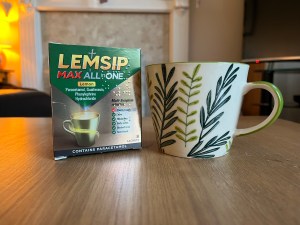
So very many thanks to Albert, and on that note, I’m off back to bed with a Lemsip. Normal service will, I hope, resume next week.

Do you have opinions, memories or ideas to share with me? Get in touch with me via the ‘Contact’ tab at the top right of this page.

This column appeared in the Darlington & Stockton Times on Friday 24th Jan and the Ryedale Gazette and Herald on Wednesday 22nd Jan 2025

Is the truth in the post?

5ABA3BF6-2E79-4EE0-A4A6-D364A24A8117
Dad continued to research witch posts and their connection to the martyr Father Nicholas Postgate right up until his death in 2017.

Happy New Year and welcome to 2023! I do hope you’ve had a wonderful time over the holiday season. For us, the festive period is always a time of joy alongside reflection, when we think of our lost loved ones who are not here to share it with us, and about other people who suffer loss and illness around this time of year.

If you’ve read any of my dad Peter Walker’s writing, either through his books or columns, you’ll know how proud he was of his home county and he would agree with a commentator I heard saying: “Of all the regions of our great country, Yorkshire seems to pride itself on taking most pride in itself.”

Dad grew up in Glaisdale, a small village in the heart of the North York Moors, and in a 1979 article I found in his study at my mum’s house, he tells us how lucky he was to have a childhood which allowed him to freely roam the rural landscape. He writes: “Remote and beautiful, it boasts several isolated farmsteads and I used to visit friends there, living in solitary splendour and away from the bustle of life in the towns.”

These ancient farmhouses were very sturdily built and Dad found their interiors fascinating, particularly the huge inglenook fireplaces. At least two that he visited had carvings on the wooden posts supporting the smoke hoods of these fires. The posts were known as ‘witch posts’ and they sparked in Dad an interest that lasted right up until his death in 2017. In his later years, it became a real quest to find out more about the stories behind them. What he discovered went against many long-held beliefs but Dad was convinced his research proved him right.

Originally it was thought that these carvings were intended to ward off evil spirits and witches, hence the name. They were usually crosses, some simple, while others were more complicated, with the cross forming the centre and elaborate carvings surrounding it. But over the years, Dad came to believe they were in fact associated with the legendary Martyr of the Moors, Father Nicholas Postgate.

Postgate carried out his ministry in the 1600s at a time when Catholics were being persecuted by the state, and to be caught practicing mass was considered a treasonable offence. Therefore many Catholic priests went underground, and, like Postgate himself, often hid in open sight by being ‘employed’ by wealthy landowners as servants and gardeners. Although these landowners outwardly appeared to support the Church of England, in fact they still secretly practised Catholicism thanks to brave priests like Fr Postgate.

Moorland locals devised cunning ways of letting fellow Catholics know where mass was being celebrated, such as hanging out a certain number of items on a washing line near the home in question. Unfortunately, Postgate was eventually caught baptising a child and was executed in York in 1679. In 1987, his sacrifice was recognised by Pope John Paul II, who beatified him alongside 84 other Catholic martyrs from England and Wales.

During his quest to find out more about Postgate, Dad discovered that witch posts bearing these cross symbols only proliferated during the time of the martyr, and only in areas where he is thought to have visited, which is the main reason why he believed they were connected to Postgate. Their purpose, he suggested, was to secretly indicate to fellow Catholics that they were in a safe house. It is possible that the association with evil spirits and witches was a deliberate ploy by Catholics to spread misinformation so that the true meaning behind the symbols would not be discovered. One of these posts can be seen in the Ryedale Folk Museum in Hutton-le-Hole today.

Dad was finally able to publish his theories in his book ‘Blessed Nicholas Postgate, Martyr of the Moors’, a comprehensive biography of the holy man. As I was researching this piece, I came across a Yorkshire Post interview he did in 2012 and what I didn’t know was that his diagnosis of prostate cancer in 2007 was what inspired him to finally write the book.

“It’s a story I feel very strongly about and thought I should get on with the book before I died,” he said.

I wonder if anyone reading this knows where any more witch posts can be found?

Read more at countrymansdaughter.com. Follow me on Twitter @countrymansdaug

This column appeared in the Darlington and Stockton Times on 6th and Ryedale Gazette and Herald on 4th January 2023