Ploughing through time

IMG_7496
The three strips of darker green in the middle of this picture are evidence of the ancient ploughing method, ridge and furrow

I was visiting a house for work recently, listening to my colleague talk about the field over the road which offered a tranquil countryside view from the back garden. The viewer had asked if there was a possibility that the field would get developed with housing, therefore spoiling the lovely rural outlook.

My colleague informed them that it would be unlikely due to the fact that in the field was evidence of the ancient ‘ridge and furrow’ method of agriculture, and therefore there was a chance that it was classed as a Scheduled Monument by English Heritage. My ears pricked up as the seeds of a column began to form. I had to find out more about this aspect of our agricultural history.

Ridge (or rig) and furrow is an ancient ploughing technique that dates from at least mediaeval times and possibly even earlier. You’ll likely have passed it and perhaps not have known what you were looking at. To spot it, keep an eye out for a grassy field that undulates smoothly at regular intervals, like a giant green corrugated roof. If you find one, you are looking at centuries-old evidence of the hard graft of a farmer who would have had to trudge up and down that field with his plough for hour after hour, year after year, to create the ridge and furrow effect.

In the days before Enclosure (a series of Acts of Parliament starting in the early 17th century that chopped up and enclosed vast swathes of land that used to be common), settlements would grow crops to feed the local population on common land in what was called the ‘open field’ form of agriculture. Villagers would draw lots and be allocated their own strip, or several strips, which they would cultivate using a single-sided ploughshare to carve up the soil ready for planting. Originally pulled by oxen, and later horses, the strip would be ploughed from the outside, and all the soil would be pushed into the centre, creating a ridge which increased the surface area of your plot, which meant you could sow more crops. They had to be canny with what they planted where, and used different types of crop, such as corn and wheat, in the same ridge that would tolerate either wet or dry conditions. The driest soil was obviously at the top of the ridge, and the wetter soil at the bottom, so judicious planting was a must to ensure that whatever the weather threw at you, enough would survive to provide food over the barren winter months. To assist with drainage, ridges were always ploughed in the direction of any slopes, rather than across them, with the furrows helping to drain water away.

Each strip was called a ‘land’ and as a rough guide, lands could be up to 22 yards wide and around 220 yards long, a measurement known as a ‘furlong’ (furrow-long). Some examples look like a rather large ‘S’ shape, and this is evidence that they were created by an ox-led plough, the curve of the ‘S’ being created by the ample space needed when the great beasts had to change direction. The straight examples will have been dug by horse-drawn ploughs.

The ridge and furrow method died out once the double-sided plough was invented, and many of the ridges were dug over or developed upon and have disappeared. However, some were just too large or too difficult to get rid of (reaching heights of up to six feet), which is why they can still be seen undulating like a series of rounded humps beneath the grassy surface of some fields today. These fields may be classed as Scheduled Monuments and protected by law, which means they cannot be removed or developed upon unless permission is granted by English Heritage.

A ‘furrow-long’ was considered the length a horse could plough in one day, or a pair of oxen could plough before they needed to rest and was the chosen method of measuring distance when the sport of horse-racing took off in the 1500s. To this day, furlong markers line British racecourses, and the length of any race shorter than a mile will be described in furlongs, which is an eighth of a mile. Despite suggestions that the system is outdated, there is no indication that our very traditional British racing industry is going to change any time soon.

Read more at countrymansdaughter.com. Follow me on Twitter @countrymansdaug

This column appeared in the Darlington and Stockton Times on 21st  July and Ryedale Gazette and Herald on 19th July 2023
The Mystery of the Disappearing Chestnuts

F9A9518C-92CE-4D9B-9E1C-45A8A175B392
Marmalade the cat


555EB19F-21C0-46F1-B7E0-2A2067E9A7CD
Sweet chestnuts

This column appeared in the Darlington & Stockton Times on 19th January 2018, & the Gazette & Herald on 17th January 2018. 

You may remember that in my column from the Gazette & Herald on 6th September 2017 (‘Dad’s swift actions stop a catastrophe’) and the D&S Times from 8th September 2017 (‘Saved from catastrophe by Dad’s swift action’) that I talked about the various family cats, both tame and feral, that lived in and around my childhood home.

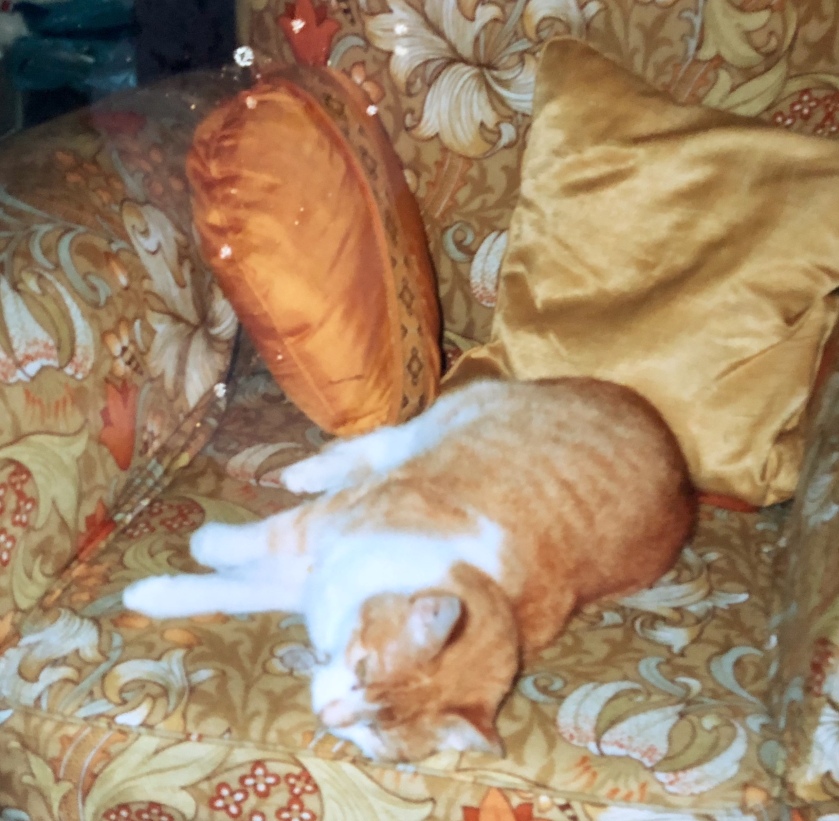
Dad recounts a lovely story about our longest-surviving cat, Marmalade, in his January 21st 1978 column. She had wandered into our garden as a very young stray and never left, becoming a much-loved part of the family. She had come from a nearby farm, but the farmer had no interest in the cats that frequented his hay barn and was more than happy when they took up residence elsewhere.

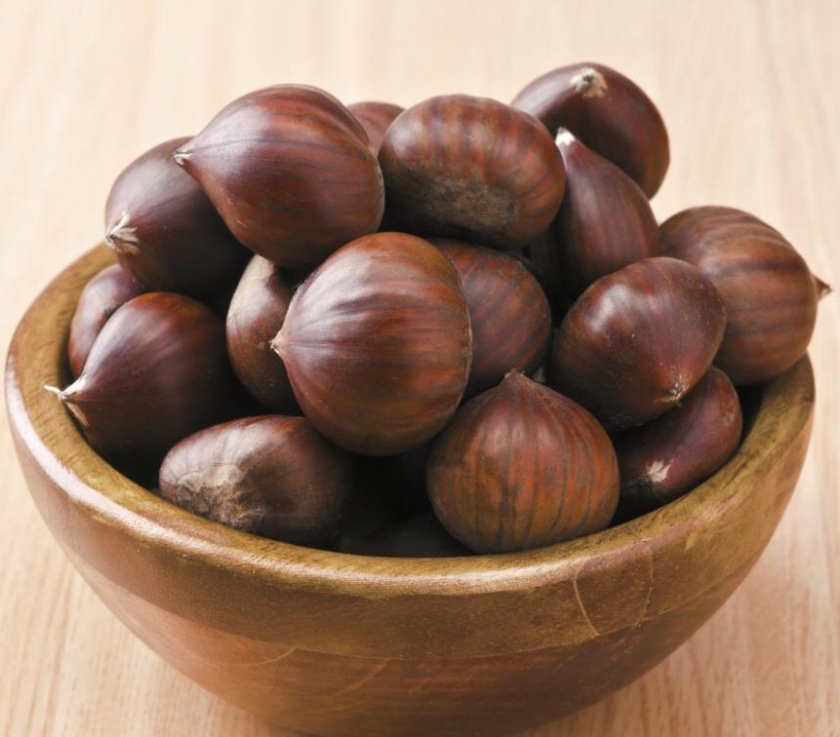
Mum and Dad had been stumped by the mystery of the disappearing chestnuts from the windowsill. What was a full bowl a few days earlier, was now no more than half full, and no-one confessed to having eaten any.

Then one day, Dad saw the cat jump on to the ledge and scoop out a chestnut with her paw, which then fell to the ground. She leapt after it in an uncharacteristically energetic way, and chased it across the floor, flicking it up into the air and batting it from paw to paw, as she would had she caught a mouse. Once the chestnut had disappeared under the furniture, she went back again for another one. What was it about the chestnut that ignited this new obsession? Dad had no idea, and my own searches have shed no light on it.

It brings to mind the effect of catnip, often used to scent pet toys. Catnip is a plant from the nepeta, or catmint, genus in the Lamiaceae family, and there are many varieties. In an article by the appropriately-named Kat Arney on the Royal Society of Chemistry website (www.chemistryworld.com), she explains that catnip contains a chemical called nepetalactone, which in cats induces behaviour similar to a person having taken drugs. They act with languid abandon, brushing their bodies against the leaves or rolling around among the stems. If they chew or eat it, they soon become what one might call ‘out of it’. For us humans, the plant can be infused to make herbal tea, and in times gone by small doses were used as a mild sedative. It is not recommended to be taken in large quantities, even though hopeful hippies gave it a go in search of a cheap high. All they ended up with was a painful headache and an upset stomach.

Catmint is a lovely garden plant, but to avoid delirious kitties flattening your borders, it is recommended that you place a small crop of nepeta cataria, the most potent catnip, in a place where you don’t mind them being mauled by frolicking felines, and then they will ignore the other milder varieties you have planted in pride of place. I have no idea if this distraction tactic works, and would be delighted if any readers can tell me!

After Marmalade arrived, she was soon followed by her sister Eric (my brother chose this name. He was outnumbered by females of both the human and feline variety, which might explain why!).

Eric remained feral, and we could never get close enough to tame her. After she had been with us for about a year, she produced a litter of kittens. We’d known she was pregnant and, due to her sudden change in appearance, that she had given birth, but we couldn’t find her litter anywhere. Then, on Christmas Eve 1977, she produced her own feline nativity scene in a very prominent position near our back door. Of course when we found the kittens, we instantly fell in love, and they were named (again courtesy of my brother) Alfred, Rodney (both girls) and Jackson (a boy).

But Eric would never be able to live indoors, and so Dad found the little family a cosy place in our disused henhouse, ensuring they had plenty of straw to keep them warm. We carried the kittens up to the henhouse ourselves, and lured Eric with some cat food on a spoon. She stayed there for about a week, before bringing her kittens back down to the back door on New Year’s Eve. So we repeated the process again, and this time she stayed. The young kittens thrived, and although they never became household pets, they became very much a part of our family history.