Pondering on the past

3B2F82BC-3419-46EC-8255-B0DE005F2E98_1_105_c
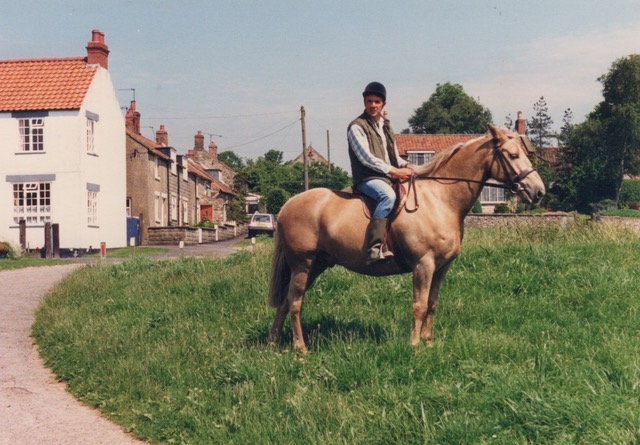
Reader Paul Ireson on one of his horses in Newton-on-Rawcliffe in about 1987. He owned and named Old Pond House which can be seen with the red door near the car behind him. A carved witch post stands still in tact in the sitting room of the house.

Following my columns about festive birthdays, I have been contacted by one of the few people who declares to enjoy them.

Andrea Dandy says: “I was born on Christmas Day in 1941 and have loved every birthday. When I was a child my brother would complain I always got more presents than him. He didn’t realize I never got any presents during the year. When I had three sons, they also always said I got a lot of presents at Christmas. I also have a nephew who was born on my 27th birthday.”

It sounds like Andrea was quite fortunate, with her loved ones making sure she had enough gifts to cover both Christmas and her birthday, contrary to the experiences of other readers who felt hard done by.

I get a bit of a thrill when readers find articles that I wrote a while back and come to me with new information.

Paul Ireson got in touch about a couple of columns I wrote in January 2023 concerning witch posts. If you remember, these carved posts are usually found near fireplaces in very old houses and originally it was thought that the carvings, often featuring crosses, were intended to ward off evil spirits and witches, hence the name. But over the years, my dad came to believe they were in fact associated with the legendary Martyr of the North York Moors, Father Nicholas Postgate, at a time when Catholics were being persecuted. Dad discovered that posts bearing these cross symbols only proliferated during the time of the martyr, and only in areas he is thought to have visited, which is the main reason why he believed they were connected to Postgate. Their purpose, he suggested, was to secretly indicate to fellow Catholics that they were in a safe house. It is possible that the association with witches was a deliberate ploy by Catholics to spread misinformation so that the true meaning behind the symbols would not be discovered. One of these posts can be seen in the Ryedale Folk Museum in Hutton-le-Hole today.

In one of the columns, I mentioned a 17th century cottage called Old Pond House which has a witch post in its living room. Paul revealed: “I bought Old Pond House in Newton-on-Rawcliffe (near Pickering) in 1986 for £38,000 including stables and a three-acre field. We lived there for several years. I had never heard of a witch post and occasionally people would look through the window and enquire about the post. I revisited Newton recently as I now live at Rosedale but didn’t get a chance to visit the house.”

Paul remembered that when he lived in Newton, there was a dairy farm and a post office-cum-shop in the village, but they have been converted into holiday rentals. He added that their house didn’t have a name and they’d wanted to call it ‘Pond House’. Unfortunately, that name had already been taken by a neighbouring property and so, as their cottage was older, they chose ‘Old Pond House’ instead! He said: “The witch post was in original condition and was always a talking point with visitors.

“At the time I was working in a shop and my wife was a receptionist which shows how affordable property was then. Mind you the mortgage rate was about 12%!…We lived there for four years and had two horses…We travelled to York to work every day in an old Volvo estate that did about 20 miles to the gallon. I recall a few bad winters when we would all wait for the snow plough to come up from Pickering before we could get to work.”

It makes me wonder whether people would go to that effort these days. Not only is the road as far as Pickering (where you pick up the main road) single track, and therefore not easy to navigate in wintry conditions, but it is also a good 35 miles into York. I do remember that, living in a village 20 miles from school, we would go to extraordinary lengths to get there, and very rarely did we look out of the window and decide it was too snowy to set out. These days, it seems, a few flakes come down and the whole of Britain grinds to a halt! But then, we were a hardy lot back then, weren’t we.

Or were we just foolhardy?

This column appeared in the Darlington & Stockton Times on Friday 8th March and the Ryedale Gazette and Herald on Wednesday 6th March 2024.

The comfort of strangers

IMG_1556
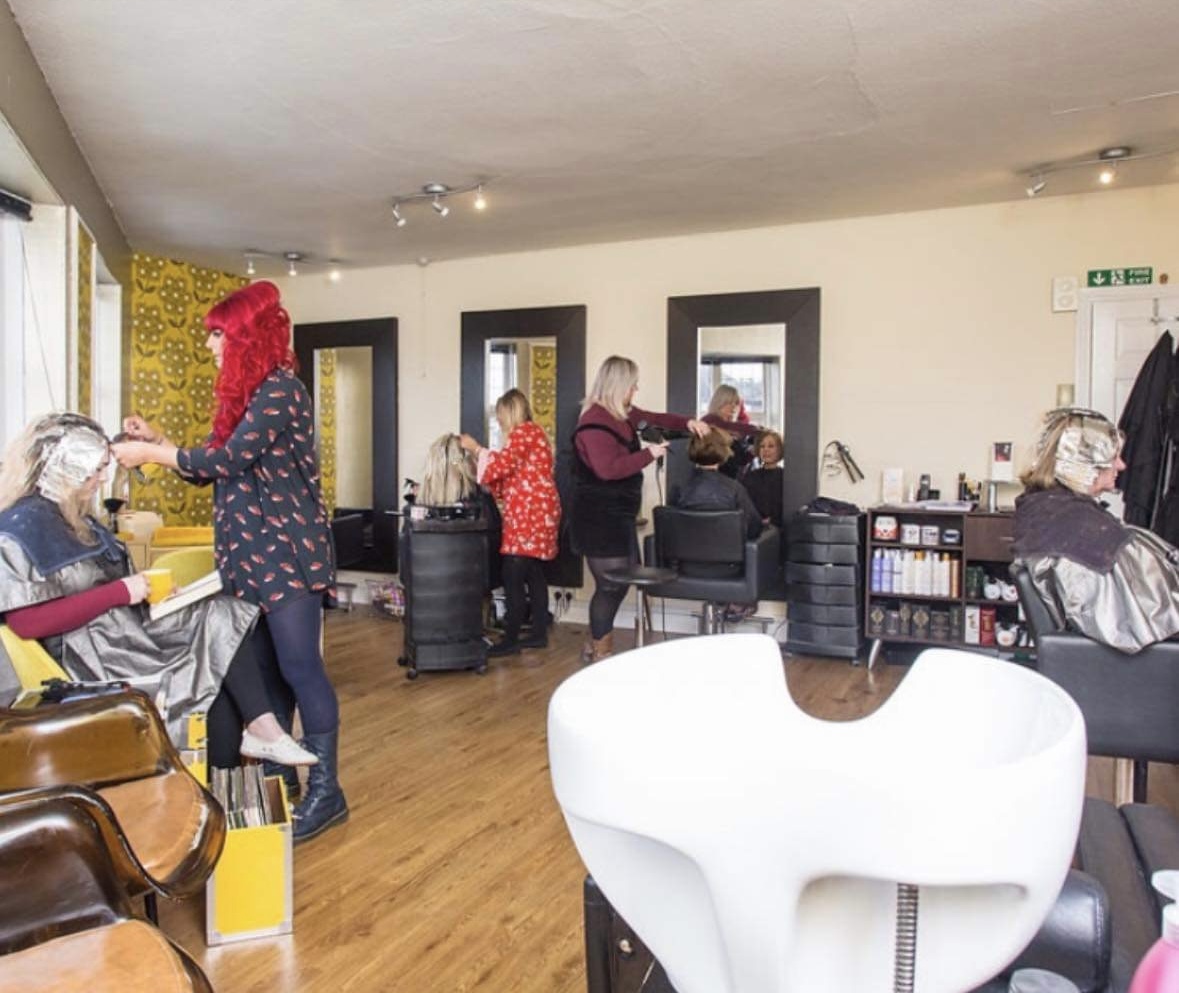
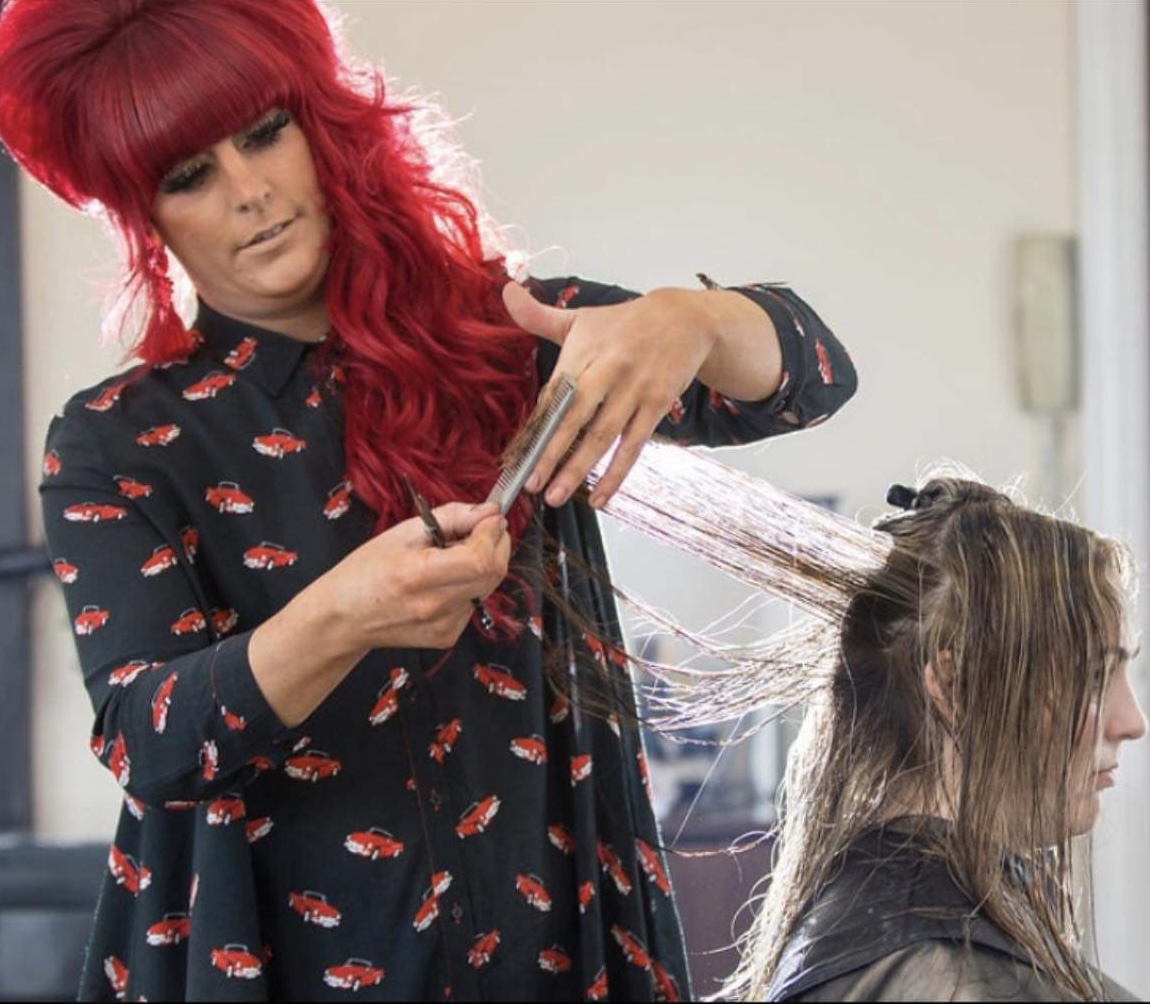
We think of a hair salon as a safe space where we can reveal things we wouldn’t tell our loved ones. Picture courtesy of RocktheBarnet.com.
IMG_1554
What confessions have you revealed while talking to your stylist or beautician? Picture courtesy of RocktheBarnet.com.

I was struck by something a friend said the other day about how we open up to strangers about things we might not mention to our nearest and dearest.

The friend in question was sitting next to a woman on a plane, heading back home to London after going to visit his elderly mother who was very unwell. He had been torn about leaving because he thought it might be the last time he would see her. His mind was working overtime, questioning whether he had made the right decision.

The stranger asked – without malice – why he was going home. My friend then opened up about his dilemma and how he felt that he needed to get home to spend time with his partner so that he could be strong enough to deal with the moment his mum actually died, and the difficult days that would lie ahead.

He says: “I felt like my travel companion was my conscience made real: “Why are you going back to London?” And in talking to her I realised that this was the correct choice. We then spoke about shared experiences in grief and toasted our mothers with champagne.”

It eased his guilt and gave him comfort about his decision. “I actually believe she was heaven sent,” he says.

When I go to get my hair cut, I talk to my stylist about all sorts of stuff that I wouldn’t mention to those I know, liberated in the knowledge that I don’t have to filter what I say to protect other people’s feelings. I’m sure there’s a name for this kind of informal talking therapy and I can imagine the same goes for all kinds of practitioners in the beauty industry.

This week I have had both my nails and my hair done, so mentioned the theme of this column during my appointments. It was universally acknowledged that their salons were safe spaces where people felt at ease sharing their most intimate of thoughts.

They told me tales of women cheating on their husbands and men leaving their wives, alongside other misdemeanours often committed under the influence of alcohol. But the most shocking revelation was shared by an unfortunate bride-to-be. On the night before her wedding, her fiancé asked to meet her saying he had to make a confession before he could marry her. He then admitted that he had slept with another woman. As devastating as that was, though, it was not the worst bit. The worst bit was that the woman he had slept with was her own mother. That is some salon revelation!

On the subject of confessions, we all know that people who have had too much to drink sometimes say things they wouldn’t normally, but what I want to know is, is what they say true, or just nonsense fuelled by the alcohol?

The reason I ask is because a few years ago I went out with someone that I had recently met and didn’t know very well. I’m not sure if it was nerves or the fact that I terrified him, but he was downing glasses of wine very quickly and was soon rather worse for wear. He then started to talk rather too loudly about his ‘fantasies’, and I began to feel distinctly uncomfortable. He leaned in a bit closer and asked if I wanted to know what he most fantasised about. I started to protest, but he was oblivious to my discomfort and would not be stopped.

“I fantasise about driving down a dark country lane. Then, in my headlights I spot a couple walking hand in hand along the road,” he began.

“Oh-oh,” I thought, “I don’t want to hear about his saucy dreams involving other couples.”

He carried on. “Then when they turn around, I see it is my ex-wife and her new boyfriend. So I put my foot down and run them both over!”

My jaw dropped. I was NOT expecting that. I didn’t know whether I was relieved that it wasn’t sexual, or even more disturbed that he fantasised about murdering his ex-wife. Needless to say, that was the last time I went out with him, and as far as I am aware, his ex-wife and her new boyfriend never came to any harm.

So tell me, have you been subject to any surprising confessions from strangers?

This column appeared in the Darlington & Stockton Times on Friday 1st March and the Ryedale Gazette and Herald on Wednesday 28th Feb 2024.

An illegitimate prejudice

IMG_1531
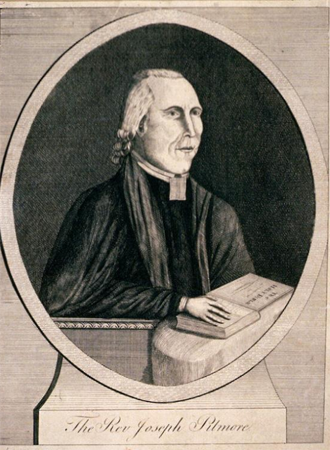
Joseph Pilmoor (or Pilmore) in later years (Picture courtesy of the New York Public Lubrary)


IMG_1580
Pilmoor in his younger days (Picture courtesy of the Smithsonian Collection)

Reader Neil McBride raised an interesting point after having read my piece about the Methodist preacher Joseph Pilmoor, who was raised in the tiny village of Fadmoor on the North York Moors yet went on to become a hugely influential preacher in the US colonies after being sent there by the founder of Methodism, John Wesley. Joseph was the son of pioneering engineer Joseph Foord, a Quaker, who brought fresh water to villages in the Tabular Hills in the 18thcentury. He was banished by the Quakers after having fathered his son out of wedlock. 

Neil says: “I wonder if Pilmoor spoke of illegitimacy in his sermons. If so, it would be interesting to know how he handled it.”

Neil’s comment set me off on my own pilgrimage across the internet to see if I could find any record of his speeches, or those of his mentor Wesley, that mentioned the Methodist attitude to children of unwed mothers.

The early Methodists were so-called because they approached their faith in a very methodical way. They pledged to obey three main rules, which in simple terms were ‘Do no harm’, ‘Do good’, and ‘Love God’. By sticking to this ‘method’, their lives, so Wesley preached, would be improved beyond measure and they would find salvation. Of course, there was a lot more to it than that, with various breakaway factions along the way disputing what true Methodism was, and there were dozens more lists of instructions as to how to fulfil those three apparently simple main rules. But fundamentally, unlike many of their contemporary faiths, Wesleyan Methodists believed that anyone, from whatever background or class, could be ‘saved’.

I could not lay may hands on any direct references by Wesley or Pilmoor to children being born out of wedlock. It doesn’t mean they don’t exist; it just means I don’t have the time to keep searching through all of their thousands of sermons to find them. However, it does appear that they considered unmarried women who gave birth ‘fallen’ and in need of ‘saving’. And by saved, of course, they meant converted. They were not turned away, as long as they embraced the Methodist way of life. Obviously though, the attitude was that it was all the woman’s fault and no doubt many prayers were said to help her tighten up her loose morals. I doubt that they ever felt the need to pray for the man involved in the physical transaction that resulted in a baby. 

I can imagine why this strategy was so successful in gaining followers, especially among the masses of displaced and dispossessed residents of the colonies. If you were a slave trapped in an abysmal life or a pregnant woman with no husband and no income, you would be desperate and miserable. Then someone comes along and tells you that by following three ‘simple’ steps, your life will change for the better forever. Why wouldn’t you give it a go? It’s an approach that has stood the test of time, with various advertisers today still offering a list of supposedly ‘simple’ steps to solve all your worldly woes. 

So perhaps Joseph Pilmoor used his own experience as an example to his flock. Look what happens, he’d have said, when you are saved? I went from a rejected bastard child to a globe-trotting, celebrity preacher blessed by God! He’s the 18th century Methodist version of a social media influencer. 

On the subject of the word ‘bastard’, regular reader Clare Proctor said: “When I was young the word ‘bastard’ was still being used to refer to children born out of wedlock. In fact, my father, jokingly, used to refer to my brother’s children (he was not married to their mother) as the three little ‘b’s!…Now my children have no concept of the relevance of whether their friends’ parents are married or not, they probably don’t even know. They certainly would not refer to them as bastards. It just gets used as a swearword. But if you don’t know its original meaning, then how is it offensive?” 

How attitudes change. Calling someone a ‘bastard’ when I was young suggested that the mother of said ‘bastard’ was morally lacking in some way. Thankfully, we have made some progress since then, and acknowledge that two people are responsible for a pregnancy and, generally, one of them is a man. 

This column appeared in the Darlington & Stockton Times on Friday 23rd and the Ryedale Gazette and Herald on Wednesday 21st Feb 2024.

Does anyone love a festive birthday?

IMG_1540
Photographer Bella Bradford  and her daughter Heidi, who both have New Year birthdays

My column about festive birthdays sparked some interesting feedback, with most declaring that they don’t like it and would prefer to have a birthday at a different time of year away from Christmas.

Claire Dunston-Elliot was born on 20th December and says: “I hate joint Christmas/birthday cards or presents. Sometimes people forget my birthday because of Christmas, or I get birthday gifts wrapped in Christmas paper.” She also points out that it’s often tricky to find places to eat that do a normal menu not just Christmas food. “I would love a summer birthday,” she says.

Sarah Robinson’s birthday is on 20th December too and she tries to be as organised as possible, making sure that all the Christmas presents are bought and wrapped before the 20th and that ‘Christmas stops for just a day’ so she can enjoy her birthday to the full. She adds: “I did a joint 50th in the summer with my husband and it was much better! I find I am mellowing with this the older I become, and I’m just glad family and friends are around to call by.”

That’s a valid sentiment which is shared by Rob Fawcett, whose birthday falls on 16th December: “I guess it would be nice to have it in July, but I’m getting to that age when I don’t give a monkey’s when it is…just as long as they keep coming!”

Jenny Jagger, who celebrates on 29th December, declares: “It’s rubbish. I made sure I had my babies in the spring!” She also tried celebrating in the summer, but people tended to forget her birthday altogether.

Katie Westmorland says: “I’m a December birthday and I don’t like it. Christmas cards come before birthday cards in the post!”

Clare Proctor adds: “We happily have all our birthdays in the summer, so we can have shared celebrations, but when the girls (both August) were small we made sure to celebrate their individual birthdays so they both got equal attention. I remember a friend’s daughter’s birthday being 2nd January and it often got forgotten because everyone was exhausted from the festive season!”

Michael Kilmartin’s daughter Rose was born on Boxing Day 2014: “For me this is a pain because Christmas has to be finished or put on the back burner. When at home, I used to look forward to a second roast dinner or a visit to a working men’s club for a pint and a bag of crisps. Rose now chooses what she would like to eat and would agree that some of her celebration gets mixed up with Christmas. Presents seem to be smaller too. My wife believes Rose should have a half birthday but this creates issues with her brother and her friends who don’t know what to buy her etc. I will never, however, forget dinner on Boxing Day 2014.” I bet he won’t!

Elise Dawson says: “Our Jack’s is on 16th December. We always put decorations up on the first weekend of December and he doesn’t seem bothered. I’m sure he will as he gets older though.”

I think Elise has a point in thinking that young children don’t mind having a festive birthday, but as they get older they begin to notice things they might be missing out on.

Photographer Bella Bradford has a double whammy, with herself and her five-year-old daughter Heidi both having New Year birthdays. “Having a birthday on the 30th December has always been a weird one. I’ve never truly been able to celebrate with a big group of people on the day itself because people want a quieter day before the New Year’s party after a busy festive period. Luckily Heidi’s birthday is on New Year’s Eve and there is always a party so she will always be around people to celebrate.”

John Walker seems to be the lone adult voice who doesn’t mind having a festive birthday. His falls on New Year’s Eve and he says: “I used to get invited round to the next-door neighbours’ to celebrate. It’s a great time to have a birthday, just about everyone worldwide celebrates it!”

And the obliging neighbour who would always throw a party on New Year’s Eve? Well, that was me!

Are there any of you out there who enjoy having a festive birthday? If so, do get in touch!

Contact me via my webpage at countrymansdaughter.com.

This column appeared in the Darlington & Stockton Times on Friday 16th and the Ryedale Gazette and Herald on Wednesday 14th Feb 2024.

The son is a preacher man

IMG_1534
Joseph Pilmoor, born in Fadmoor, was instrumental in popularising Methodism in the USA

IMG_1530
A memorial plaque dedicated to North Yorkshire-born Joseph Pilmoor in North Carolina. Picture by Laura Troy.

At last some readers have come forward following my appeal a few weeks ago to reveal the worst presents you have been given. There are a couple of corkers, such as a car bumper given to Fiona Lyons and an electric toothbrush given to Net Wiles. I don’t know if it is a surprise to learn that both gift-givers are now ex-husbands.

It is sometimes disappointing to receive two of the same thing, but one year Janet Pearce received no less than four Filofaxes (I’m sure most of you will remember these leather-bound personal organisers that were ever-so trendy in the 1980s and 1990s).

In my column, Clare Proctor had revealed that her husband Howard defied the male stereotype, showering her with gorgeous presents, but she confessed that she didn’t possess the same ‘nous’ when it came to choosing for him. One year, her misguided mother-in-law went to Clare rather than her son for advice on what to get them for Christmas, and consequently when Howard opened her gift, a hand-held vacuum cleaner, he declared bluntly: “I expected something more exciting for a present!” Poor Howard.

On another note, Ian Ford got in touch after coming across my column from October 2023 about the water engineer Joseph Foord. He thinks their families might be connected (the spelling of his own name dropping the second ‘o’ courtesy of his great, great, great grandfather, also called Joseph). Although he hasn’t yet firmly established that connection, he went on to talk about Foord’s illegitimate son – yet another Joseph – Joseph Pilmoor.

Pilmoor was born out of wedlock in 1739 after Foord had a liaison with a lady called Sarah Pilmoor from Fadmoor near Kirkbymoorside, and as a result, Foord was thrown out of the Quakers. This inauspicious start did not deter the young Pilmoor from following an extremely interesting path.

Pilmoor was educated at Kingswood School near Bristol, which was established by the founder of Methodism, John Wesley. In 1769, he travelled to Leeds along with his childhood friend, Richard Boardman from the neighbouring village of Gillamoor, to listen to John Wesley speak. Wesley’s passion and devotion to his cause had an immediate impact on the young men from the North York Moors, and they volunteered to become missionaries to the American colonies. Although Wesley had travelled there himself, he’d returned to England following a scandal over a woman who’d spurned his affection and to whom he’d refused to give communion.

Incidentally, this year marks the 250th anniversary of the publication of John Wesley’s controversial pamphlet, ‘Thoughts Upon Slavery’ in which he lambasts society’s tolerance of such an abhorrent practice upon which the colonies were built.

‘Where is the justice of taking away the lives of innocent, inoffensive men; murdering thousands of them in their own land, by their own countrymen; many thousands, year after year, on shipboard, and then casting them like dung into the sea; and tens of thousands in that cruel slavery to which they are so unjustly reduced?’ he wrote.

Wesley embraced the itinerant lifestyle of the travelling preacher and is said to have journeyed 250,000 miles on horseback and delivered 30,000 sermons during his lifetime. Inspired by their mentor the two young men travelled and preached extensively in the colonies, going to New York, Philadelphia and Georgia, staying in each place only for a short time before moving on. Although he returned to England for 10 years between 1774 and 1784, Pilmoor returned to the US to continue his mission and appears to have been far more successful in recruiting followers than his more famous founder. Today there are around six million Methodists across more than 30,000 churches in the USA.

Pilmoor’s influence is evident by the number of commemorative plaques that have been erected in various places, including in the grounds of St John’s College, Annapolis, where he is said to have delivered the ‘first Methodist sermon in Maryland’ on 11th July 1772 beneath the college’s famous ‘Liberty Tree’. Another plaque describes him as a ‘Pioneer missionary’ and marks the place where he preached the first sermon in the North Carolina colony at Curritick Courthouse on 28th September 1772. A church nearby was named after him.

When you think about it, that’s quite the achievement for an illegitimate lad from a tiny North Yorkshire village.

This column appeared in the Darlington & Stockton Times on Friday 9th Feb and the Ryedale Gazette and Herald on Wednesday 7th Feb 2024.

Facing the hoaxers

IMG_1745It surprises me when I browse Facebook, which celebrates its 20th birthday this week, that some people are still taken in by posts that are clearly hoaxes. 

When Facebook first went live on 4th February 2004 from the Harvard student room of 19-year-old Mark Zuckerberg, no-one could have predicted what a social behemoth it would become. From its modest beginnings the online networking platform now has more than three billion regular users (more than a third of the global population) and the page on which I share links to my columns or the occasional picture is a minute pinprick on the surface of the social media equivalent of Planet Jupiter. 

The numbers above make you realise just what a powerfully malevolent tool it could be when the wrong hands get hold of it. A friend of mine is a performer and regularly posts about upcoming events. I had a notification about a show that, unusually, he hadn’t told me about. When I clicked on it, it took me to a page that was selling something far more shocking than show tickets. My friend’s page had been hacked. 

So you do have to be vigilant about what you click on, what you comment upon and what you share on these public platforms. One popular current scam is about lost or missing pets that don’t actually exist, and yet they get countless ‘likes’ and ‘shares’ from sympathetic people wanting to help, but who haven’t gone to the trouble of finding out if the appeal is genuine. Facebook declares that it removed 1.5 billion fake accounts in the last quarter of 2022 alone. There must be money to be made in them because why otherwise would they go to the trouble of creating them? Perhaps because I am a trained journalist, I am automatically skeptical, and check sources out for myself before I expose something to my friends on Facebook.

There was one post labelled ‘Life in the 1500s’ that caught my eye. It started like this (please forgive the coarse terminology): “People used to use urine to tan animal skins, so families used to all pee in a pot and then once a day it was taken and sold to the tannery. If you had to do this to survive you were ‘piss poor’. But worse than that were the really poor folk who couldn’t even afford to buy a pot. They ‘didn’t have a pot to piss in’ and were the lowest of the low.”

The long post featured other well-known phrases that it declared had all originated in 16th century England, such as ‘dirt poor’ which came about because the rich had formal floor coverings in their homes while the poor only had mud. The saying ‘don’t throw the baby out with the bath water’, so it claimed, evolved as a result of the youngest child being the last in the queue for the bi-annual bath and could disappear in the filthy water; ‘upper crust’ referred to rich people because they got to eat the best bit of the bread loaf, which was the top.

As it turns out, although fun to read, this purported account of the etymology of these well-known sayings, is in reality a load of hogwash that has been doing the rounds for even longer than Facebook has existed. It first appeared in 1999 and was perpetuated by round-robin emails that often landed in your inbox on a Friday afternoon to entertain you before knocking off for the weekend. It was debunked by historical experts almost as soon as it appeared.

Just so you know, there is no written record of those phrases involving poor people and urination having been used before the 20th century, so the claim that they are 16th century is rubbish. The one about urine being used in the tanning process is, however, true. As for babies in bath water, that saying was originally a German proverb dating from 1512. The first trace of it in English dates from 1849. As for ‘upper crust’, this phrase dates from the 19th century, referring to the aristocracy, and ‘dirt poor’ is not even an English phrase but originated in America. 

Despite all this, though, I can’t help but admire the creativity of whoever wrote it, and wonder if they are surprised it is still fooling readers 25 years later. 

This column appeared in the Darlington & Stockton Times on Friday 2nd Feb and the Ryedale Gazette and Herald on Wednesday 31st  Jan 2024.

Birthdays as planned?

IMG_1375
Fred Bradshaw, whose birthday was on Christmas Day. It was celebrated in the morning before the festive celebrations began

My lovely colleague Karen Darley at the Ryedale Gazette and Herald sent me a message after reading my column which mentioned taking the Christmas decorations down on or before the Feast of the Epiphany on 6th January.

She said: “It is always a dilemma in our house as my birthday is January 5th, so I have often spent the day taking decorations down – not the most exciting day!”

She adds: “Apparently when I was born, after a difficult day or so, my dad returned home on January 6th and our neighbour was in a panic that all the decorations had to be down to avoid bad luck…It’s a standing joke that my birthday is at the one of the most miserable times of the year. I often got joint Christmas and birthday presents and sometimes in Christmas wrapping paper!”

This made me think about those of you who have birthdays around the festive period, and I started to wonder if you felt it was a good thing or a bad thing. And what is your experience of having a birthday at a time of the year where people are preoccupied with another massive and expensive celebration where everyone, not just you, gets presents?

There is a lady in my home village who turned 100 on December 29th and she held a large party in the church hall where most of the village attended. She made a moving speech in which she declared she was so happy to be able to have a party because during her childhood, she was never given one because of it being so close to Christmas. I felt a bit cross when I heard that because it is not the fault of the child when they are born, but rather down to the parents’ bad (or lack of) planning, and so surely the onus is on them to put in the effort to make the child feel special on their big day, keeping it separate from Christmas.

Karen’s birthday experiences influenced her decisions on when her babies were born: “I made a point to plan, as much as these things can be planned, to not have a baby at this time of year, so fortunately the eldest daughter’s birthday is in March and the younger one in May.”

Of course, you can argue that people with festive birthdays get double the presents – but do they actually? If your birthday is around Christmas, would you prefer two distinct celebrations and presents, or a joint celebration, with doubly expensive gifts?

My sister’s father-in-law, Fred, was born on Christmas Day and her husband remembers that when he was a child, they always celebrated Fred’s birthday on the morning of 25th December, then started the Christmas shenanigans in the afternoon. His mum was adamant that the birthday got the attention it deserved, and there were presents to match.

It may not have been the case when Fred was a child though. As his wife Margaret points out, Fred grew up on a farm, so there were always jobs you had to do on Christmas Day, such as feeding the livestock and milking the cows, and as such it was unlikely there was much time to celebrate Christmas, let alone a birthday too.

It is an interesting fact that the most popular time to give birth is in mid to late September, and if you count nine months backwards to when conception occurred, then guess what? It happens around Christmas and New Year, when many people are celebrating, perhaps with a drink or ten, and so they are footloose and fancy free. And hey presto, more babies are conceived at that time of year than any other. Another explanation is, apparently, that children born in September are more likely to do well in school, because they are the oldest in the class, and therefore more developed and ready to start their educational career.

But that sounds far too organised to me. It is a fact that many babies are conceived when we are relaxed, having fun, and possibly a bit tipsy. That seems to be borne out in my own experience. When I count back from when my children were born, the eldest was conceived on a summer holiday, the middle one during the Christmas/New Year holiday and the youngest around about my birthday.

And I can honestly say, there was very little planning involved in any of them.

This column appeared in the Darlington & Stockton Times on Friday 26th and the Ryedale Gazette and Herald on Wednesday 24th Jan 2024.

Counting our blessings

IMG_1513
The Goathland Plough Stots in action

IMG_1512

I was disappointed that readers didn’t come forward following my column about unromantic Christmas gifts. I’m dying to learn what rubbish items you’ve received and yet, having said that, I understand that the giver of the awful present might also read this column and so a certain reticence is perfectly understandable. If I guarantee your anonymity, would that help?

I did hear from a reader who declares that her husband defies the stereotype and is the ‘perfect’ gift-giver. Clare Proctor has never suffered the misery of unwrapping a set of pans, writing of husband Howard: “He always buys me great gifts, jewellery, gorgeous perfume, my favourite Florentines, lovely scarves…the list goes on.” She says she sometimes struggles buying gifts for him but adds: “You can never have too many pairs of socks or boxes of chocolate! Also, this year, we treated each other to tickets to see Nicole Scherzinger in Sunset Boulevard in the West End in January – my wish; Howard’s gift!” I think we all need a Howard in our lives!

On another note, Peter Allen from Gilling near Helmsley got in touch following my column about Plough Monday. He had himself composed a piece on that very subject for his parish magazine and includes more detail, saying the custom “was especially prevalent in the North and consisted of a gang of youths, sometimes as many as forty, dragging a plough through the streets. Dressed in white shirts, with a warmer coat underneath, they sometimes blackened their faces. Colour was added with the use of ribbons attached front and back, and knots of ribbons in their hats…An old lady was dressed up and joined the group. More often than not this was a boy in women’s clothing. George Young in his ‘History of Whitby’ refers to these as ‘Madgies’, or ‘Madgy Pegs’ and they went round from house to house, rattling collection tins. When they received money, they shouted “Huzzah”, but if nothing was forthcoming the cry was, “Hunger and starvation”.”

He also mentioned a play that was performed in the village where I grew up. “There is an Ampleforth Play which incorporates sword dancing. The Ampleforth Play contains elements of a traditional Plough Play and as it was performed around Christmas, it would therefore seem safe to assume that it was part of a Plough Monday festival. Some features of it are that the music was provided by a fiddler and a drummer but that songs were unaccompanied. The troupe of players moved from place to place in procession thus: The two musicians, a flag bearer, Clown and Queen, the King and the rest of the dancers/actors in pairs. Interestingly the Queen was always played by a man who had not had his hair cut for twelve months before the performance. Preparation for the play had begun months before…and dancing masters toured the villages of Cleveland teaching the words of the play and the sword dances en route. The Ampleforth Play does not seem to have been performed locally for well over 100 years, although there is a reference to it having been produced in London in the early 1920s.”

Peter asked if I could find anything in my dad’s files, and sure enough, I dug out a newspaper clipping from 1966 which suggests it was performed more recently. I don’t know who the writer was, nor which paper it came from, but it states that the Goathland Plough Stots ‘performed a play very similar to that acted by the Ampleforth Plough Stots…The Rev. Patrick Rowley, vicar of Ampleforth, is at present collecting information regarding the Plough Monday celebrations which I remember being regularly observed in Cleveland when I was a boy.’ The writer adds that the tradition was a ‘relic of pre-Reformation days’ and describes an event that has remained more or less the same for centuries. One difference was that by 1966, the donations collected were spent on a community celebration at the local inn, whereas originally, it was to ‘pay for the votive lights in church. These were renewed and burned throughout the octave of their feast and were associated with their prayers that God would speed the plough and give a bounteous harvest.’

With the incessantly wet conditions we’ve had recently playing havoc for many farmers trying to grow winter crops, let’s hope the blessings of the ploughs work and we can expect far better weather in 2024.

This column appeared in the Darlington & Stockton Times on Friday 19th and the Ryedale Gazette and Herald on Wednesday 17th Jan 2024.

A past to be Pict apart

20231229_100121
The now disused St Hilary’s Church in Picton near Yarm.

This  Saturday (13th January) was St Hilary’s Day and it is said to be the coldest day of the year. Its chilly reputation came about after a severe frost in 1205 which started on 13th January and lasted until 22nd March.  

Reader Jim Ackrill from Picton near Yarm got in touch with a lovely message connected to St Hilary. He said: “I was doing some research into my local parish church (now closed and sold) and came across an article by someone you may know! A certain Nicholas Rhea published the article in the Darlington and Stockton Times on the 13th of January 2012. It interested me as our local church was dedicated to St. Hilary when it was built in 1911.”

My dad’s article explained that St Hilary was born in 315 in Poitiers, a town in France known for its architecture and hill-top setting. Hilary followed the beliefs of his prominent pagan parents until the age of 35 when he became a Catholic priest and pledged to lead a life of abstinence, despite the fact he was already married with a daughter. He was elected Bishop of Poitiers in 353, and travelled extensively visiting the Middle East, Greece, and Italy.

He was known for being outspoken, and his writings upset Emperor Constantine II, leading to him being banished to Phrygia (now in modern central Turkey) and then back to Poitiers. St Augustine refers to him as an illustrious doctor and, as a progressive thinker, was said to be keen to educate children with learning difficulties. St Hilary died in Poitiers on or around 13th January 368 and is known as St Hilary of Poitiers, Pope Pius IX having named him Doctor of the Church in 1851.

Jim Ackrill wonders more about the connection of St Hilary to his home village: “Now this is the interesting information which I discovered. Poitiers is in western France and was founded by the Celtic Pictones tribe (also known as Pictavi or Picts) and which, after Roman influence, became known as Pictavium. As Christianity was officialised across the Roman Empire during the 3rd and 4th centuries, the first Bishop of Poitiers from 350-367 was St. Hilarius (Hilary). The connection between Picton and the Pictones cannot be a coincidence. I believe some well-read cleric connected the two and suggested St Hilary for the church at Picton.”

It is possible that Jim’s theory about how St Hilary’s in Picton came by its name is correct. It was closed to worship in 2004, and hence St Martin’s Church in neighbouring Kirklevington was rededicated to St Martin and St Hilary in 2011, the centenary of the original St Hilary’s Church. The village name has evolved from Pyketon to Pykton, then Pickton to Picton, and has been said to mean ‘peak town’ which would fit in very well with its hilltop location and as such, echoes its French counterpart.

However, there is a possibility that ‘peak town’ is wrong, if an historical link with Poitiers can be established. Could Picton actually come from ‘Picts town’? As Jim says, Poitiers was called ‘Pictavium’ during St Hilary’s lifetime and is believed to mean ‘painted people’, referencing the Gallic Picts’ habit of painting or tattooing their skin.

It could of course just be a remarkable coincidence that Picton and the Pictones have similar names as well as a link to St Hilary. During the reign of Edward 1st (1272 – 1307), the family that owned the village took the name Picton to symbolise their ownership of it and the surrounding land. It is interesting to note that as a youth, King Edward I was heavily influenced by his relatives from the Poitou region of France (known as Pictavia) of which Poitiers was the capital.

It is also worth mentioning the Scottish Picts, a tribe with a ferocious reputation from the far north and east. Like their Gallic cousins they were named by the invading Romans, thanks to their habit of painting their skin to make them seem more ferocious in battle. Although they have links to the French, I think it is unlikely they have any connection to the village of Picton.

There must be a lot more to be discussed in this story, but it will need someone with a bigger and more knowledgeable brain than mine to get to the bottom of it.

Contact me via my webpage at countrymansdaughter.com, or email gazette@gazetteherald.co.uk or dst@nne.co.uk. 

This column appeared in the Darlington & Stockton Times on Friday 12th and the Ryedale Gazette and Herald on Wednesday 10th Jan 2024.

The blessed plough

a111e9e8-a072-4284-b7b9-22e898bf8993
The plough has been a fundamental piece of farming equipment for centuries, enabling the population to feed themselves.
IMG_1509
Blessing the plough outside Ripon Cathedral (Photo courtesy of Ripon Cathedral).

I’m sure you know that it is traditional to remove Christmas decorations by the Feast of the Epiphany on 6th January, although it is still debated as to whether you have to take them down before the 6th or on the 6th to avoid inviting bad luck into the house. I’m still unsure which is right.

What you might not know is that the day after is St Distaff’s Day. St Who? I hear you cry. Well, Distaff is no-one and there is no such saint. It actually refers to the cleft stick used by spinners to hold yarn in place and appeared this country in around 1505. St Distaff’s Day was symbolic of women resuming their regular household chores after the 12 days of festive fun. Spinning was an essential skill, and women would spin most evenings, turning raw wool and flax into thread to be used for clothing, footwear, bedding, baskets and for mending all of the above.

St Distaff’s Day precedes the more well-known Plough Monday. This is the first Monday after the Epiphany when the men of the household would resume their labouring duties. In the days before mechanisation, the plough was the most important piece of farming equipment that the community would rely on to enable them to plant crops and feed themselves for the coming year.

In Mediaeval times, small villages would have just one plough to be shared by residents, and a ploughman would carve out each person’s plot in the ‘ridge and furrow’ method of open agriculture. Once the autumn harvest was complete this revered piece of equipment would usually be stored in the local church for the winter. A candle, or ‘plough light’, would be kept permanently burning to protect the plough from any malevolent crop-ruining spirits that might be lurking about.

Then, on Plough Monday this sacred machine would be brought out of hibernation to mark the start of the new agricultural year. It would be blessed by the priest, and the good folk would ask the Lord to grant them a successful growing year ahead. Men would dress up in costumes, similar to that of Mummers or Morris Dancers, and then parade to music through the village, knocking on doors asking for alms. Anyone who declined to give a few coins would likely find that overnight, their front path had been ploughed up. The plough posse would end up at the local inn and spend the rest of the day feasting, drinking and having a merry old time.

Today, it is not uncommon to see this tradition marked on the Sunday before Plough Monday, which is known as Plough Sunday, and I am a bit confused as to when or if one came before the other. Some sources suggest the plough was blessed on the Sunday, and then the parade would take place the next day. Other sources have the events happening on the same day, whether it be the Sunday or the Monday.

The custom has disappeared from many places, but not all, and in our region is marked most notably in Ripon Cathedral (which this year takes place on 14th January), and in my dad’s old stomping ground, Goathland (7th January).

In fact, I was looking at one of my dad’s books, ‘Yorkshire Days’, in which he mentions Plough Sunday and Monday, and also the ‘Goathland Plough Stots’. The Goathland tradition is to bless the plough on the Sunday after the Epiphany, and then follow that up the following Saturday with their ‘Annual Day of Dance’, a traditional sword dance practiced by the Goathland ‘Stots’. ‘Stot’ is an old Yorkshire word for the oxen or bullocks that pulled the plough, and therefore was given to the men who pulled it through the village during the celebrations.

As I was writing this column, the words to ‘There’s a hole in my bucket, dear Liza’ popped into my head. As a young child, I used to be very confused as to why Liza would suggest that Henry mended his holey bucket with straw when the buckets I knew were made of plastic or metal. But it has only now dawned on me that back in the day they’d be made from wood, clay or some kind of woven yarn or straw, and repairs would likely have been with whatever natural material was to hand.

Unless you can think of a better explanation?

This column appeared in the Darlington & Stockton Times on Friday 5th and the Ryedale Gazette and Herald on Wednesday 3rd Jan 2024.