For the ones who never came home

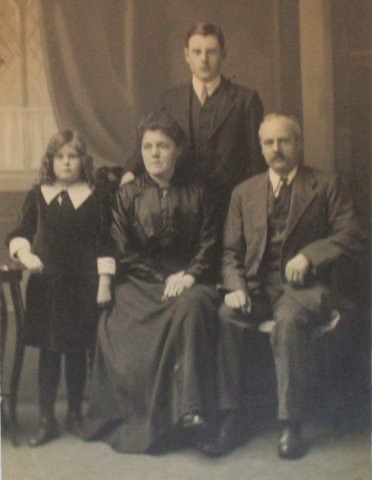
Lynne Catena’s uncle, Arthur Pearce, who was killed in WWII during the North Africa campaign in 1941. This picture was taken before the war, in his early 20s, and proudly dressed for a military tattoo.

A few more responses have come in on recent topics. Maxine Gordon contacted me about the convention of incorporating a maiden name into a child’s given name: “Both my sister and I and my best friend from Kirkcaldy have this tradition. We have our grandma’s maiden names as our middle names…I think it was unusual and raised some eyebrows at school etc, so probably dying out even in the 1970s. We might have been a last generation – my mum doesn’t even have a middle name.”

Maxine mentioned something which had not before occurred to me: “As kids you don’t want to stand out, so when they read your name at primary school and people laughed, that wasn’t so nice.” An unusual name certainly could make you a target for mockery among your childhood peers.

Until Fiona White contacted me, I had only come across the maiden name used as a middle name. But her family did something different: “My brother was given my mum’s maiden name as his first name – Innes.” Like Maxine’s family, the name Innes is Scottish. Are there more maiden names given as first names in that part of the world I wonder?

A couple of weeks ago I told the story of Lynn Catena’s Uncle Arthur, who was killed at age 24 while serving in the North Africa campaign in WWII. The war generation are notably reluctant to talk about their experiences. While Clare Proctor was watching the recent Remembrance commemorations, she was particularly captivated by the recollections of a veteran who, like her own father, had served in Burma (now Myanmar). “This veteran was saying that when returning from that war zone they were instructed by their superiors not to go home and talk about their war, because the people of Britain had suffered enough! So, he said, they never talked about it. My father certainly didn’t.”

She adds: “My cousin (30 years older than me) said our family did not celebrate VE Day because her Uncle Allan was still at war in the Far East. Their big day was VJ Day.” It’s satisfying to see that VJ Day is now being suitably commemorated, considering how many of our soldiers fought and died out there.

Robert Carter contacted me after seeing my piece about the Alamein Memorial a couple of weeks ago. Robert visited the Commonwealth, German, and Italian memorials and the Al Alamein Military Museum.

He says: “I was particularly interested to see the number of joint graves which were the last resting places of mainly armoured vehicle crews who presumably could not be separated because of the circumstances of their deaths. As a former soldier I thought it very apt that as they had fought and died together that they should be buried together.”

He adds: “The German and Italian memorials were built in the fifties which involved collecting the bodies from both nations that were widely distributed across the former battlefield and as a result many are listed as ‘Unknown’. The Italian memorial is, as you might expect, a tall very elegant building whereas the German is more sombre and fortress-like. Interestingly, inside the German building is a ring of sarcophagi, each one dedicated to each of the German states, ie Brandenberg, Mecklenburg, and so on, with a list of the servicemen from that state who died during the course of the battle…The museum was an excellent tribute to all of the nations involved with each being given equal status and range of exhibits.”

It is a sombre reminder that ordinary families on both sides of the conflict suffered equally with the loss of their loved ones.

When Lynn told me the story of her Uncle Arthur, I was saddened that I didn’t know what he looked like and assumed that I was unlikely to ever see a picture of him.

But I was wrong. Lynn found a photo and explains: “This is an old photo of Arthur Pearce that I took from my mum’s collection. She told me he wanted to be a career soldier. I believe, in this photo, he’d taken part in a military tattoo. RIP to the uncle I never met.”

Using his picture here is my small tribute to just one of the many young men who never came home.

Do you have opinions, memories or ideas to share with me? Get in touch with me using the ‘Contact’ button on the top right.

This column appeared in the Darlington & Stockton Times on Friday 5th and the Ryedale Gazette and Herald on Wednesday 3rd Dec 2025

Hey Nonny! No?

My niece Eleanor and husband Ben shared some exciting news this week! Baby Walker is due in May next year!

Do you remember two weeks ago I mentioned that I had no immediate relatives that would be able to carry on the family name of Walker? That was until my niece Eleanor happened to marry into a totally separate family of Walkers.

Her mum, my sister Janet, was delighted: “It’s lovely to have another Walker back in the family.”

Having read the column, my own mum said: “I wasn’t bothered to lose my surname ‘Smith’ as there were still millions of ‘Smiths’ in the world. But now I’m a ‘Walker’ and there are millions of them too!”

Alison Davies recommended a rather drastic way to reclaim your own surname: “Get divorced! I did and went back to my family name.” She adds: “I did sneak Davies in as a middle name for my eldest.” Although having said that, getting divorced is not that drastic if you consider around half of us married people do it in the end.

Jane Ridley did the same as Alison when naming her son: “I couldn’t bear to give up my maiden name as I’m the last of the Ridleys. Bobby’s middle name is Ridley. My husband’s middle name is his grandmother’s maiden name of Powell.”

Since I’ve become aware of the convention of preserving a family name in children’s middle names, I discovered that so many people have embraced it, and yet it never occurred to me to do it with any of my boys.

Sarah Mason says: “Both my boys have Mason as part of their middle names. I wanted them to have my surname somewhere! Hopefully they might continue the tradition, although it may well be difficult for my youngest as his partner is from Chile and they keep their mother’s surname and just add to it.”

That’s an interesting convention, and I feel it’s rather enlightened of Chile to ensure the female name is so prominent. But does it also mean that it leads to really long surnames?

Janet Pearce adds: “My late husband was the last male of his family to have children. He had three sons but none of them have had children and are unlikely to, so that branch of the family name will die out. He was sad about it, but I don’t worry about these things!”

Kate Broad says: “I will never understand why women changed and continue to adopt their husband’s name.”

And I agree to some extent, because if I had my time again, I probably would not adopt my husband’s name, or at least would combine mine and his in some way.

Clare Powell’s family used an interesting method to preserve a name: “My husband’s dad had Slingsby as a middle name, as did his grandfather. It was a family surname, but we didn’t use it – unless you count naming the cat Slingsby!”

Of course, we live in a patriarchal society that has been that way for centuries, where the male line dominates. But there are cultures across the world where women have always led the way. In India, the Khasi tribe has a matriarchal structure where children take on their mother’s name and girls inherit the wealth. Mosuo (China) and Minangkabau (Indonesia) both have matriarchal societies where women are heads of the household and property is passed down the female line. In Kenya there is a village called Umoja which was founded by women who rebelled against patriarchal oppression and domestic violence.

Since I wrote my original piece, I have received some absolutely wonderful news! Eleanor and husband Ben are expecting their first child and Baby Walker is due in May next year. It is all rather fitting, because both my dad and myself were born in May (and even though it is not our family branch, we are very happy to hang on to the coattails of another set of Walkers!).

My sister and imminent grandparent Janet is debating how she would like to be referred to once the baby comes along. Should she be Granny, Grandma, Nan or Nana? Families often have their own quirky names for grandparents and I’ve heard ‘Gangan’, ‘Pops’ and ‘Runny and Dumper’. When my eldest began to talk, he could not pronounce ‘Granny’ and so my mum became ‘Nonny’. Twenty-nine years later, Nonny she remains.

Did you call your grandparents anything unusual? Let me know!

Do you have opinions, memories or ideas to share with me? Get in touch with me using the ‘Contact’ button on the top right.

This column appeared in the Darlington & Stockton Times on Friday 14th and the Ryedale Gazette and Herald on Wednesday 12th Nov 2025

Walking the family line

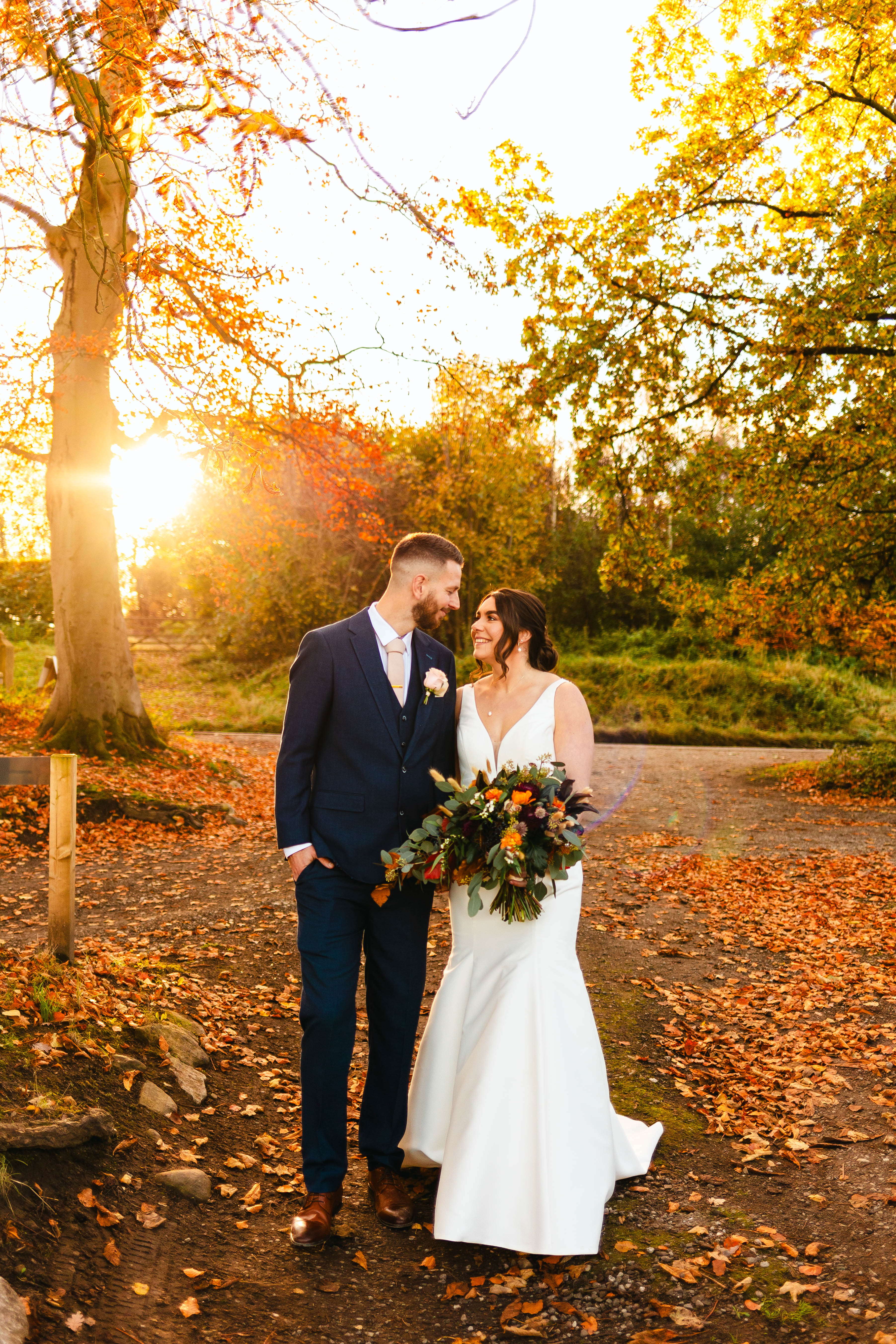
My niece Eleanor preserved the family name by a happy accident when she married Ben. Picture by Bella Bradford Photography

You might remember that a couple of weeks back I talked about family names, and reader Wendy Sissons mentioned that her father’s side of the family use ‘Leedham’ as a middle name for some of the men in the family. She wasn’t sure where it came from, but assumed it was the surname of a relative.

Since then, I‘ve been talking to my mum, and she remarked that her eldest brother, Henry (b.1932), had the middle name ‘Harland’, which was the surname of their father’s mother. Her second brother, John (b.1935), was given the middle name ‘Lacy’ which was their mum’s maiden name.

Was this a convention to preserve the surnames of the female lines due to the fact that women surrendered their own surnames upon marriage? By including it as a given name in the male line of descendants it would not only ensure the ancestors were memorialised, but there would be less chance that the family names would vanish altogether, should there be no other males to carry it forward as a surname.

Do you know the middle names of your aunts, uncles and cousins? I certainly didn’t, and that’s where our family tree came in handy. Using that, I discovered that, interestingly, my Uncle Henry’s son, my cousin Richard (b.1964), was given the middle name ‘Lacy’, and he also passed it on to his own son Charles (b.1997). As far as I am aware, that’s where the references to the family name ‘Lacy’ end. I do wonder why Henry chose ‘Lacy’ for his son, rather than the ‘Harland’ of his own name, and I can’t see any others on the tree with that as a middle name either. My mum had five siblings in total, but the rest were all girls (my mum being the eldest, born in 1937).

I wonder if there exists a field of expertise that focuses on the history of surname usage, and how practices have changed down the centuries? A family name was, and still is, a source of great pride for lots of us, but with many women now opting to keep their own surname on marriage, there is perhaps less likelihood of them disappearing from the family line. It is also a fact that in 2025 there are more couples who choose not to get married at all and therefore the choice as to whether to keep your own or take on your spouse’s name is irrelevant.

When I was young, we associated double-barrelled surnames with ‘posh’ people, but today they are much more common among we plebs. Unmarried parents will often link their surnames together when children are born. There are also more divorces and more second marriages, and children born through a second marriage are sometimes given the surname of both parents combined which will also mean they have a name in common with their older step siblings.

I have mentioned before that I was married to a Dutch man, and in the more enlightened Netherlands, the convention is for women to keep their own surname which they add to that of their husband when they marry so that it becomes double-barrelled (with the woman’s surname last). However, it only applies to the wife, so any children born of that marriage will still have just the husband’s last name.

I divorced ten years ago, and kept my married name for a long time afterwards, simply because it was the same as my children who were still in their teens when we split up. I wanted to keep some kind of normalcy for them as we navigated a very difficult period. However, as they grew into adulthood, having the same name as them grew less important, while wanting to go back to my own became more so, particularly after I lost my dad and sister Tricia, who was still a Walker. With them gone, and my eldest sister Janet married and my Buddhist monk brother switching to a chosen Buddhist name, there was just my mum who still had the surname ‘Walker’. Therefore, once I took over these columns, I decided to reclaim my family name.

My little story doesn’t quite end there. My eldest niece, Eleanor Bradshaw – daughter of Janet – got married in 2023 and took her husband’s name.

And that name? Of course, it is Walker.

Do you have opinions, memories or ideas to share with me? Get in touch with me using the ‘Contact’ button on the top right.

This column appeared in the Darlington & Stockton Times on Friday 24th and the Ryedale Gazette and Herald on Wednesday 22nd Oct 2025

When a name means a Lot

Reader David Severs’ Auntie Carlotta’s grandfather James Foster standing next to his boiler at Baxter’s Brewery in Thornton Le Moor in the late 1800s


Reader Davis Severs’ Great Auntie Carlotta, far left, with her brother Lancelot standing behind their parents Ada and Robert Armin from Thornton Le Moor.

We return this week to the theme of unusual names. If you recall, Brian Reader contacted me about his quirkily-named relatives Rocious, Fera and Ellengor. In my piece I had found a number of Ellengors from the Northallerton and Bedale areas. They included Ellengor Barker (1862-1955), Ellengor Bramley (1871-1965), and Ellengor Barker Rollins (1889-1977).

After having read my piece, Brian got back in touch to say: “The Rollins and Bramley families are all related to Barker. The earliest Ellengor I have found so far was Ellengor (Ellen) Barker (nee Elliott) born in 1822 in Woodhouse and who died on 4th June 1887 in Northallerton. I have yet to follow up the Elliott family.”

As we have seen from the successive Ellengors, the same name used to live on in a family’s descendants for many years. I wonder if it was considered familial duty to pass down a name, or was it done just because people liked doing it? Today, new parents seem less inclined to follow the tradition, and I wonder why that is too.

Horacio Romeo, who reads my column online, has his own list of uncommon names. He said: “Living in Brazil, unusual names are quite usual to find…Azize, Kilber, Alison (male), Glademir, Suelí, Dagna, Adilson, Claudiceia…I can spend the whole day!”

David Severs comes from a family where quite a distinctive name persisted: “My grandfather Arthur Robert Foster was born at Thornton le Moor in 1879. His sister, Ada Mary Foster, had been born in 1874. Their father, James Foster, was the boilerman at Baxter’s Brewery in the village.

“Ada married Robert Armin, the Armins being a longstanding local family (There is still an Armin House in the village). Robert and Ada called their son Lancelot and their daughter Carlotta. I was always intrigued by my Auntie Carlotta’s comparatively unusual and quirky name, apparently common on the continent as a variant of Charlotte, but not in the UK.

“When I researched my ancestry I found that several successive generations of Armins had been given the biblical name Lot. It seems Robert and Ada did not want to follow the family practice but wanted to recognise it, so they called their offspring LanceLOT and CarLOTta.

“Although I had an explanation I was still intrigued by their use of the comparatively unusual name Carlotta.”

Some years later, David discovered what could be the answer when a history of the village was published in the year 2000 to mark the Millennium. The book explained that the driving force behind Baxter’s Brewery was a man called Newsome Baxter who died in 1889.

David continues: “He left the brewery to his son William Newsome Baxter who died only three years later. The brewery then passed on to William’s wife Emma, their two sons and their daughter Ethel Carlotta.”

It was the earliest date in his research that David had come across the name: “So now I knew whence Robert and Ada Armin found the name Carlotta.”

David did wonder what the wealthy and influential Baxters would have made of their lowly boilerman’s daughter snaffling the family name for her own child.

I’ve recently been watching the series ‘The Yorkshire Auction House’ which features Kirkbymoorside-based Ryedale Auctioneers and their charismatic owner Angus Ashworth. Angus was helping to clear the house of a retired policeman whose daughter was called ‘Myron’ or ‘Meiron’ (I only heard it so am unsure how it would be spelled). It was a new name to me and upon a quick Google I discovered ‘Myron’ is Greek in origin and is normally the male version of ‘Myra’. Meiron, however, is a Welsh girl’s name meaning ‘the admired one’.

This show has captivated me because it deals with a subject close to my heart, and one which almost all of us will have to face at some point in our lives – that of having to sort through the possessions of a loved one after they have passed away. What do we do with it all? It is a very emotional and difficult process, and I have to say that Angus and his team deal with it in a very sensitive manner.

My dad accrued so much ‘stuff’ over his lifetime that having someone like Angus on hand to deal with it all might be just what we need!

Do you have opinions, memories or ideas to share with me? Get in touch with me using the ‘Contact’ button on the top right.

This column appeared in the Darlington & Stockton Times on Friday 3rd and the Ryedale Gazette and Herald on Wednesday 1st Oct 2025