Time to ban the bang?


Screenshot
Fireworks don’t need to be noisy to be impressive. For the sake of our wildlife, livestock and our furry loved ones, it’s time to ditch the bang


Fireworks season is upon us, having been heralded weeks ago by youths obsessed with watching things explode extremely loudly in the air. A number of them have been letting off rockets not far from our house, transforming some of our otherwise relaxed doggy residents into quivering wrecks who scurry to hide behind things or under things and shake with fear, no matter how reassuring we try to be. To an animal, the sudden earth-shaking booms are terrifying.

I am not against fireworks at all. In fact I love them, and for years, my children and I would head out to watch a display at a local cricket club. For a small club, it was utterly fantastic, and hundreds of people would turn up to eat hotdogs, drink warm beer and watch the show with choruses of ‘Oooooo’ and ‘aaaahhhh’ as the fountains of sparkles burst above us. The excitement would build and build towards the end, when the largest and most impressive sequence of exploding balls of lights and stars filled the sky. It was magnificent.

It was only once I started to look after dogs ten years ago that I began to understand the impact the noise had on them. It’s impossible explain to an animal that the loud explosions will not do them any physical harm, and when you factor in that dogs have far more sensitive hearing than we humans, then you can imagine how distressing it is. Owners often ask me what they can do to make it less stressful for their pets, and my suggestions include getting a thunder vest (or shirt). This is a tight-fitting garment that wraps around the dog, giving them the feeling of being enveloped in an anxiety-reducing hug and are recommended for anything that makes them nervous, such as trips to the vet, rides in the car and the like. There are also natural calming supplements, treats, sprays and toys that claim to help. I have no idea if any of these things work, and suggest you talk to your vet if you want more expert advice.

Saying that, there is already a perfect solution available, and I cannot understand why it has not been adopted by everyone yet. That is, low noise fireworks. They are often referred to as ‘silent’, but they are not totally quiet because the explosive charge needed to launch them from the ground does make some sound. I have seen some absolutely stunning fireworks that burst into enormous balls of sparkles while expelling a small ‘pop’. They are no less impressive than their brash, noisier counterparts.

I am delighted to see that supermarkets like Asda, Aldi and Lidl are blazing the community-friendly low-noise trails, having stocked them for a number of years now, and more and more retailers are following suit, which is encouraging. However, they still hedge their bets by continuing to offer the noisy ones alongside them.

My only experience of the effect fireworks has on animals is through domestic pets and wildlife in and around my home, so I would be interested to hear from those of you in the agricultural and equine sectors as to the impact loud fireworks have on your livestock. I do think someone in a position of authority should take the lead and recognise that the trend towards low noise fireworks is increasing, sending a clear message as to what the public wants.

I know there will be some of you who like the noisy bangs and explosions, and I do agree that they are a lot of fun, if only they did not cause such distress to our furry friends.

Interestingly, I have learned today that a person who is obsessed by fireworks is known as a pyrophile (never call someone this when you are drunk, otherwise you could end up in a world of trouble). I also now know what an oenophile is (lover of wine), a turophile (lover of cheese), ailurophile (lover of cats), a xenophile (lover of foreign things), an astrophile (lover of starry things), phonophile (lover of vinyl records), cinephile (lover of films), a sapiophile (lover of intelligent people) and lastly, a paleophile (lover of ancient things).

For reference, the future Mr Walker, whoever he turns out to be, will have to be a combination of at least the last two.

Do you have opinions, memories or ideas to share with me? Get in touch with me via the ‘Contact’ tab at the top right of this page. 

This column appeared in the Darlington & Stockton Times on Friday 1st Nov and the Ryedale Gazette and Herald on Wednesday 30th Oct 2024

Romans go underground

IMG_2051
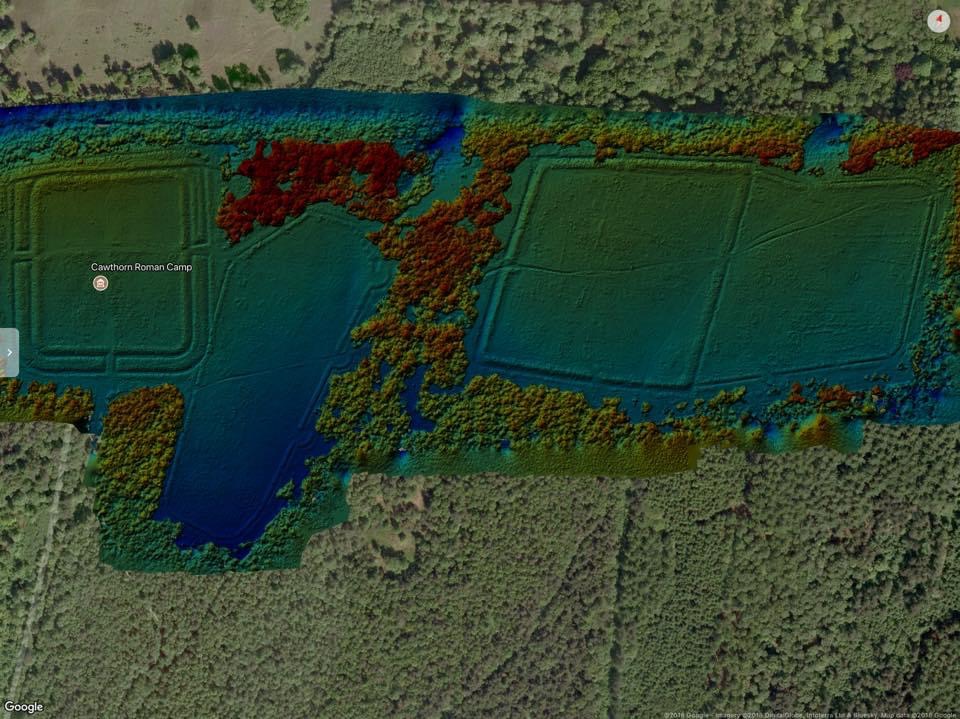
Images of the complete Cawthorne Camp near Pickering which comprises four elements which are (L-R) Fort D, Camp C, Fort A and Annexe B. Photo by Tony Hunt of Yorkshire Archaeological Aerial Mapping

IMG_2050
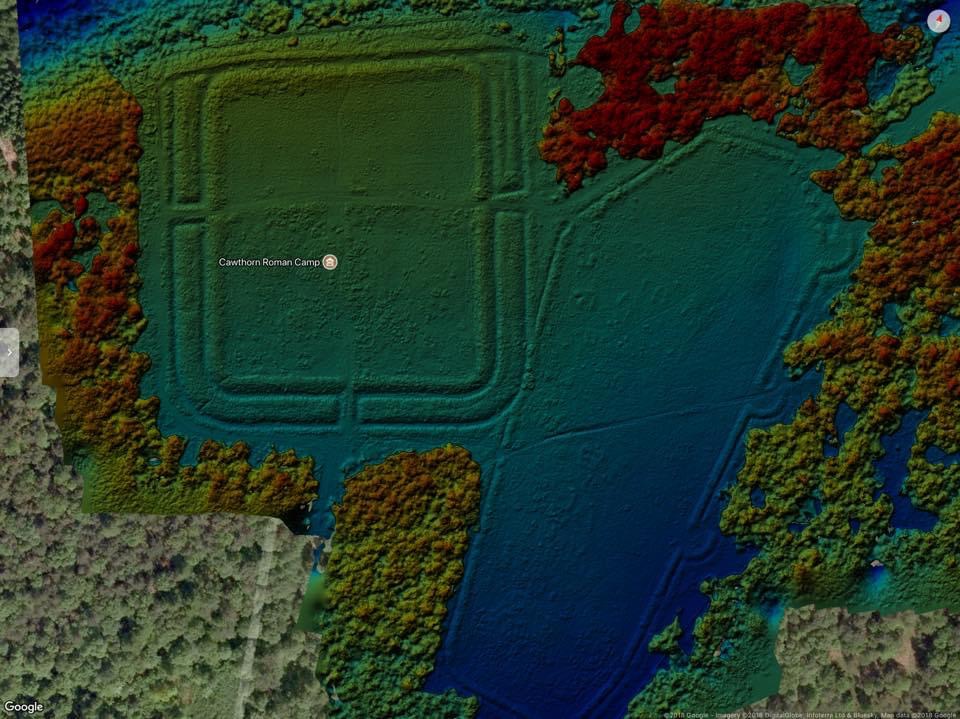
Fort D (left) whose boundary overlaps Camp C (right) which shows it was built later. Three clavicula gates can clearly be seen to the eastern boundary of Camp C. Pictures by Tony Hunt of Yorkshire Archaeological Aerial Mapping.

I studied Greek and Roman history at university and am fascinated by the ancient world and the remnants of the past that lie beneath the ground we walk upon today.

That’s why I was captivated by some pictures of Cawthorn Roman Camp taken from the air by Tony Hunt of Yorkshire Archaeological Aerial Mapping (YAAM) that popped up on Facebook. The specialist imaging revealed the camp in far more detail than can be seen with the naked eye, bringing it to life in a way I had not yet experienced.

Cawthorn Camp lies atop a rocky escarpment a few miles north of Pickering. I’ve mentioned it before in relation to Wade’s Causeway, sometimes referred to as the Roman Road, which runs across Wheeldale Moor from Goathland. Although only a short section is visible now, some believe it linked Whitby with a settlement at Amotherby near Malton, passing through Cawthorn Camp en route. Some archaeologists suggest it is much later and of mediaeval construction, while others think it dates from even earlier than the Romans, and attribute it to the Neolithic or Bronze ages. My theory is based on logic rather than expertise: perhaps the first moor-dwellers forged what they thought was the easiest route across the landscape, and then the Romans came along and rather than go to the trouble of digging out a whole new road across tricky unfamiliar terrain, used what was already there to create a more formal and recognisable highway. Then in the mediaeval period, more features were added. Thus, this mishmash of eras and styles has led to historians arguing as to which period the road officially belongs.

The camp dates from around AD75, although is believed to have been abandoned, re-inhabited, rebuilt and expanded several times over its lifetime. Although finds such as coins, tools and pots peter out after AD120, the camp would likely have been occupied after this date, possibly as a training ground, especially as the Romans occupied Britain until the start of the 5th century. We don’t really know why there are so few finds later than AD120 though.

There are four distinct elements across two separate plots, referred to as Fort A, Annexe B, Camp C and Fort D with A and B adjacent to each other at the eastern end, while C and D are a slight distance away towards the west. On the ground, although you get an idea of its scale through the deep ditches and mounds it is only through aerial photography that you can truly appreciate it. The forts, as the name suggests, will have been more permanent structures, with a building at their centre and ramparts surrounding them. The temporary camps will have served a more transient population of marching infantry. Similar settlements can be found along the routes of many of our Roman roads lying around 25 miles apart, the distance a cohort of soldiers would be expected to march in a single day.

Three of the plots are shaped like rounded-cornered rectangles, with gates facing every direction. We know Fort D was built later than its immediate neighbour, Camp C, thanks to the fact its boundary overlays that of Camp C, as seen in the accompanying YAAM image. Camp C is a bit of a rarity, shaped as it is like a coffin, and instead of having gates on every side as you’d expect, has three large portals along its eastern boundary. There is also one small opening on the western side, but no entrances to the north and south, which is very unusual.

The canny Romans knew a thing or two about building fortifications, and the three gateways (which are clearly visible in the YAAM image on the right side of Camp C), are known as Claviculae (vine tendrils), their curved shape meaning you cannot see in from the outside. The narrowing entrance would force any attacking enemies to shimmy through, trailing their cumbersome shields behind them as they tried to see where they were going with their sword arms before them, vulnerable and exposed, which allowed the defending Romans to easily disable them.

If space permitted, I could go on and on about Cawthorn Camp but I urge you to go and visit. There is still one question though; how much more lies beneath our feet that has yet to be discovered?

I’d love to hear from you about your stories, memories, opinions and ideas for columns. Use the ‘Contact’ button on the top right of this page to get in touch.

This column appeared in the Darlington & Stockton Times on Friday 11th and the Ryedale Gazette and Herald on Wednesday 9th Oct 2024

An air of mystery

IMG_2038
What we believe is an ancient gatepost covered in moss and lichen spotted on the Cleveland Way by Paul Martin. But what is purpose of the hole at the top?


IMG_2042
A ‘daisy-chain’ of padlocks at a BT site. Each contractor will have their own lock and key so they can gain access at any time.


I’ve had a lovely message from a reader following my recent column about love locks. If you remember I wrote about the padlocks that are attached to the metal walkway over the River Wharfe in Otley. The idea is that a courting couple declare their everlasting love by fixing a padlock on to the bridge and throwing the key into the waters below ensuring the lock can never be undone. The practice has become widespread all over the world, most famously on the Milvian Bridge in Rome, the Pont Des Arts in Paris, and on Mount Huangshan in China.There are a number of tales purporting to be the origin of the practice, but it is not known if any any of them are actually true.

Betty McDonald got in touch with me about a September 2013 trip she made with her late husband to the War Museum in Arnhem in the Netherlands, and to the German dams which were the target of the famous Dambusters Raid in May 1943. She wrote: “We did a tour of two of the bridges which where breached, Eder Dam and the Mohne Dam…It was a very proud moment to actually walk and stand on the dam which helped us to win the war, although sad too as many villages were swept away, destroying a German bomb-making factory.”

She added: “It was our very first sight of the padlocks of love on the Mohne Dam…We wish we had known about the love locks as we both knew the Mohne dam would be on our tour, and maybe one of our last tours. We stayed looking at the many locks of love and when we left I blew a kiss to the locks, with a lovely memory of being there together with my husband knowing our love was truly locked.”

It makes me wonder how many of you reading this have secured a love lock to a bridge, and was your love sealed forever?

On a slight tangent, I saw a Facebook post by Paul Martin who was walking the Cleveland Way. He included some pictures of what he had seen en route, and one was a secure gate outside a BT property which had three padlocks attached to it. He explained: “Each contractor who has access to the BT site will have their own padlock in the ‘daisy chain’ meaning any of them can get access at any time. It is not one of those lovers’ things on bridges.”

What a good idea, that each contractor has their own lock and key. It makes me think of when we get our oil tank filled up. We have one of those newer bunded ones where the outlet for filling it is under a manhole on top and you always need a key to access it. More often the not the delivery driver does not carry one, so we have to either make sure we are at home, or leave the key in a safe place. The keys are universal, a bit like those that open electric meter cupboards, so wouldn’t it make more sense if the drivers simply carried their own?

Paul included another picture from his walk of what looked like an ancient gatepost with a hole in the top. He wondered what it was for, and we surmised that the hole could be for tethering horses, or that another part of the gate mechanism would have once been attached to it. I’ve included a picture so you can see for yourself. Let me know what you think was the purpose of the hole.

The markings on the right-hand side of the post particularly caught my eye. They reminded me of those made by moorland stonemasons, often herringbone in style, which I have written about before in relation to traditional house building. This time they are a series of a vertical strikes in the stone, which look deliberate, but only decorate one half of the post. Was this the signature of a particular mason?

The post is covered in vivid green moss and lichen, as is another waymarker that lies high on the Cleveland Way that Paul photographed. He explains that this occurs when the air is particularly clean and free of pollution.

Let’s hope our precious North Yorkshire countryside air will remain this way for many centuries to come.

This column appeared in the Darlington & Stockton Times on Friday 27th and the Ryedale Gazette and Herald on Wednesday 25th Sept  2024.

The legacy of lost things

1-100_0612
A clock face made by reader David Severs’ ancestor Hugh Pannell with the herringbone pattern around the outer edge of the dial and around the name boss, along with the rare ‘Clock & Watchmaker’ inscription.

I’ve had some more feedback from readers following the column I wrote about the stones marked with the herringbone pattern typically used in the construction of traditional North Yorkshire moorland homes. Reader John Severs had referred me to a book entitled ‘Life in the Moorlands of North-East Yorkshire’ written in 1972 by Marie Hartley and Joan Ingilby. There was a section on this specific type of masonry along with some photographs featuring a well-known local family, the Weatherills.

Another reader, John Buckworth, has emailed to say: “Good to read your article re. Mr G. Weatherill. We were a customer of his some years ago and a great admirer of his craftsmanship. I pass his stone yard at Ainthorpe quite frequently and still see the antiquated home-made crane to lift the headstones. Also there’s a piece of carved stone on his wall depicting a fox’s mask, brush and hunting horn. Most country people followed the hunt and I find this a great tribute to the past way of life. Being now in my 80s I am a great admirer of country life and your father’s writings.”

He added: “I think the old crane was built by his grandfather…There are some very fancy and OTT headstones. However when my wife’s father died, he was a man of the soil and we walked into the stone yard at Ainthorpe and there was a piece of rough Yorkshire sandstone which fitted the man admirably.”

My editor at the Darlington and Stockton Times, Hannah Chapman, spotted something relevant on a weekend walk: “I was walking on the Cleveland Way yesterday (north from Lordstones café) and I’m sure I spotted a stone in the path with the grooved diagonal pattern you wrote about in the Chop Gate area. Could the old stones from houses in the area have been used to build paths?”

I think Hannah probably has a point – why not reuse stones from the tumbled down moorland buildings in the construction and repairs of our public walkways?

I also received a couple more stories about ‘lost things’ and how difficult it is to discard a lone earring. Monica Ganz contacted me all the way from America about a bracelet her mother had given her: “It had a daisy as a charm. I loved it, because the daisy was painted yellow and white…I was delivering newspapers on my bike and somehow the Daisy fell off, never to be found again. When I was older in my 20s, I was water skiing. I wore these cute little gold huggy earrings that had small diamond on them. Of course…the earring popped off…I still have the bracelet and the one earring…Why do we lose treasured items? Hard to know why, right? And it’s hard to part with them.”

I wonder if it is more the memories and feelings that are held within the precious item that makes it hard to let go?

David Severs from Northallerton had his own fascinating story too: “You might be interested to know that in Saywell’s ‘History and Annals of Northallerton’ he recounts how a gardener’s newlywed wife had lost her wedding ring in their garden and 14 years later, in 1796, it was found when a customer cut into a turnip and found the ring inside.”

David also mentioned how the herringbone pattern was used in the decoration of clocks and watches: “Herringbone engraving was used on the brass dials of long-case clocks in the early years of the 18th-century in London … said to be a sign of quality. Some clockmakers used it until about 1740. My ancestor Hugh Pannell, the Northallerton clockmaker, was in business until he died in 1788. I have traced well over 100 of the clocks he made and many of them have herringbone engraving. Most clockmakers decorated the spandrels on their brass dials (the corners) with cast-brass decoration; a few engraved the spandrels; and even fewer left them undecorated: Hugh did all three…Most of his dials have herringbone engraving somewhere. Incidentally on the photograph (seen here) he described himself as ‘Clock & Watchmaker’ and this is very rare indeed. In very many years I have found only one example by one other clockmaker whereas I have found five examples by Hugh Pannell, three of these dials now being in the USA.”

I’d love to hear from you about your stories, memories, opinions and ideas for columns. Use the ‘Contact’ button on the top right of this page to get in touch.

This column appeared in the Darlington & Stockton Times on Friday 9th  and the Ryedale Gazette and Herald on Wednesday 7th August 2024.

A night to remember

I have had a pleasing update following my appeal for help to find out more about King Henry’s Night. I had been contacted about a year ago by Linda Chambers from the Rosedale History Archive asking if could find anything out about it after an elderly gentleman had told her about the custom that centred around young people going out on a particular night and meeting up with likely suitors. Try as I might, I could find no reference to it in my usual trusty sources, such as my dad’s study, his books and the National Newspaper Archive.

However, Linda herself read my piece and got back in touch saying: “I happened to be at Ryedale Folk Museum last week to look at their exhibition ‘Believe It Or Not’ which highlights the folk traditions and witchcraft which were once very much part of moors life. I happened to see a panel which described The Kissing Ring, a charming old tradition where young people gathered outside late on a summer’s evening. It is believed this was last performed in Rudland in the 1930s when 40 young men and women held hands and danced in a ring singing the words which I have attached. The circle gradually diminished as couples broke away with a chosen partner and the young man would walk the girl home. I think we have the answer to King Henry’s Night!”

And having read the words to the ditty, I think Linda must be correct. They are as follows:

‘King Henry was King James’s son

And all the royal races ran

Upon his heart he wears a star

Right away to the ocean far

So choose to the East

And choose to the West

And choose the one that you love the best

If he’s not there to take her part

Choose another with all your heart.’

So it is likely those who took part in The Kissing Ring would have referred to the occasion as ‘King Henry’s Night’ thanks to the words of the song they would sing.

Linda adds: “While I was there, I bought the booklet, published by the Esk Valley News, which adds detail to what is seen in the exhibition – an excellent read, and I recommend the exhibition to anyone interested in our local folklore. It is so easy to lose sight of local traditions and stories, many of which must now be forgotten.”

It’s true that if we did not have places like the Ryedale Folk Museum, or indeed columns like this discussing old traditions and folklore, then such things will be lost. We should all support local museums and local newspapers in a world that seems to be being taken over by technology. Nothing can compete with real people telling us about real memories, because once they are gone it will be too late.

On the subject of preserving local history and traditions, I had the pleasure recently of travelling to a house up near Chop Gate for work. It was a beautiful old farmhouse that commanded glorious views south across the valley towards Bilsdale.

It was built in the early 1800s out of large stones in varying shades of sand and gold. But what caught my eye were the distinctive markings. They looked like they had been carved with a repeating arrow pattern, a little bit like the skeleton of a feather or a fish. Every stone carried this pattern, and it was as if they had been painstakingly hand-sculpted to create a beautiful effect, and one I believe is peculiar to this part of the world.

I know the pattern was not created by some frustrated sculptor working as a bricklayer, but that it is more to do with the way the bricks were made, thanks to friend Linda Harman who explained: “They cut the clay brick shape then take excess clay off with a brush which makes that pattern.” And Irene Sykes, who lives on the North York Moors, adds: “I think local quarries were excavating different types of stone and so they dressed the stone they excavated using different methods.”

Do you know any more about how these stones were made, and the local quarries they came from? Perhaps you had a relative who was a stone mason. Do get in touch as I’d love to know more!

I’d love to hear from you about your opinions, memories and ideas for columns. Use the ‘Contact’ button on the top right of this page to get in touch. This column appeared in the Darlington & Stockton Times on Friday 28th and the Ryedale Gazette and Herald on Wednesday 26th June 2024.

A house with no name

IMG_1631
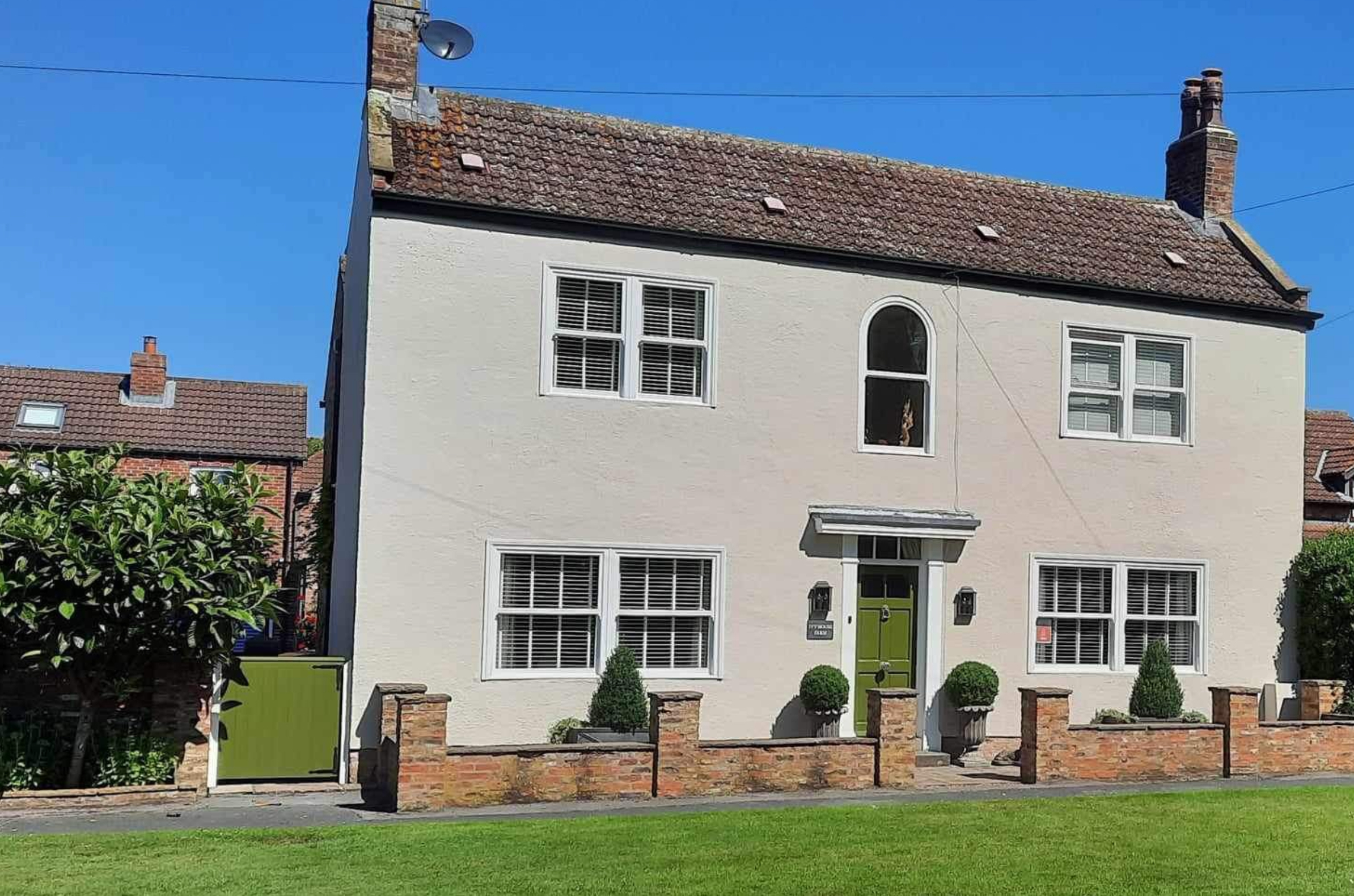
Clare’s house has been called Ivy House Farm for more than 200 years, even though the farm is long gone

IMG_1630
Ivy House Farm back in the 1940s when it was still in operation.

I had some interesting comments about house names following my column that mentioned the fact that Old Pond House in Newton-on-Rawcliffe had no name until reader Paul Ireson bought it in the mid-1980s. He’d wanted to call it Pond House (the village pond lay not far from their front window) but a neighbouring house had already used that name, hence they called it ‘Old Pond House’.

Reader Andy Long says that when he moved into his house in the late 1990s, although it had a number, there was also a name on the gate. “The gate was rotten so was removed and the name was never replaced or used. Maybe we thought a house name was too posh for us!” Andy isn’t completely sure he’s right but thinks the name was ‘Ingleside’. “The Gaelic origin or link to an open fire possibly went over our heads…or the pending birth of our first child seemed more important!”

And Lynn Catena says her sister’s first house was called Brae Side, but as it also had a number, they never used it. You often see houses on numbered streets that also have their own name, but it used to be seen as rather pretentious, the point being that you don’t need a name if your house already has a number. If such a house does have a name, would you use it when telling someone your address? And if you choose to name a house that already has a number, does it ever become recognised by Royal Mail? Can you ditch your house number altogether and change it to a name?

I grew up in a North Yorkshire village where most of the houses, including ours, had names rather than street numbers. When I was a teenager, we moved to a new house in the same village, and Mum and Dad were able to choose what to call it. They romantically named it after a wood where they would go for walks before they were married. Claire Dunstan-Elliott, who originates from Yorkshire, has spent many years living and working in Wales. She says: “I’ve named every house I’ve owned after the previous place I lived which has worked out quite well.” But she found visiting some small Welsh villages for work quite taxing: “There are no street names, no house numbers, and every house in the village is just named – it is really hard work, especially when they are in Welsh!” Imagine how hard it must be for a new postman or postwoman in these small country villages. Let’s hope they get paid per hour and not per round!

Most people who are going to name a house often, like my parents, have some meaningful reason for the one they choose. Judging by the most popular house names in the UK, though, you can tell that most go with far more practical and obvious choices. At the top of the list is Rose Cottage, and close behind are Orchard House, The Coach House, The Cottage, The Bungalow, The Lodge, The Barn, The Stables, The Gables and The Willows. Hillside and Hillcrest are also up there as are Sunnyside, Woodlands and Meadow View.

Clare Proctor says naming can be a weighty responsibility. “We were hoping to buy a lovely house called Corner Cottage (old house; newish name). I hated the name and was going to change it, but to what? For the few months we were in the running we debated new names. It was worse than trying to choose a baby’s name, or even worse, a pet’s name!” Clare and her husband eventually bought a house called Ivy House Farm, but the farm had long gone, so they pondered changing it, but again, couldn’t think of a suitable moniker. “We eventually decided that as it had held the name for nearly 200 years it was not for us to change it. I just tell people it’s a retired farmhouse!”

Paul Ireson, who lives in Rosedale and whose house-naming sparked this column, might be interested to know that Clare once ran a hotel there: “We used to own the White Horse Farm Hotel. It also was not a farm, but the previous owners bought some sheep and chickens and thought the name would give it a more rustic appeal!”

Have you ever named a house, and if so, what name did you choose and why?

I’d love to hear from you about your opinions, memories and ideas for columns. Use the ‘Contact’ button on the top right of this page to get in touch. This column appeared in the Darlington & Stockton Times on Friday 29th March and the Ryedale Gazette and Herald on Wednesday 22nd March 2024.