You can lead a horse to water

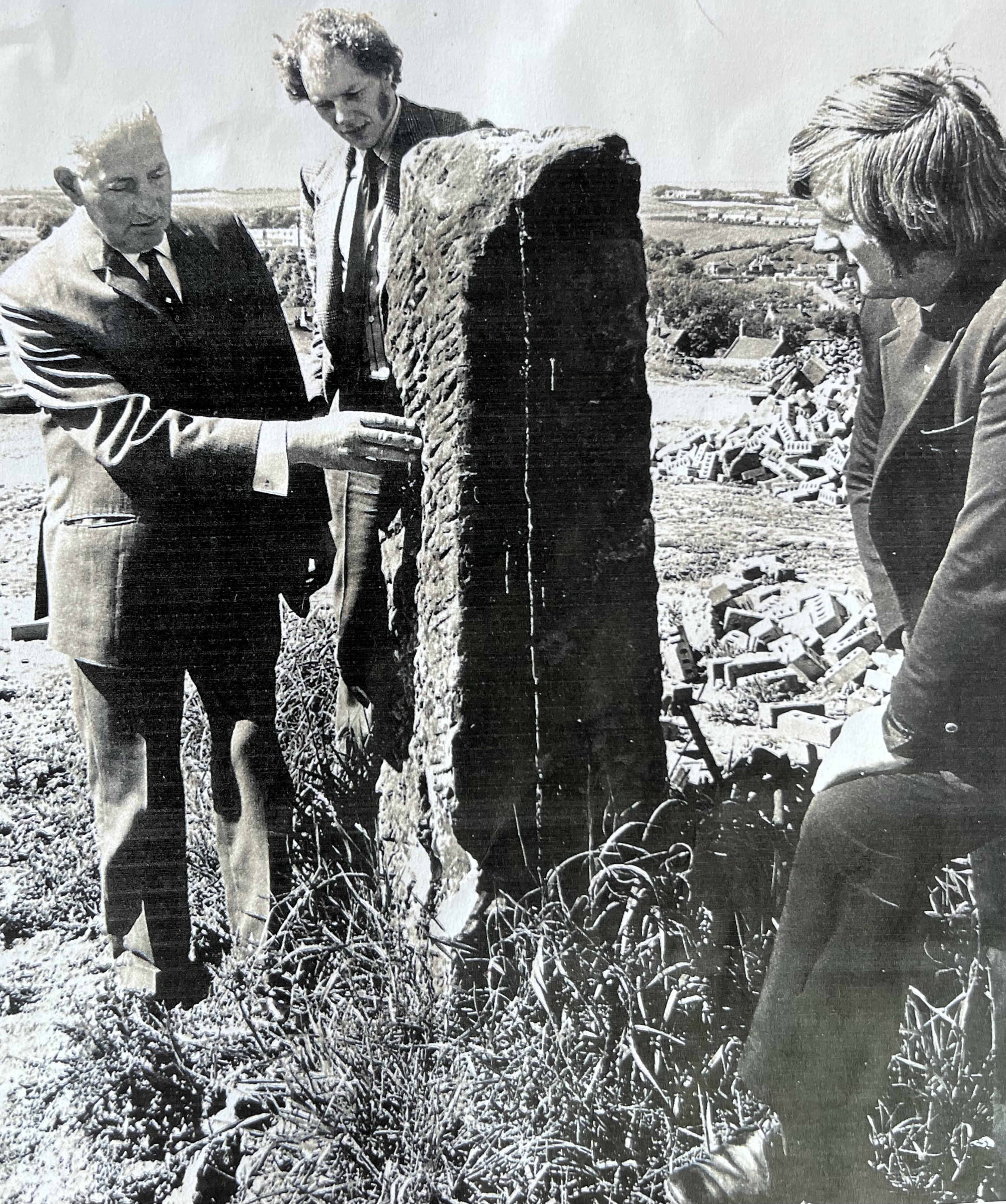
A drawing of Sir Ralph Payne-Gallwey from Vanity Fair magazine in 1893. Sir Ralph of Thirkleby Hall, paid for a roadside water trough in the village (Photo: Leslie Ward, public domain via Wikimedia Commons)


A few weeks ago I wrote about how my best friend and I celebrate the longevity of our relationship by having an annual weekend away together.


Gurli Svith from Denmark wrote: “Your column on friendship touched me very much because I have a very good friend I have known since I was 14 and she was 12. She was going to start at my school and came to my home to ask if we could cycle together. That was the beginning and now being 76 and 74 we are still close friends. We do not meet very often but when we do it is as if we saw each other just yesterday. We can talk about everything, and we have helped each other through hard times. For many, many years we have given each other birthday presents, but sometimes we have not seen each other for two or three years so it is like Christmas when we are sitting there drinking tea, eating cakes and unwrapping our presents.”


Is it true that many people are closer to their best friends than their own family? The saying goes, you can choose your friends but you can’t choose your family, so if you could opt out of spending Christmas and Easter with relatives, would you? (I acknowledge that I might be opening a can of worms with that question!)


Let’s get back on safer ground with troughs. Regular reader Clare Powell says: “We do have a couple of stone troughs we bought in a farm sale in Rosedale in the 1980s (Paid more than we should have because my husband kept bidding against himself – much to the locals’ amusement!). We transported them in the back of a Volvo. No idea how old they are, so it was interesting to read your article. Like you, I never really thought about who made them, and how. And you’re right, your dad would have had the answer at his fingertips.”


He sure did, and I now have the space to tell you what I discovered inside his old file. There were a few cuttings, columns, and notes, one of which was in Dad’s handwriting dated 15th May 1993. He had written it during a phone call from a chap called Dick Thompson who lived in our village and whose family had made locally quarried stone troughs for years.


“Each trough was excavated with a pickaxe and drawn down to the road on a sledge,” he’d scribbled. “It took seven or eight days to make one trough – all sizes done. Circular pig troughs also made so pigs could eat together.” He added that the troughs were made on spec, bought mainly by farmers, although parish councils paid for communal troughs situated in villages.


Among other things, the file also contained a newspaper cutting from March 1973 written by the esteemed founder of the original Countryman’s Diary column, Major Jack Fairfax-Blakeborough.


“The wayside water troughs were a real blessing both to parched travellers and to horses,” he wrote, “Especially in the heat of the summer when roads sent up a cloud of dust. Many of the troughs were erected by landowners who knew their value to man and beast. Some of them have inscriptions which tell us of their donor and his consideration for horseflesh.”


He mentions one between Burnsall and Appletreewick in the Dales which has a Latin verse ‘De torrential in via bibet propteren exaltabit caput’ which translated means ‘He will drink at the spring on the way, and thereafter lift his head with joy’, which is the last line of Psalm 110 in the Old Testament. The Major (and my dad when he wrote about it 20 years later) could not shed any light on who had placed the trough there. Can any of our Dales contingent add any more detail about this particular trough?


Dad mentions another placed at Thirkleby near Thirsk, paid for by Sir Ralph Payne-Gallwey (1848-1916), 3rd Baronet of Thirkleby Hall, who was an accomplished engineer, historian and artist. Its inscription, with a bit of poetic license where the rhyme is concerned, reads: ‘Weary traveller bless Sir Ralph, who set for thee this welcome trough.’


I have a feeling we have a lot more to come on these once indispensable features of our countryside highways and byways.


Do you have opinions, memories or ideas to share with me? Get in touch with me using the ‘Contact’ button on the top right.

This column appeared in the Darlington & Stockton Times on Friday 2nd and the Ryedale Gazette and Herald on Wednesday 30th April 2025

Solid as a rock

The unfinished millstone near Kildale. You can clearly see the markings made by the mason. But why was it never finished? Picture by John Buckworth

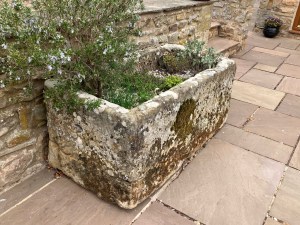
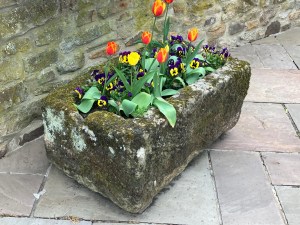
What happens when you suddenly pay attention to something that has not been on your radar before? That thing starts popping up everywhere! A couple of weeks ago I mentioned I’d spotted an old stone trough in the garden of a house near York that piqued my attention. Since then, I have seen them all over the place, in gardens, on roadsides, on footpaths and in fields. Clearly, the stonemasons of North Yorkshire were kept very busy a few centuries ago.

I posed a few questions in the hope that a knowledgeable reader would help me flesh out the history of these troughs. Stan Willis is that knowledgeable reader: “I was fascinated to read your article on stone troughs…The trough would certainly have been cut from a solid piece of rock. To cut a rock that size out of a quarry would have been an achievement in itself. Then it would be to square up before any cutting out was done. It would be dragged to its intended site. The mason wouldn’t risk many weeks of chipping out before transport in case the finished article broke on the final journey. Pickaxes would not be used to cut out the trough…The main cutting would be done with a hammer and cold chisel, a laborious task which probably took several weeks.”

The one pictured with my column was between five and six feet long, about two to three feet wide and almost the same in depth. Stan informed me that such a piece would have been transported on wooden rollers pulled by horses, and that it was likely a drinking trough for large livestock.

He added: “I had the privilege to meet a man from Barnard Castle who probably cut out the last one in the area 50 years ago. He also ran a haulage business; I think is name was Marwood.”

Gurli Svith, who contacted me all the way from Denmark, reads my columns online. She said: “When I saw the picture of a trough, my first thought was ‘The Curse of the Golden Trough’, written by your father.” Gurli was referring to the 5th book in Dad’s Inspector Montague Pluke series, where the eccentric inspector’s hobby, between solving murders, is to seek out and catalogue long forgotten drinking troughs on the North York Moors.

Gurli continued “I do not know much about troughs (we had one at home when I was a child), but since I read your father’s book I notice every trough I see. On some occasions I just take a look at it or into it, and at other times I take photos. But from now on I am sure I will look at the pattern if I see one.”

My column also prompted John Buckworth to contact me on a related subject: “Your article on the stone trough reminded me of the huge millstone in the middle of the moor west of Kildale…I’ve visited it a few times but it is not on a public footpath and difficult to locate when the bracken is up. It is about seven feet in diameter and the top face is finished and ready to flip over and face off the other side. It would take a good team of horses to move it. The nearest water source would be Kildale I assume. I have known about it for 50+ years…I would love to know more about it.” John, like me, imagined that it would have taken the mason many hours of hacking the stone out, and yet the other side remains unfinished. Why, after all that hard work, did he not complete the job?

I wonder if there are any readers out there who know the stone and the history of the area who has any suggestions as to why that is the case? (Please note: I have deliberately not published the exact location due to the fact it is not on a public footpath and there are nesting game birds that should not be disturbed).

Last time I wrote about troughs, I also bet that my dad had a file on them. Sure enough, on my last trip home I found it. But I’ve now run out of space, so I will have to leave what I have discovered for another day.

Do you have opinions, memories or ideas to share with me? Get in touch with me using the ‘Contact’ button on the top right.

This column appeared in the Darlington & Stockton Times on Friday 25th and the Ryedale Gazette and Herald on Wednesday 23rd April 2025

No stone unturned

The huge stone trough I spotted in someone’s garden. How did it get there?
The deliberate diagonal markings of the mason’s tool can clearly be seen


Do you remember a while back I wrote about stone masons, and the incredible skills that went into creating the distinctive masonry that features in many homes on the North York Moors? Masons had their own particular way of marking, and the ‘posher’ homes often featured the more labour-intensive herringbone pattern, while more basic patterns were used for less fancy constructions.

I was reminded of those stone masons the other day when I came across a magnificent trough in the back garden of a home near York. I was so captivated by it that it distracted me from the job I was meant to be doing. Thankfully, the clients were interested in hearing what I knew about the markings on the trough. Until I turned up, they’d not considered much about its past and how it had got there.

What initially struck me was the size of the thing. It was between five and six feet long, and about two to three feet wide and the almost same in depth. The internal and external surfaces all featured the distinctive markings made by the stone mason’s tool in a uniform and deliberate diagonal pattern.

It appeared to have been formed out of a single piece of rock because I could not see any joins. I guessed the trough was at least a couple of hundred years old, maybe more, and we all wondered how this huge, heavy beast had got there, if indeed it had ever been transported from elsewhere. The owners said their house was at one time a farm, built in the 1700s, and so it is possible the trough has been in that spot in their garden for up to 300 years.

This is the point where I appeal to those among you who have grown up on ancient farmsteads, or who are familiar with the history of such troughs. I have some questions for you.

–        Would the trough have been built from a single piece of masonry?

–        If so, how long would it take to hew out all the stone to make such a trough?

–        I understand pickaxes were used. Is that true?

–        Would it have been built onsite? Or transported from elsewhere? If it was moved, how did they do it in the days before mechanisation?

–        This trough has no outlet for water to drain out, so what would it have been used for (It is very deep, so only suitable for big livestock, if indeed that’s what it actually is)?

–        Could it be anything other than an ancient water container for animals?

It is one of those occasions where I wish my dad was here, because I am certain he would have been able to answer all those questions. In fact, ancient horse troughs feature heavily in one of his series of books, the Inspector Montague Pluke collection. The eccentric inspector’s hobby, between solving murders, is to seek out and catalogue long forgotten drinking troughs on the North York Moors. I’m sure my dad would have done plenty of research into these often ignored but common features of the landscape. Next time I go home, I will be rifling through his old files!

Before I took over these columns eight years ago, I would have barely given the trough a second glance. But I have learned so much about the lives and traditions of our part of the world, thanks to having to sit down and write them each week, that I’ve found myself appreciating the world around me in a lot more depth. The history, folklore, traditions and skills of our wonderful neck of the woods mean so much more to me now. It really is a blessing, and I must not only thank my dad (for if it wasn’t for his passing, I would not be doing this), but also all of you who continue to read my columns, and who get in touch to help me solve my little mysteries. Your contributions play such an important role, for without them, much of this stuff would be forgotten. Who knows if the following generations will ever be interested, but unless we put our memories down in writing, they will be lost forever.

So, from me to you, please accept a great big THANK YOU!


Do you have opinions, memories or ideas to share with me? Get in touch with me using the ‘Contact’ button on the top right. 

This column appeared in the Darlington & Stockton Times on Friday 11th and the Ryedale Gazette and Herald on Wednesday 9th April 2025

Swanning about at Swinton

The Turret at Swinton Park which was an amazing place to stay


The spectacular circular bathroom in The Turret


The dining room is called ‘Samuel’s’ after textile millionaire Samuel Cunliffe-Lister who bought Swinton in 1888


A few years ago, my best friend and I realised that our relationship was about to pass a significant milestone – that of 50 years. We had met when her mum and my dad, who were both writers living in the same village, arranged a play date for us four-year-old girls.


We got on like a house on fire and have been the best of friends ever since. Our friendship is rather unusual in that we have never attended the same school and always had completely separate social circles. We went to different universities, moved to different cities, and lived and worked miles away from each other. And yet our friendship remained steadfast. Apart from my immediate family, she has known me longer than anyone else on the planet. Because we still live 200 miles apart, we don’t see each other as often as we’d like, so the time we do spend together is very precious.


As the half century anniversary approached, we felt it warranted a weekend break together. We had a wonderful time in a nice hotel, just the two of us pampering ourselves, eating good food and drinking good wine and chatting about everything and nothing. It was brilliant.


As happens with other occasions of such national importance, we decreed that it had to be honoured every year. We are both working mothers who have survived raising three children, who have also miraculously emerged (relatively) unscathed, and so it is only right that we get an annual pass out to indulge ourselves.


I’ve just returned from our latest jolly, the fourth, and it has pitched the bar rather high. We went to the swanky Swinton Park Hotel in Masham and found to our delight that, due to an issue with our original room, we had an upgrade – to a turret. Actually, not A turret, but THE Turret. There is only one at Swinton Park.


We had the whole turret to ourselves – all three floors of it. As you’d imagine, the rooms are round in shape and there are a lot of stairs, but the added bonus is that you can work off all the rich food and wine you consume by running up and down to the bathroom on the top floor and the sitting room on the bottom.


For many years, the house was known as Swinton Castle thanks to the Gothic nature of the architecture, with great towers, imposing gateways, battlements atop the walls, and of course the famous turret that stands proud at the main entrance. The original building was constructed in 1695 by the magnificently-named wool merchant, Sir Abstrupus Danby and then inherited by his son, also called Abstrupus, who continued to extend the grand home. But his son, William Danby, presumably miffed at being given such an ordinary name, just about obliterated the original building constructed by his grandfather and replaced it with an extraordinary ‘castle’.


The castle was sold in 1888 to Samuel Cunliffe-Lister, a multi-millionaire in the Bradford textile industry who decided that the turret simply wasn’t grand enough, so he made it bigger and more castley. And when you own the largest silk mill in the world and employ 11,000 people, I think you have earned the right to build a turret as big as you like.


It’s not just about the turret though. Swinton is a vast estate of 20,000 acres across the Yorkshire Dales, employing more than 200 mainly local people. Swinton Park Hotel covers just 200 of those acres, and the whole lot remains in Cunliffe-Lister hands. There was a major bump in the road in the mid-1970s when the family was forced to sell the house due to the rising costs of running the place, not helped by a whopping inheritance tax bill. However, the family were able to buy it back in 2000, and the current owners, Mark Cunliffe-Lister (the 4th Earl of Swinton) and his wife Felicity have transformed it into a thriving multi-faceted business, combining the historic local traditions of the land with our modern expectations of luxurious getaways.


There was a lot more that we didn’t get to see and do on our stay there, so I’m not sure just one night in a turret is enough. We may have to go back next year.


I do wonder, though, do you have a special friendship?


Do you have opinions, memories or ideas to share with me? Get in touch with me using the ‘Contact’ button on the top right. 

This column appeared in the Darlington & Stockton Times on Friday 4th and the Ryedale Gazette and Herald on Wednesday 2nd April 2025

Who’s going to watch over us?

Dad signing books in the garden wearing his silver watch

Dad having a cuppa a few years later wearing his smart gold watch

Following my story a couple of weeks ago about some friends who were reunited with lost possessions, Michael Brown from Stokesley got in touch with his own tale. If you recall, one friend, Aisling, thought her diamond wedding earrings had been stolen, only to have them given back to her 10 years later after they’d been found in an old jacket pocket. Another friend, Stefan, was reunited with his smart suit jacket after it had been accidentally donated to the school fair and sold for 50p. Stefan bumped into the new owner wearing it on the street who sold it back to him for 50p.

Michael’s story centres around a Christmas party for members of the National Federation of Retail Newsagents. As District President, Michael was invited to the Newcastle branch’s party in Ponteland one year. He’d been planning to drive back home afterwards but was worn out after a long and tiring journey and on top of that, the weather was awful. Having learned that the pub did not have accommodation, the evening’s host, Richard, offered him a room in his home for the night.

Richard and his wife Karen were very warm hosts and provided Michael with most of what he needed for the night, including a dressing gown.

Michael explains: “The next morning, I slipped on the dressing gown and discovered a watch in the pocket. Reaching the kitchen, I presented my find to Karen. She was overjoyed. Although not hugely valuable, the watch held a lot of sentimental value as it was her grandmother’s and had been missing for quite some time.”

Whenever Michael sees Richard and Karen now, they reminisce about the occasion and Karen’s unexpected reunion with her grandmother’s long lost watch. “That evening has created a special bond between us,” says Michael.

What a lovely tale, with serendipity playing a vital part, as it so often does in stories like this. So many variables had to slot into place to enable Stefan to get his jacket back, for Aisling to recover her earrings and for Michael to discover Karen’s watch. She may never have otherwise found it had she not offered the dressing gown to Michael on his impromptu stopover. Perhaps from above, Grandmother had been influencing the way all the chips fell so that her watch and her granddaughter could be happily reunited.

It makes me wonder how many people still wear watches? I haven’t had one for years and have not missed it because there are so many clocks surrounding me, on my phone, in the car, on household appliances. Having a clock hanging on the kitchen wall that the whole family rely on is no longer necessary thanks to the electronic gadgets at our fingertips.

There’s a fair few of us who will have watches that have been passed down through the generations though. My dad used to wear his own dad’s timepiece, although in later life, a smart gold one replaced it.

A couple of weeks ago, I asked you which is the one item you’d save from a fire and wondered if you’d be practical – like a passport; or valuable – like jewellery; or sentimental – like photos. If I had to choose one of the two watches I mentioned above I’d probably save my dad’s rather than Grandad’s because I remember him wearing it with much pride and therefore has more sentimental value to me. It is a hard choice, though, and I have no doubt that I wouldn’t get rid of either unless I really had to.

Harbouring of items of sentimental value is the reason I have a garage that is still full of boxes I have not unpacked; boxes that contain a load of stuff I cannot bring myself to throw away and yet cannot face sorting out either. How does one make the decision to throw away hundreds of letters sent between myself and my best friend, or my parents, or my siblings? They become even harder to let go once the writer has passed away. But they are in a box, and unlikely to be read by anyone except me, and only now and then. What the heck do I do with them?

It makes me ask again, what you might save from a fire if you had to choose but one item?


Do you have opinions, memories or ideas to share with me? Get in touch with me using the ‘Contact’ button on the top right. 

This column appeared in the Darlington & Stockton Times on Friday 21st March and the Ryedale Gazette and Herald on Wednesday 19th March 2025

Swim the Channel? Fat chance of that!

Bill Burgess slathered in lard before his successful attempt at swimming the English Channel in 1911. (This work is from the George Grantham Bain collection at the Library of Congress. According to the library, there are no known copyright restrictions on the use of this image).

My recent mention of goose fat as a home remedy for a bad chest prompted reader Mike Brown from Stokesley to get in touch. It reminded him of TV personality David Walliams: “He smeared it all over his body before swimming across the English Channel to raise money for the BBC charity Sports Relief. The late Queen mentioned this when she presented him with the OBE for his services to charity and the arts. He replied that the application wasn’t as much fun as it looked. Probably smelt awful too. So as well as a remedy for a persistent cough goose grease is a good insulator as well.”

Walliams completed the 21-mile swim in a very impressive 10 hours and 34 minutes in July 2006, despite confessing that he had never done anything remotely sporty in his life before. Later, in 2008, he swam the Strait of Gibraltar, and then in 2011 completed the ridiculous challenge of swimming the length of the River Thames. He covered 140 miles, starting in Lechlade, which is about 45 miles west of Oxford, and finishing eight days later at Westminster Bridge in London.

For the latter two events, Walliams was wearing a wetsuit, but for his Channel swim, he was only permitted to wear a ‘standard swim costume’ as defined by the Channel Swimming Association for it to be classed as an official swim. The rules state that the costume should not aid buoyancy nor offer thermal protection, and it cannot cover the arms or legs. The same rules apply to the swim hat too, and you are not allowed to use anything that will help you stay afloat or swim faster, so no flippers armbands, rubber rings or lifejackets.

Basically, it’s just you and your Speedos against the elements. Oh – and of course, the goose gunk. Some people smear it all over their body to prevent heat loss, while other more hardy individuals cover just the areas that are likely to chafe, such as armpits, necks, shoulders and thighs. That thought makes me squirm (and if you have ever spent too long in the sea, you will understand the fidgety discomfort of saltwater chafing).

Some people choose not to use fat from a dead animal and instead make their own mixture of roughly 50/50 lanolin and petroleum jelly. Lanolin is what makes a sheep’s fleece waterproof, and is extracted from freshly-shorn wool in a centrifugal process involving hot water. It has dozens of uses, but it does harden when cold, so for the cross-Channel fraternity, it is mixed with petroleum jelly to keep it spreadable.

The first person to ever swim the Channel unaided was 28-year-old Captain Matthew Webb in 1875. He smeared himself with porpoise fat to preserve body heat and avoid the chafing. He earned fame and a small fortune from the achievement, and tried to replicate the financial rewards through other water-related endurance challenges, but none matched that first major accomplishment. He died just eight years later while attempting to swim the Niagara Falls Whirlpool Rapids.

It was another 36 years before anyone else managed to cross the Channel and he happened to be a Yorkshireman. Bill Burgess tried and failed 17 times before succeeding on his 18th attempt in September 1911. Although born in Rotherham, he spent most of his adult life in France, and competed for the country at the 1900 Olympics where he won a bronze medal in water polo. He also coached the first woman to swim the Channel, American Olympian Gertrude Ederle, who was only 20 when she completed the feat in August 1926.

Undertaking a Channel swim sounds, quite frankly, awful. Not only do you have to go to the faff of smearing yourself in gunge before plunging into freezing sea water, you also have to contend with wind, currents, tides, sewage and floating rubbish, never mind the constant traffic surging through the busiest shipping lane in the world. Then there’s the seasickness caused by the incessant motion of the waves, the sore and chapped lips, and the raging thirst thanks to the gallons of polluted salt water you’ll inevitably swallow. Why the heck would you?

Of course, I am facing my own swimming challenge later this year when I compete in my first triathlon. Let’s hope goose fat won’t be needed.

This column appeared in the Darlington & Stockton Times on Friday 7th March and the Ryedale Gazette and Herald on Wednesday 12th March 2025

Picturing the past

I stopped printing photos and putting them in albums in about 2012. Will my great-great grandchildren know what I looked like if they don’t have access to photos of me?

I’ve had a few more comments about the conundrums we face when making decisions about what to do with all the stuff we accumulate over our lifetimes. Should we leave it for our loved ones to deal with after we’ve gone, or should we get rid of it ourselves before we shuffle off this mortal coil? Are those we leave behind interested in the stories behind the things we treasure, or could they not care less?

Lynn Catena, a Brit who now lives in Canada, says: “I doubt my boys are interested in anything I deem sentimental, but I plan on labelling some items. What they decide to do with them after I’m gone is their decision.”

She does have one item of particular significance though, a silver charm bracelet. “My sister gifted it to me when I was her bridesmaid. I have added to the charms (mix of English & Canadian). I have two sons, and three grandsons, so I’ll be gifting it to my nieces, and their daughters.”

Reader Clare Proctor is a self-confessed maximalist, and her house is packed with furniture, antiques and collectibles. She has two daughters with very different attitudes: “Molly said she would get rid of everything, but Lily said she’ll keep it all!”

For Michael Kilmartin, it’s printed photos that he hopes to pass on and points out that few of us print them out anymore. There are devices, like digital photo frames, where you can upload your pictures, and every so often the display rotates so you get to see a variety of your favourite images. But I wonder, 100 years down the line when your great-great-grandchild asks about you, what will their parents show them? Will your future descendants know what you looked like if printed photos no longer exist? Thanks to the photographs that I have inherited, I can see for myself the family likeness in my great-grandparents’ faces and can visualise their lives and contribution to our unique family history.

I stopped putting my photos into albums in about 2012, not intentionally, I just never got round to it as time and technology moved on. I now look through my recent photos via my phone and tablet and have backed them up in ‘cloud’ storage so they never get lost should my devices conk out. But when I’m gone, will my children be able to access them if I forget to give them all my passwords?

Today we don’t have to remember to take a camera to a special event because, thanks to our mobile phones, we have one with us all the time. And we don’t just take one photo, do we, we take lots, and just keep going until we get one we like. I keep promising myself that I will go through and delete all those ‘extras’ and as I write this, I only have 24,893 pictures to go through on my phone (good grief!).

It was not that long ago that we had to be so much more considered about snapping pictures. Firstly, the camera film was expensive to buy, secondly, you only had a limited number of shots you could take before the film ran out, and lastly, they were costly to get developed. As every parent does, once I started a family, I took lots of pictures of the children and religiously had them printed and put into albums. You had to either physically go to a shop or send the films away in an envelope and wait two weeks to get them back.

Do you remember that feeling of eager anticipation as the bulky envelope dropped through the letter box? And that other feeling of abject disappointment when you opened it to find your fingertip in the corner every picture? How would today’s young people cope with having to wait all that time without even knowing if they had taken a decent picture? Too bad if it was taken just as we blinked or sneezed!

Scrolling through photos on a screen is not quite the same as sitting down with a cuppa and turning the pages of the family albums while reading the captions and dates someone has taken the time to write down.

How will the future generations look back on their families’ past, I wonder?

Do you have opinions, memories or ideas to share with me? Get in touch with me via the ‘Contact’ tab at the top right of this page.


This column appeared in the Darlington & Stockton Times on Friday 7th Feb and the Ryedale Gazette and Herald on Wednesday 5th Feb 2025

Time to make decisions

Horacio Romeo’s beloved antique mirror has to stay in Buenos Aires, Argentina, because it is too big to bring to his current home in Brazil.

Following my column about the Hugh Pannell clock owned by Arkansas-resident Sandra Parkerson, David Severs has been in touch. David is a descendant of the 18th century Northallerton clockmaker and was able to provide some useful historical context about it. If you recall, the grandfather clock has been in Sandra’s family for more than 200 years, but she is looking to find it a home because it will be too big to take to a new apartment.

David is compiling a record of Pannell’s work and explains that it is unusual to find ‘CLOCK & WATCH-MAKER’ engraved on the name boss. “This is very rare indeed and to find yet another Pannell example is exciting,” he says.

He explains that Sandra’s walnut case is not original: “I have found well over a hundred Hugh Pannell clocks and not one is in a walnut case.” Most of Pannell’s clocks were in cases of mahogany, oak or pine. David has found only one pine example due to the wood not being durable, and mahogany is also quite rare because he would have had to transport it by cart from west coast ports such as Liverpool, which was far more costly than a readily available oak case. Mahogany cases were the preserve of the wealthy, and housed Pannell’s finest pieces. They became more common once the rail network reached Northallerton in 1841, well after Hugh Pannell’s time. Oak cases with mahogany veneer were known as ‘typical Yorkshire cases’ in 1774 when Pannell was working.

David says about Sandra’s clock: “The decoration on the pediment is not something I have seen over here and the split trunk door is also new to me. It is possible that the clock mechanism alone was sent to the USA and then placed into Sandra’s mahogany case upon arrival.”

David adds: “I have found that some 30% of Hugh’s surviving clocks are now marriages which is perhaps not surprising given that it is 236 years and more since he was making clocks…I am aware of his clocks in California, Florida, New Orleans and San Francisco as well as this one in Arkansas. Clocks by his son Joshua…have found their way to Iowa and California and one of his watches to Florida.”

This brings me on to the subject of what to do with meaningful objects you have collected in your lifetime.

Regular reader Clare Powell says: “I inherited my dad’s grandfather clock…and decided to sell it later on. You get nothing for them at auction, nobody wants or has the room for them, even old ones. But I discovered it was handmade by a company in Somerset and he had paid £3,500 for it. I couldn’t bring myself to sell it for £150, so I am still stuck with it!”

In a previous column I mentioned a small wooden box my grandad gave me which I hope one of my sons will keep. Clare explains that the thought of what to do with all her family heirlooms keeps her awake at night: “I am not sure we should burden the next generation with all our ‘stuff’. If you tell them why everything means so much to you, will they feel ridden with guilt if they are not able to keep it all? Then again, if you don’t tell them, then they may wish they did know the story of certain items, like you and your box.”

Horacio Romeo from Brazil, who contacted me through my web page (countrymansdaughter.com), has a similar problem to Sandra in that he has a beautiful mirror that is too big for his current abode: “I love it and enjoy looking at it when I go to Buenos Aires (Argentina) but bringing it here is out of the question.”

Leni Ella says: “My nana used to say, ‘If you want it, put your Monica on it’, the only way you could bagsy something in her house.” (I am assuming Nana meant ‘moniker’ and ‘Monica’ is a family joke!).

My aunt, Liz Davidson, revealed that she has a family heirloom: “I have a crocheted white bedspread that came from my dad and one of his aunties I think. It’s very heavy when you put it on the bed.”

There is only so much the following generation will want to keep so what, I wonder, will happen to grandad’s bedspread?

Do you have opinions, memories or ideas to share with me? Get in touch with me via the ‘Contact’ tab at the top right of this page.

This column appeared in the Darlington & Stockton Times on Friday 17th Jan and the Ryedale Gazette and Herald on Wednesday 15th Jan 2025

From loss to love

image1
Carol Hepplestone with some hearts of remembrance outside Bedale Post Office during Baby Loss Awareness Week in October


image0
The work of yarnbombers in Bedale during Baby Loss Awareness Week in October
118178277
PC David Haigh, who showed such kindness to Carole Hepplestone after the loss of her baby, Leigh. PC Haigh was murdered by Barry Prudom in 1982.

Occasionally I give talks where I often discuss my dad’s role in the Barry Prudom case. Dad was Press Officer for North Yorkshire Police when Prudom murdered Constable David Haigh near Harrogate in 1982. While on the run, he also killed Sergeant David Winter in Malton and pensioner George Luckett in Nottinghamshire. George’s wife Sylvia was also shot but miraculously survived.

After one such talk, I was approached by Carol Hepplestone who told me a very moving story and, with her permission, I am sharing it with you today.

On 3rd November 1981, Carol gave birth to her second baby, Leigh, at Carlton Lodge Maternity Home in Harrogate. Unfortunately, Leigh passed away very suddenly at six days old on 9th November 1981. What prompted Carol to approach me was the fact that Constable David Haigh played a significant role in her life around that time. “Your talk brought it all back to me,” she said.

Carol explained that after losing Leigh, not only did she have to go through the trauma of a postmortem to find out why he had died, but there was an agonisingly long wait for the results. When they finally did come, the doctor delivering them did a terrible job. “He said they couldn’t find a reason why he had haemorrhaged so they were just going to put it down to a cot death…He said I could go away and have more children. It was quite dismissive and there was no offer of any follow up care.”

The whole experience left Carol bereft and on one particular night she decided she needed some time to herself and headed out without telling anyone where she was going. Her panicked husband phoned the police fearing she was vulnerable and may be in danger. “David Haigh was with my husband when I rang home and the phone was passed to him. In a calm way he asked where I was and told me he would come and collect me, which he did and took me home. He then sat us down and acted as a mediator/councillor/listener between us.”

Afterwards, Constable Haigh visited regularly to see how they were. “He was a father of three small boys at the time and could empathise… He went above and beyond his duties as a police officer.”

It was only a week after his last visit that she learned that he had been killed. It hit her hard, and her heart broke for his wife and boys. Sadly, Carol’s marriage did not survive but as time went on, she grew stronger and reached a stage where she felt she could help other women going though what she had. She joined her local baby bereavement support group, Sands.

“It’s a place where we could talk, listen and support couples,” she says. “We liaised with hospital staff on how to treat bereaved parents. We introduced the idea of memory boxes. We raised funds for a dedicated room for these parents. We also raised funds for a Sands memorial statue which stands in Stonefall Cemetery, Harrogate. I recently visited the cemetery and was astounded to see the volume of graves, plaques and memorials dedicated to our lost babies.”

Carol has two other sons, Jonathan, born in 1979, and Ben, her ‘rainbow’ baby, born in 1983 (a rainbow baby is one who is born following miscarriage, stillbirth or after a sibling has died). On what would have been Leigh’s 40th birthday, Jonathan completed a challenge to raise funds for Sands, running four miles every four hours for 48 hours.

Carol was walking through Bedale last month and was pleasantly surprised to see the town was decorated by yarnbombers to mark Baby Loss Awareness Week (9th -15th October), something that would never have happened back in the 1980s: “How encouraging to see how things have come on over the years, instead of very little being spoken about it like in the past,” she says.

At 71, Carol has now found happiness with a new partner and remains eternally grateful for the kindness shown by David Haigh at a time she most needed it. She hopes that today, with more awareness and organisations offering support after the loss of a baby, no-one will feel let down in the way she was when Leigh died.

“No matter how many years go by, you never forget.”

Do you have opinions, memories or ideas to share with me? Get in touch with me via the ‘Contact’ tab at the top right of this page.

This column appeared in the Darlington & Stockton Times on Friday 29th Nov and the Ryedale Gazette and Herald on Wednesday 27th Nov 2024

From darkness come lights

IMG_5590
I finally managed to tick off this bucket list item – seeing the Northern Lights. I didn’t have to travel any further than my own back garden

Do you have a bucket list? Things you’d like to do before you pop your clogs? Bucket-list items I’ve ticked include seeing the Wimbledon Men’s Final, hang gliding, high diving, flying in a small aircraft, eating at the swanky Black Swan in Oldstead, seeing a starling murmuration, visiting New York, Asia and Australia, and seeing David Bowie, Queen, U2 and the Foo Fighters live in concert.

Those above span a 30-year period, so 2024 has been a bit of a bumper one in comparison. I first saw a murmuration in February 2023 and it was hands down one of the most breathtaking natural phenomenons I have ever witnessed. That’s why I double-bucketed and went again this year.

Another of my ‘bucket-listers’ was going back to Greece. It is one of my favourite ever places, and yet I have only been a couple of times. I was a nanny there in 1985-6, then went back for an island holiday in the early 1990s. I finally got to return this September for a week in Crete (and I wrote about my trip to Knossos a couple of weeks ago).

My most recent ‘bucket-lister’ was seeing the Northern Lights. For most of my lifetime you had to book an expensive holiday to the Arctic Circle, or at least decamp to the very north of Scotland, to see this natural marvel. But recently they’ve been seen all over North Yorkshire and a friend of mine had even taken a picture of them from her bedroom window in York. The problem was, I always missed them. One night after a promising forecast, I sat in my garden until 2am only to be disappointed again.

Finally on October 10th at around 8pm, my sister messaged me to say the lights were putting on a display that was clearly visible from her street. I rushed out, but there was nothing even though I was just a few miles away.

A couple of hours later, I decided to have one more look before going to bed. I peered towards the north (because that’s where I thought you were meant to look for the Northern Lights) and saw nothing remarkable. Then, I scanned the rest of the clear night sky and, turning towards the south, I noticed that there was a faint pinky glow. At first, I thought my desperation had led my eyes to play tricks, but the glow seemed to get a little brighter. I had read that if you took photos with your smart phone, the colours became more visible, and sure enough, the picture I took revealed an amazing blanket of green and pink cloaking the sky. I lowered my phone, and the colours grew brighter and were soon clearly visible to my naked eye, appearing in every direction. I called my son, told him to turn off all the house lights, and we both stood in the garden staring up, silenced by the wonder of what we were seeing.

But why has it been possible to see the lights so far south of the Arctic Circle, and so often this year? The BBC has helpfully supplied an article to explain, and I have included an edited version below:

The sun is currently at the ‘maximum’ of its 11-year solar cycle. According to NASA: “At its quietest, the sun is at solar minimum; during solar maximum, the sun blazes with bright flares and solar eruptions.” What I saw from my garden on 10th October was caused by a huge sunspot that had erupted on the sun’s surface 93 million miles away which blasted a stream of electrically charged particles (or ions) towards Earth (known as a Coronial Mass Ejection). As they collided with gases in our atmosphere, light was emitted at various wavelengths, creating colourful blinking and swirling displays – the Aurora Borealis. In the northern hemisphere, most of this activity takes place near the Arctic Circle, but when solar activity is strong, this can expand to cover a greater area. There is a high chance we’ll get more of these Coronal Mass Ejections directed towards us in the coming months – a glimmer of hope for those of you who have not yet managed to catch them.

To bring this column to a close, I have one question: what is on your bucket list?

Do you have opinions, memories or ideas to share with me? Get in touch with me via the ‘Contact’ tab at the top right of this page.

This column appeared in the Darlington & Stockton Times on Friday 8th Nov and the Ryedale Gazette and Herald on Wednesday 6th Nov 2024